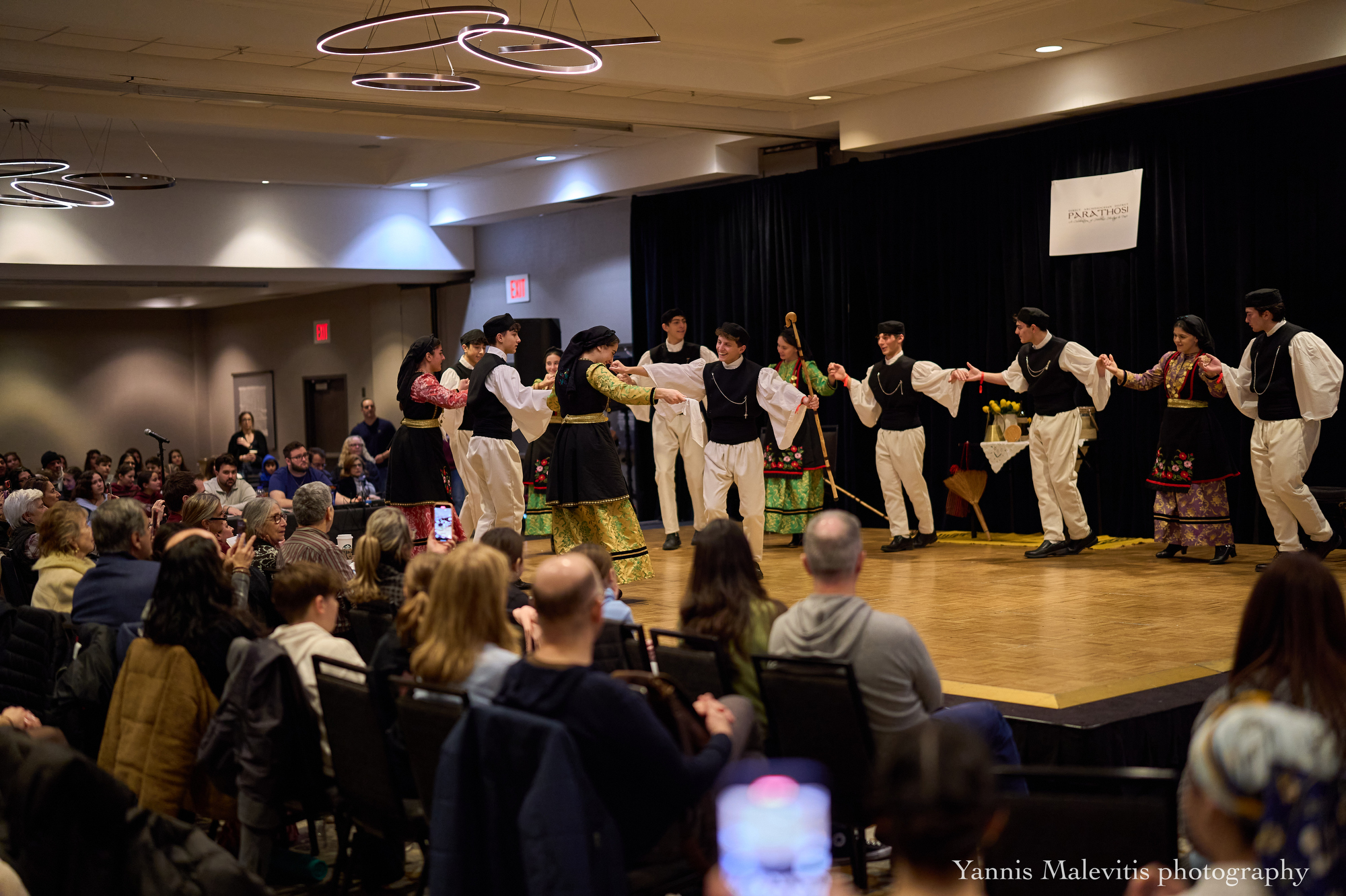
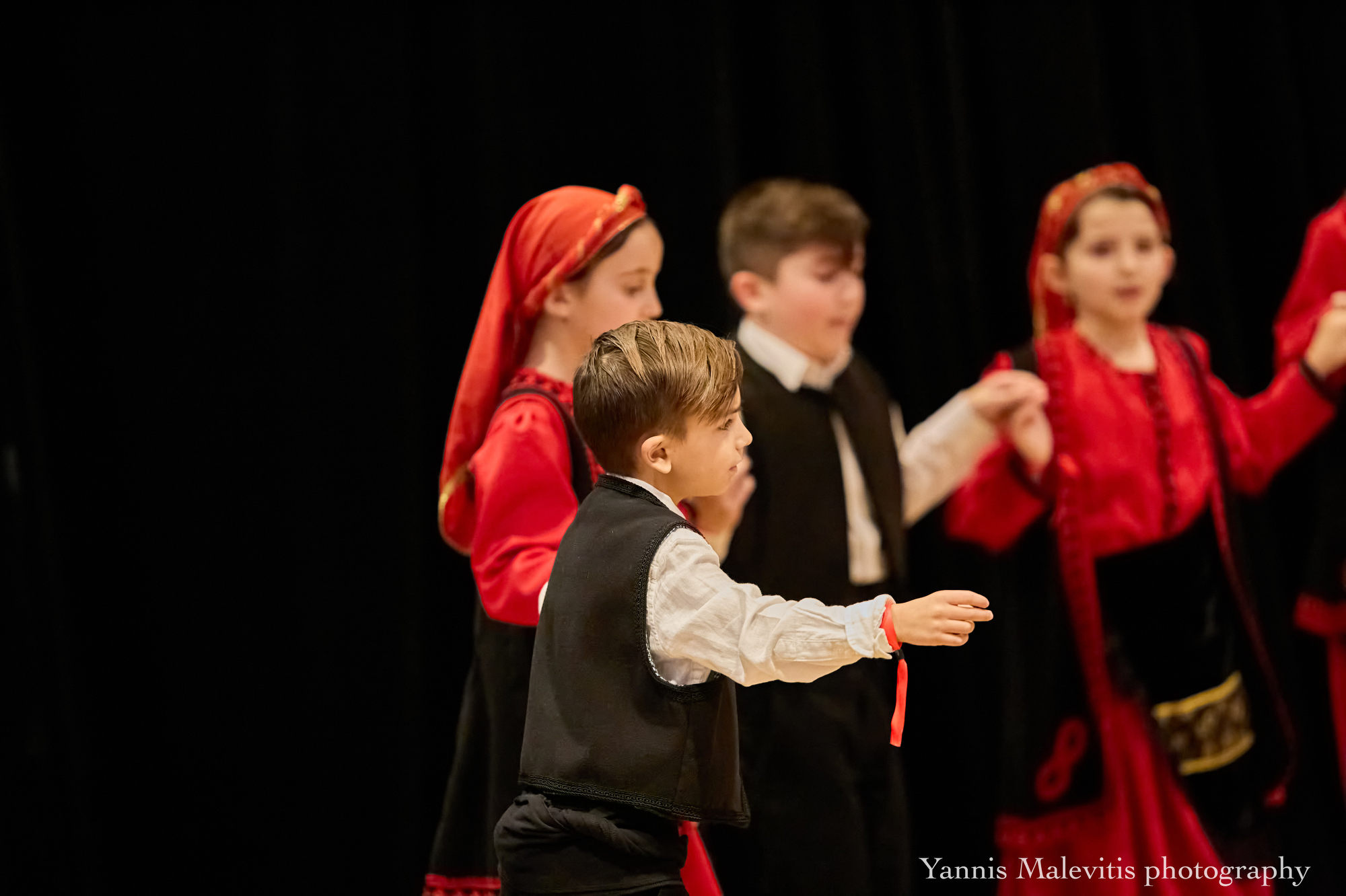
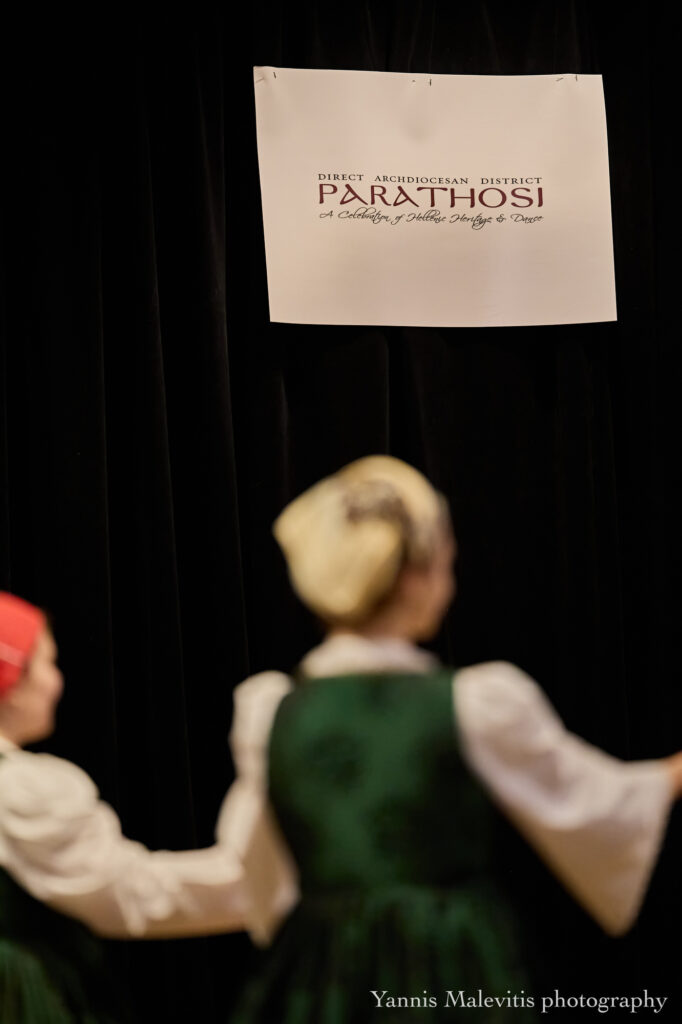
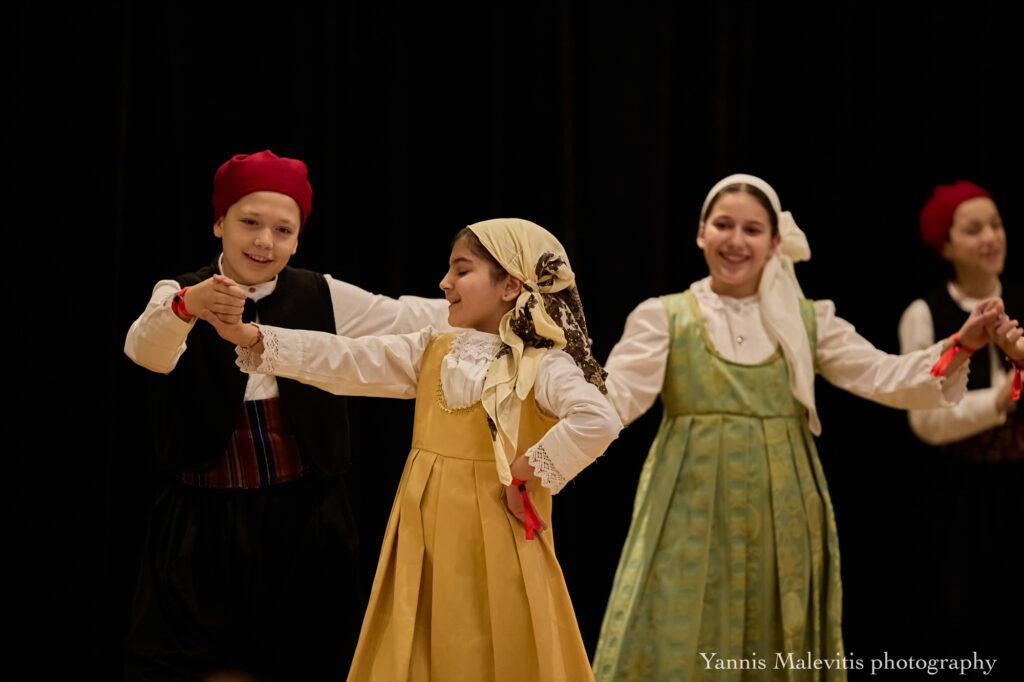
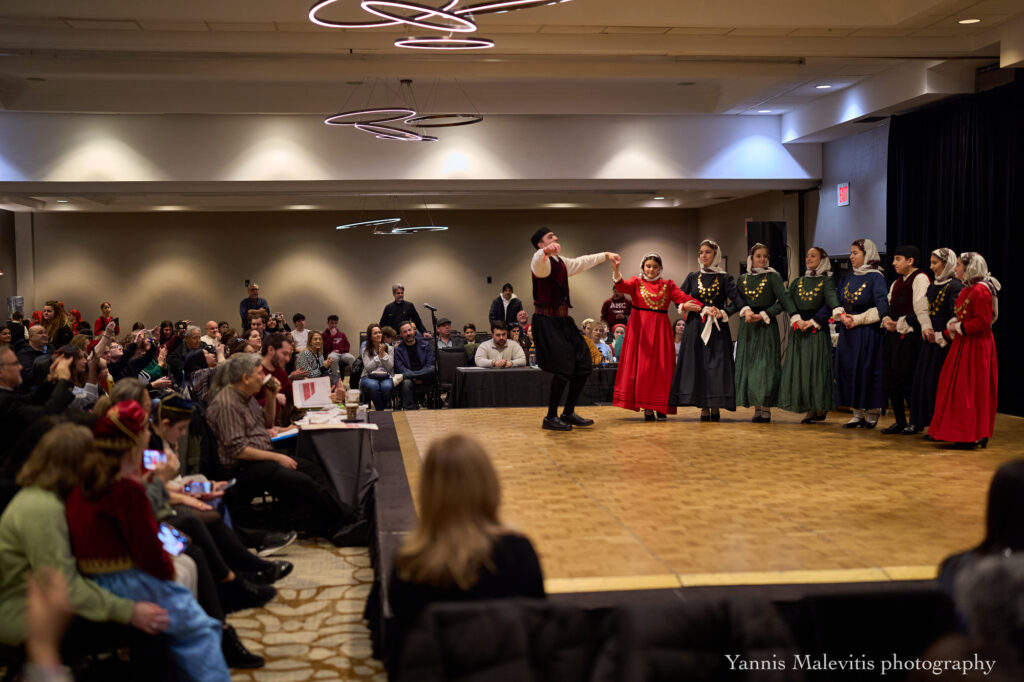
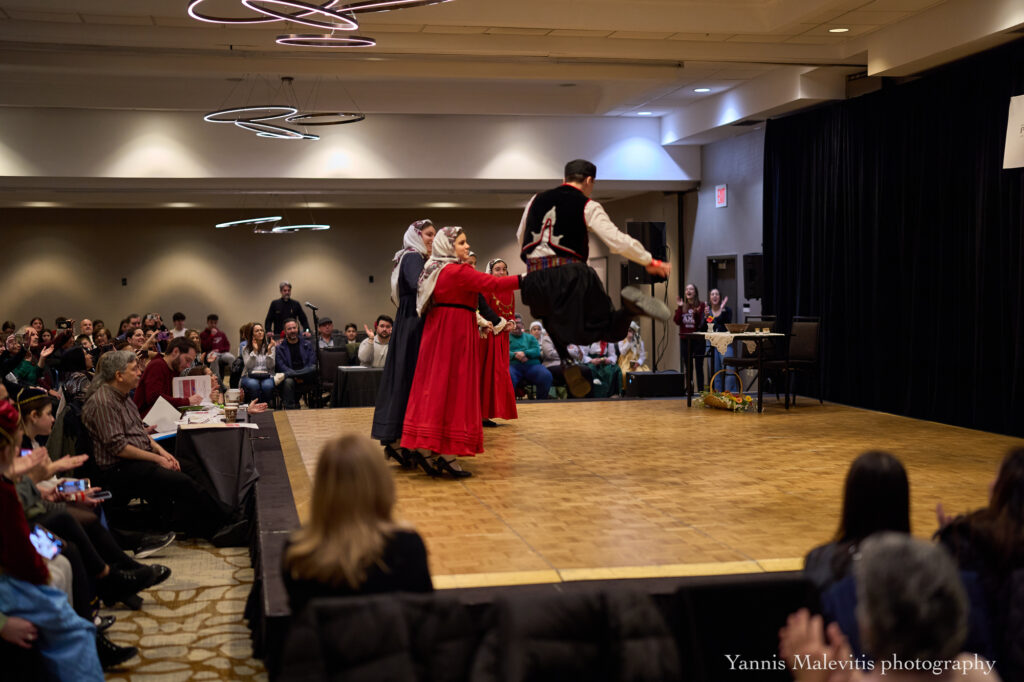
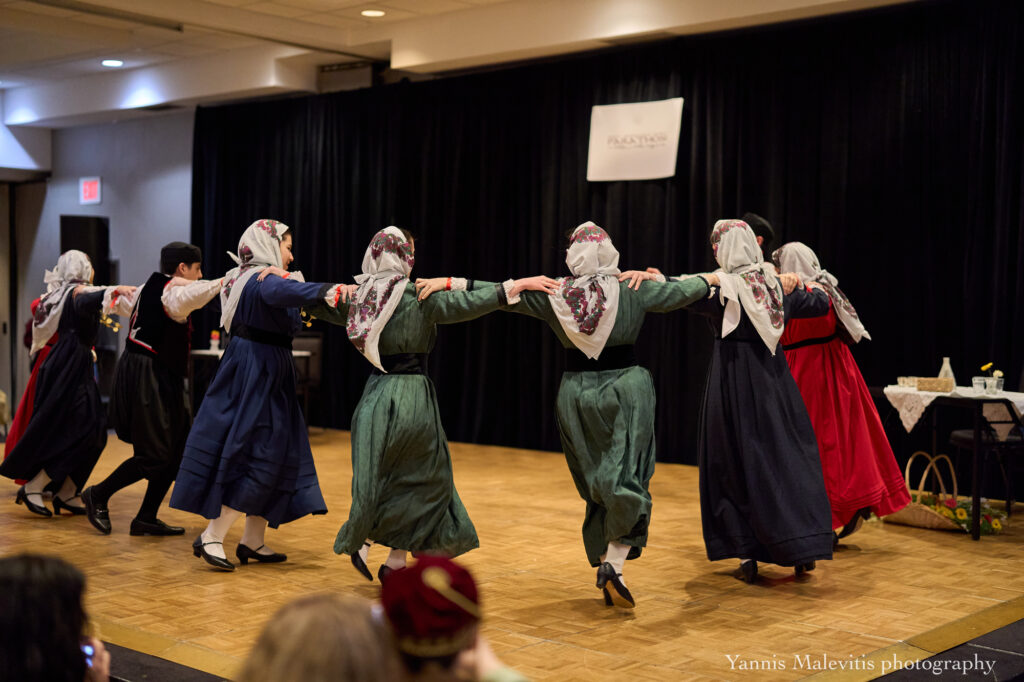
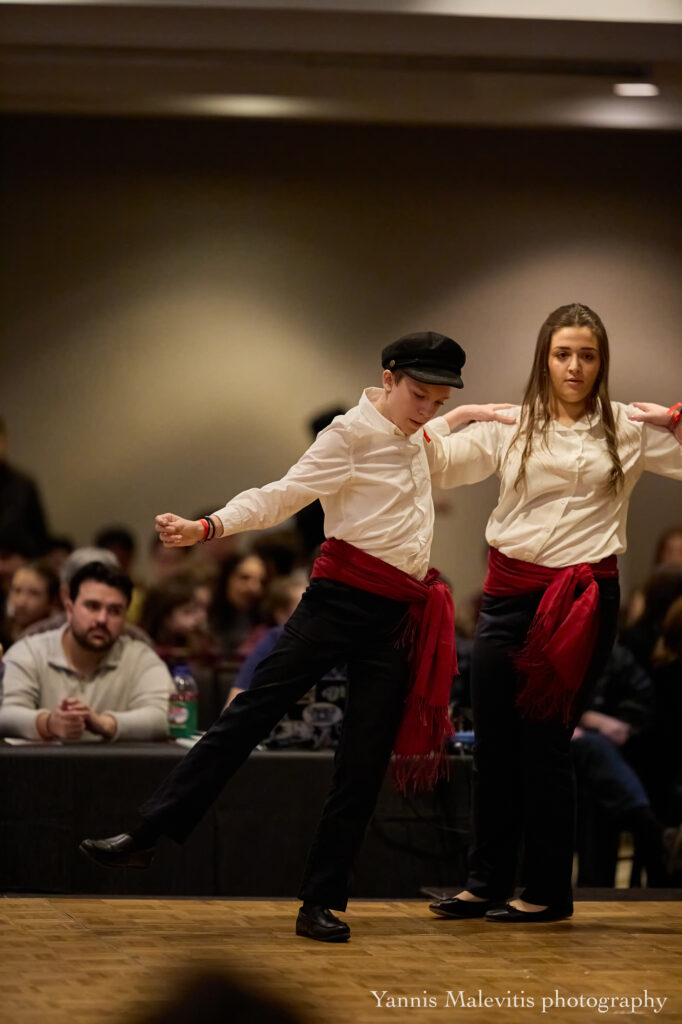
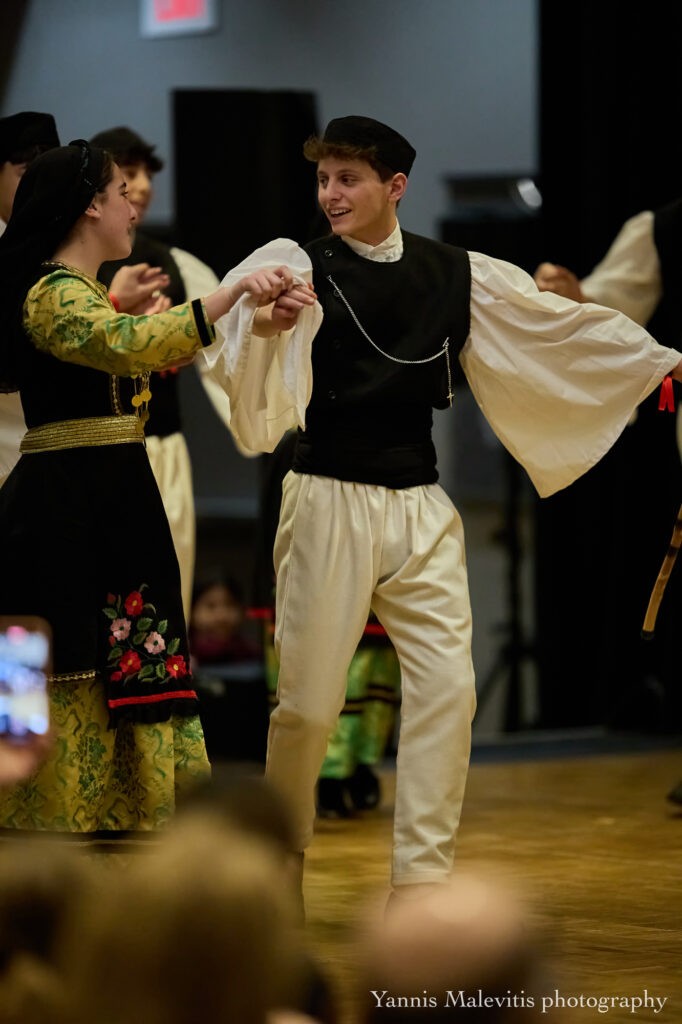
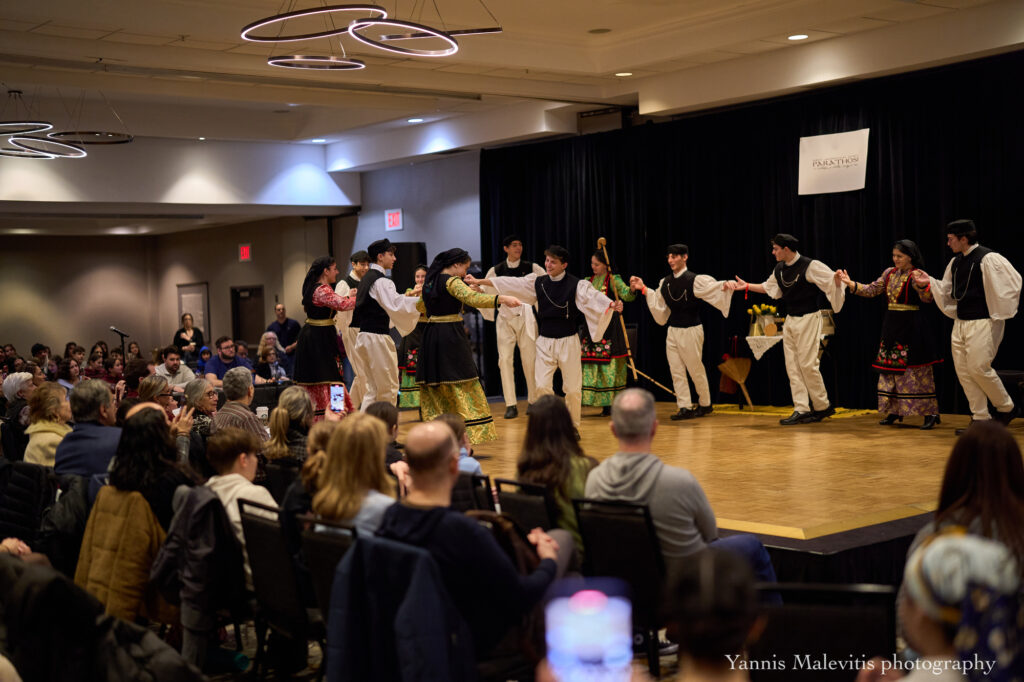
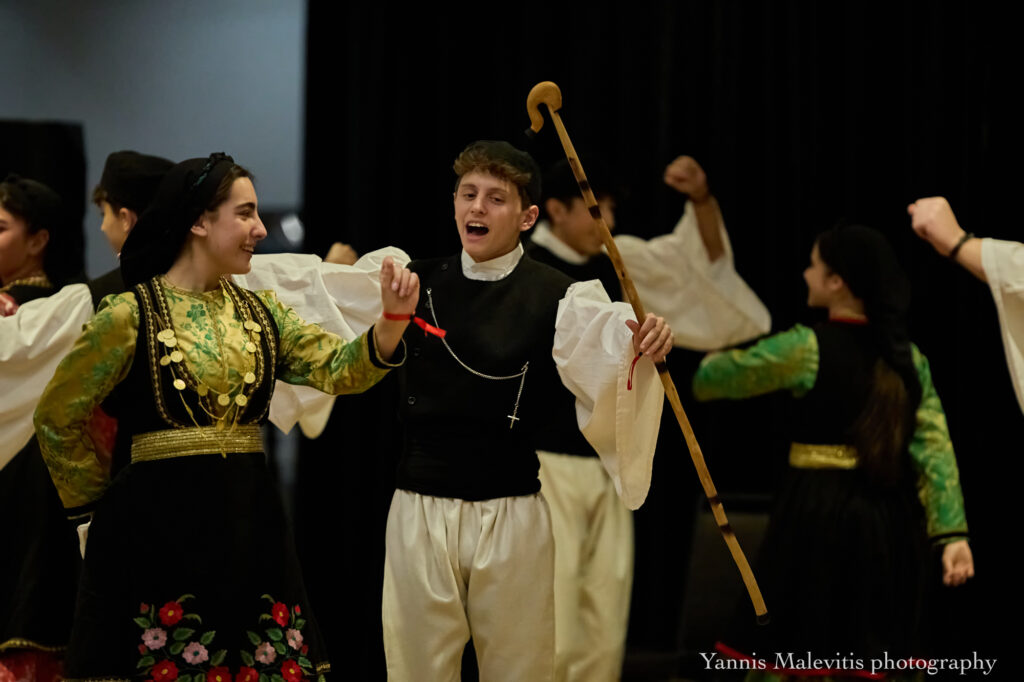
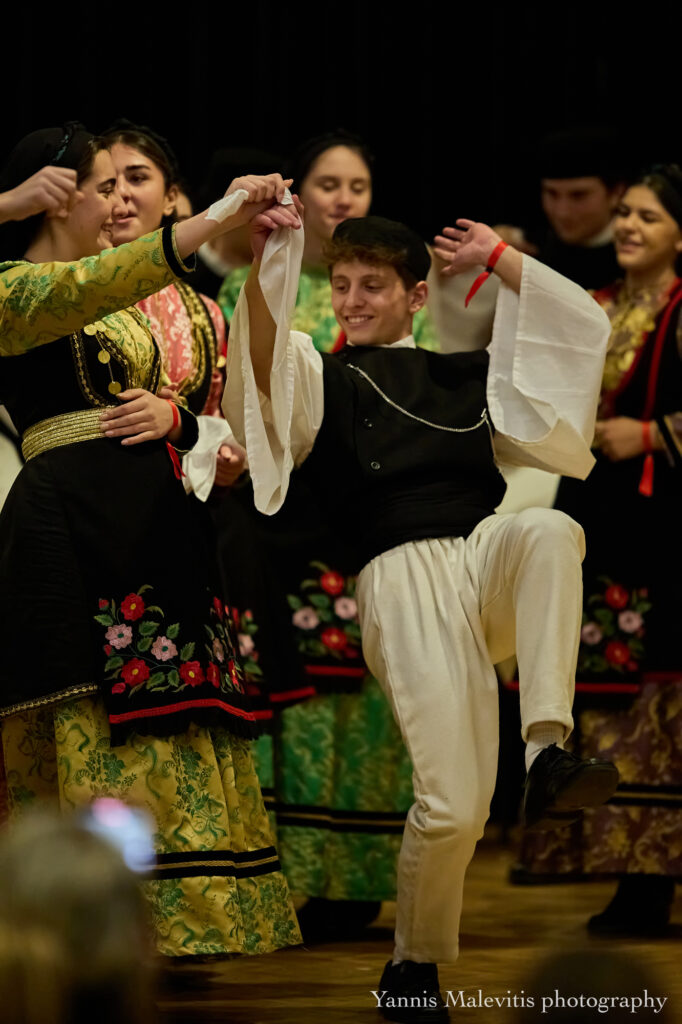
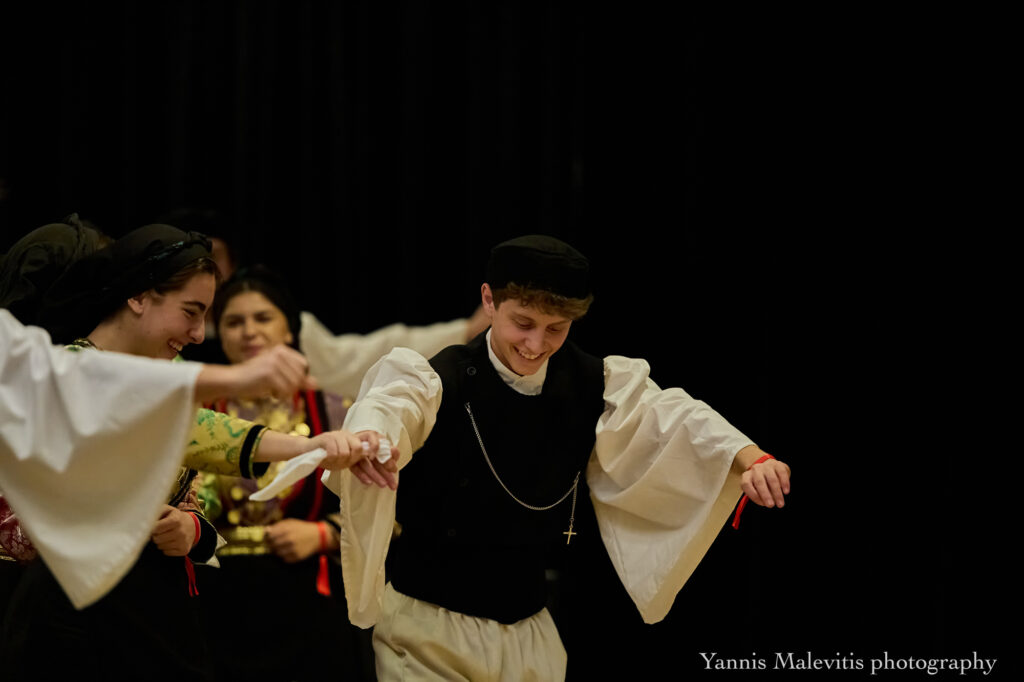
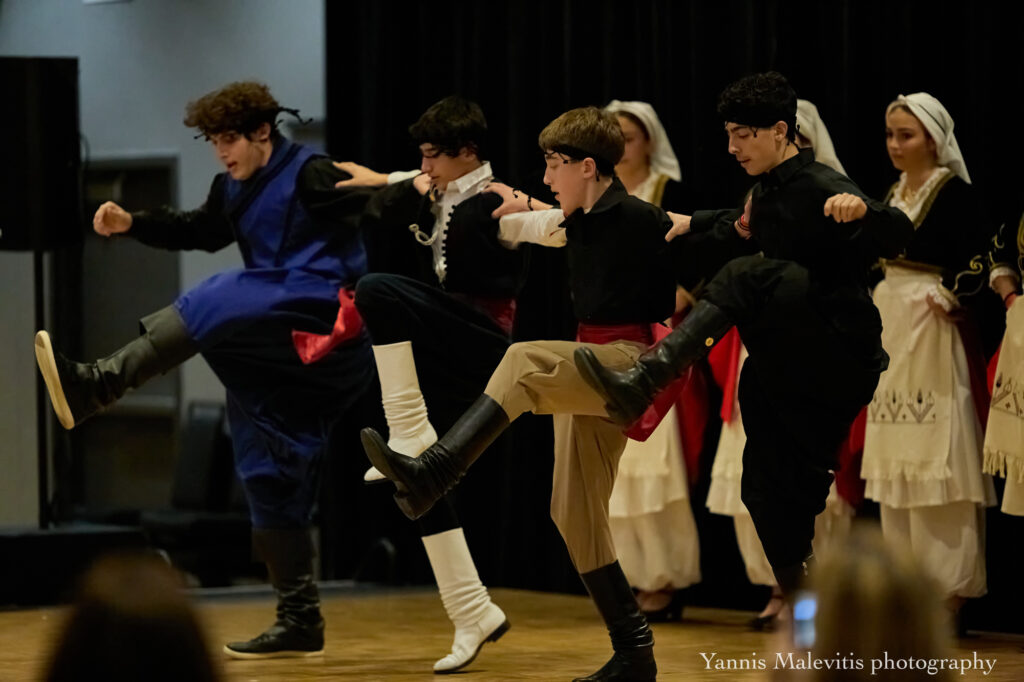
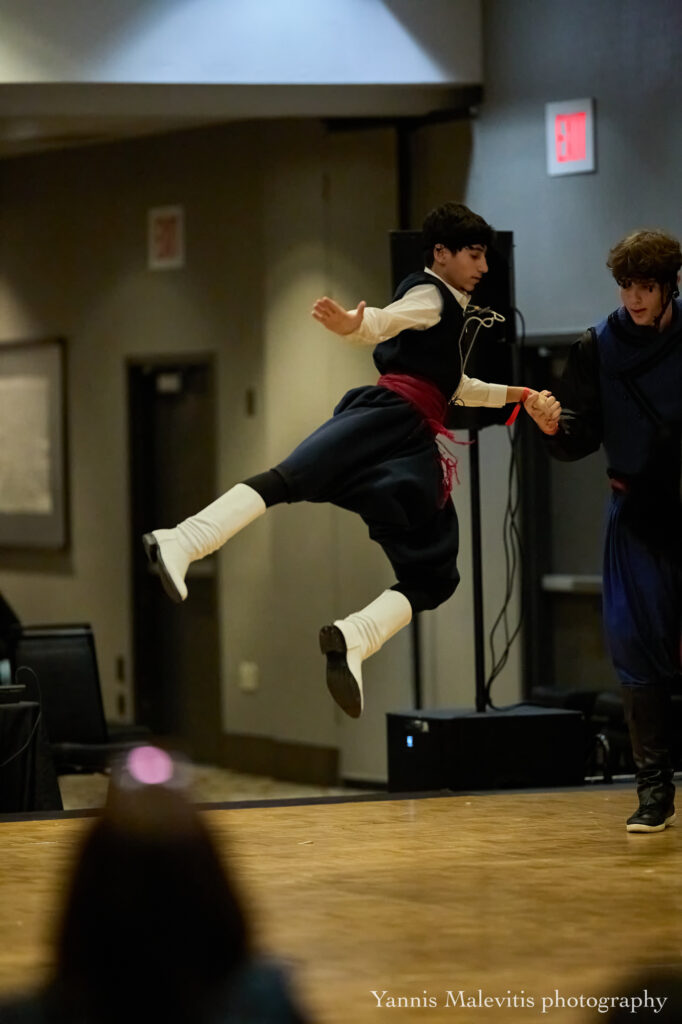
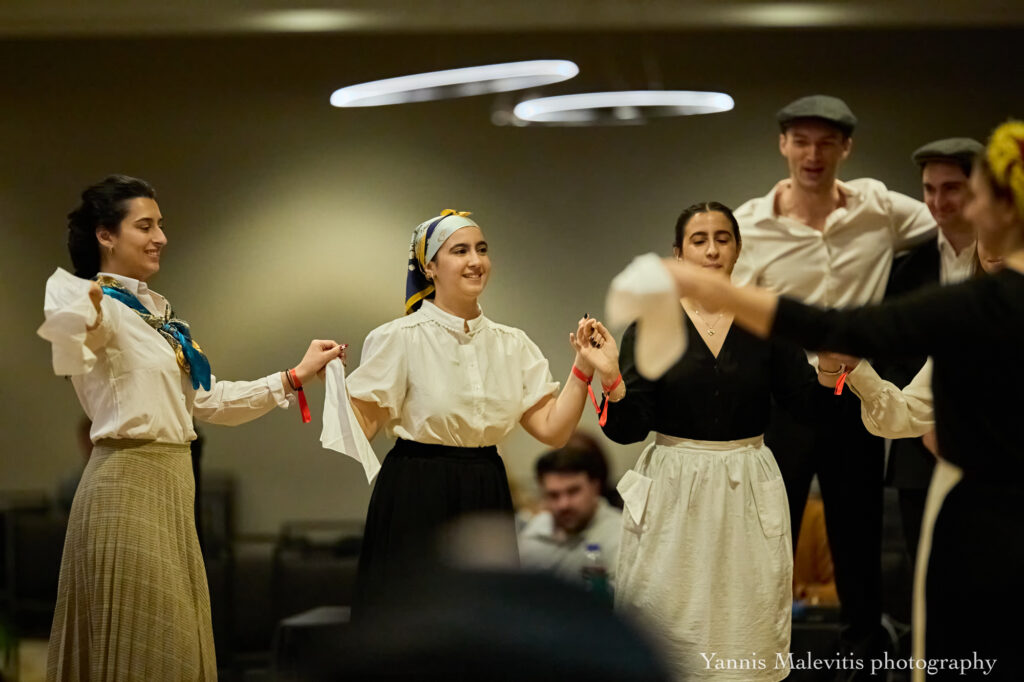
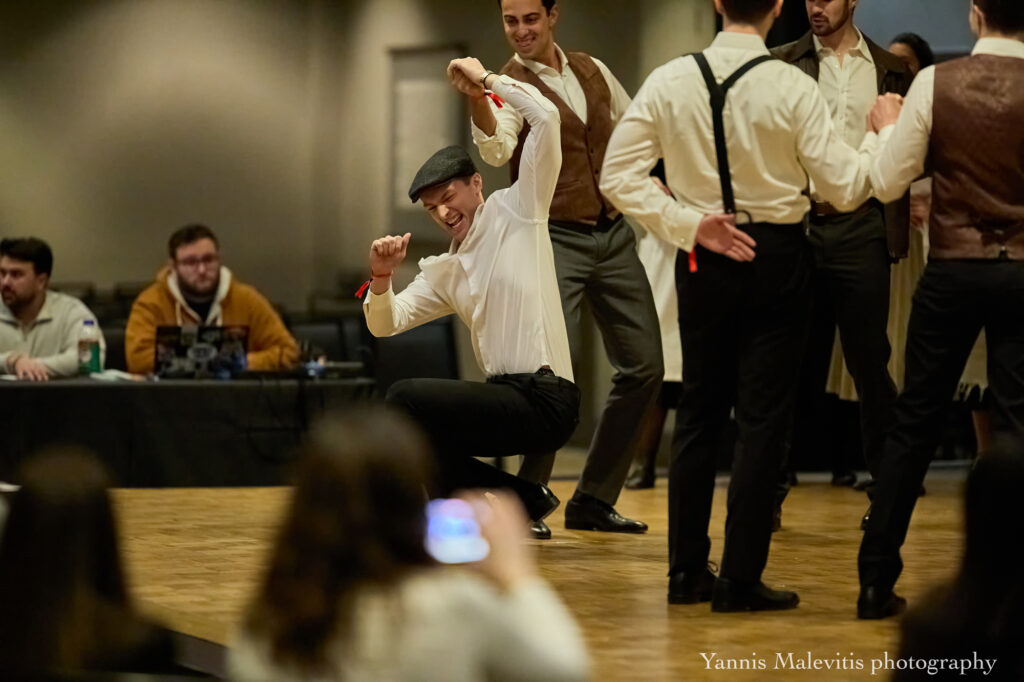
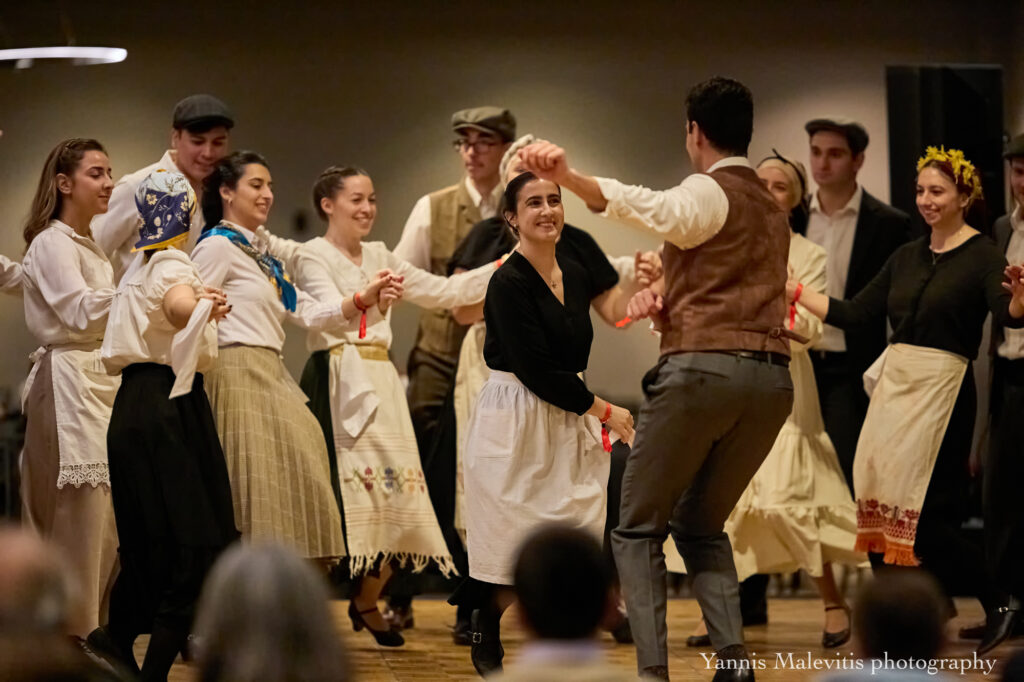
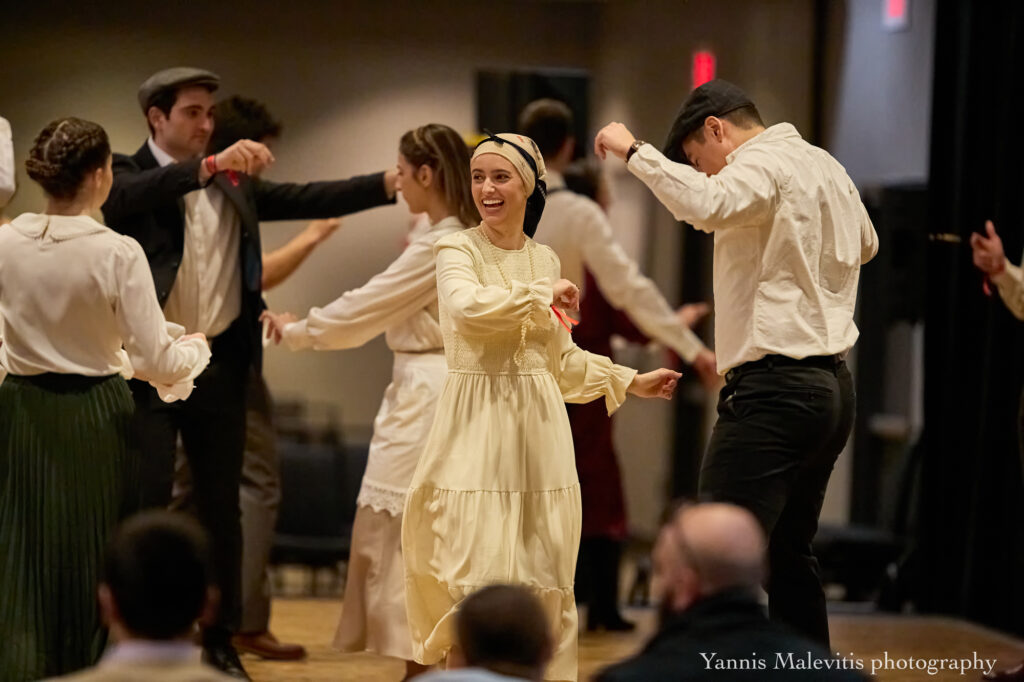
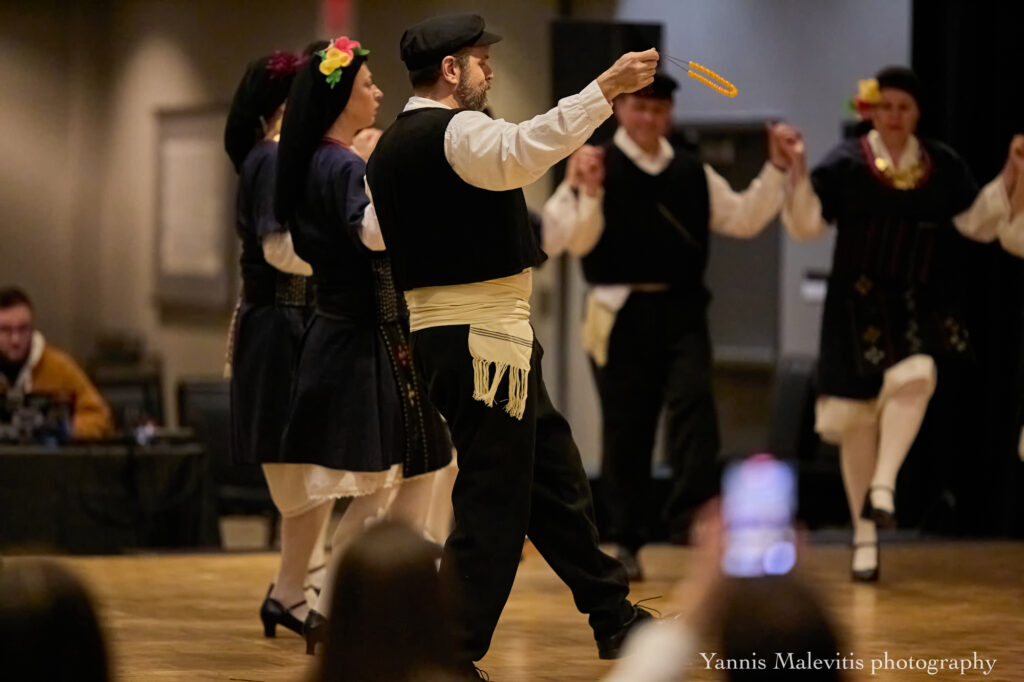
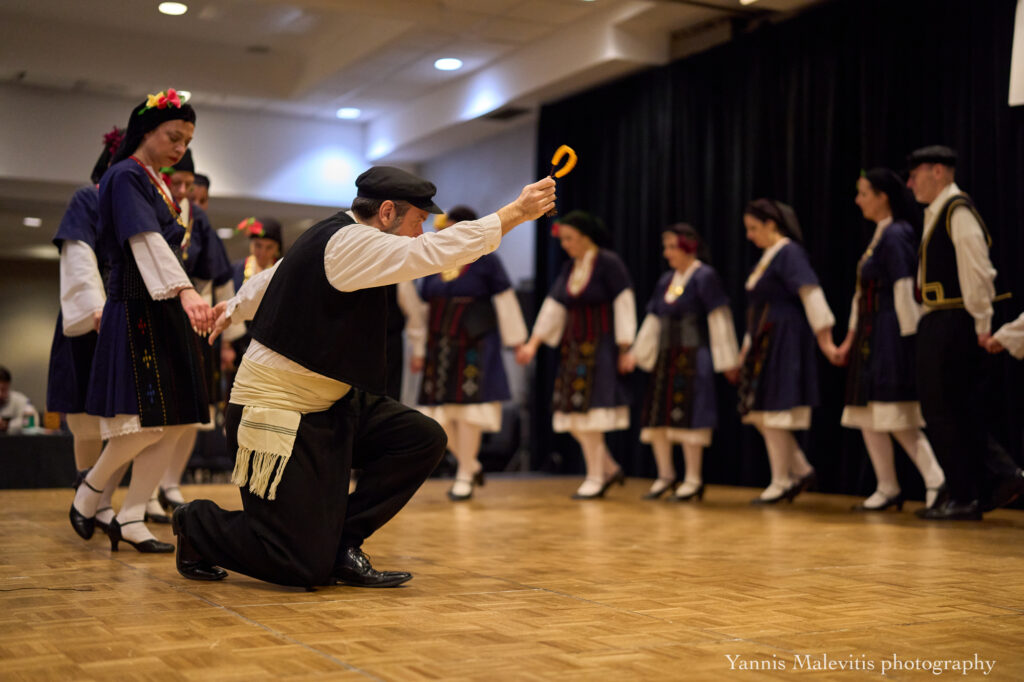
Every generation inherits traditions that shape its identity. The challenge is ensuring those traditions continue to be lived rather than simply remembered. PARATHOSI, a ministry of the Office of Youth and Young Adult Ministries of the Direct Archdiocesan District, brings together young people from Greek Orthodox parishes to celebrate Hellenic culture through traditional dance, music, and fellowship. It is an opportunity for friendships to grow while strengthening a shared connection to faith and heritage. Photographing PARATHOSI is about far more than documenting performances. Behind every dance are months of rehearsals, dedicated instructors, supportive families, and young people who take pride in preserving traditions that have been passed from one generation to the next. Throughout the celebration I looked for moments that revealed that spirit: the anticipation before a performance, the concentration of dancers waiting backstage, the movement and energy of traditional costumes, and the joy shared between performers and their families. The photographs below are a selection from this celebration of Hellenic heritage and community.
The Divine Liturgy is the central act of worship in the Orthodox Church. Unlike weddings or celebrations, it is not performed for an audience or documented for photographs. It is a sacred service in which the congregation participates through prayer, worship, and Holy Communion.
As both a Greek Orthodox Christian and a photographer, I approach every Divine Liturgy with deep respect for the traditions of the Church. My goal is never to interrupt the worship but to quietly document its beauty, symbolism, and the relationships between the clergy and the faithful.
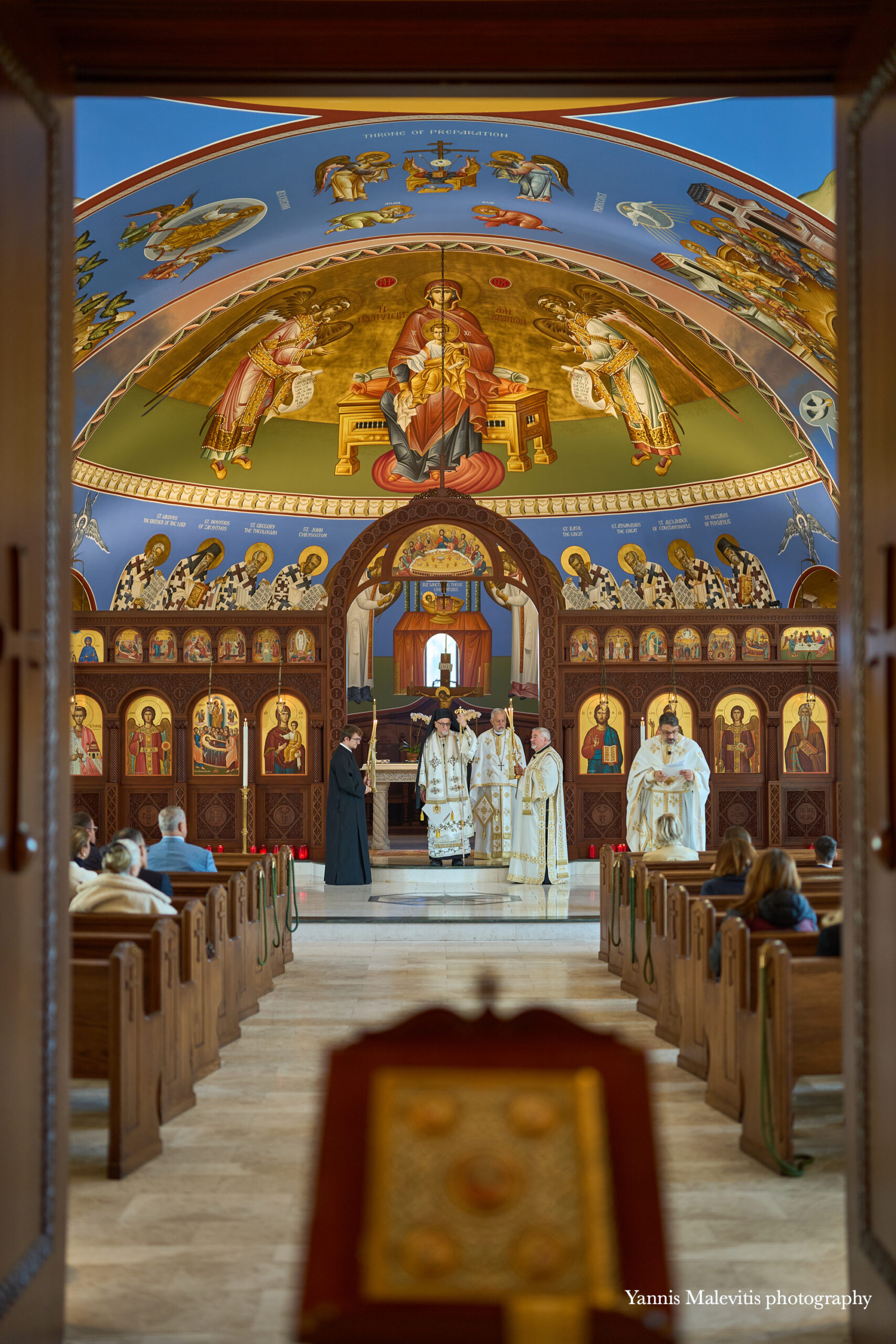
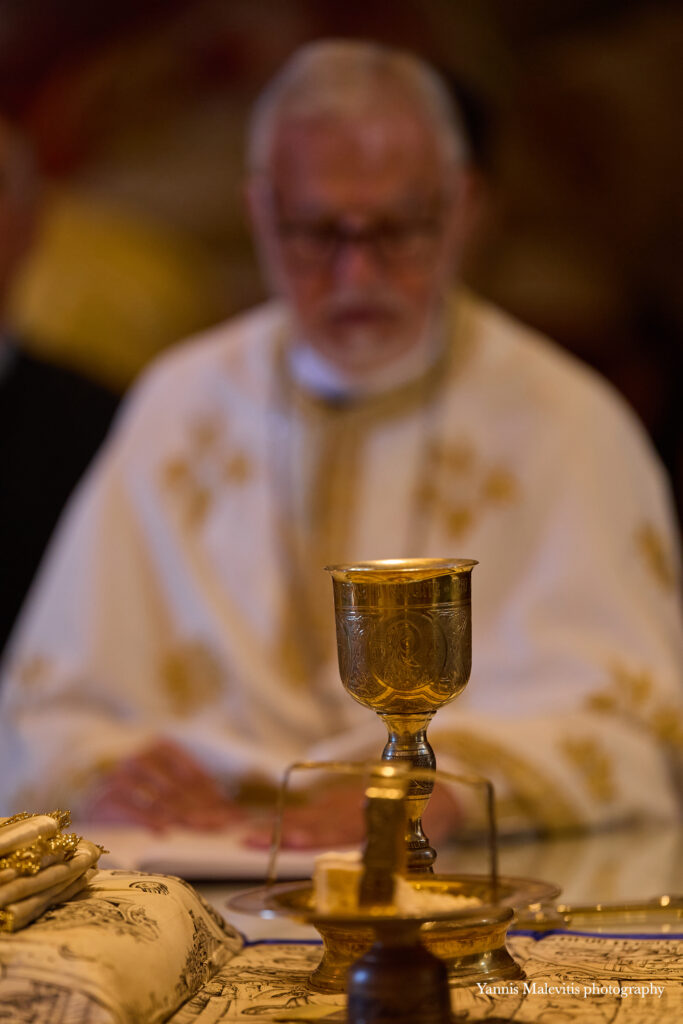
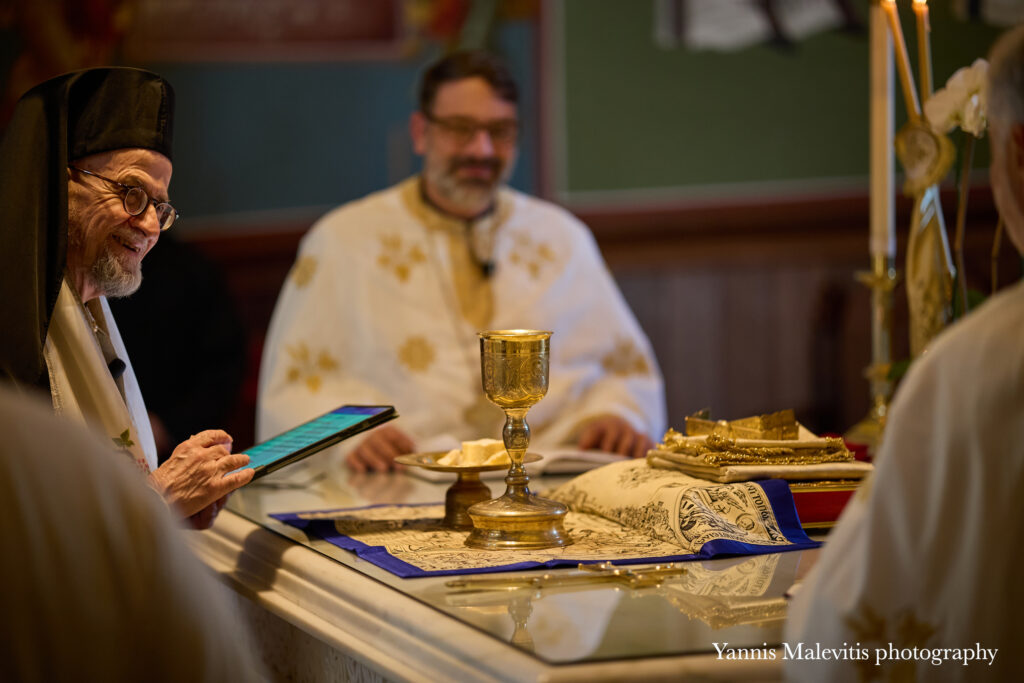
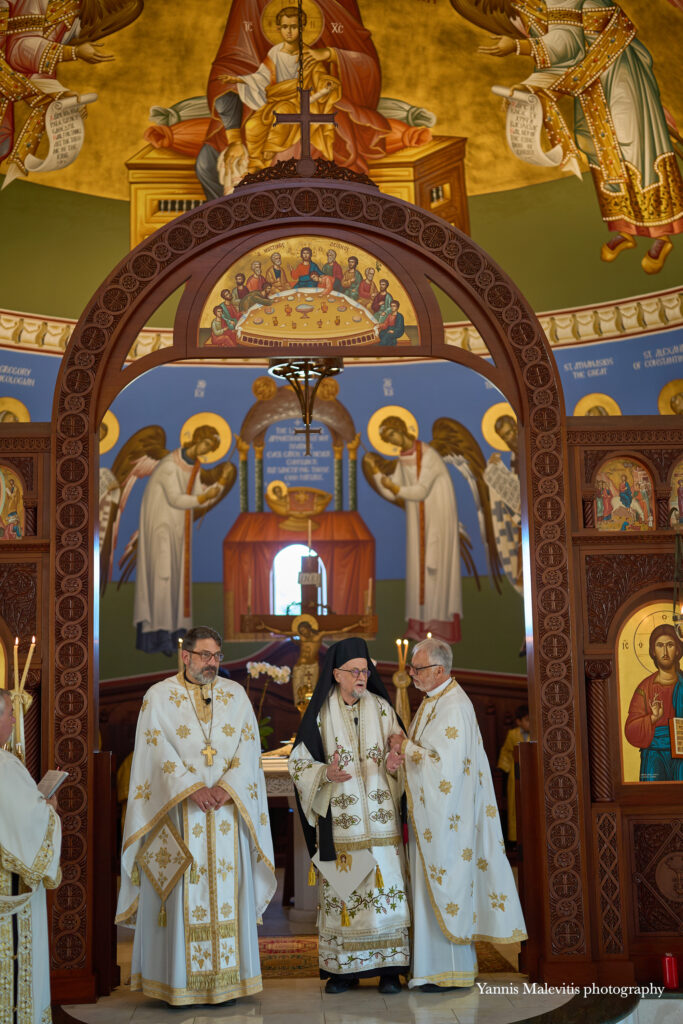
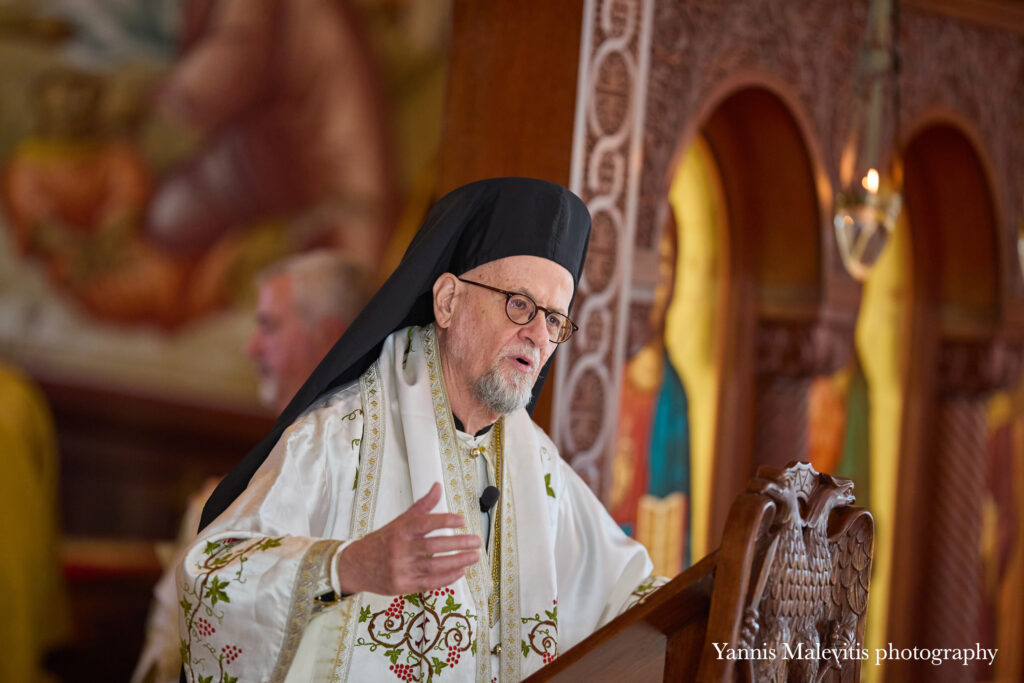
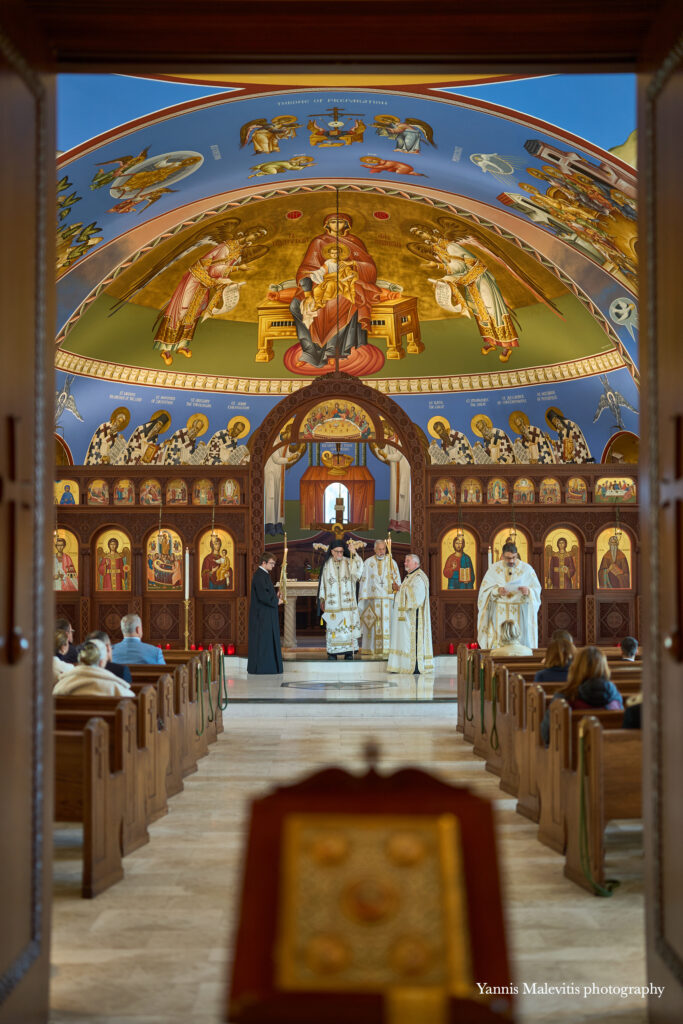
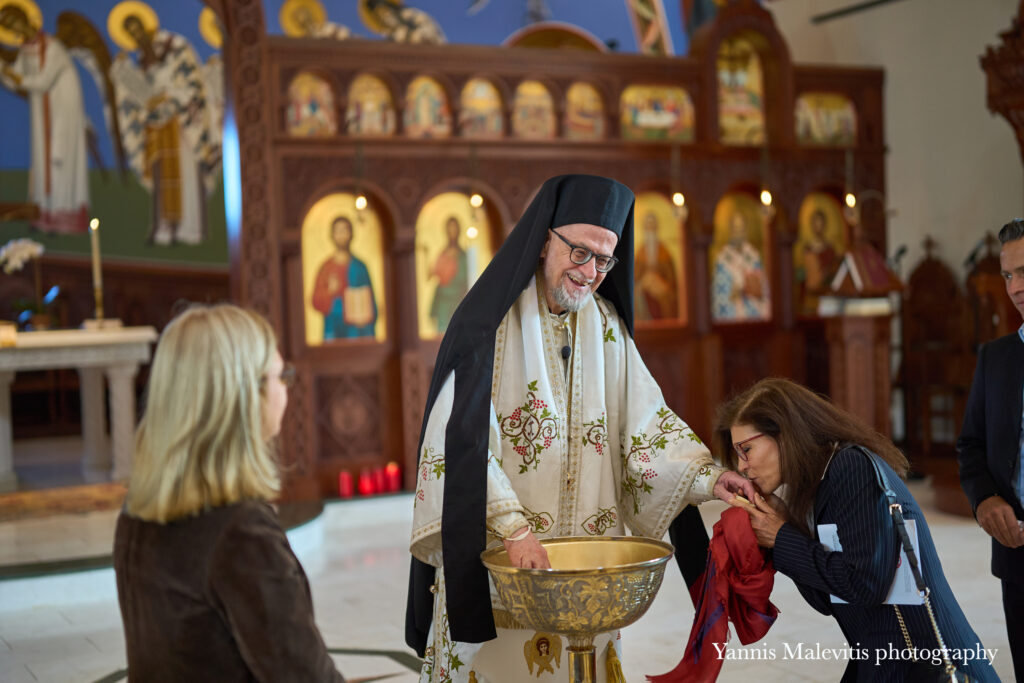
I recently had the privilege of photographing the Divine Liturgy at the Dormition of the Virgin Mary Greek Orthodox Church in the Hamptons, where His Grace Bishop Themi, founder of Paradise 4 Kids, presided over the service. The experience reminded me that photographing a Divine Liturgy requires far more than technical skill. It requires patience, humility, and an understanding of the sacred nature of Orthodox worship.
What Happens During a Greek Orthodox Divine Liturgy?
For those visiting an Orthodox church for the first time, the Divine Liturgy may appear unfamiliar, yet every part of the service has a deep spiritual meaning.
Although customs and traditions may vary slightly from parish to parish, the Divine Liturgy generally follows the same sequence. It begins with prayers and hymns that prepare the faithful for worship, followed by readings from Scripture and the Gospel. During the Great Entrance, the Holy Gifts are solemnly brought to the Holy Altar, leading to the Eucharistic prayers and the consecration of the Gifts. The Divine Liturgy culminates in Holy Communion before concluding with the final blessing and dismissal.
For Orthodox Christians, the Divine Liturgy is far more than a gathering or ceremony. It is the Church’s central act of worship and the heart of parish life. Understanding this helps explain why every movement, prayer, and gesture deserves to be photographed with reverence and sensitivity.
Understanding the Sacred Nature of the Liturgy
Photographing a Divine Liturgy requires a different mindset than photographing most events.
Every movement inside the church has meaning.
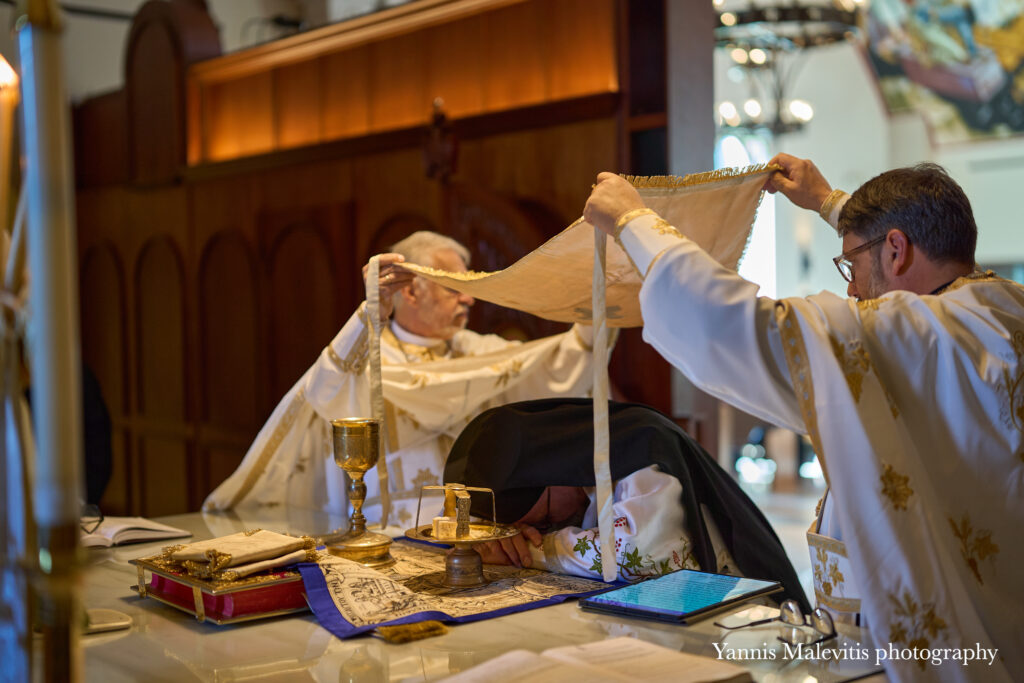
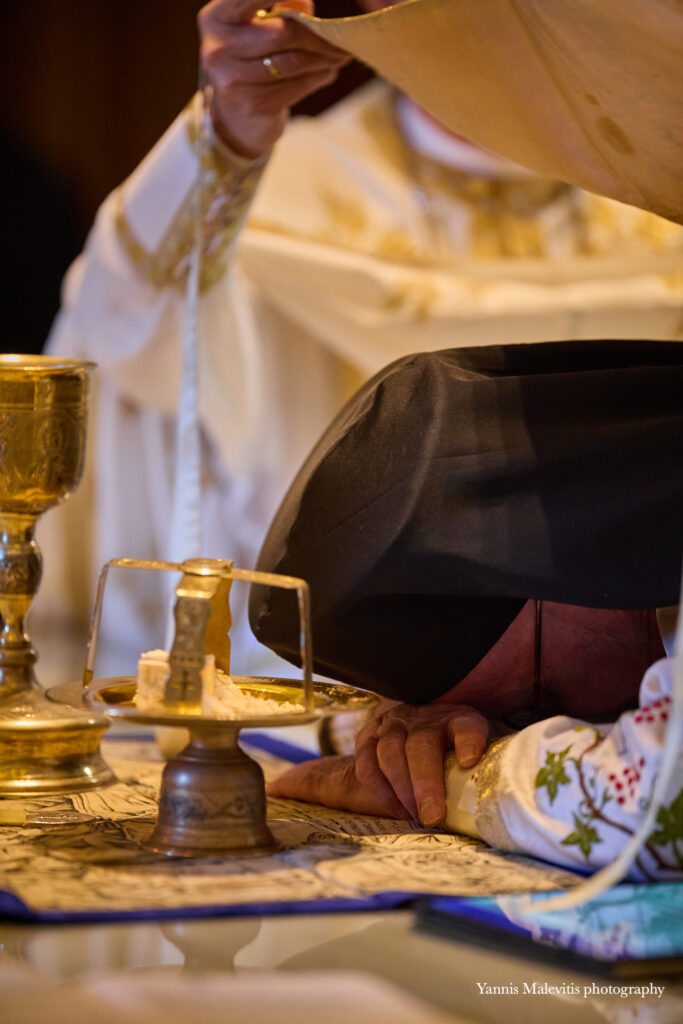
The procession of the clergy, the reading of the Gospel, the offering of the Holy Gifts, and the celebration of Holy Communion are all expressions of Orthodox worship rather than performances.
For this reason, I work quietly, avoid unnecessary movement, and remain aware of both the liturgy and the congregation.
Photographing the Church
Before the service begins, I like to document the architecture, icons, and atmosphere of the church.
These photographs establish the setting and remind viewers that the church itself is an important part of the story.
The iconostasis, icons, candles, and natural light all contribute to the visual language of Orthodox worship.
Documenting the Liturgy
Rather than attempting to photograph every moment, I focus on the moments that best communicate the spirit of the service.
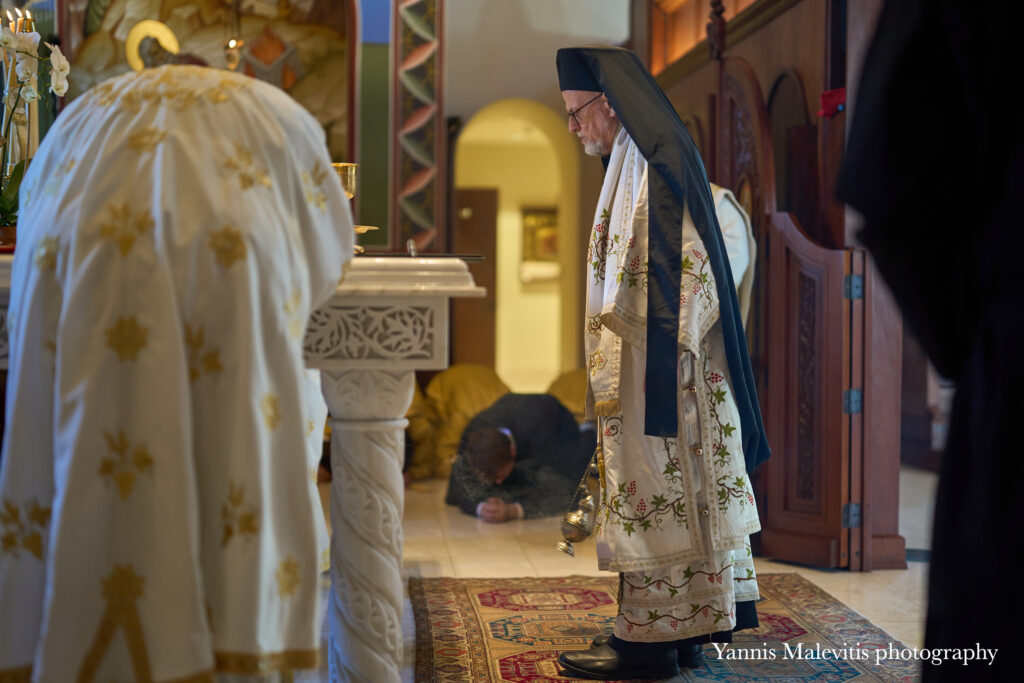
The procession of the clergy.
The reading of the Gospel.
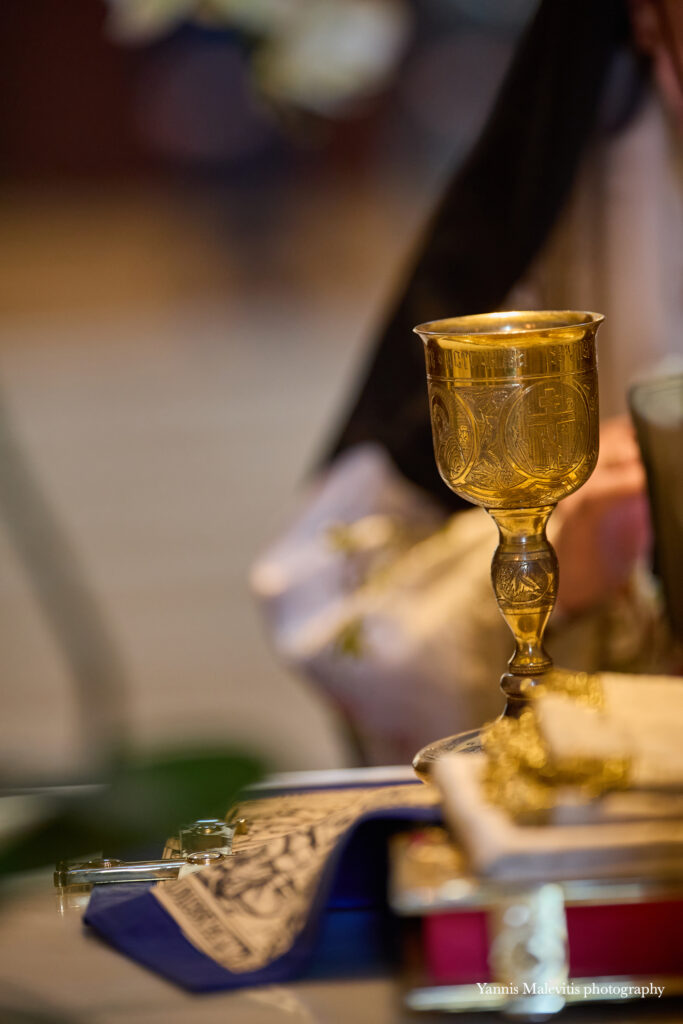
The offering of the Holy Gifts.
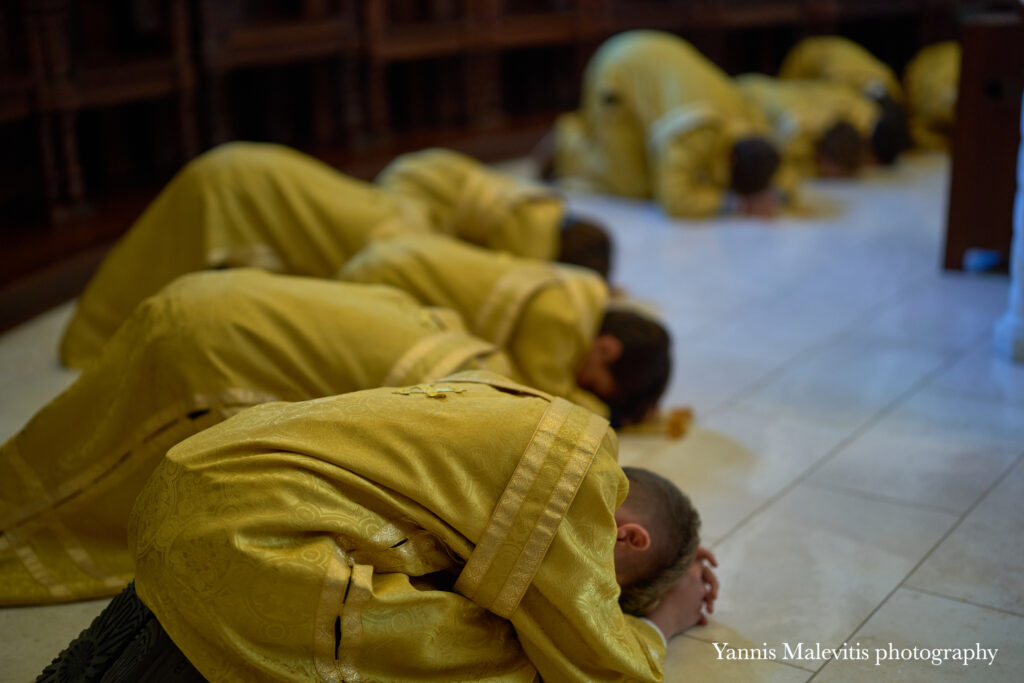
Prayer.
Incense.
Holy Communion.
Equally important are the quiet expressions of the faithful gathered in prayer.
These moments reveal the beauty of the Divine Liturgy far better than simply documenting its sequence.
Photographing the Clergy
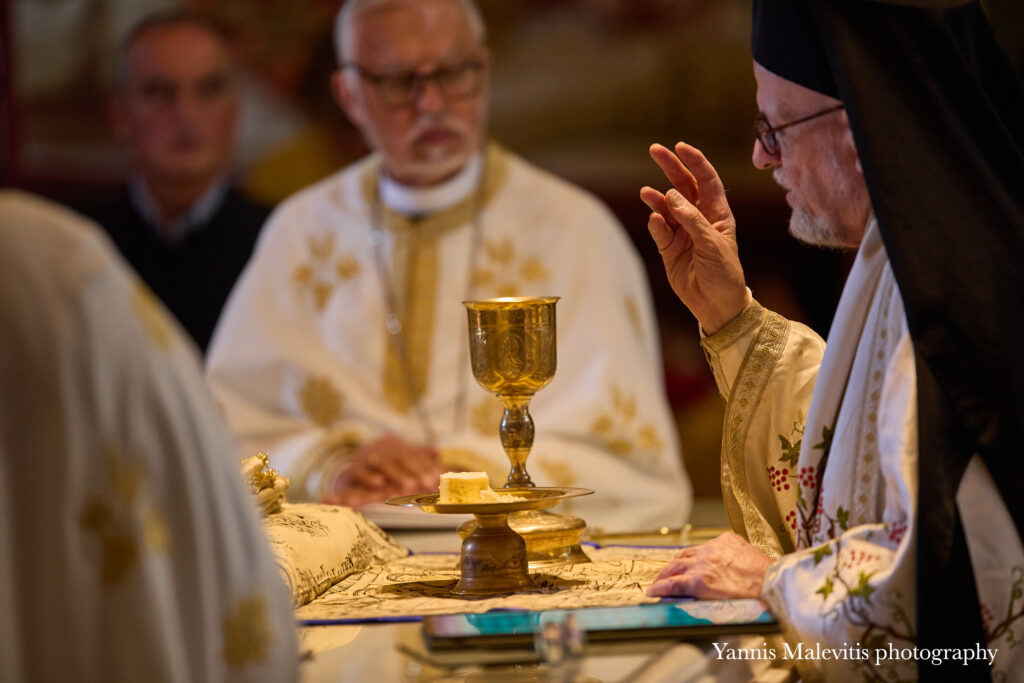
Orthodox clergy communicate through both words and gestures.
A blessing.
A moment of prayer.
The elevation of the Gospel.
The offering of the Chalice.
These gestures carry profound meaning for the faithful, and I try to photograph them respectfully while preserving the dignity of the service.
Respectful Photography During the Divine Liturgy
Every Greek Orthodox parish has its own customs regarding photography, and I always introduce myself to the priest before the service begins to understand any specific guidelines.
Throughout the Divine Liturgy, my priority is to respect the worship taking place rather than the photographs themselves. I avoid flash, keep my movements to a minimum, and remain especially discreet during the most sacred moments of the service, including Holy Communion.
My goal is to document the beauty of the Divine Liturgy without distracting the clergy or the faithful from prayer. The strongest photographs are often emerge not by being noticed, but by quietly observing the life of the Church as it naturally unfolds.
My Documentary Approach
I rarely think about creating dramatic photographs.
Instead, I try to preserve the atmosphere of worship exactly as it is experienced.
The strongest images often come from quiet observation rather than intervention.
A child lighting a candle.
A parishioner praying before an icon.
A priest preparing for the next part of the liturgy.
These moments tell the story of the Orthodox faith in a way that feels honest and timeless.
Frequently Asked Questions
Can photographs be taken during a Greek Orthodox Divine Liturgy?
Every Greek Orthodox parish has its own customs regarding photography. Before the service begins, I always introduce myself to the priest and respectfully follow the parish’s guidelines. My role is to document the Divine Liturgy in a way that honors the sacred nature of the service while remaining as unobtrusive as possible.
Do you use flash during the Divine Liturgy?
No.
The use of flash can distract both the clergy and the congregation.
I prefer to work with the available light so the atmosphere of the service remains undisturbed.
What moments do you photograph?
I document the architecture of the church, the clergy, the liturgical processions, the Gospel, Holy Communion, and the quiet interactions that reflect the spiritual life of the parish.
Final Thoughts
A Divine Liturgy is not simply an event to be photographed.
It is an act of worship.
My role is to preserve its beauty, reverence, and sense of community while remaining respectful of the sacred traditions of the Orthodox Church.
Years later, I hope these photographs remind parishioners not only of what they saw but also of what they experienced together.
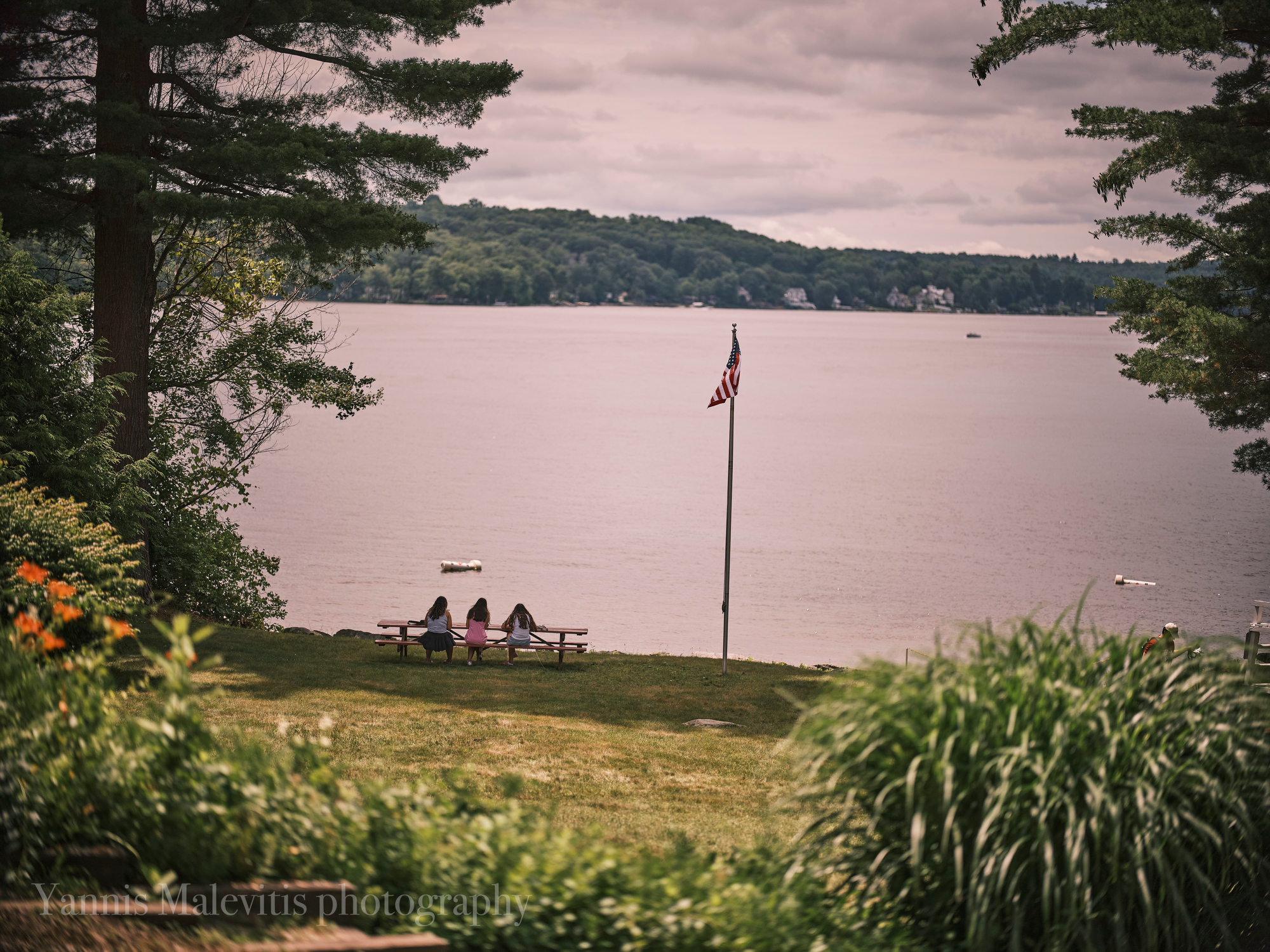
Nestled beside Bantam Lake in Litchfield, Connecticut, it gives young people the opportunity to grow in their Orthodox faith while building friendships, enjoying the outdoors, and becoming part of a welcoming community.
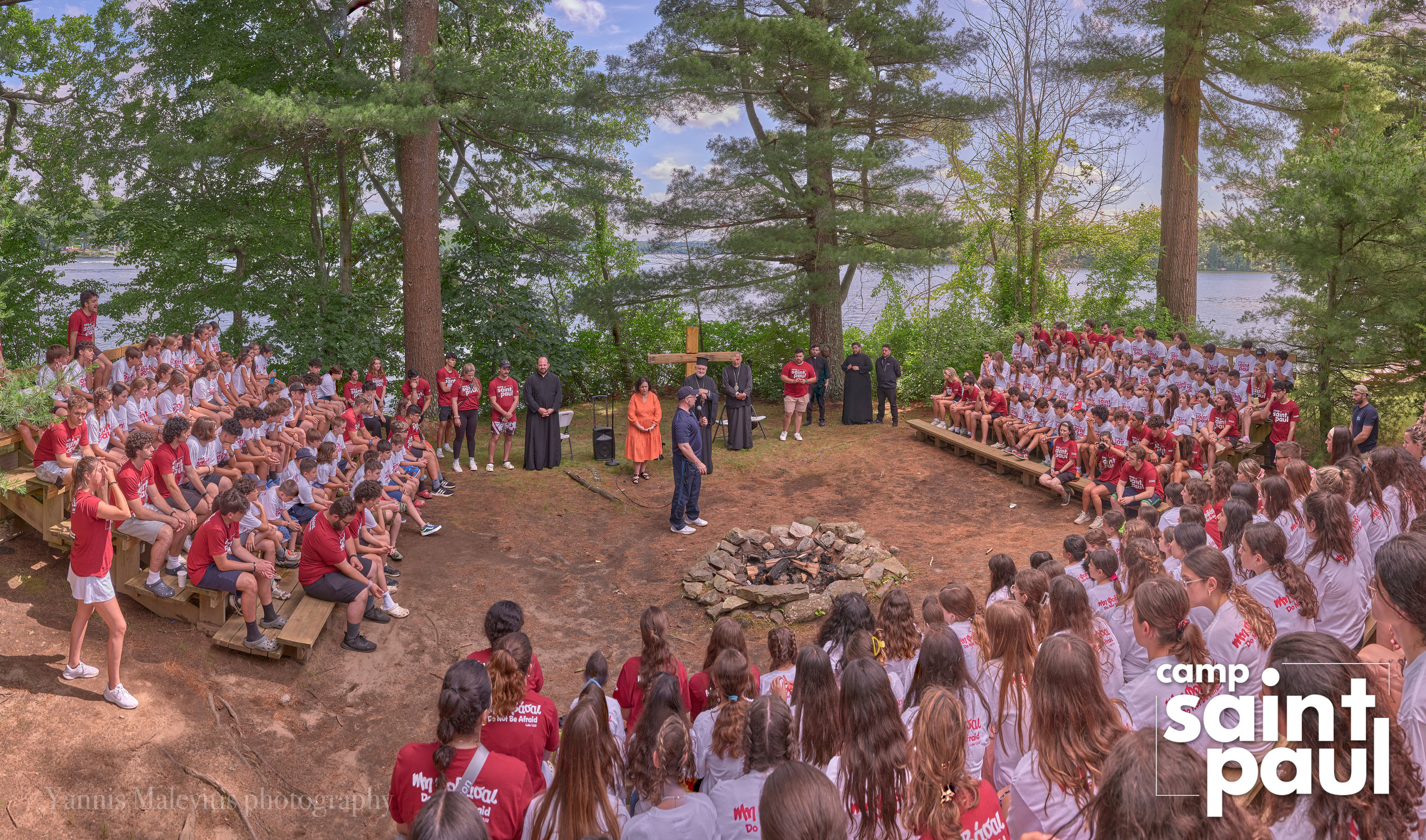
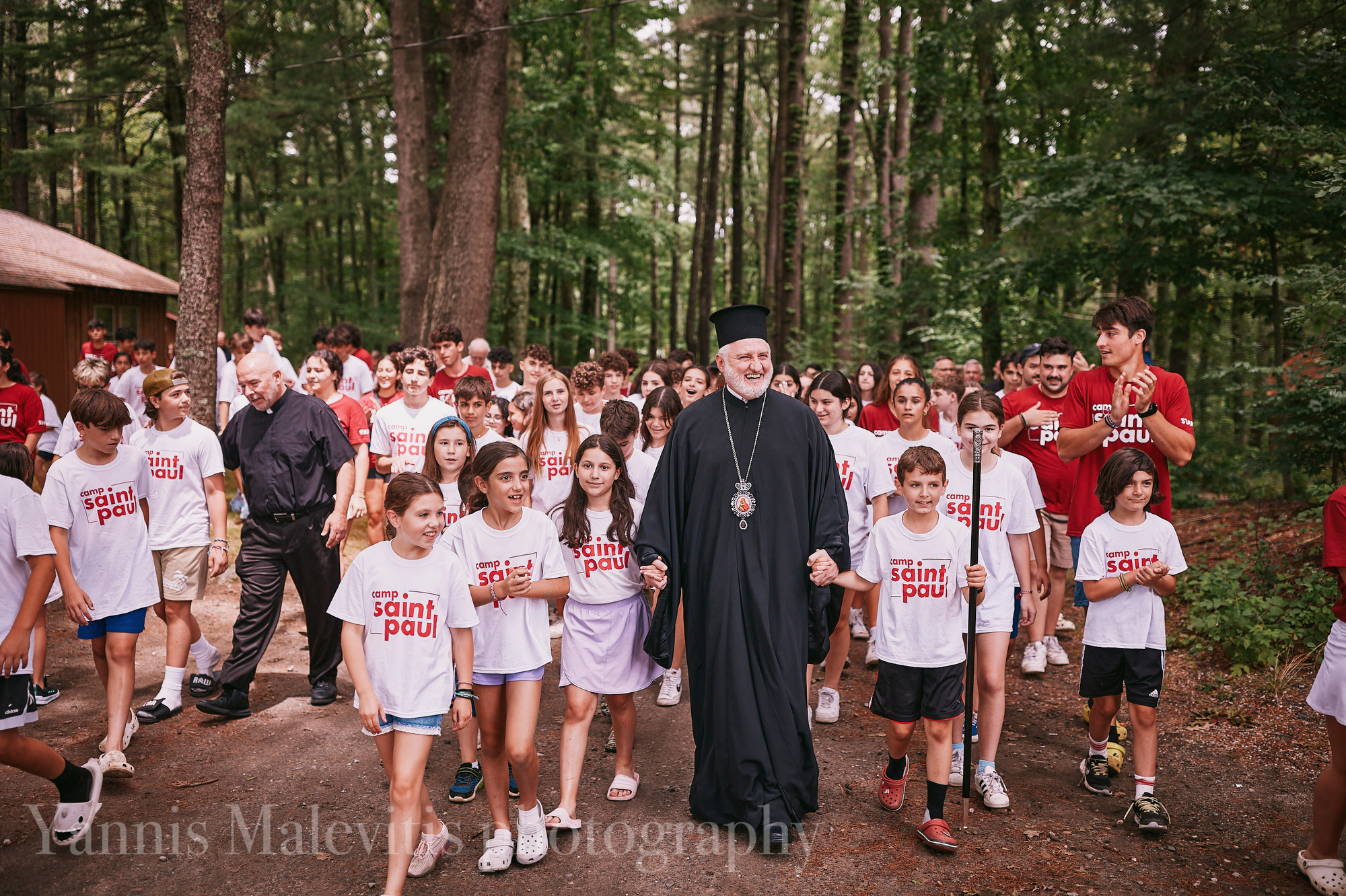
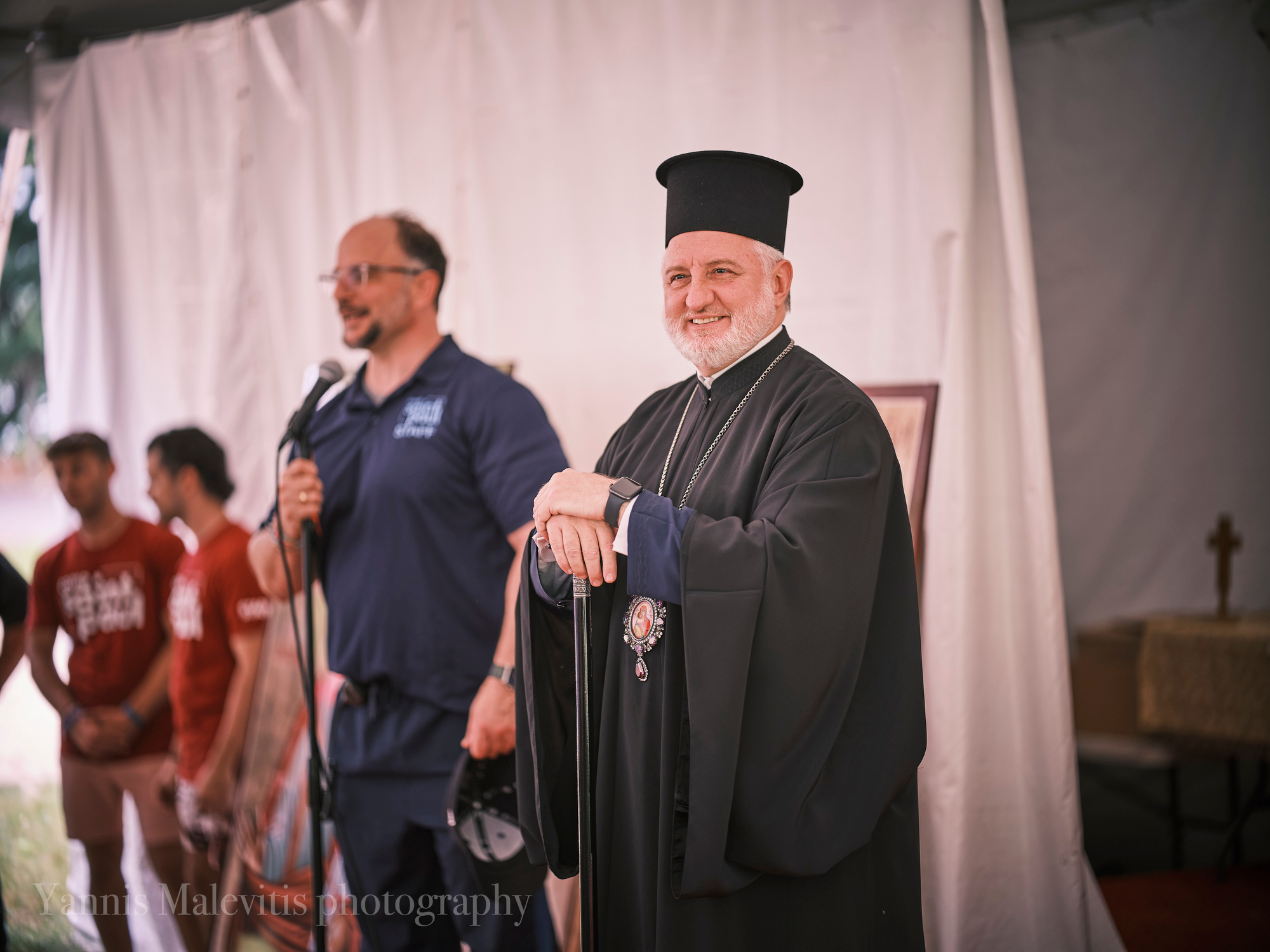
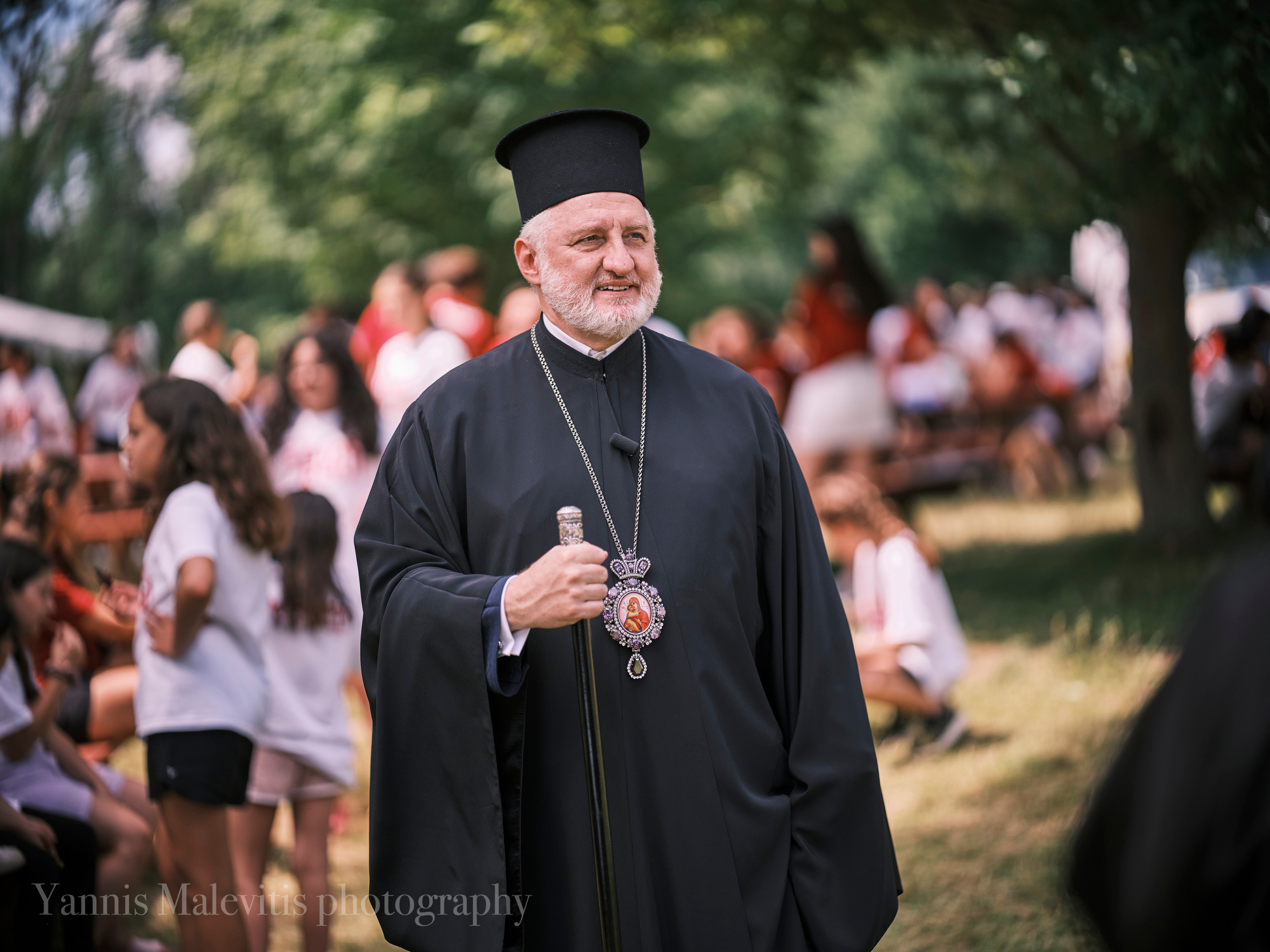
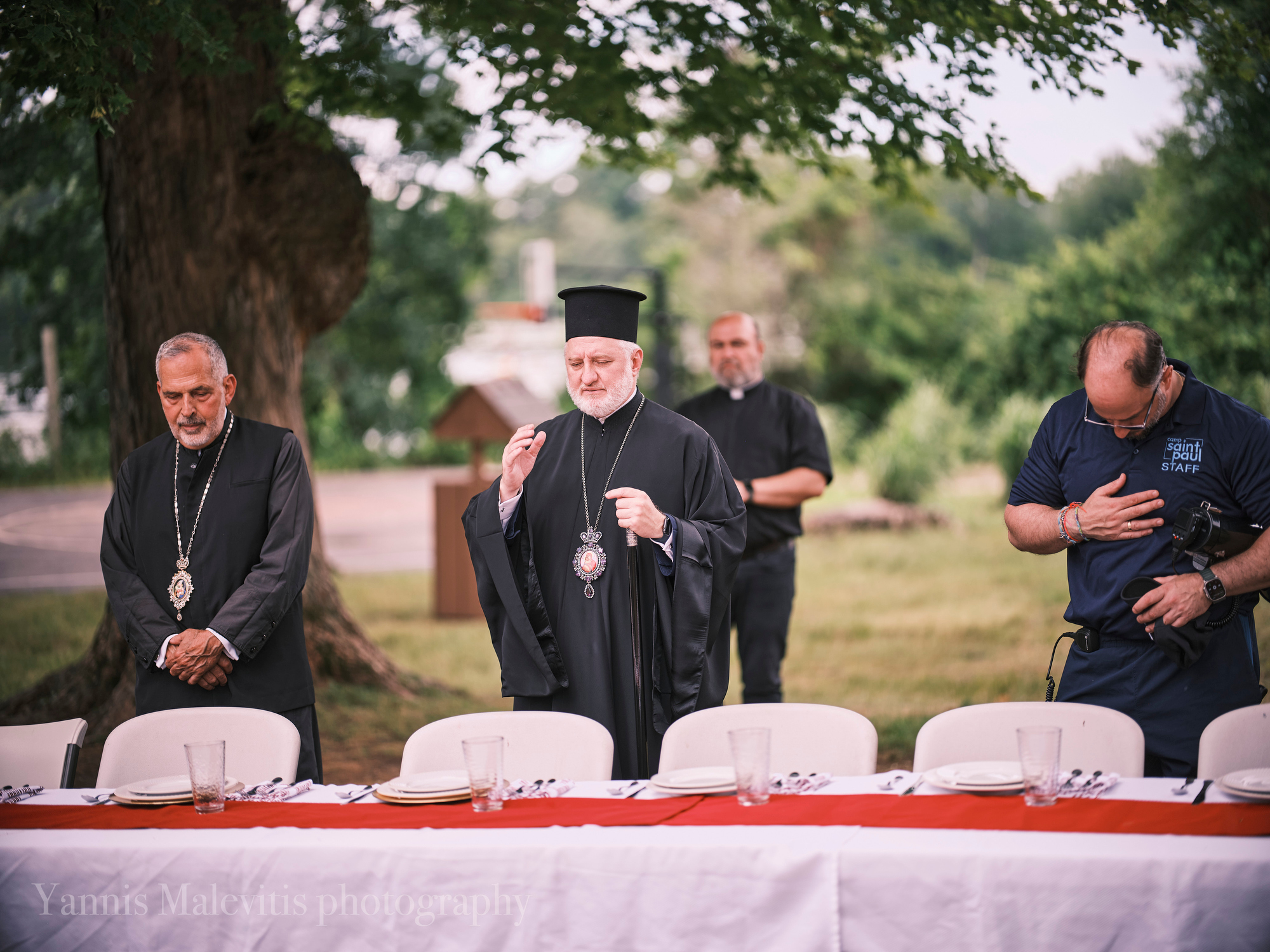
When I visited to document the pastoral visit of His Eminence Archbishop Elpidophoros, I found myself photographing not only an event but the spirit of the community itself.
A Community Built Around Faith
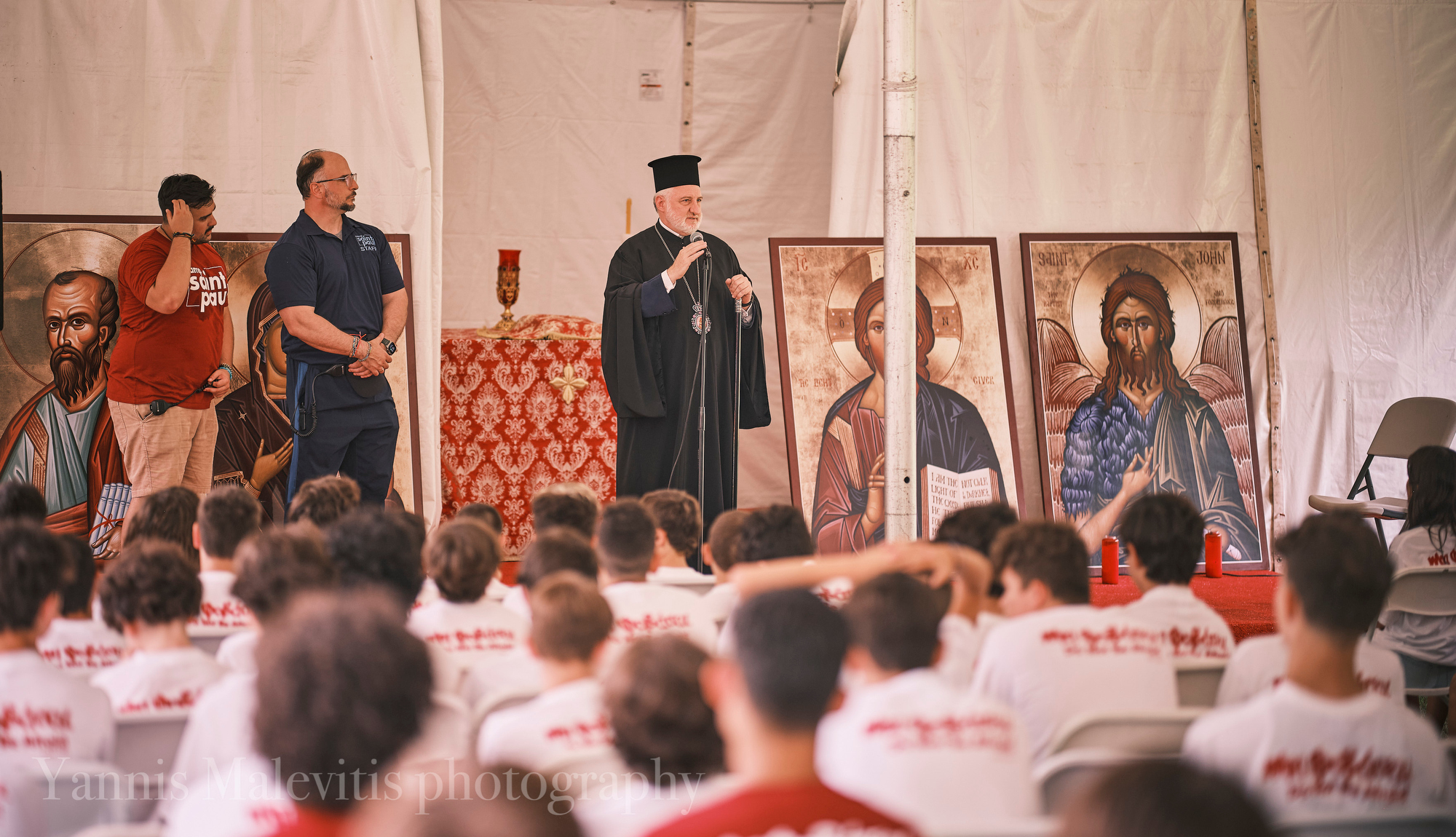
Throughout the day I watched campers, counselors, clergy, and volunteers come together with genuine enthusiasm.
The Archbishop’s arrival was greeted with excitement, but what impressed me most was the warmth with which the children participated in every part of the visit.
Rather than simply observing, they were actively engaged in the life of the camp.
Photographing the Visit
My goal was to document both the Archbishop’s visit and the community surrounding him.
Large gatherings helped establish the atmosphere of the camp, while quieter moments between campers, clergy, and staff revealed the relationships that make Camp Saint Paul such a meaningful place.
Together those moments tell a fuller story than any single portrait could.
The Setting Matters
The camp’s location on the shore of Bantam Lake contributes naturally to the experience.
The waterfront, trees, and open gathering spaces encourage conversation, worship, recreation, and reflection.
Rather than serving only as a backdrop, the landscape becomes part of the story of Orthodox summer life.
My Documentary Approach
Whether I photograph a wedding, a parish celebration, or an Orthodox camp, my goal remains the same.
I look beyond the scheduled events to preserve the relationships, atmosphere, and sense of community that make each gathering unique.
Those are often the photographs that remain meaningful many years later.
Frequently Asked Questions
What is Camp Saint Paul?
Camp Saint Paul is a Greek Orthodox summer camp in Litchfield, Connecticut, providing young people with opportunities for worship, friendship, recreation, and spiritual growth.
What do you photograph during a pastoral visit?
I document both the official events and the quieter interactions that reveal the relationship between clergy, campers, volunteers, and the wider Orthodox community.
Why photograph community events?
Photographs preserve more than activities.
They preserve the people, relationships, and shared experiences that define a community.
Final Thoughts
Photographing Camp Saint Paul reminded me that faith is experienced not only inside the church but also through the friendships, conversations, and shared experiences that bring a community together.
If your parish, camp, or Orthodox organization is planning a gathering or special event, I would be honored to document it with the same thoughtful documentary approach described in this article.