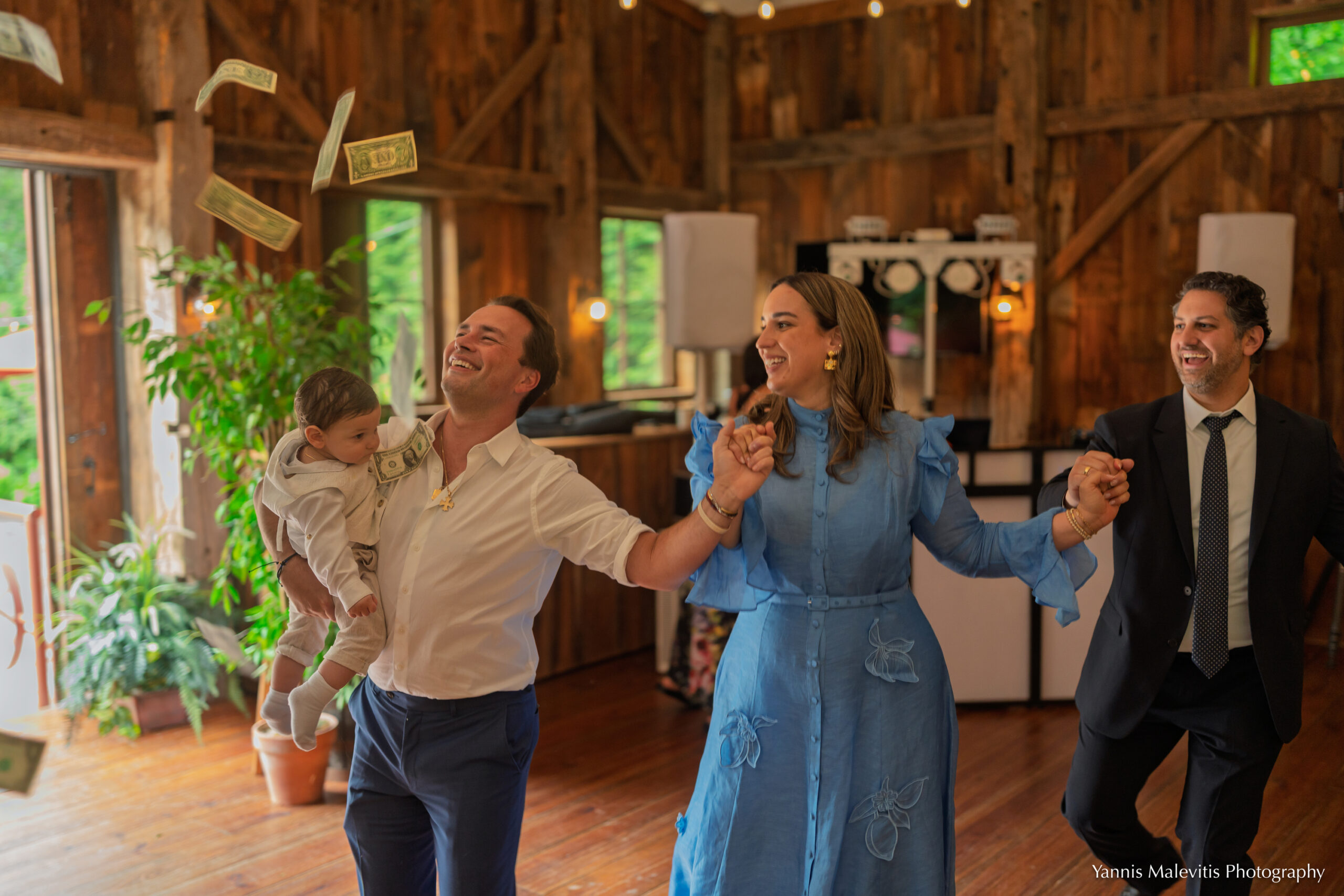
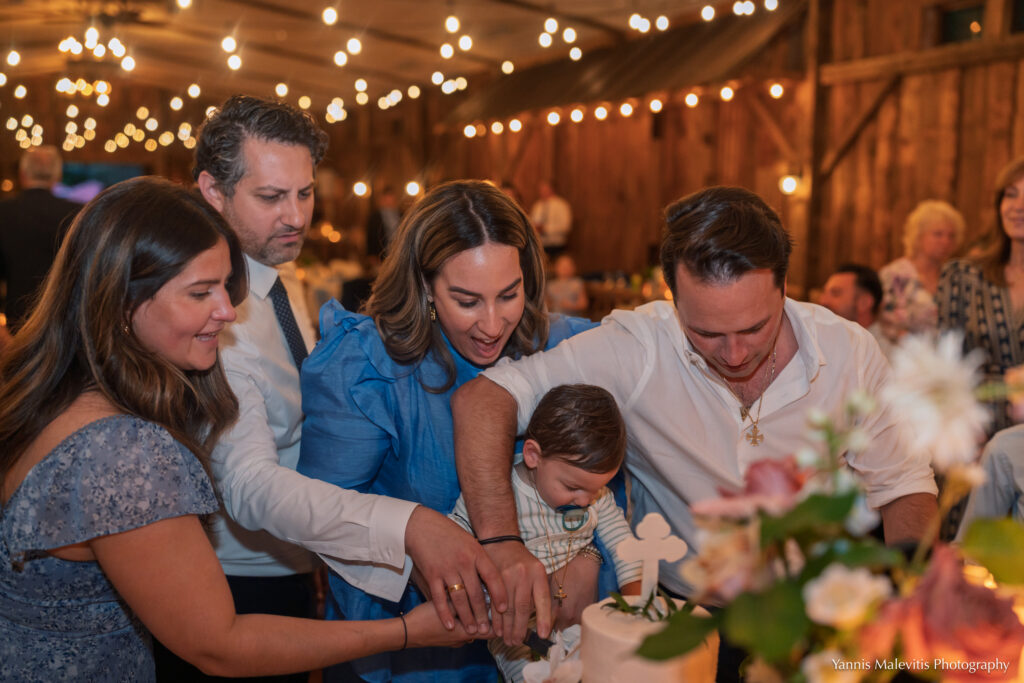
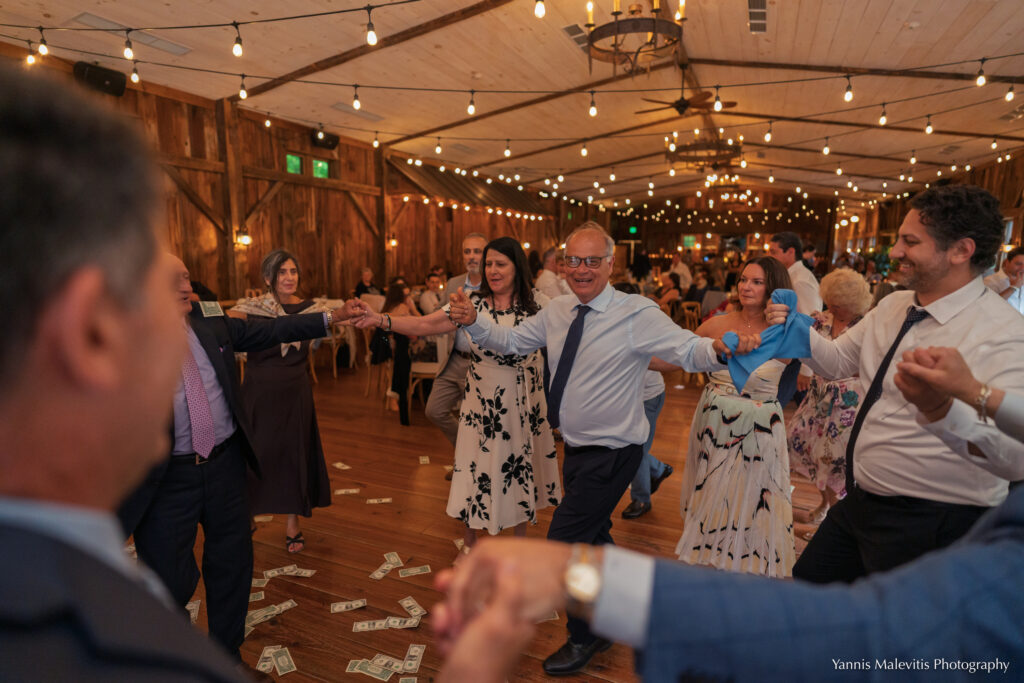
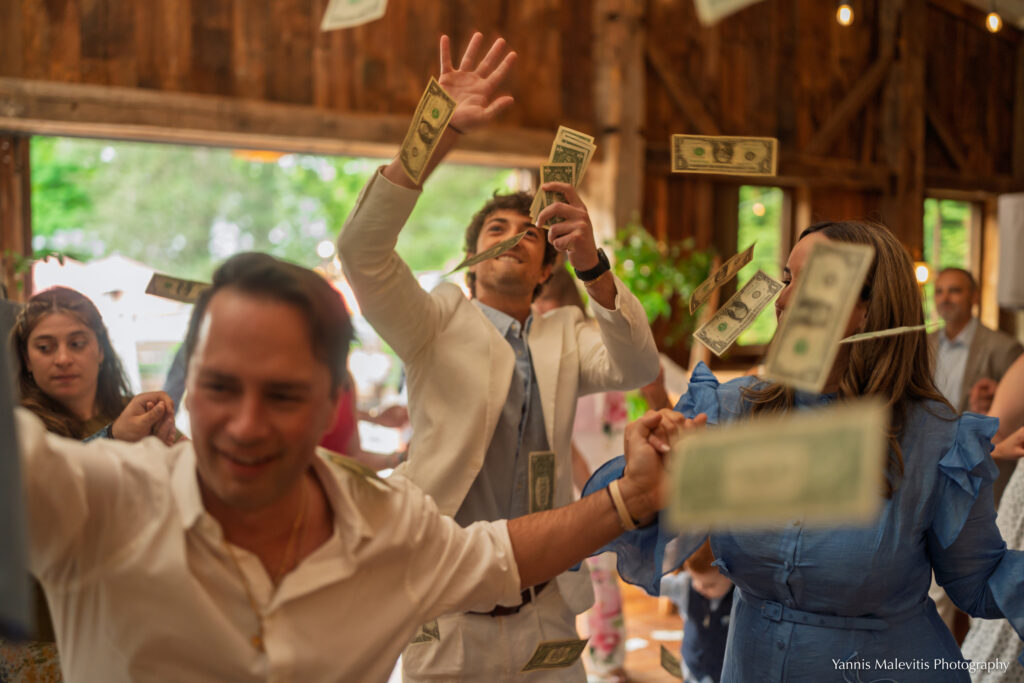
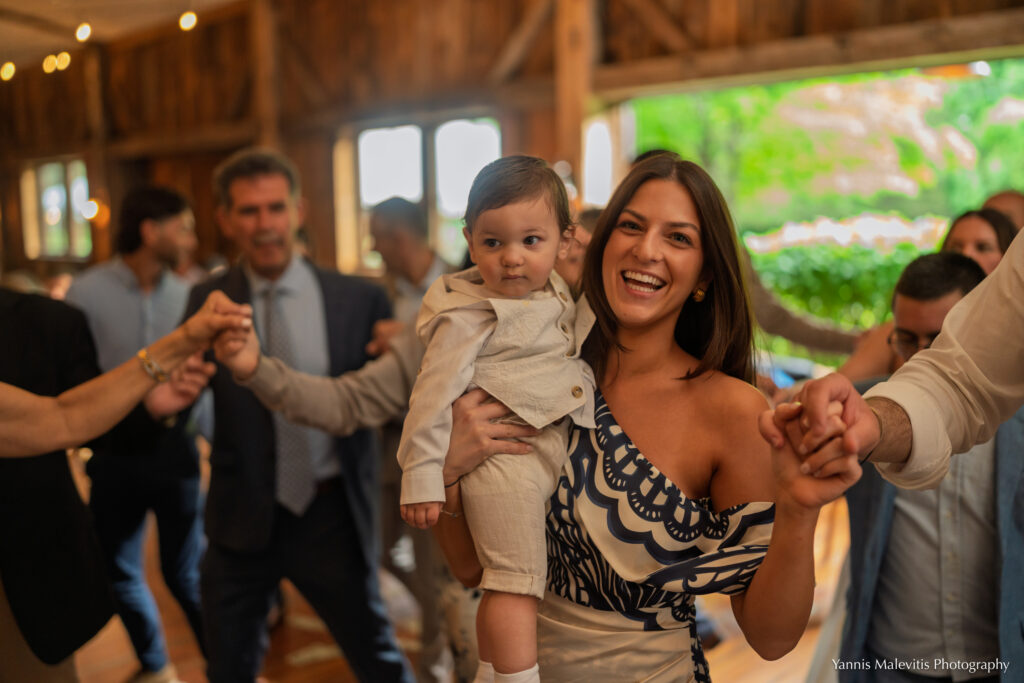
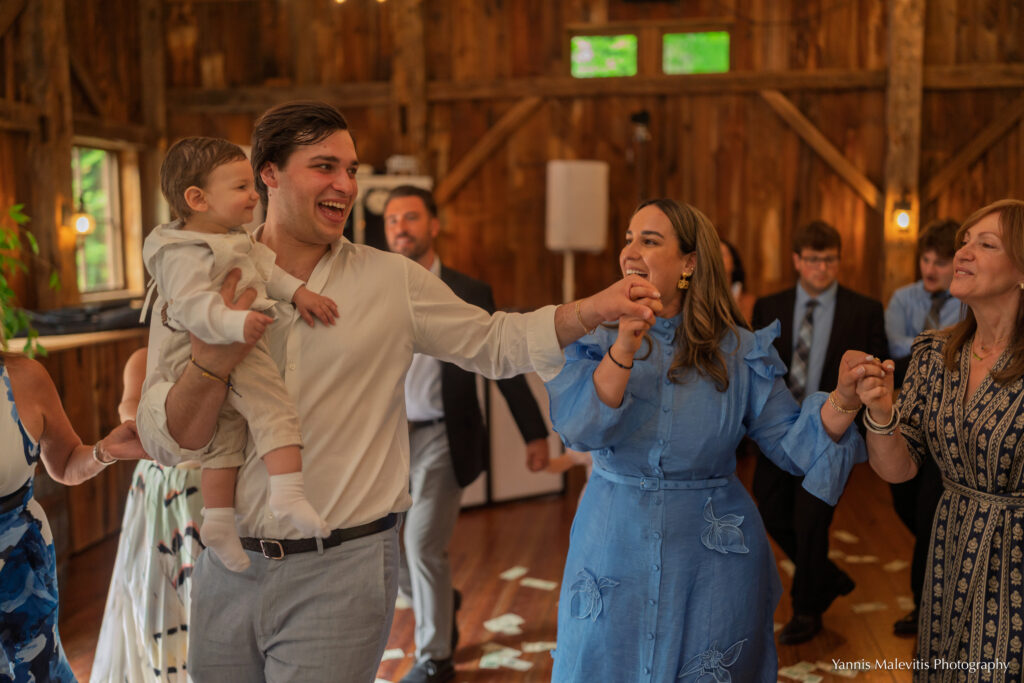
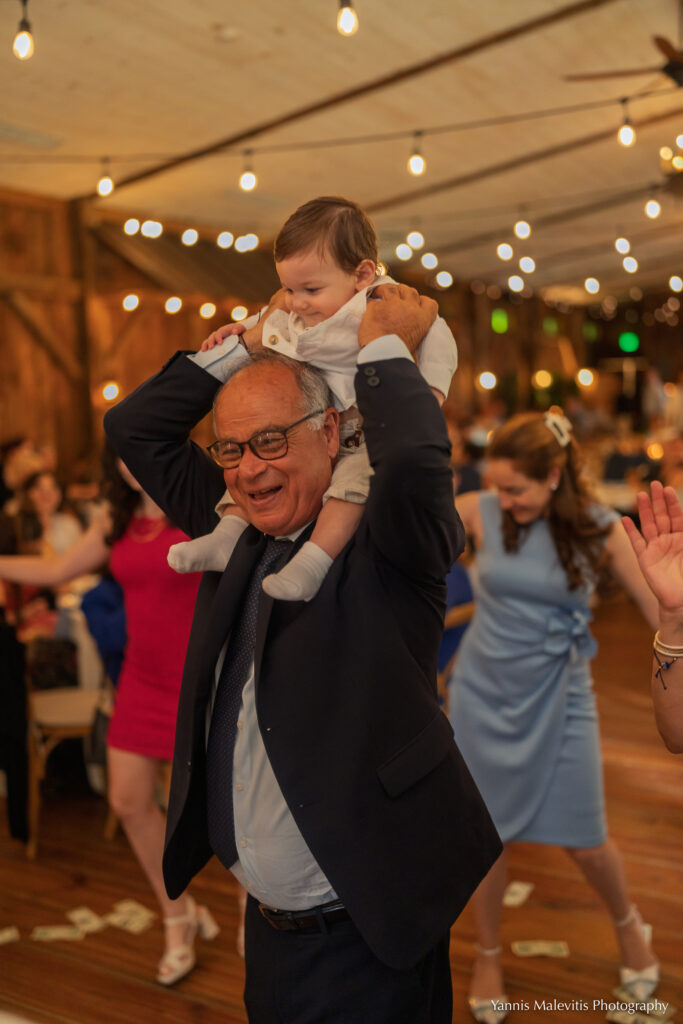
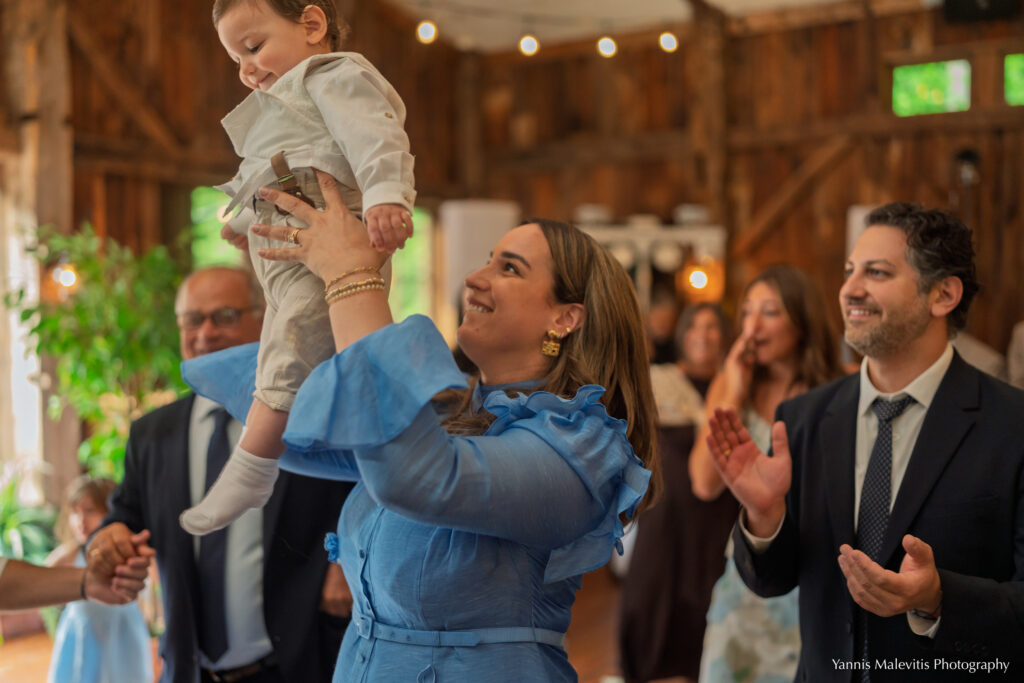
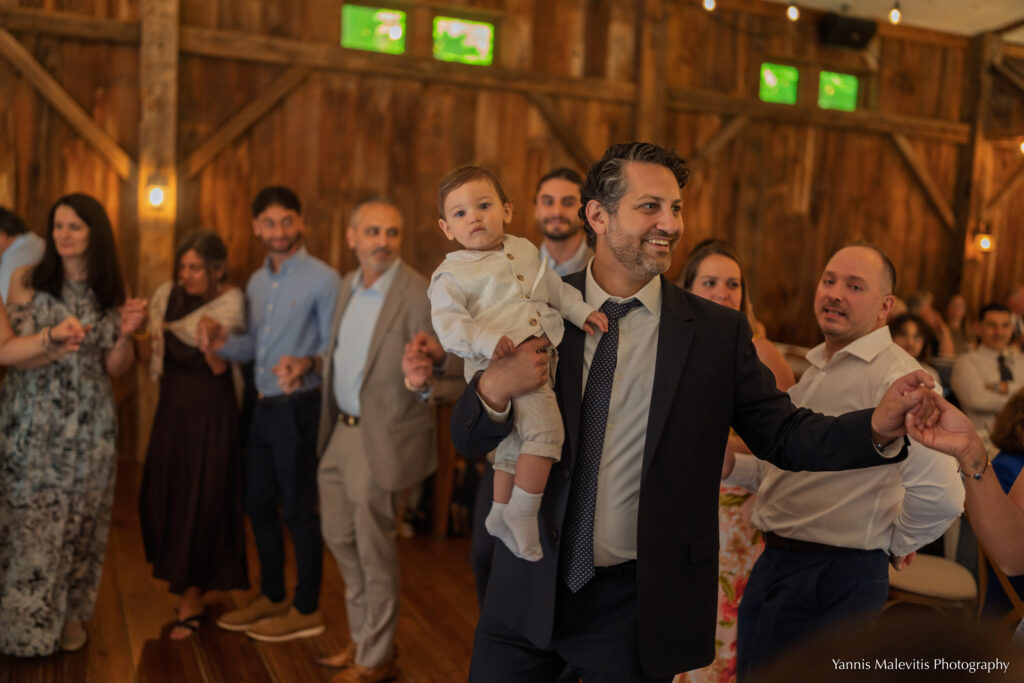
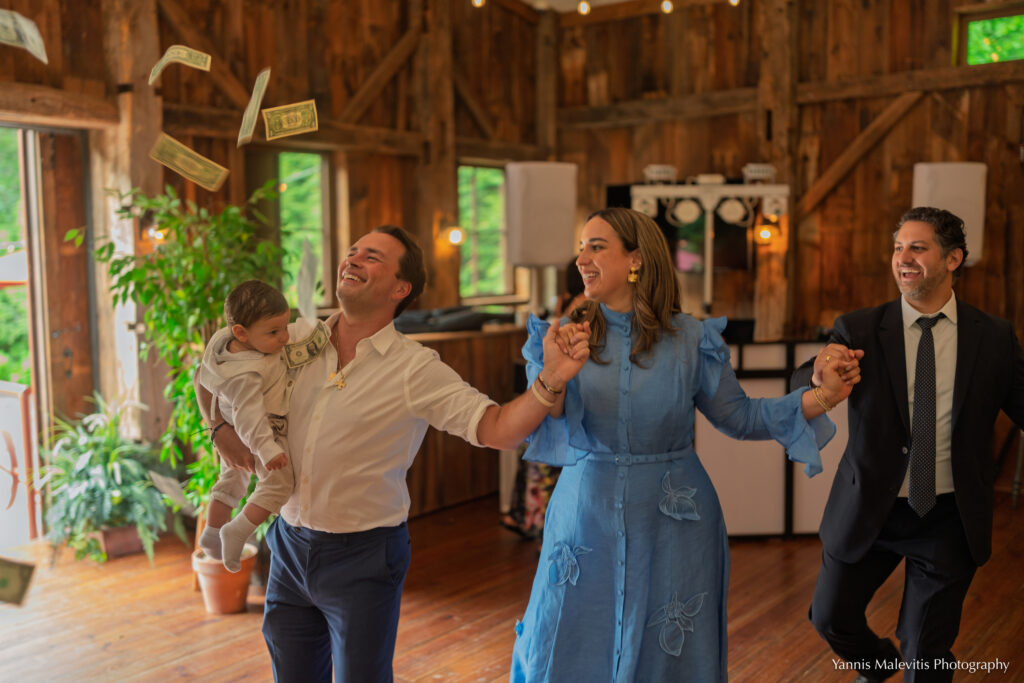
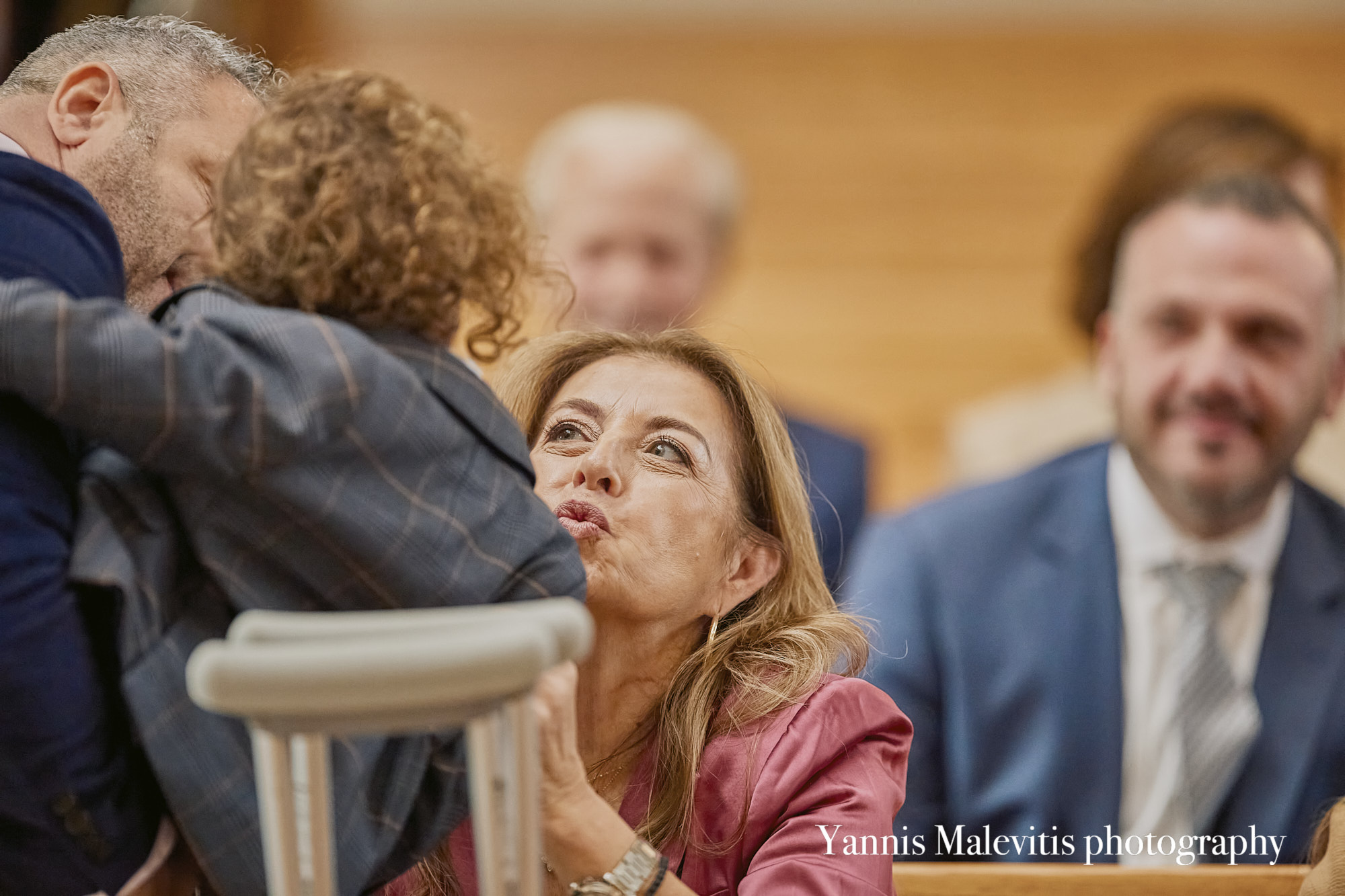
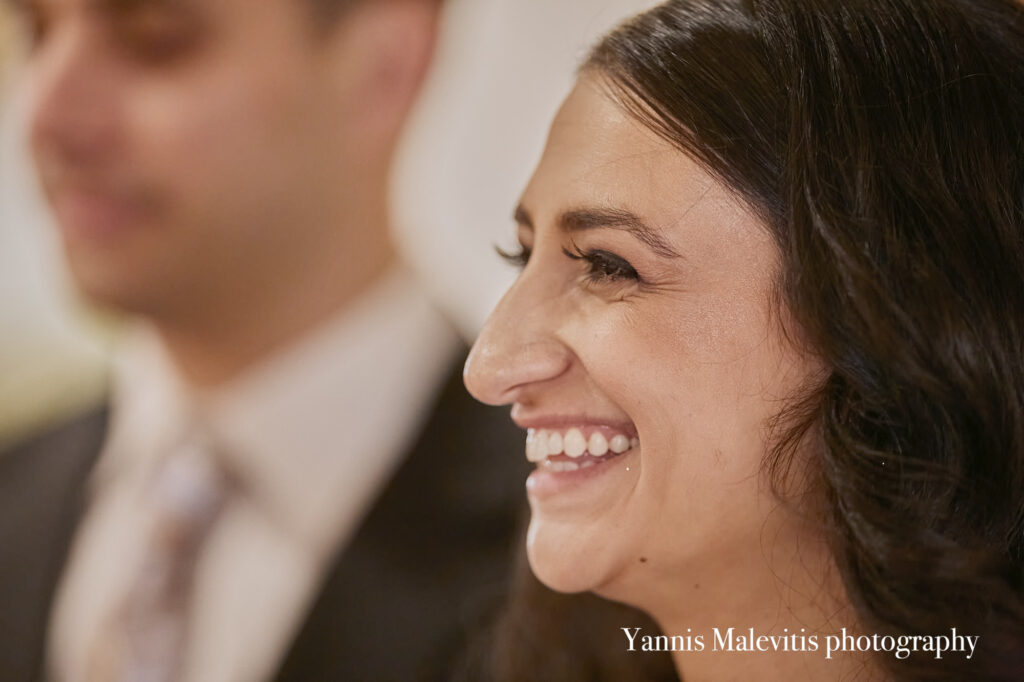
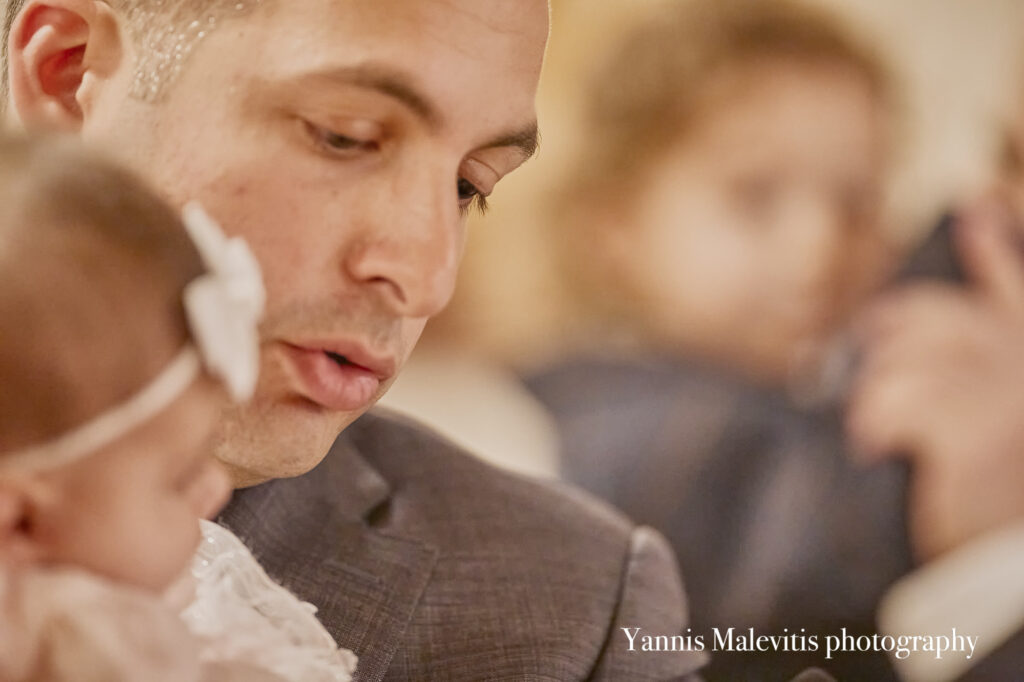
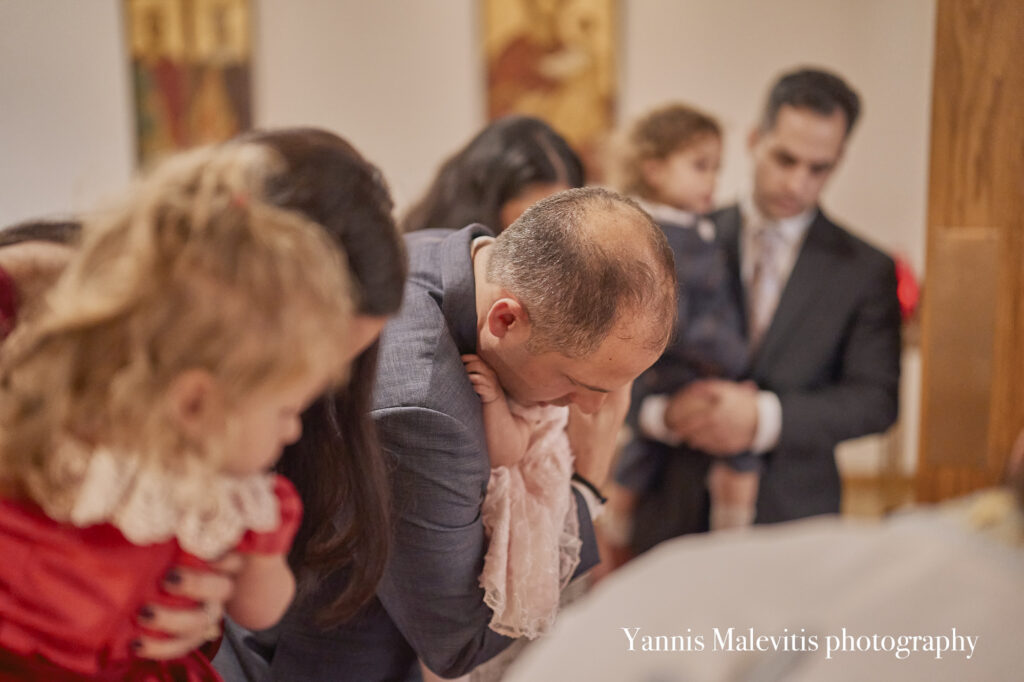
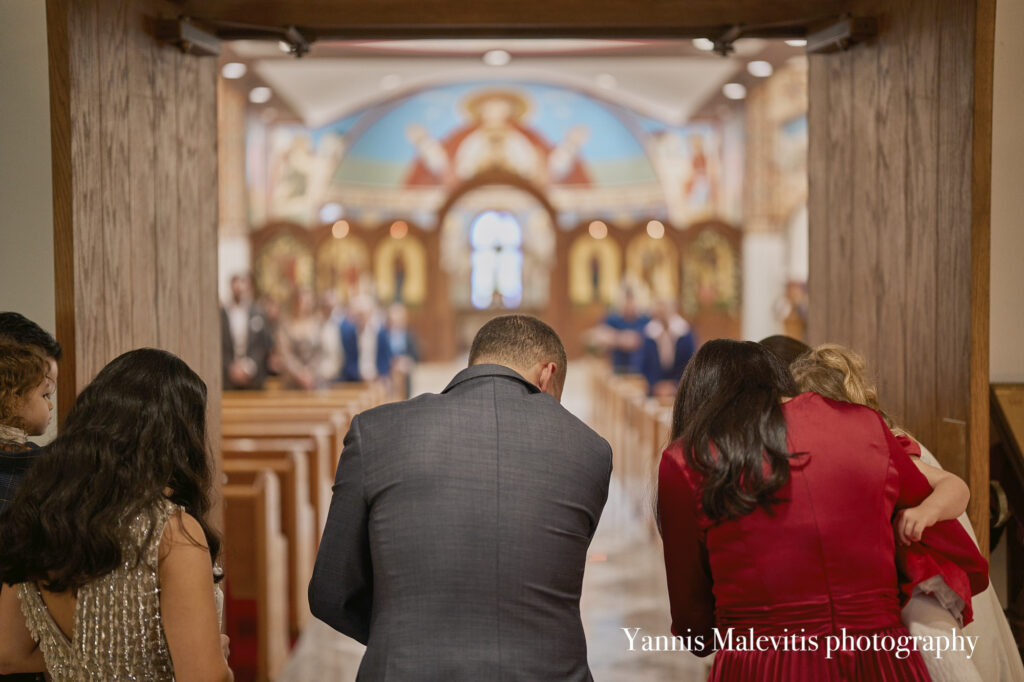
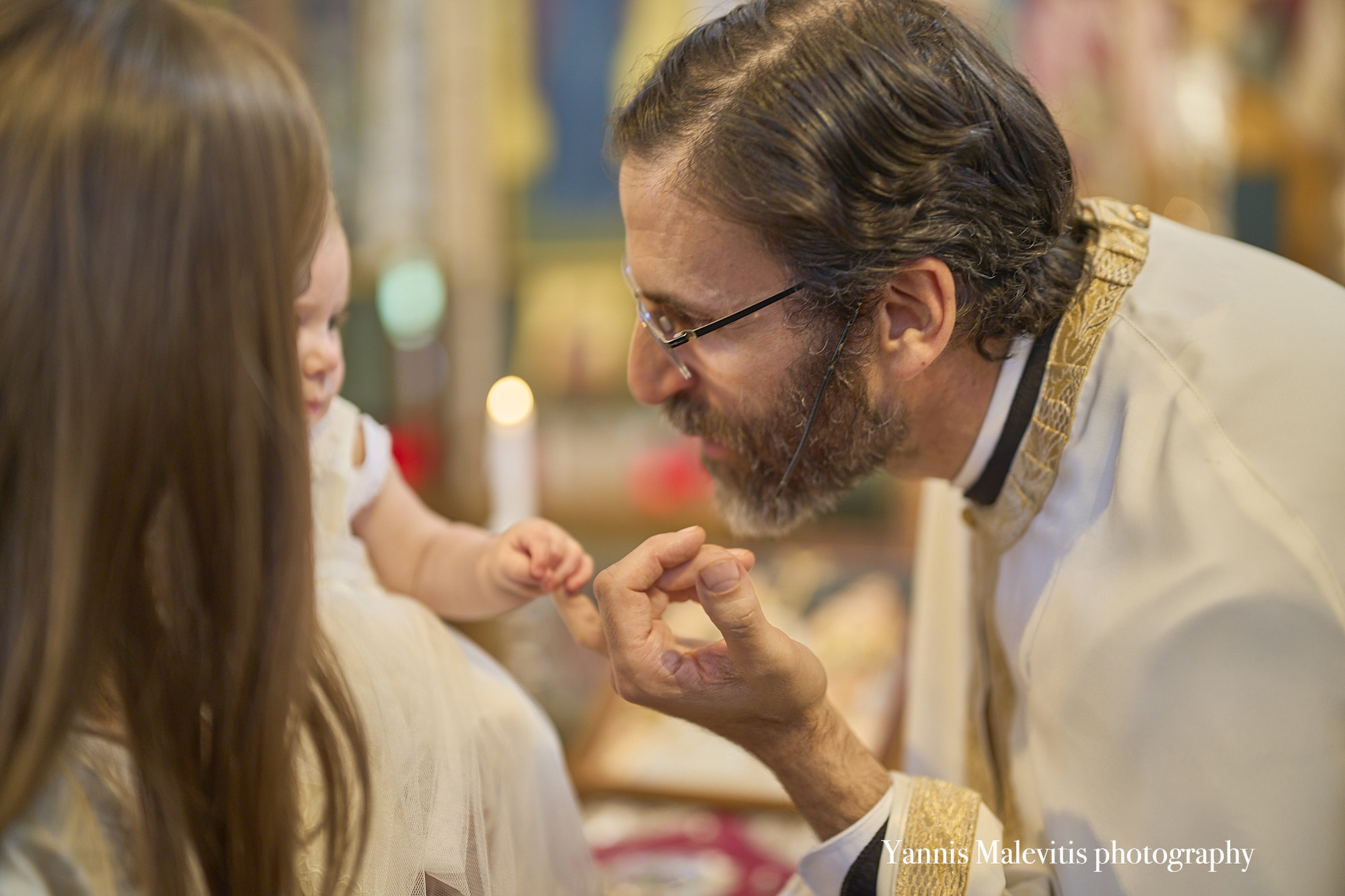
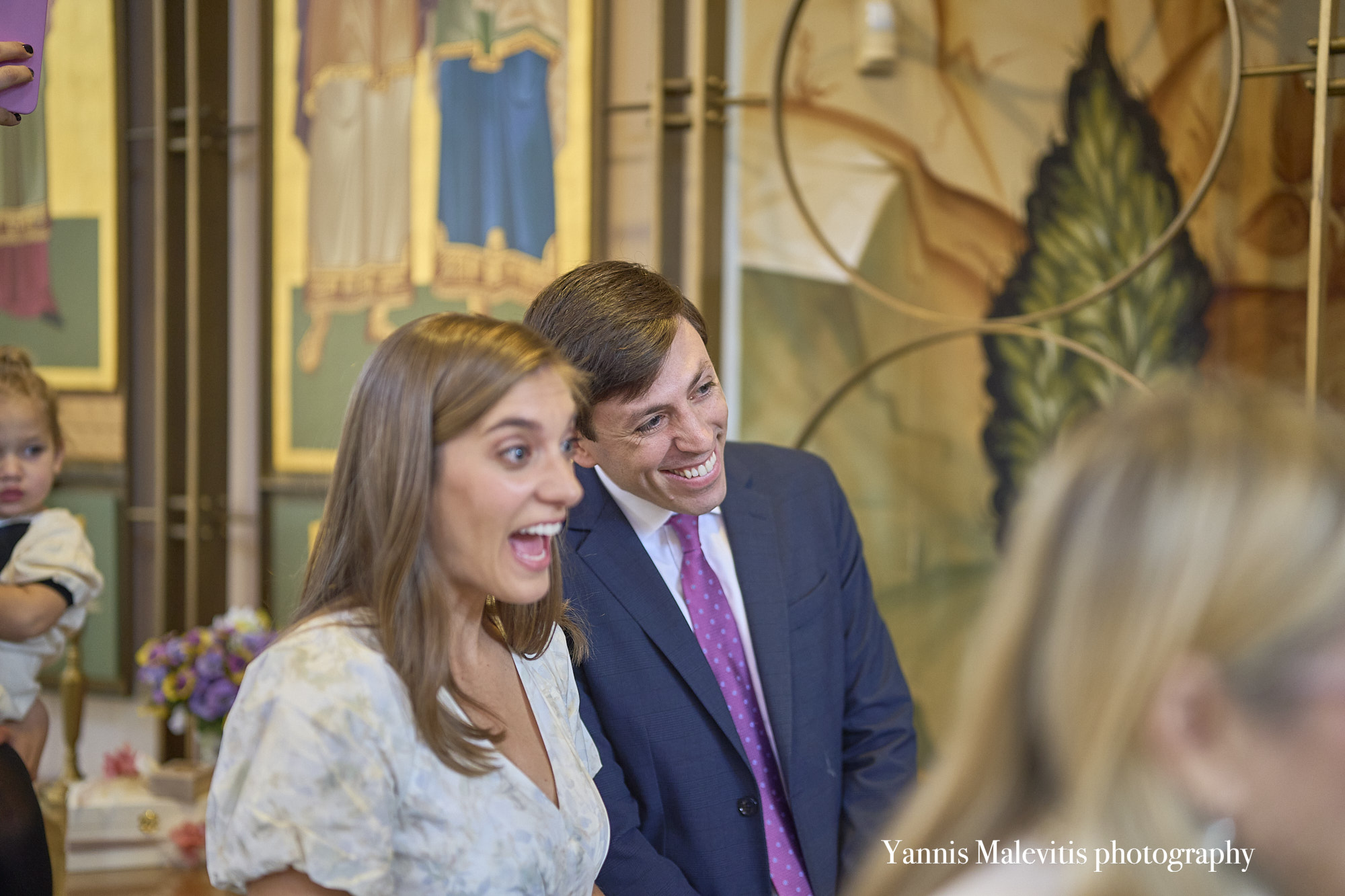
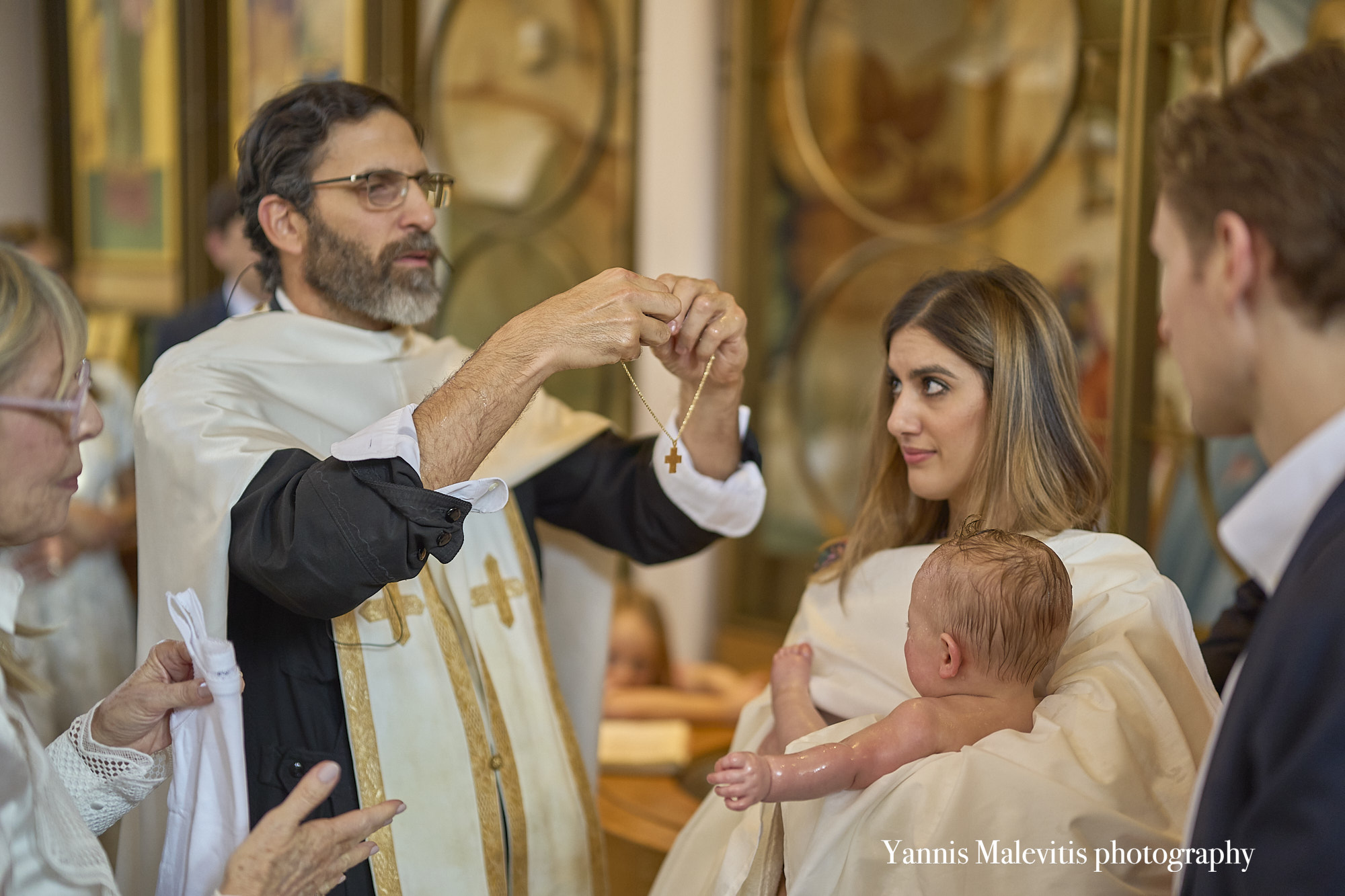
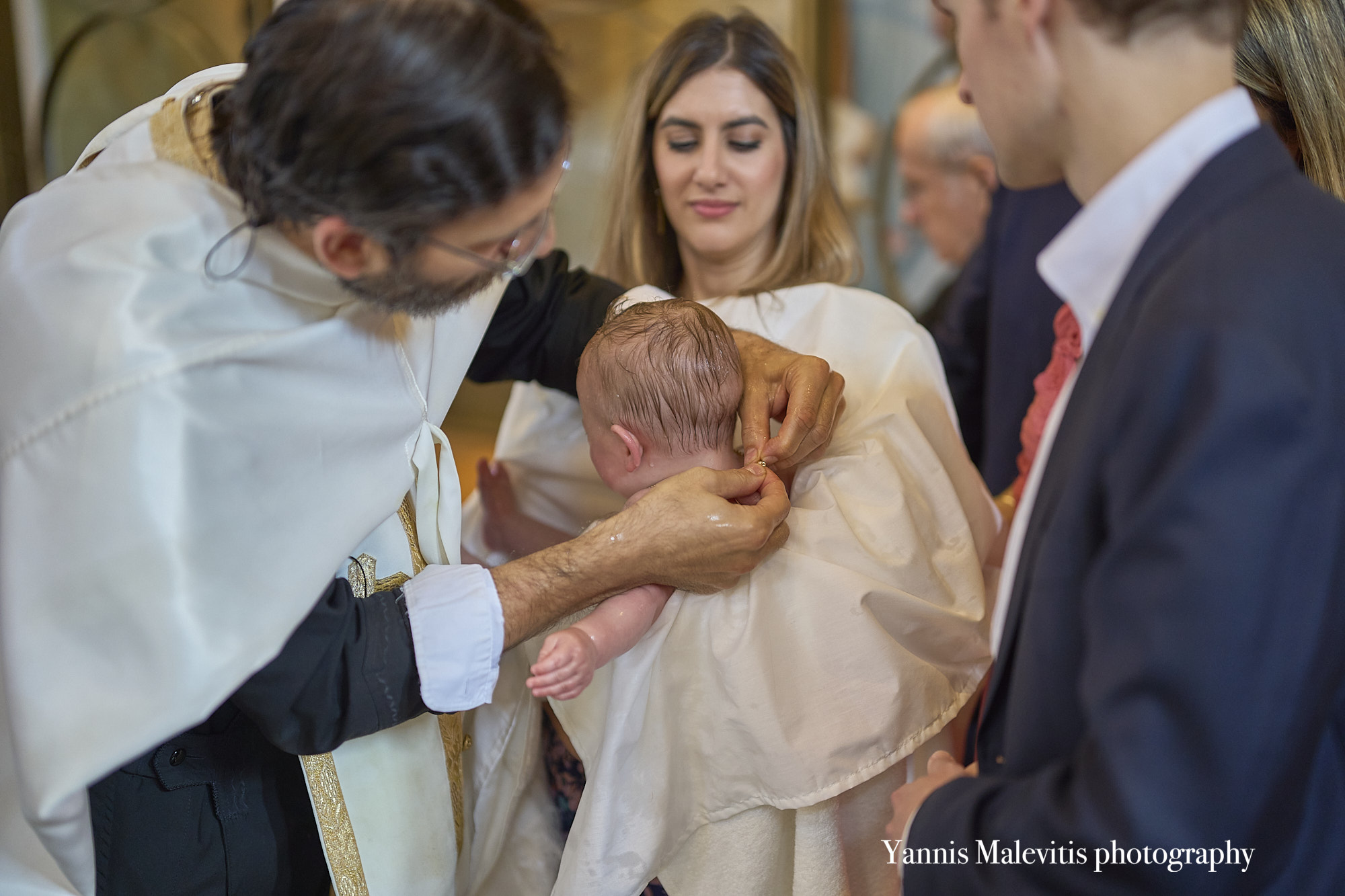
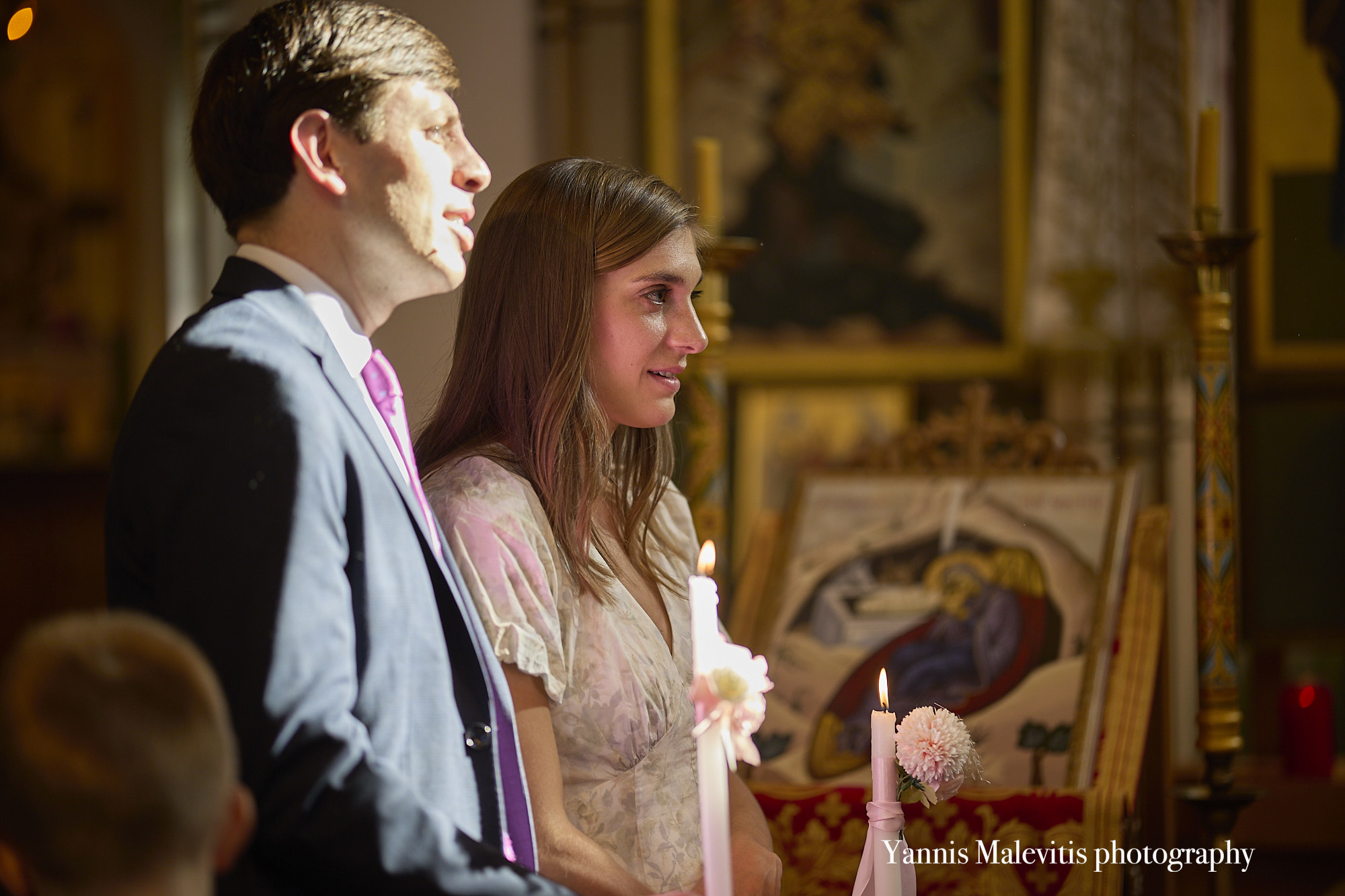
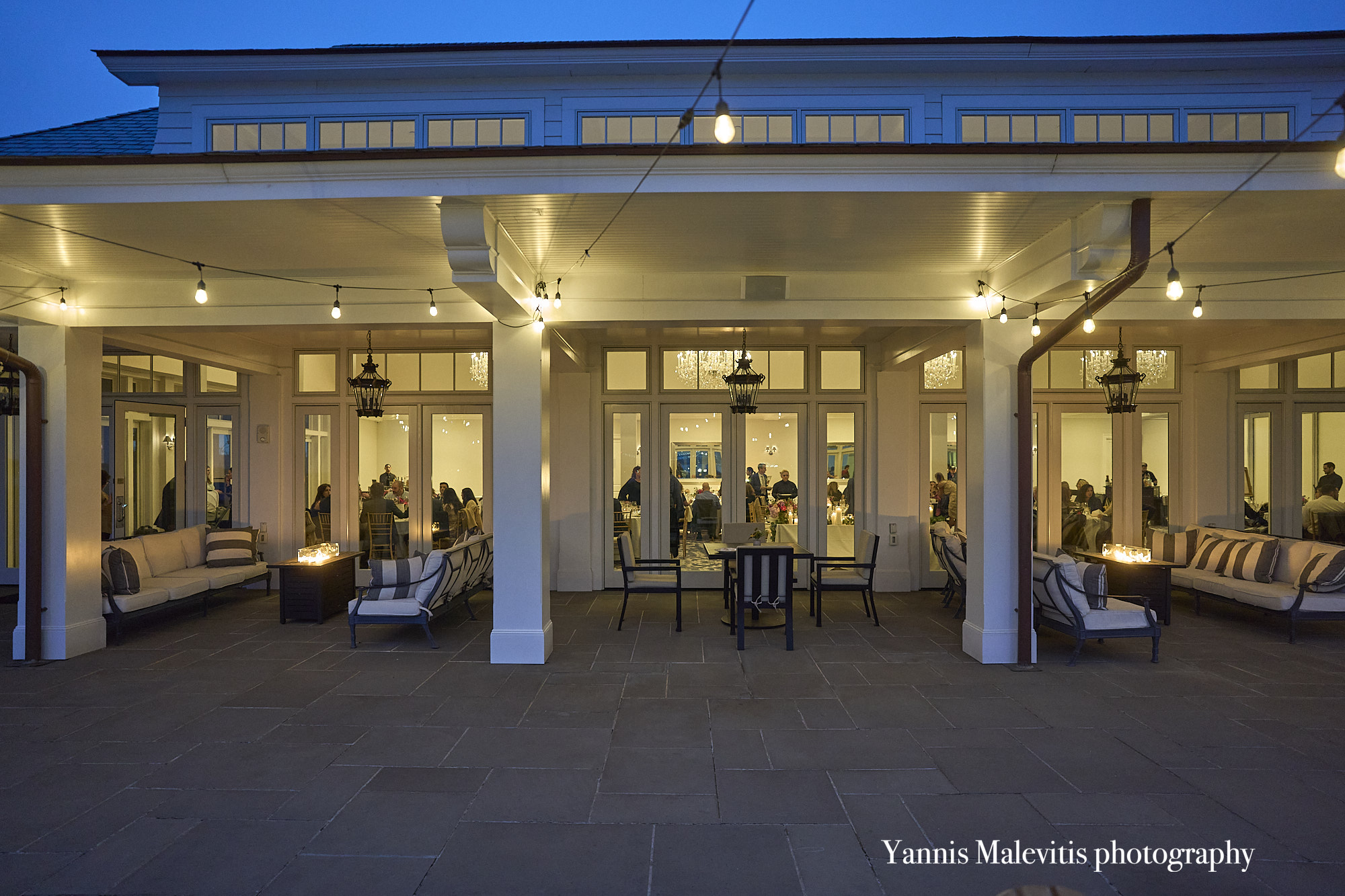
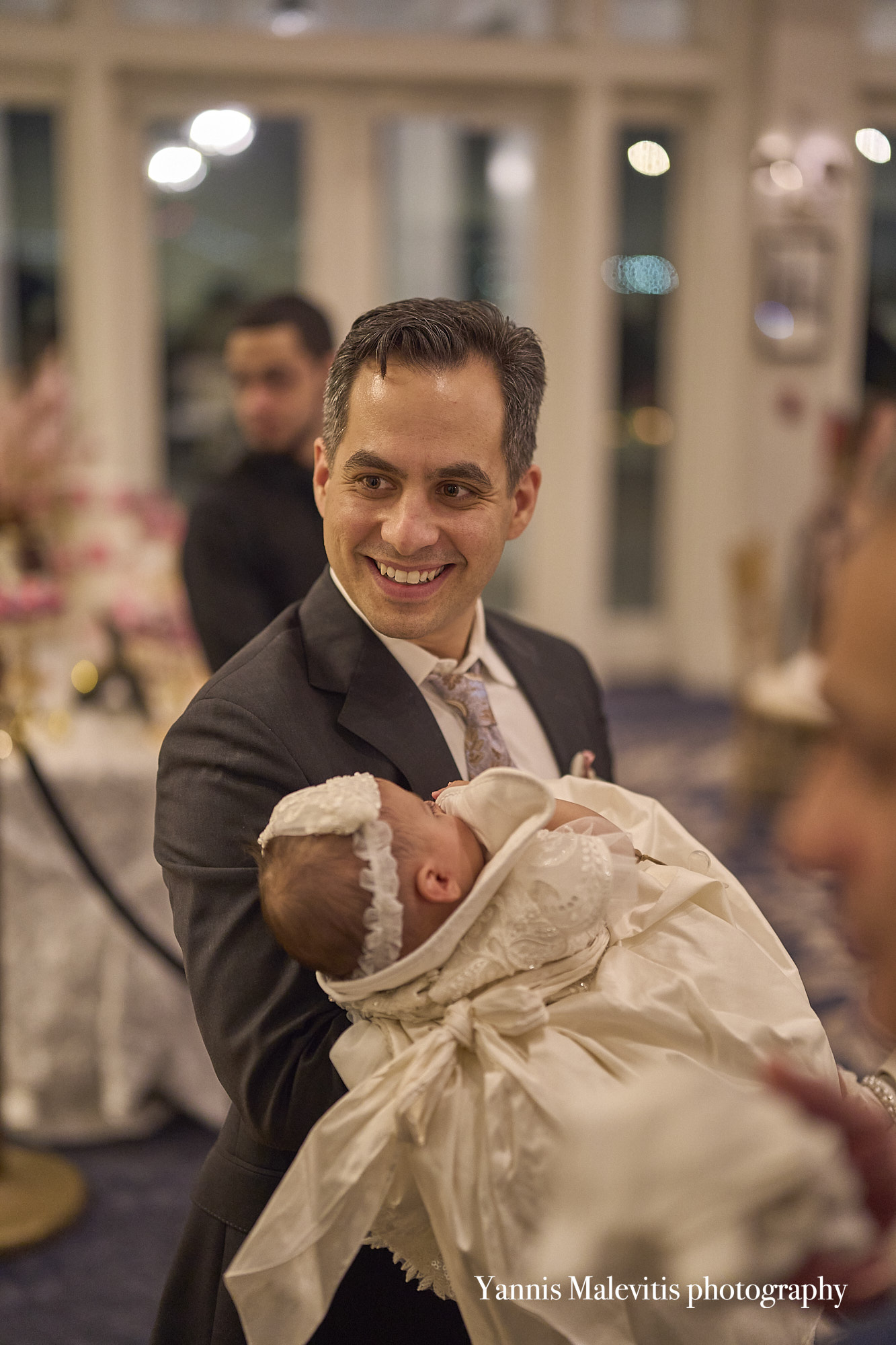
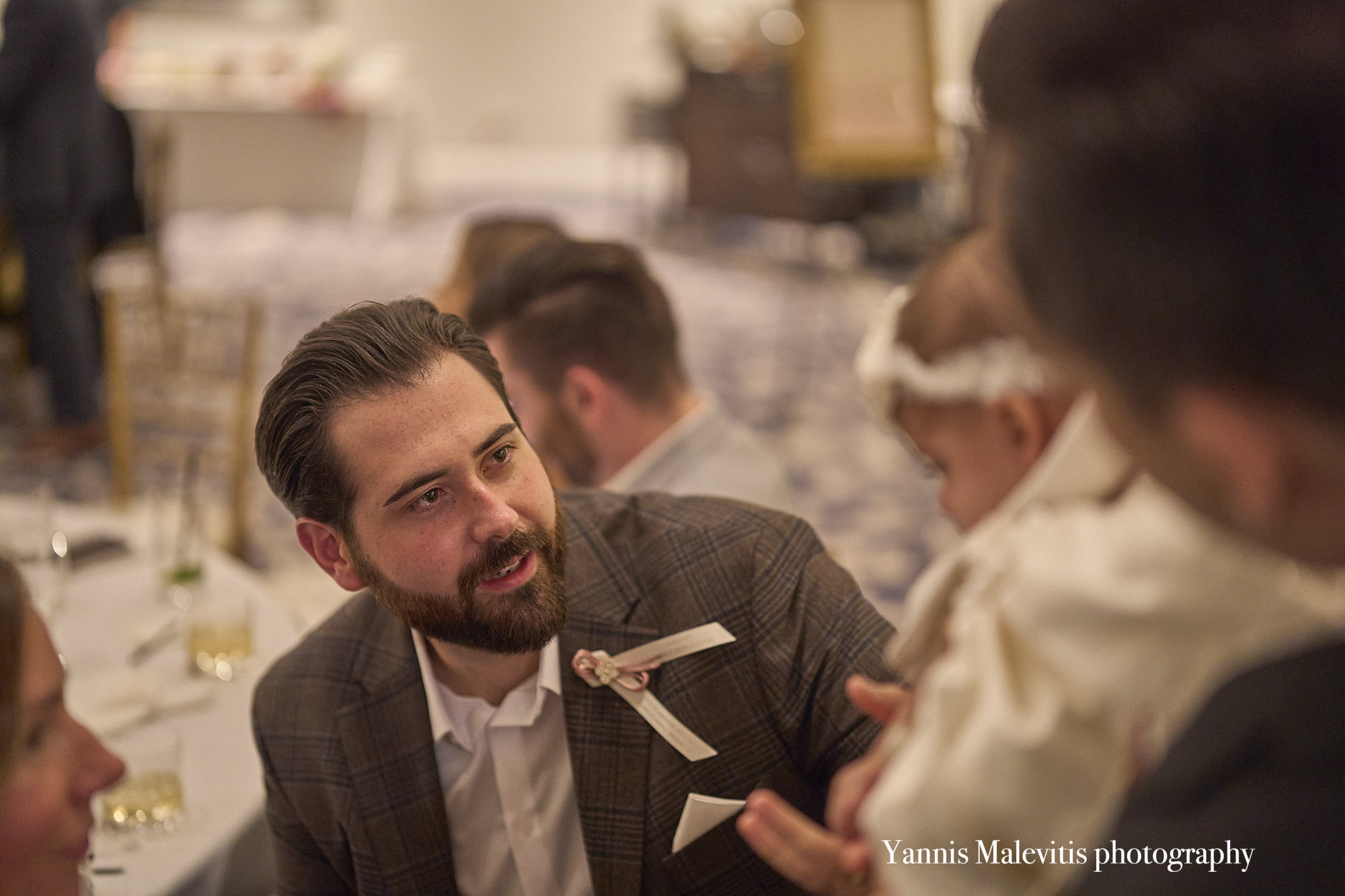
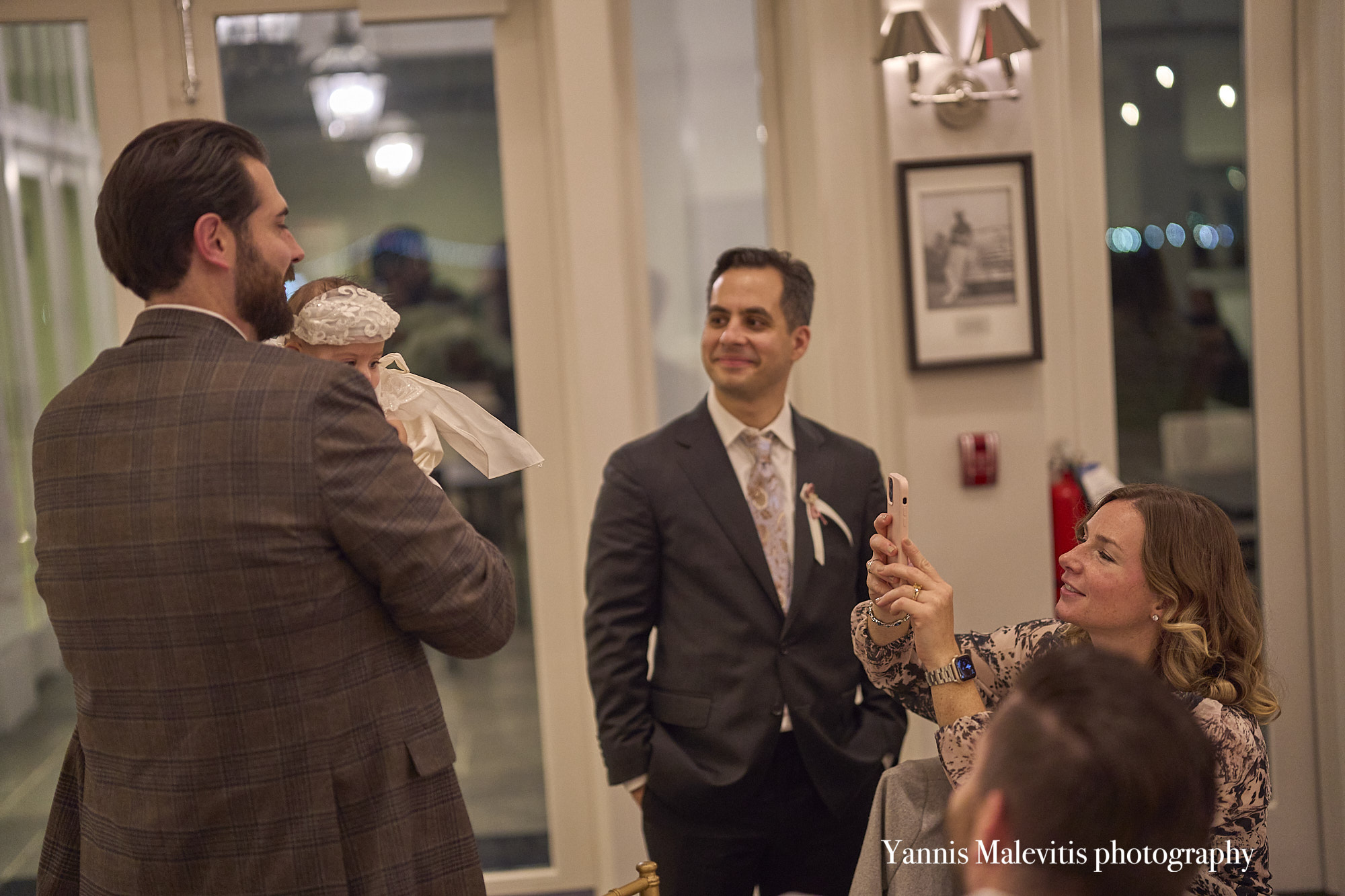
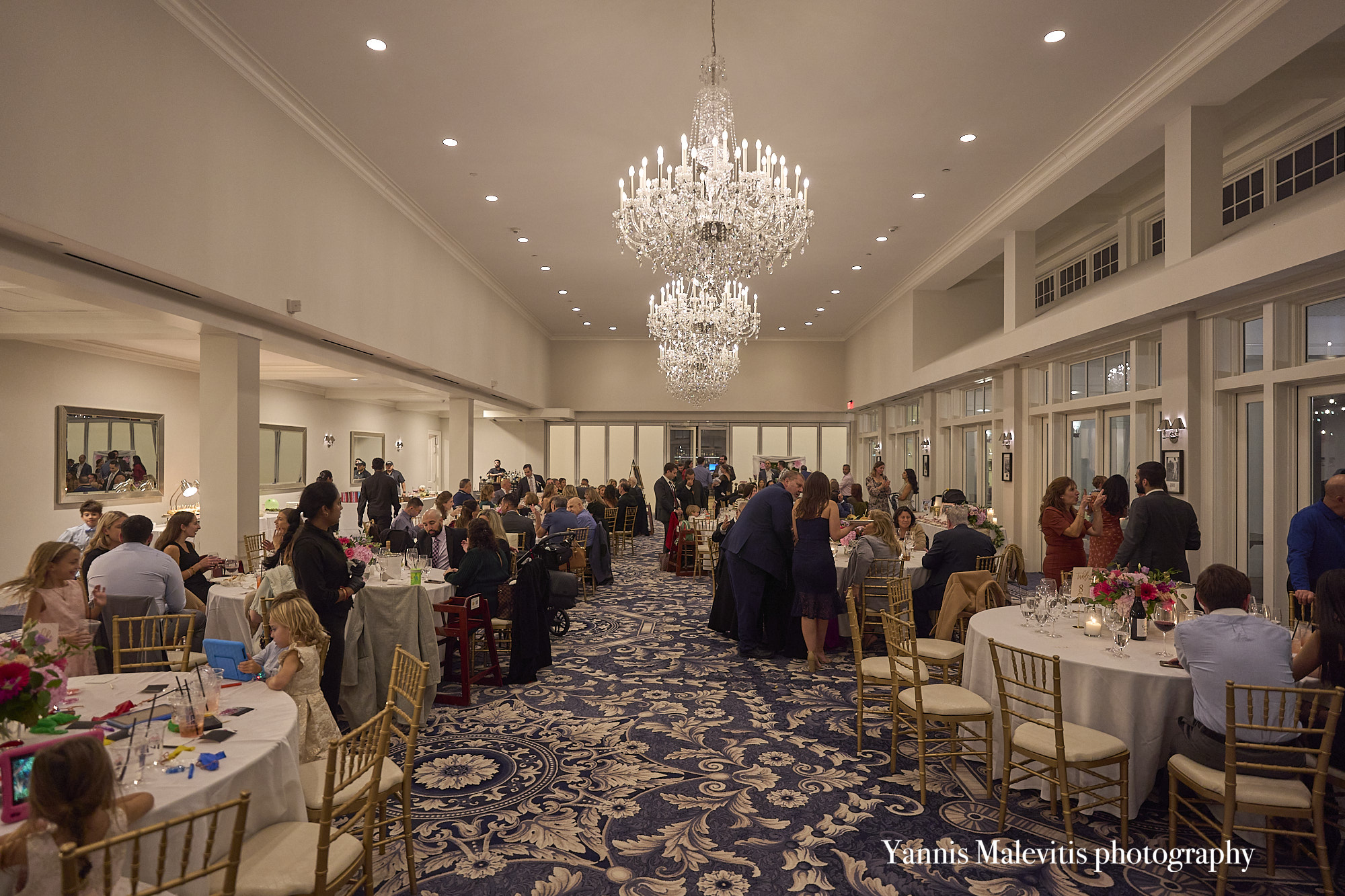
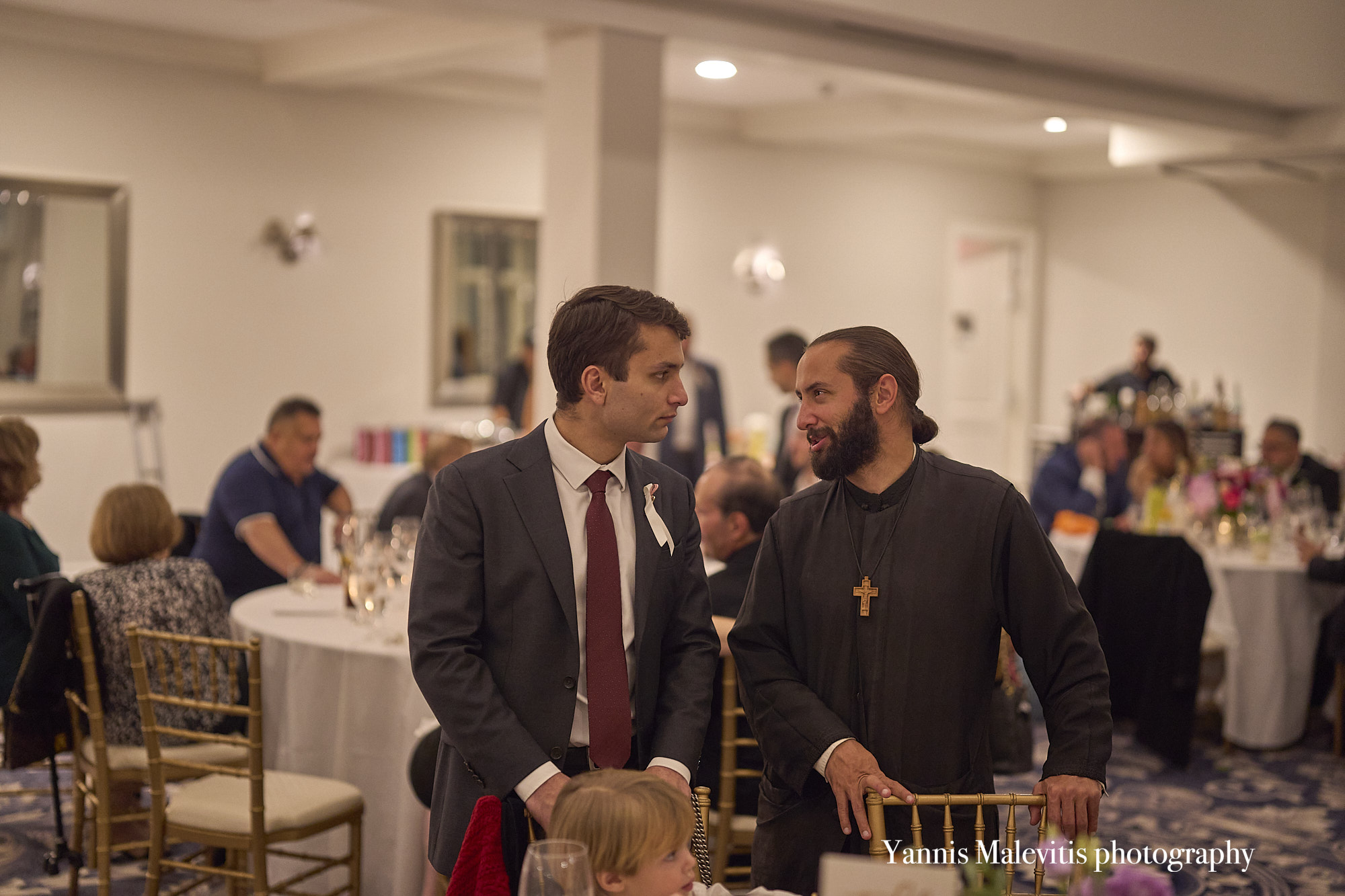
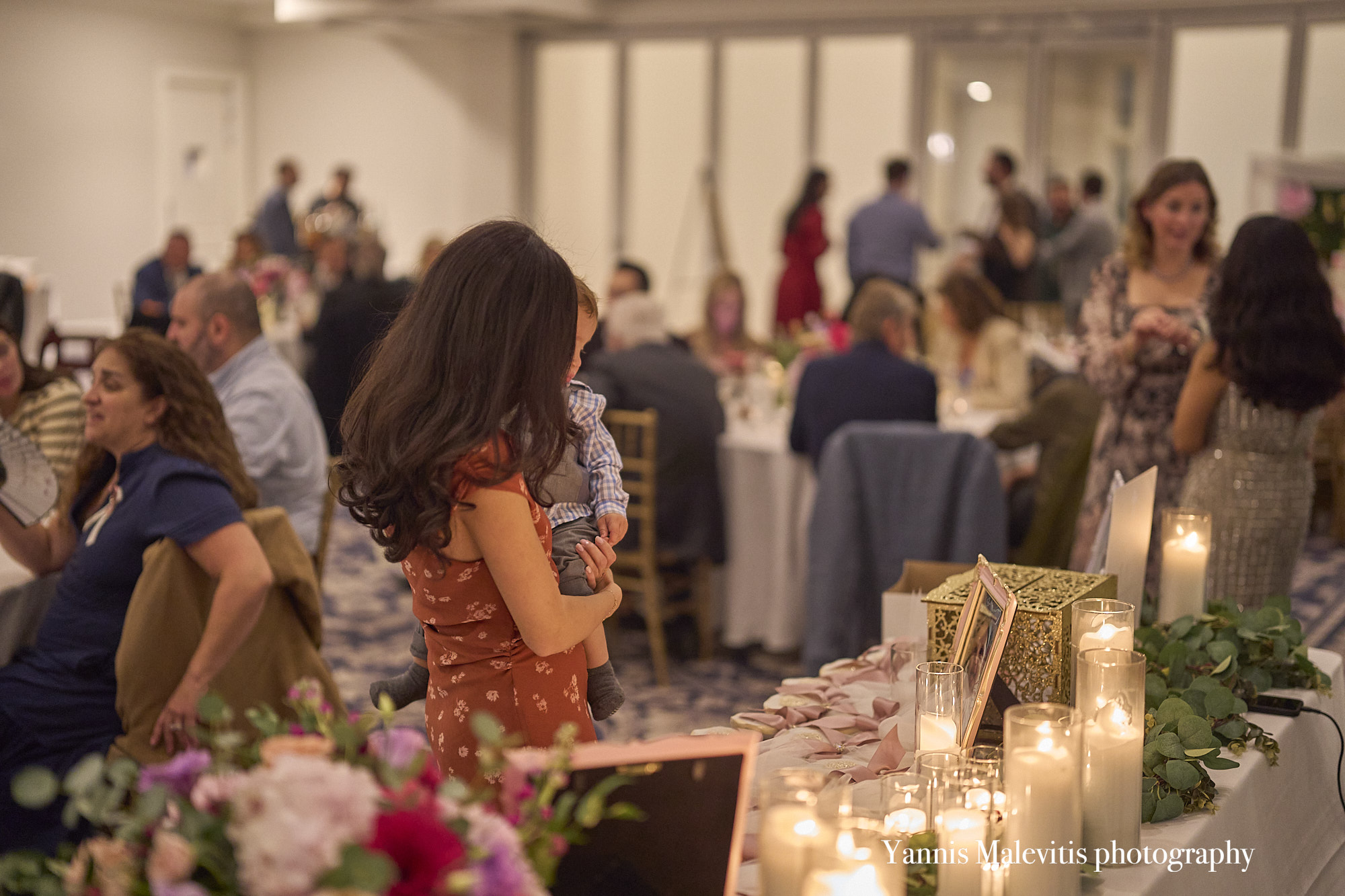
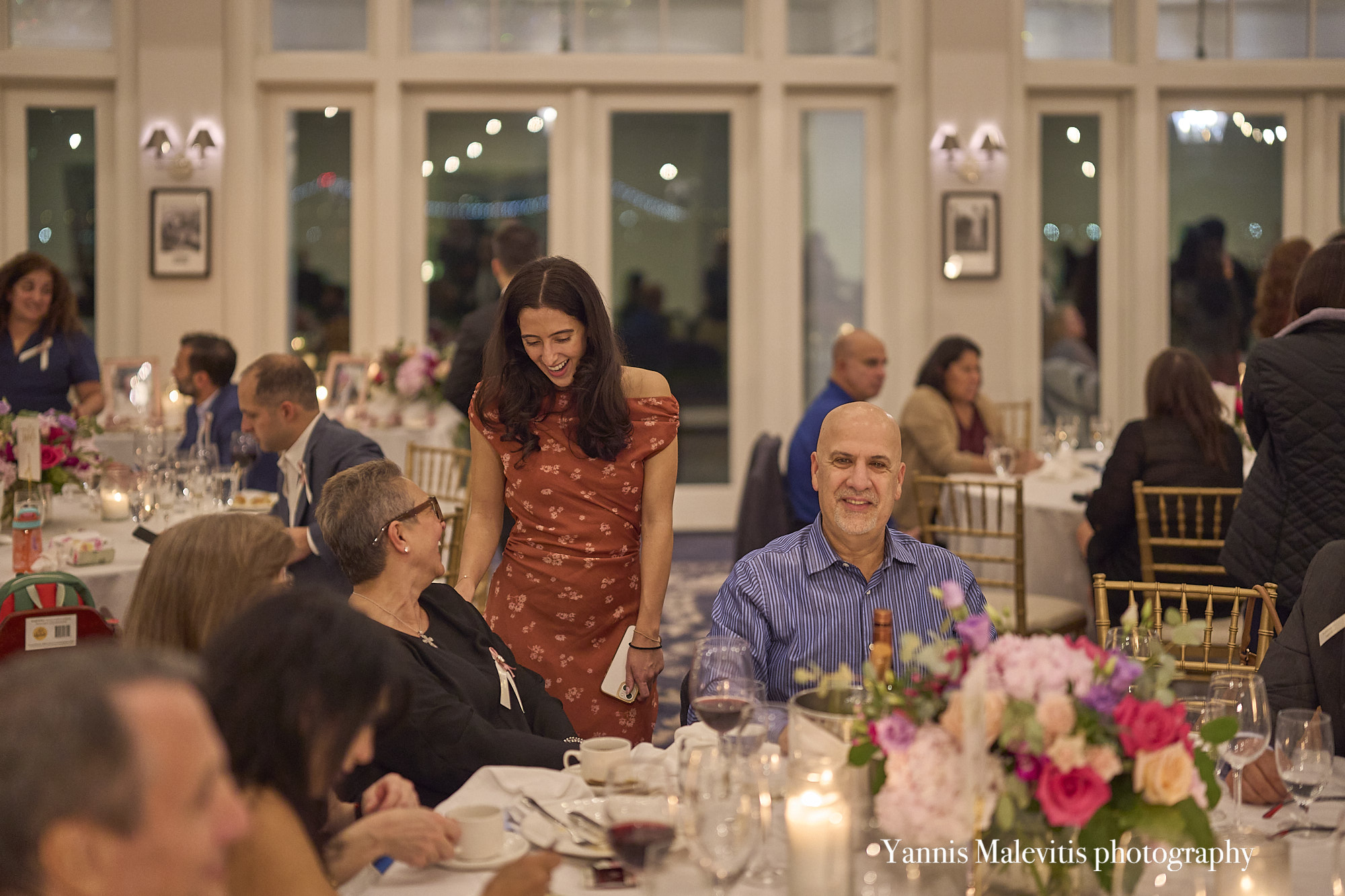
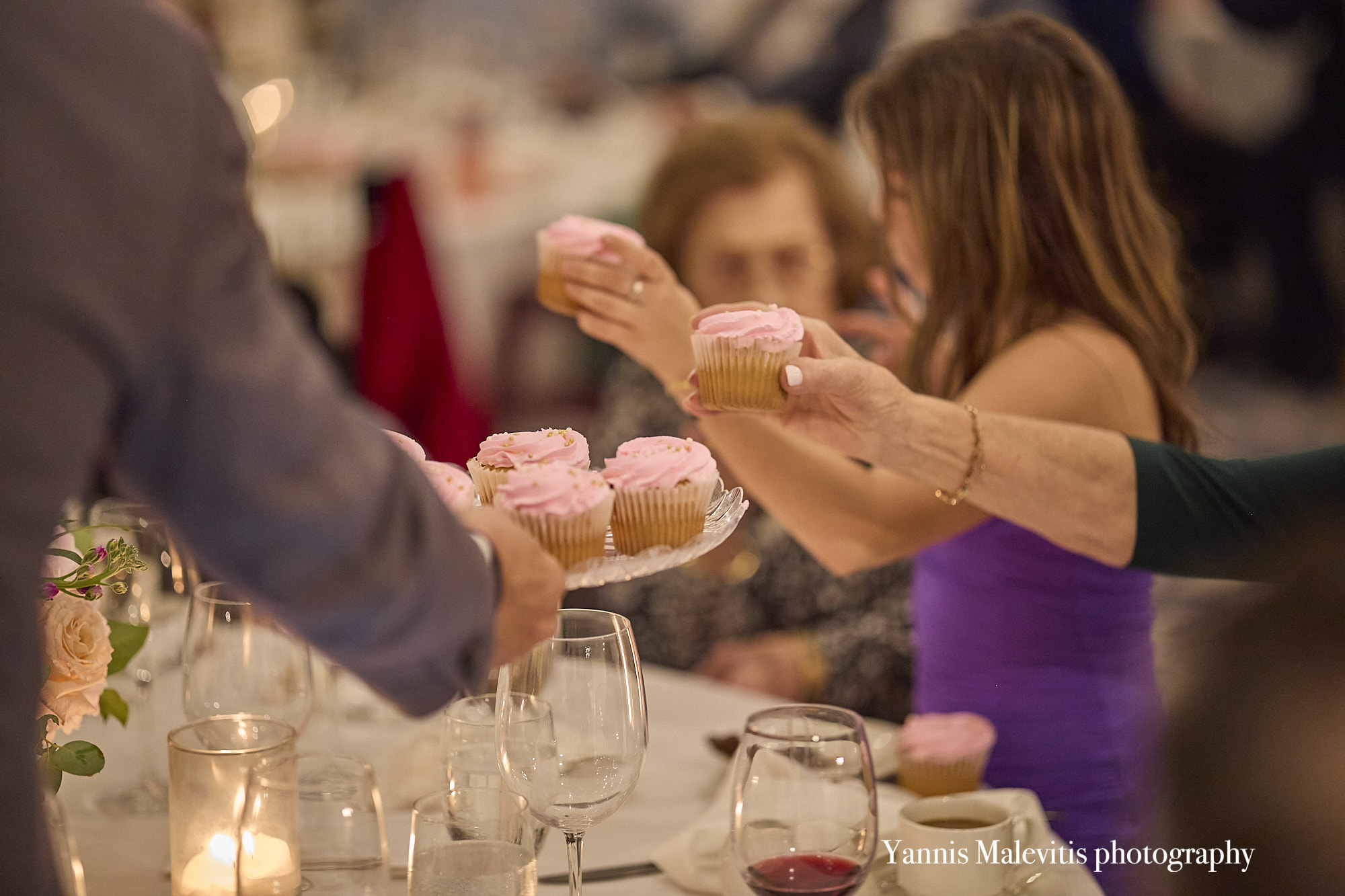
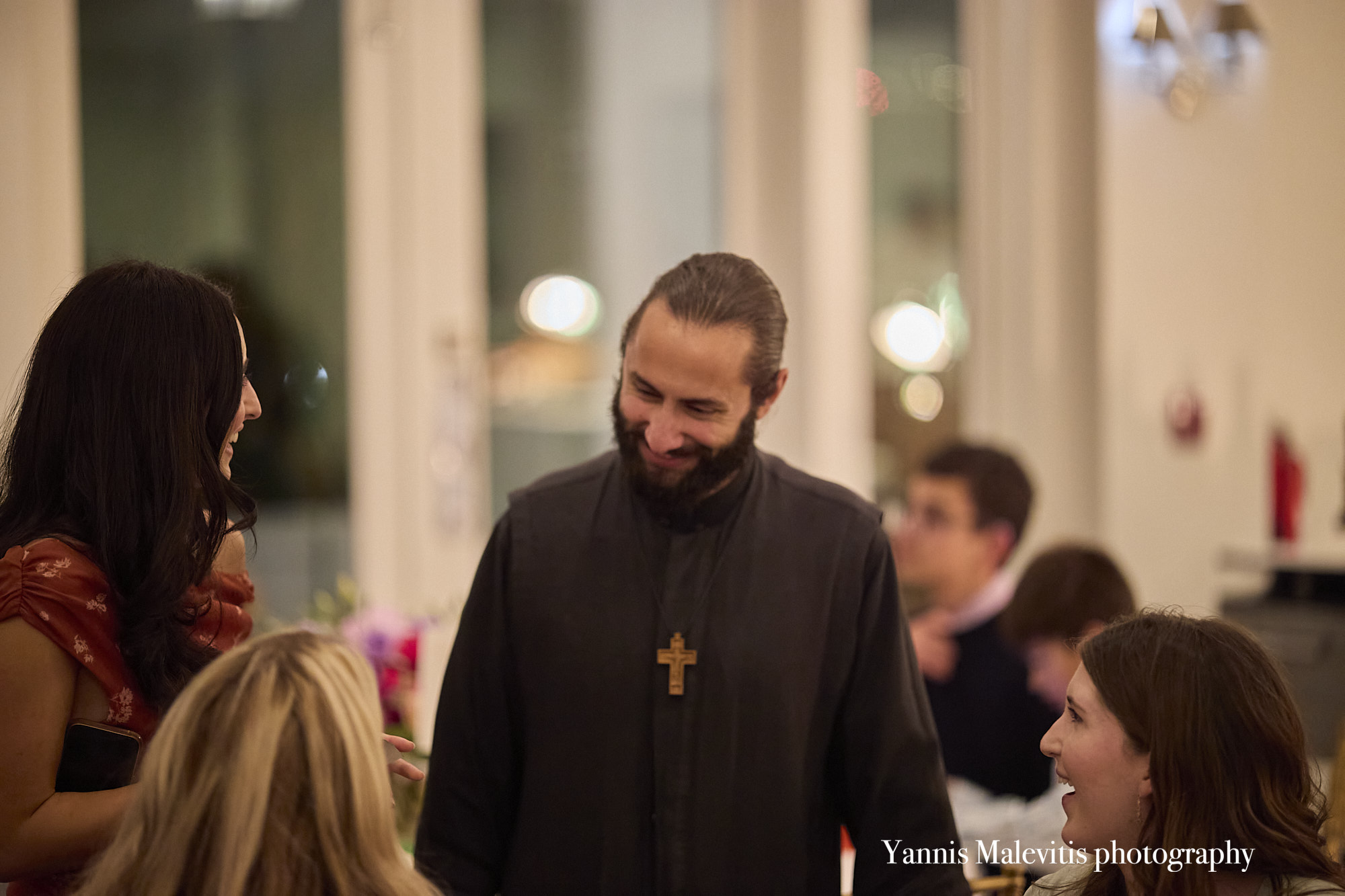
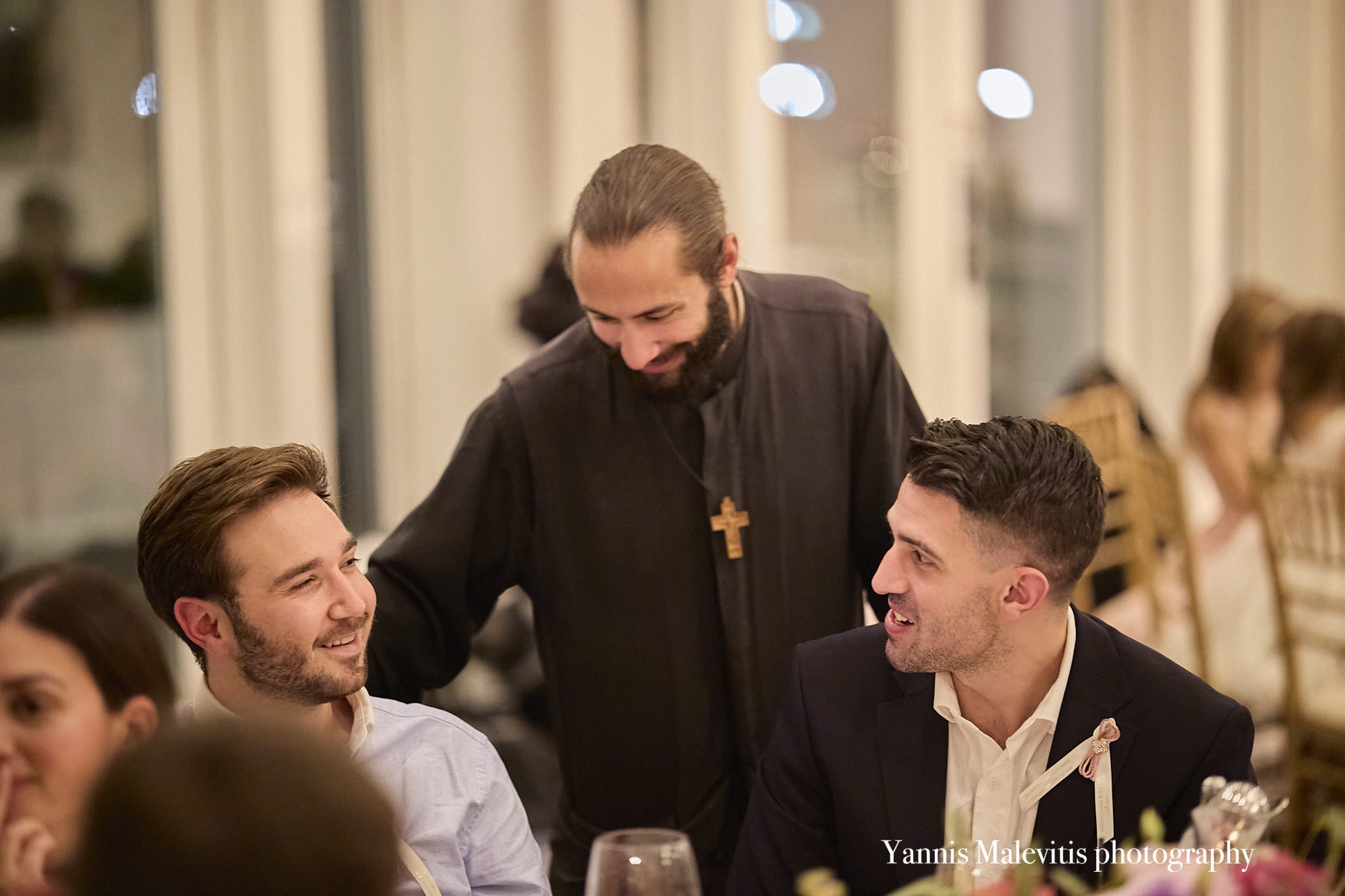
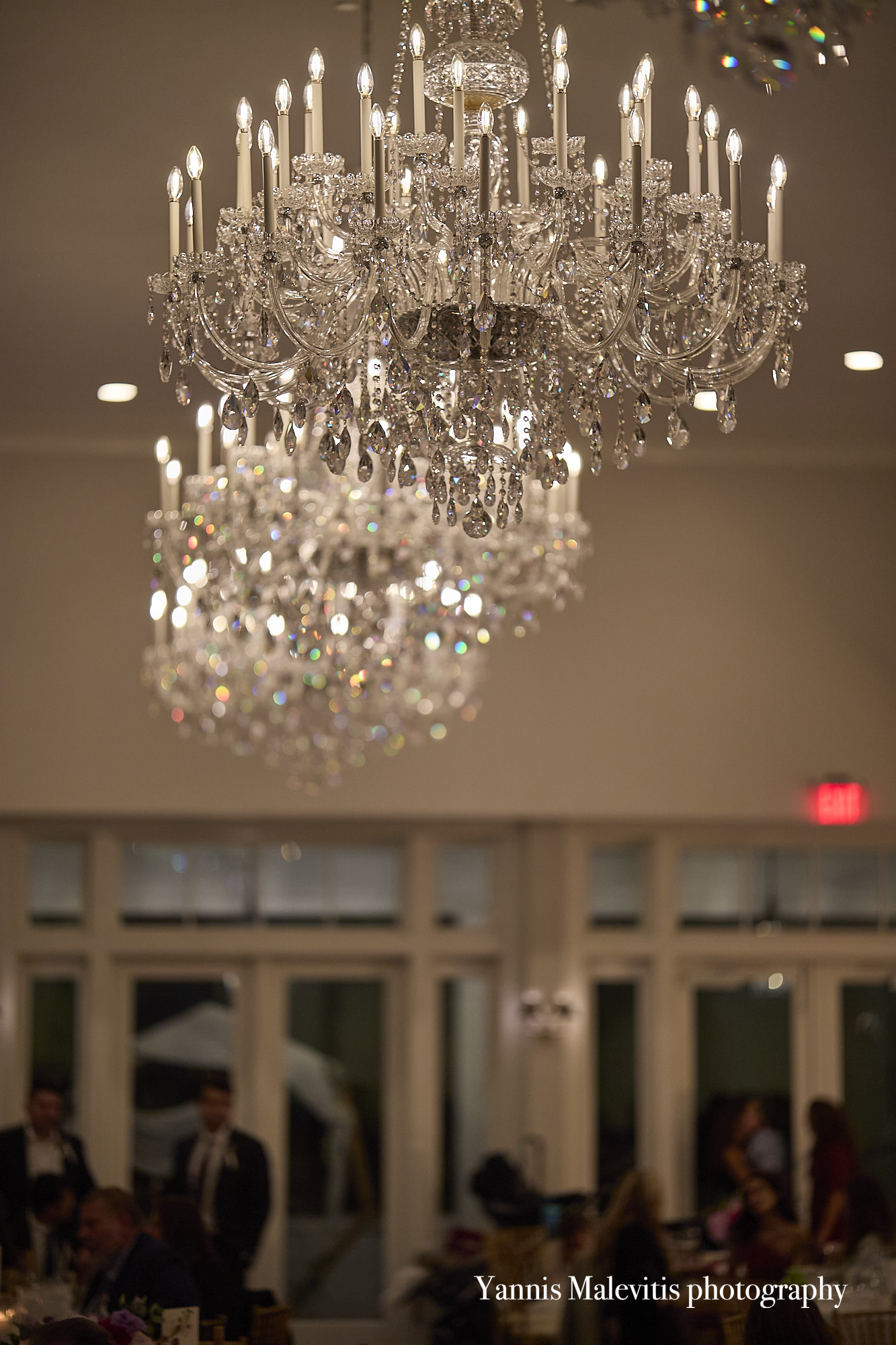
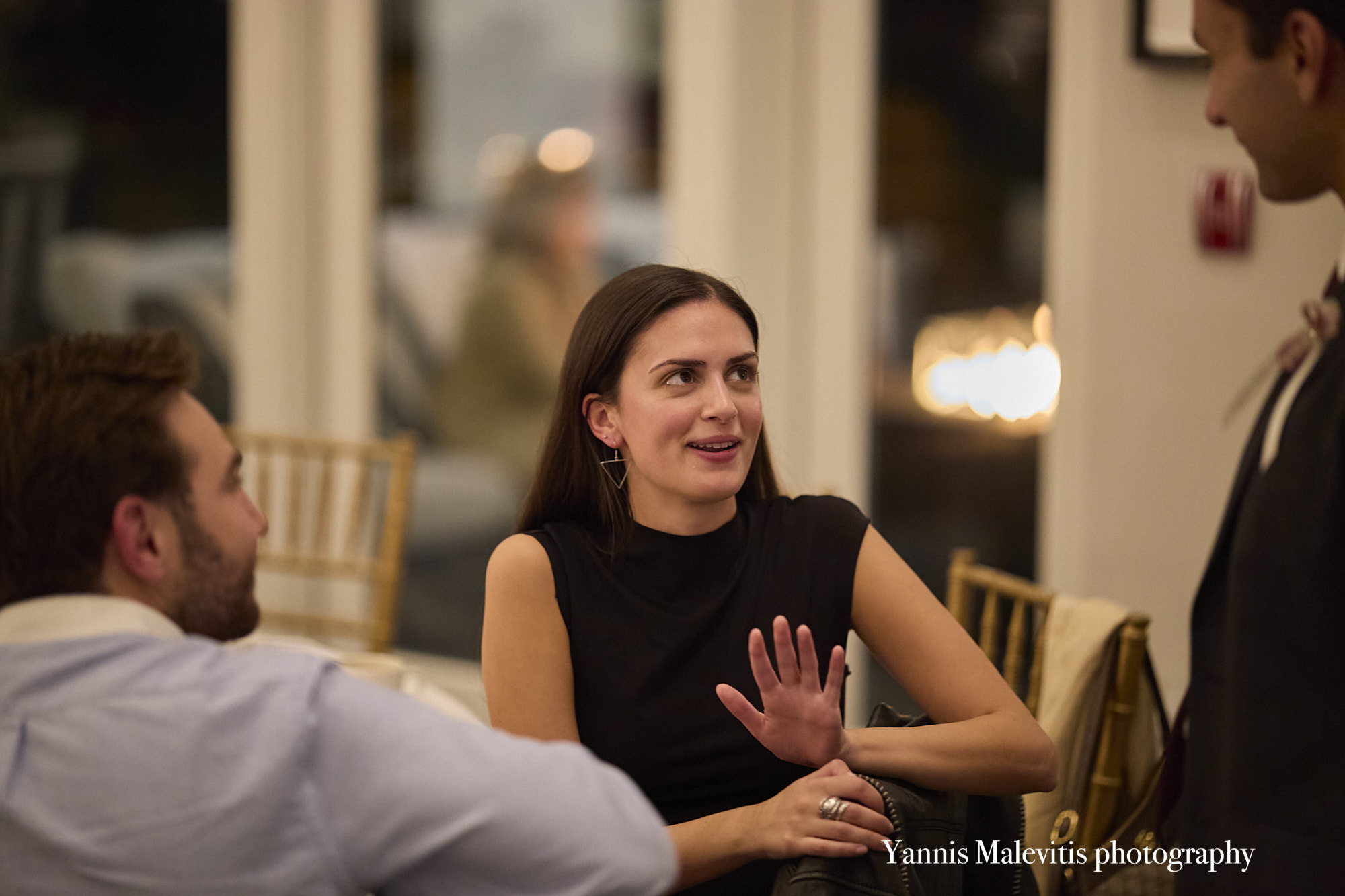
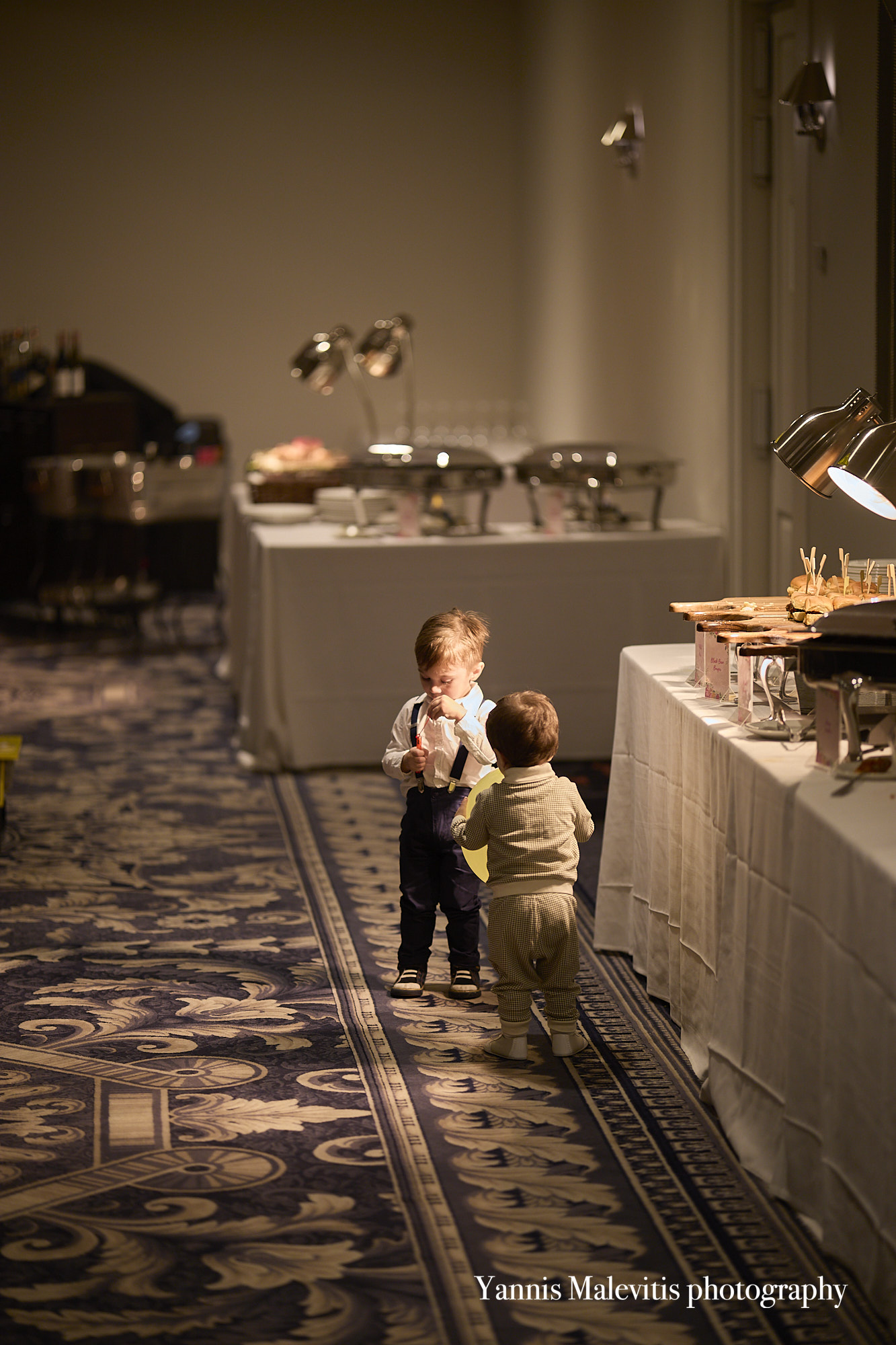
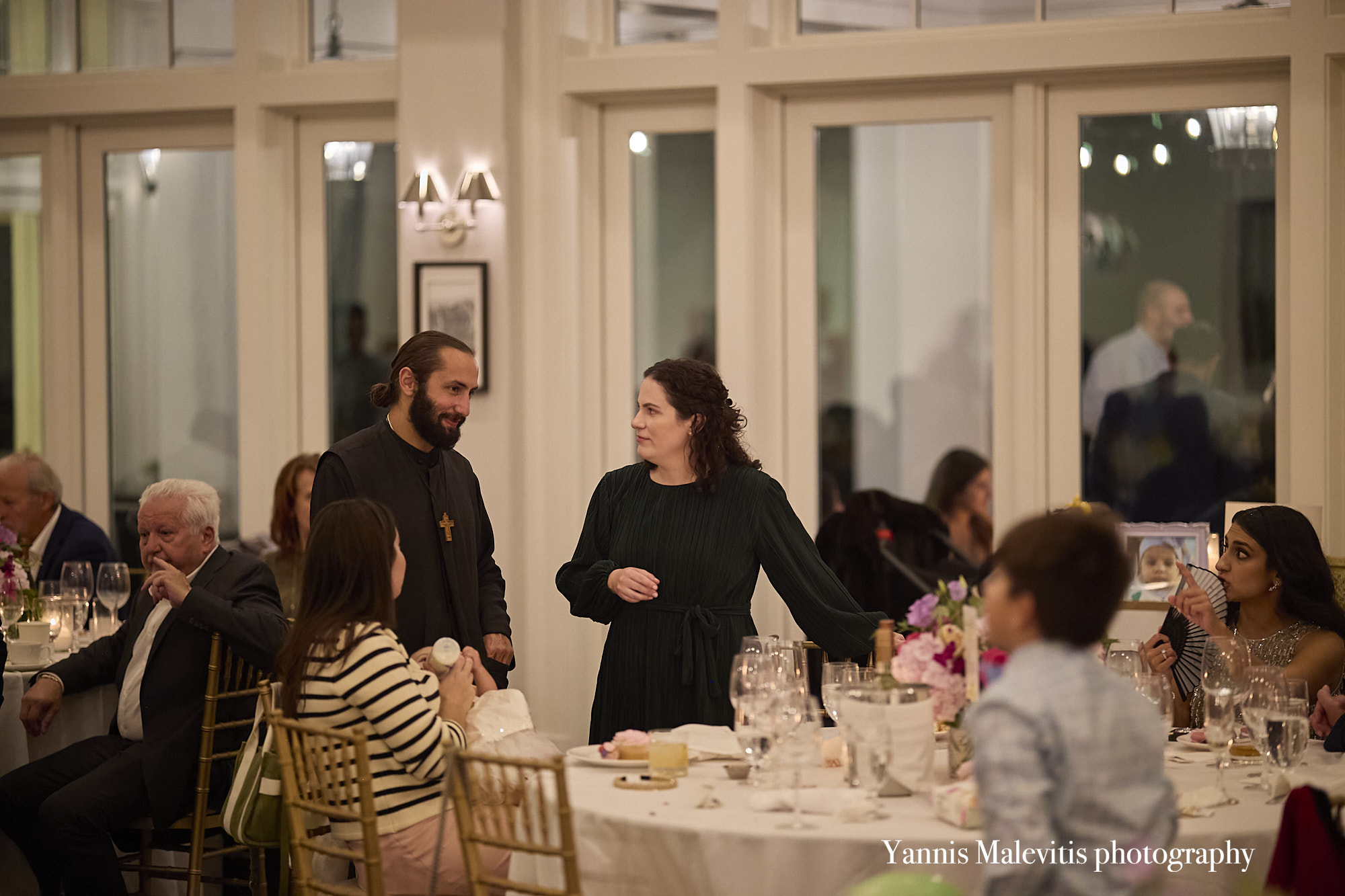
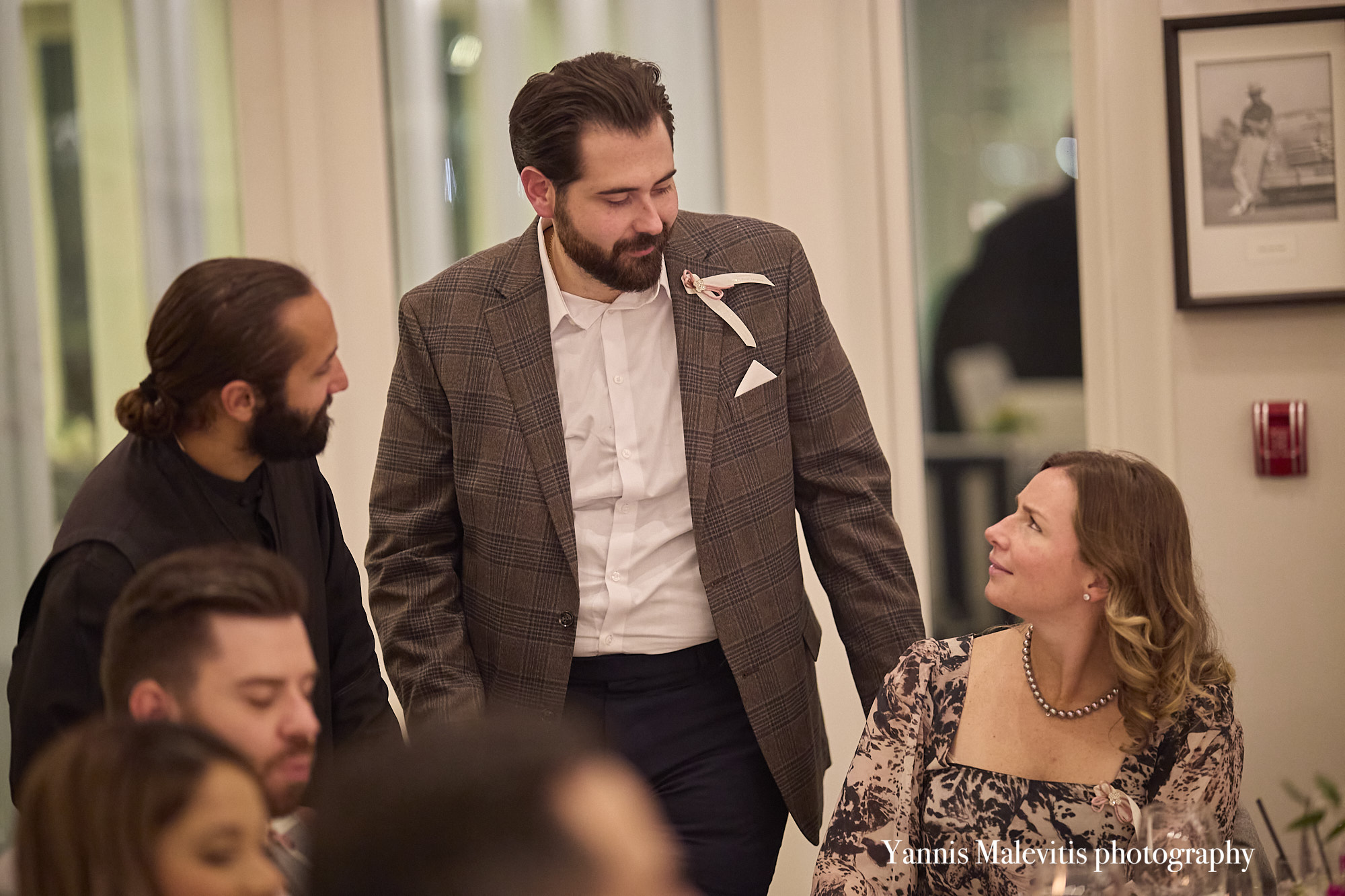
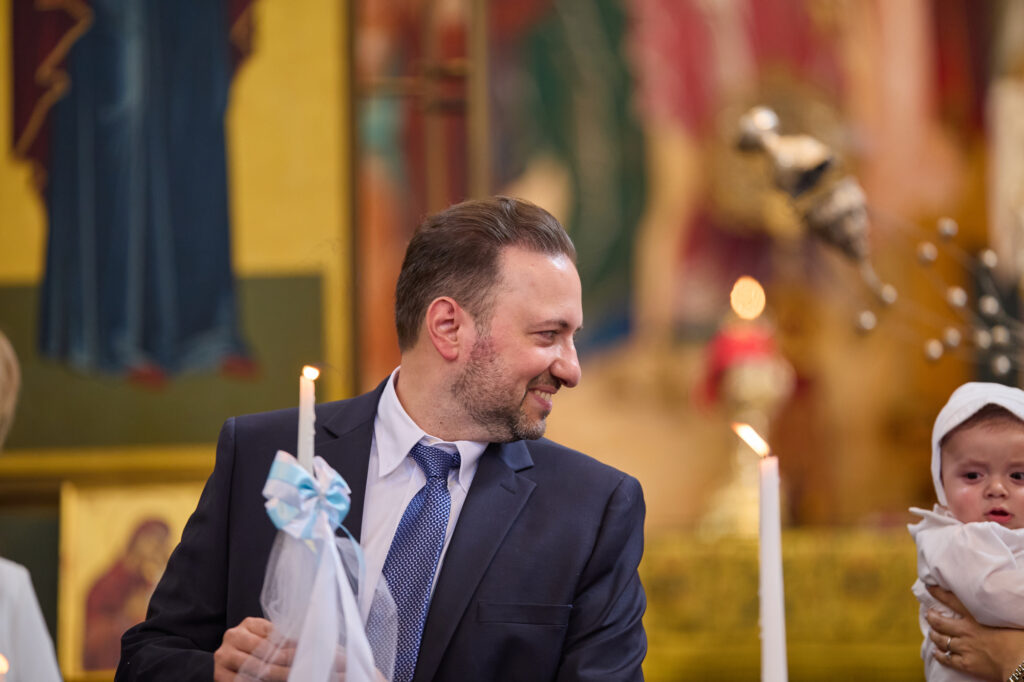
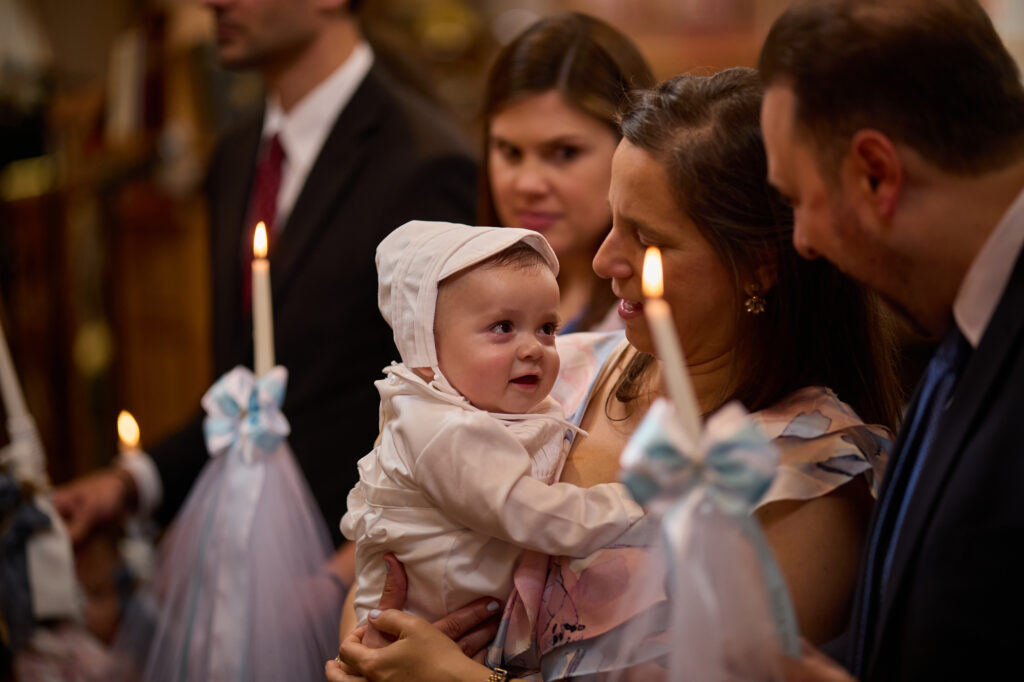
The baptism may be the sacred center of the day, but the reception is where families begin to relax. Grandparents hold the newly baptized child, cousins find one another on the dance floor, and conversations replace ceremony. These quiet interactions often reveal the relationships that become the most meaningful photographs of the celebration.
My approach is to photograph the reception as a storyteller rather than simply documenting who was present. While I certainly capture portraits, family groups, and important traditions, I focus primarily on the genuine interactions that reveal the spirit of the day.
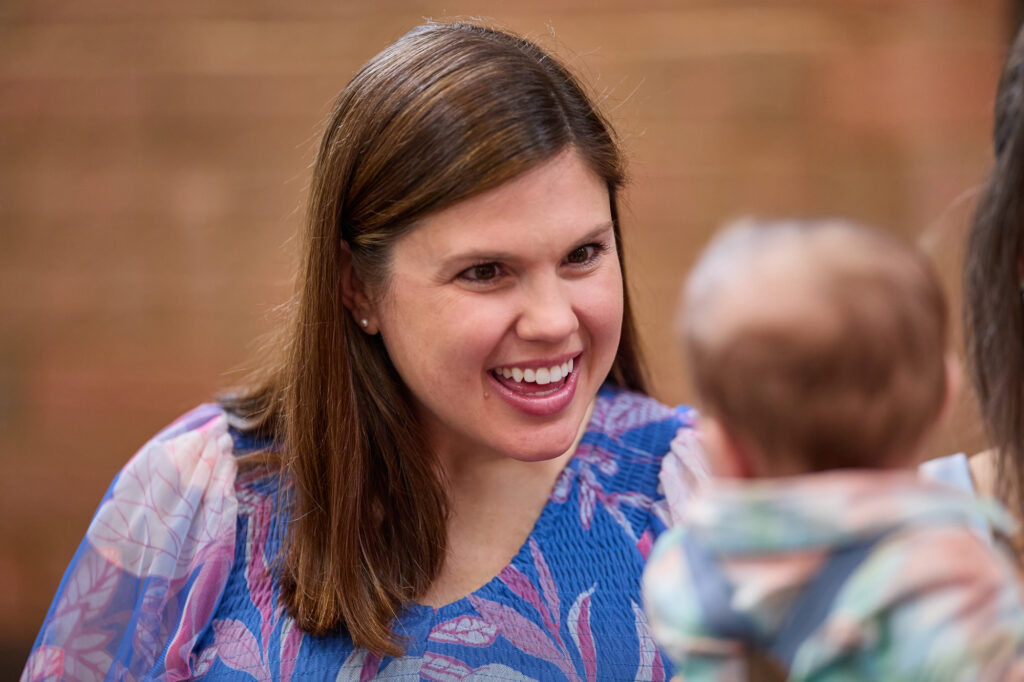
While gentle direction may help people feel comfortable, my favorite photographs almost always come afterward—when conversation replaces posing and families become absorbed in one another. Those unscripted moments often become the photographs they treasure most.
Greek Orthodox christening receptions are especially rich with emotion and tradition. Whether it is the first dance, the money dance, a family circle forming on the dance floor, or the cutting of the cake, I strive to capture not only what happened but also what it felt like to be there.
By the end of the reception, I hope the photographs tell a complete story—not only of the celebration itself, but of the relationships that gave it meaning.
Years from now, children will not remember the menu or the decorations. They will remember the people who gathered to celebrate them. My hope is that the photographs preserve those relationships with the same warmth they were experienced that day.
If you are planning a Greek Orthodox christening in Long Island, New York City, Westchester, Connecticut, or the Hudson Valley, I would be honored to document your family’s celebration with a natural and unobtrusive approach.
A Greek Orthodox baptism is one of the most symbolic and meaningful sacraments of the Church. It follows a very specific sequence of ancient rituals, each with its own deep theological meaning.
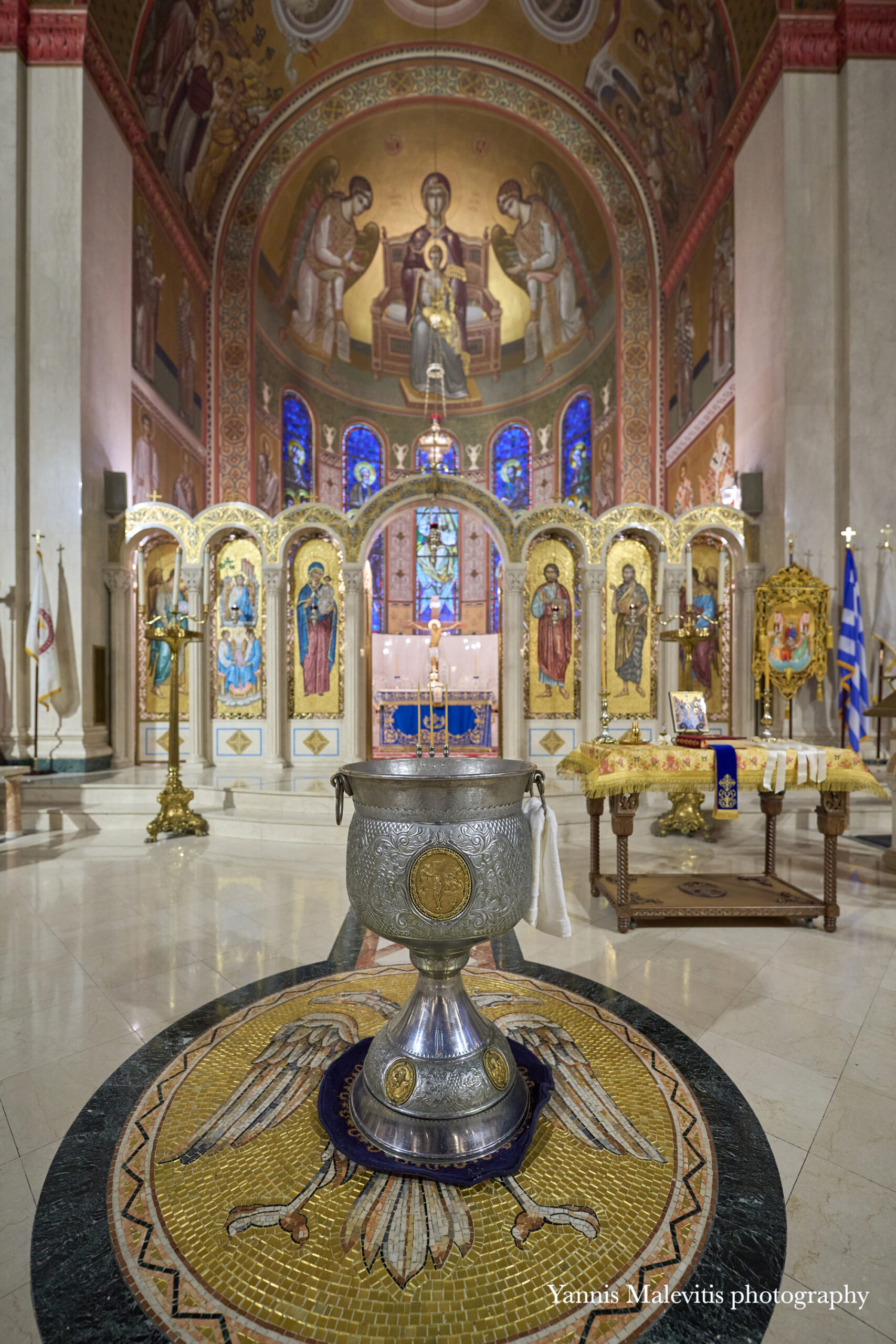
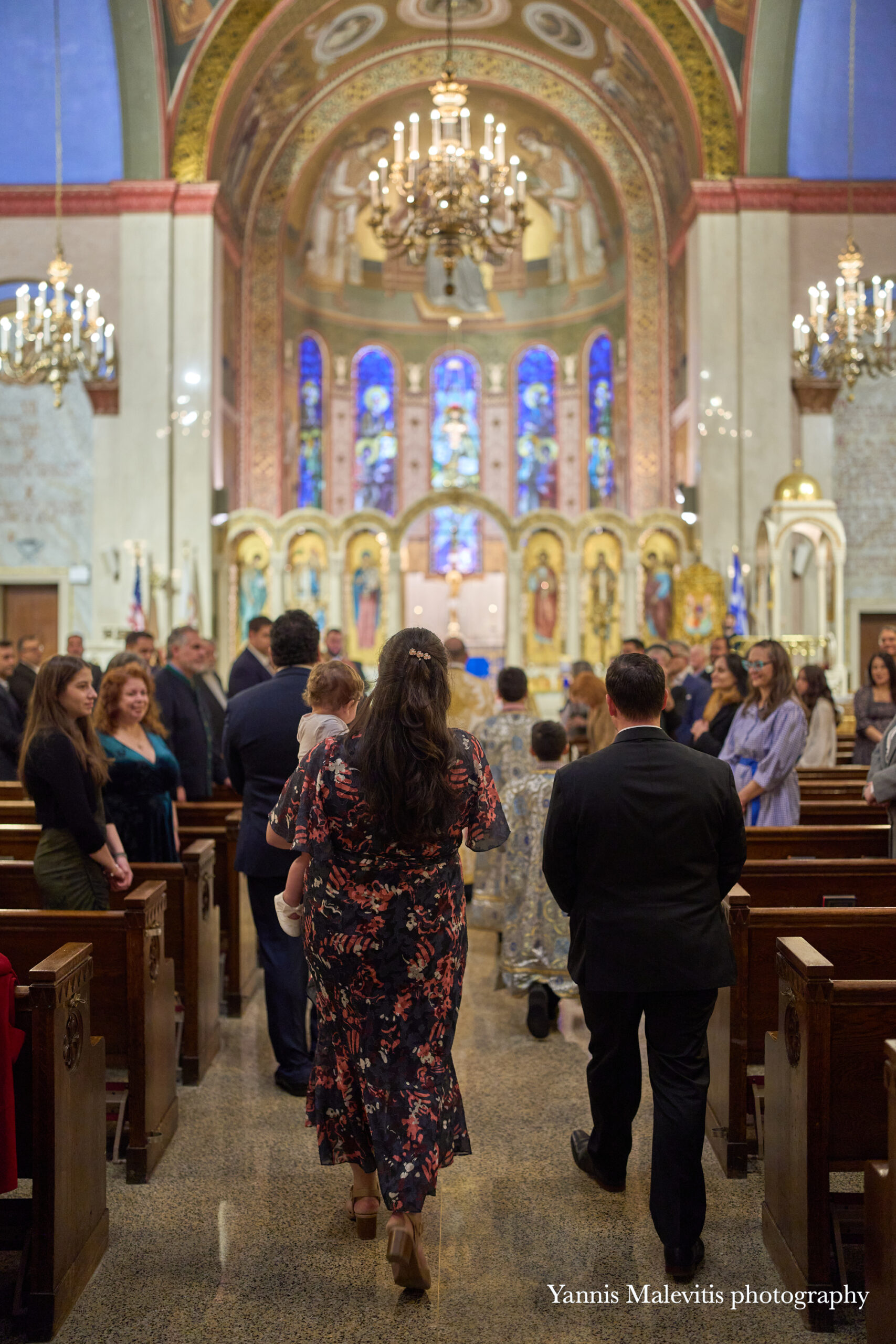
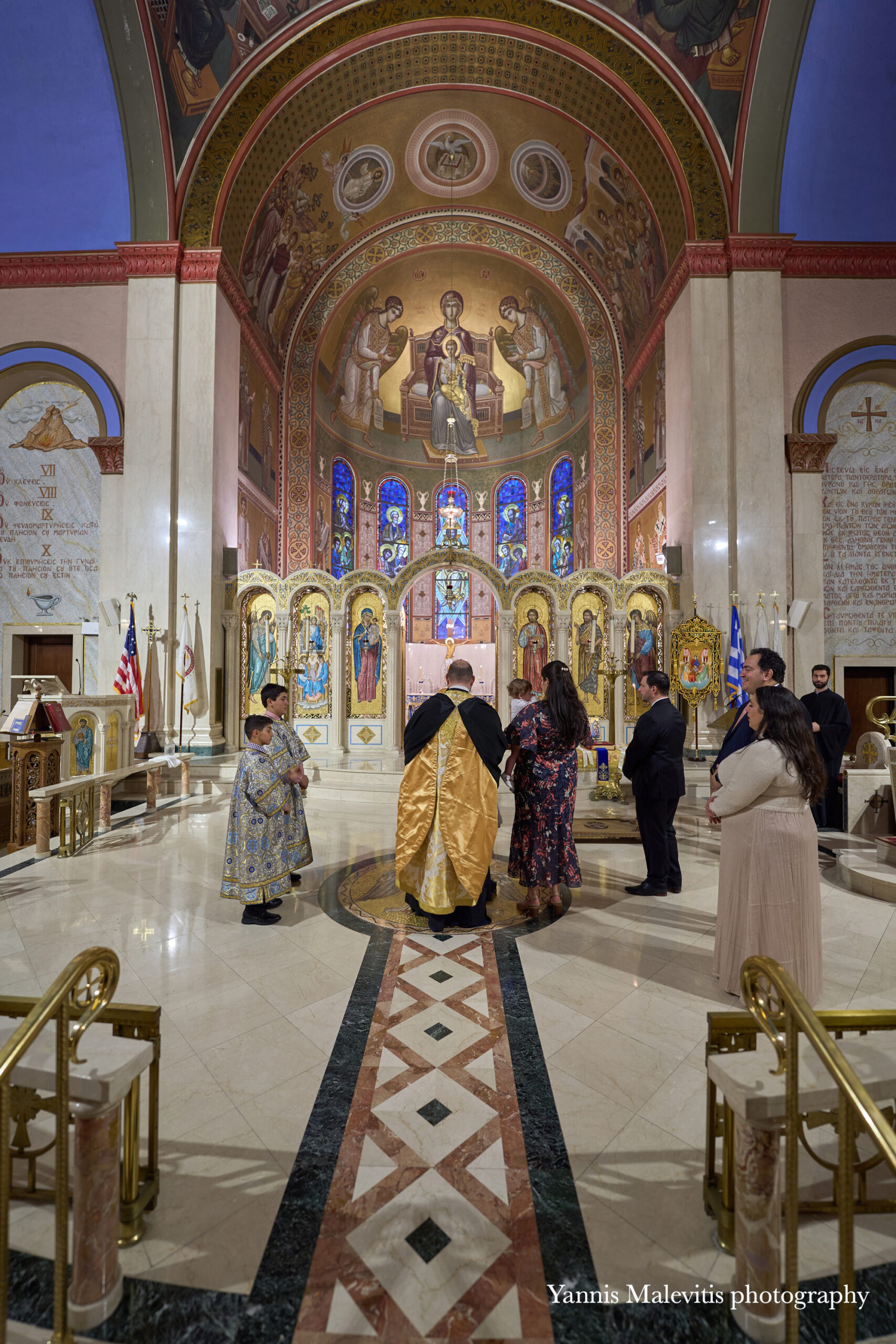
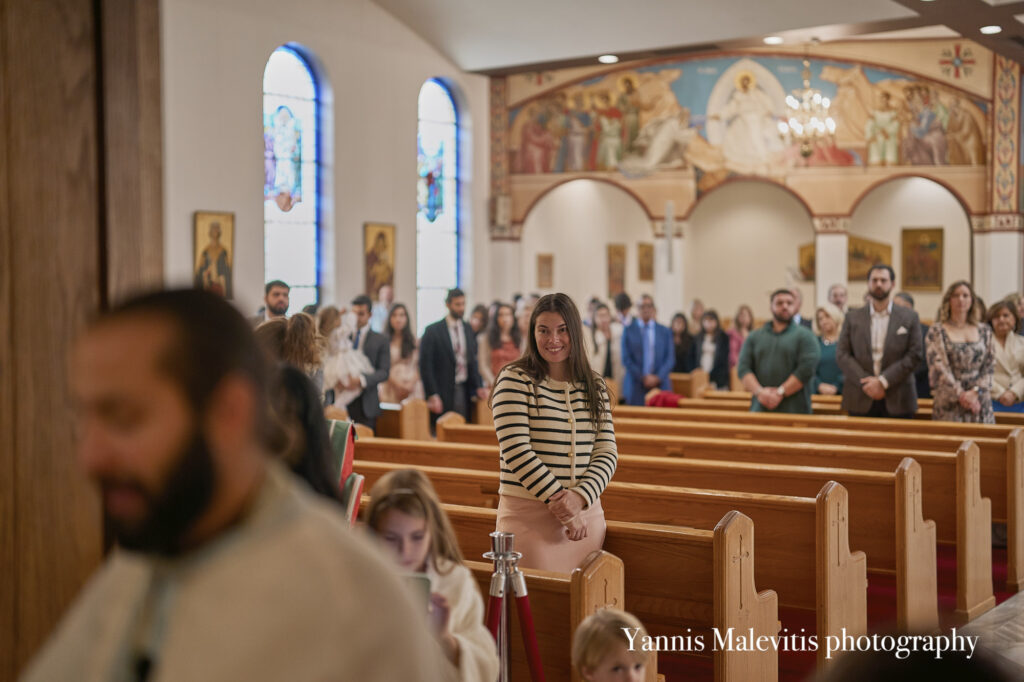
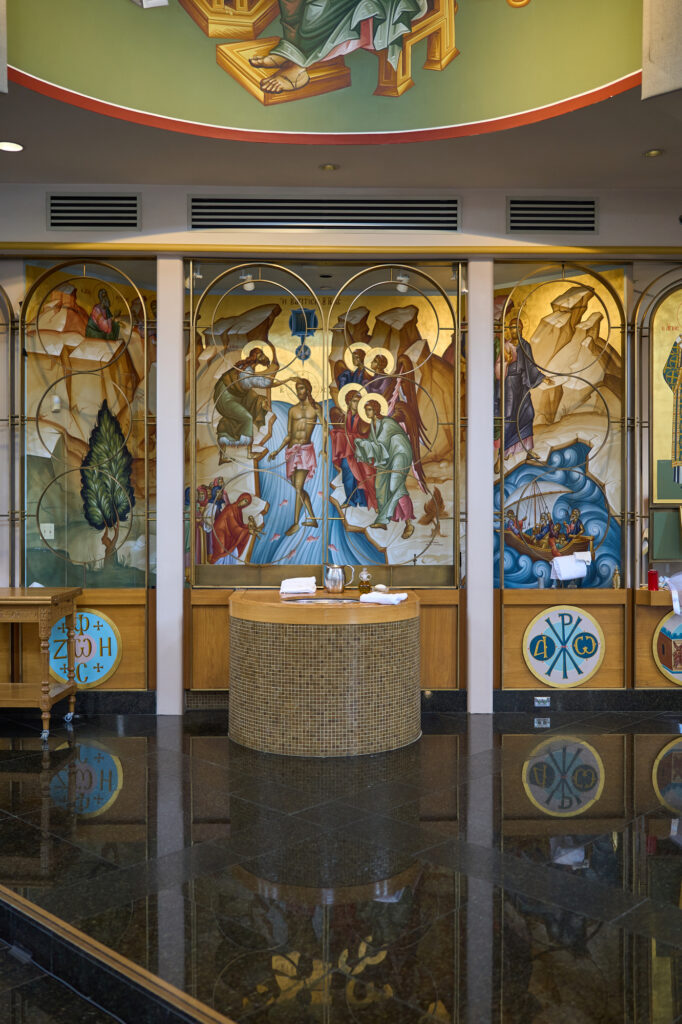
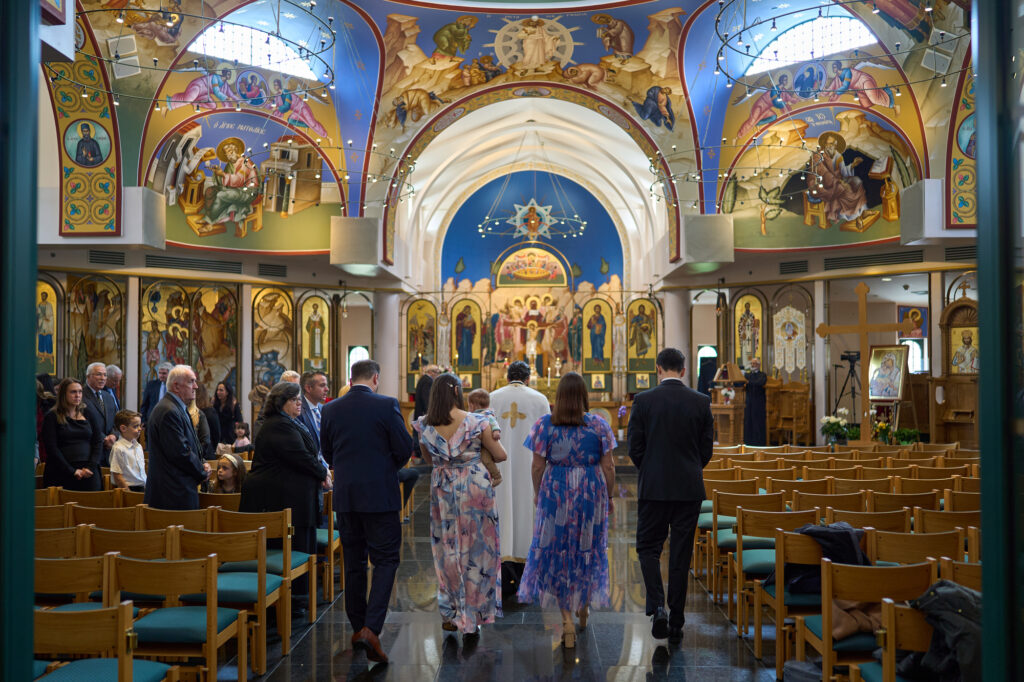
The afternoon light filtered softly through the tall stained-glass windows of the Greek Orthodox Cathedral of the Holy Trinity, casting warm colors across the marble floors. As guests gathered in the narthex, there was a quiet hum of greetings, embraces, and the familiar warmth that comes when family and friends reunite for a joyful occasion.
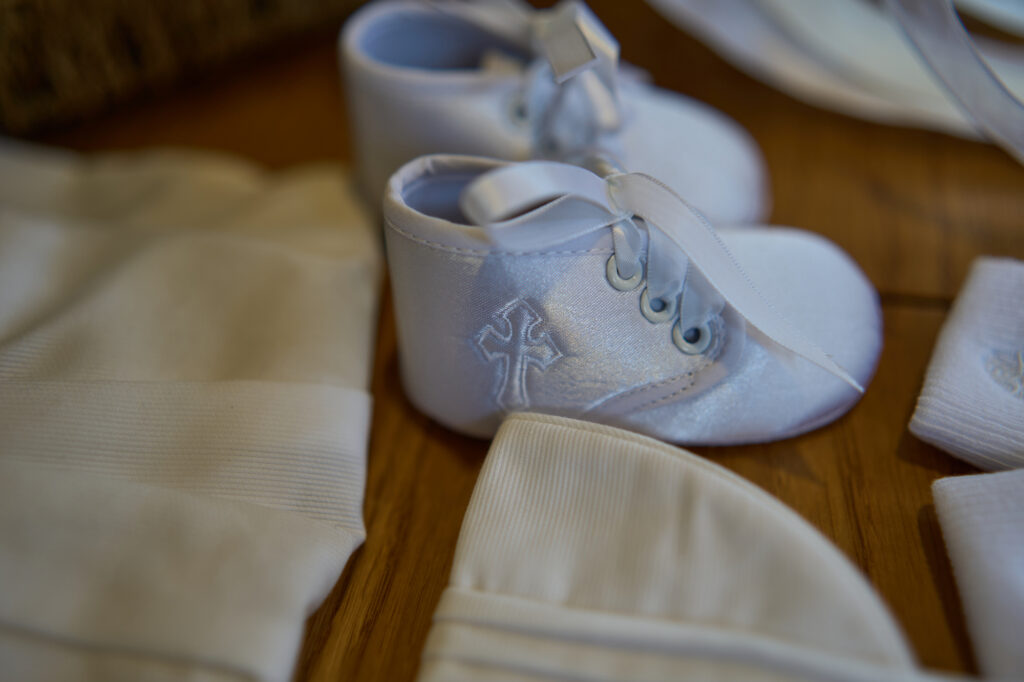
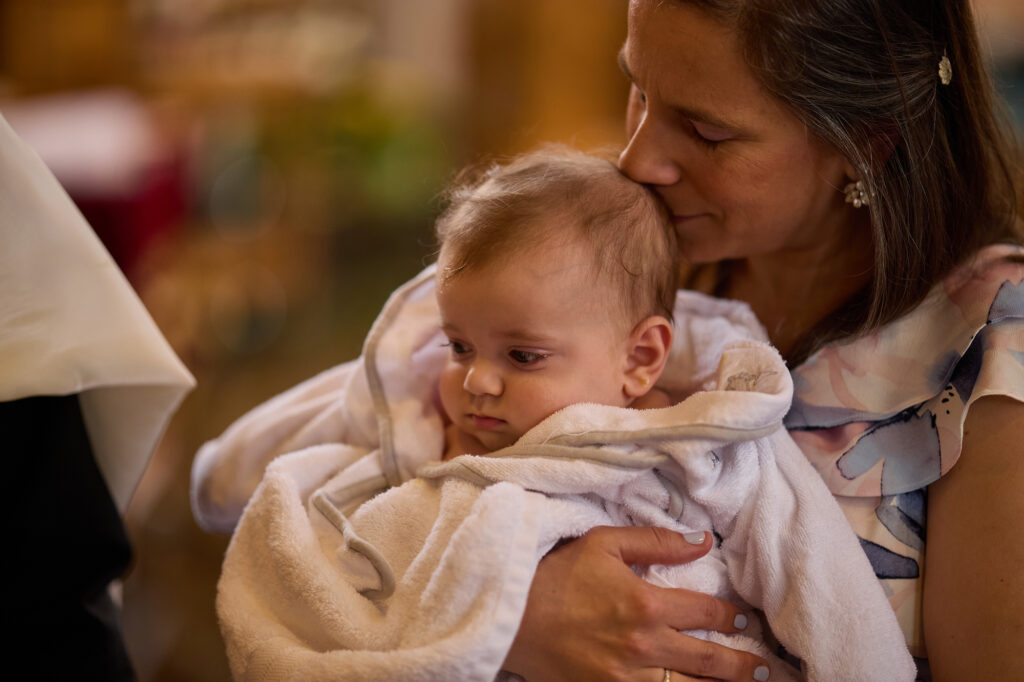
At the center of it all was the little one—calm, curious, dressed in delicate white. Surrounded by proud parents and godparents, the child became the silent heart of the celebration, the reason everyone had come together on this sacred day.
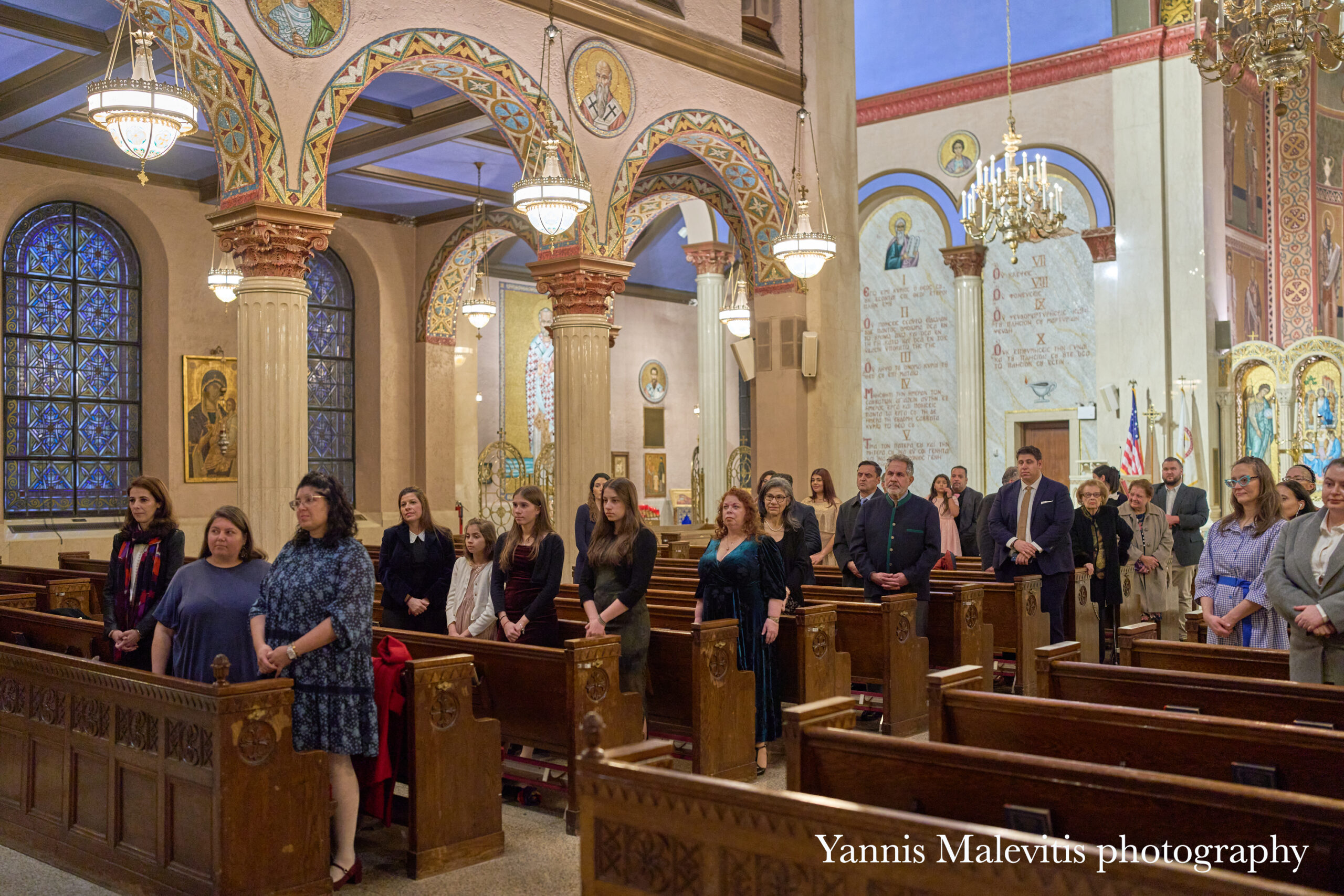
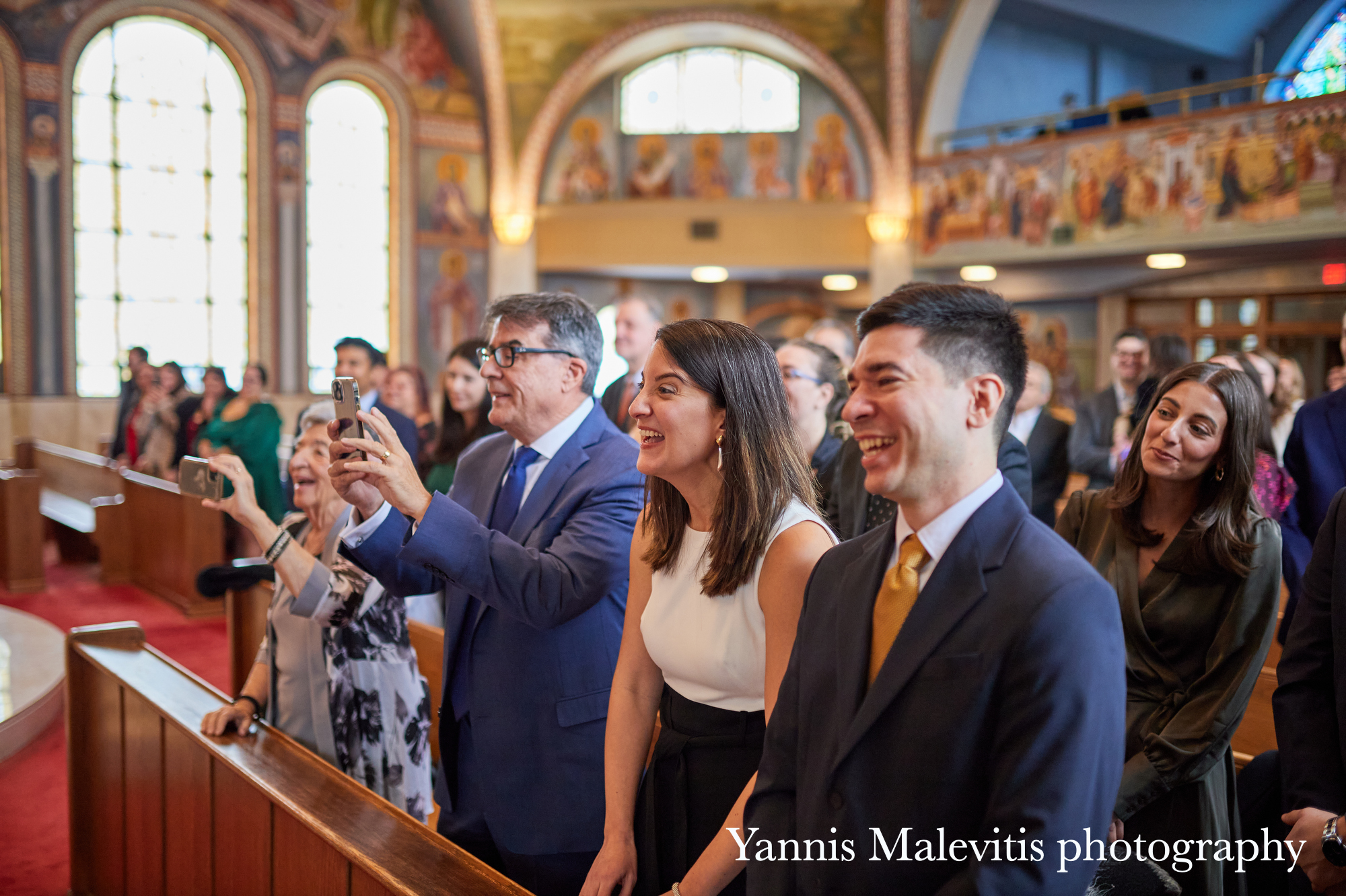
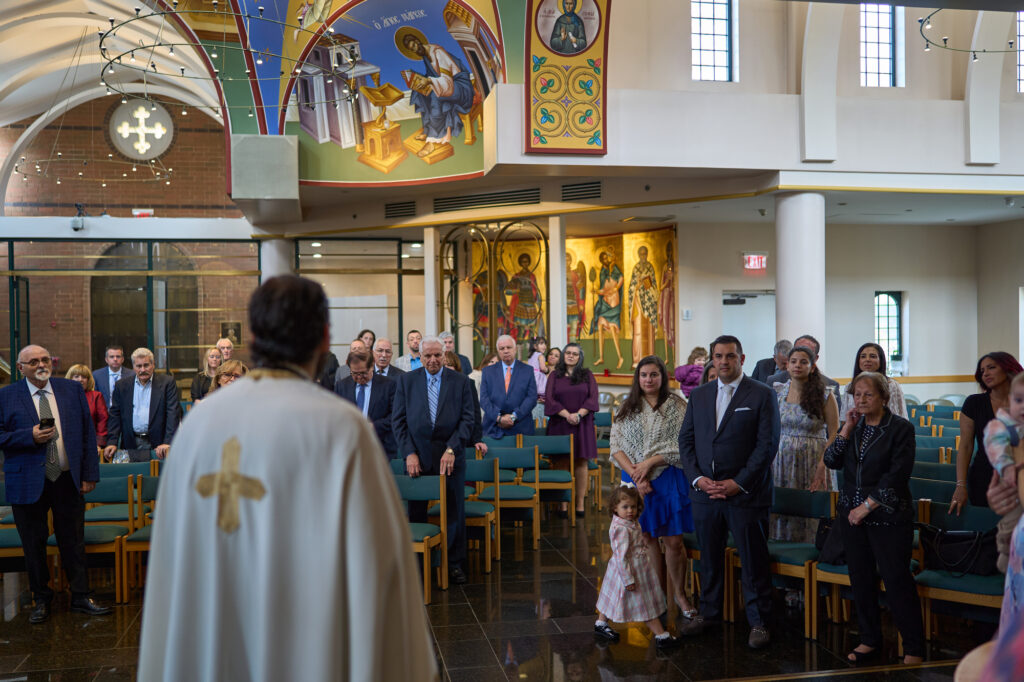
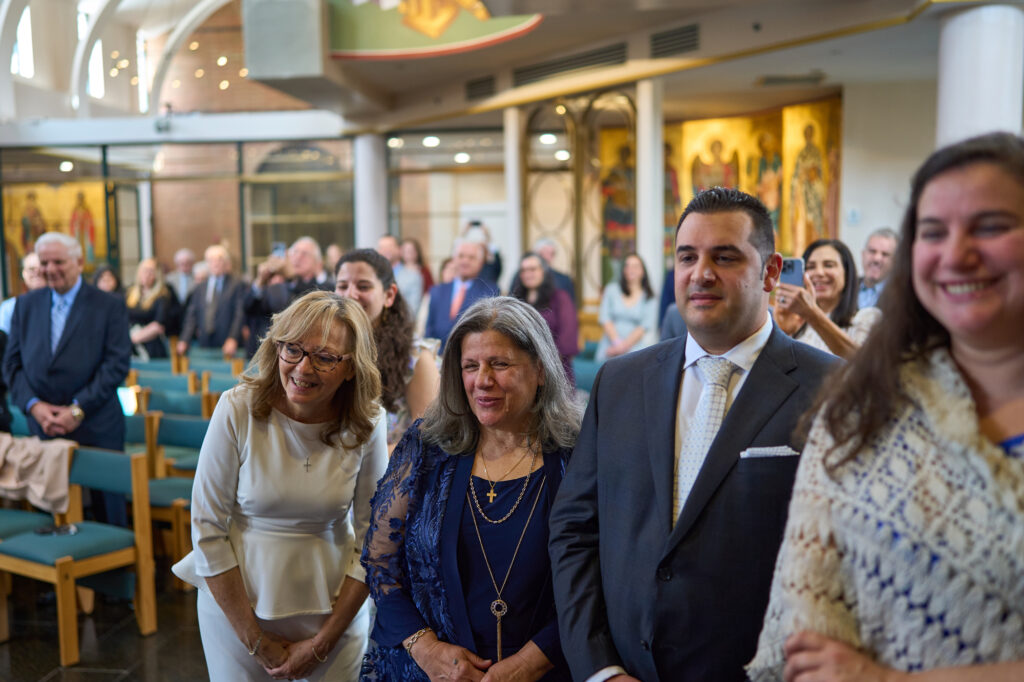
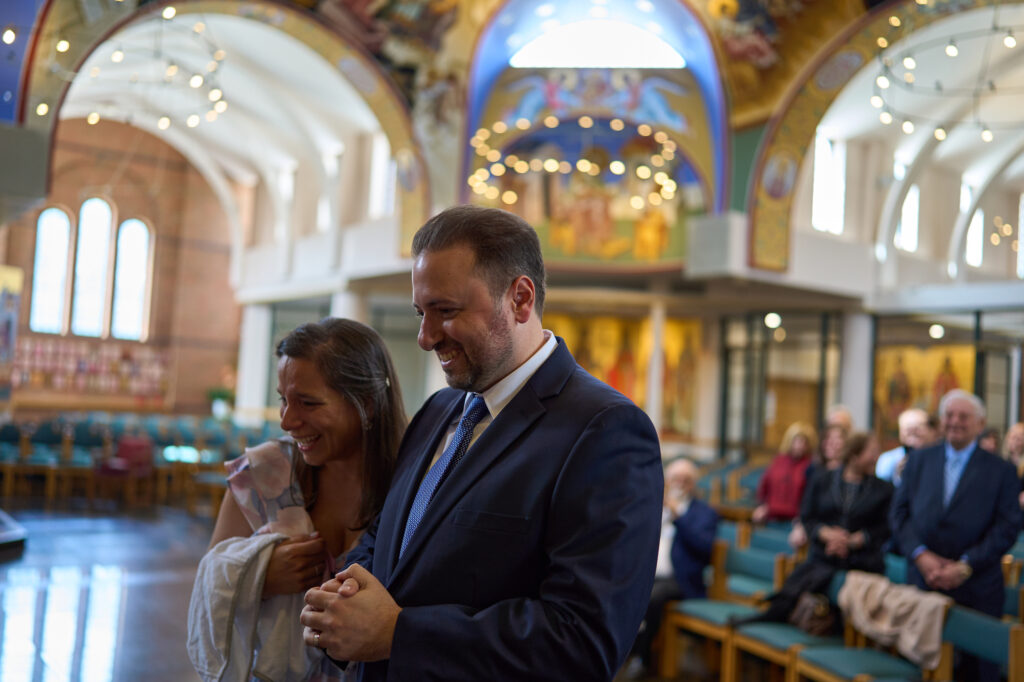
In the pews beyond, relatives and friends stood in reverent silence. Their faces, lit by the cathedral’s warm glow, reflected a shared tenderness.
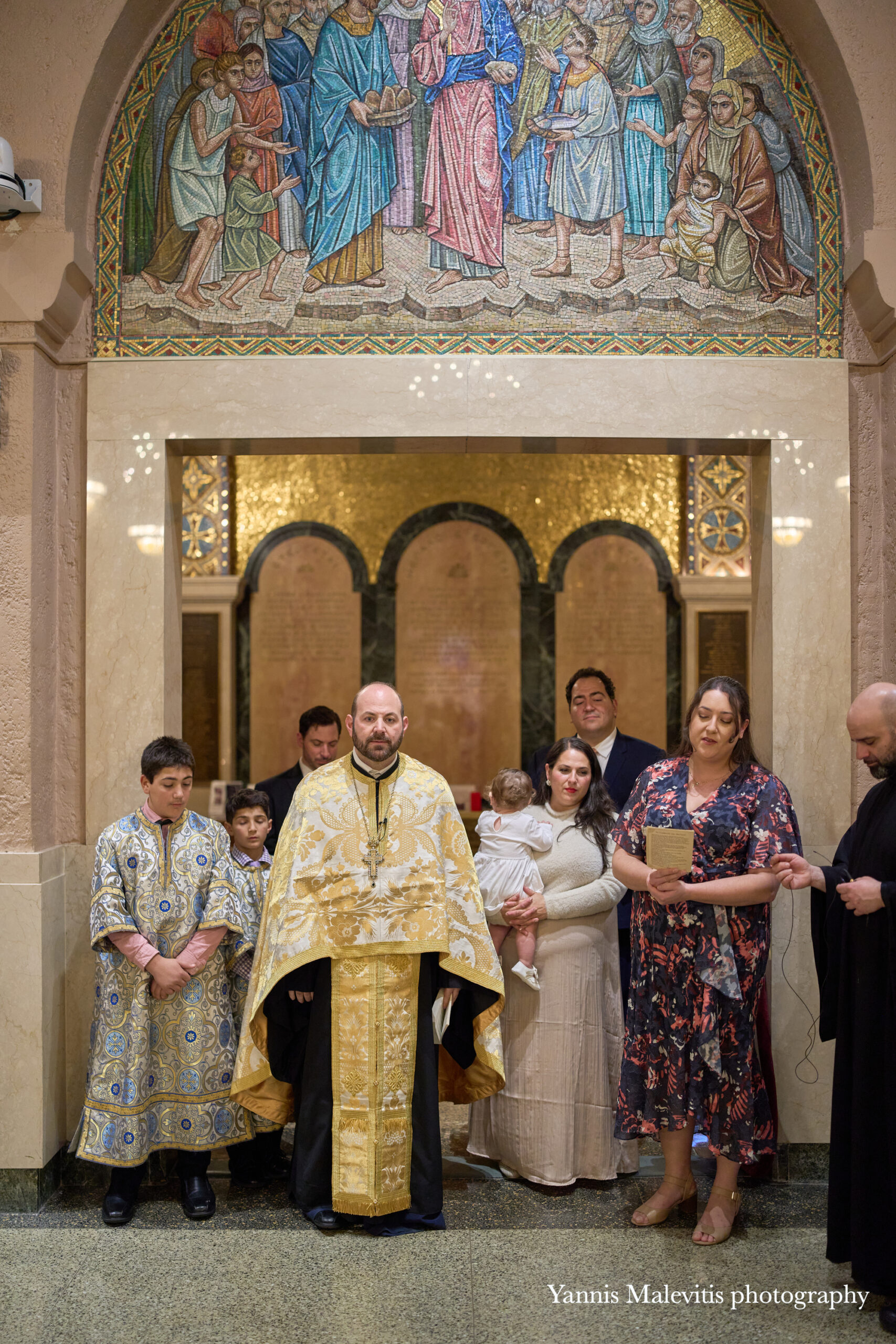
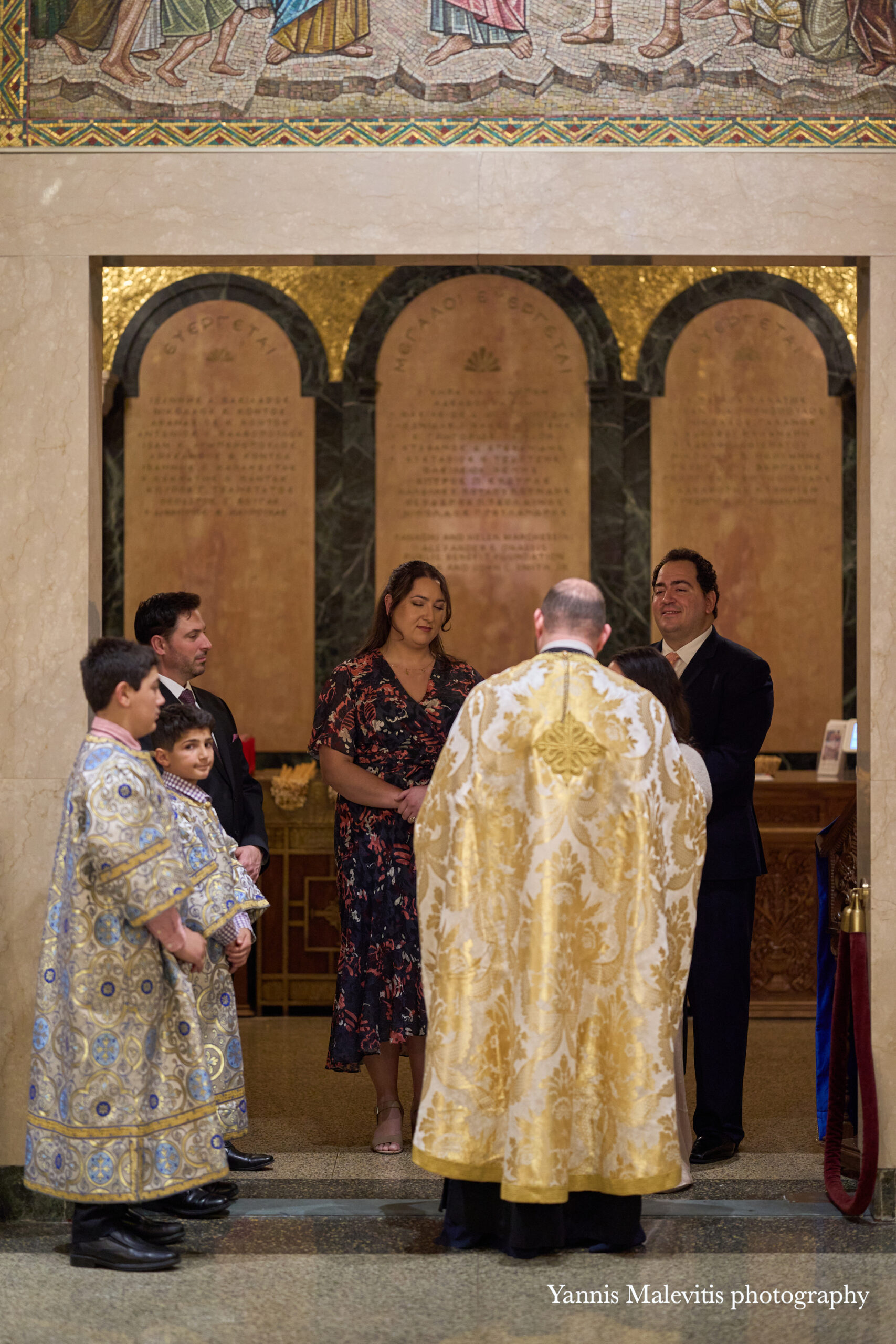
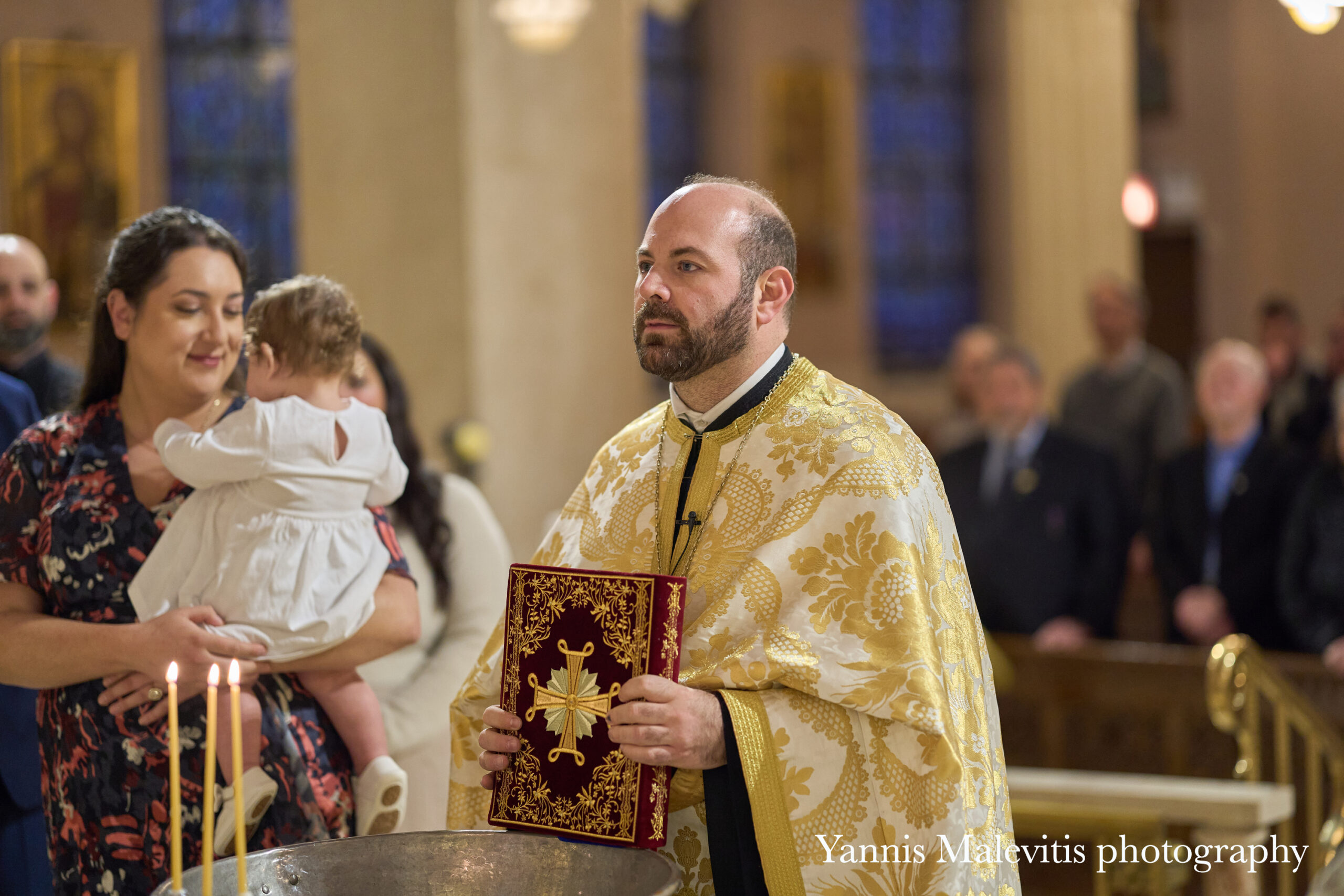
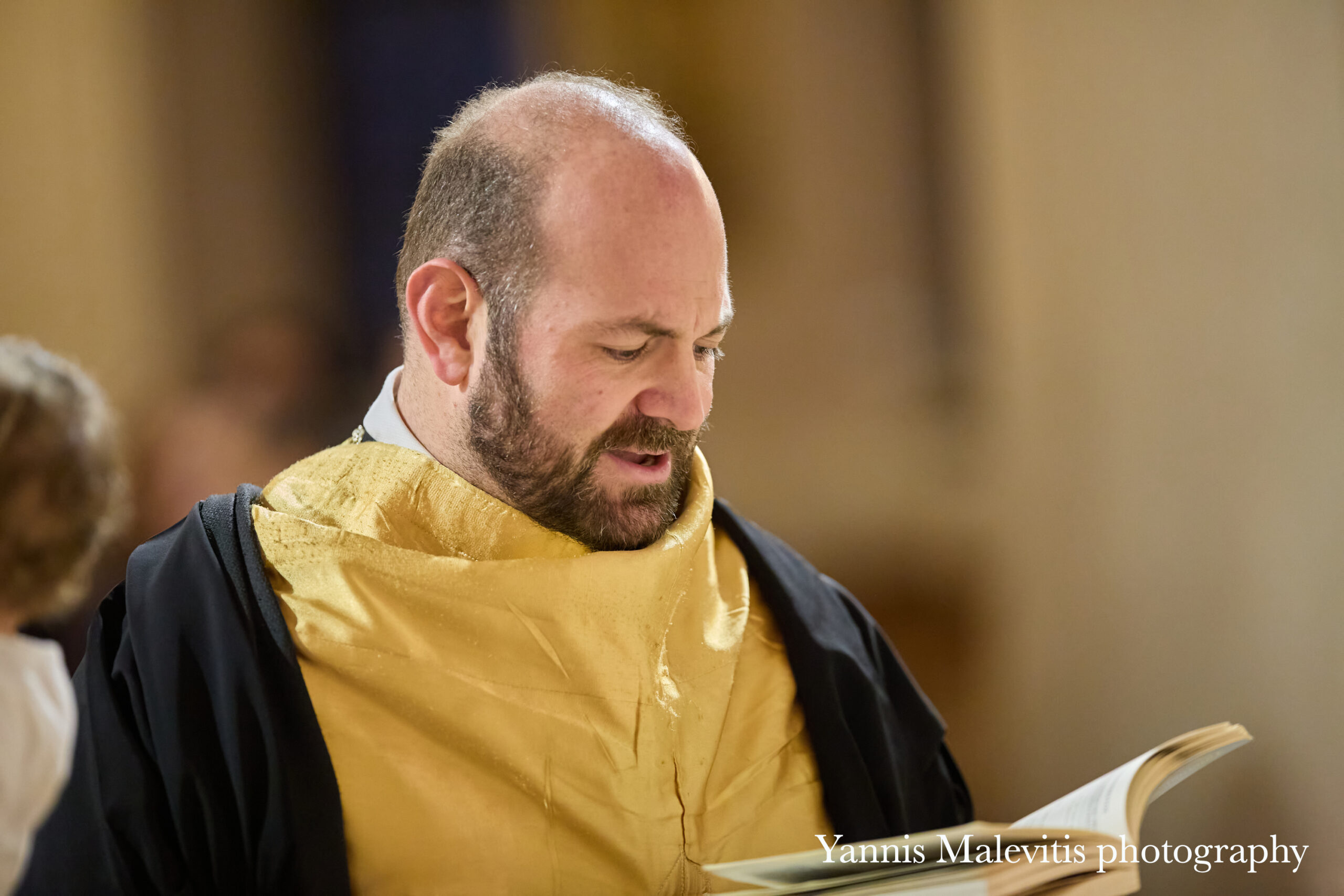
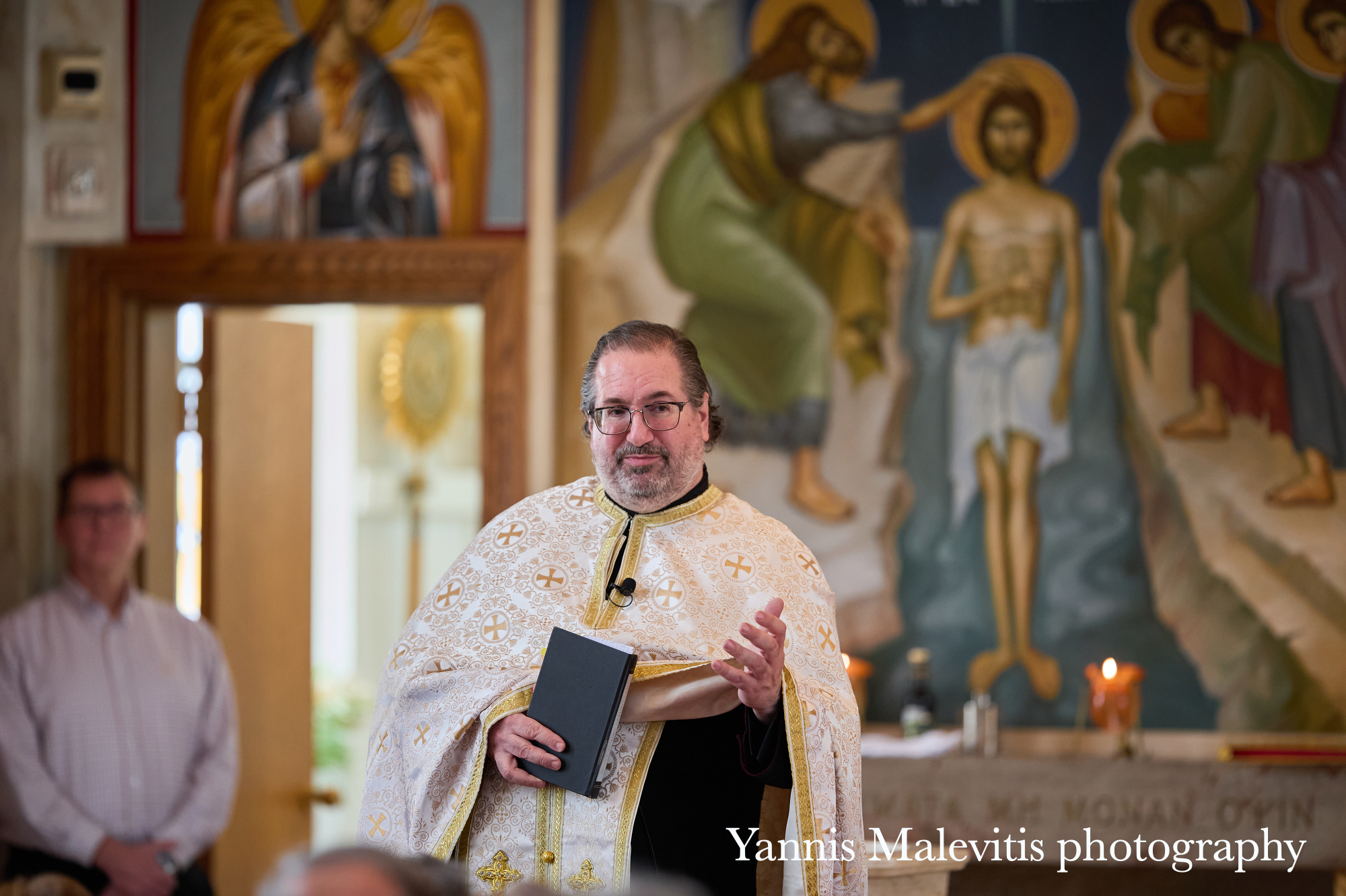
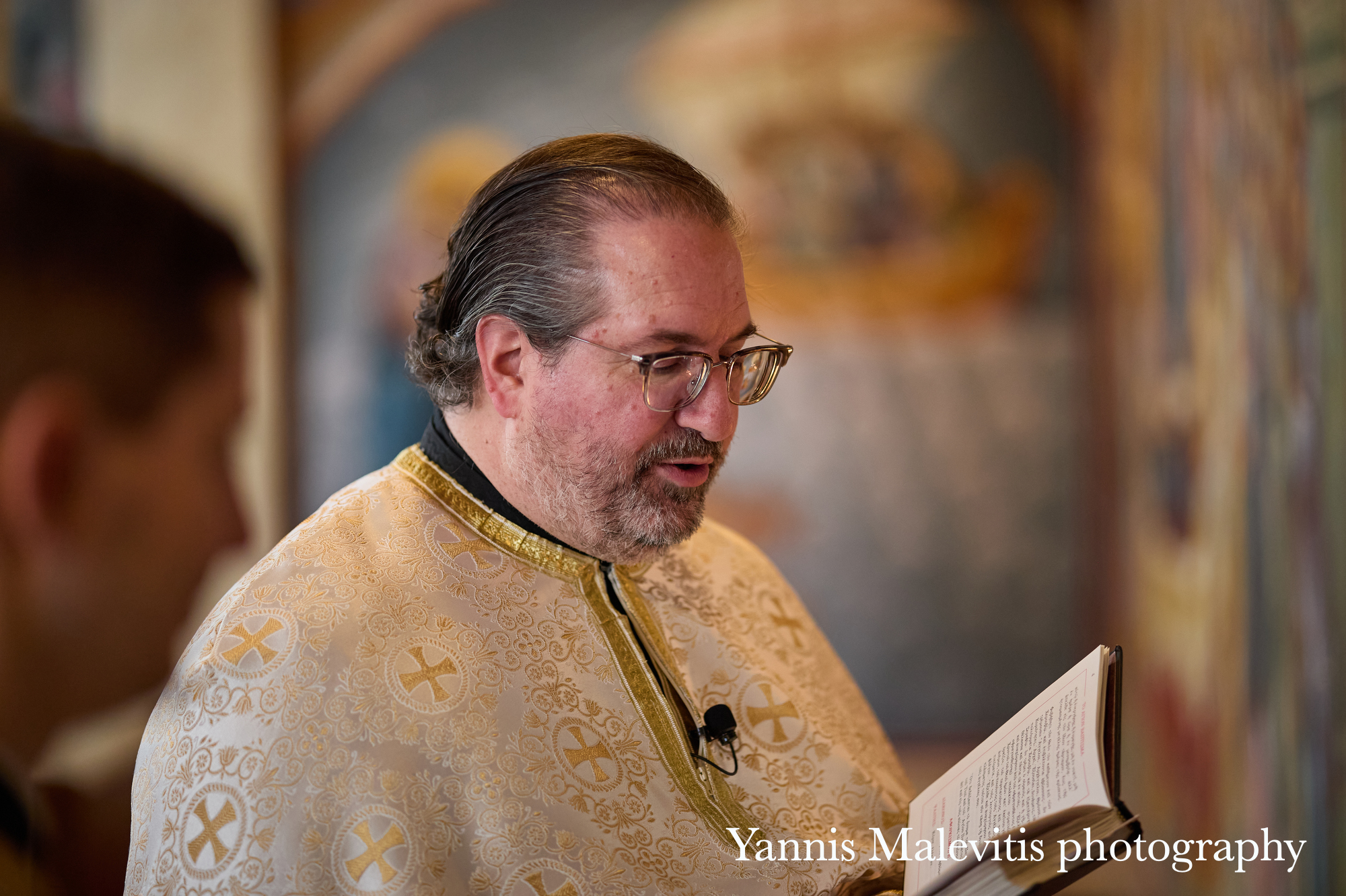
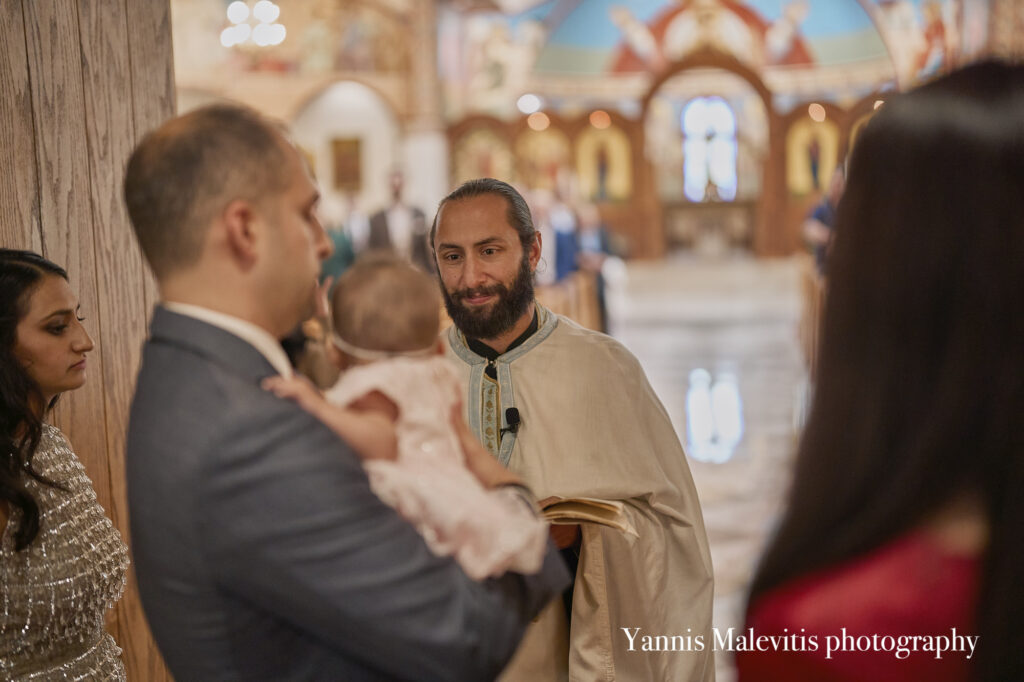
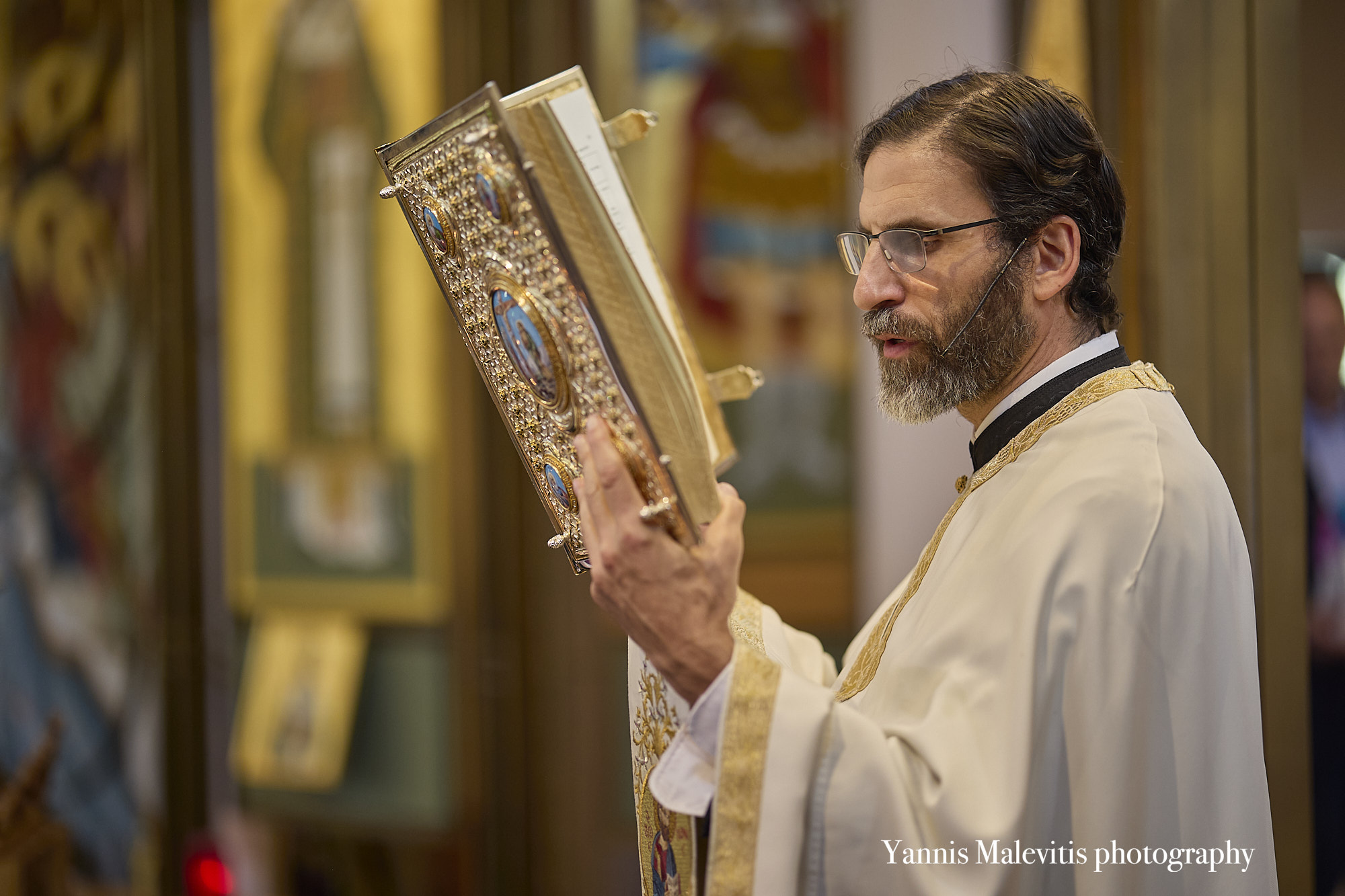
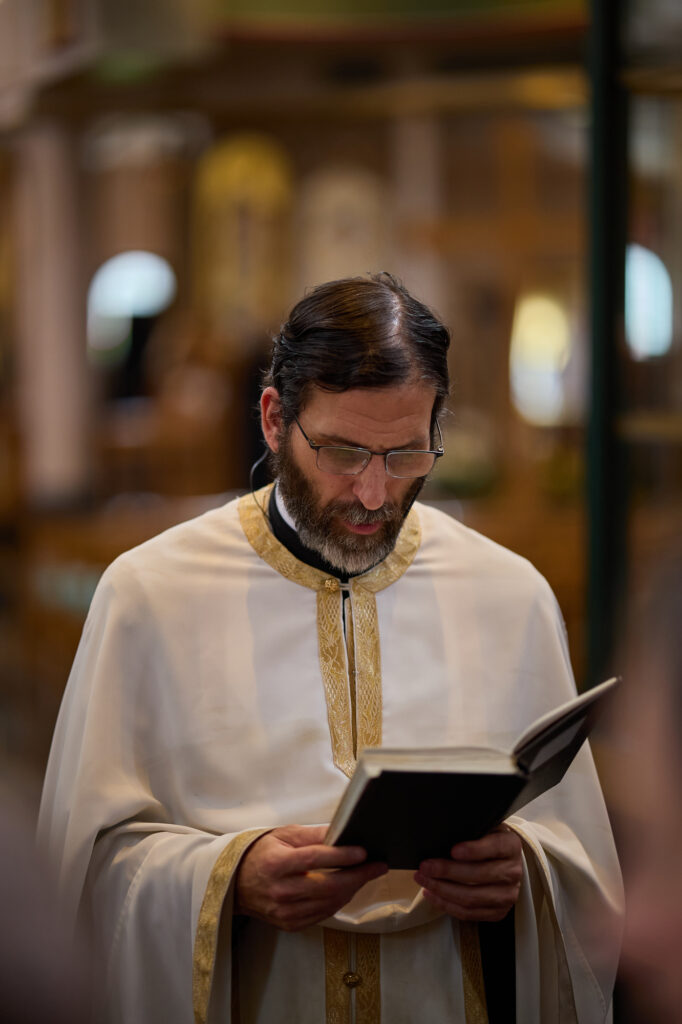
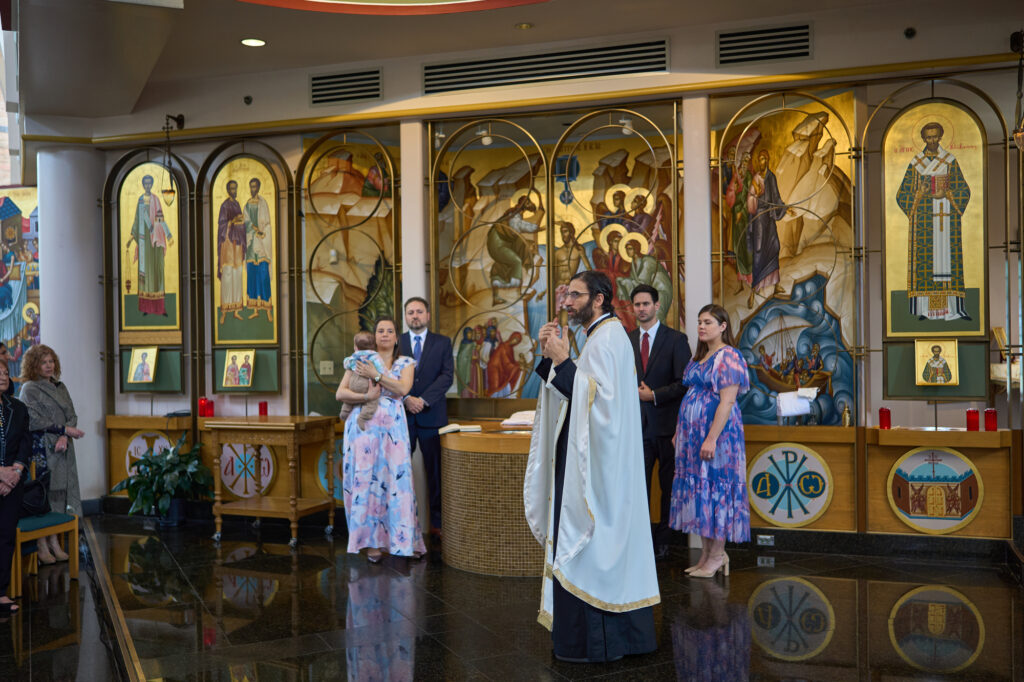
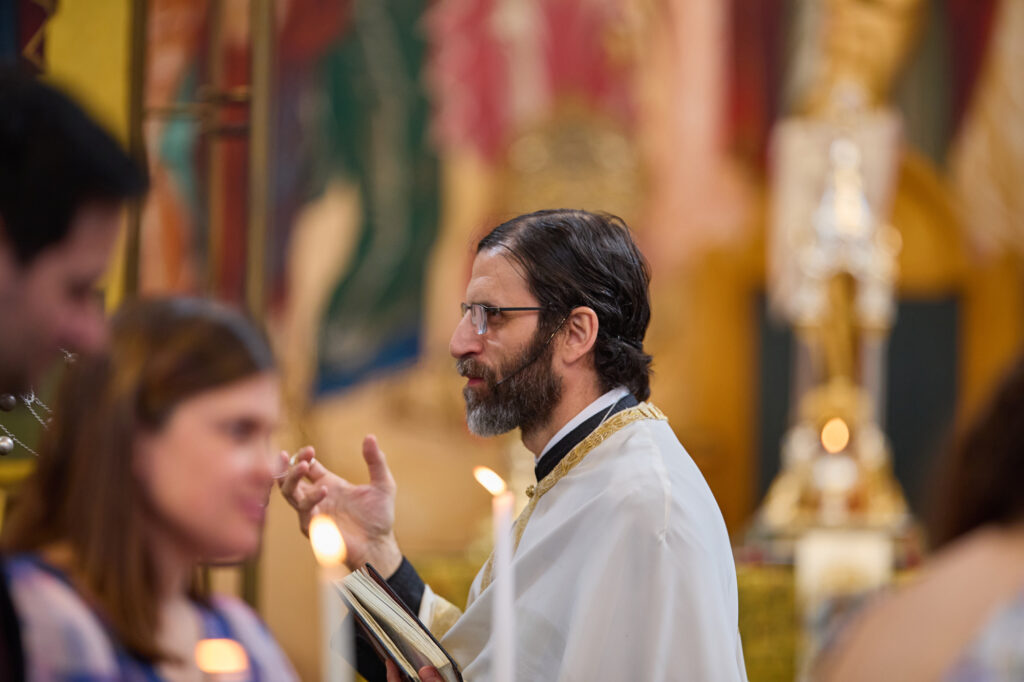
The priest welcomed the family at the front of the cathedral, his vestments shimmering under the gentle glow of the chandeliers.
The sequence of the service is as follows:
1. Reception and Naming of the Child
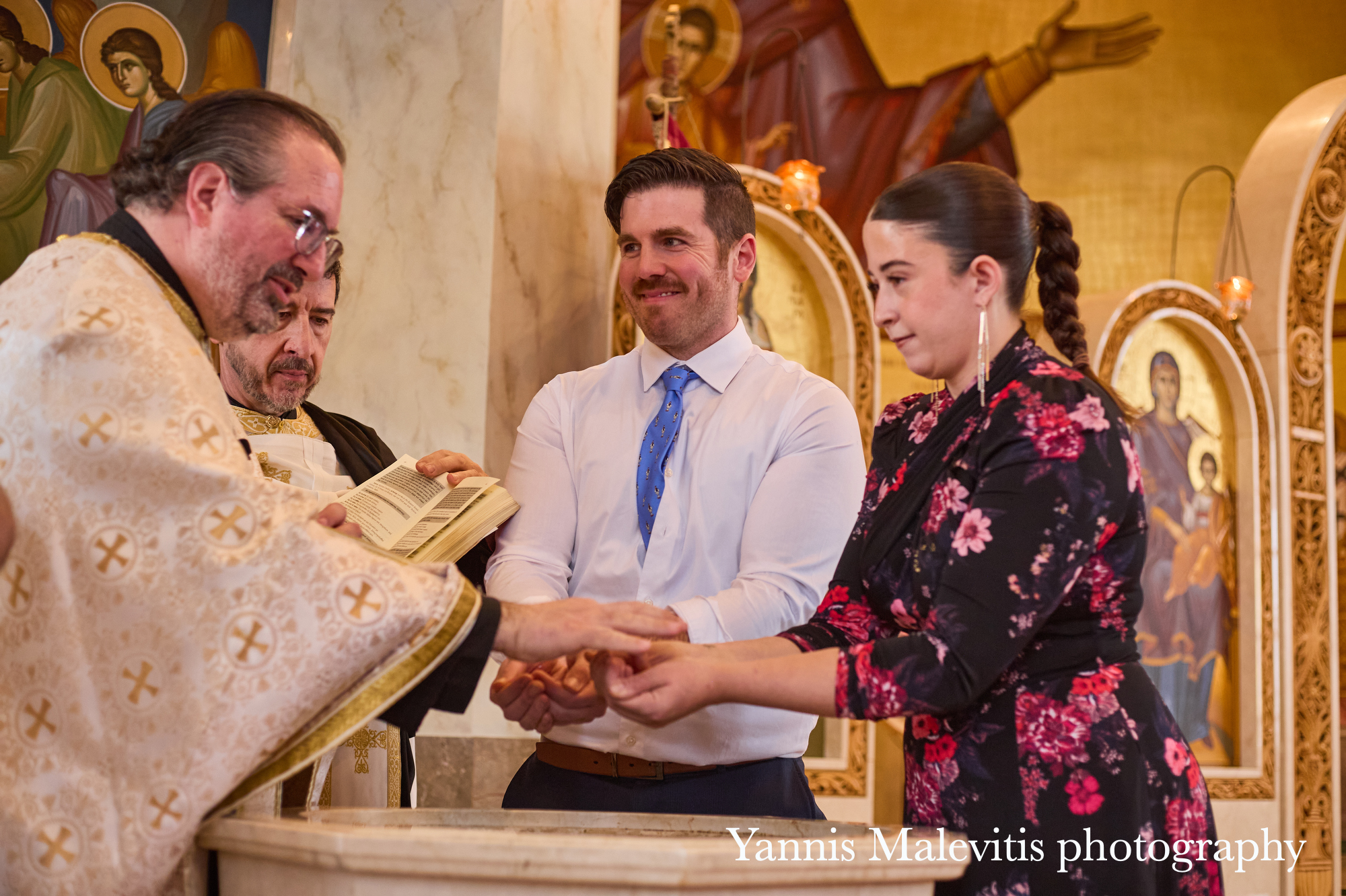
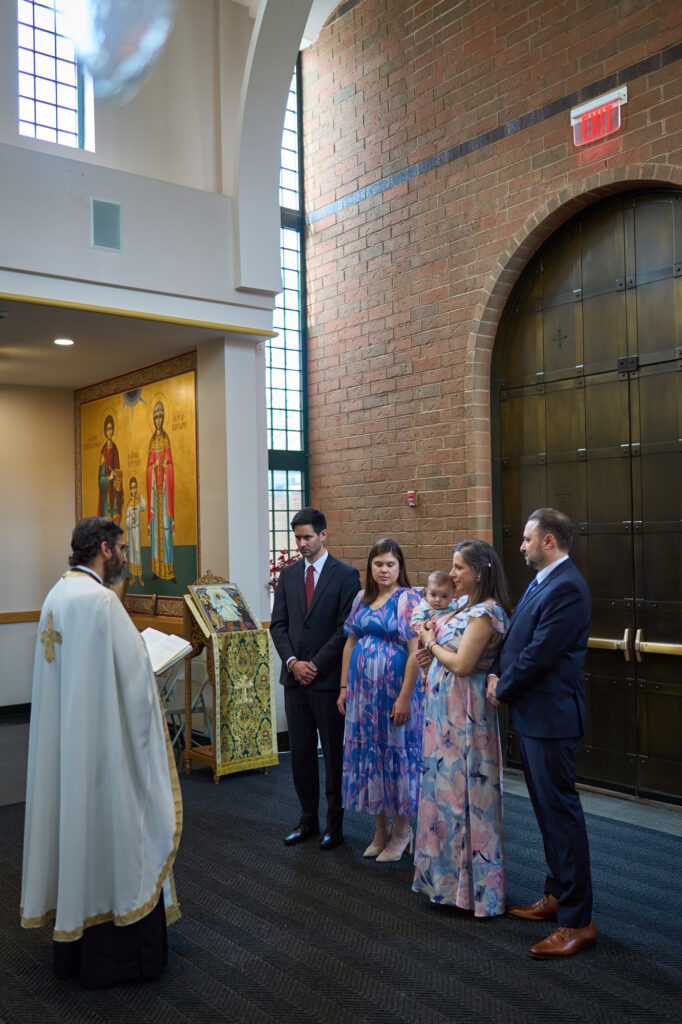
The priest meets the family in the narthex and formally receives the child into the Church. At this moment, the child is given their Christian name, and the godparent assumes the spiritual responsibility to guide the child in the Orthodox faith.
2. Renunciation of Satan and Profession of Faith
Standing in the narthex, the godparent turns to the west and renounces Satan three times.
Turning to the east, they profess the Orthodox Christian faith and recite the Nicene Creed, declaring the child’s entry into the light of Christ.
3. Entrance Into the Nave
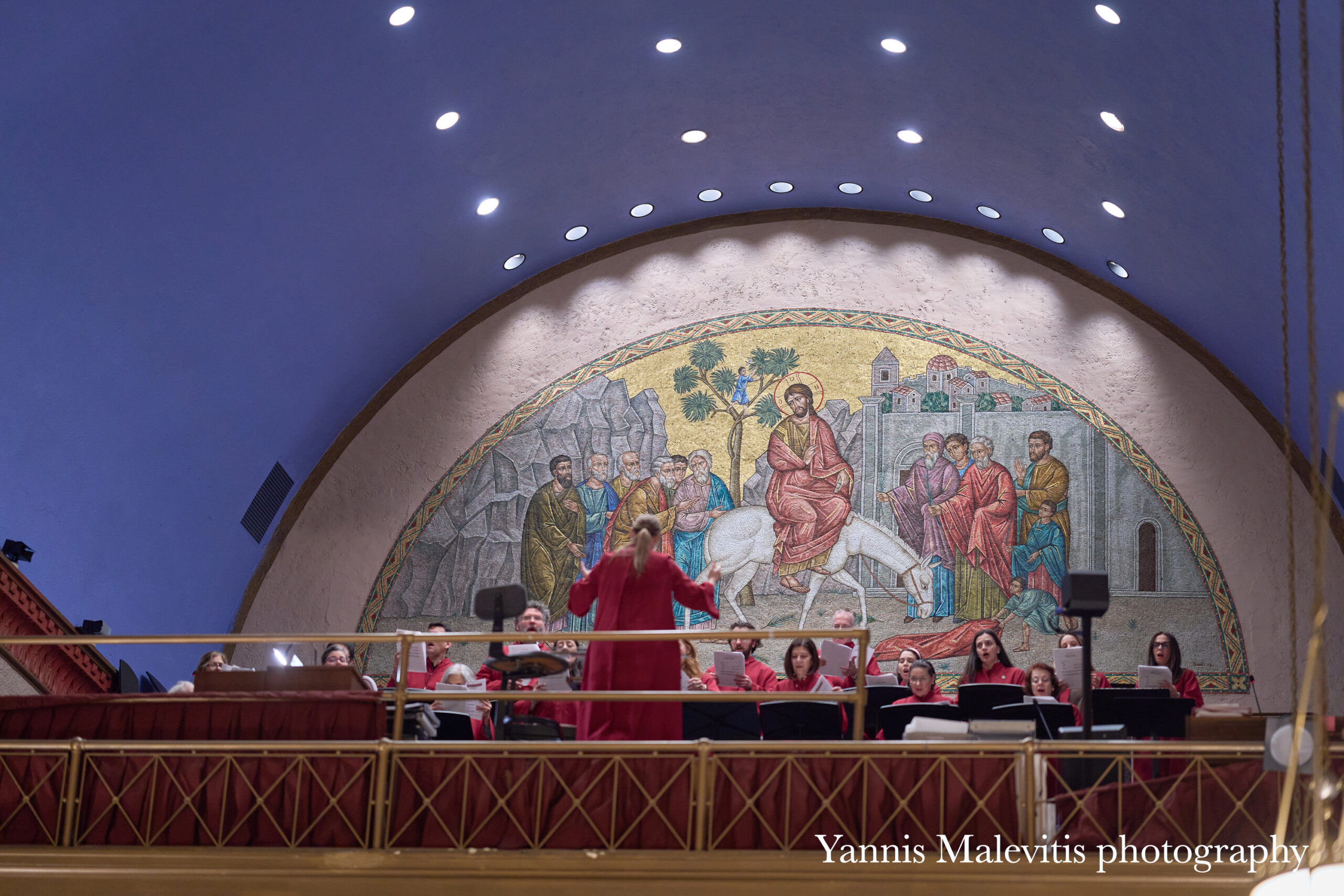
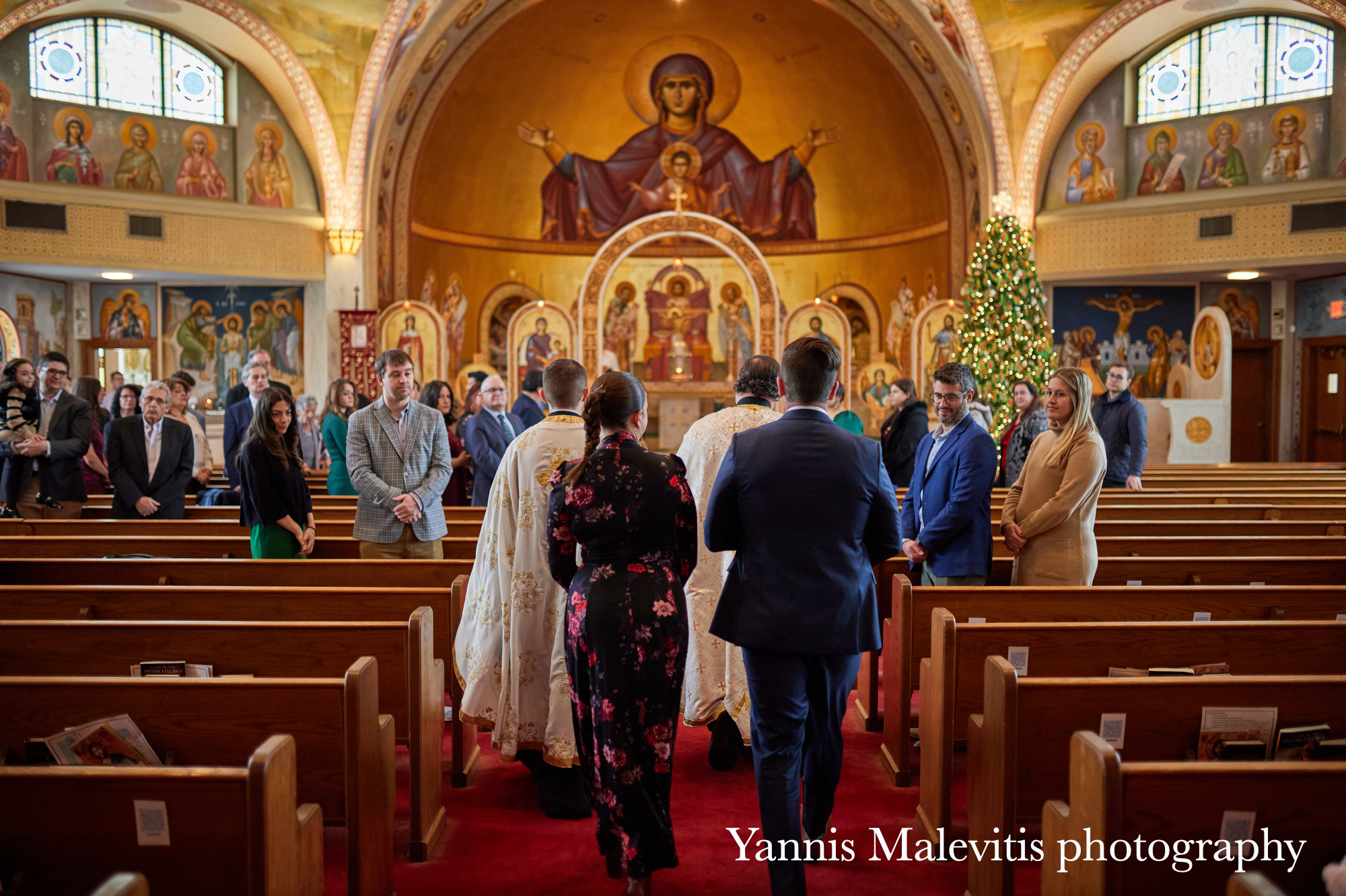
The priest leads the family and the newly received child into the main body of the church. Prayers are offered for the child’s protection, enlightenment, and spiritual growth.
4. Blessing of the Baptismal Water
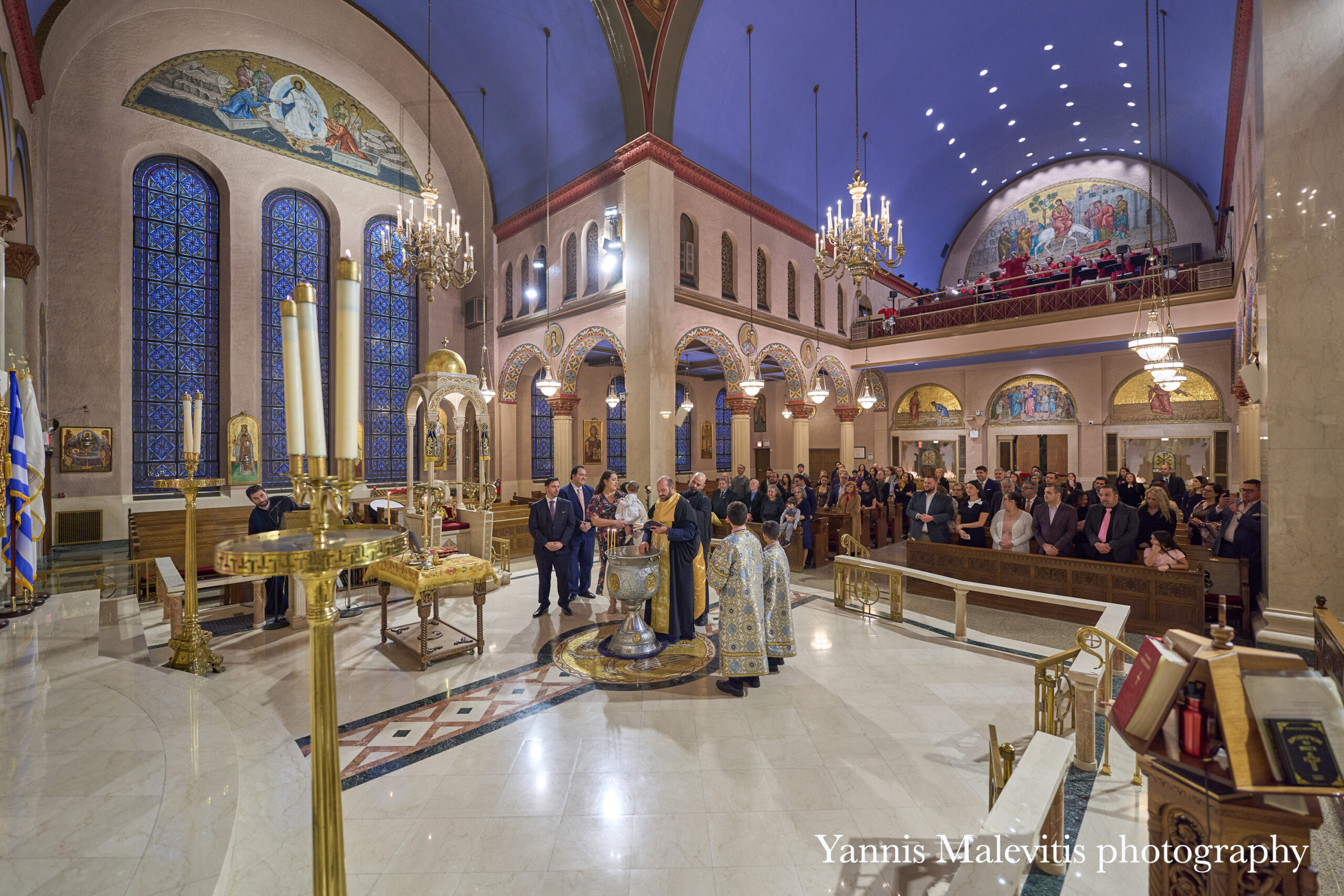
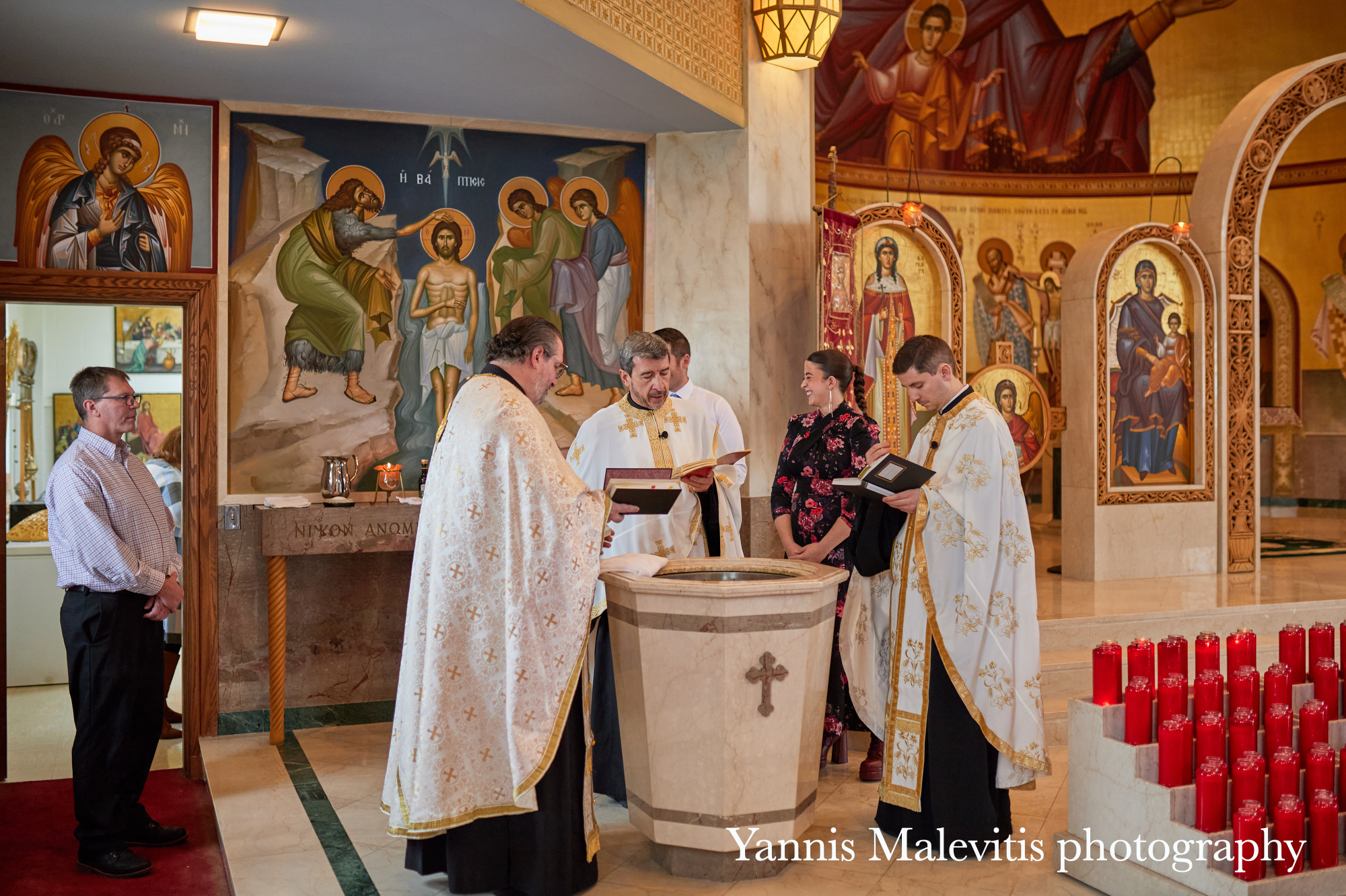
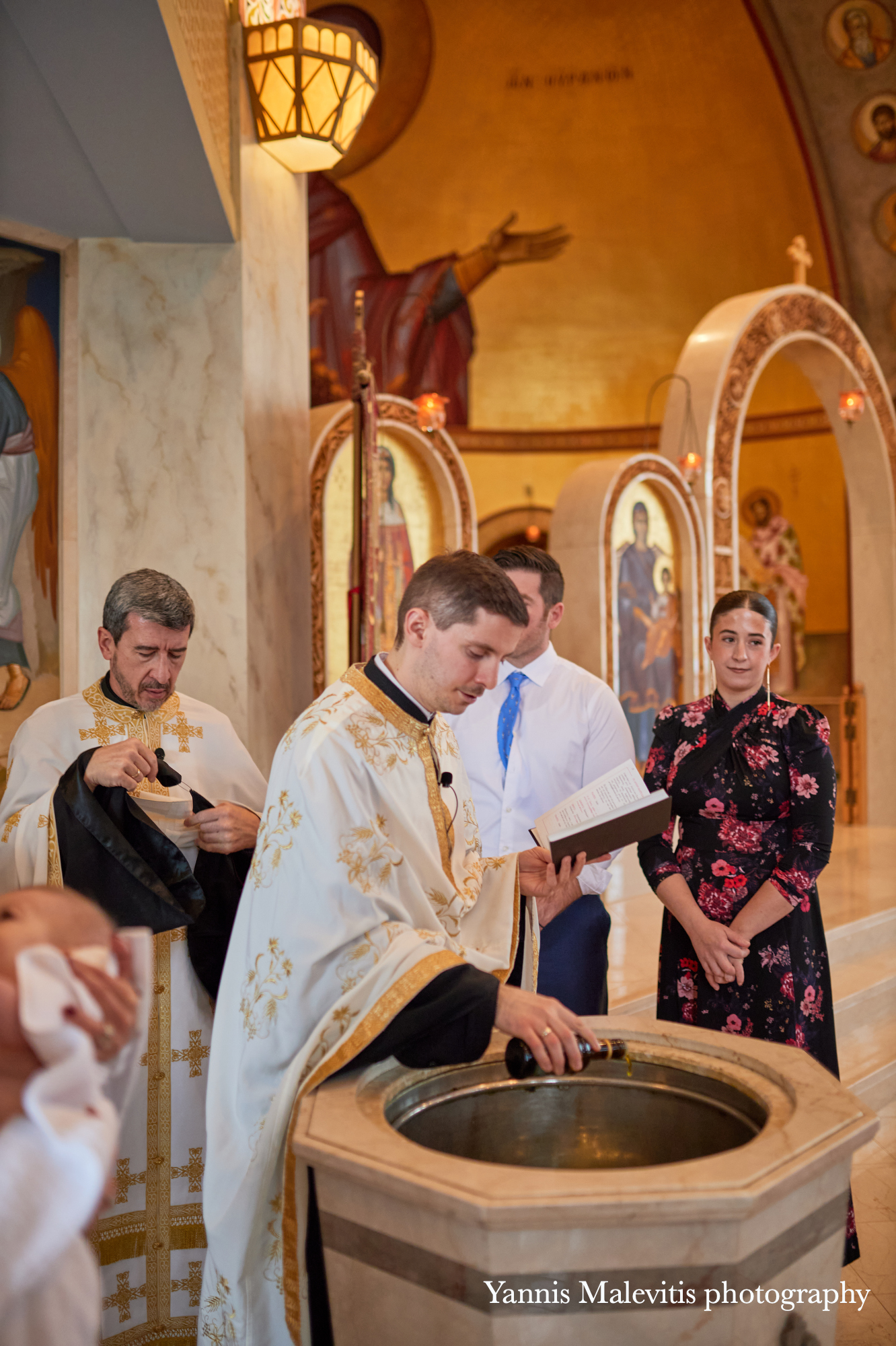
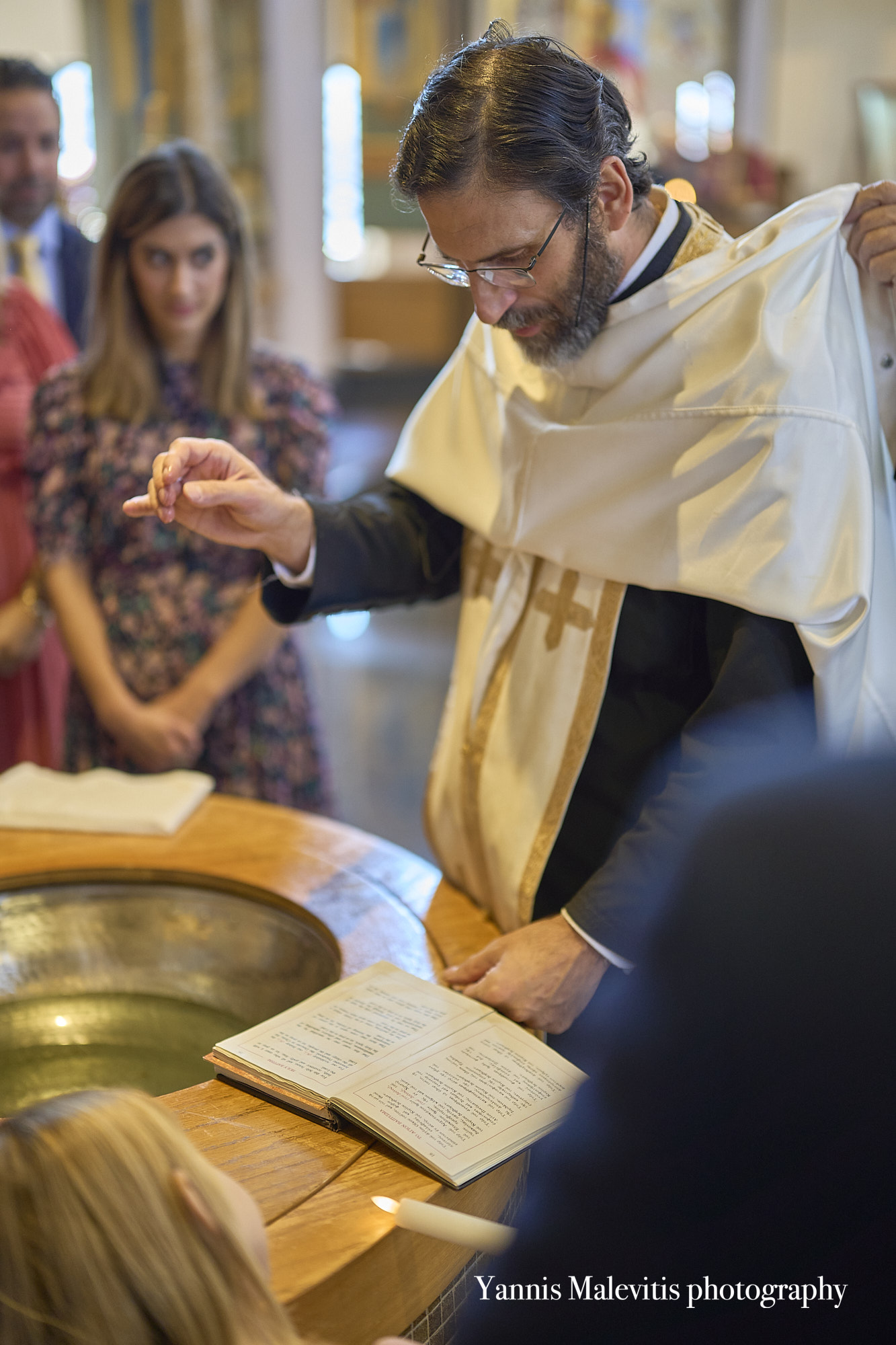
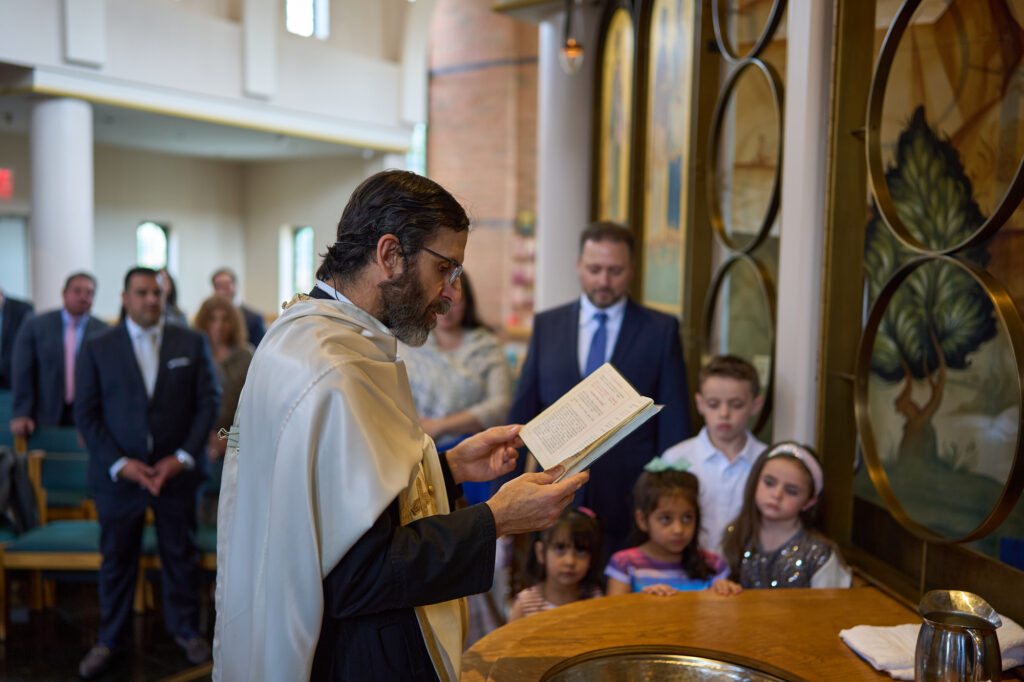
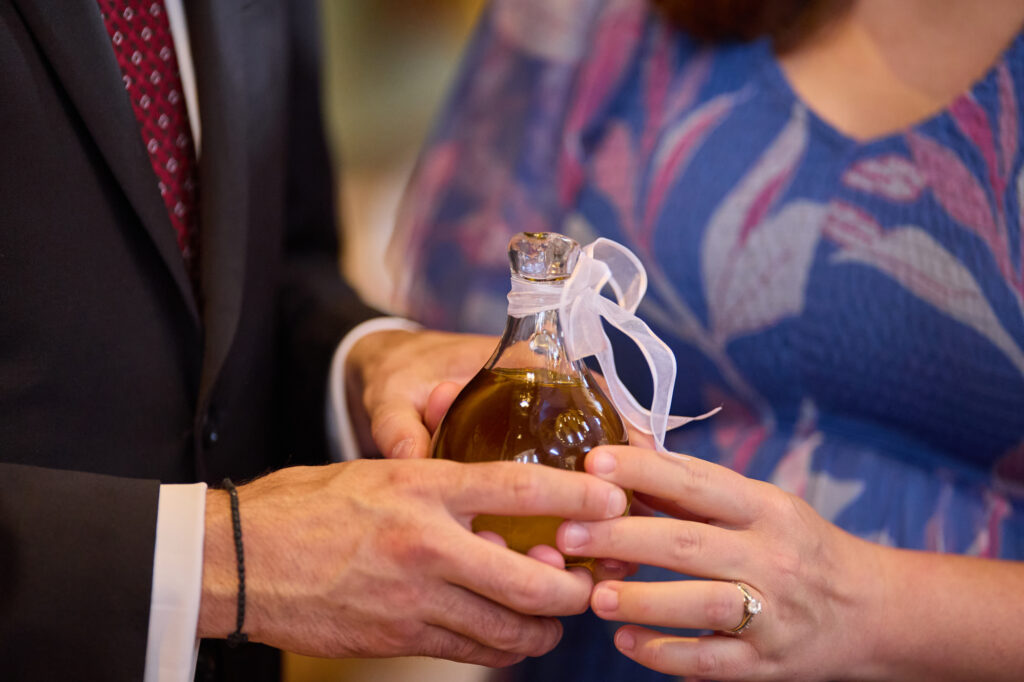
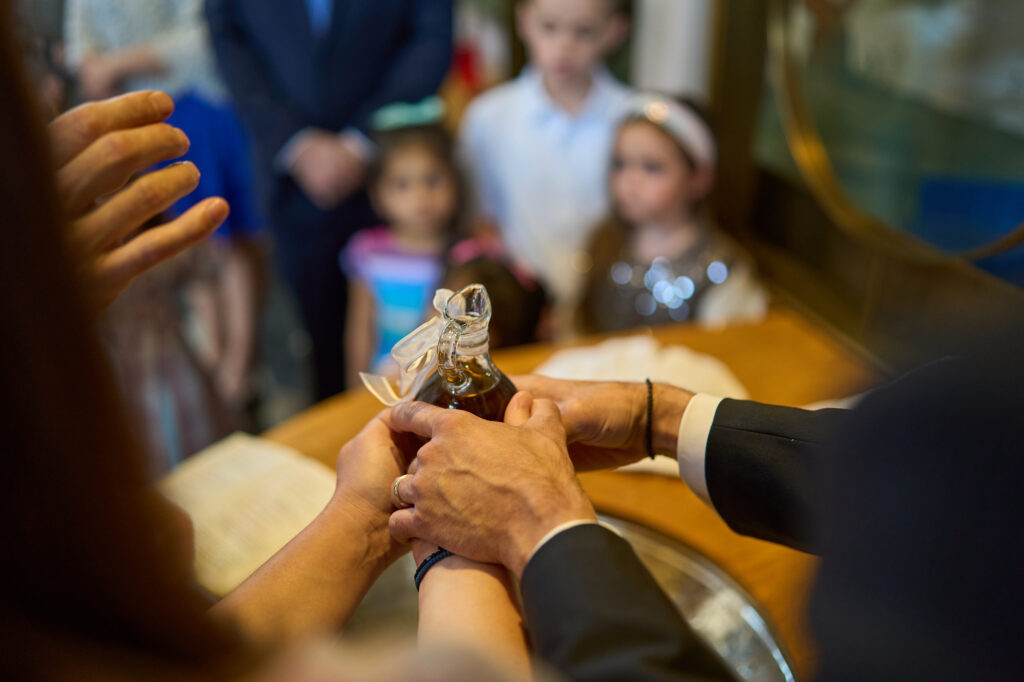
At the font, the priest blesses the water through prayer and symbolic actions, including breathing over it in the form of a cross. Blessed oil is also added to the water, signifying joy and preparation for the sacrament.
5. Pre-Baptismal Anointing
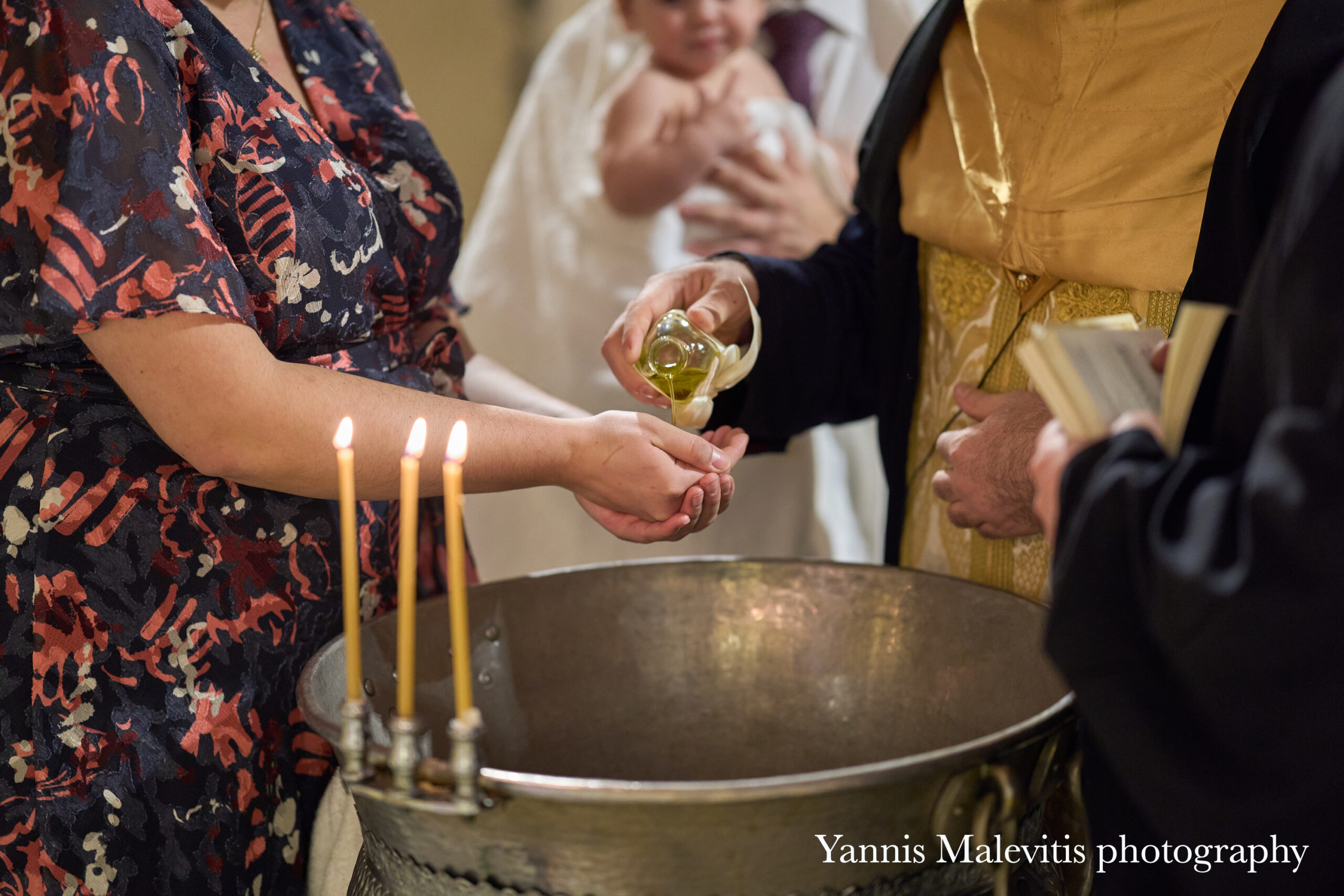
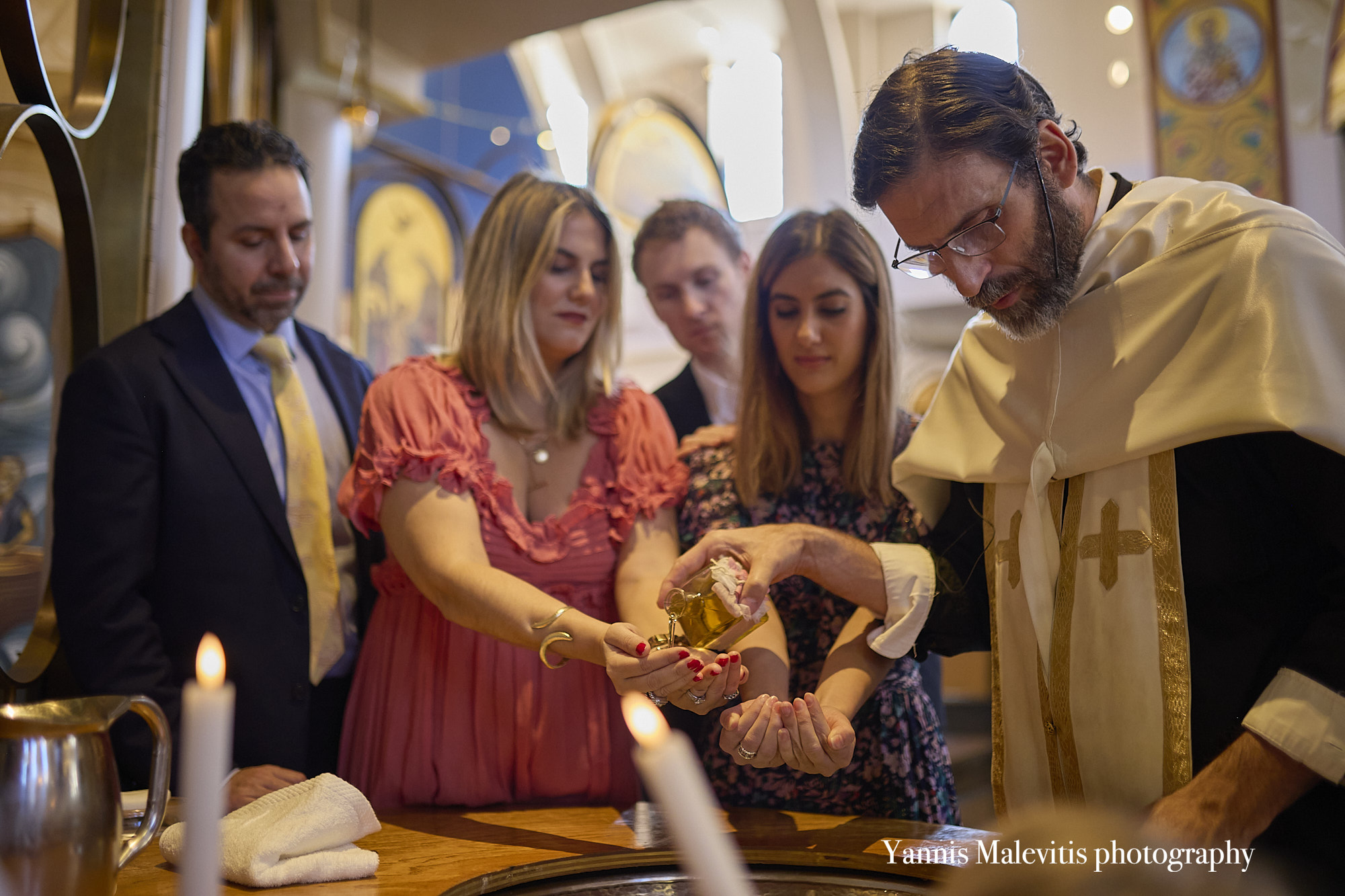
The child is anointed with the Oil of Gladness on the chest, back, hands, feet, ears, and mouth. This anointing symbolizes strength and readiness to receive new spiritual life in Christ.
6. The Baptism by Triple Immersion
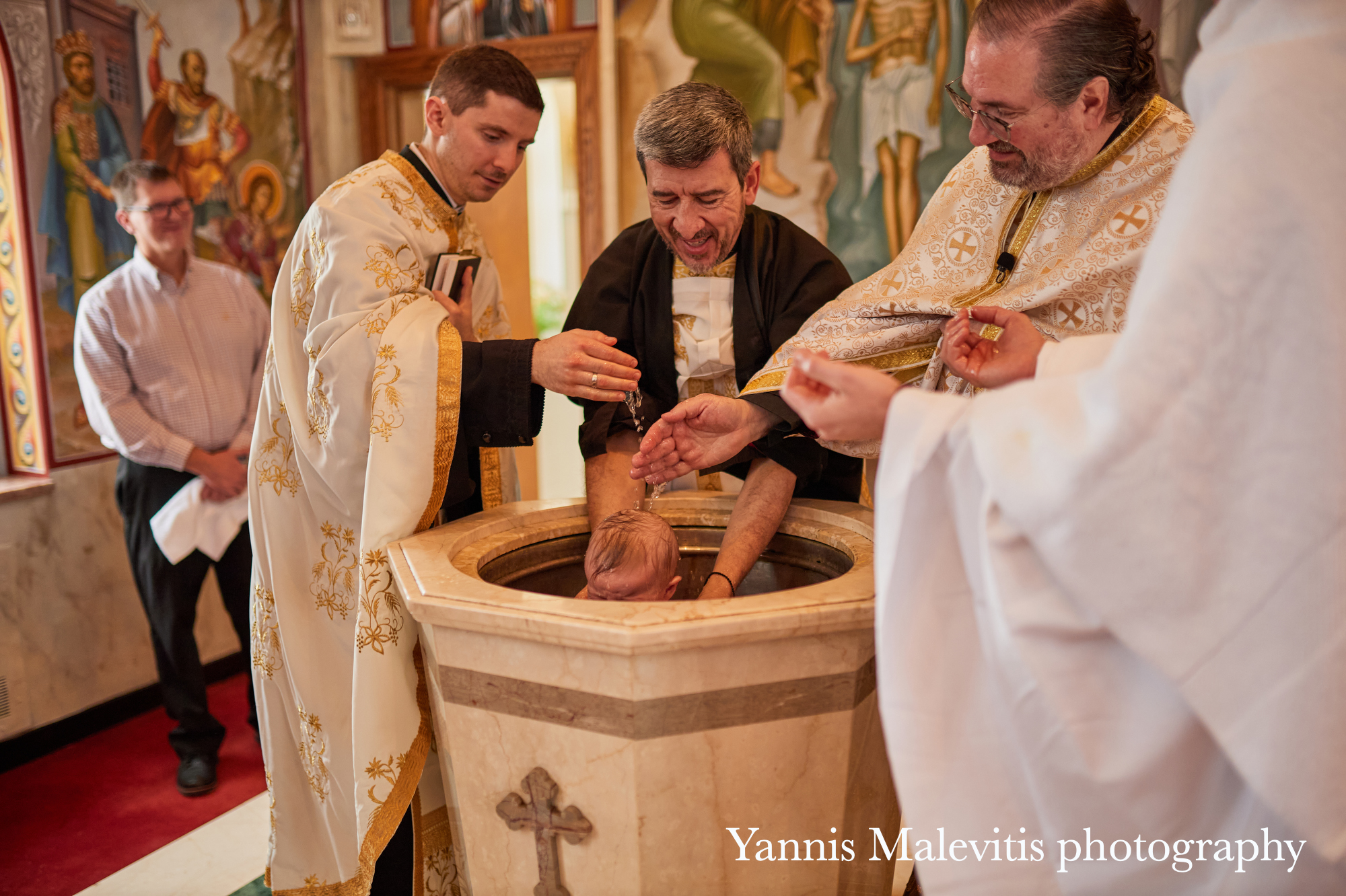
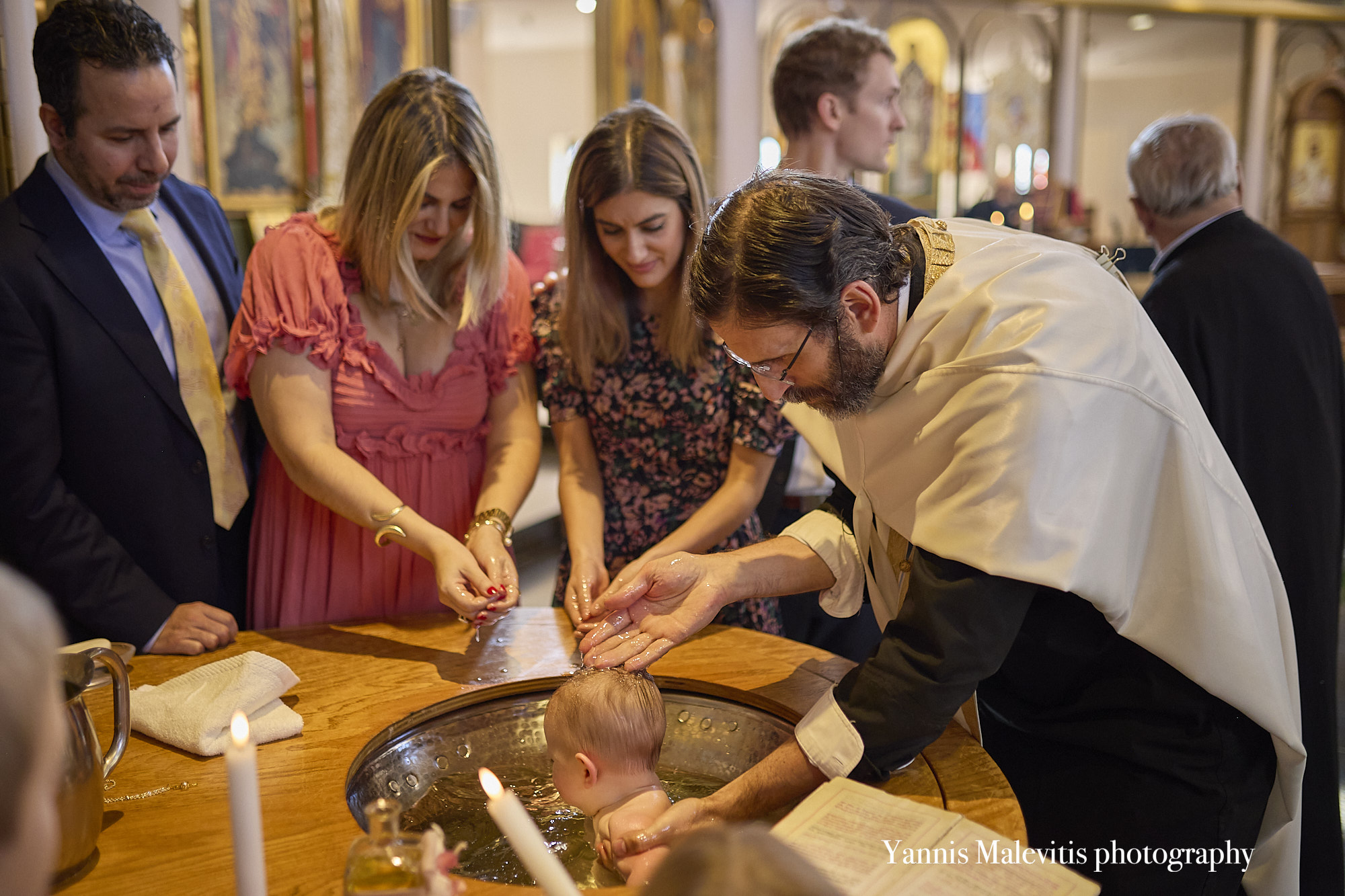
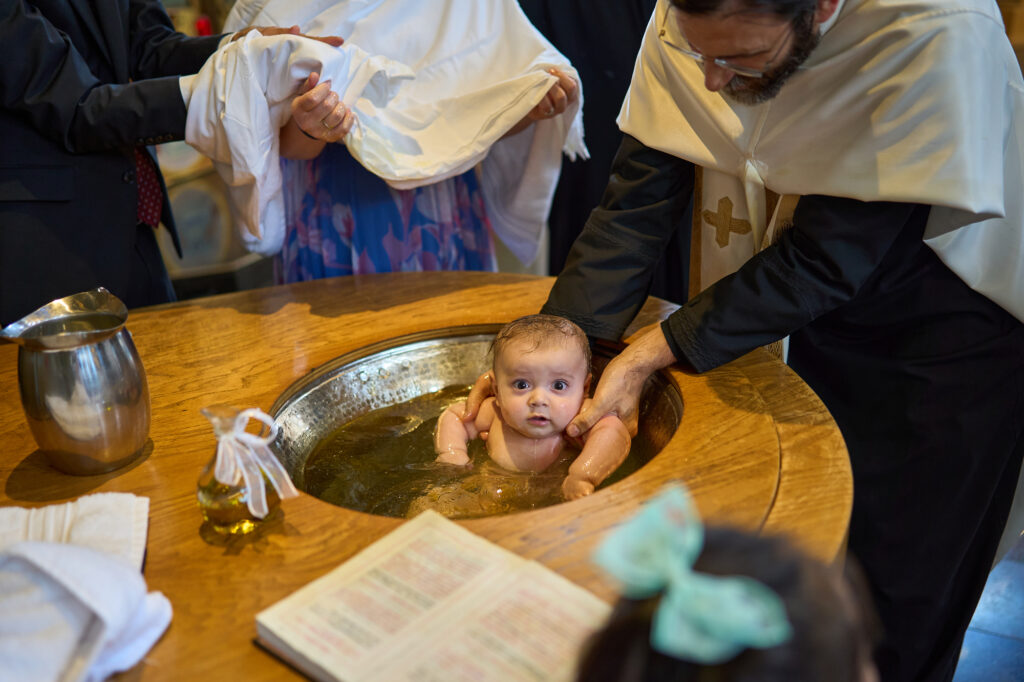
The priest immerses the child three times into the blessed water, invoking the name of the Father, the Son, and the Holy Spirit. Through this act, the child mystically dies and rises with Christ, entering into the fullness of the Christian faith.
7. The Sacrament of Holy Chrismation
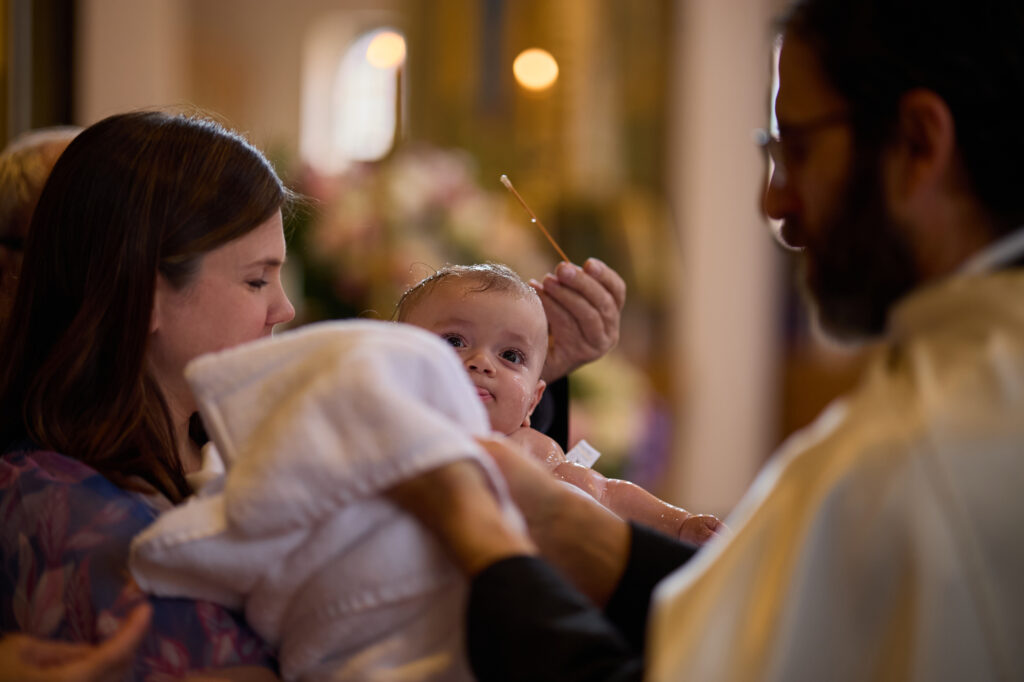
Immediately following baptism, the priest anoints the child with Holy Chrism (Myrrh) on the forehead, eyes, nose, mouth, ears, chest, hands, and feet. This seals the newly baptized with the gifts of the Holy Spirit.
8. Tonsure
The priest cuts small locks of hair from the child’s head in the form of a cross. This act symbolizes the child’s first offering to God and the dedication of their life to Christ.
9. Vesting in the Baptismal Garment
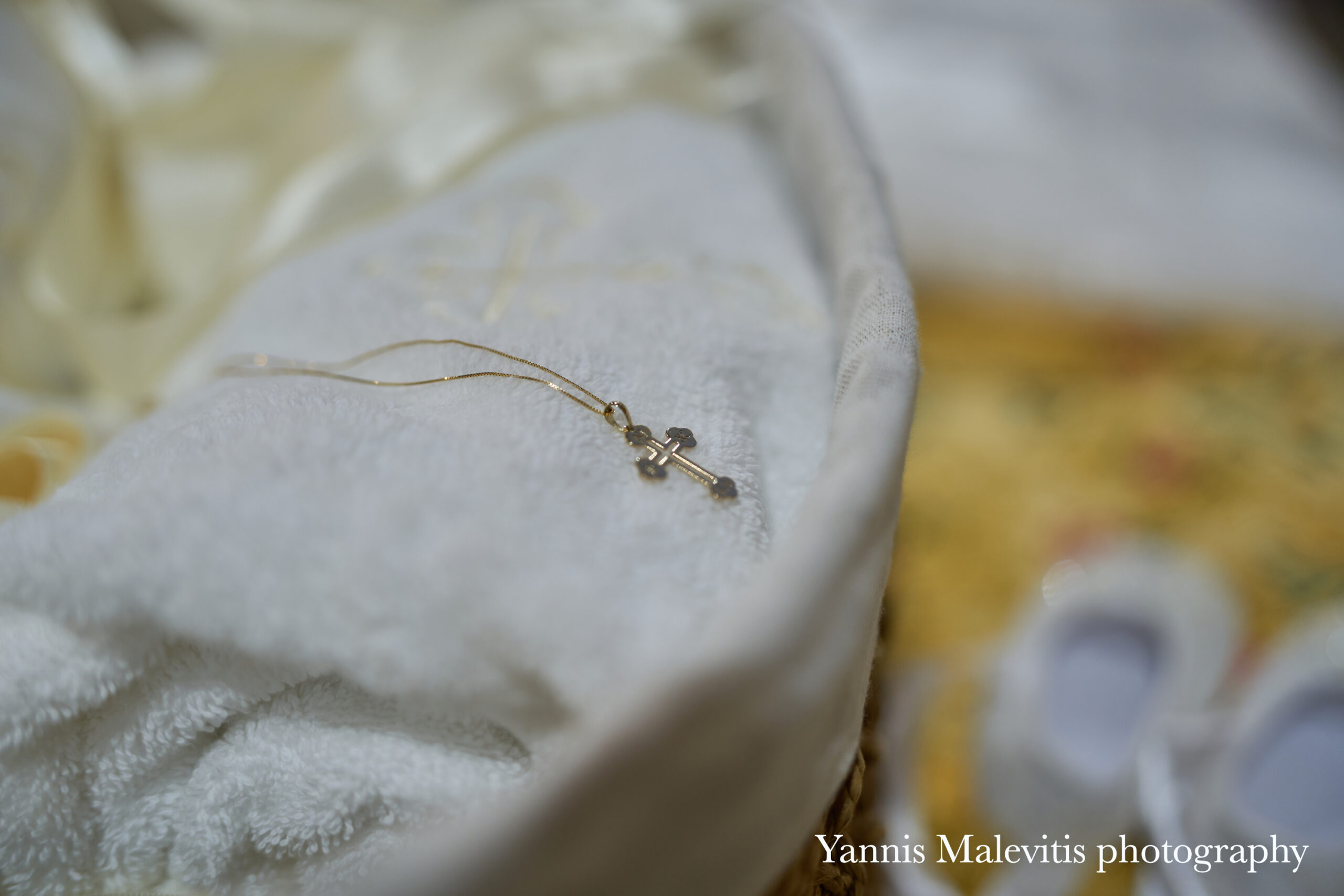
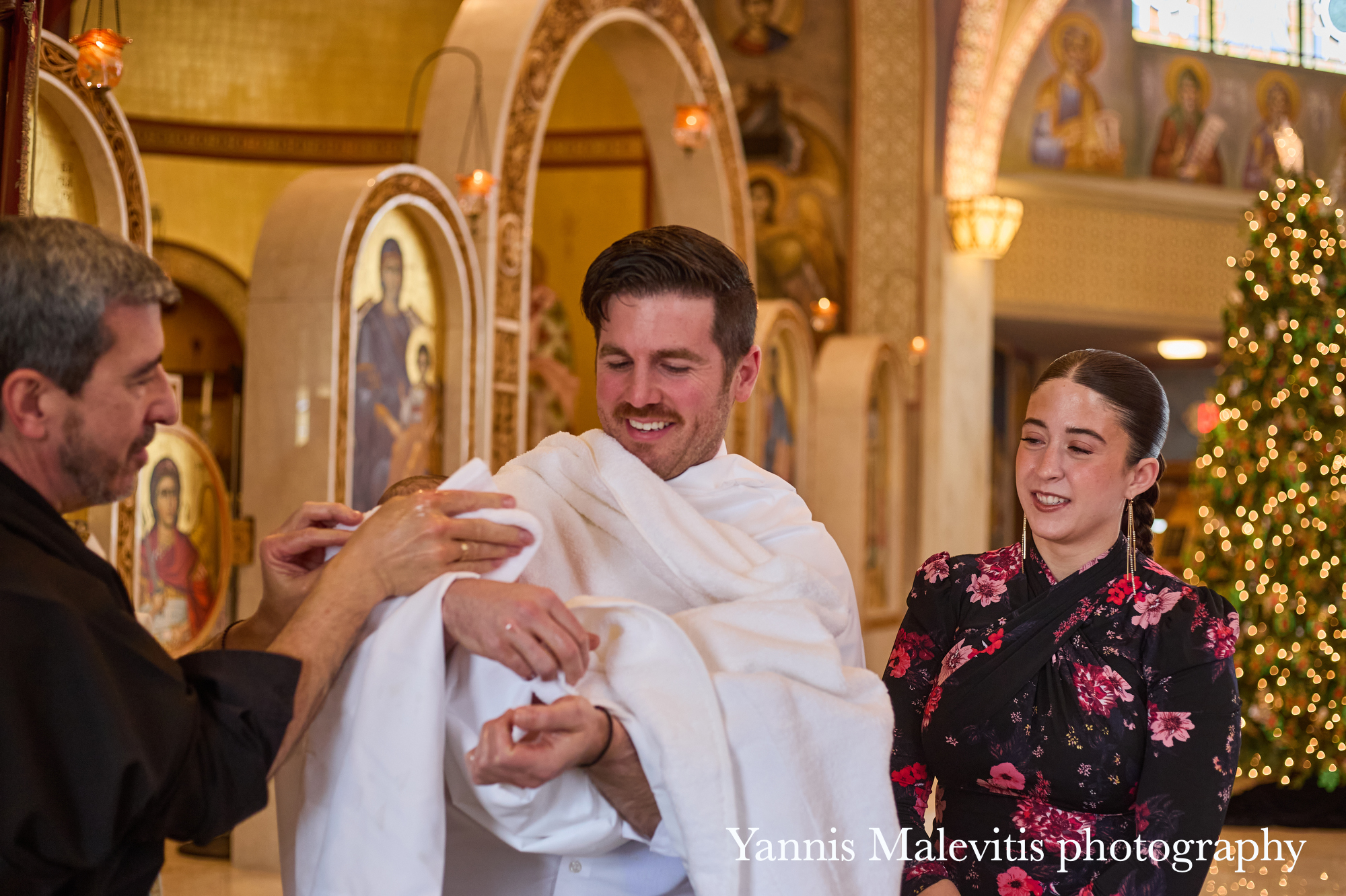
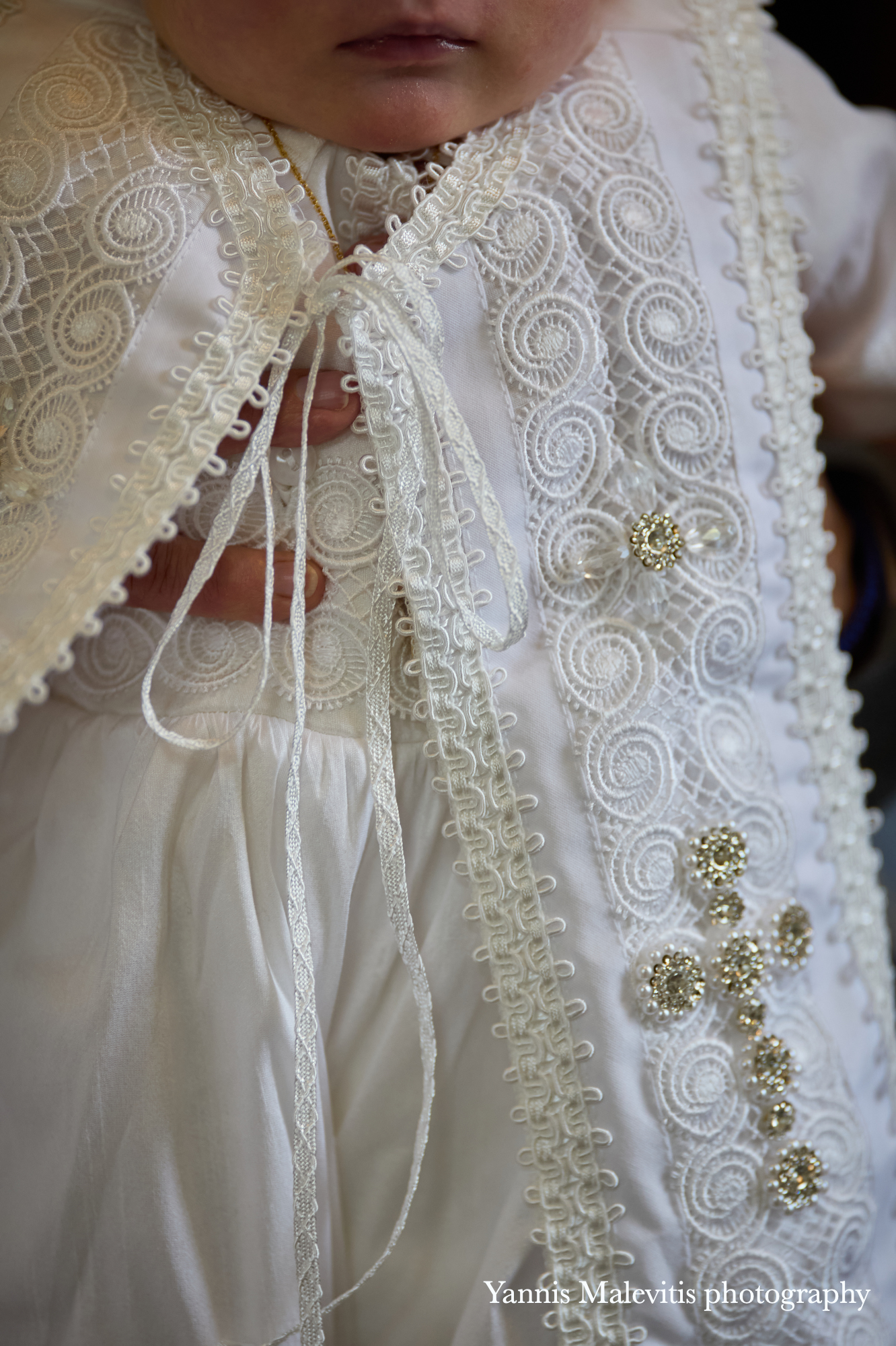
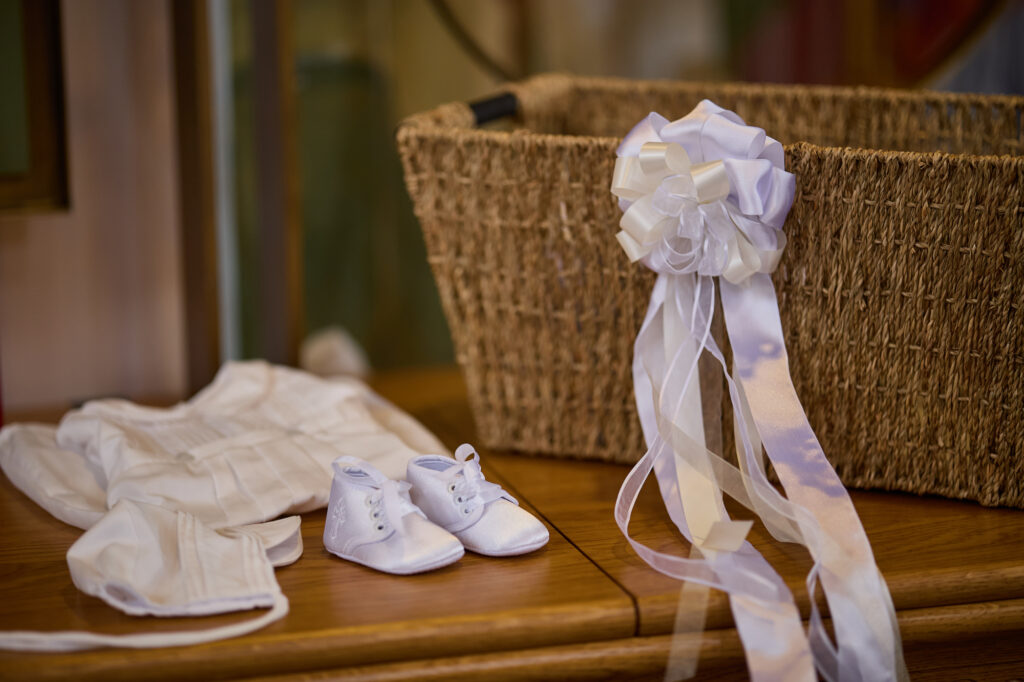
The child is clothed in white garments, signifying purity, renewal, and the new life bestowed through baptism.
10. Procession Around the Font
Priest, godparent, and child circle the baptismal font three times as hymns are chanted. This joyous procession reflects the child’s entrance into the community of the Church.
11. Holy Communion
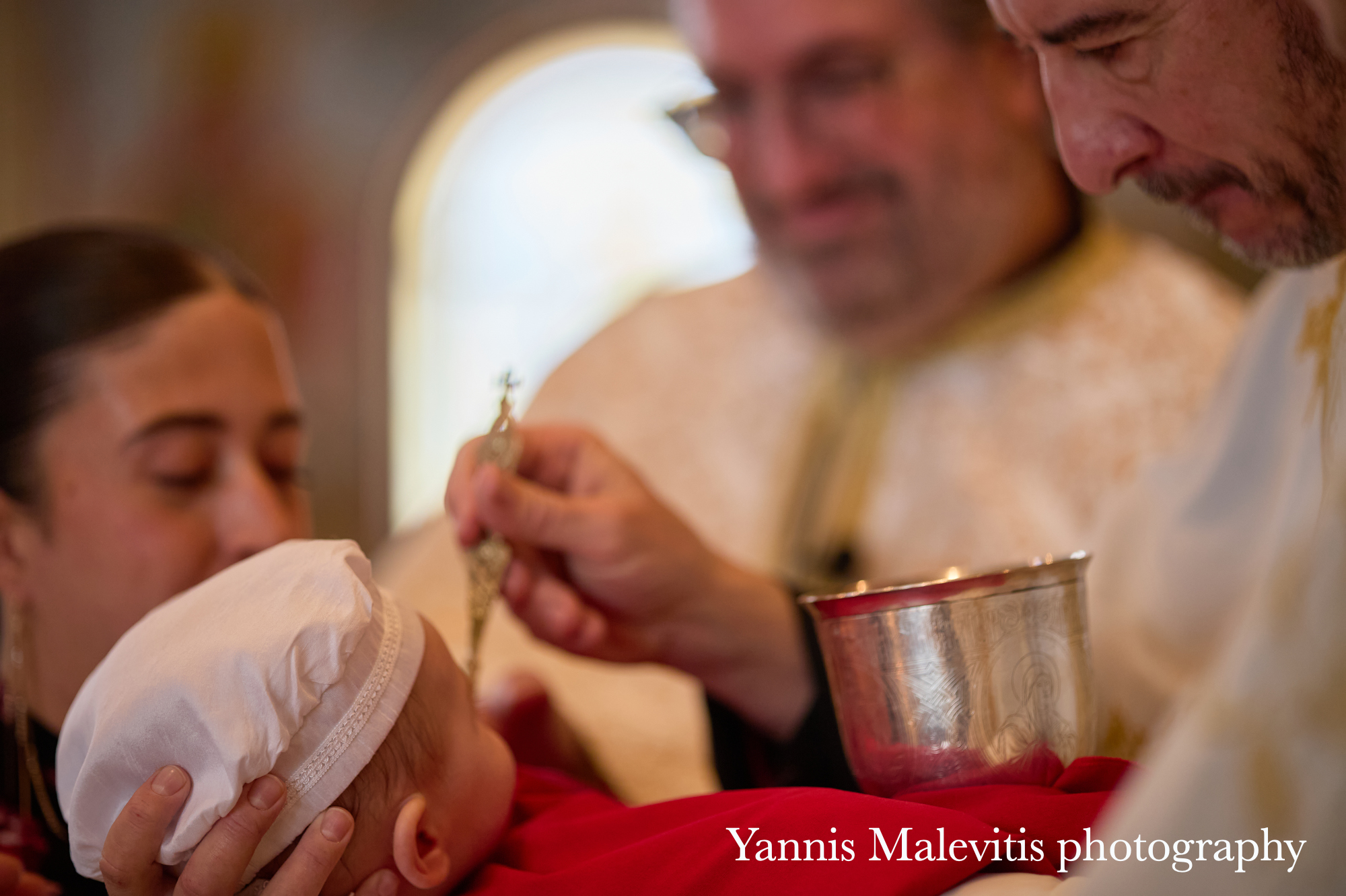
As a full member of the Orthodox Church, the child receives Holy Communion for the first time, partaking of the Body and Blood of Christ.
12. Final Blessing and Presentation
The priest offers the final prayers and blessings, then presents the newly baptized child to the family and gathered congregation, who joyfully welcome the child into the faith.
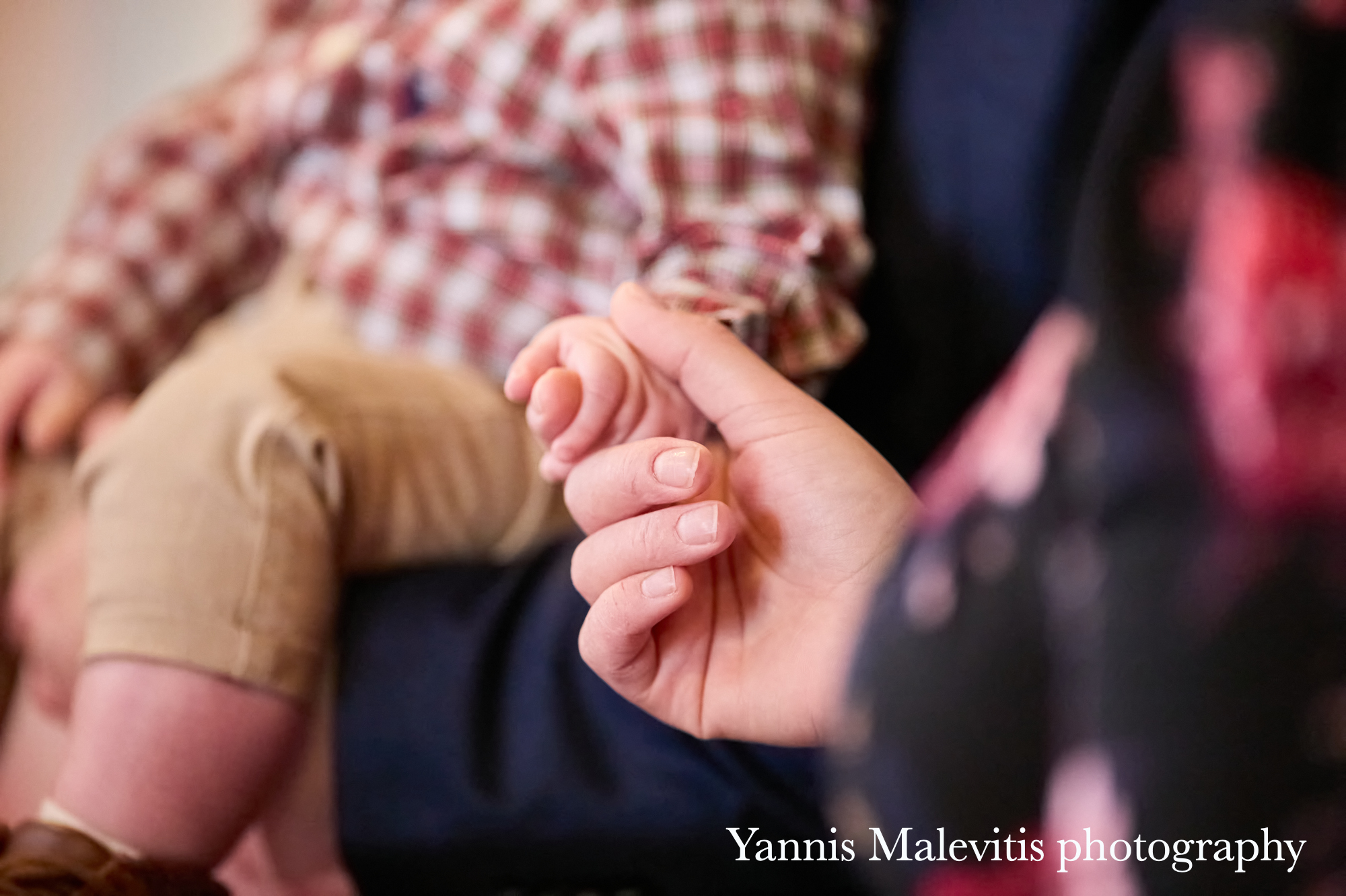
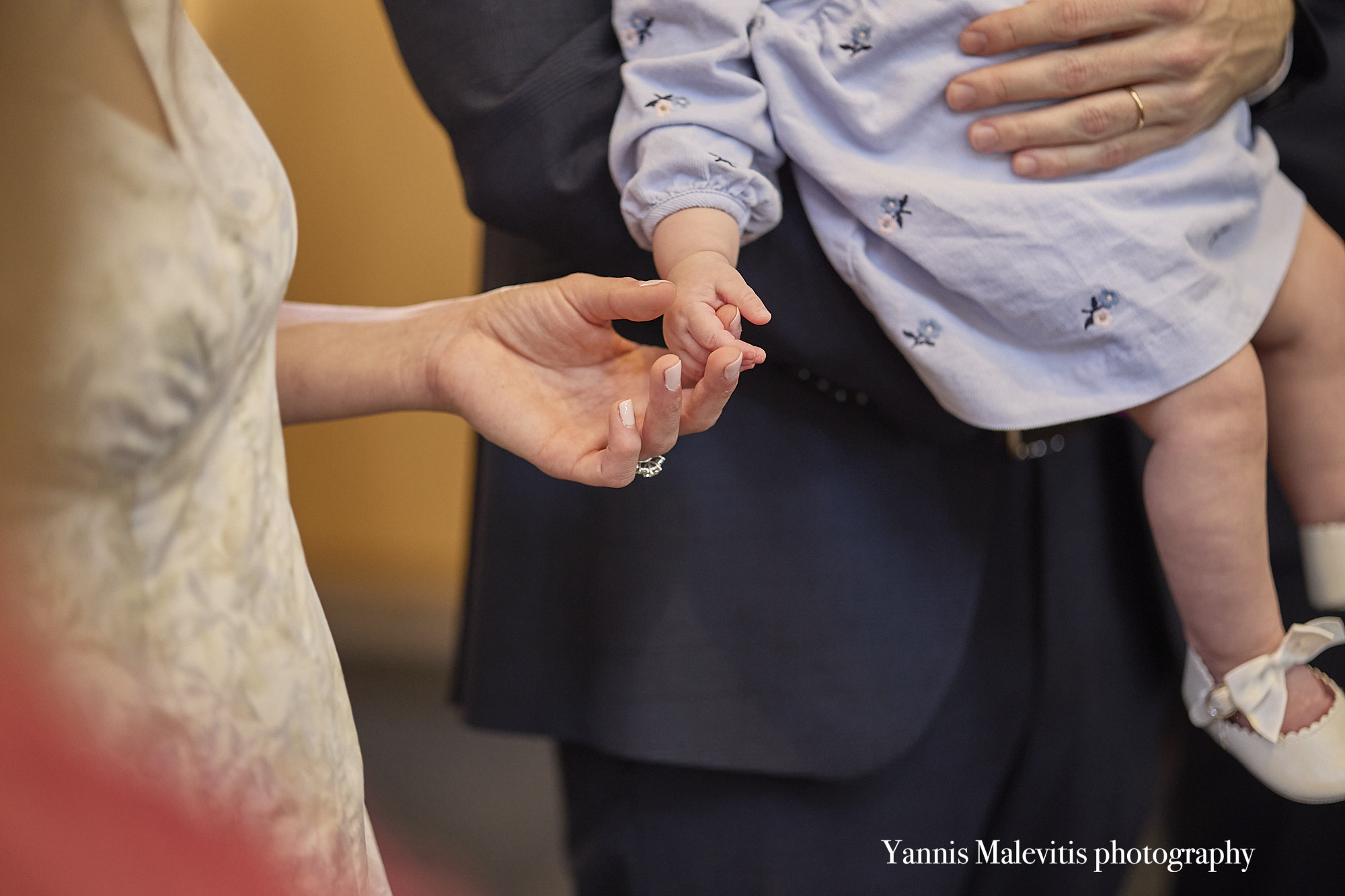
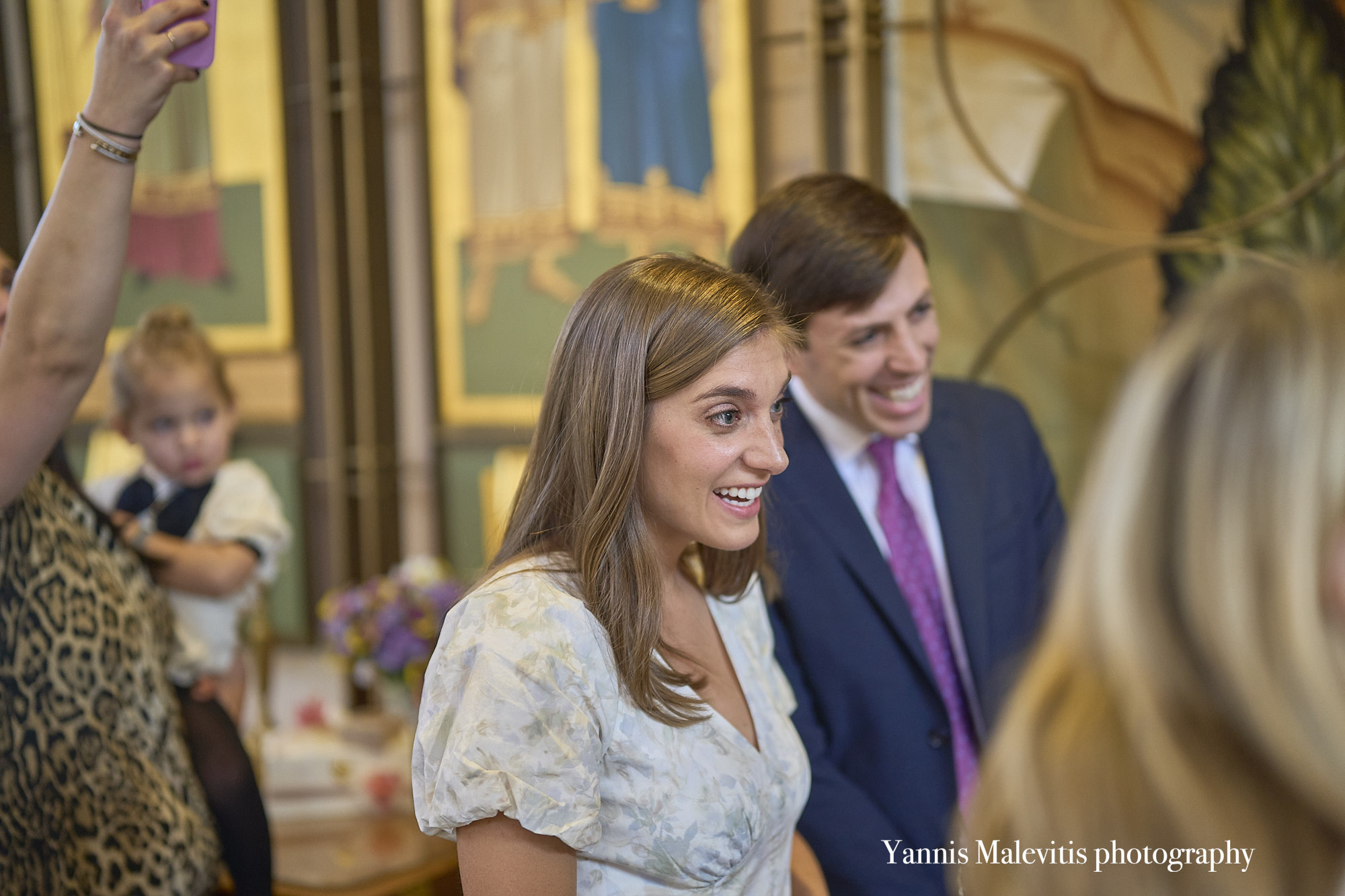
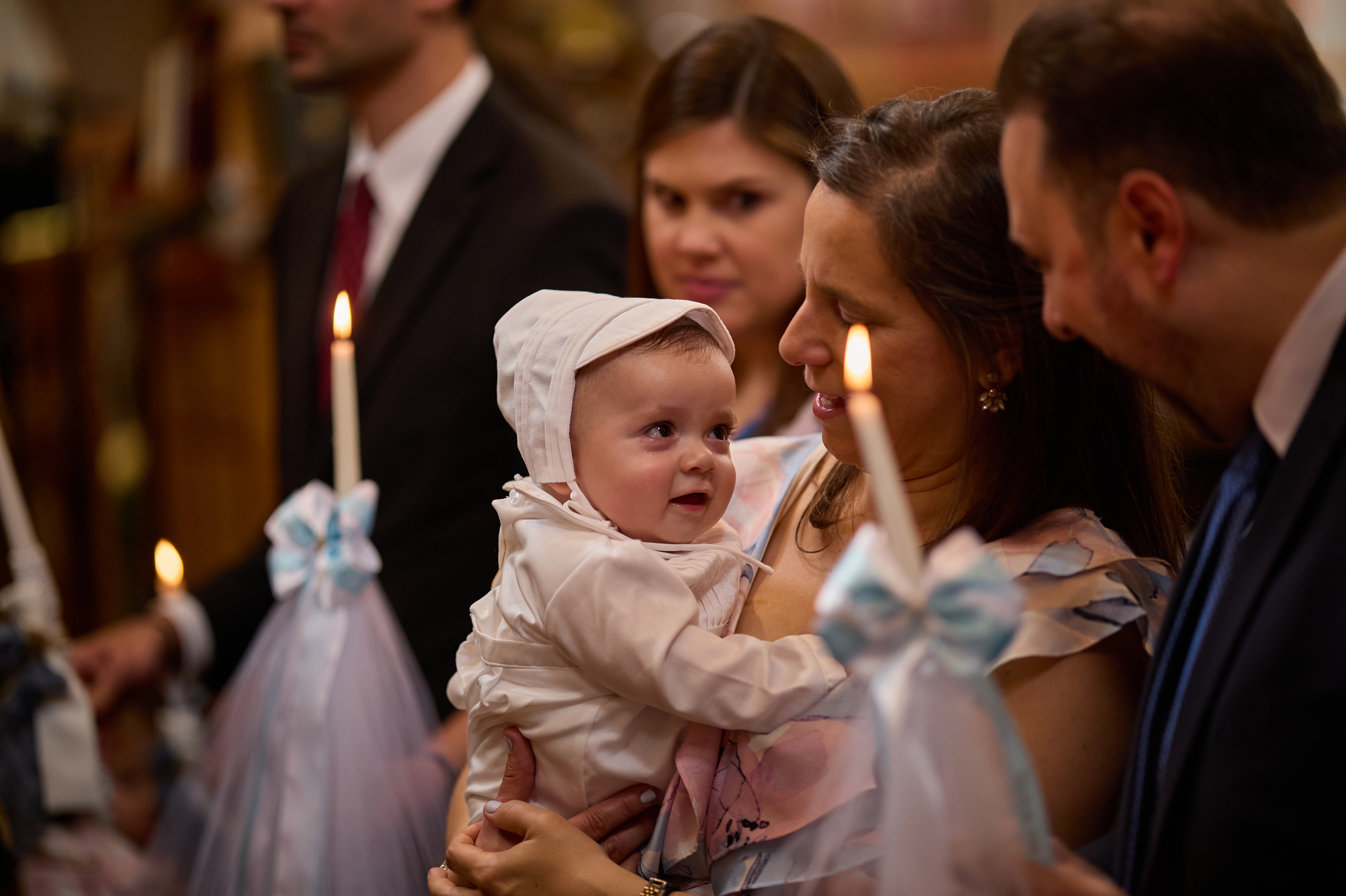
After the ceremony, the atmosphere turned even brighter. Guests gathered around the baby, offering wishes, kisses, and gentle touches on tiny hands. The parents glowed—proud, grateful, and perhaps a bit overwhelmed by the outpouring of love.
In the reception that followed, there were embraces, laughter, and shared stories between people who hadn’t seen each other in years. The baby, now fully settled in everyone’s arms, became the joyful thread weaving the community together.
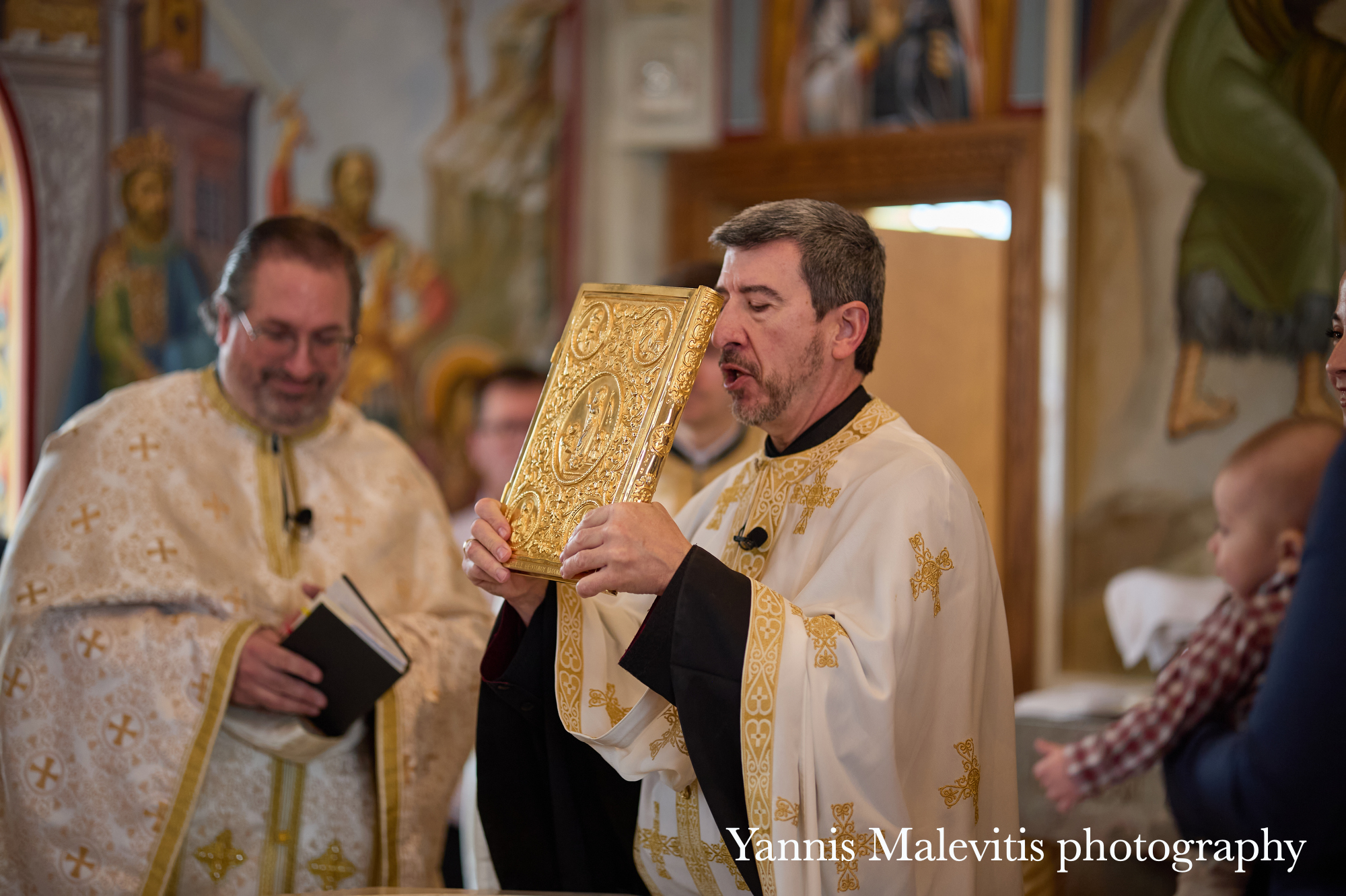
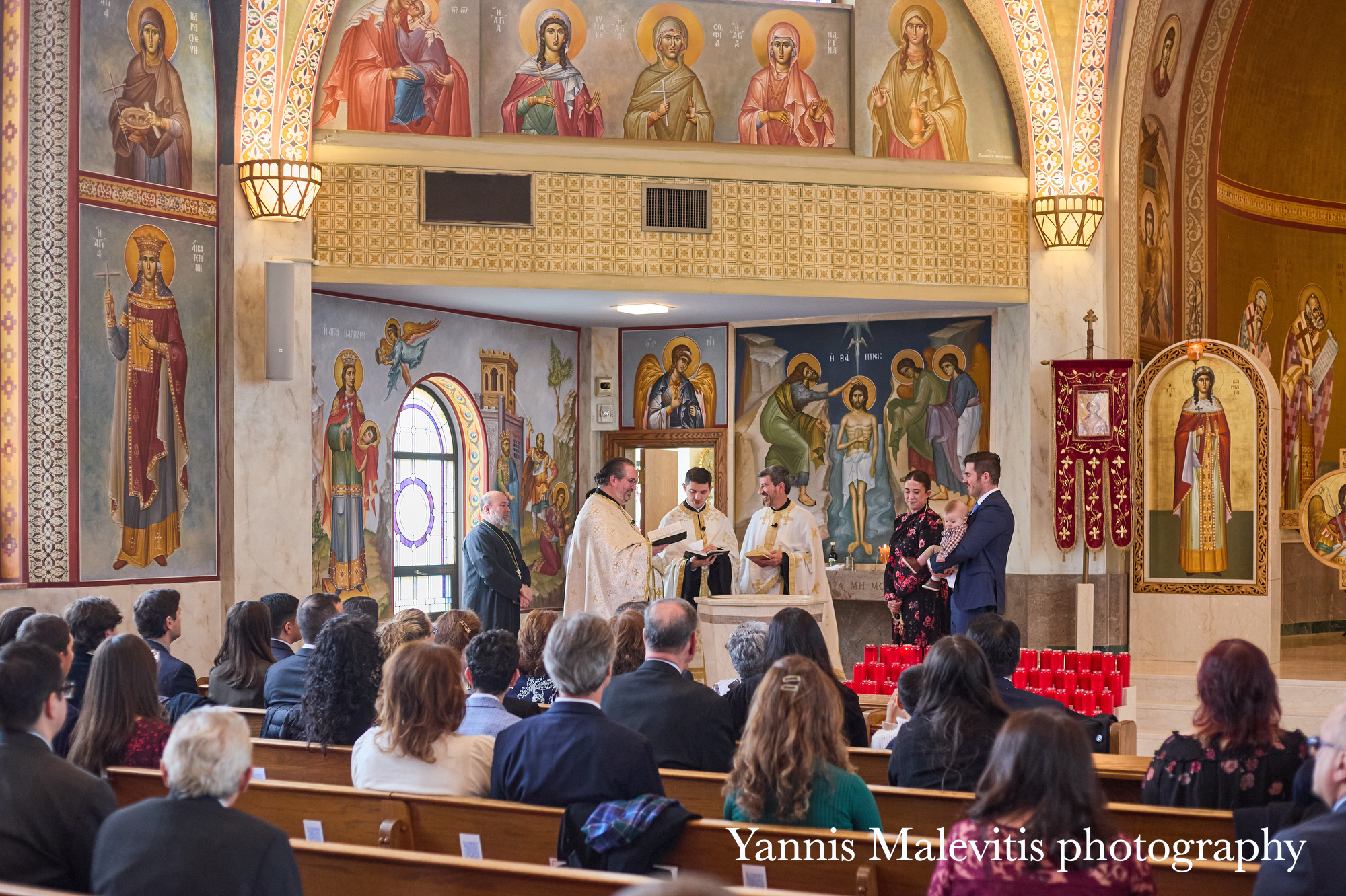
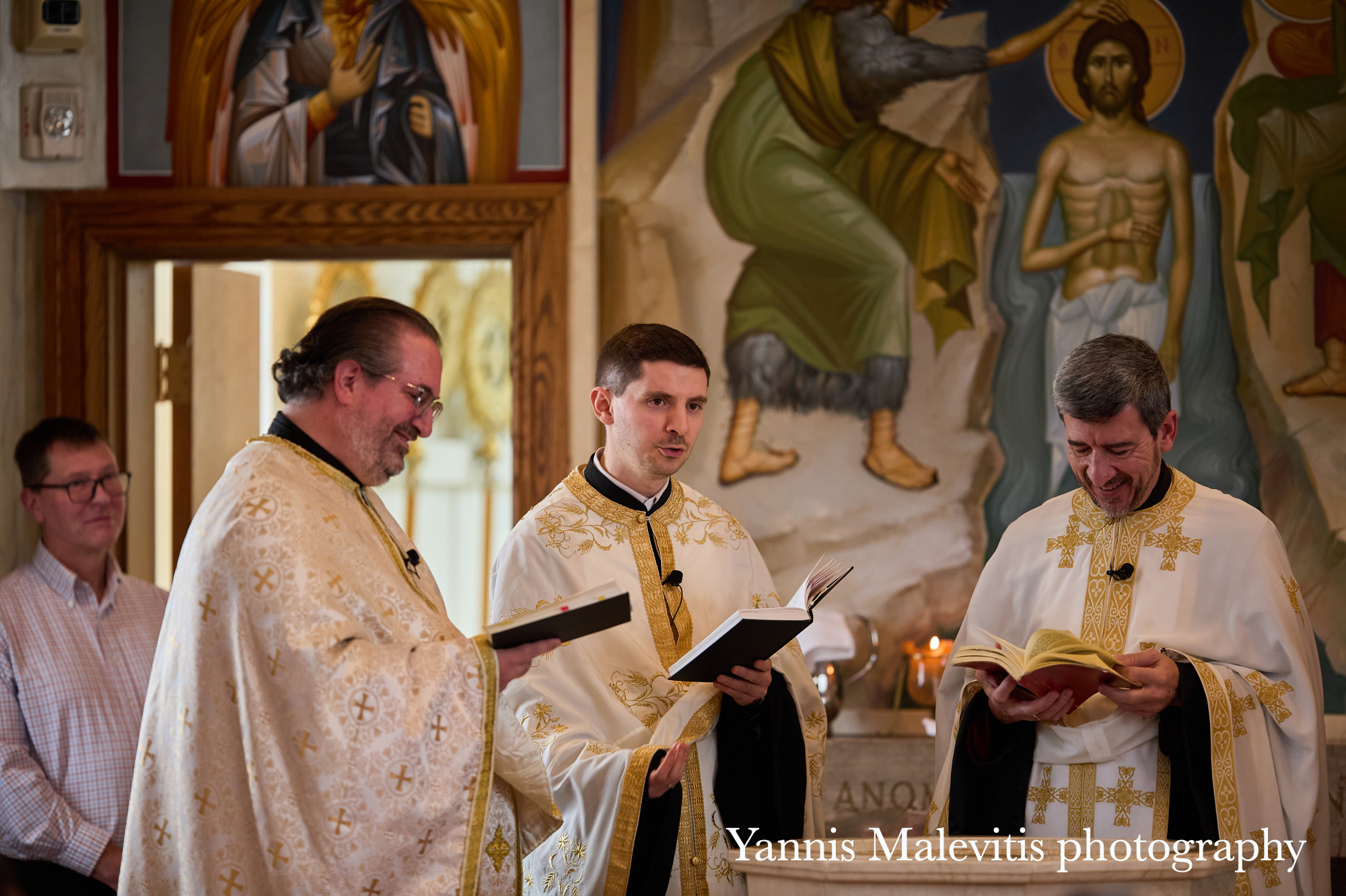
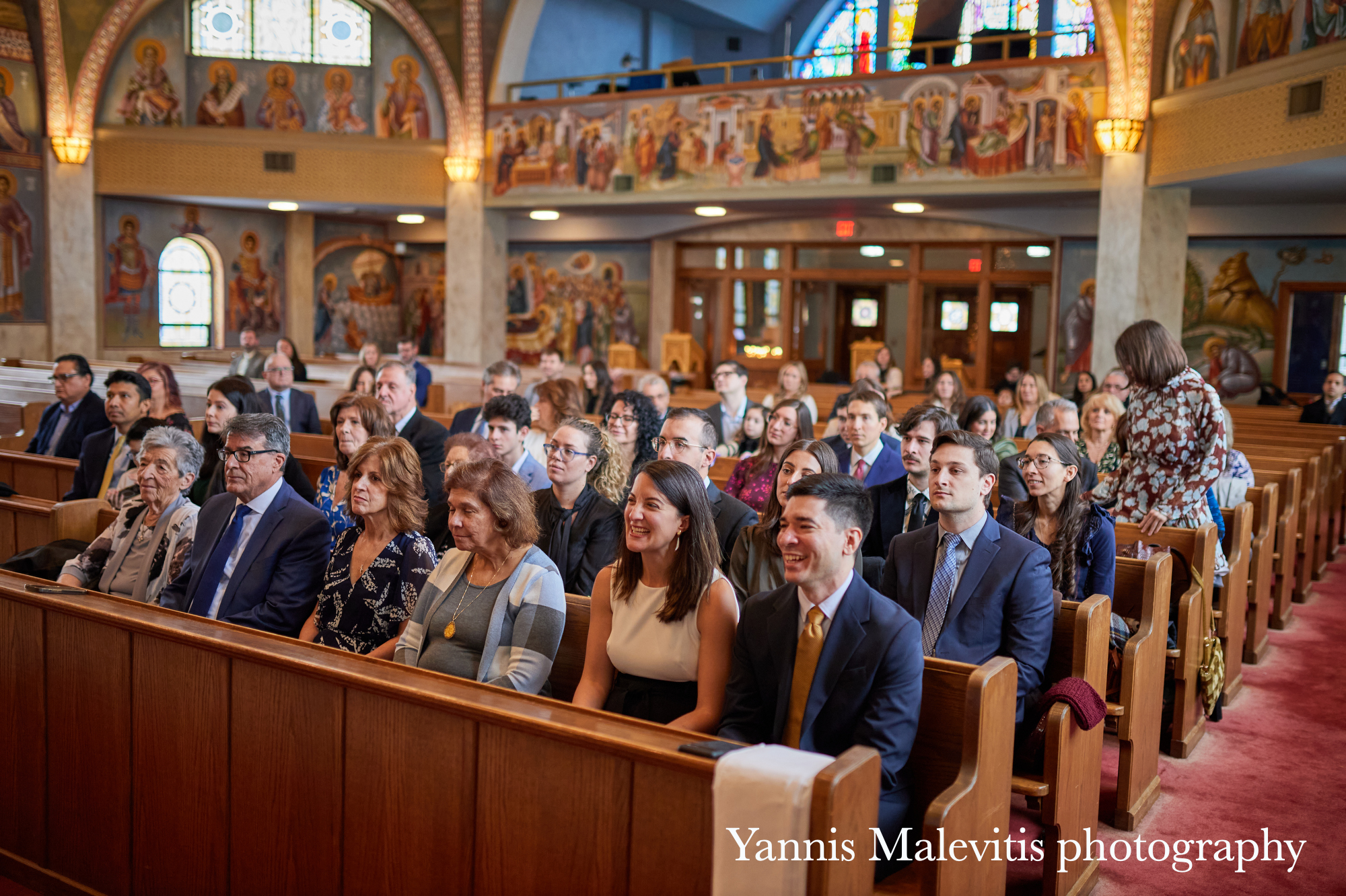
I photographed the Greek Orthodox Baptism of Athanasios at the St. Barbara Greek Orthodox Church in Orange, CT. I love capturing candid moments of a baptism.
When I photograph a baptism, I prefer using multiple cameras with prime lenses. At this particular event I chose to work with 3 camera bodies and a 35mm 1.4, a 50mm 1.8, a 100mm 1.4 and a 200mm f/2 lens.
Baptisms are deeply emotional and spiritual ceremonies filled with meaningful moments between families, friends, and the child being baptized. Capturing candid moments at such an event requires a mix of technical skills, observation, and sensitivity.
I understand the sequence of the baptismal rite and can anticipate key moments.
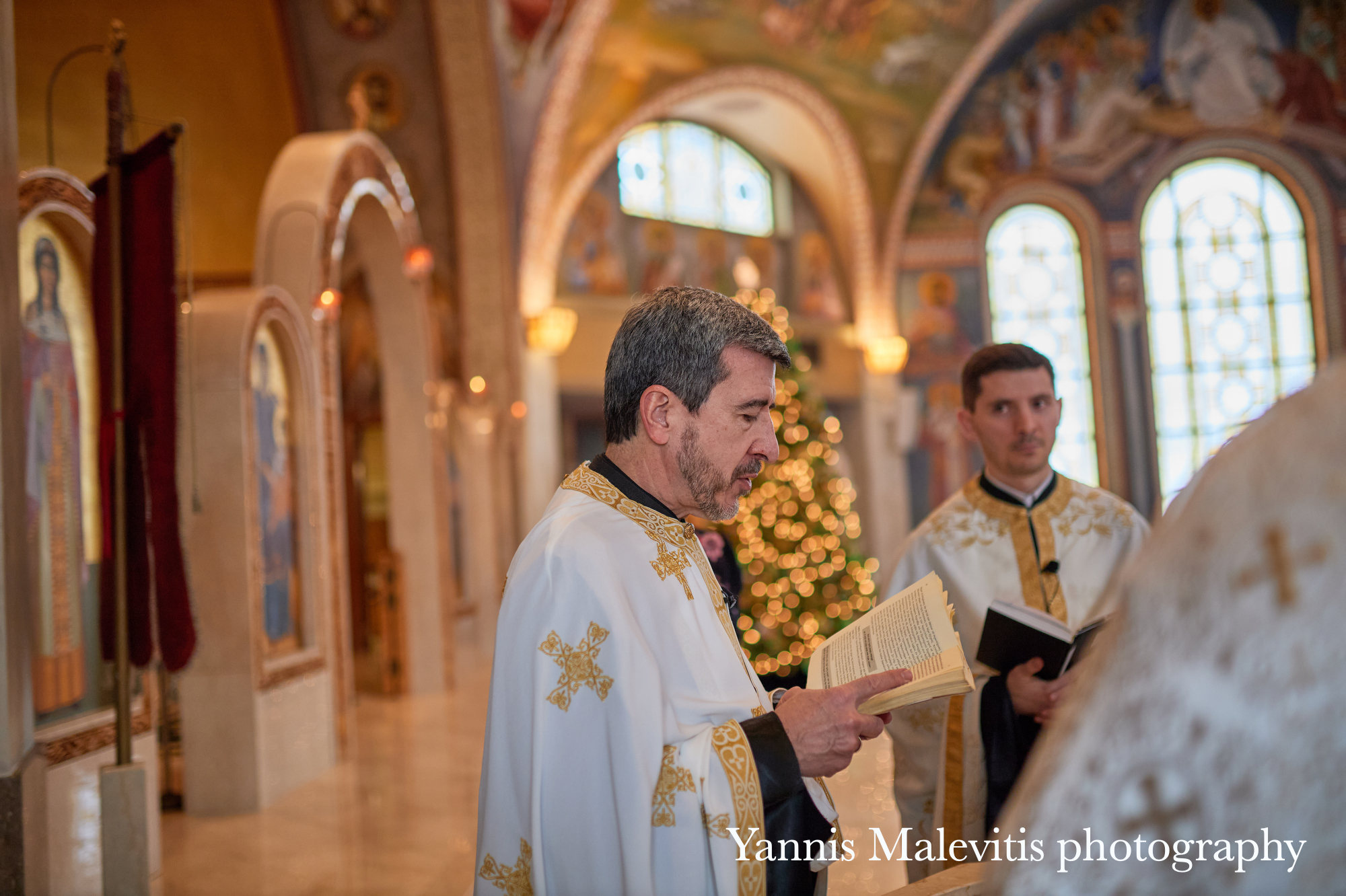
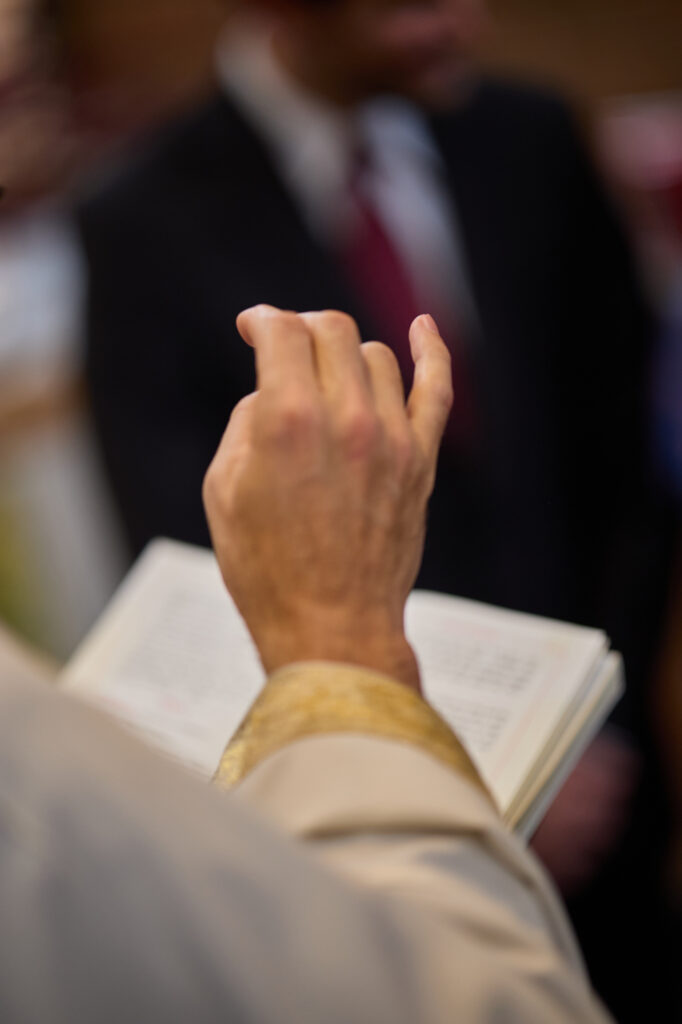
I use a discreet approach. I avoid standing between the family and the ceremony or obstructing the view for guests. I dress appropriately and move quietly to avoid drawing attention. As I want to stay in the background, I use a telephoto lens to capture intimate moments from a distance without intruding.
It is always a pleasure capturing candid moments of a baptism.
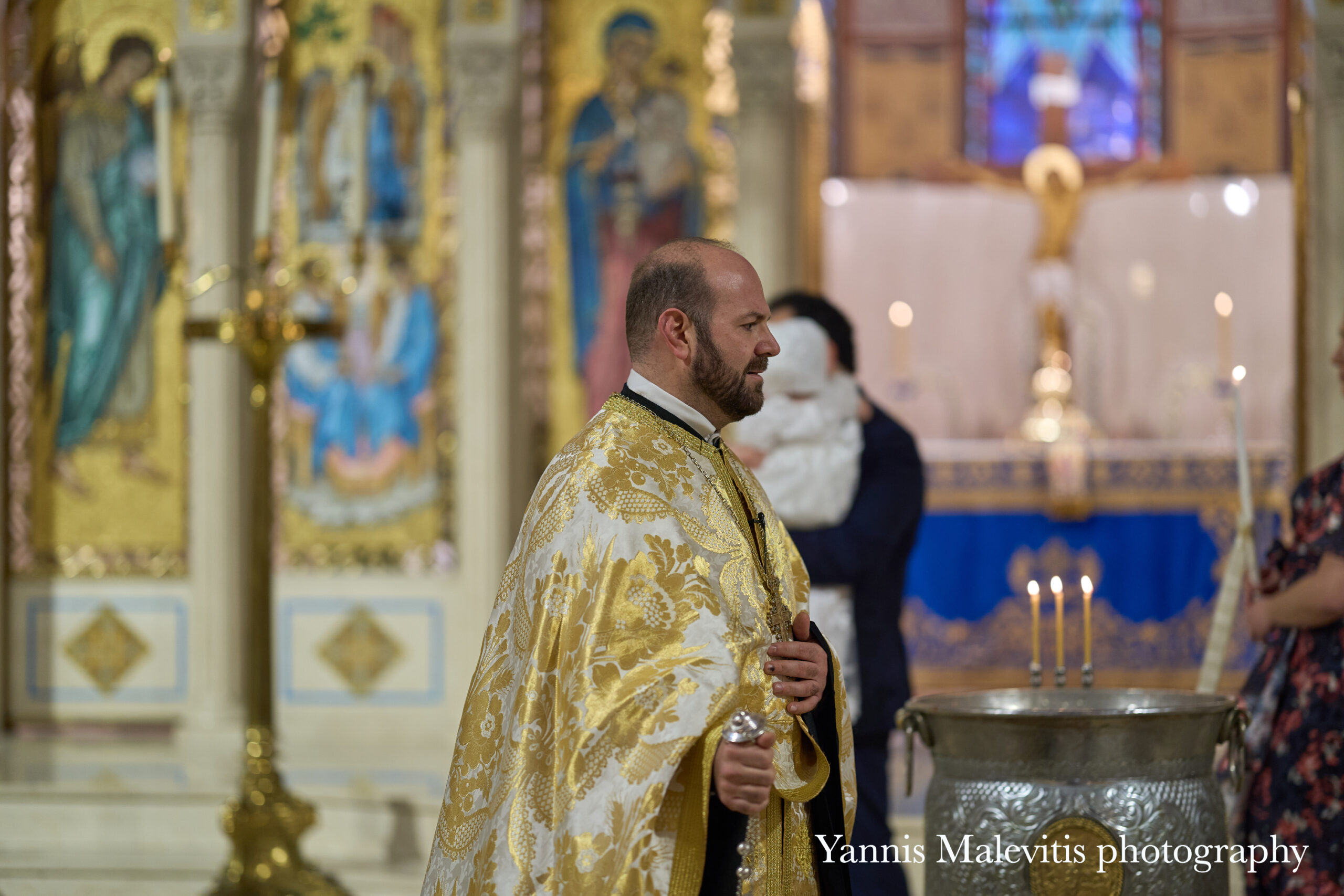
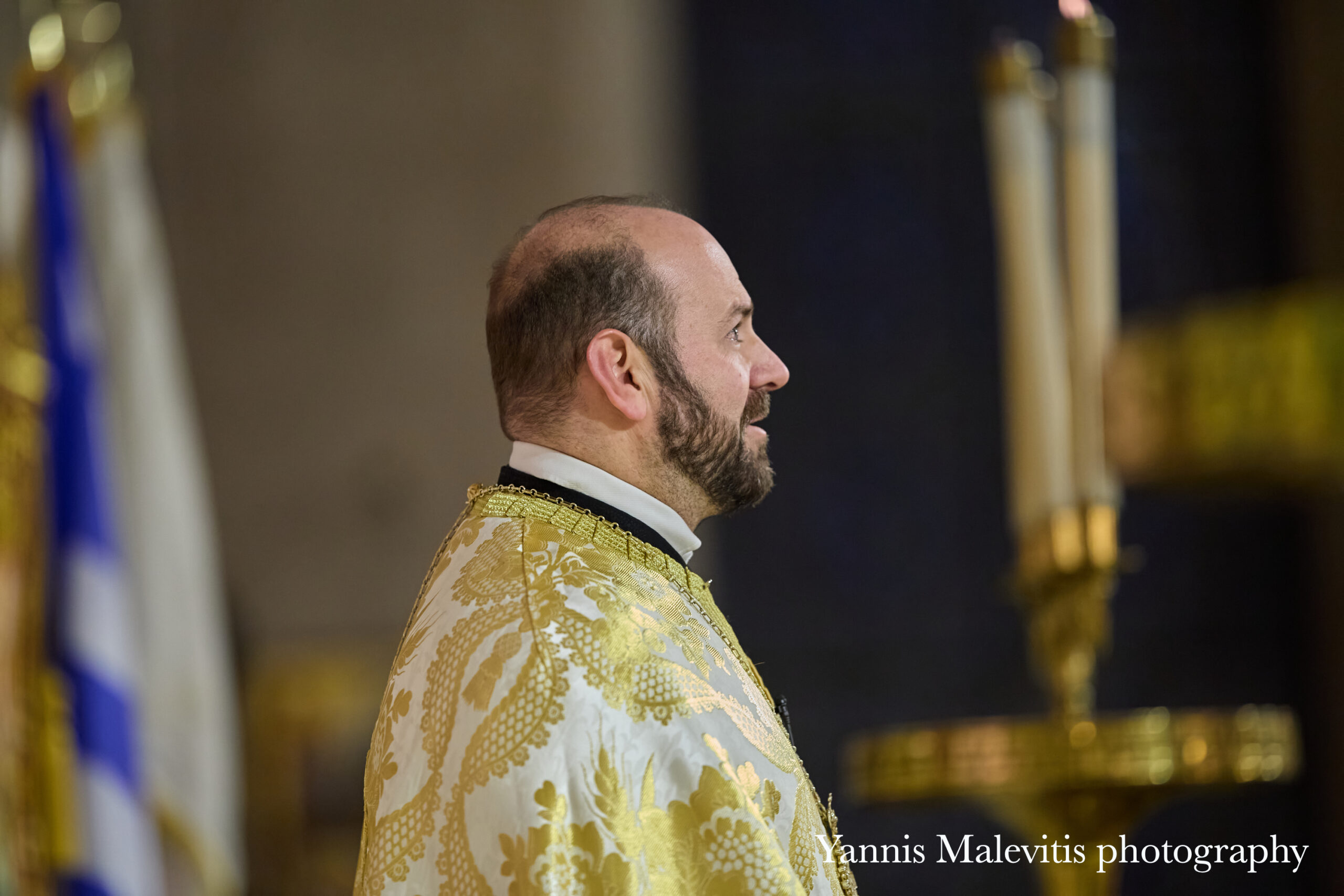
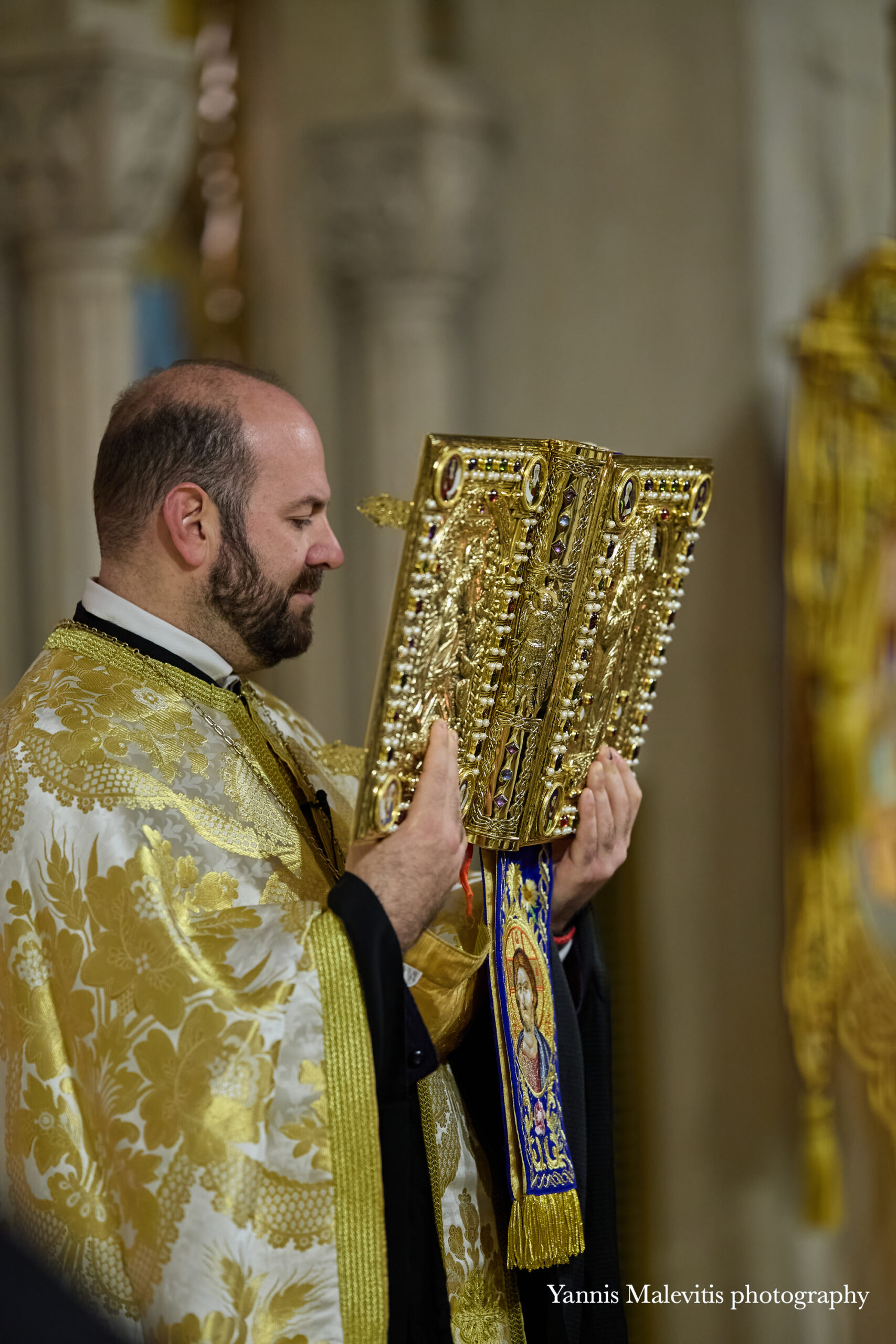
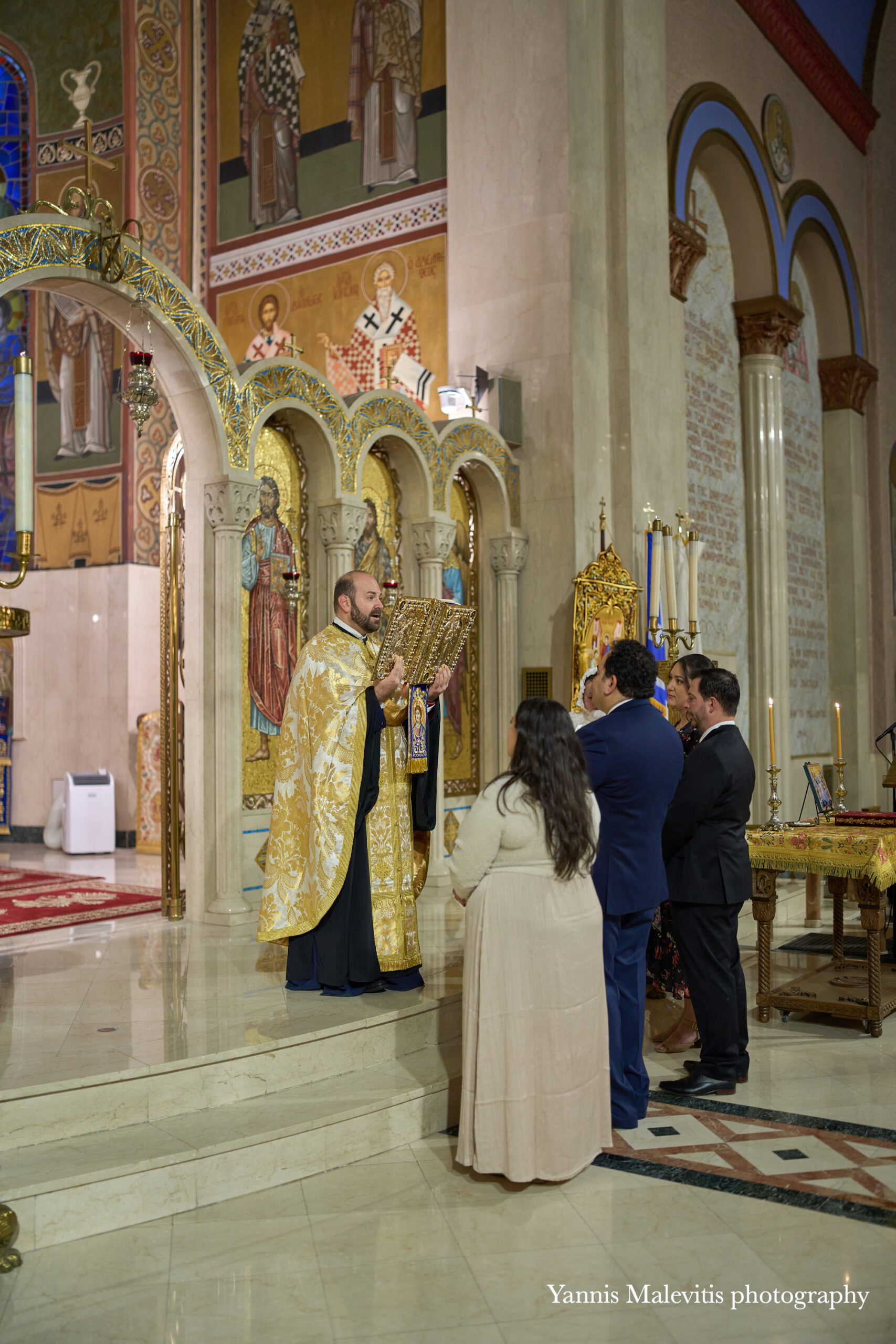
As a Greek Orthodox, I fully understand the importance of the baptism for a person’s life. For this reason, my photographic perspective of a Greek Orthodox Christening is characterized by great respect and unobtrusive coverage. I would like to give a few photo examples which illustrate my work and approach.
Before the ceremony
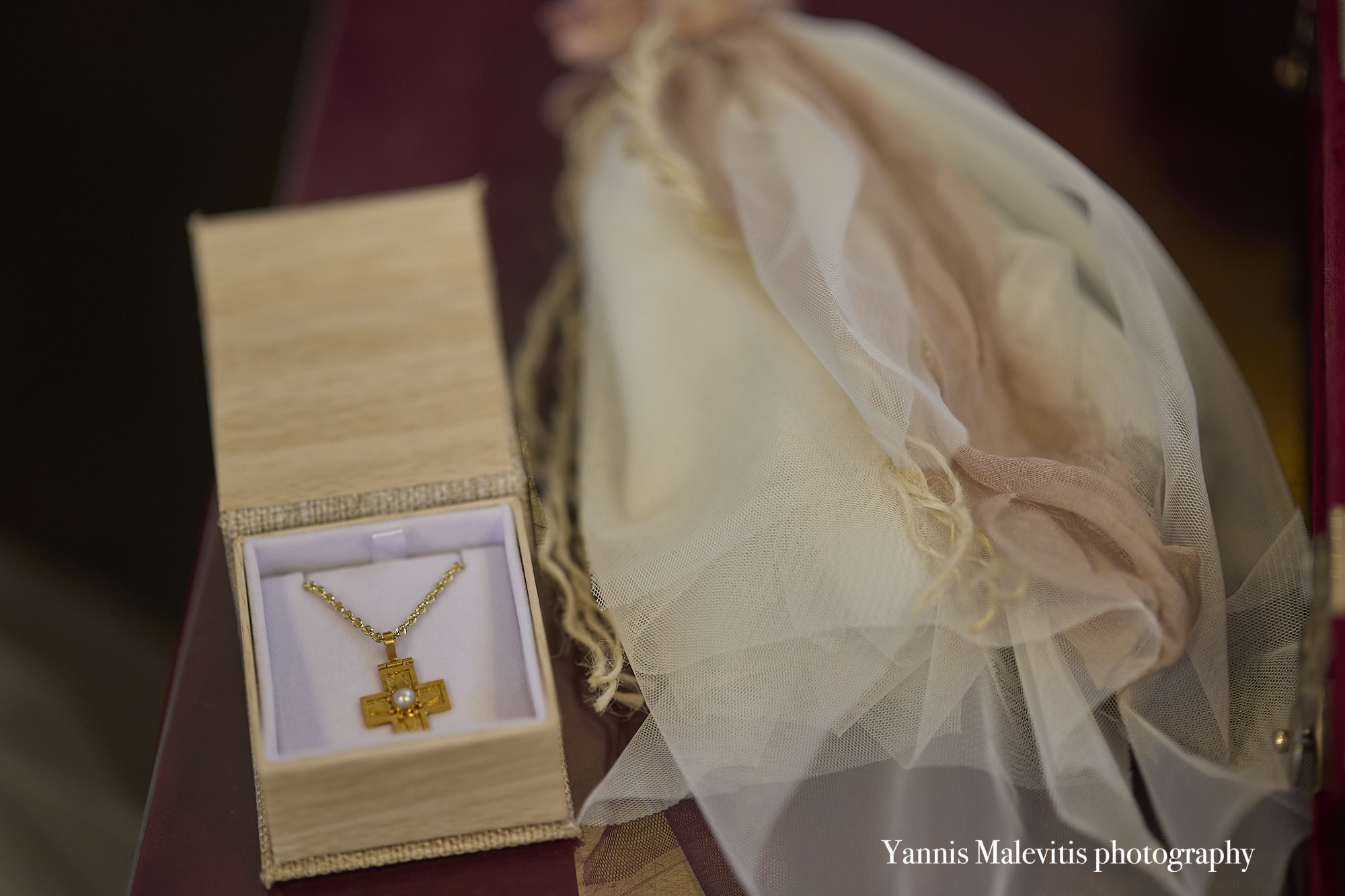
I arrive at the church 30-45 minutes before the start of the baptism. If I have not photographed an event at the church in the past, I allocate some time in understanding the direction of natural light. I also make the final selection of prime lenses that I will use during the event. Apart from my main lenses, a 50mm 1.2, a 100mm 1.4 and a 200mm f/2, I sometimes need to use a 20mm 1.4 or a 16mm 1.8 to show the architectural beauty of the church. I have extensive experience as an architectural church photographer. You may view my portfolio by clicking this link: Yannis architectural portfolio
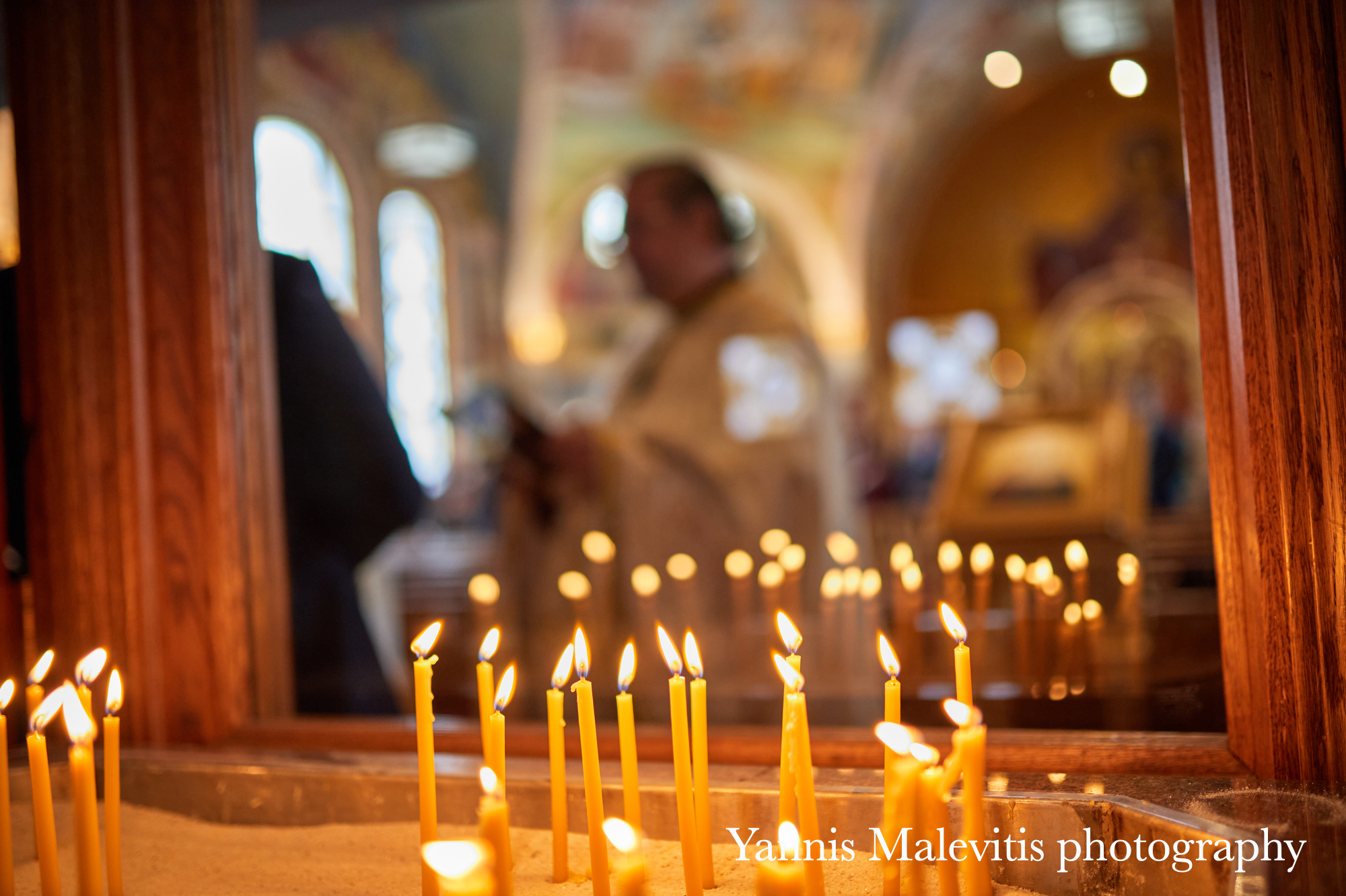
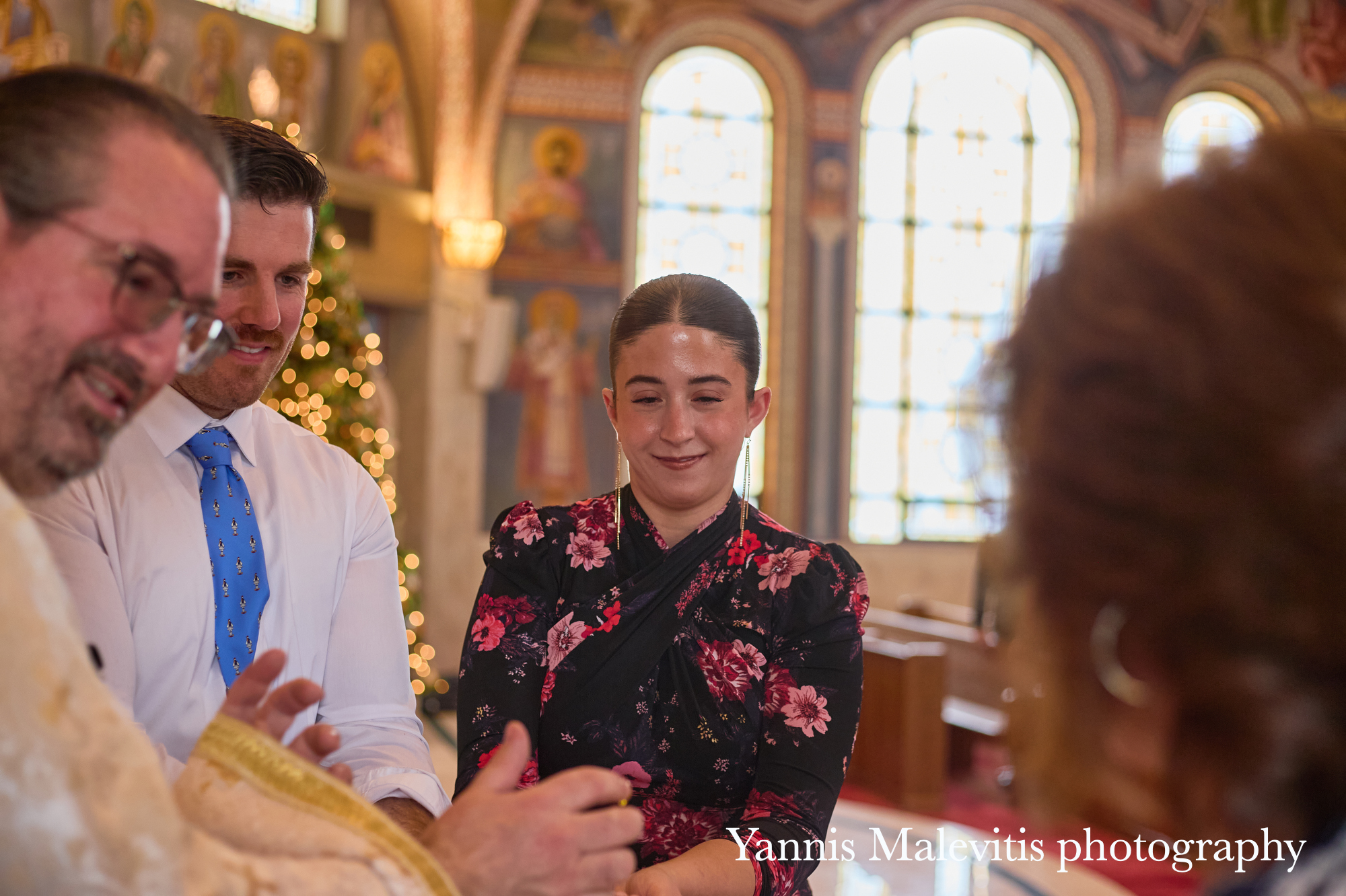
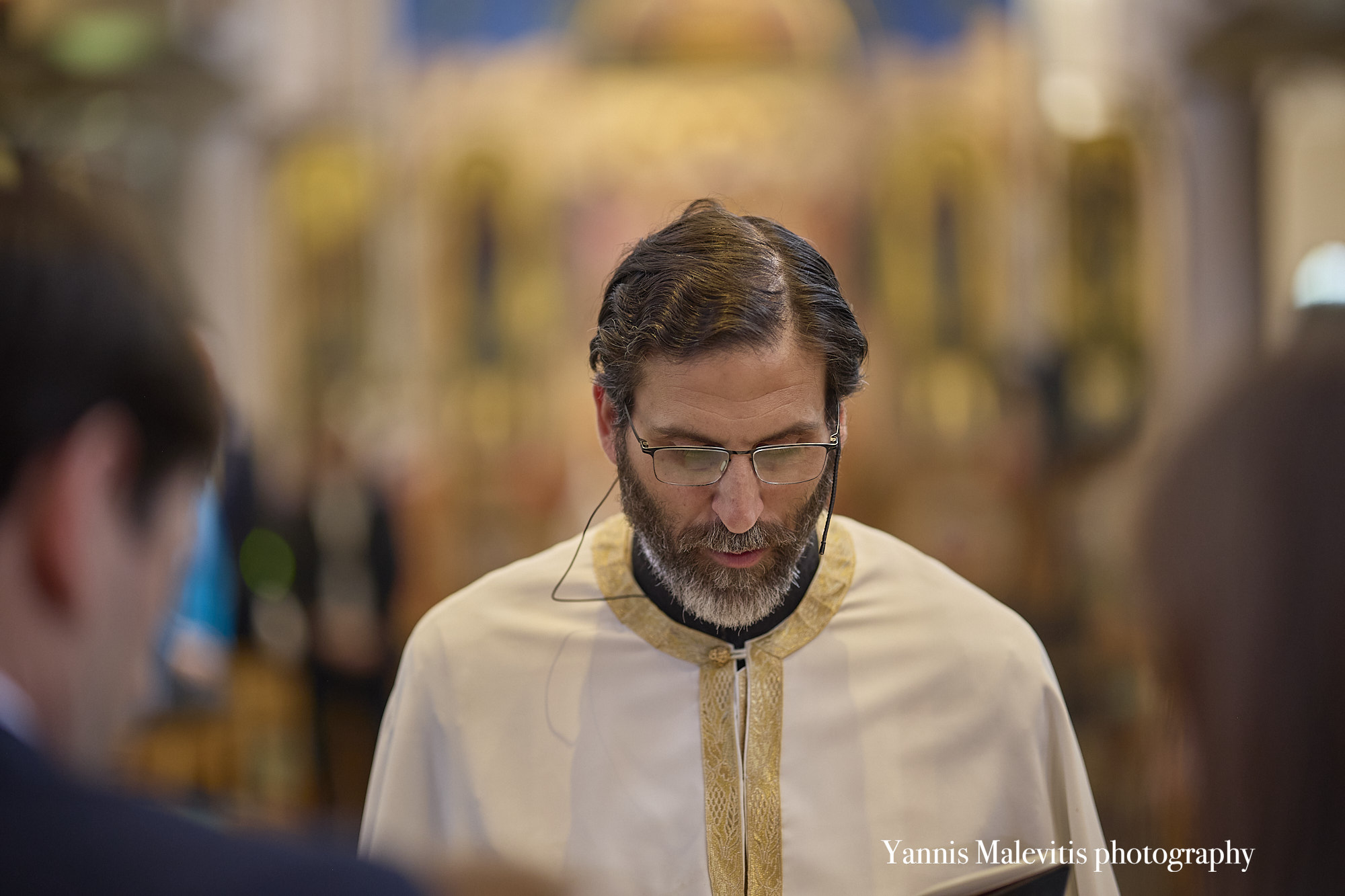
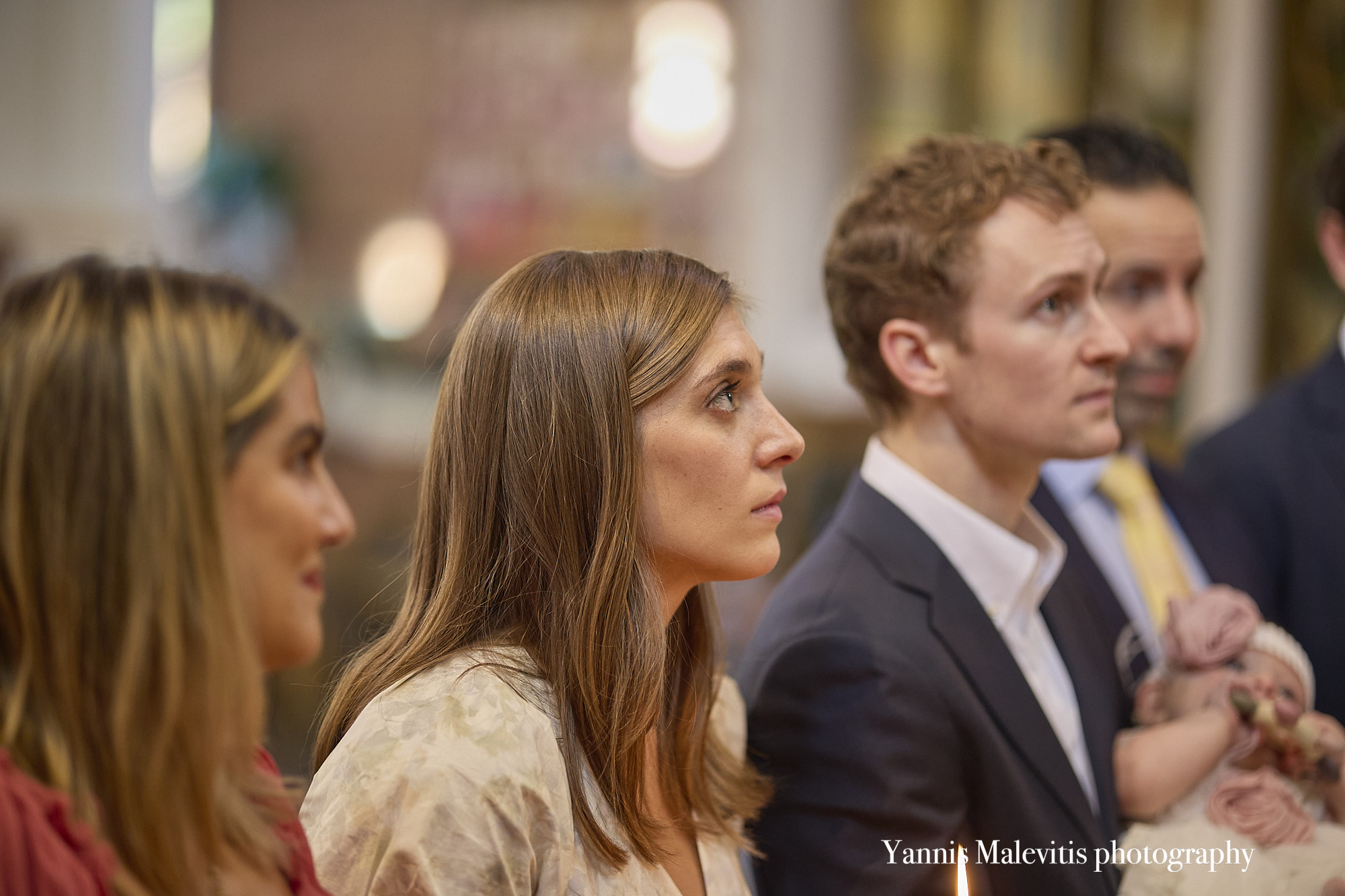
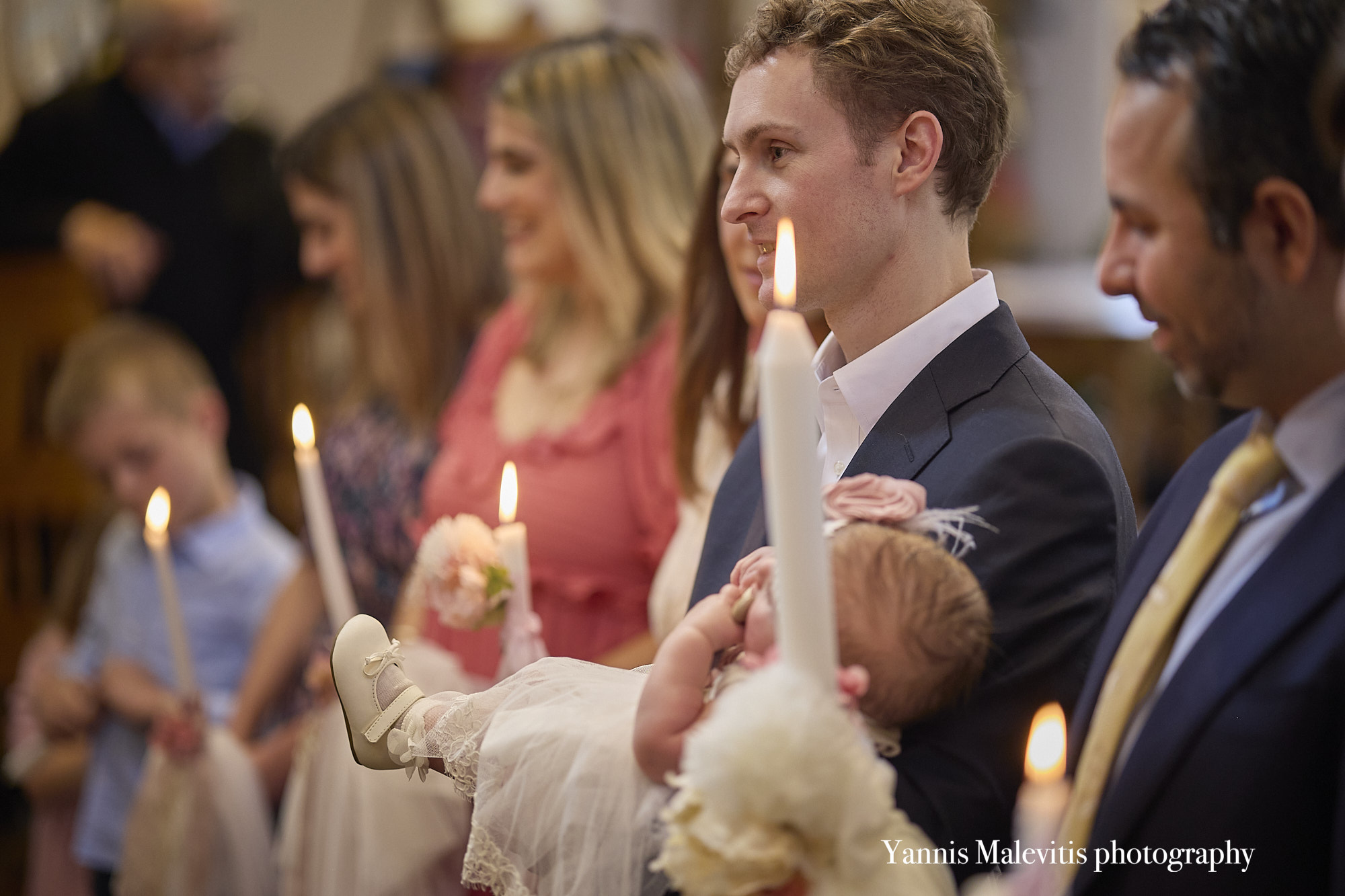
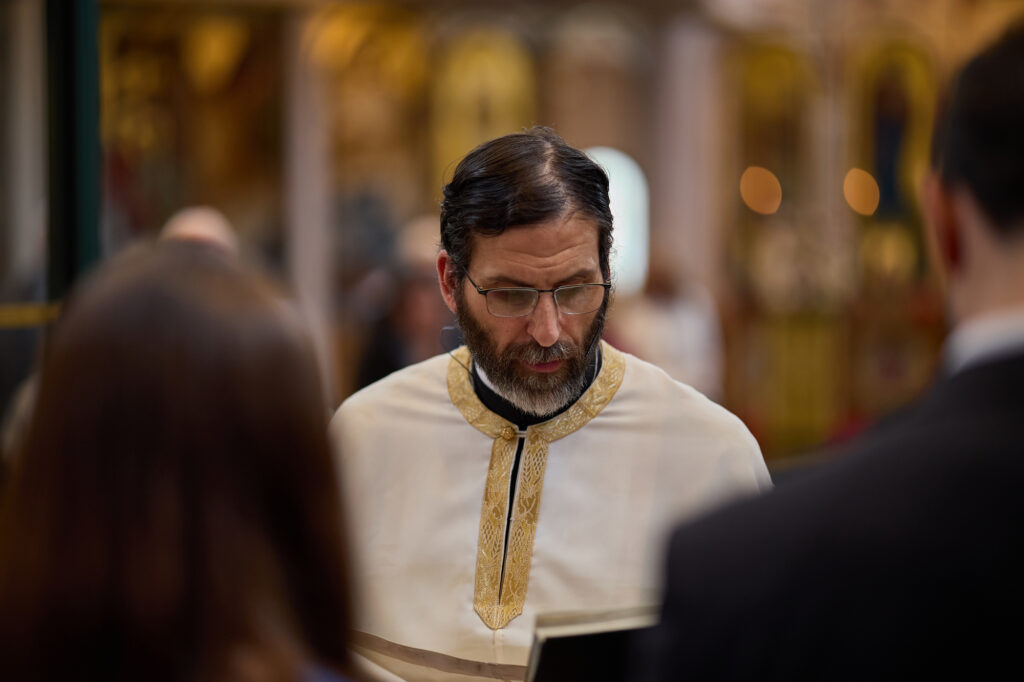
At this particular Christening ceremony I decided to use three camera bodies with a 20mm 1.8, a 50mm 1.2, a 100mm 1.4 and a 200mm f/2 lens. As the family and the guests are waiting for the beginning of the ceremony, I walk around them aiming to capture authentic moments. I try to show their feelings and isolate the subject through the use of wide aperture or the direction of natural light. Having a 200mm f/2 lens is highly convenient as it allows me to capture emotions from a distance even in the dark environment of the Narthex of the church.
The renunciation and the acceptance
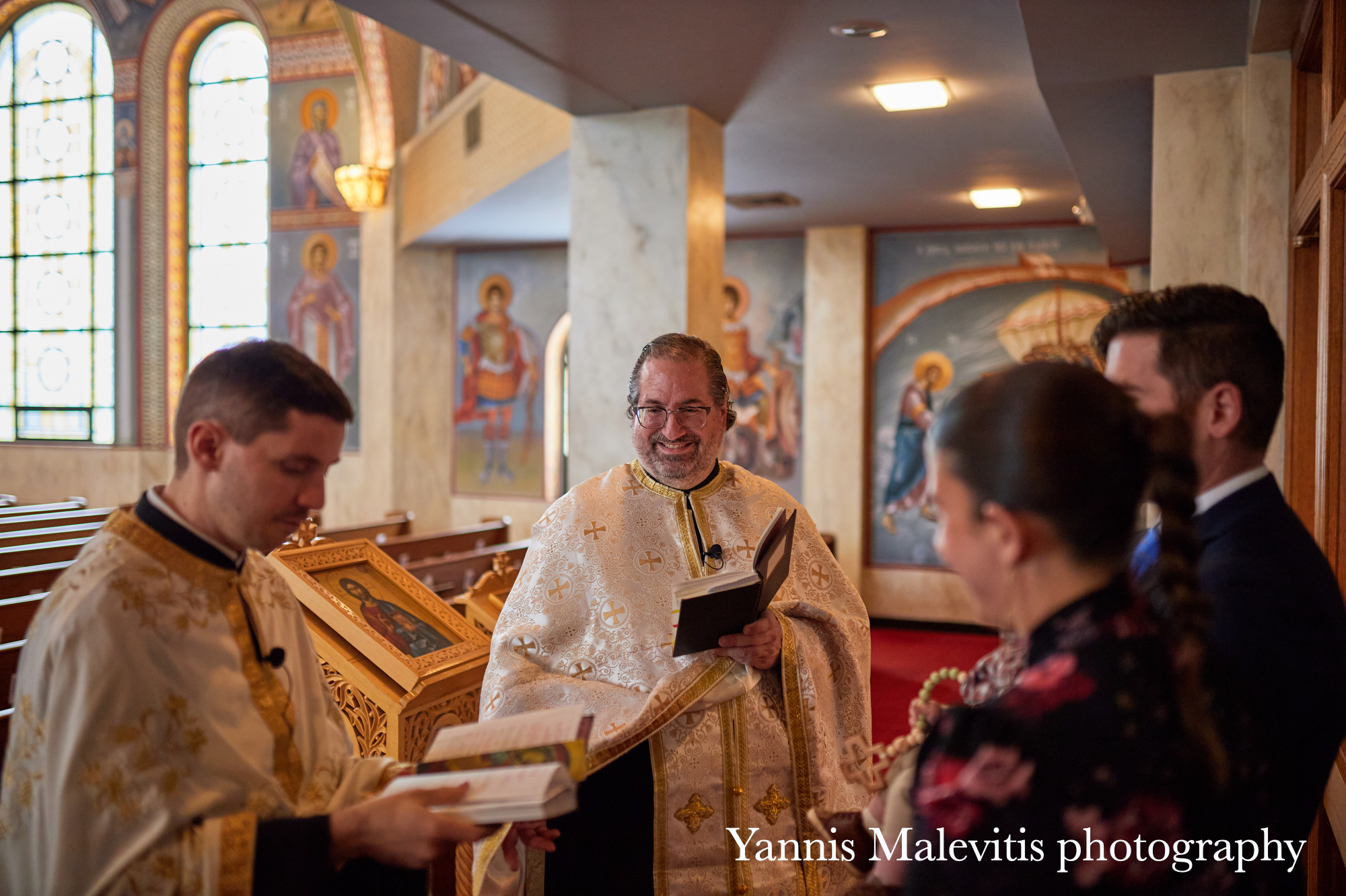
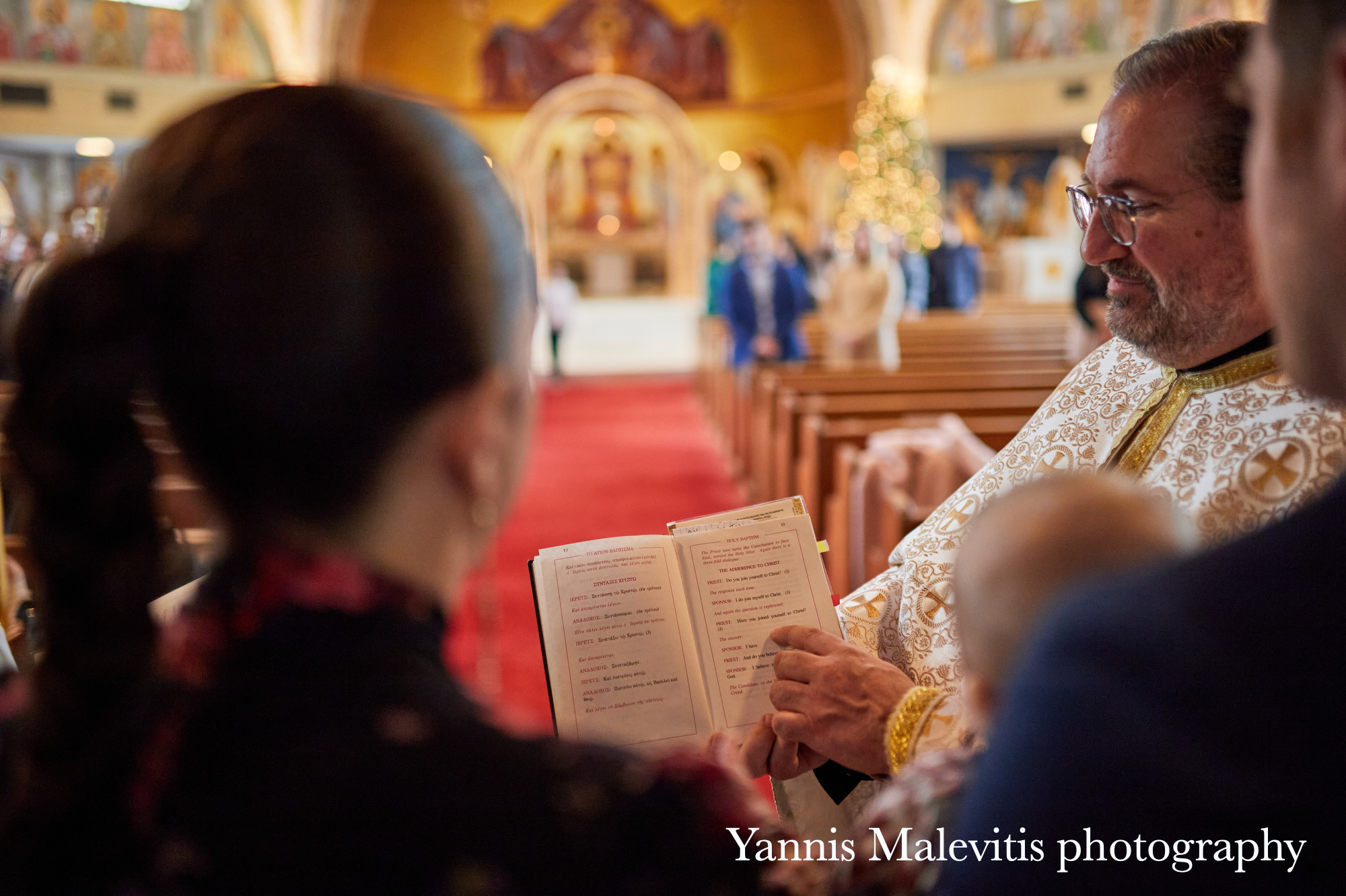
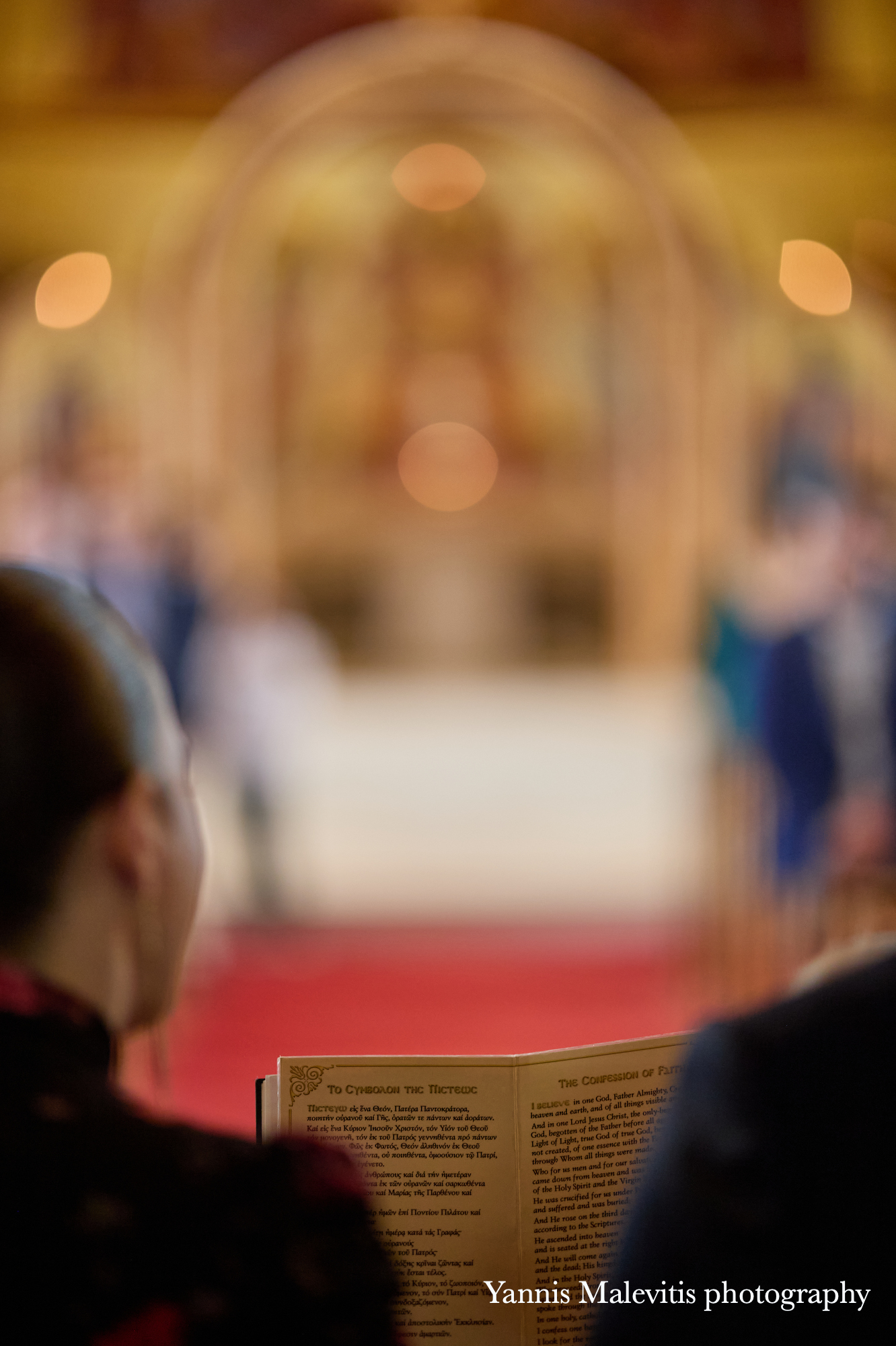
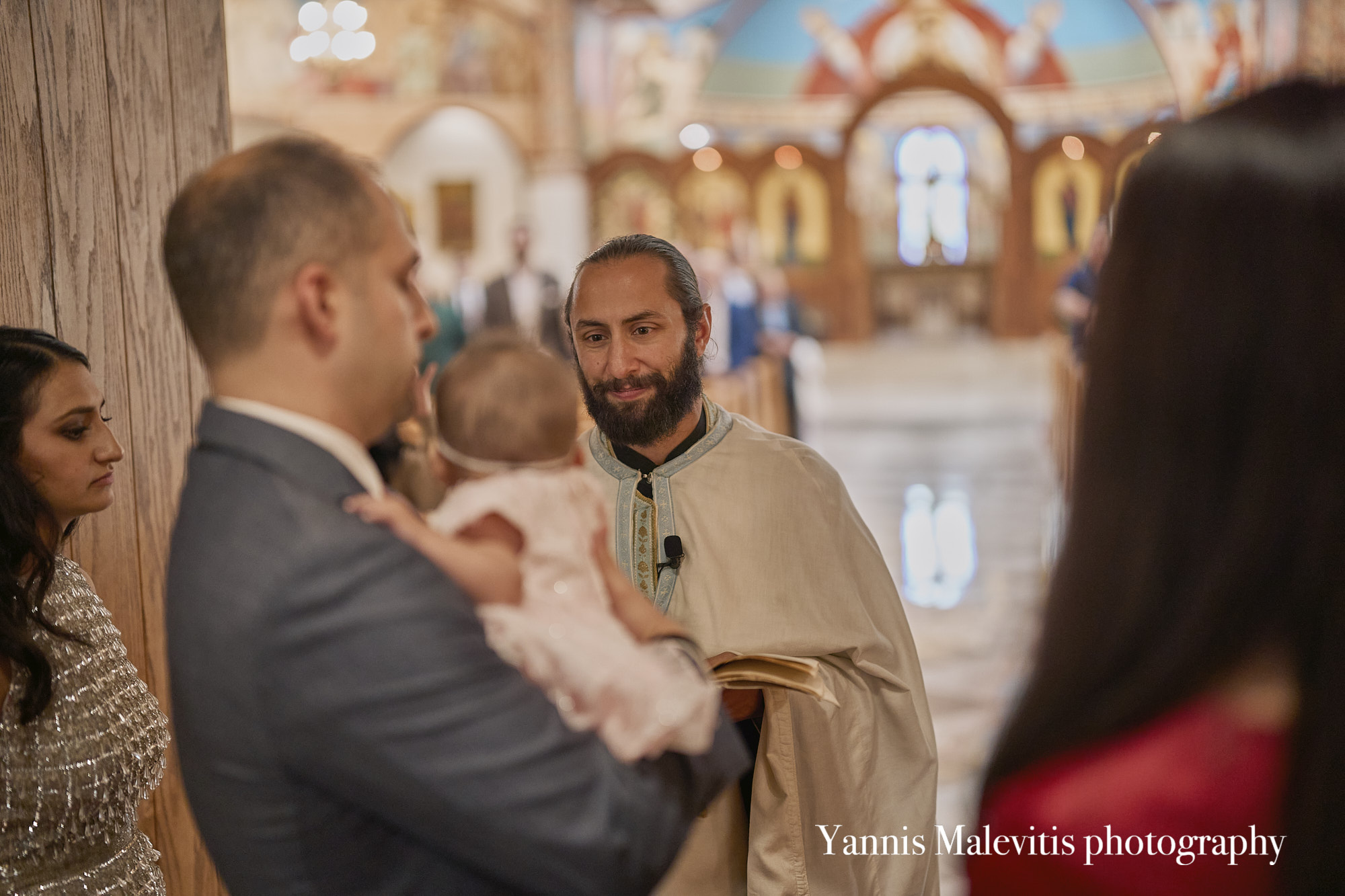
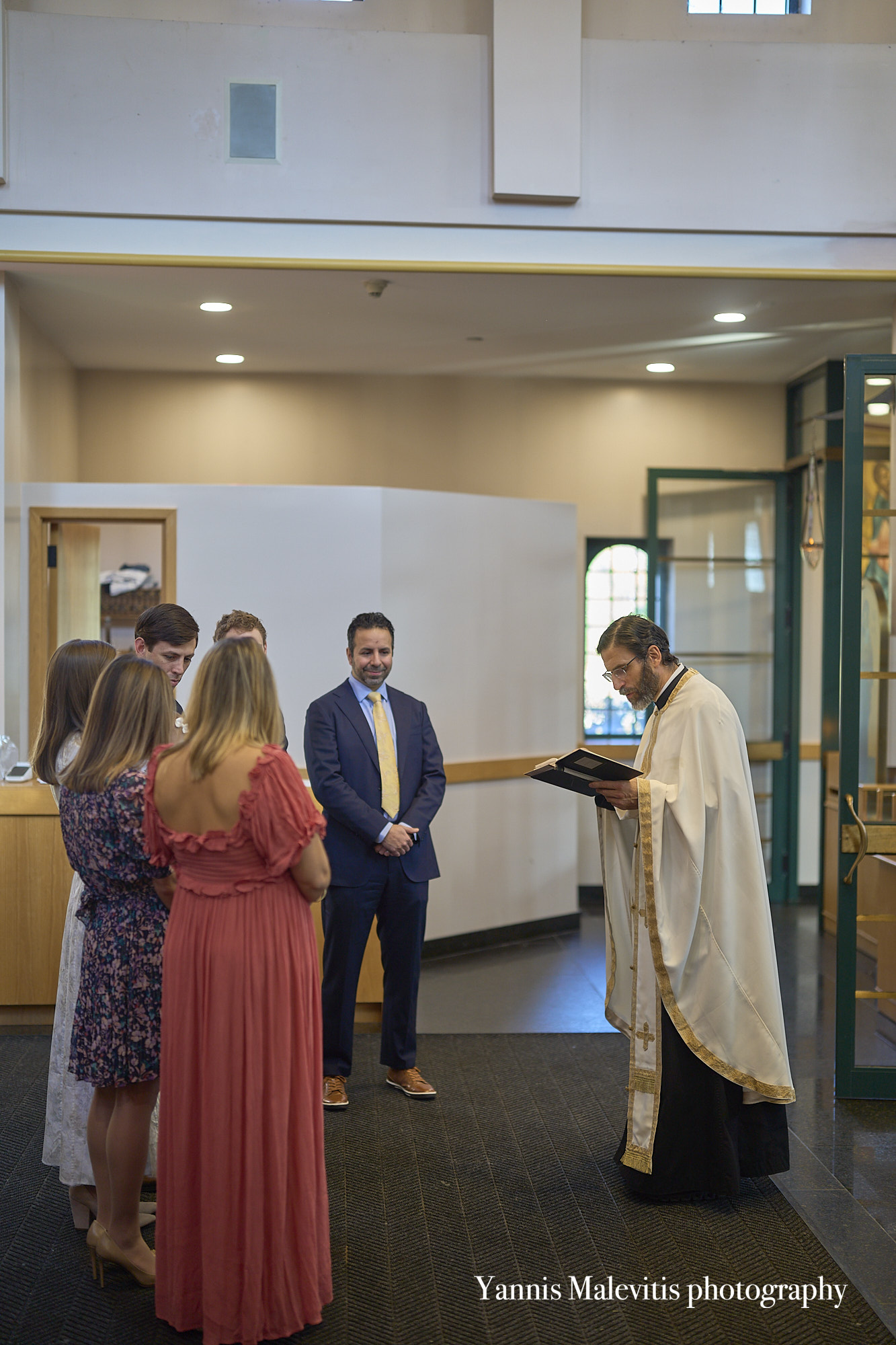
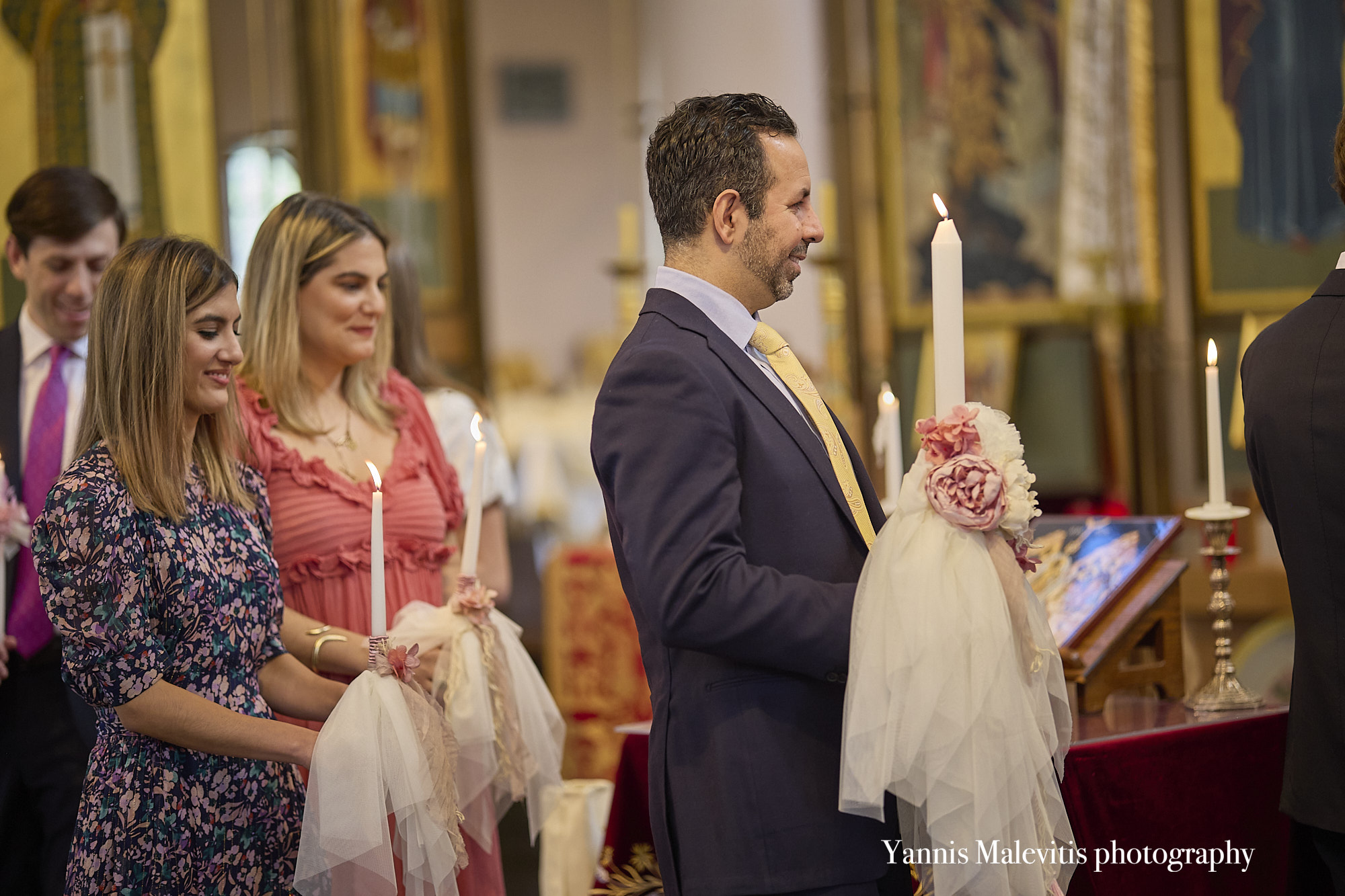
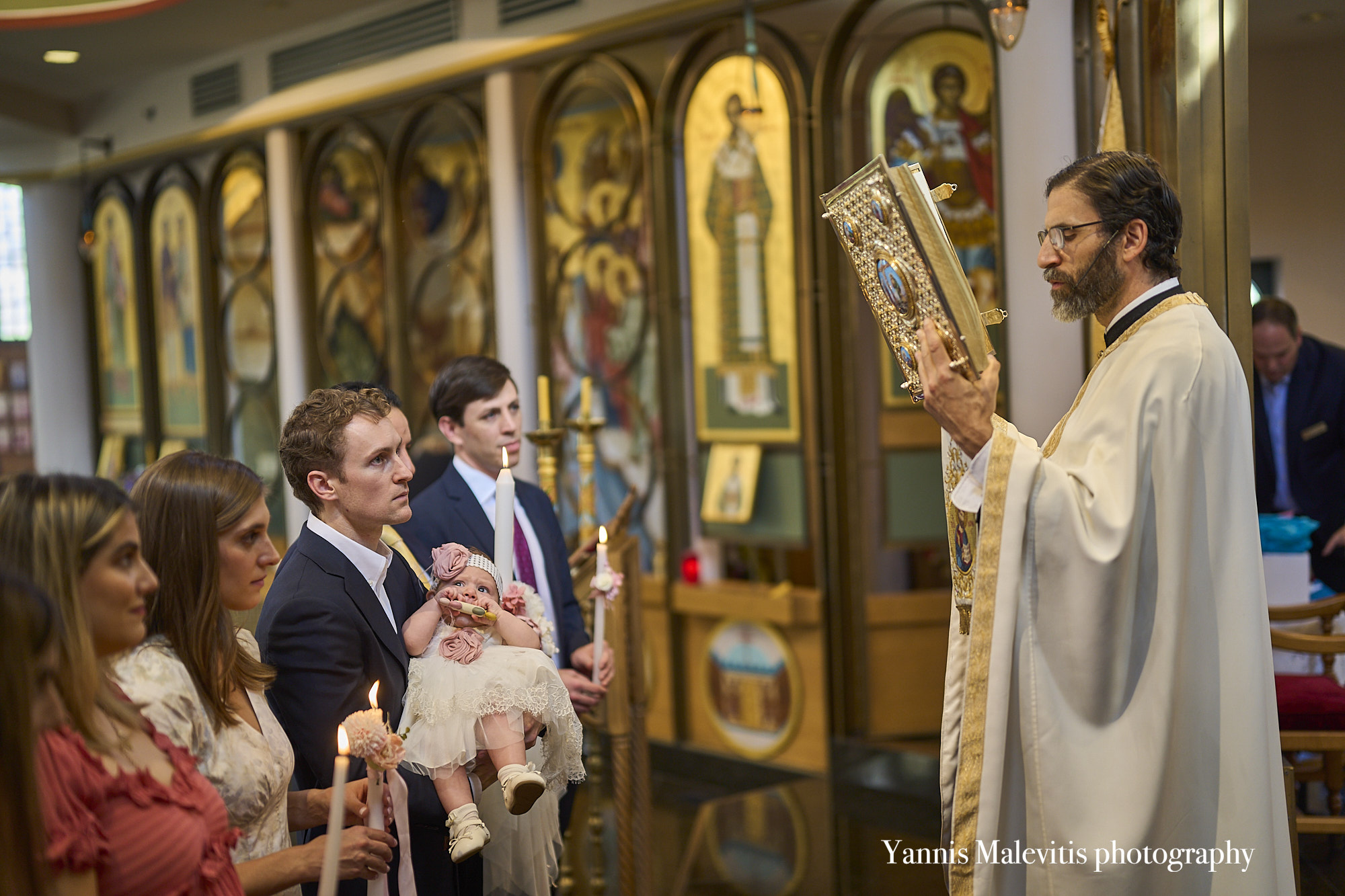
The first part of a Greek Orthodox Christening is the renunciation and the acceptance. The person being baptized will be with the Godparent (Nouno or Nouna in Greek) as he/she stands in the Narthex of the church. The prayer is followed by three Exorcisms and yet another prayer, the prayer of acceptance, at the end of which the Priest asks God to drive out and banish from the person to be baptized, any and every evil and impure spirit. The Godparent, will then be asked to face west and renounce Satan and all his works. Then the Godparent, will face east again and affirmatively answer the Priest who will ask him/her (three times) if he/she has pledged his allegiance to Christ. After doing so, the Godparent will recite the Creed, the Symbol of Faith (‘To Pistevo’ in Greek).
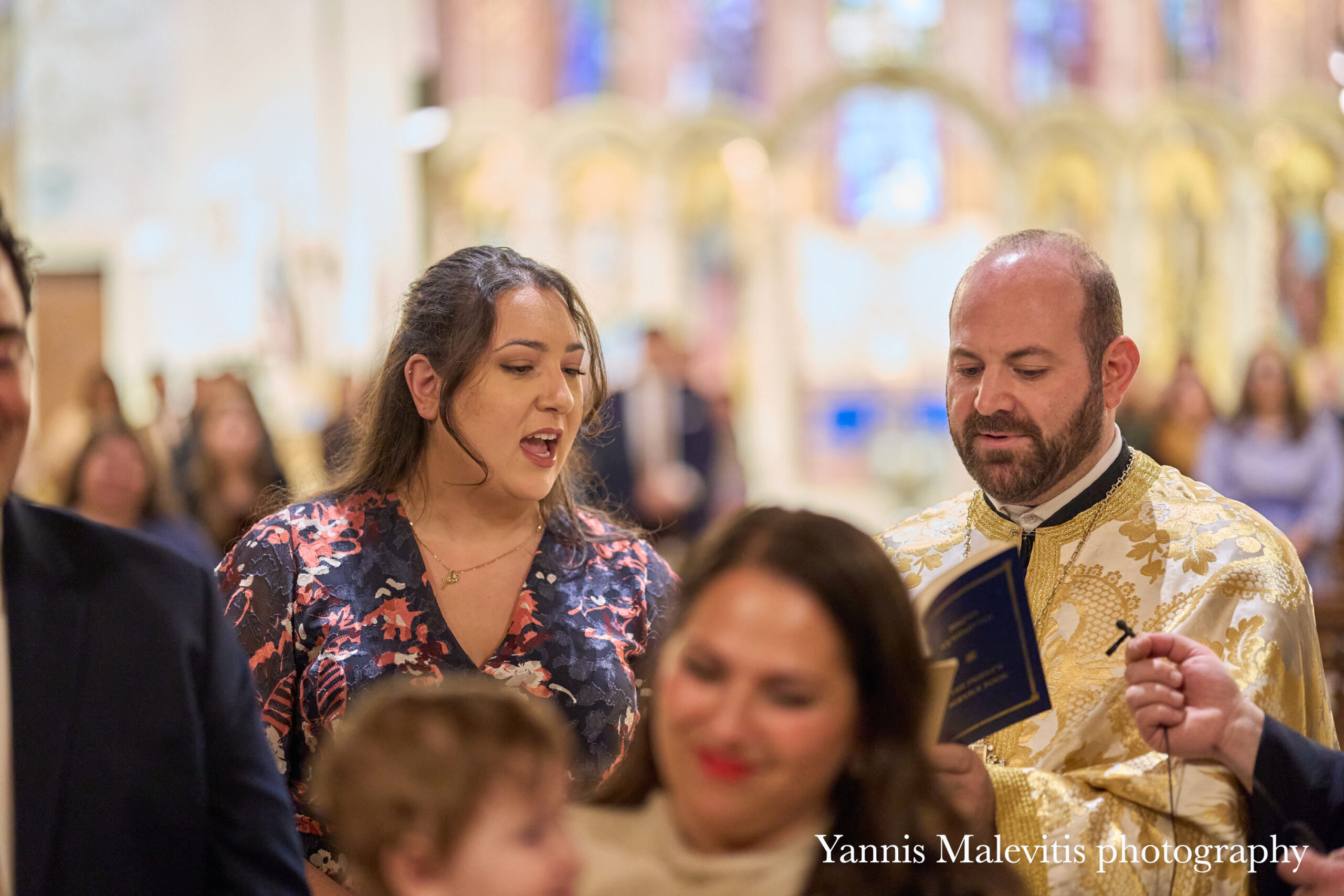
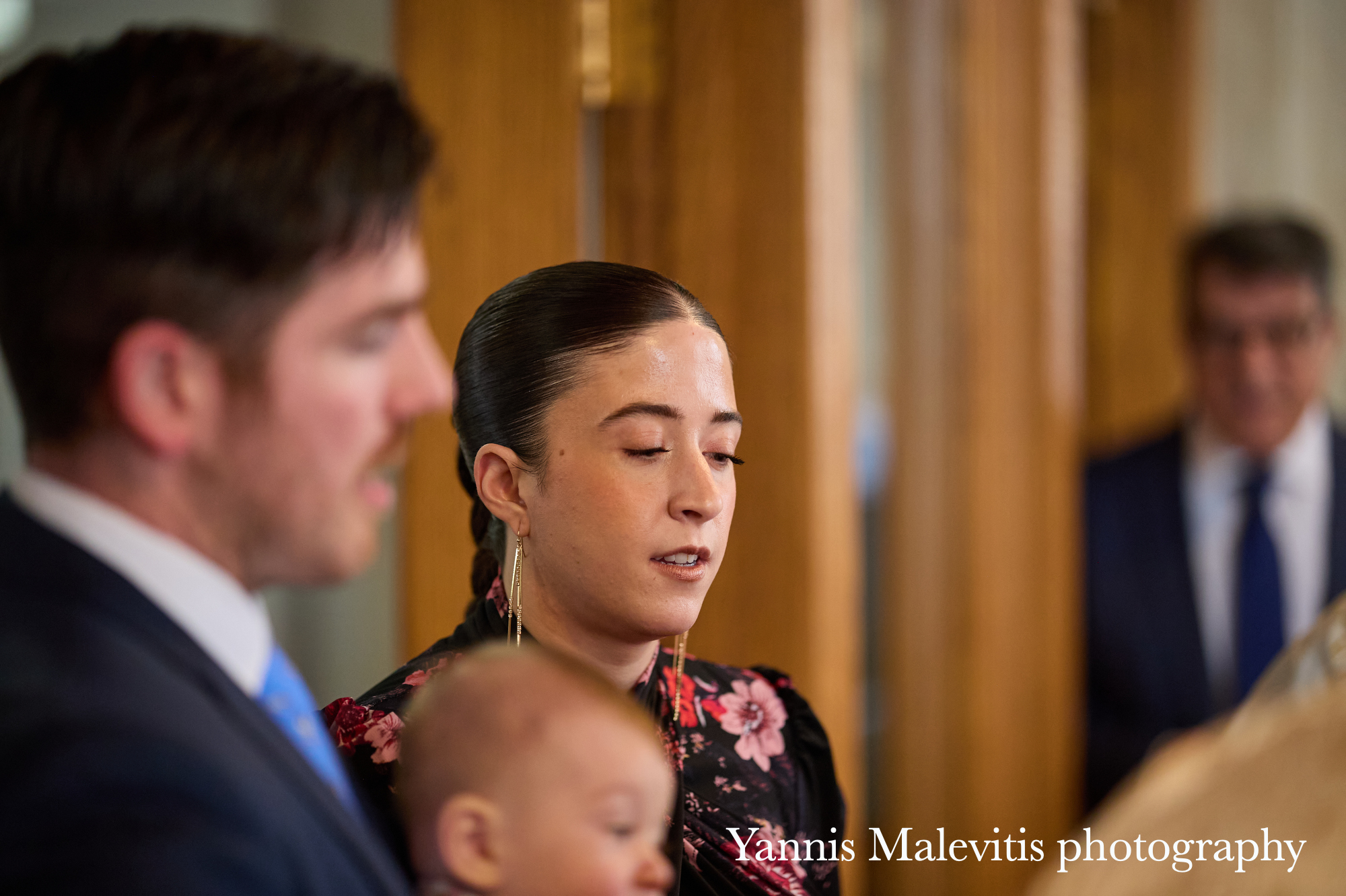
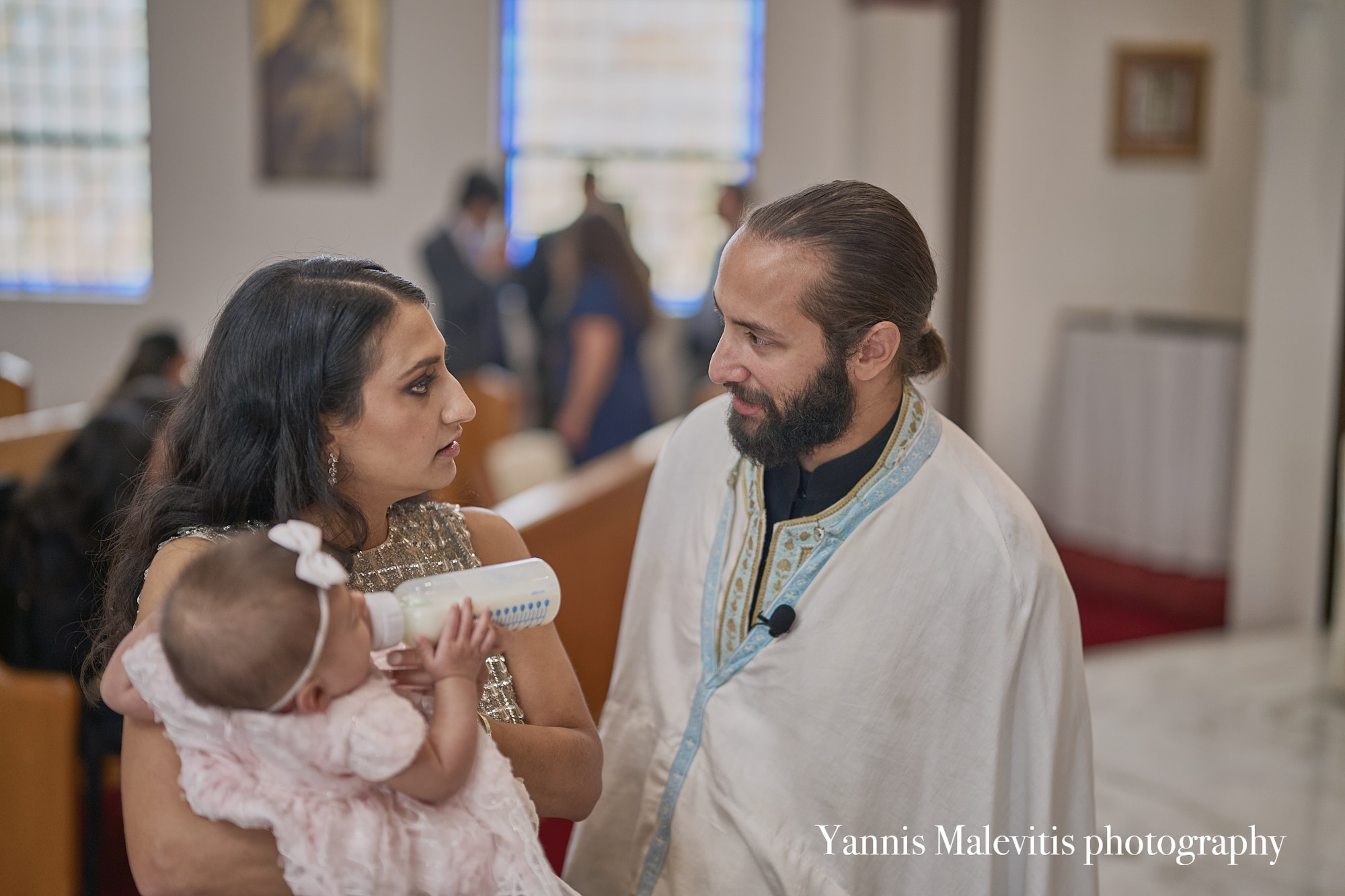
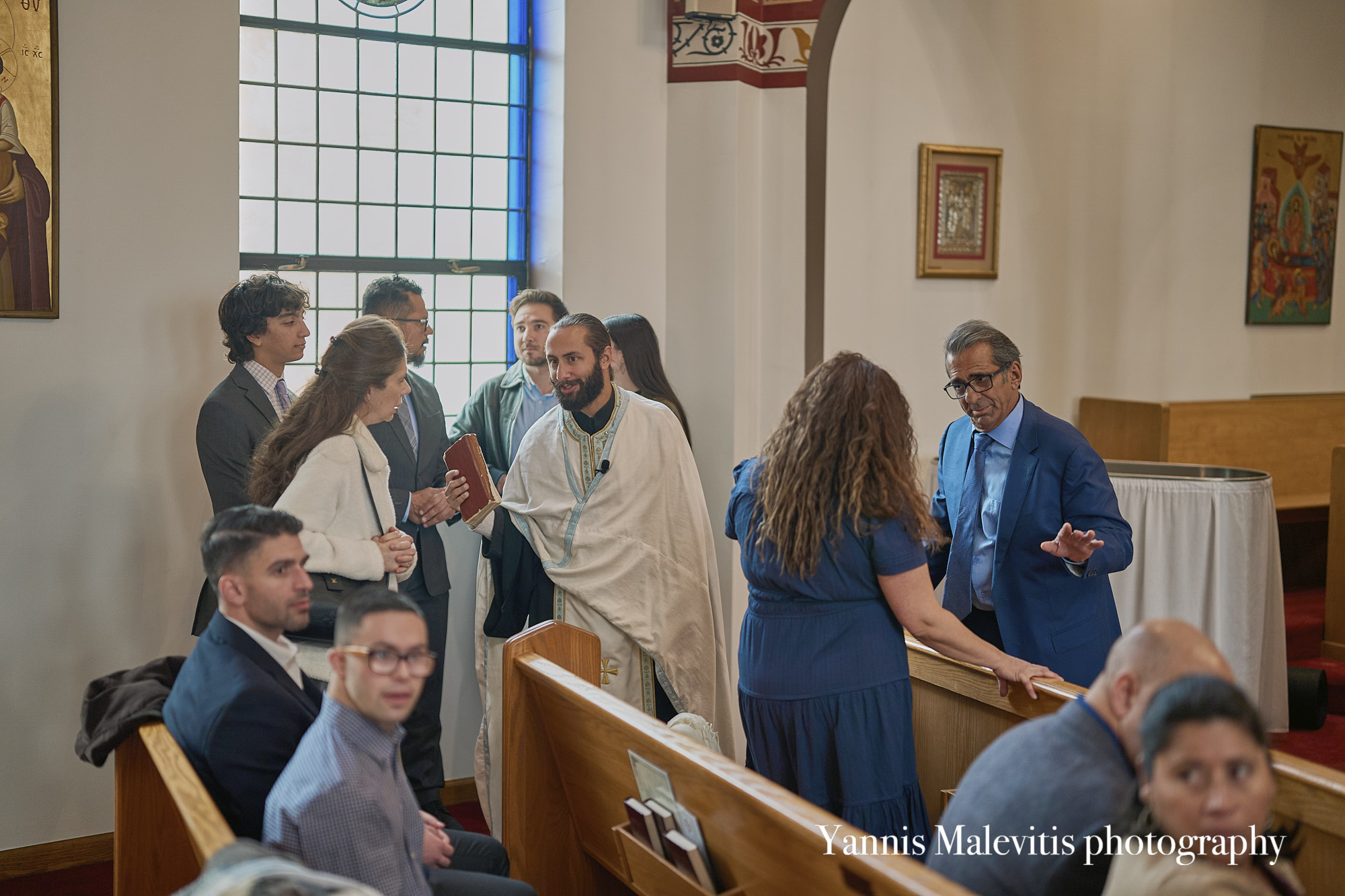
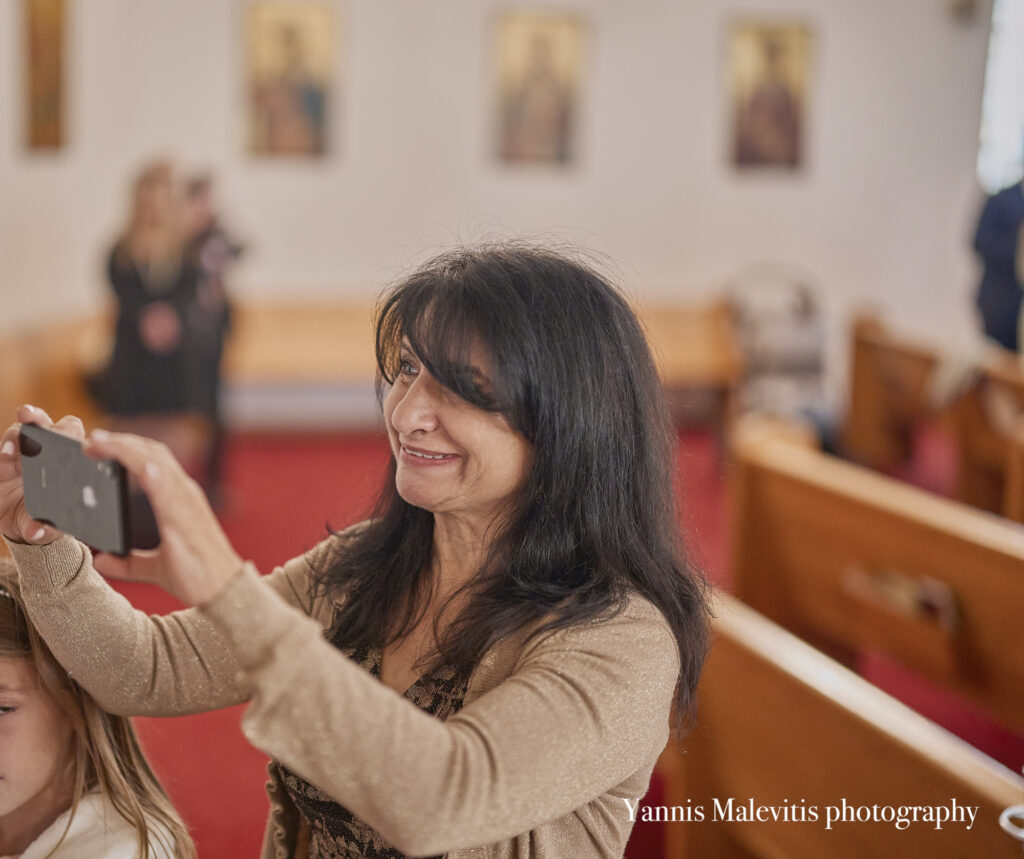
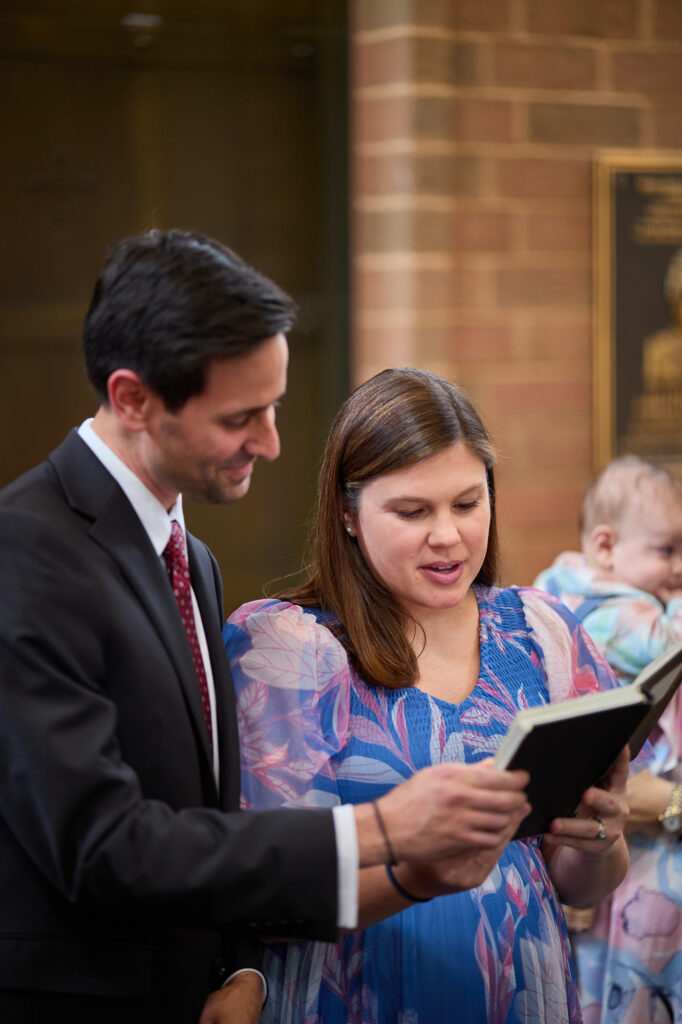
I walk around the Narthex of the church in order to capture reactions and gestures from the most flattering or interesting perspective. I consider myself a storyteller with images and the story includes other moments, such as the reaction of the mother, the grandmother capturing video, the Presvytera and aunt of the baby cherishing the moment from a distance. I photograph all these moments using only available light.
My photographic perspective of a Greek Orthodox Christening aims to differentiate my work and create works of art.
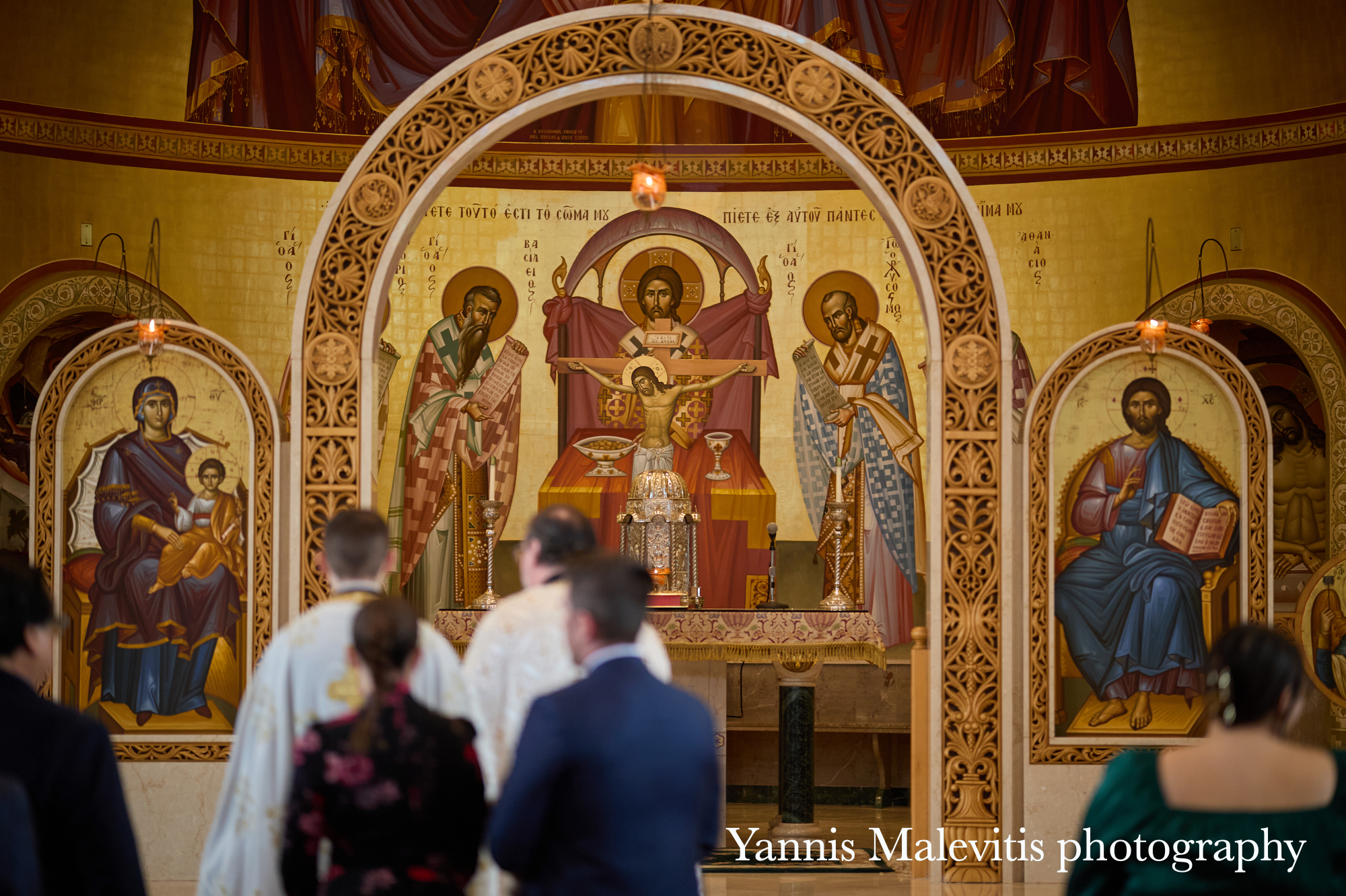
Being a parishioner of this church, Fr. Panteleimon is my spiritual father. The church has a unique architecture with the rays of sun light illuminating the faces from various positions. It is my task to see the light and capture the story from the most interesting position. I use a mix of wide shots to capture the ambiance of the church and close-ups for intimate moments. I try to position myself discreetly near the font or other focal points without intruding.
As Greek Orthodox I am familiar with the sequence of events in a Greek Orthodox baptism. Key moments include: – The anointing with holy oil. – The immersion in the font. – The cutting of hair (tonsure). – The dressing of the child in a white garment. – The lighting of the baptismal candles.
I typically carry three full frame camera bodies and use 4-5 prime lenses. The prime lenses allow two times more light to enter the camera sensor compared to typical zoom lenses. Greek Orthodox churches often have beautiful but dim lighting. I use natural light where possible to preserve the atmosphere.
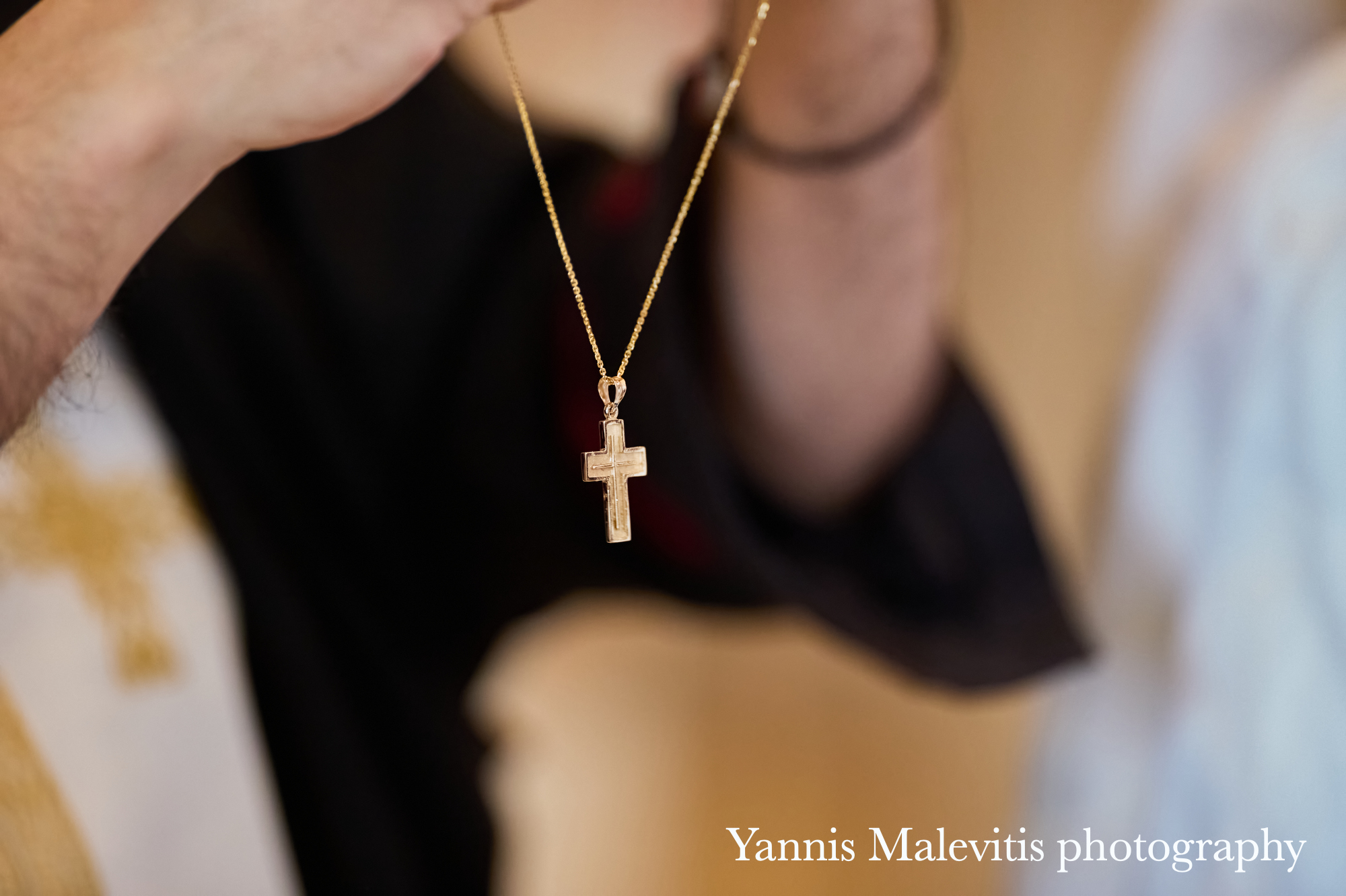
I stay unobtrusive and avoid blocking the view of the congregation or disrupting the priest. I give particular emphasis to capturing the key moments: a) Arrival and preparation of the family. b) Close-ups of the font, candles, and oil. c) The immersion of the baby in the font. d) Expressions of the family and godparents. e) Post-baptismal moments, such as the child dressed in white.
It is always a pleasure photographing a Baptism at the Holy Resurrection Greek Orthodox Church in Brookville, NY.
Christening photographer, Baptism photographer, Greek Orthodox photographer, Long Island photographer, NY photographer.
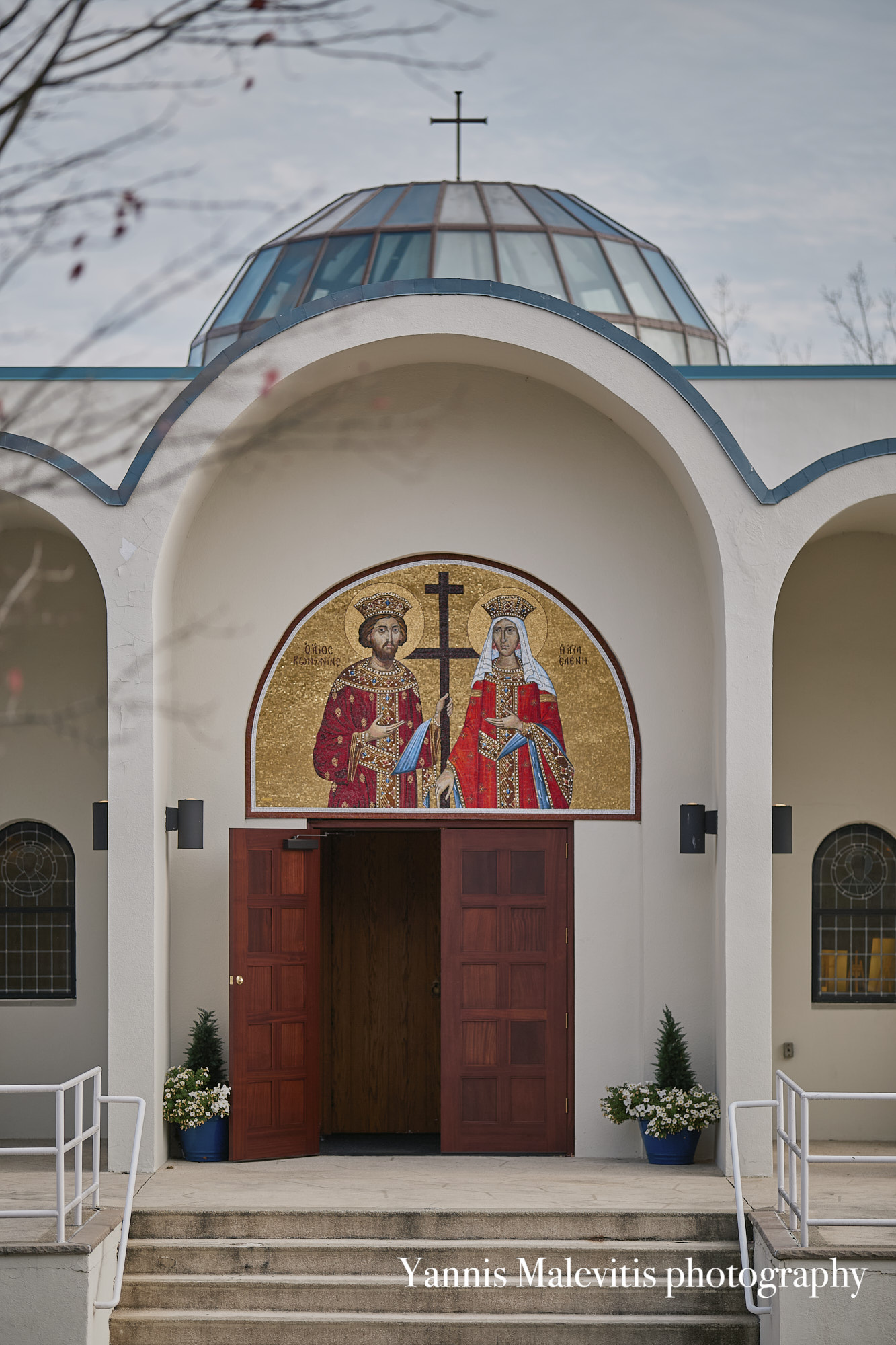
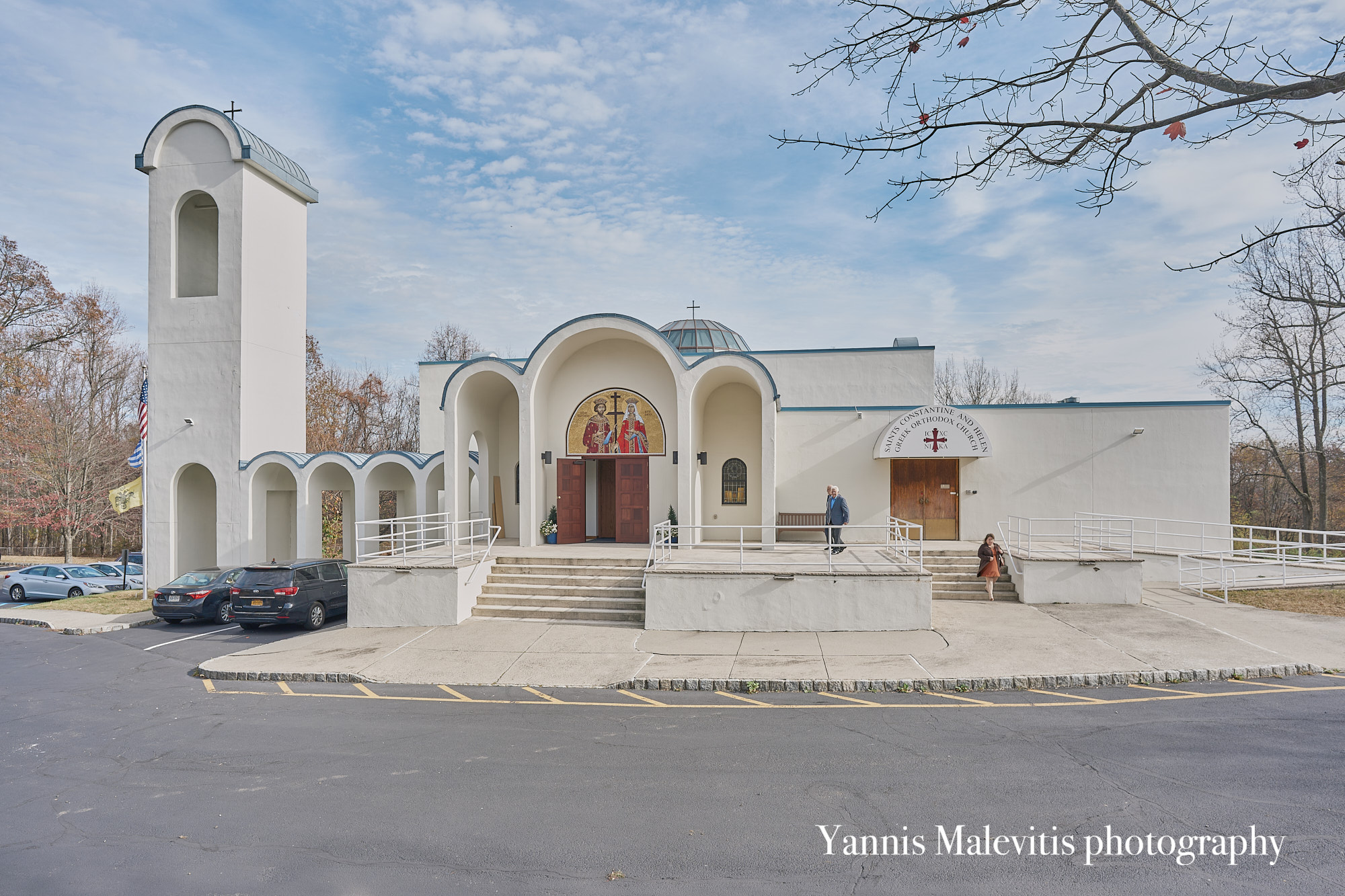
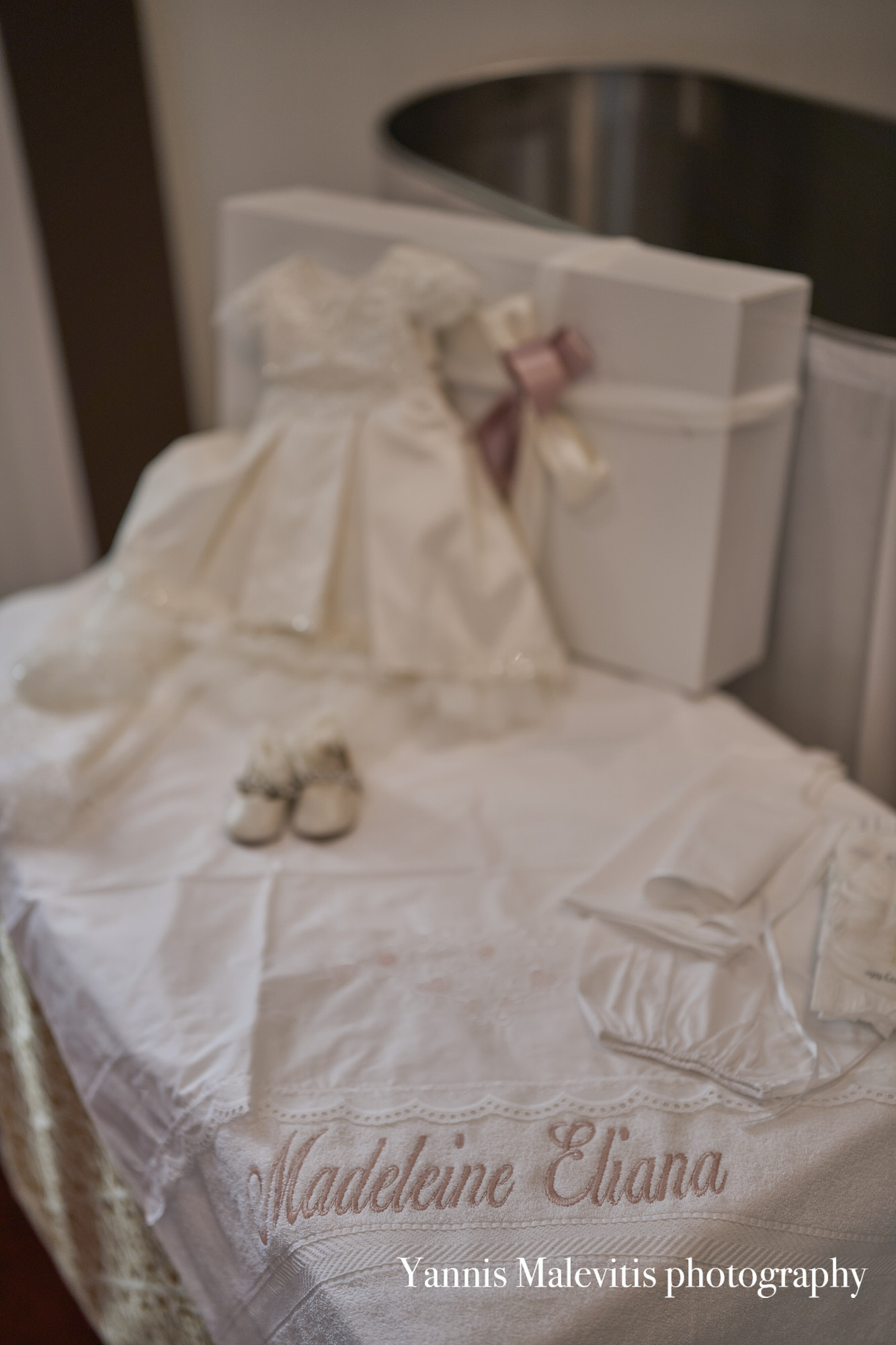
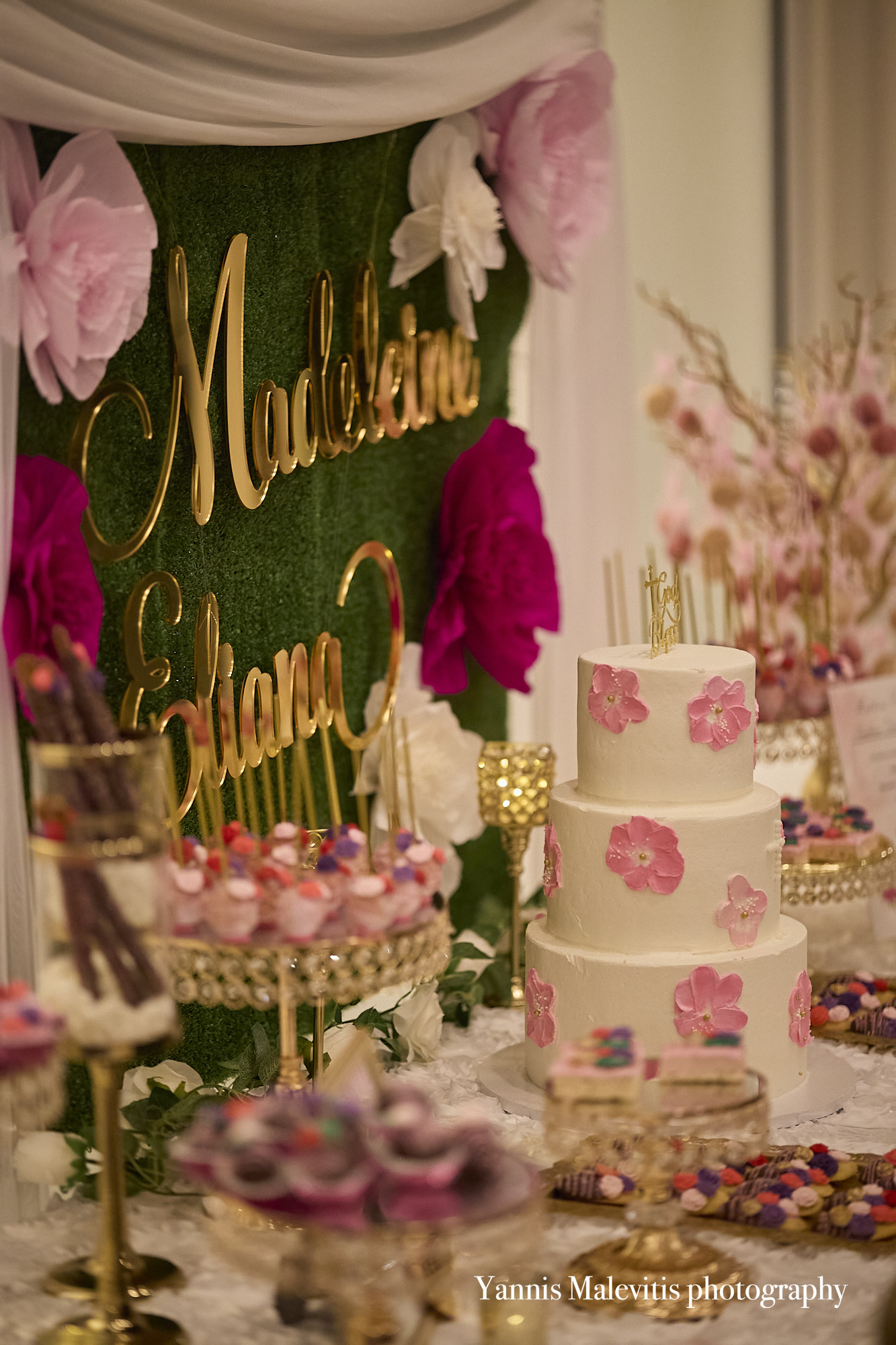
Photographing a Christening reception is a wonderful opportunity to capture many authentic moments. Two weeks ago I photographed the baptism of Madeleine at the Greek Orthodox Church of Saints Constantine and Helen in West Nyack, NY.
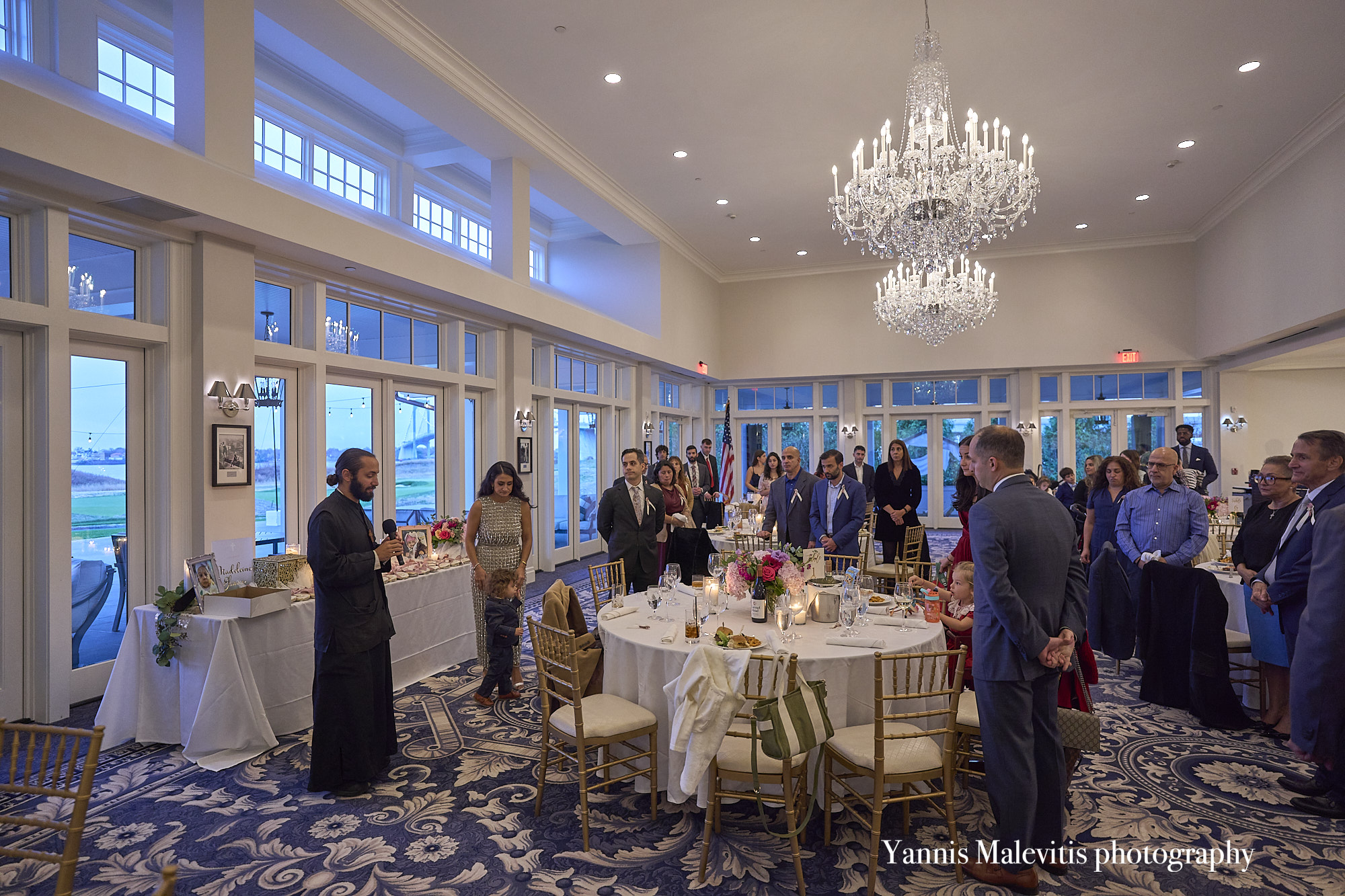
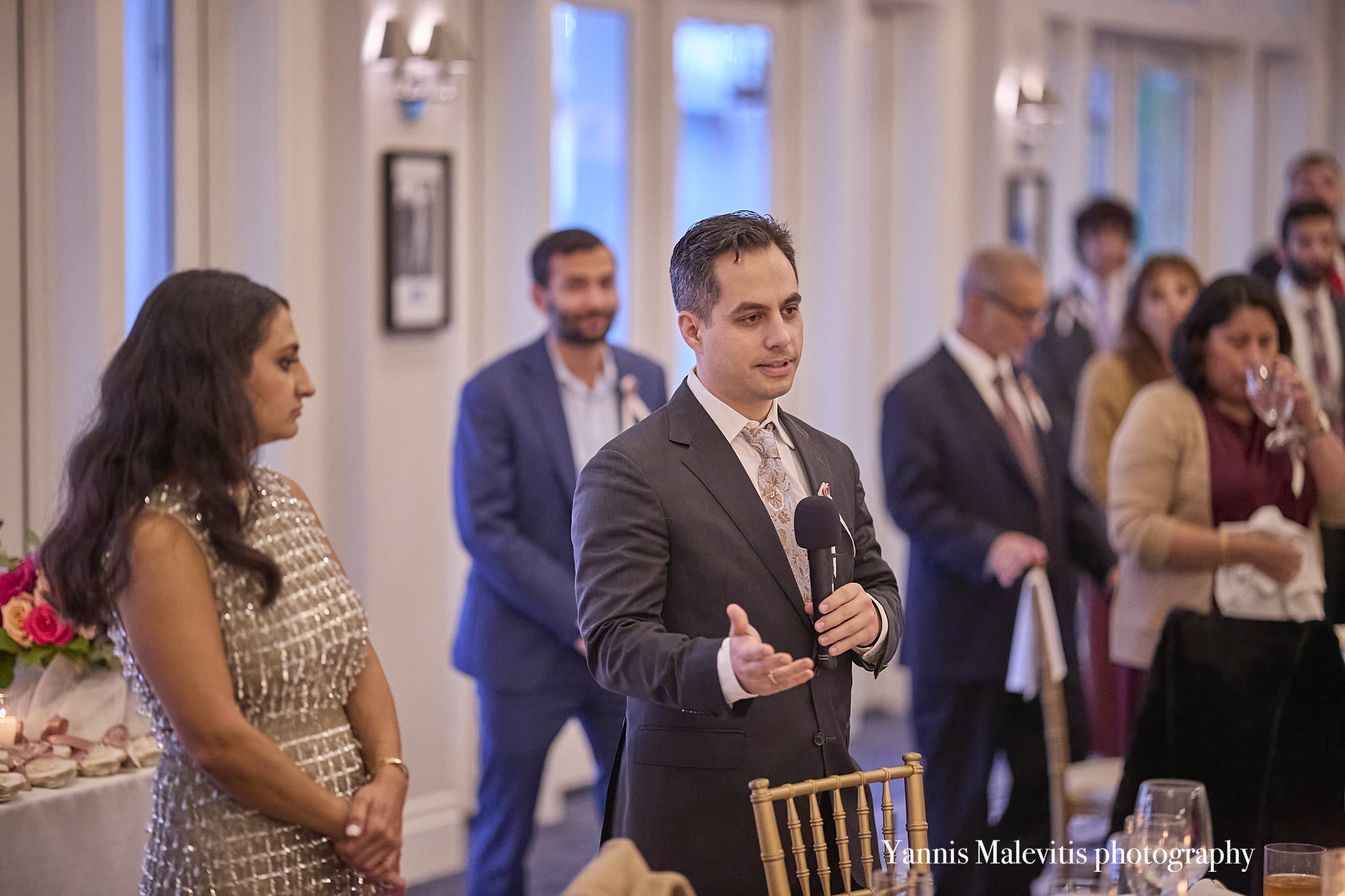
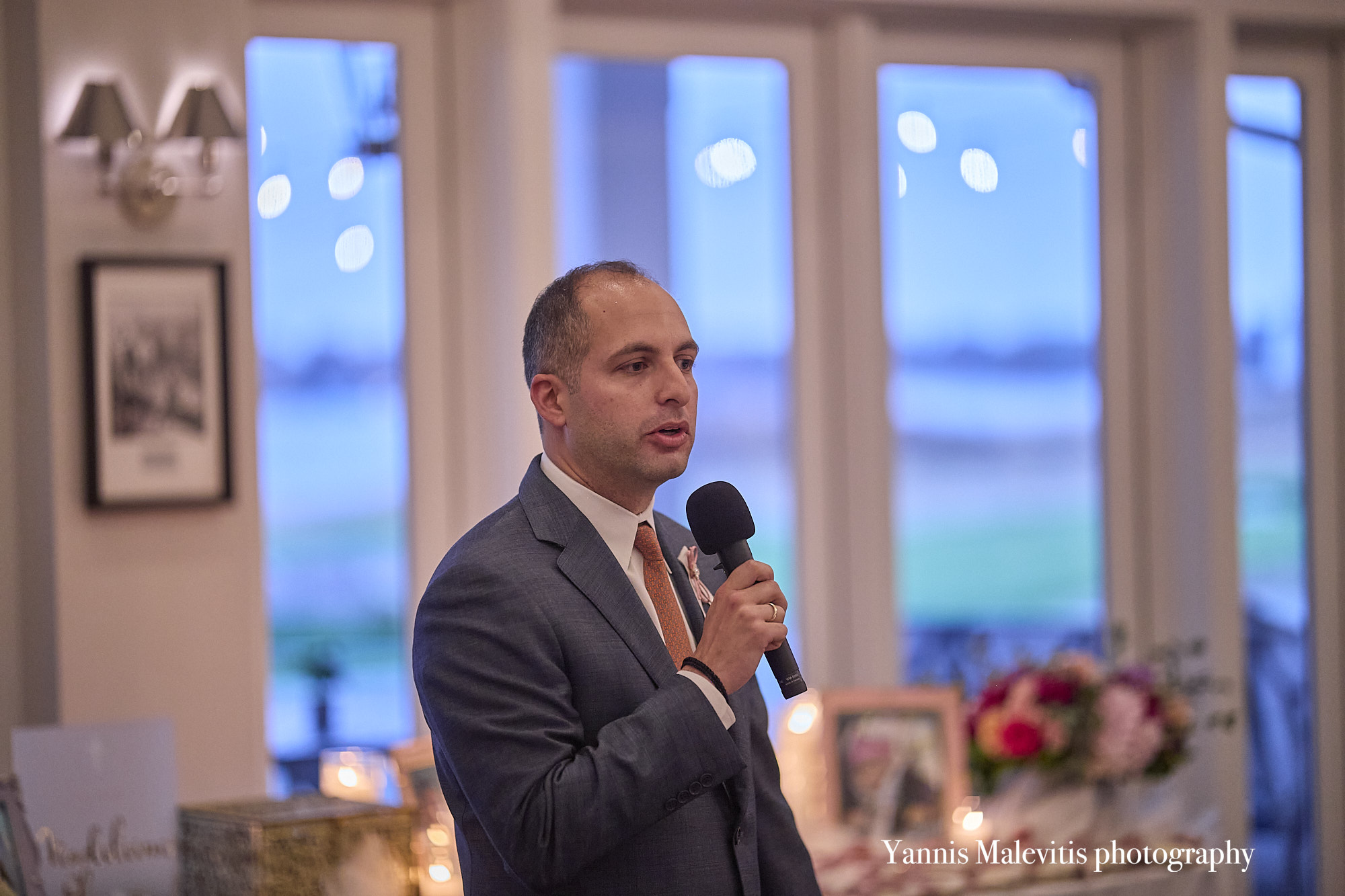
The Christening reception for Madeleine took place at the Bally’s Golf Links at Ferry Point. Fr. Michael started with a prayer and the blessing of the food. Then the father and the godparent spoke for a few minutes and welcomed their guests.
I typically use two or three camera bodies with 50mm 1.2, a 20mm 1.4 and a 100mm 1.4 lens. I love using the 50mm focal length as I walk around the tables and capture authentic moments without being noticed. My preferred wide lens is either a 20mm or a 24mm prime lens. As I don’t use external lights the f/1.2 or f/1.4 aperture is necessary to freeze the action and remain unobtrusive, because primes lenses with an f/1.4 aperture allow two times more light to the camera sensor.
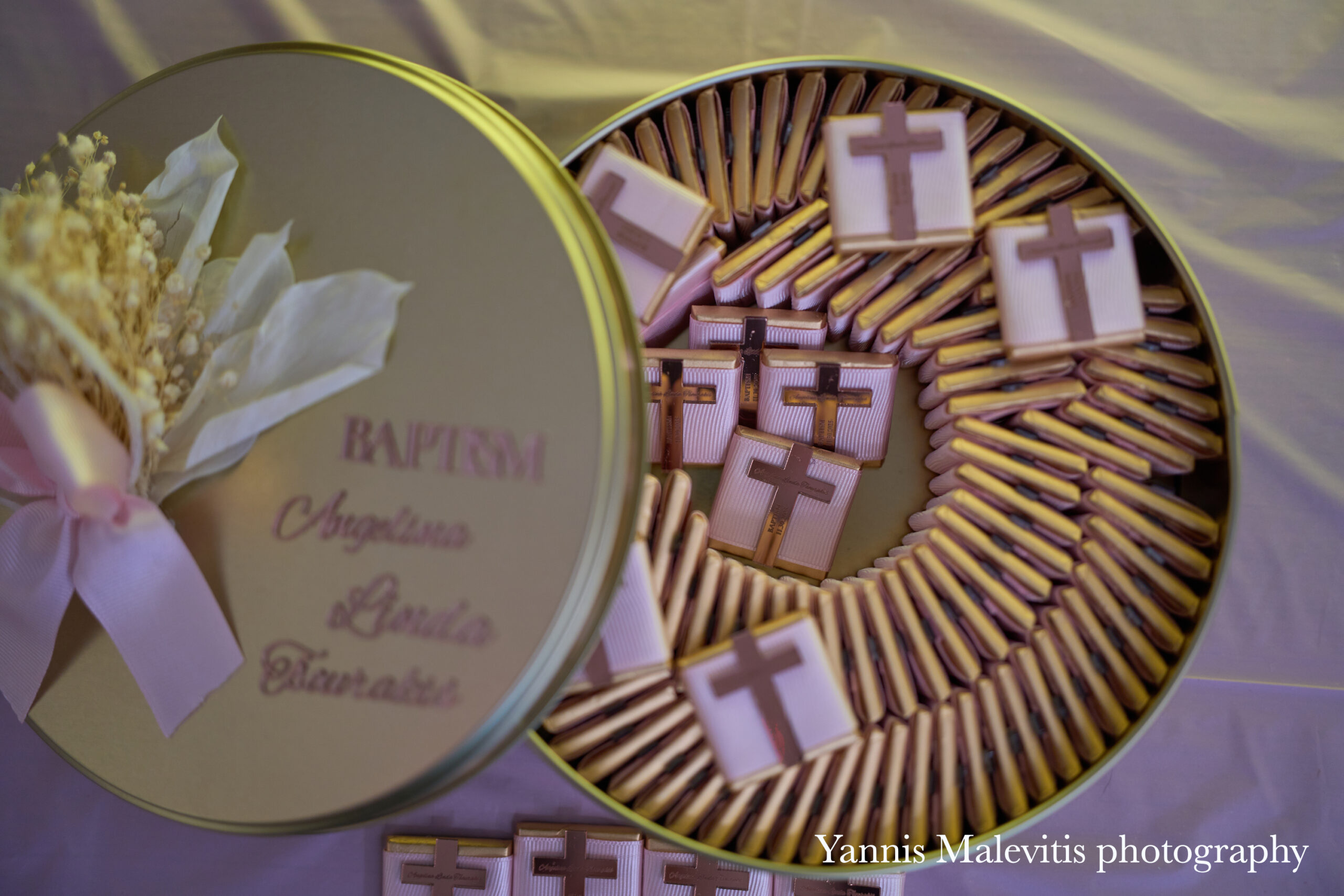
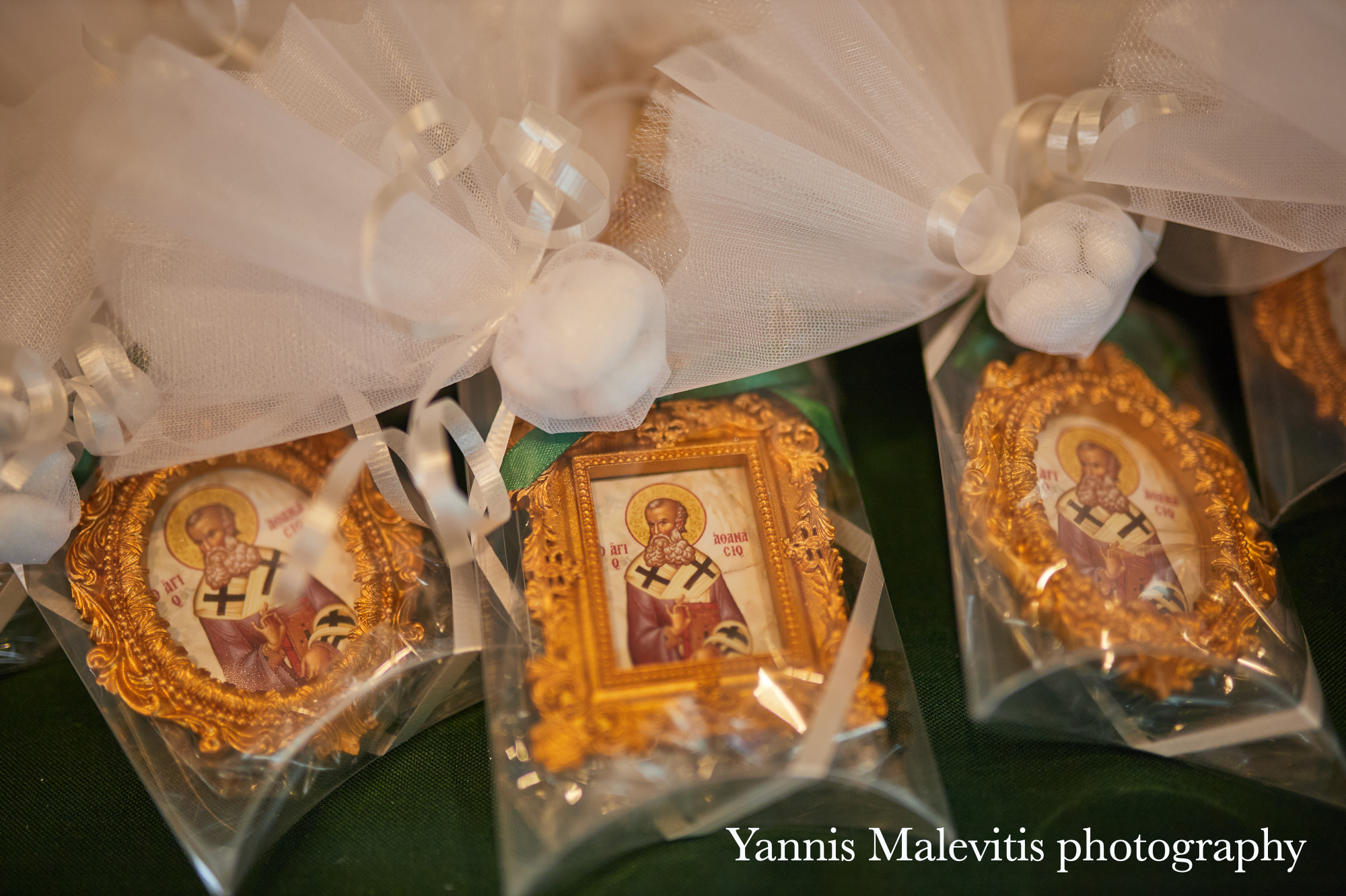
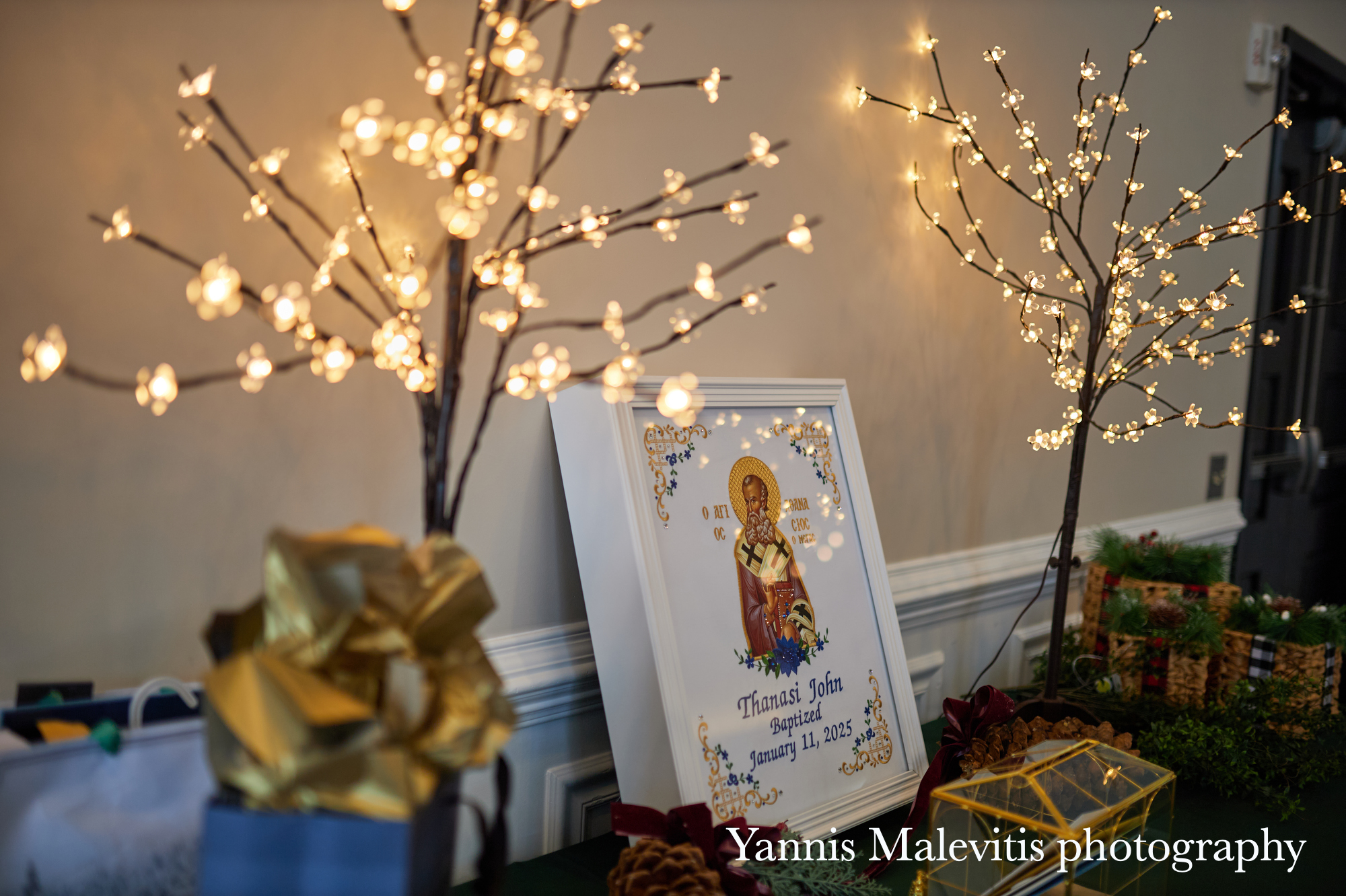
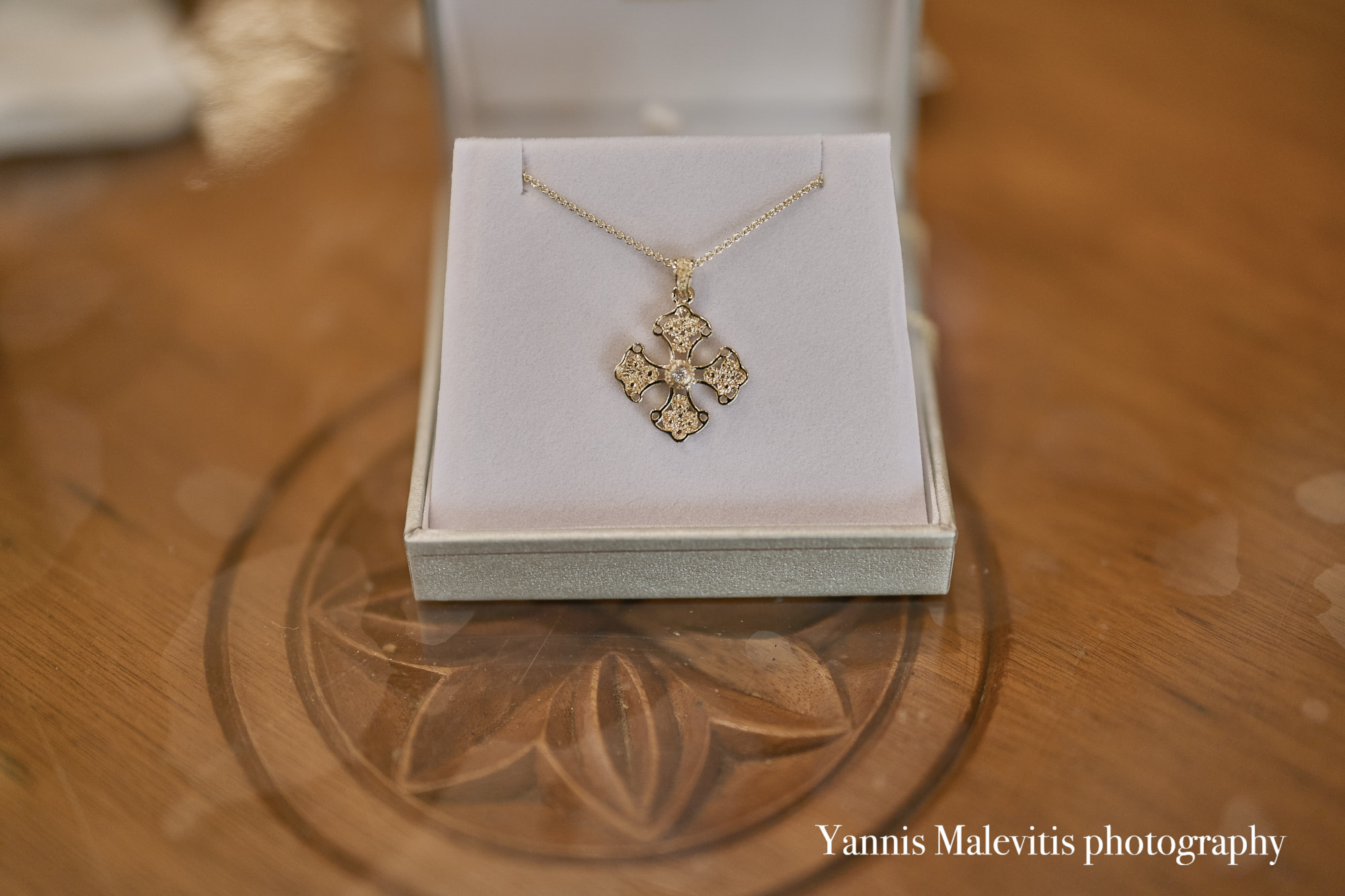
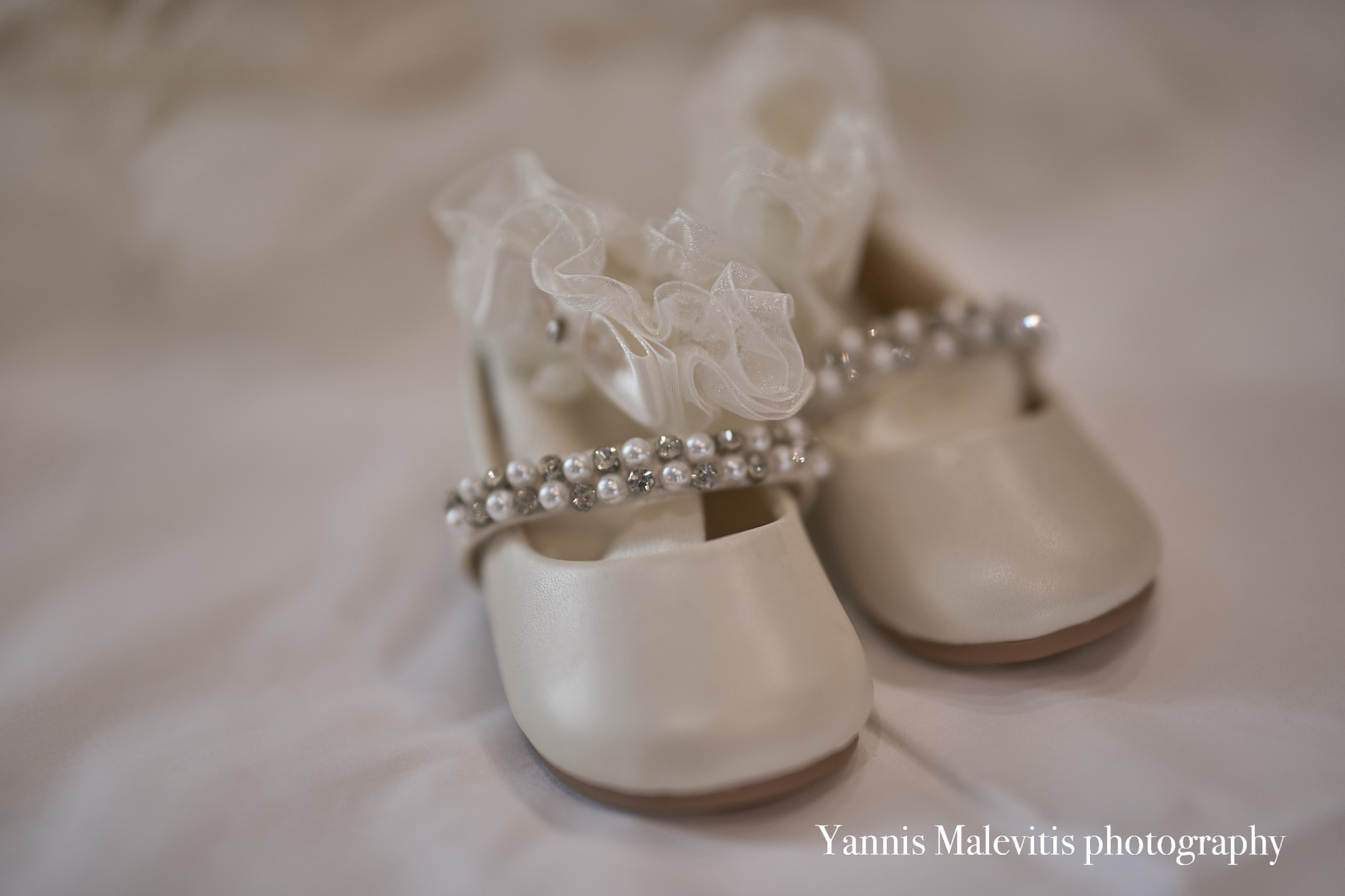
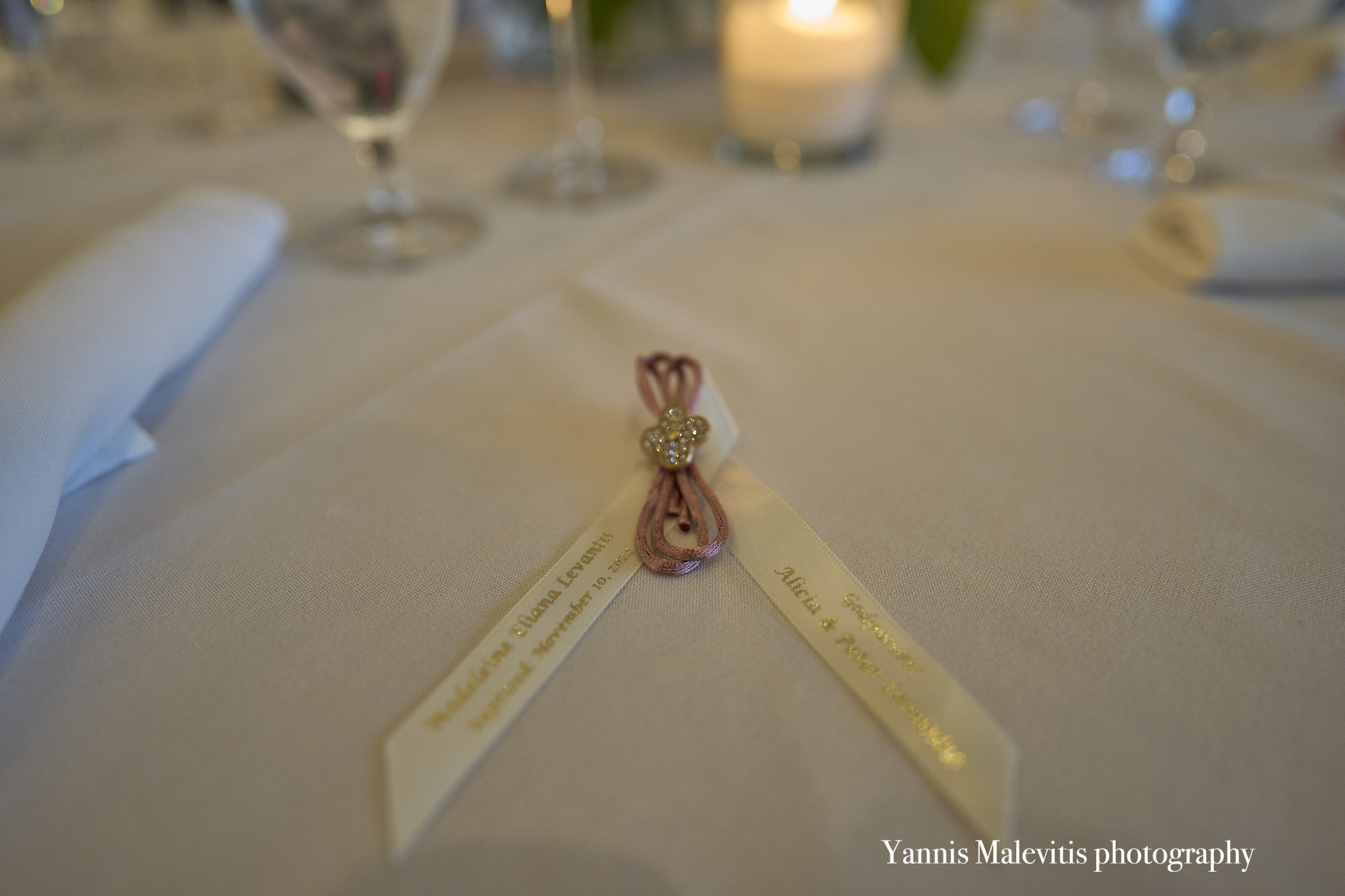
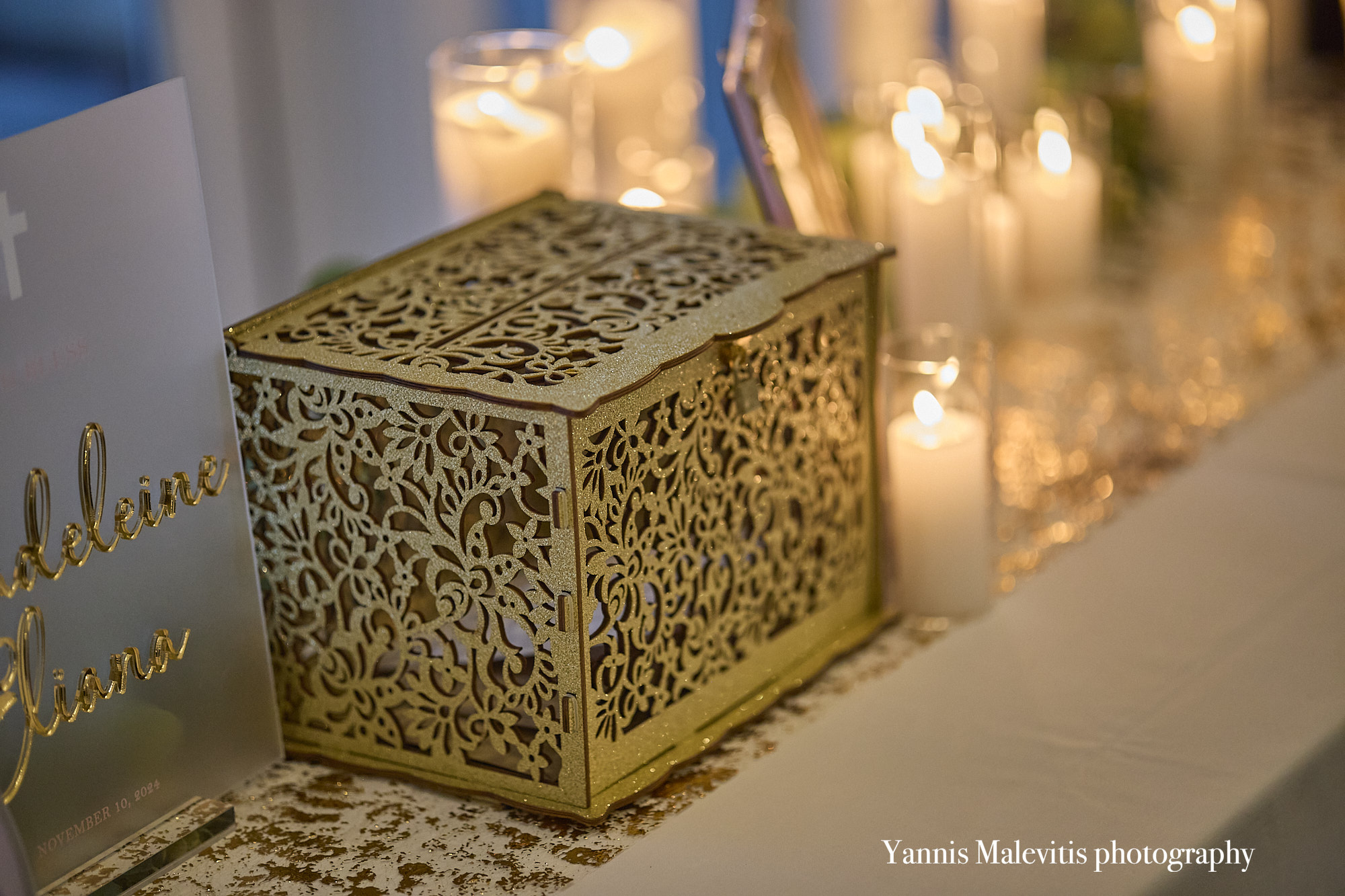
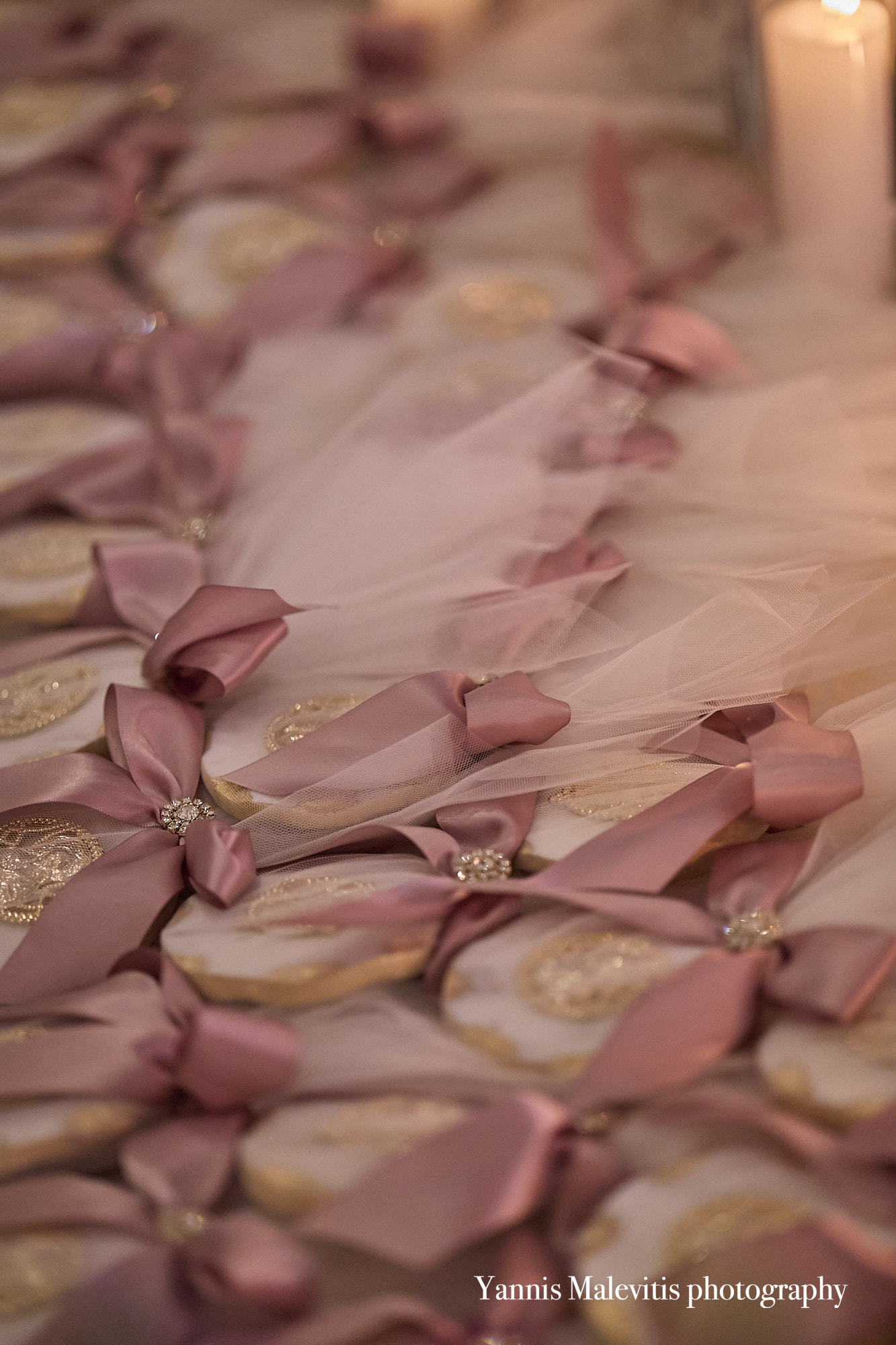
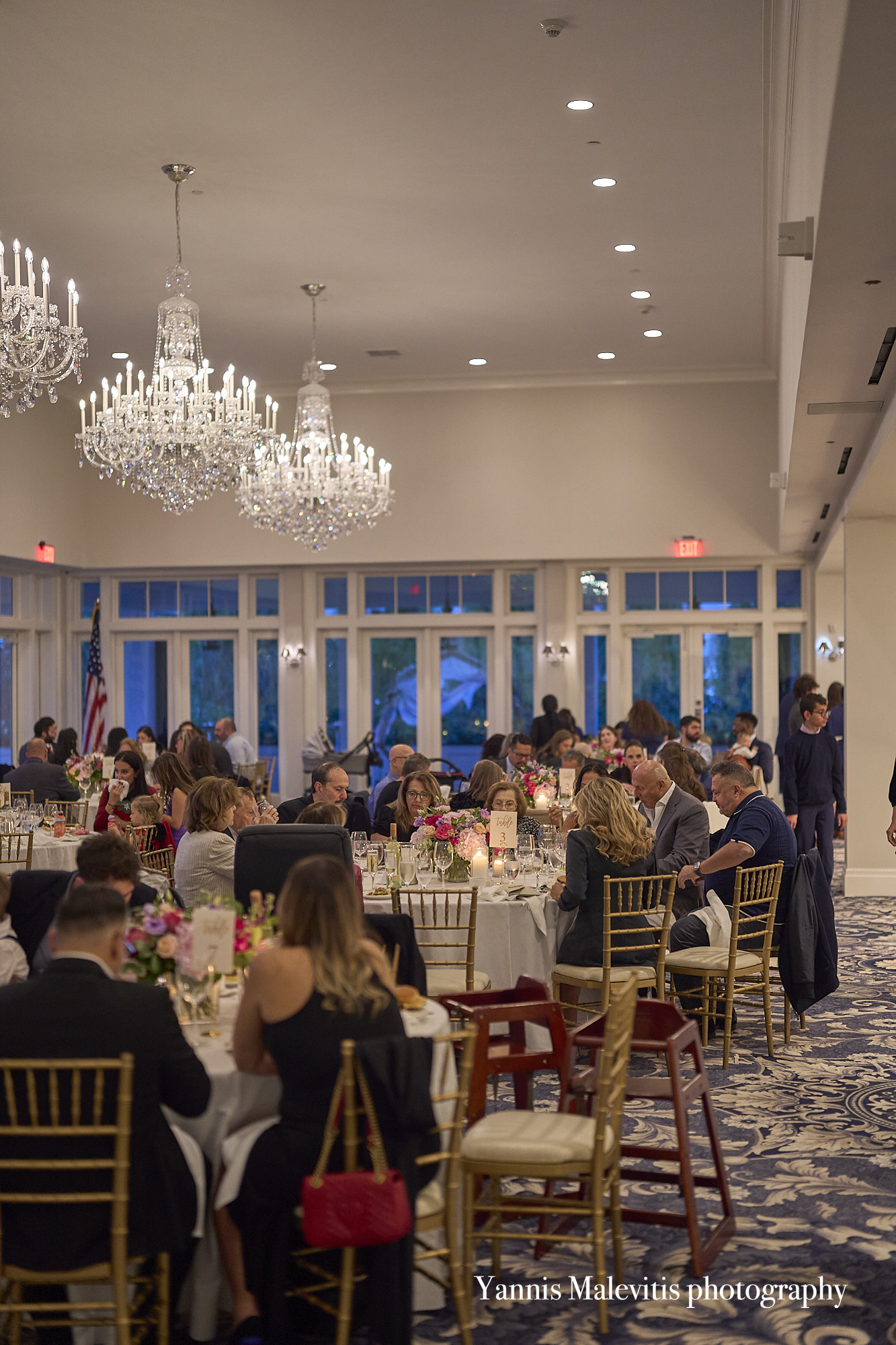
In order to capture the atmosphere, I take wide shots of the venue to showcase the setting. I also photograph decorations, table setups, floral arrangements, and favors. I focus on key shots like guests mingling, laughing, and interacting naturally. I try to remain close to the Christened child and make images of smiling, playing, or interacting with family and friends.
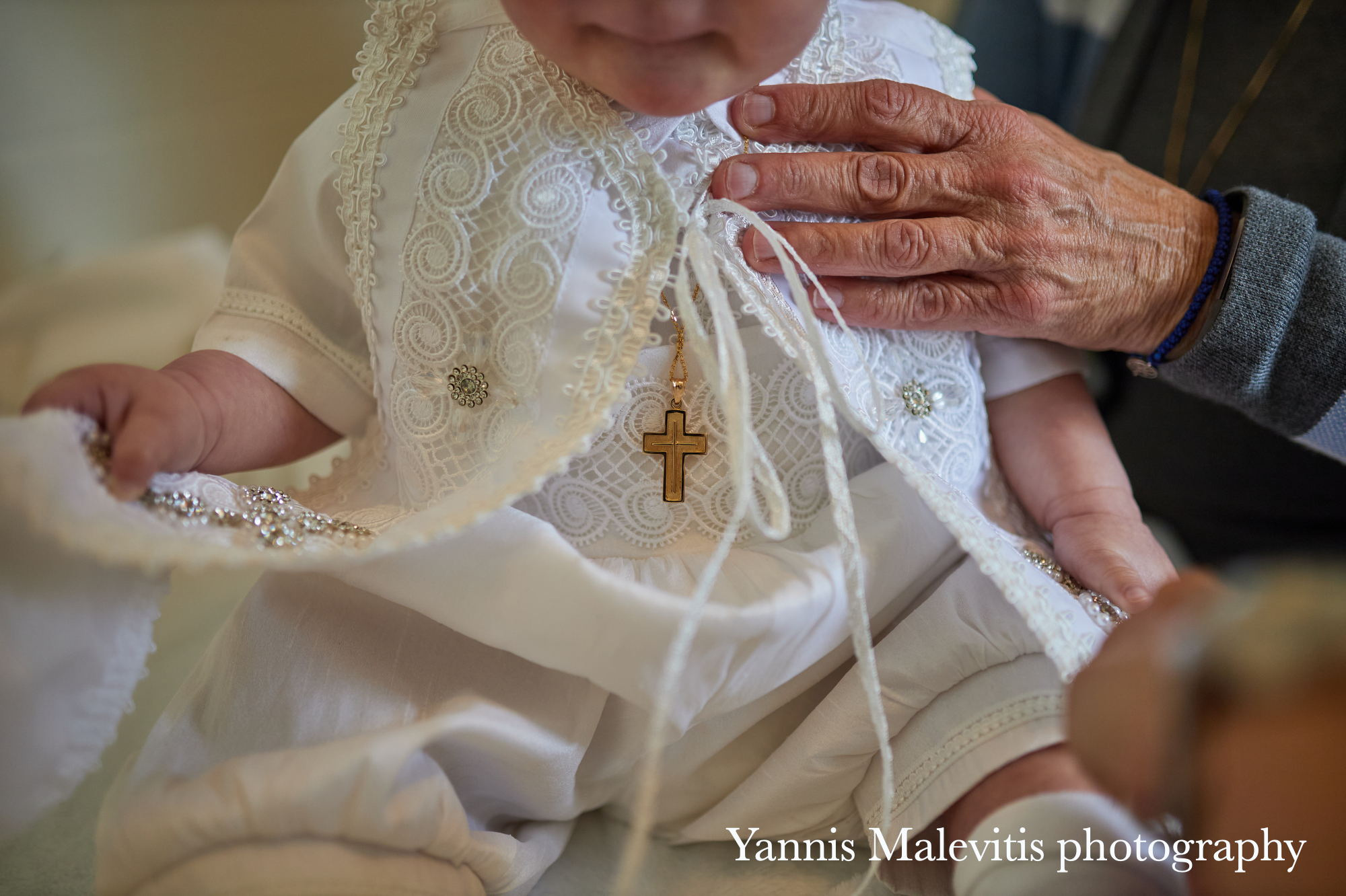
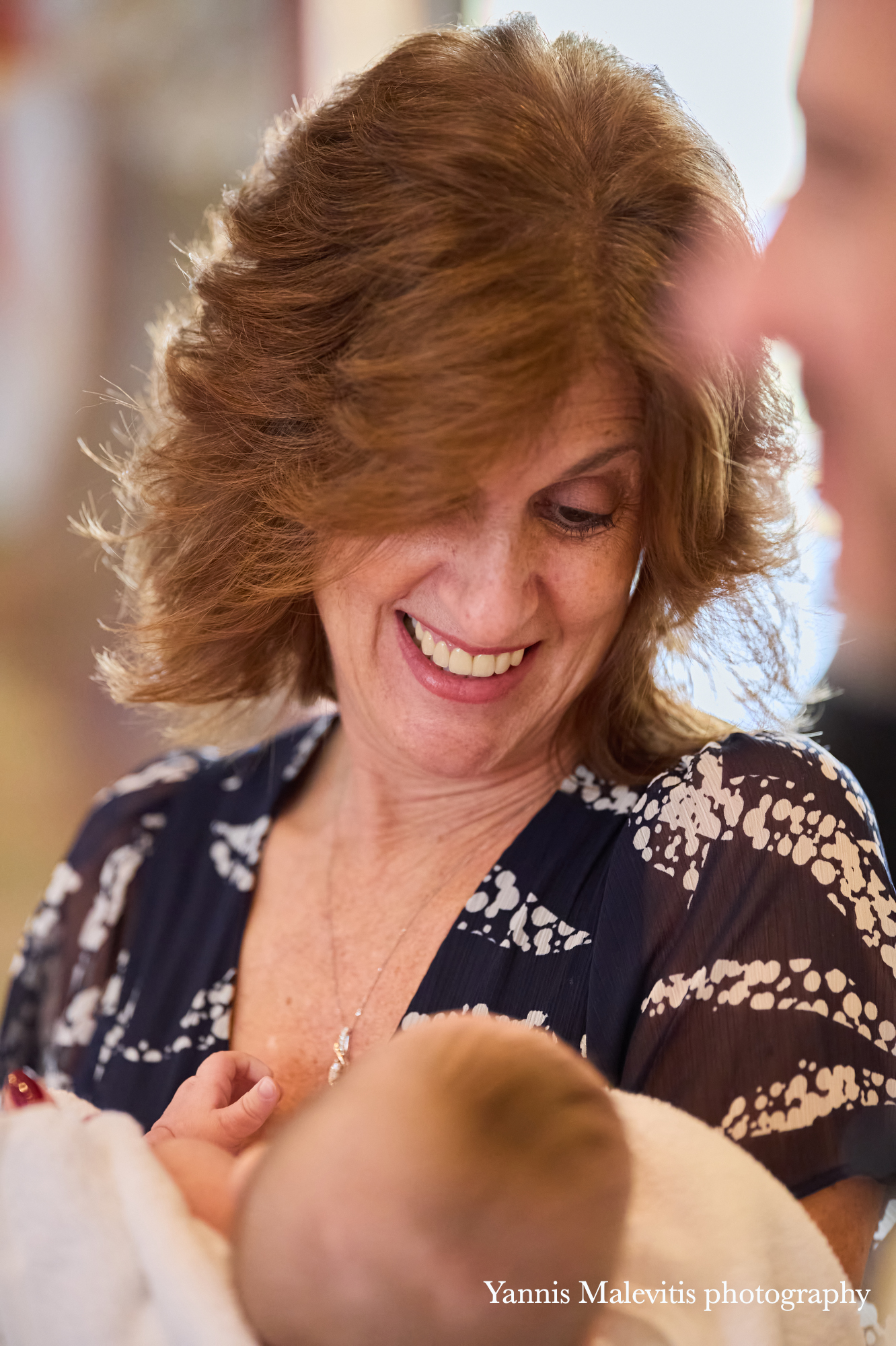
I look for touching moments, like grandparents holding the baby or siblings interacting. I also focus on expressions during speeches or heartfelt conversations. I always move discreetly to capture moments from different angles and perspectives.
By having such an artistic approach I create a beautiful collection of photos that reflect the love and joy of the christening celebration. Photographing a Christening reception is full of joyful moments.
I captured more than 1000 images which were shared with the parents in a gallery later the same day. I used three cameras and my three favorite lenses, a 35mm 1.4, the Zeiss Otus 100mm 1.4 and the Canon 200mm f/2. These three focal lengths allow me to capture authentic moments in an artistic way and tell the story without being obtrusive.
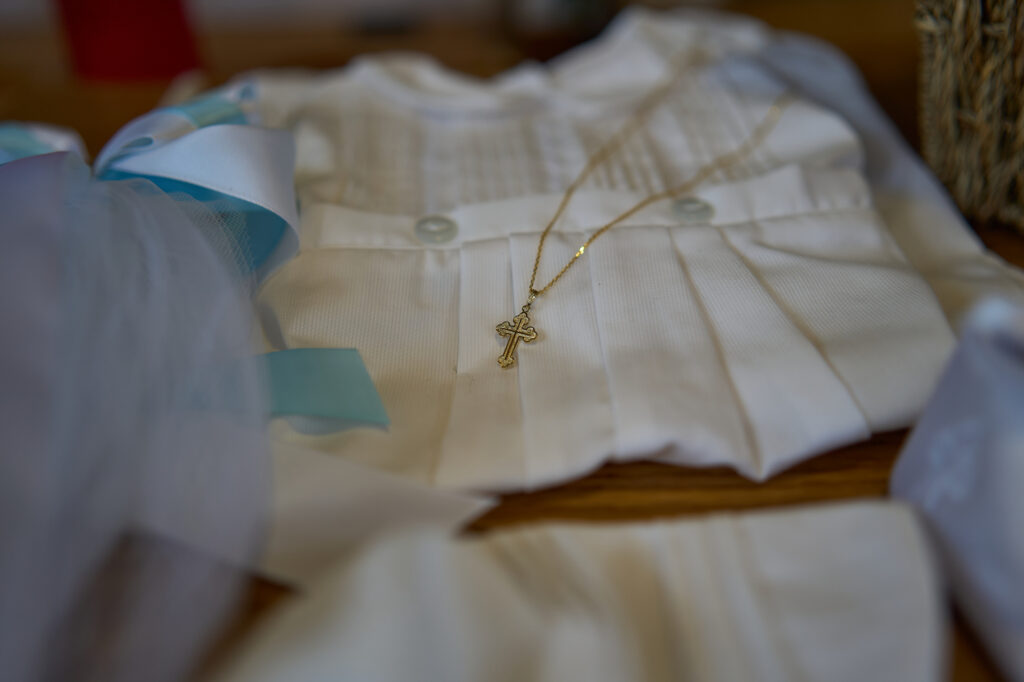
First I photograph the important details of the Christening ceremony. If we have the time, I always suggest to the parents to complete the first set of family photos before the ceremony when the baby is relaxed and calm.
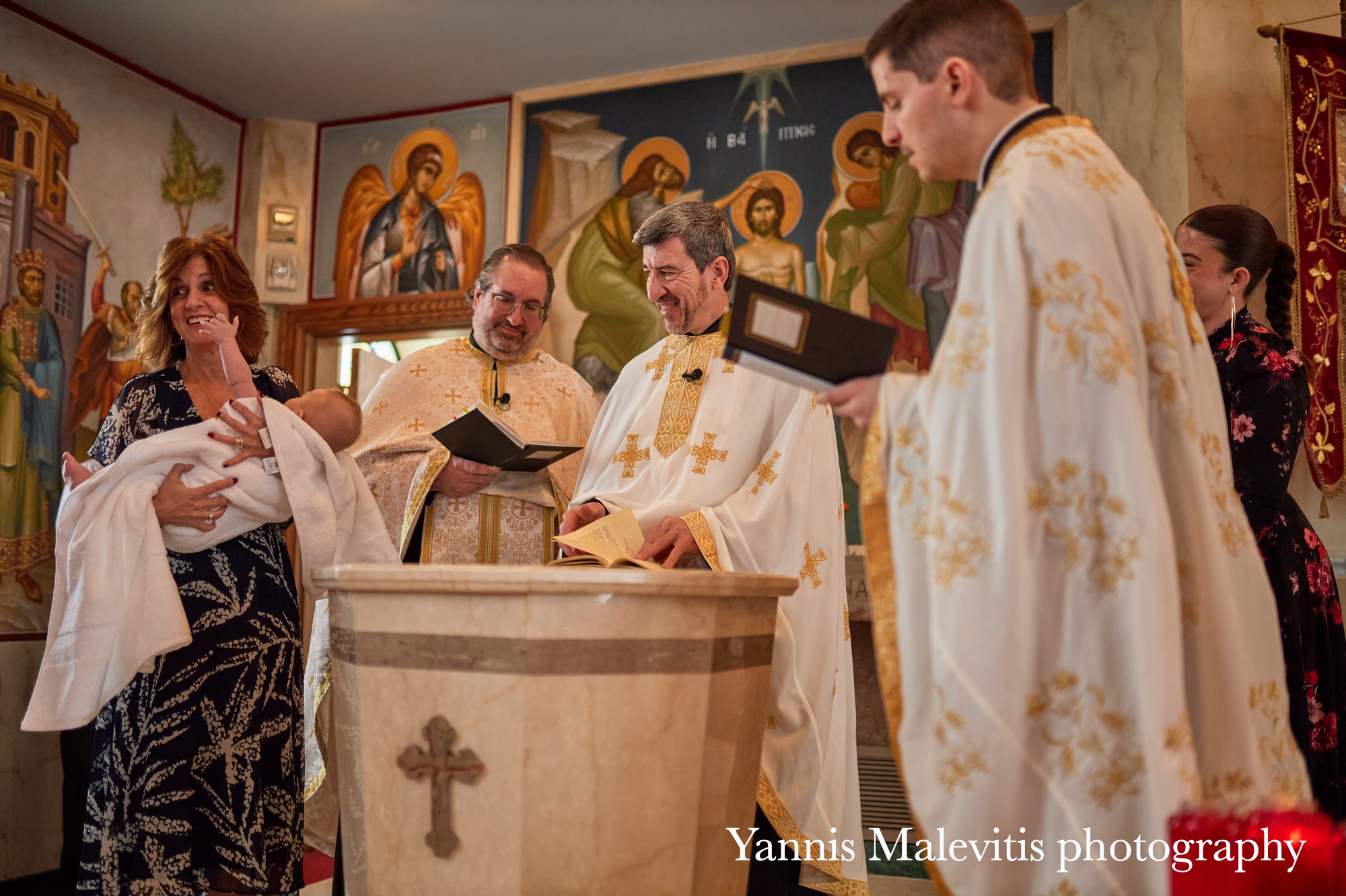
During the baptism I move around the baptismal font in order to capture not only images of the baby with the priest and his godparents but also reactions of the parents and grandparents. Using a long telephoto lens at f/2 I am able to capture unique moments with a particular artistic rendering.
We complete the photographic coverage with the formal family photos. I prefer to use a 35mm or a 50mm focal length and three flashes with an umbrella. Photographing Athanasios’ Christening at the Holy Resurrection was a wonderful experience.