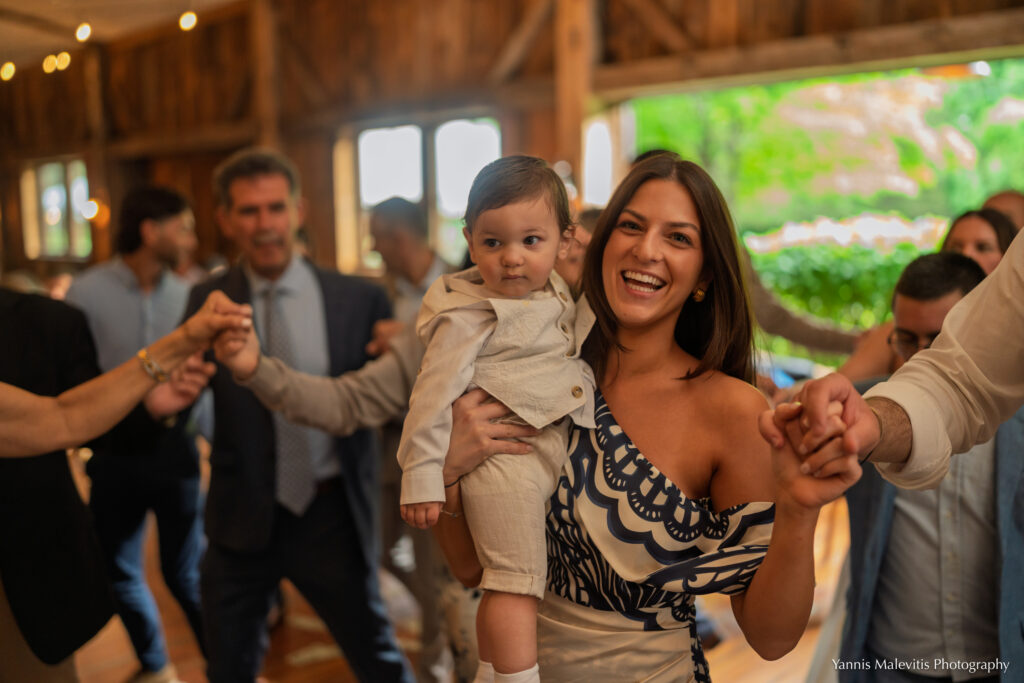
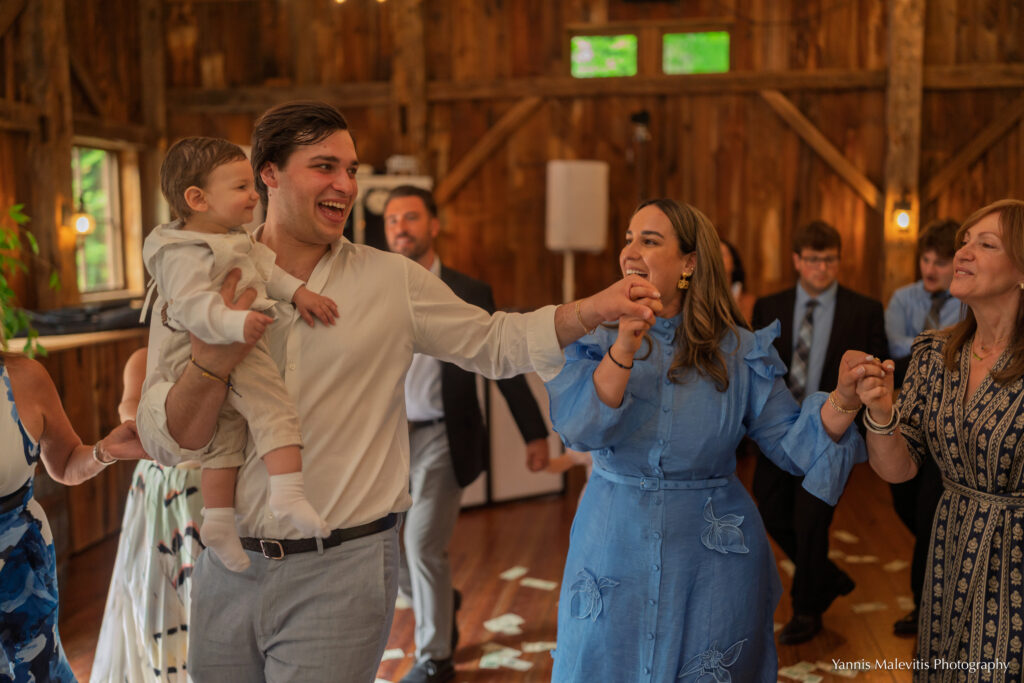
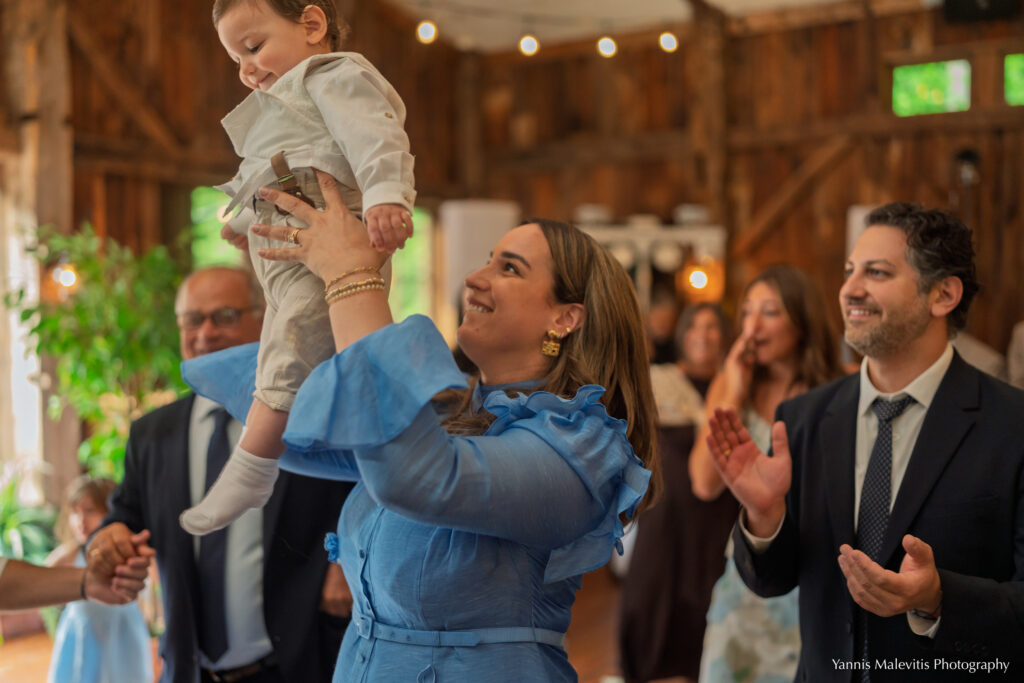
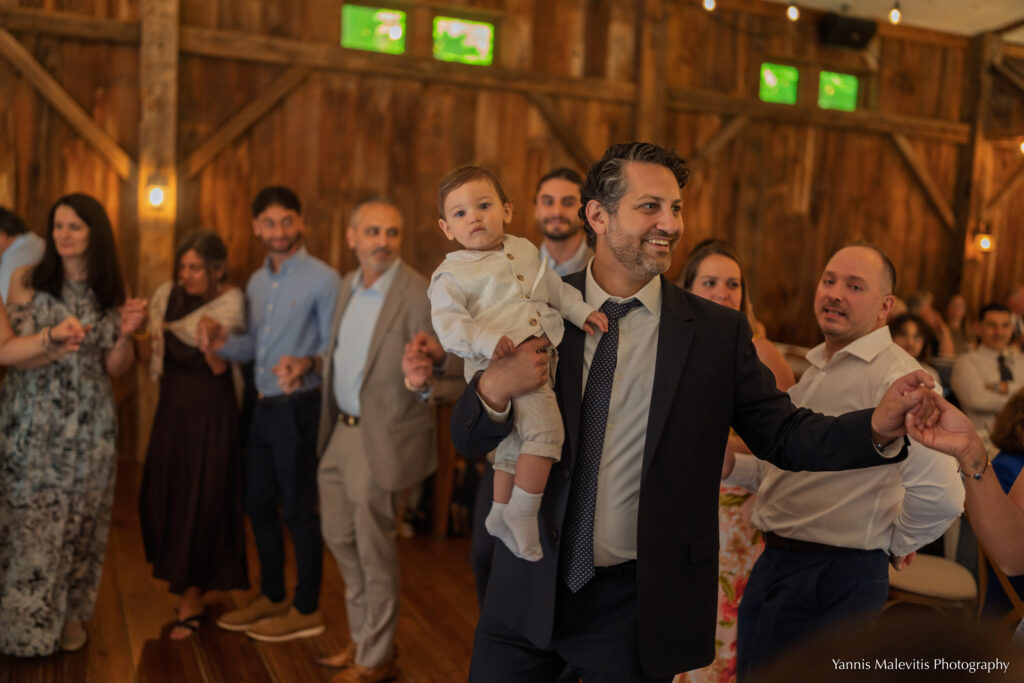
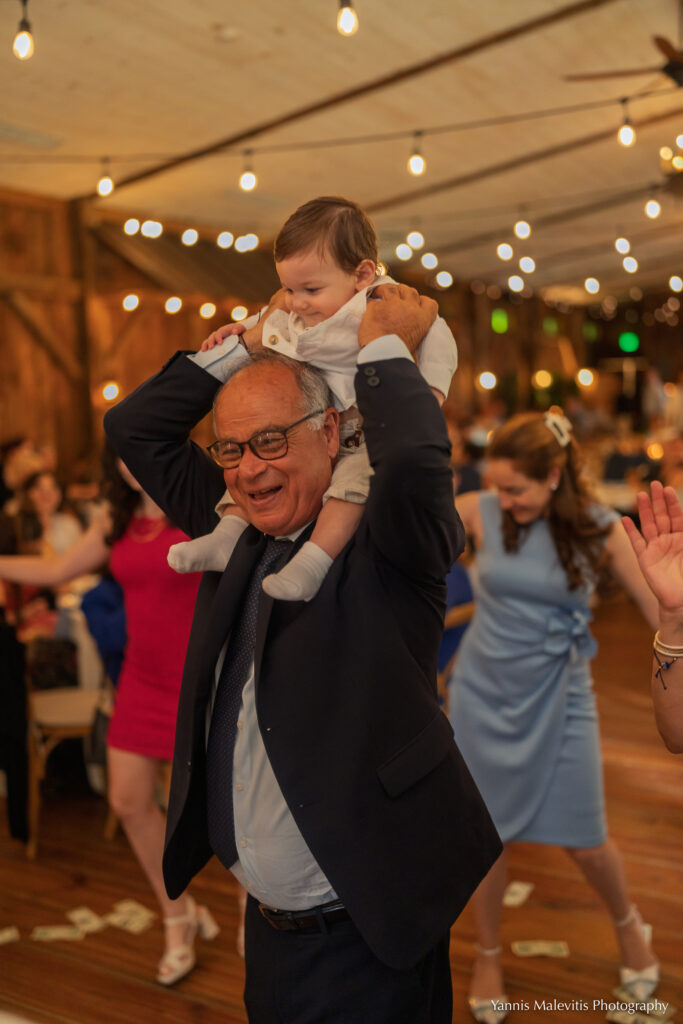
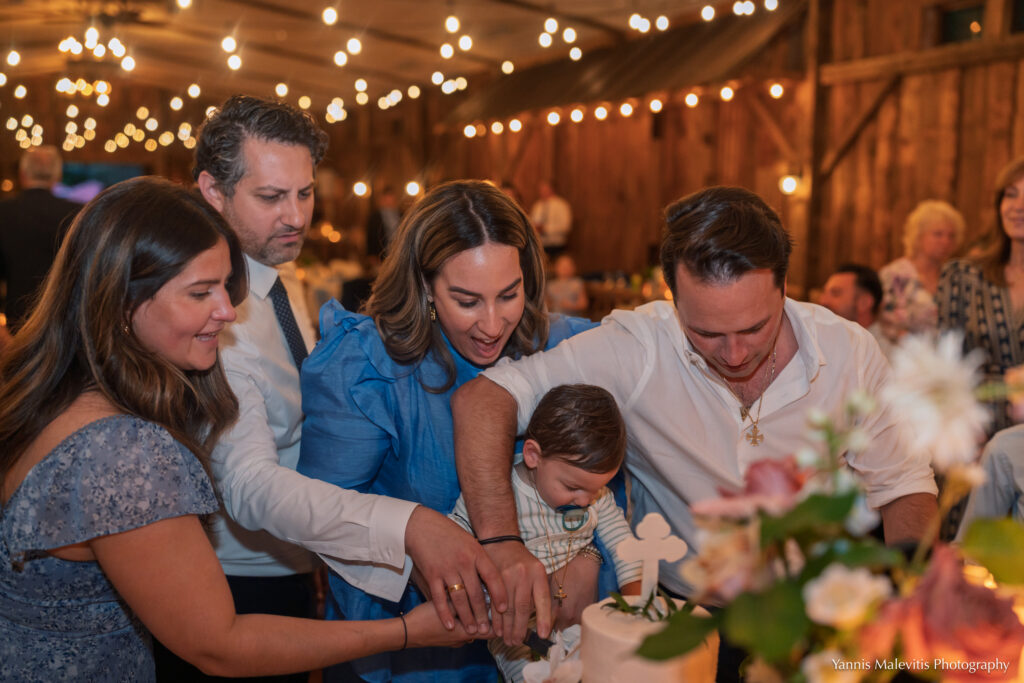
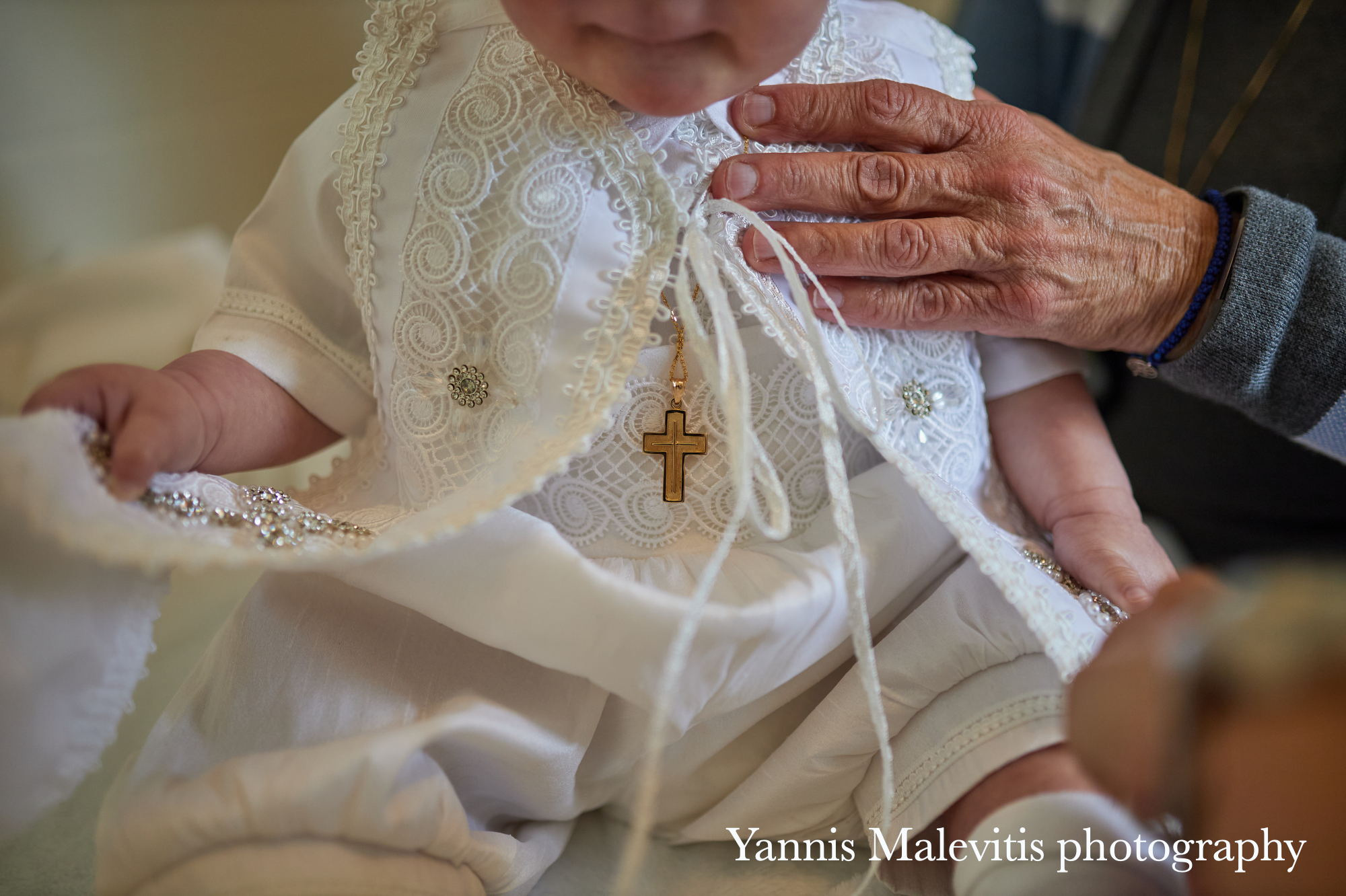
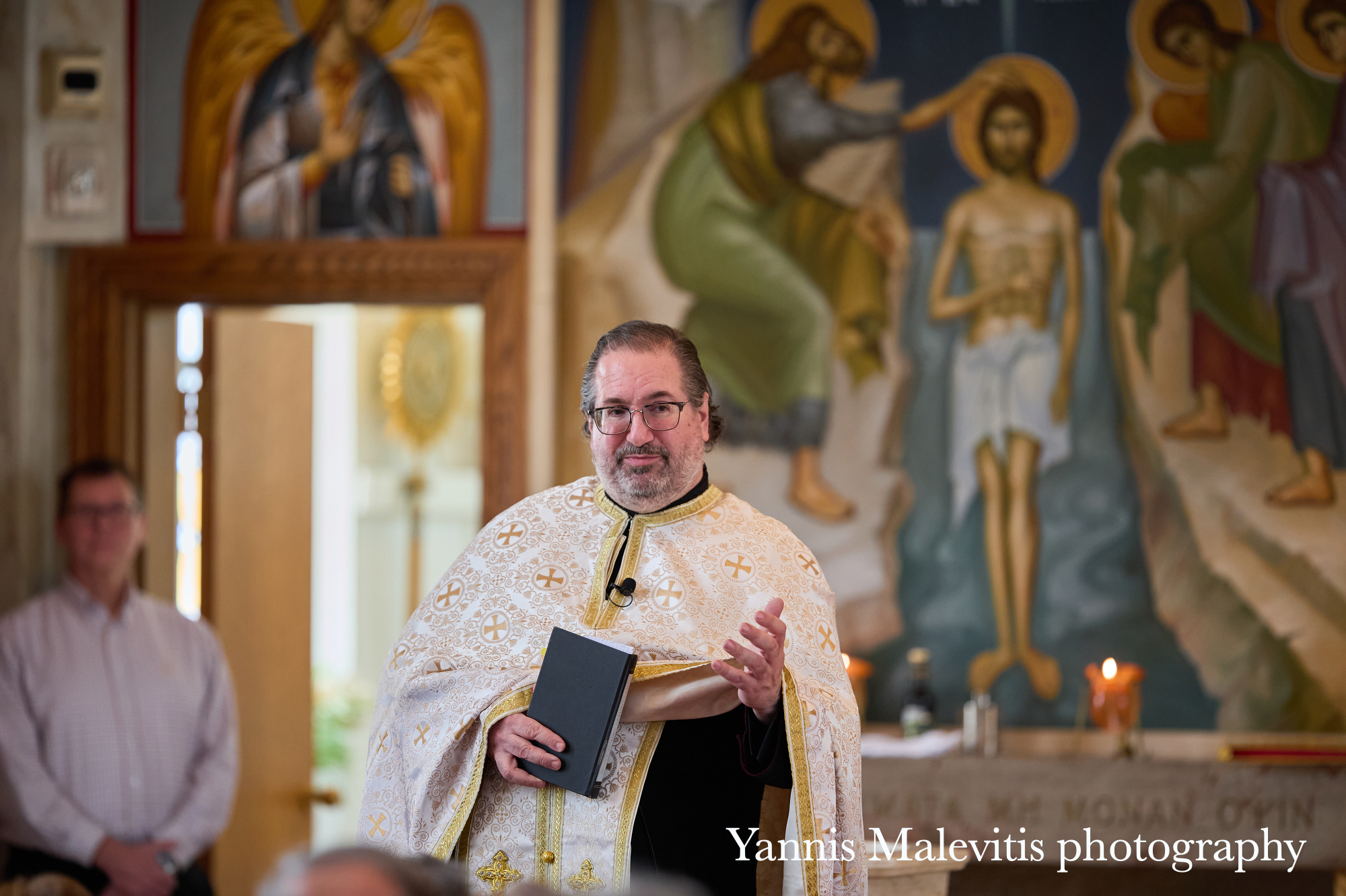
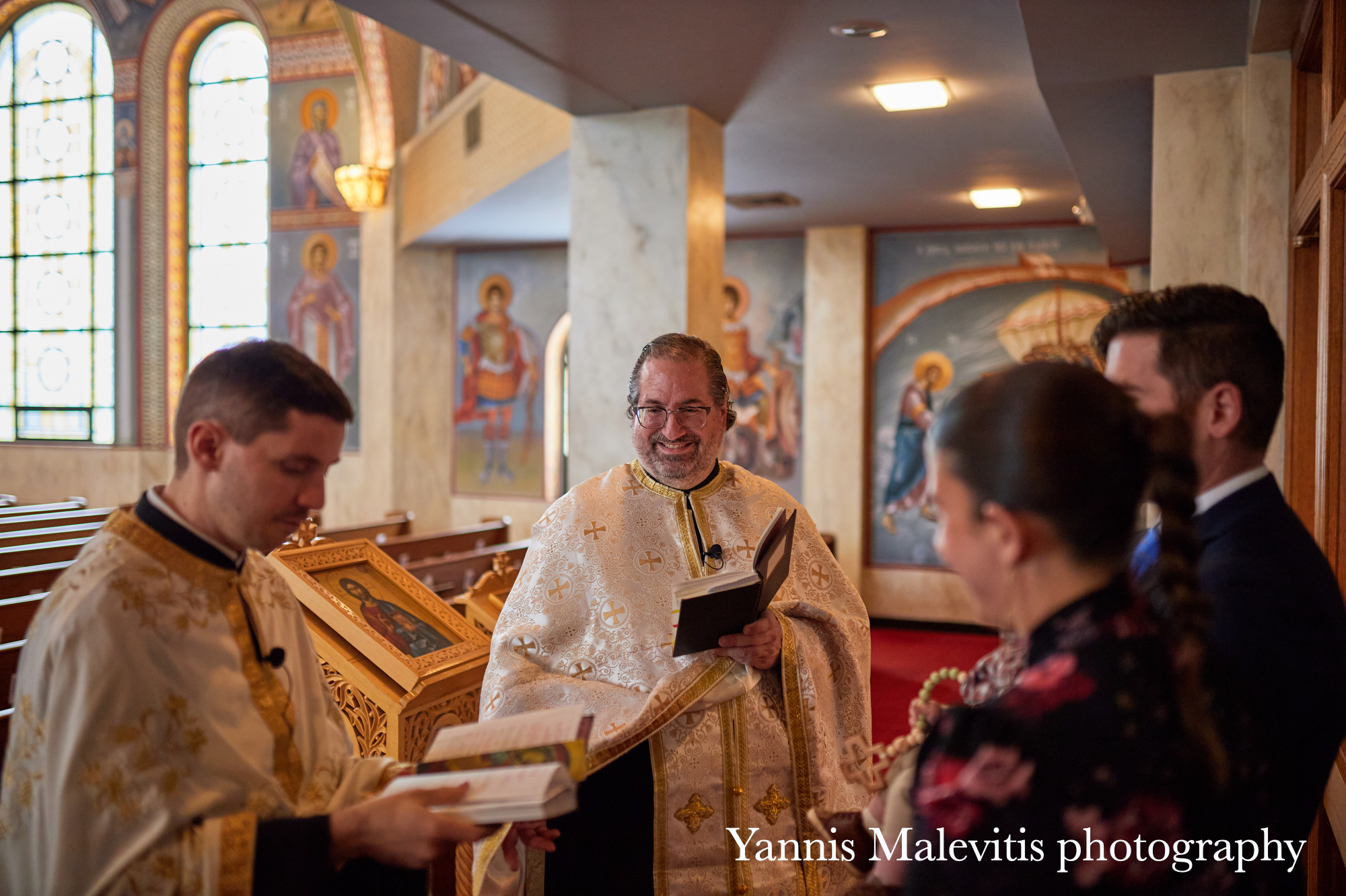
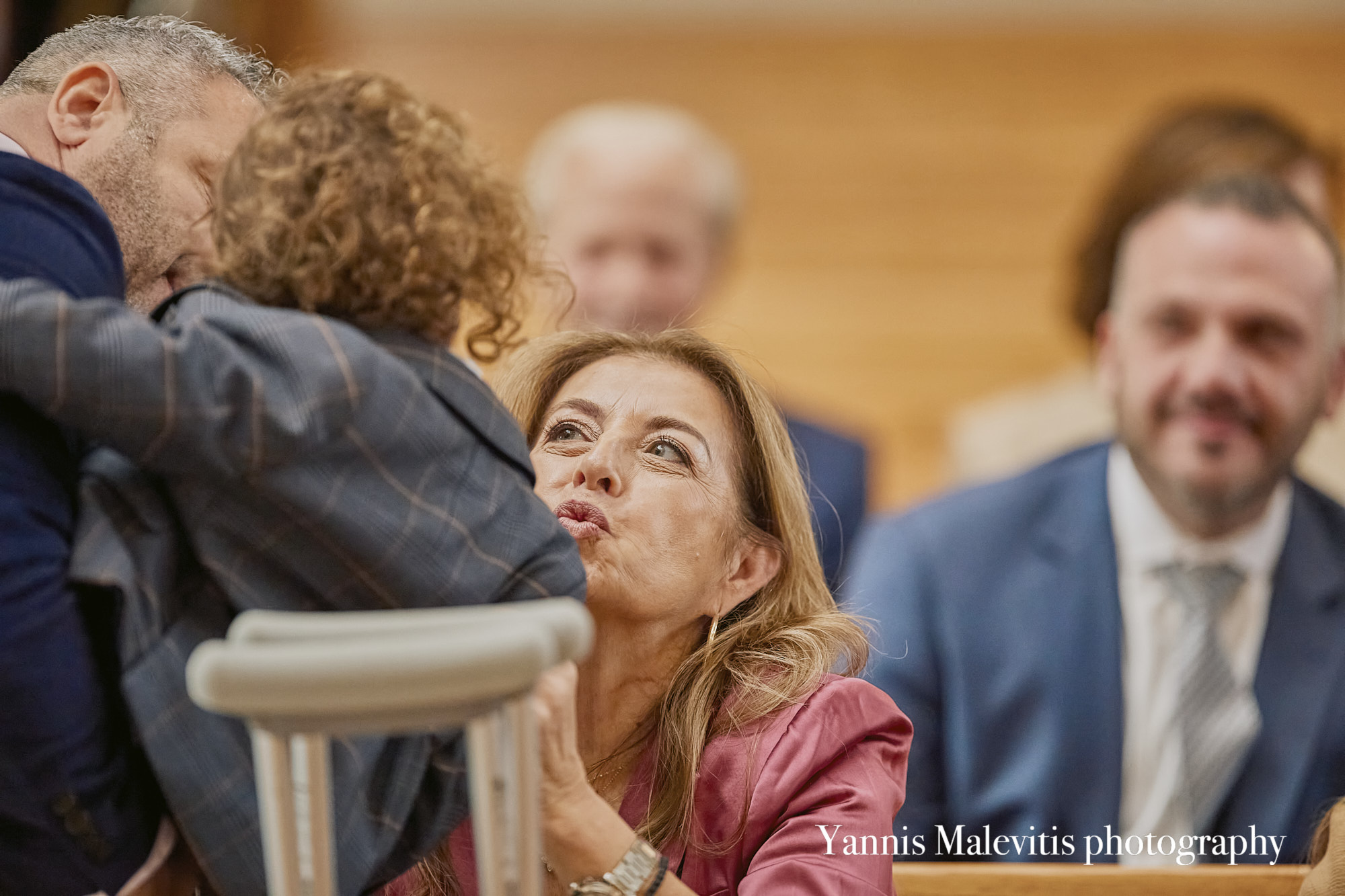
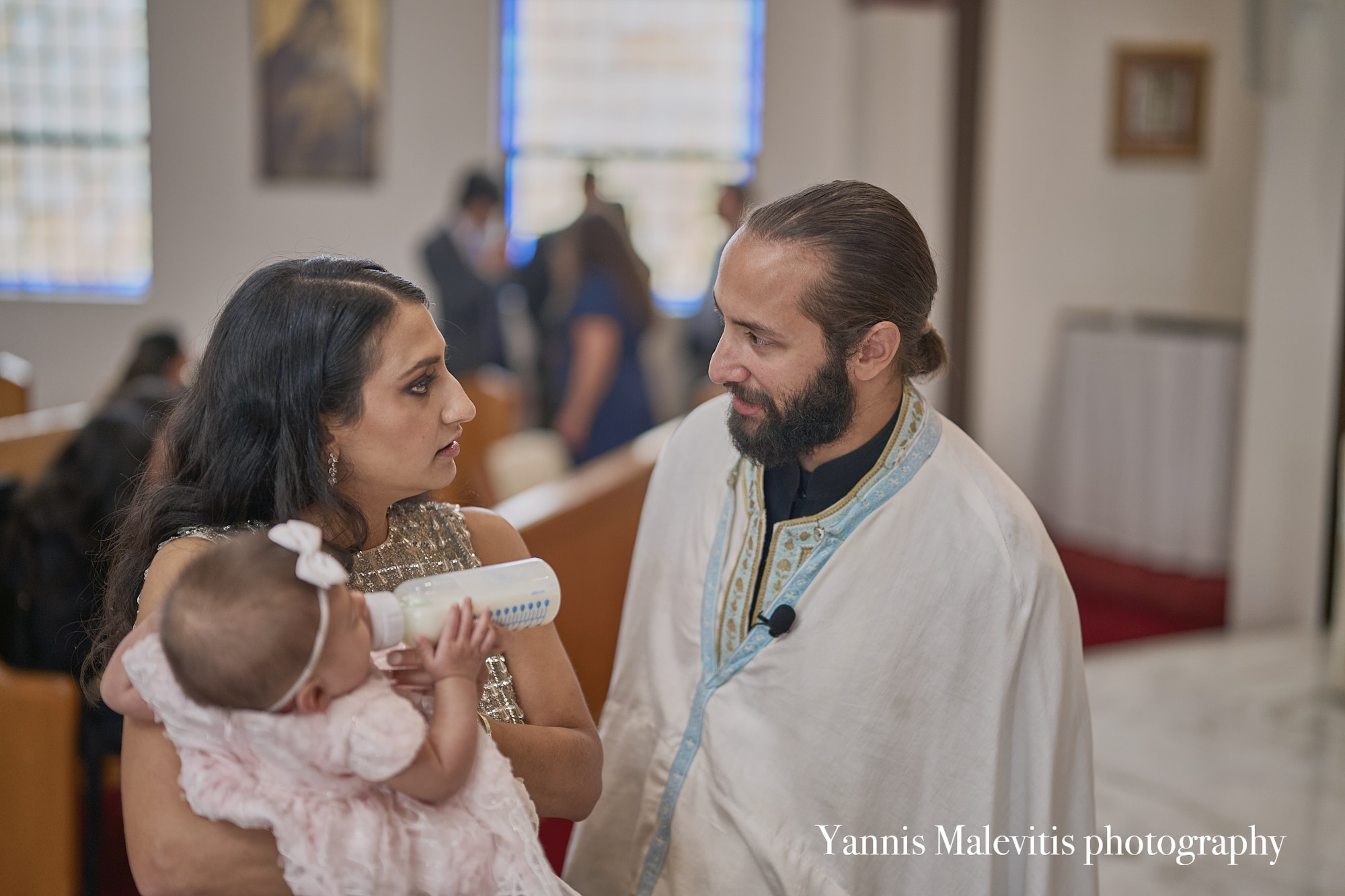
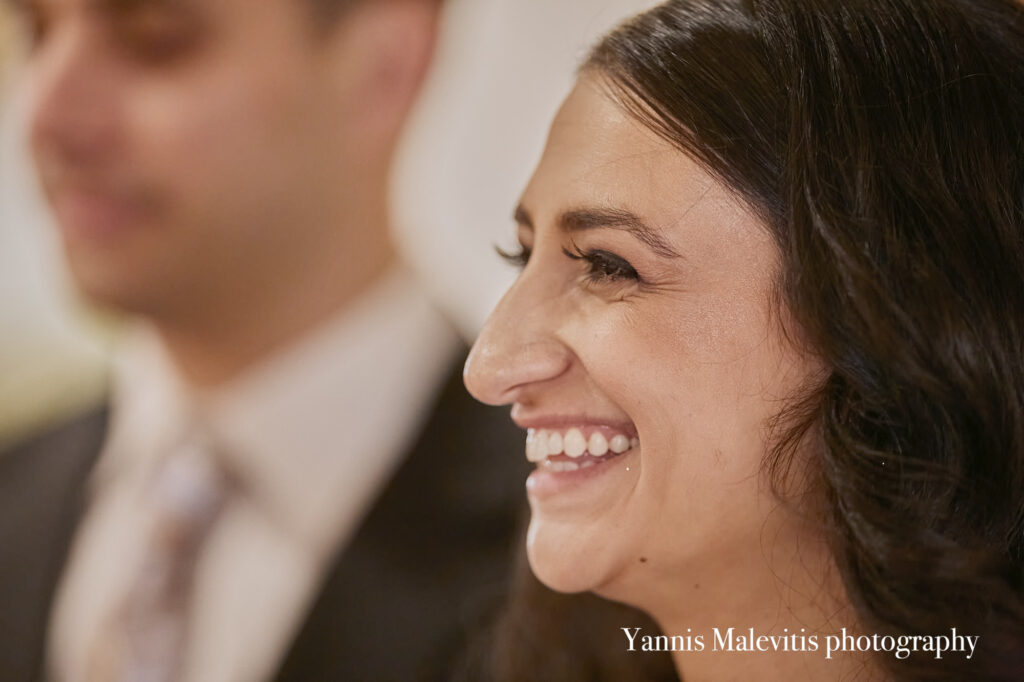
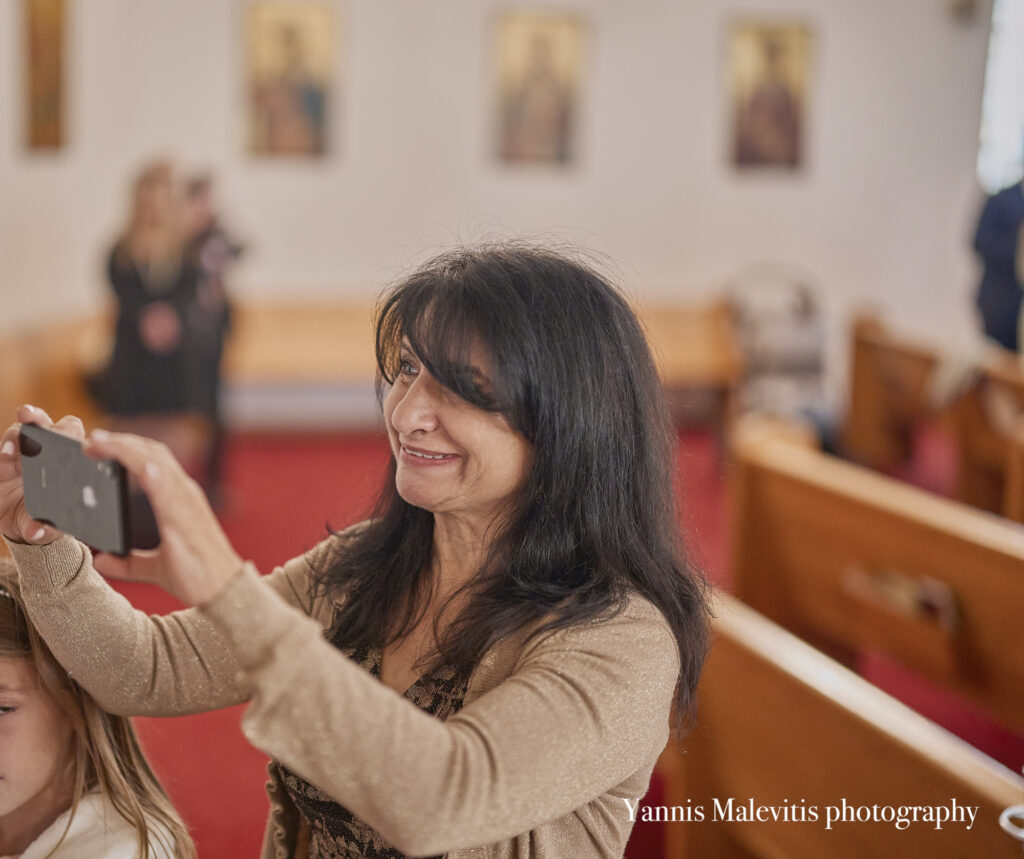
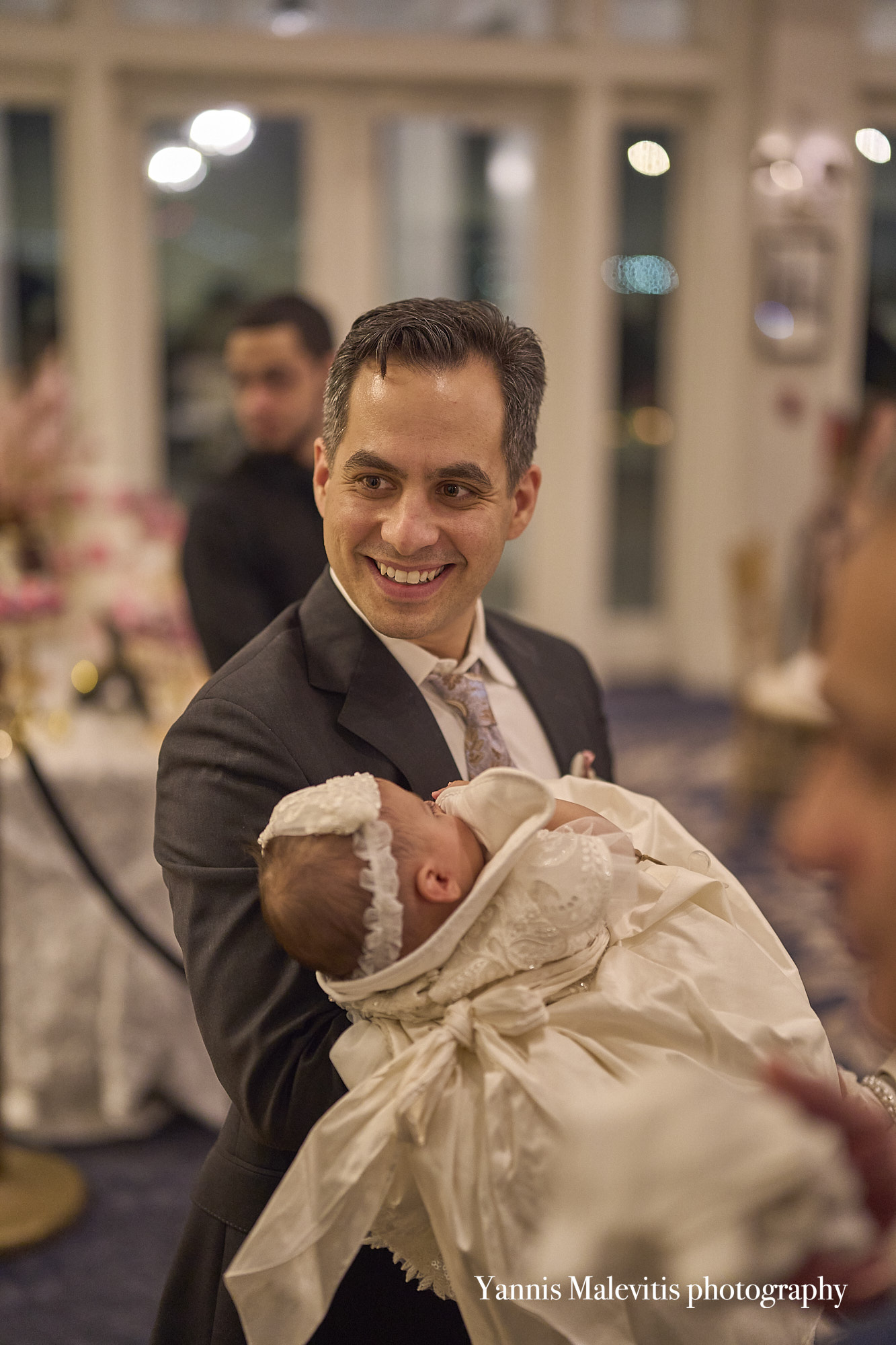
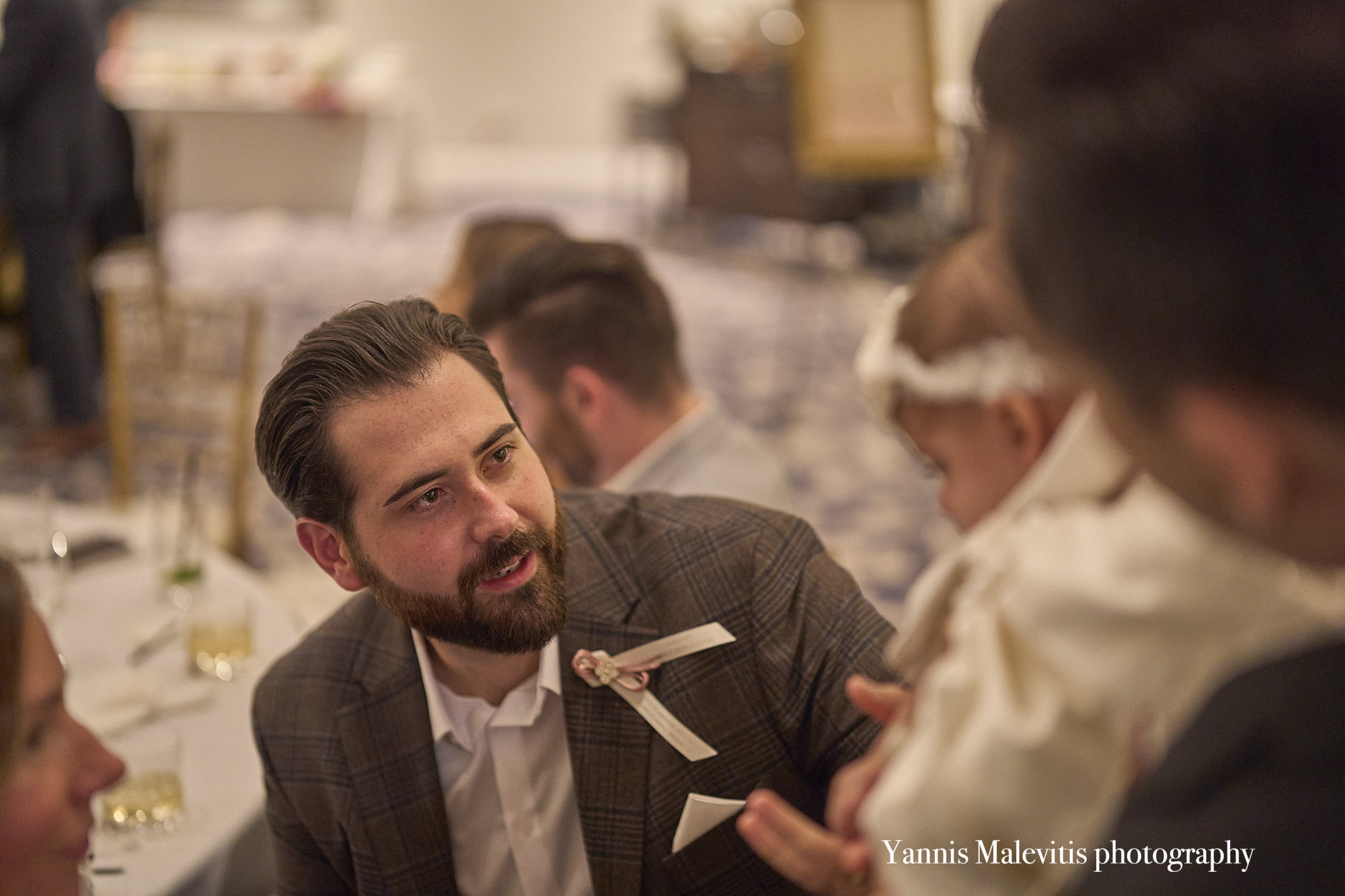
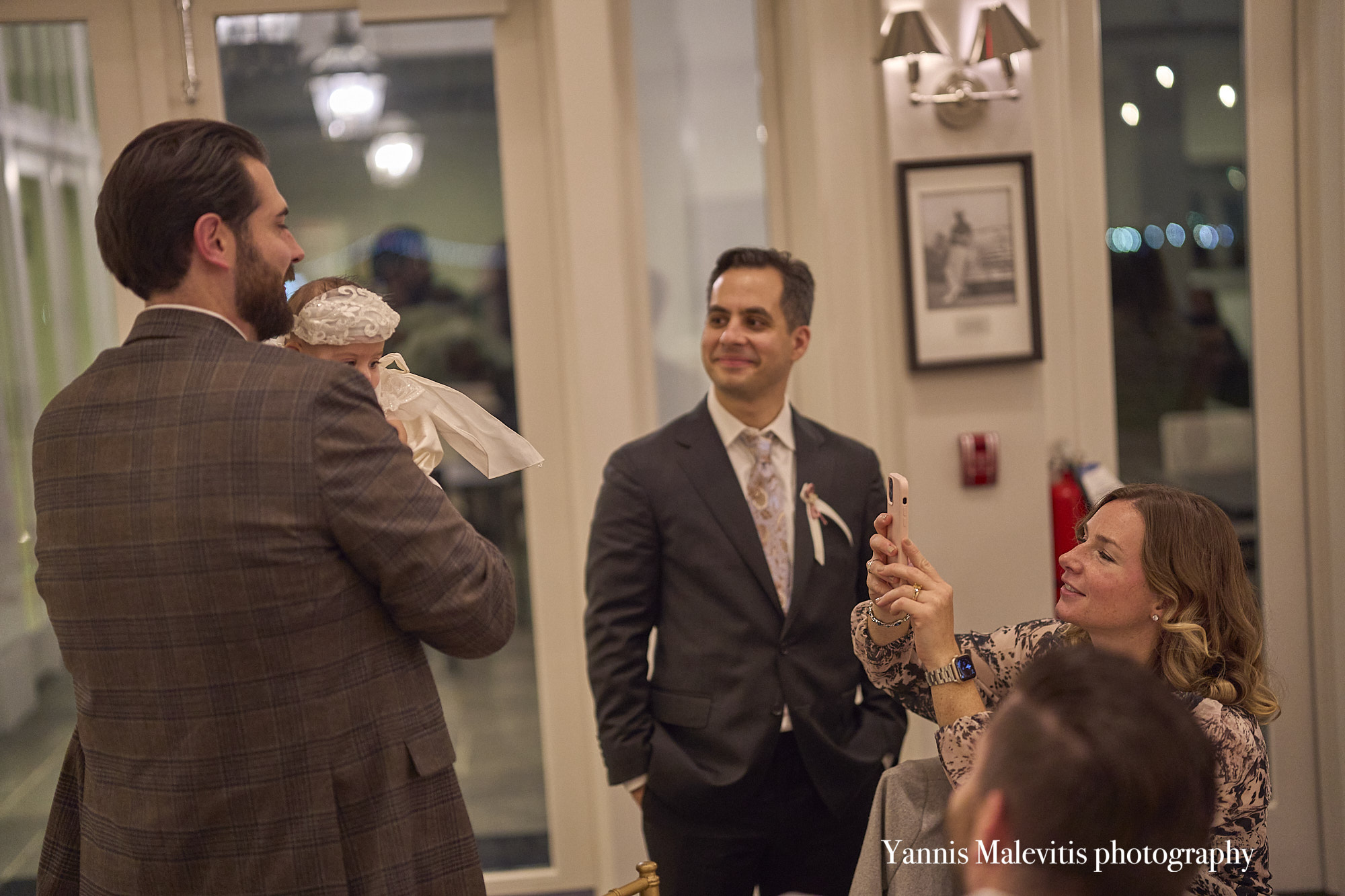
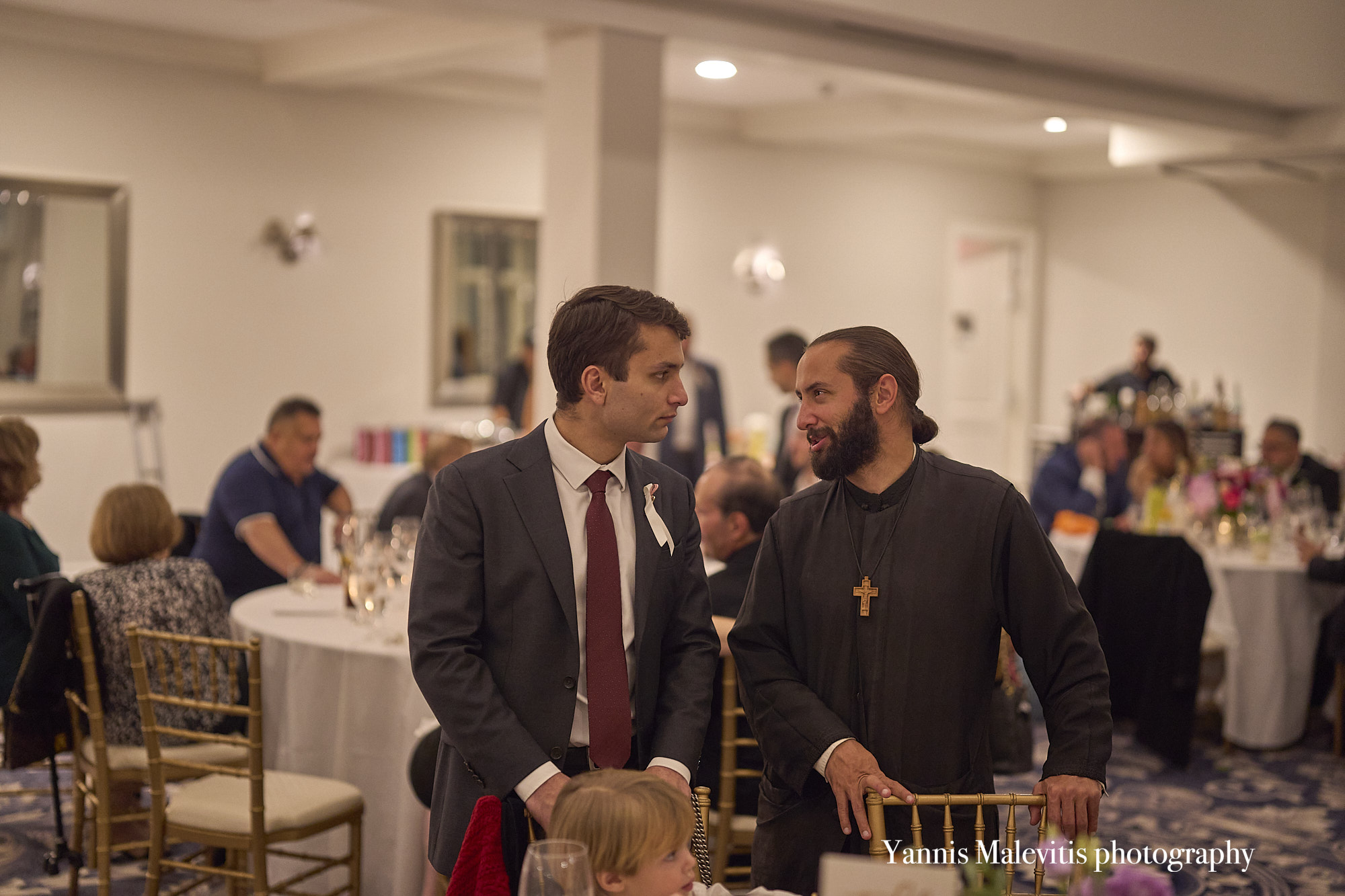
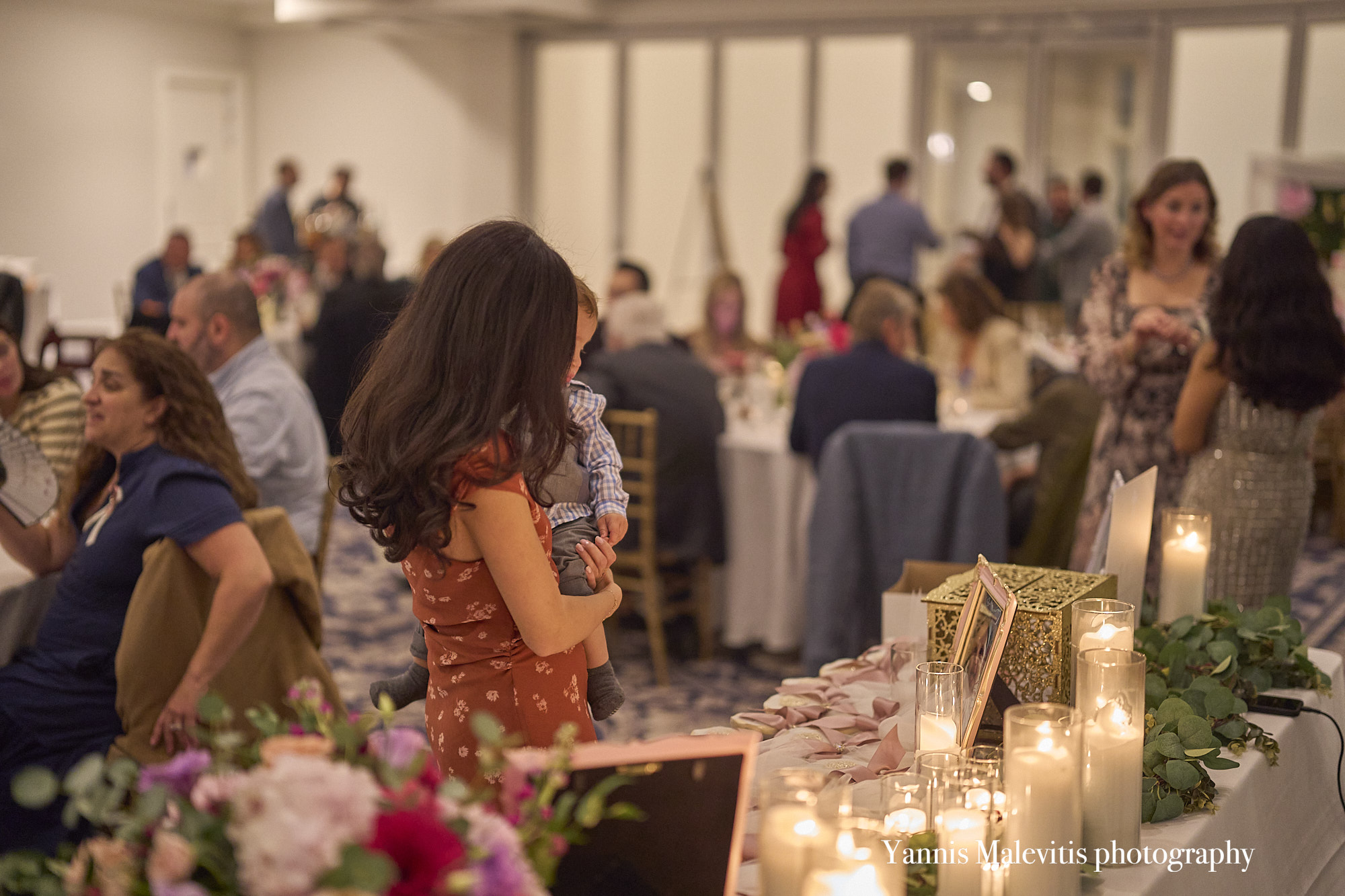
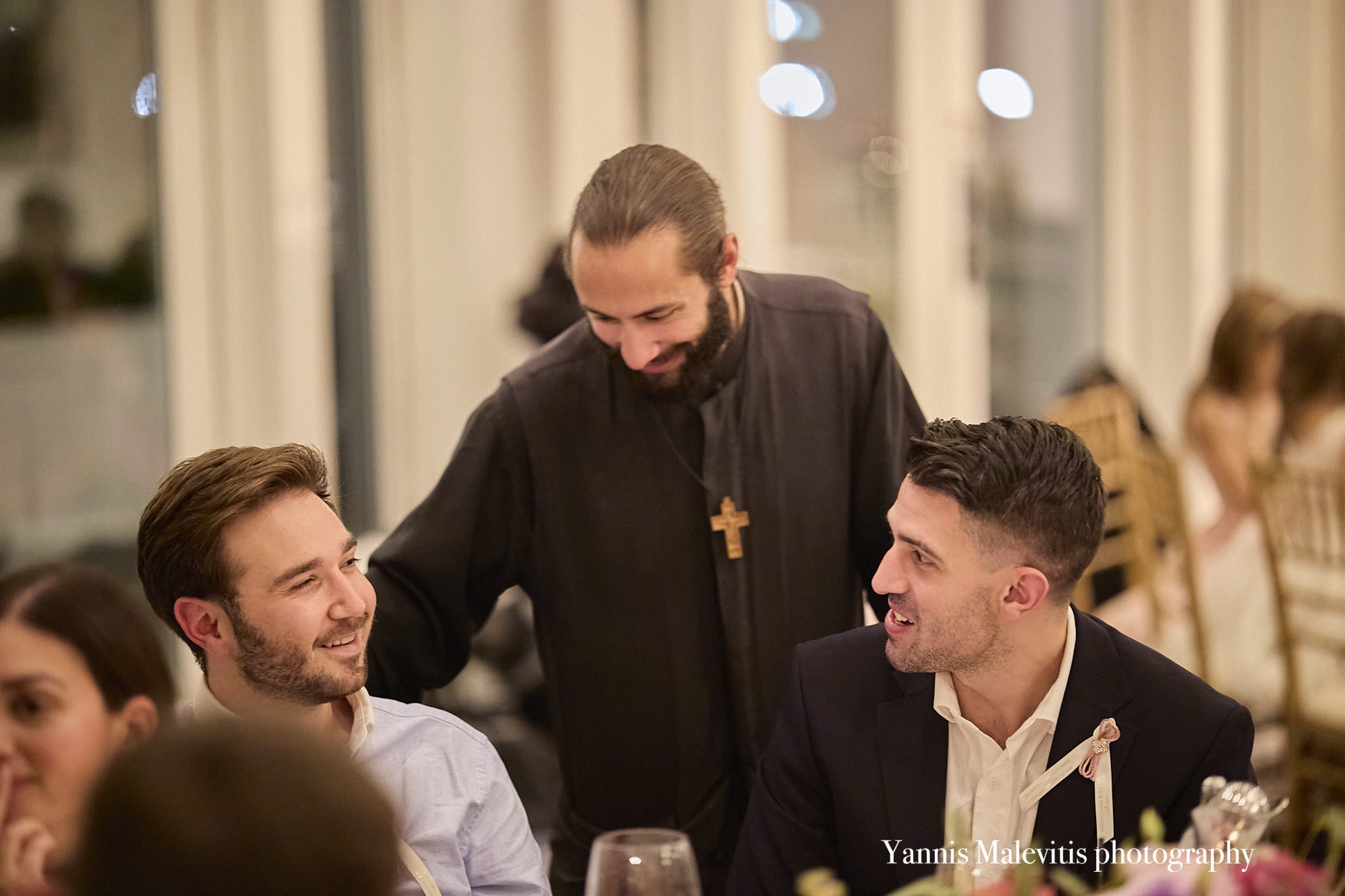
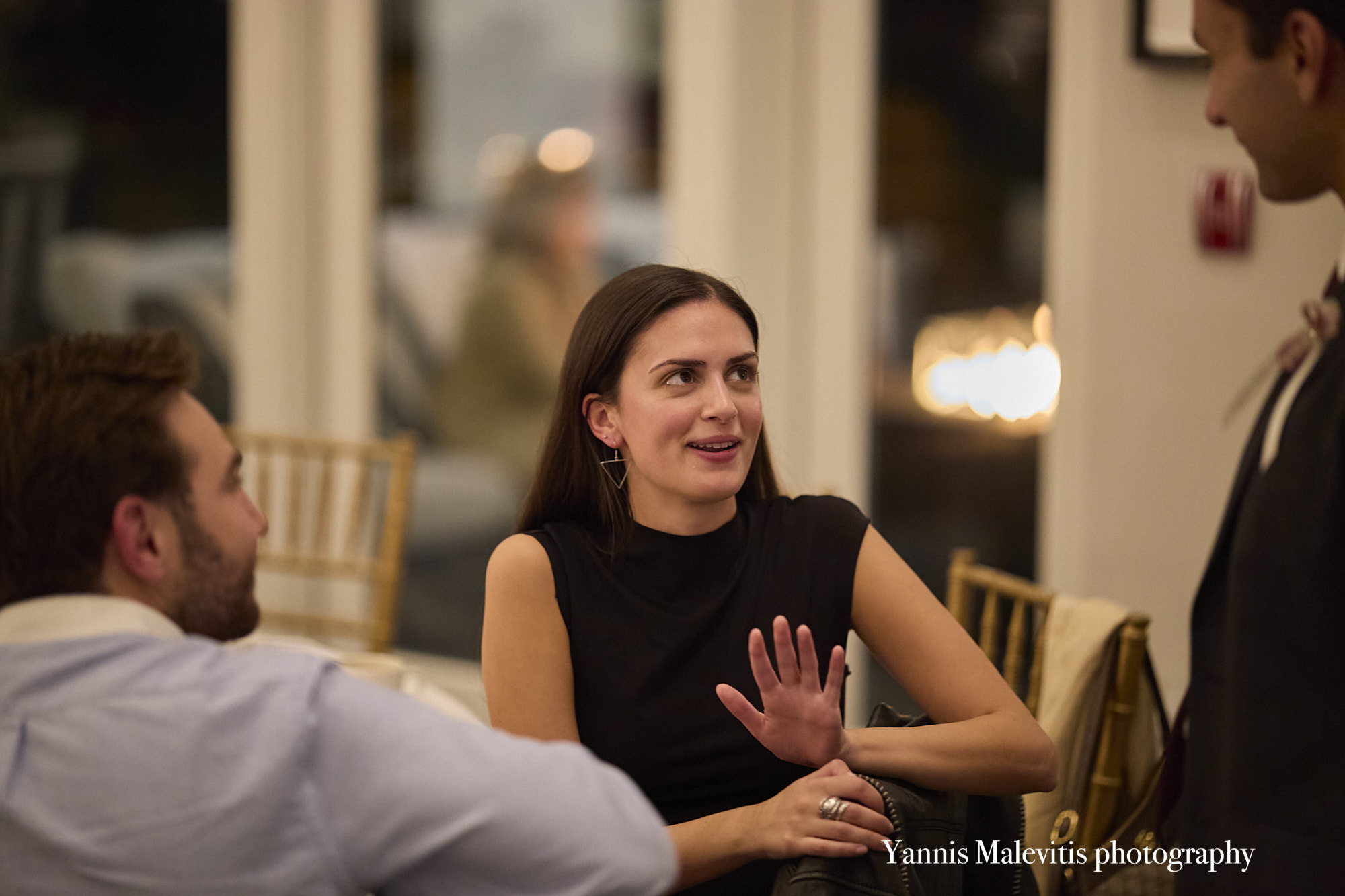
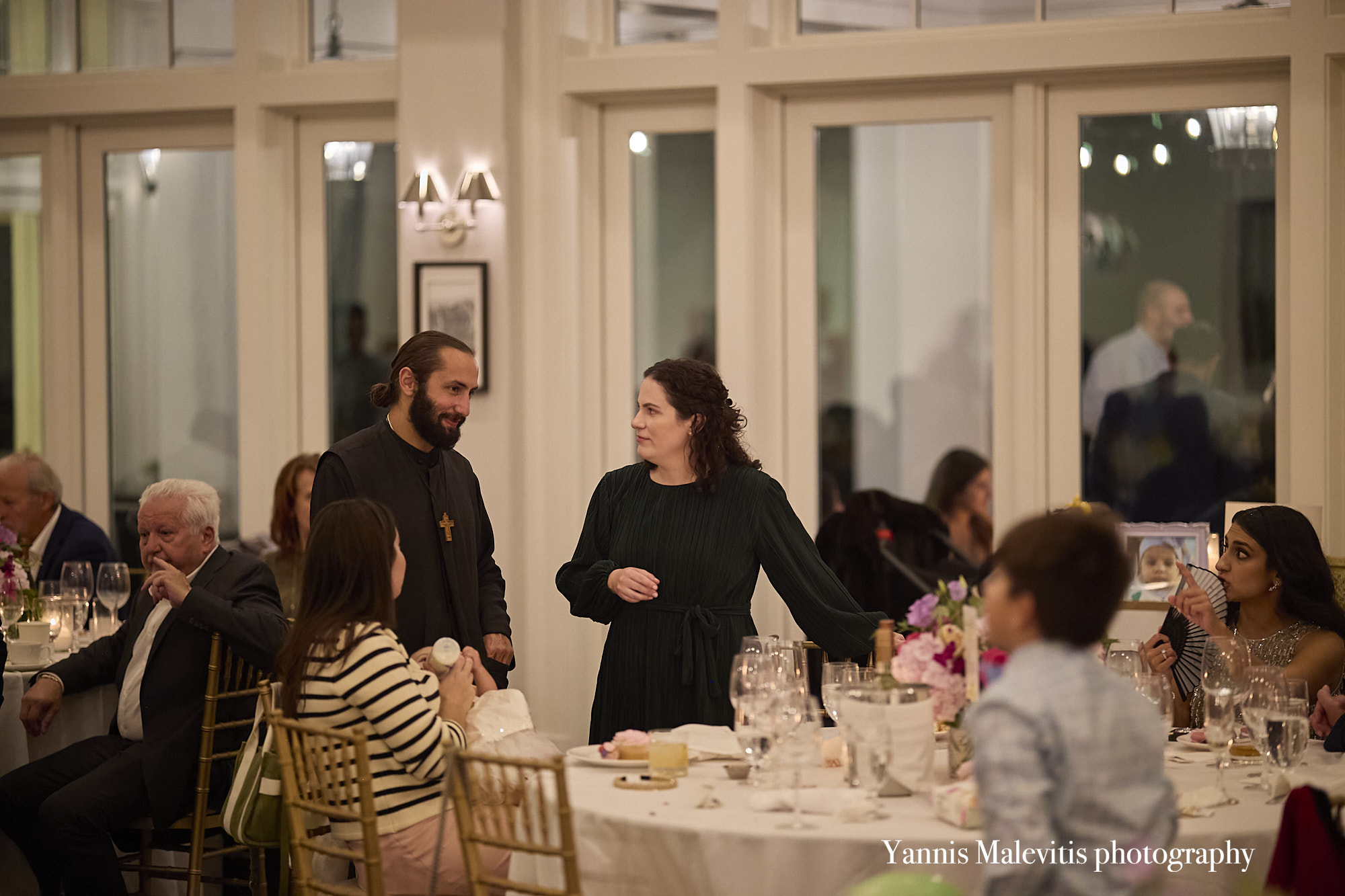
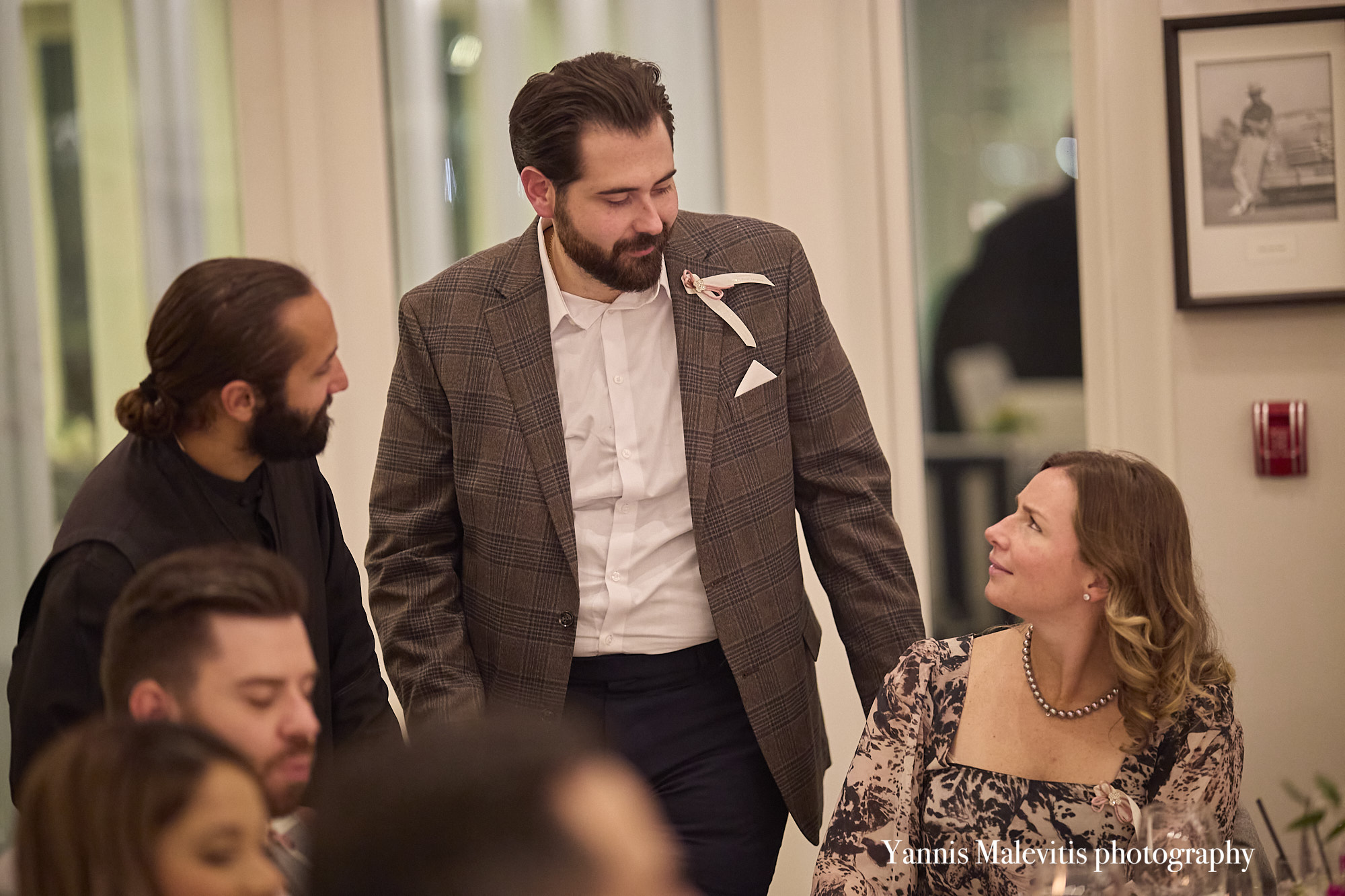
The baptism may be the sacred center of the day, but the reception is where families begin to relax. Grandparents hold the newly baptized child, cousins find one another on the dance floor, and conversations replace ceremony. These quiet interactions often reveal the relationships that become the most meaningful photographs of the celebration.
My approach is to photograph the reception as a storyteller rather than simply documenting who was present. While I certainly capture portraits, family groups, and important traditions, I focus primarily on the genuine interactions that reveal the spirit of the day.
While gentle direction may help people feel comfortable, my favorite photographs almost always come afterward—when conversation replaces posing and families become absorbed in one another. Those unscripted moments often become the photographs they treasure most.
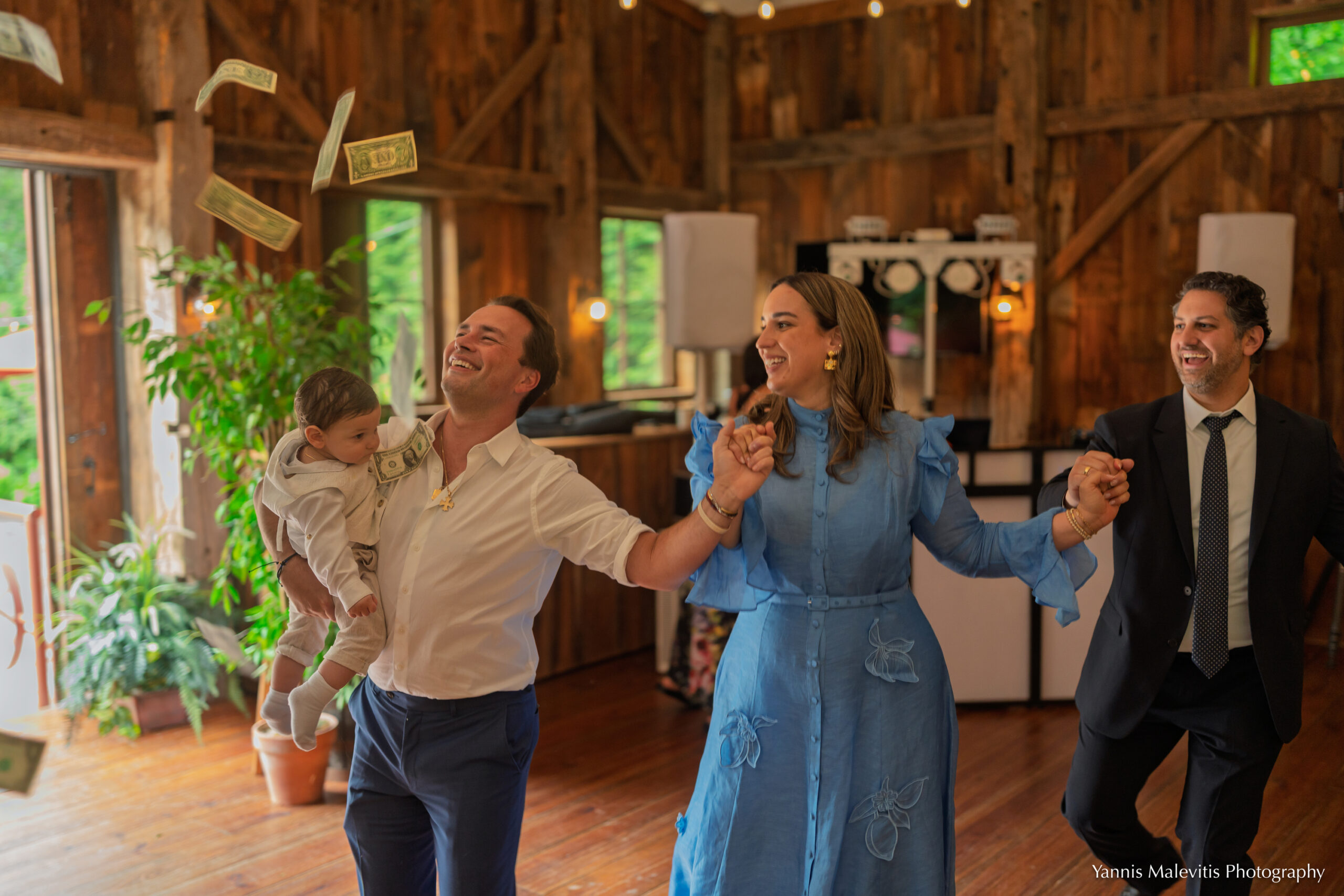
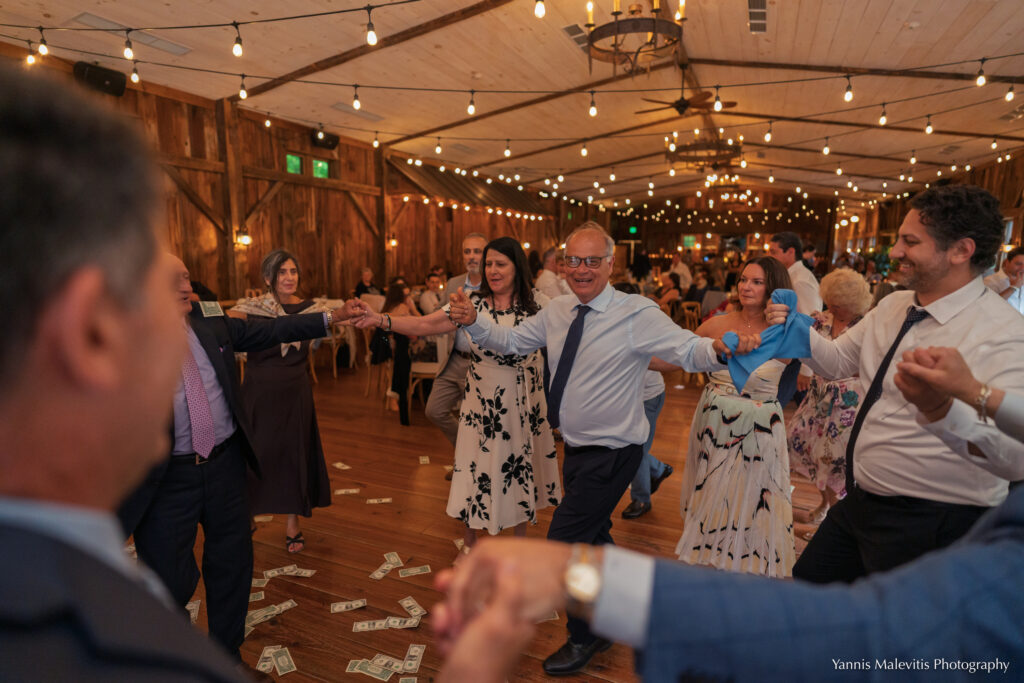
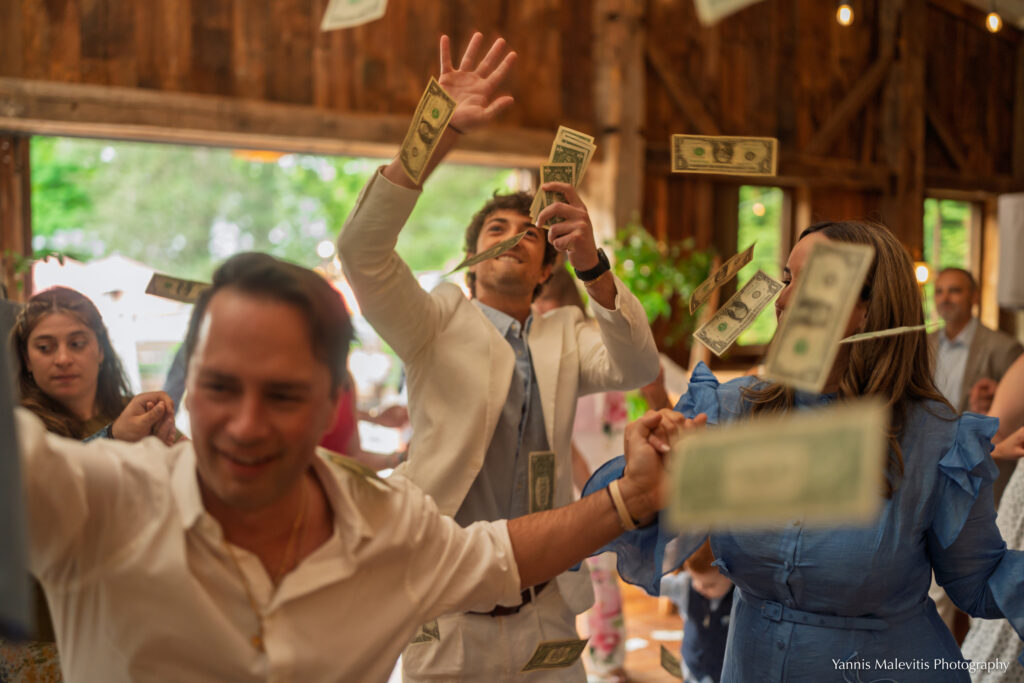
One moment from this reception has stayed with me. While I was in the middle of the dance floor photographing the celebration, I noticed the child’s grandfather moving closer with a handful of one-dollar bills. Knowing the Greek tradition of the money dance, I anticipated what was about to happen. As the bills filled the air, he lifted his grandchild onto his shoulders and began dancing through the circle. That spontaneous expression of joy and pride became one of the moments that best captured what the celebration meant to the family.
Greek Orthodox christening receptions are especially rich with emotion and tradition. Whether it is the first dance, the money dance, a family circle forming on the dance floor, or the cutting of the cake, I strive to capture not only what happened but also what it felt like to be there.
By the end of the reception, I hope the photographs tell a complete story—not only of the celebration itself, but of the relationships that gave it meaning.
Years from now, children will not remember the menu or the decorations. They will remember the people who gathered to celebrate them. My hope is that the photographs preserve those relationships with the same warmth they were experienced that day.
If you are planning a Greek Orthodox christening on Long Island, New York City, Westchester, Connecticut, or the Hudson Valley, I would be honored to document your family’s celebration with a documentary and unobtrusive approach.
The most meaningful moments of a Greek Orthodox baptism are often the ones that no one plans.
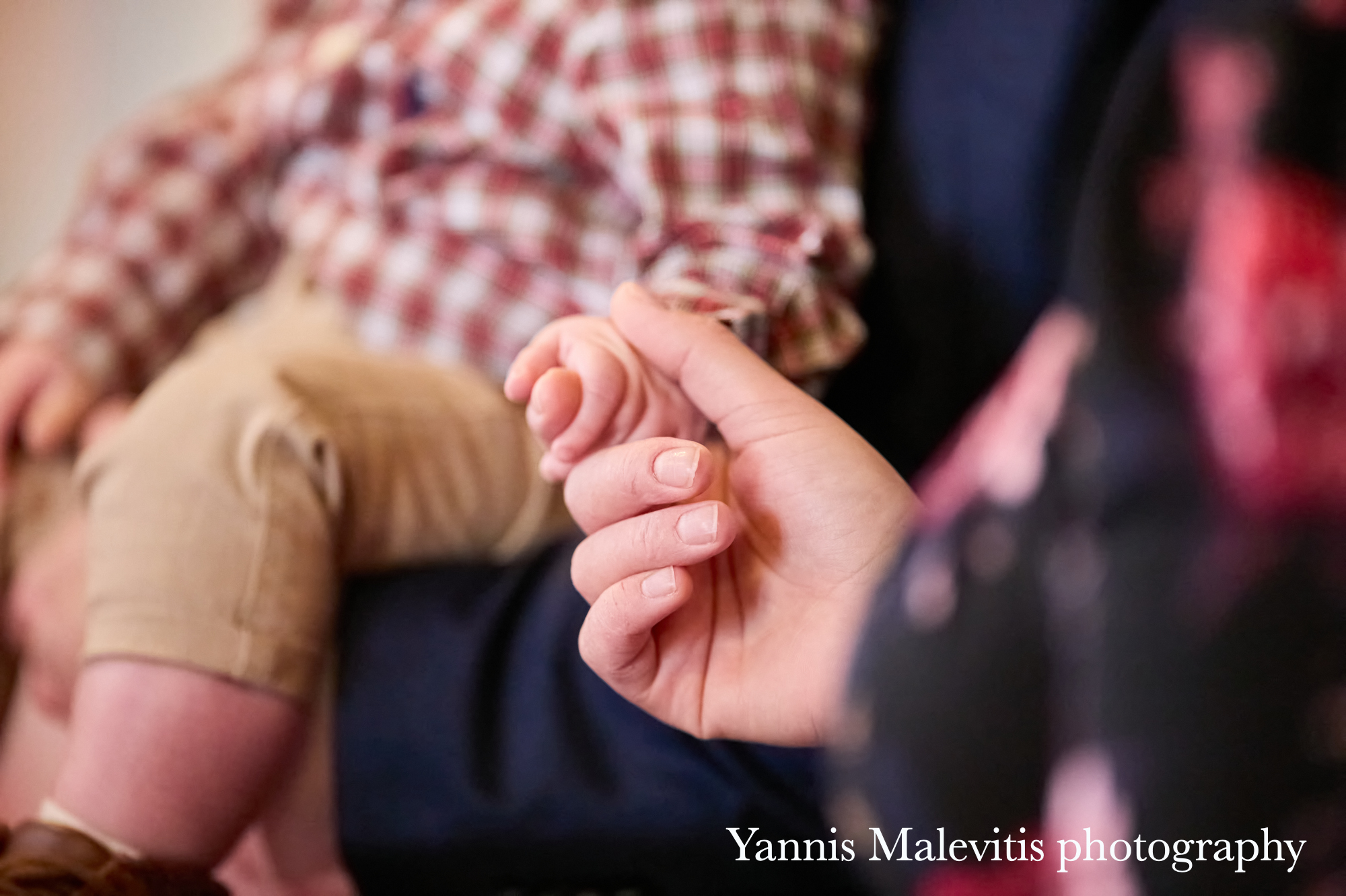
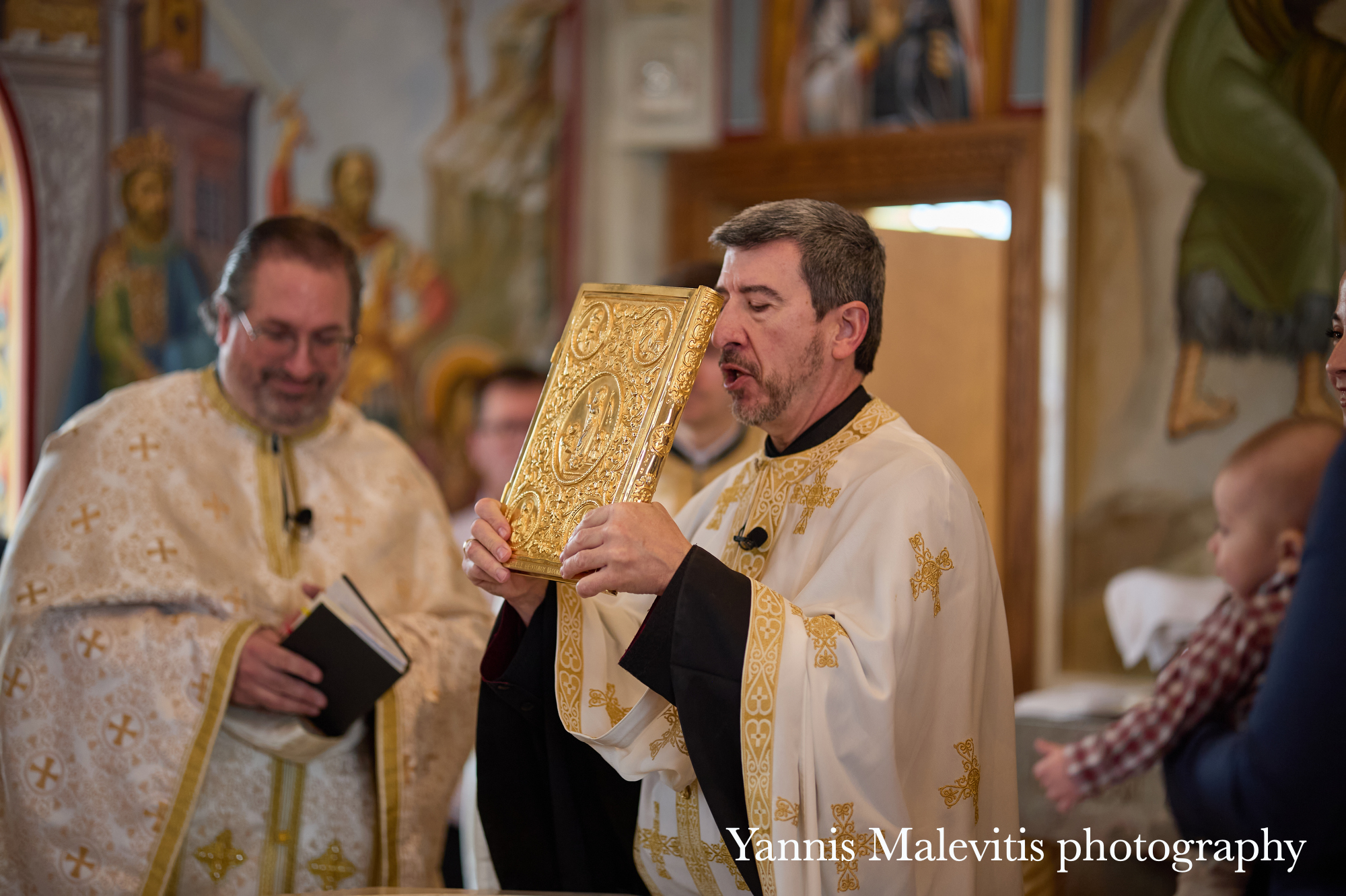
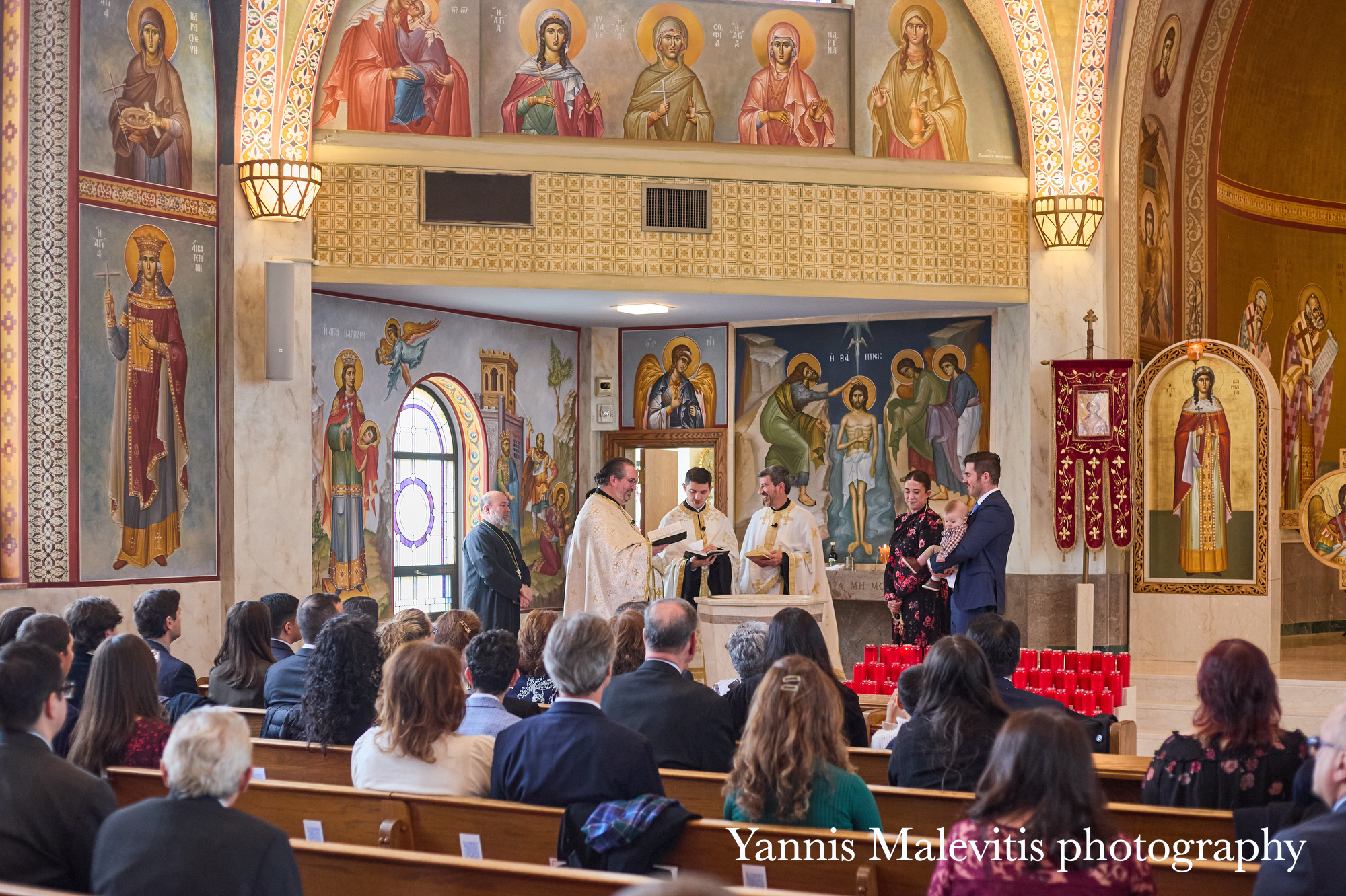
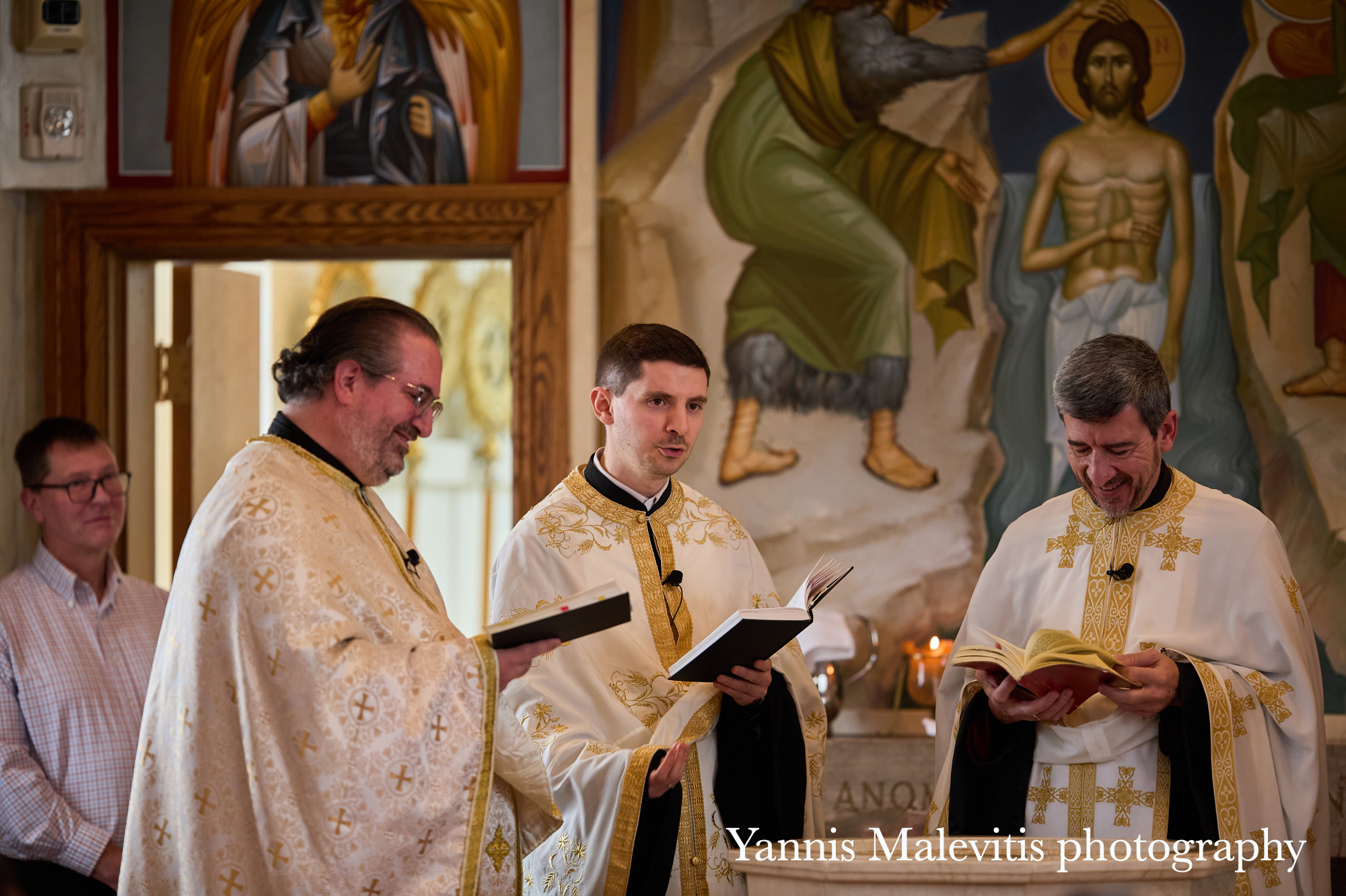
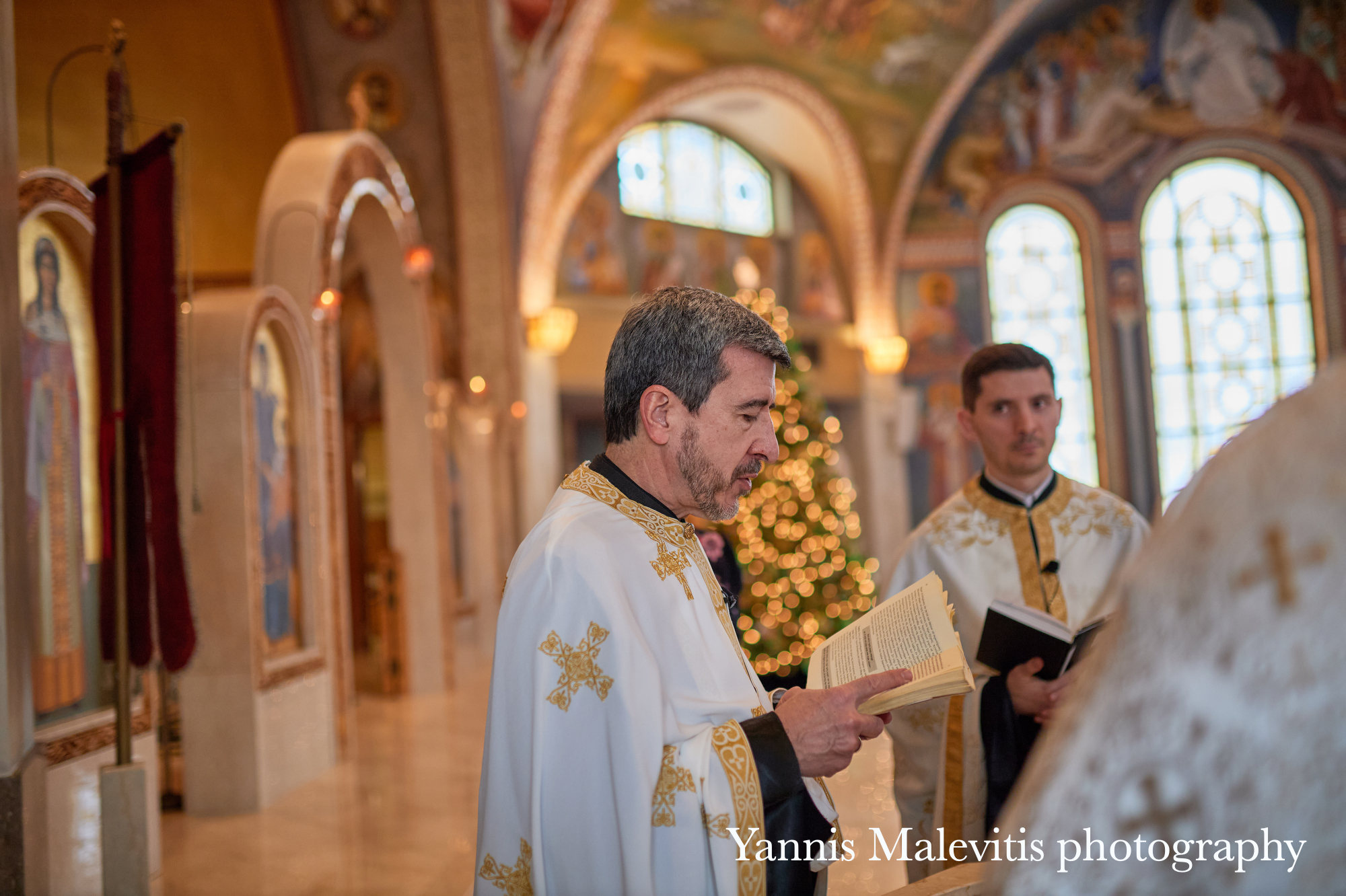
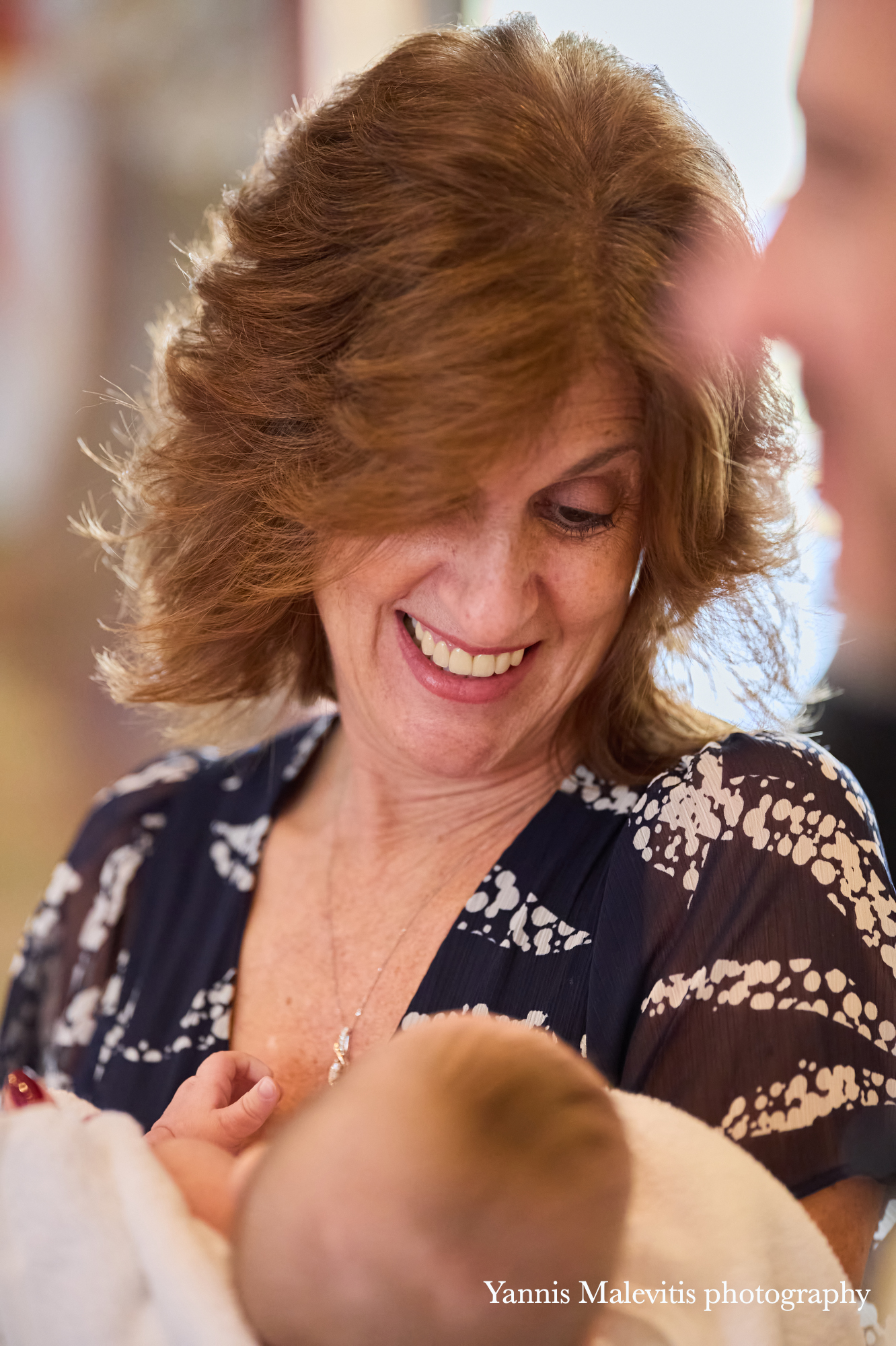
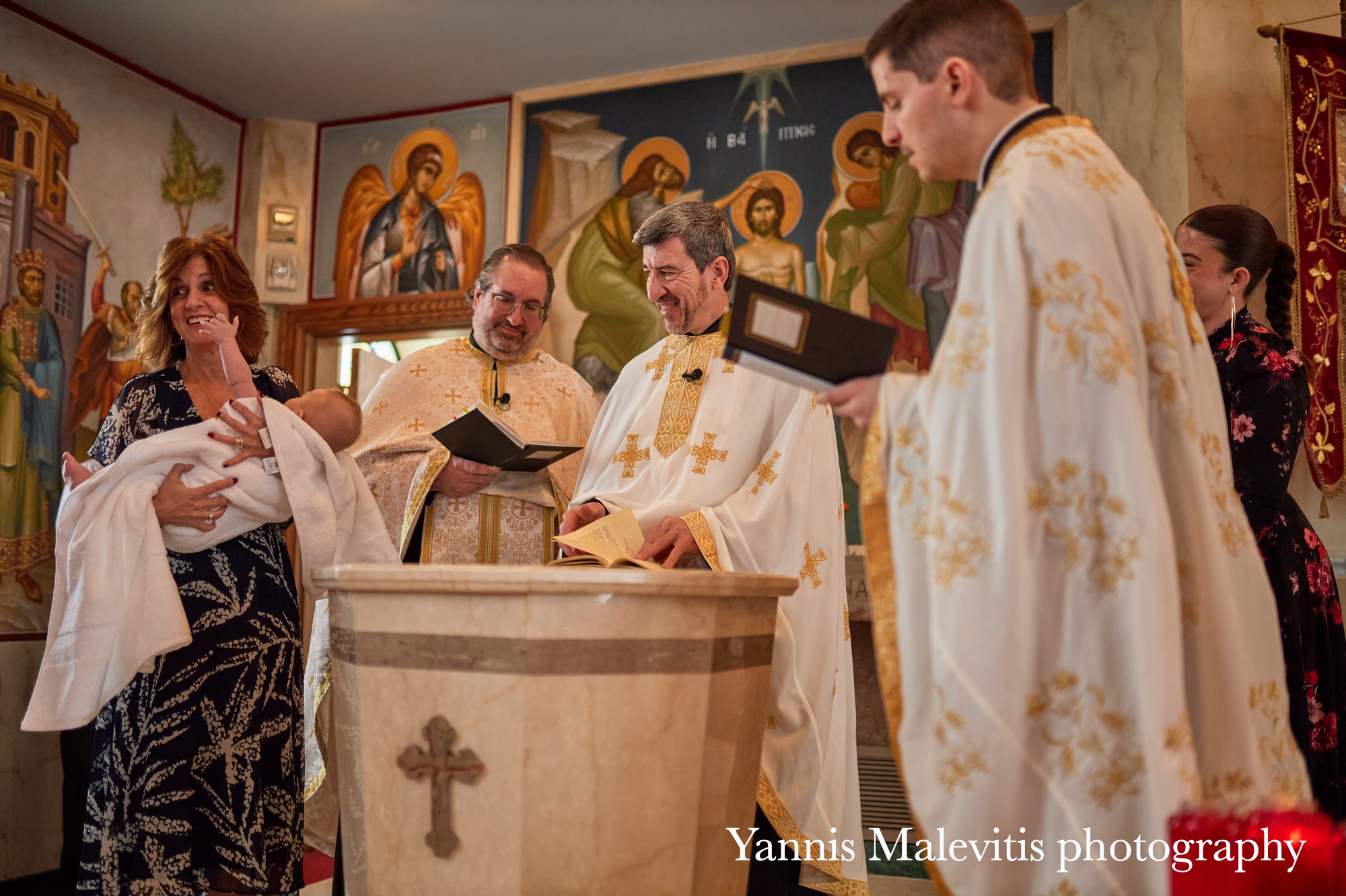
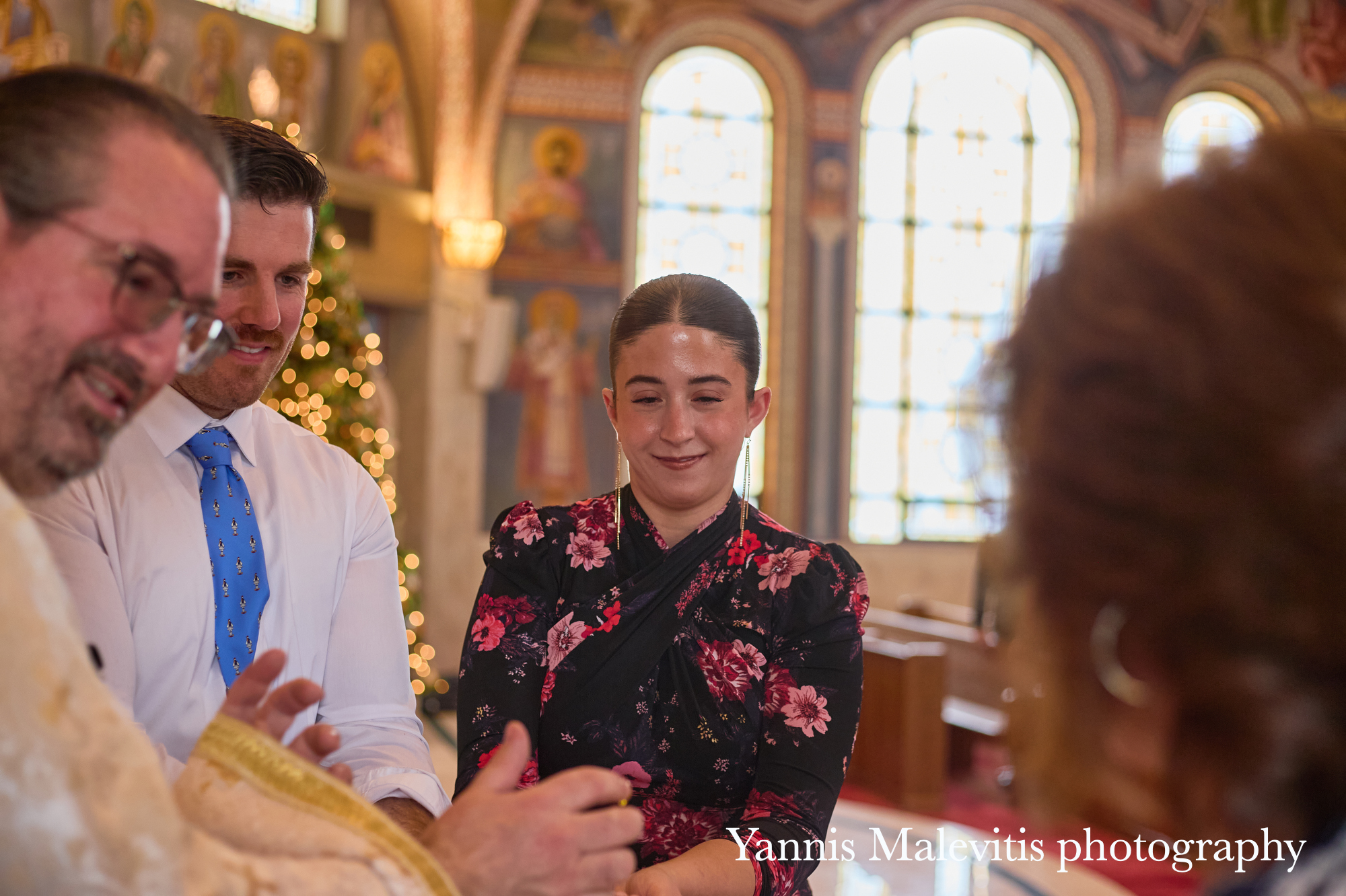
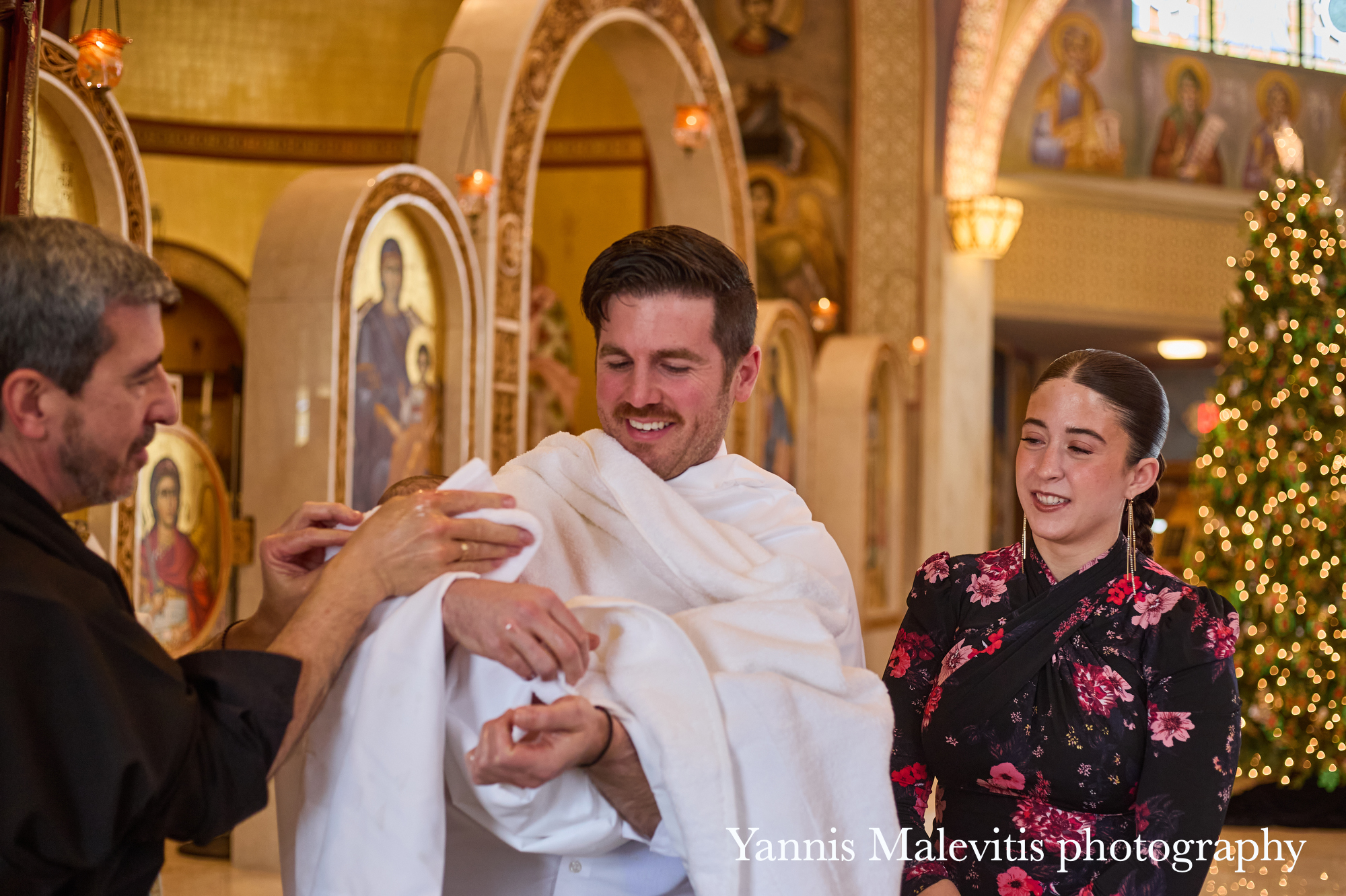
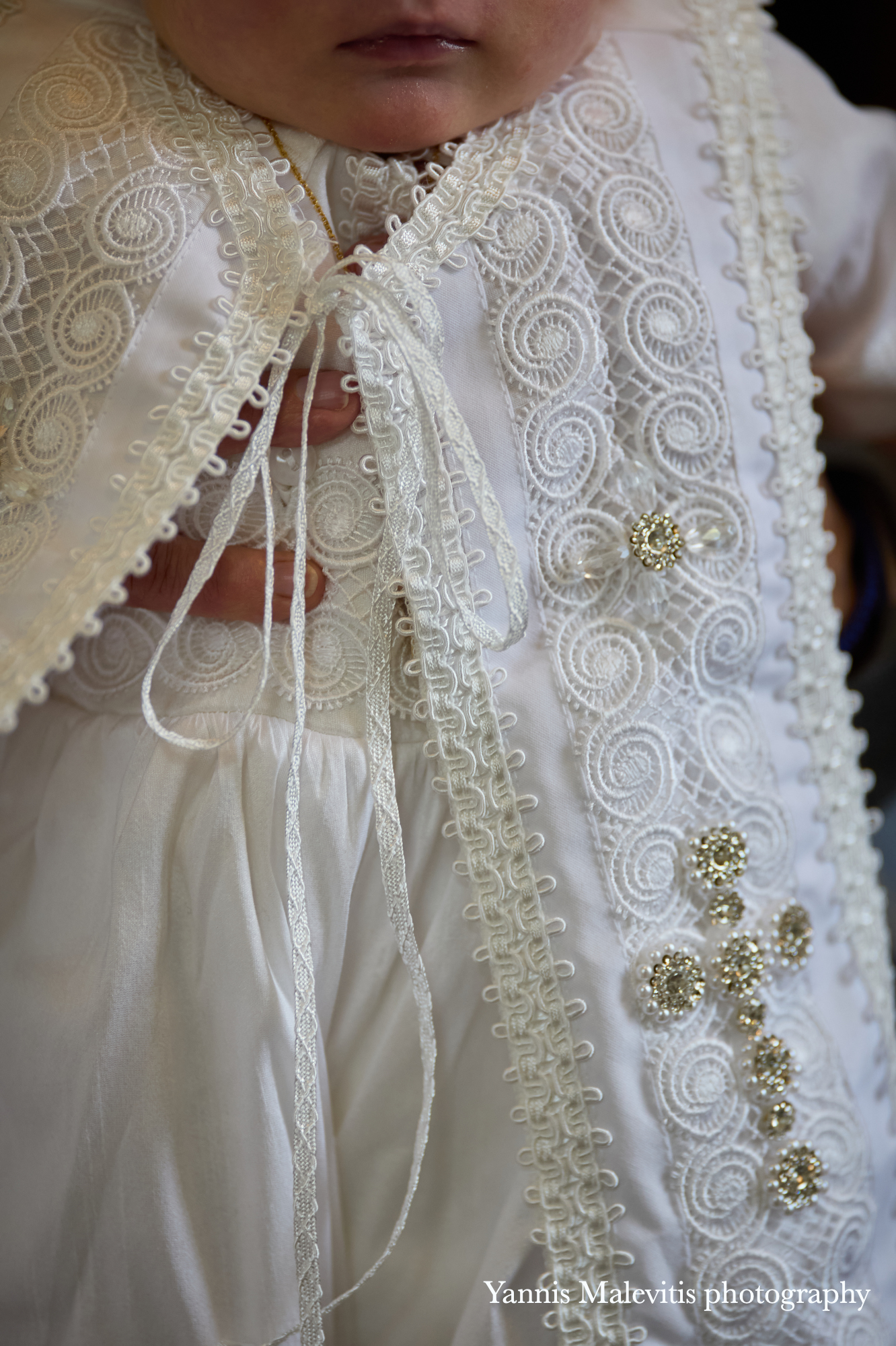
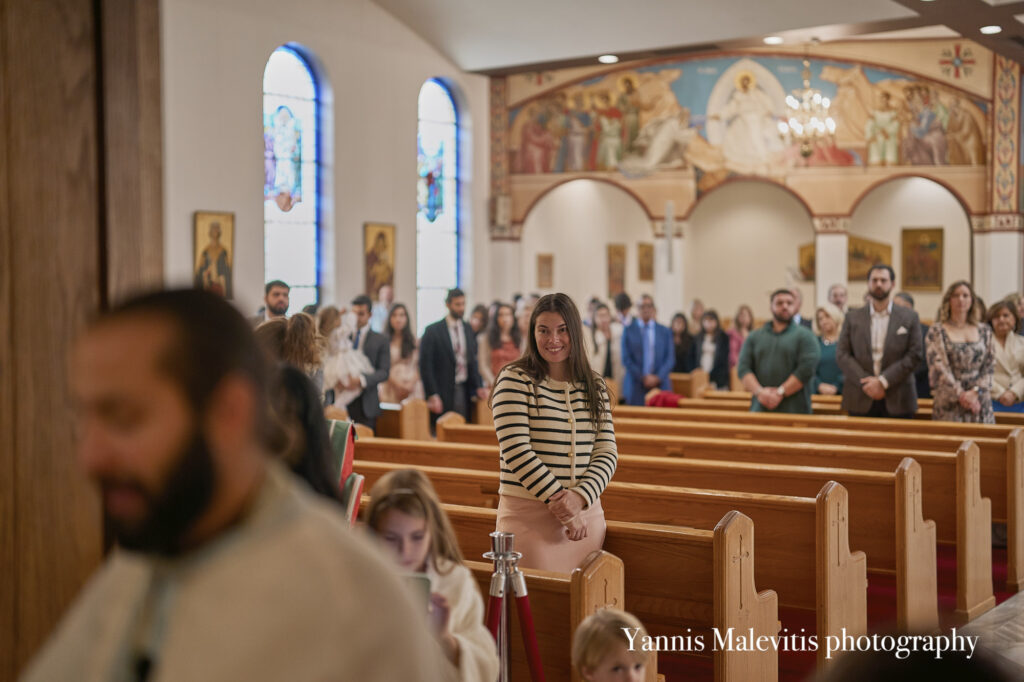
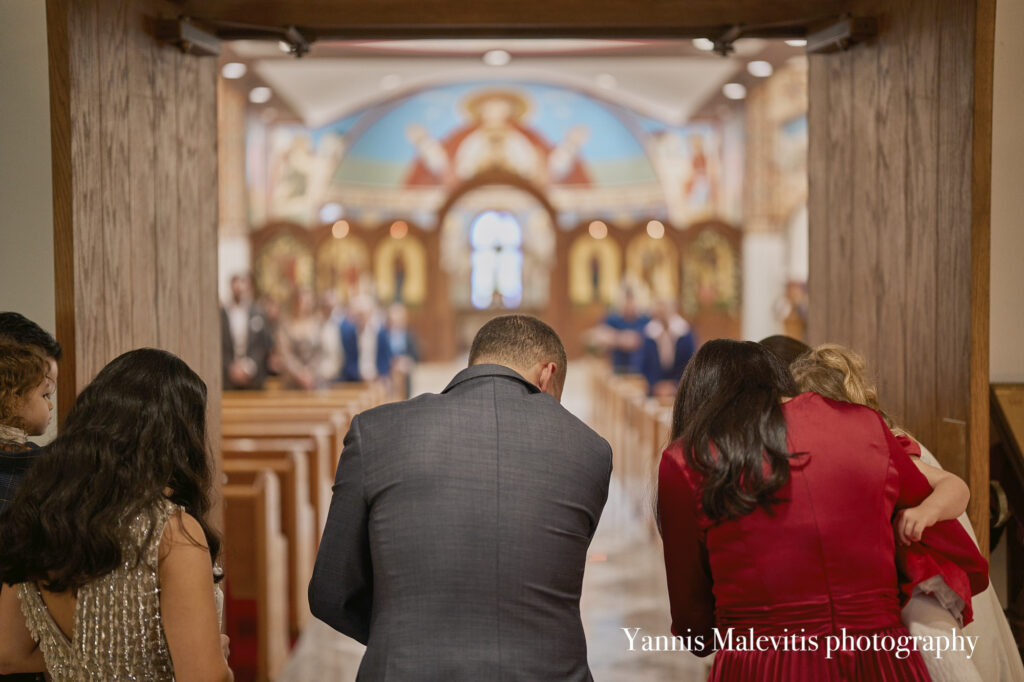
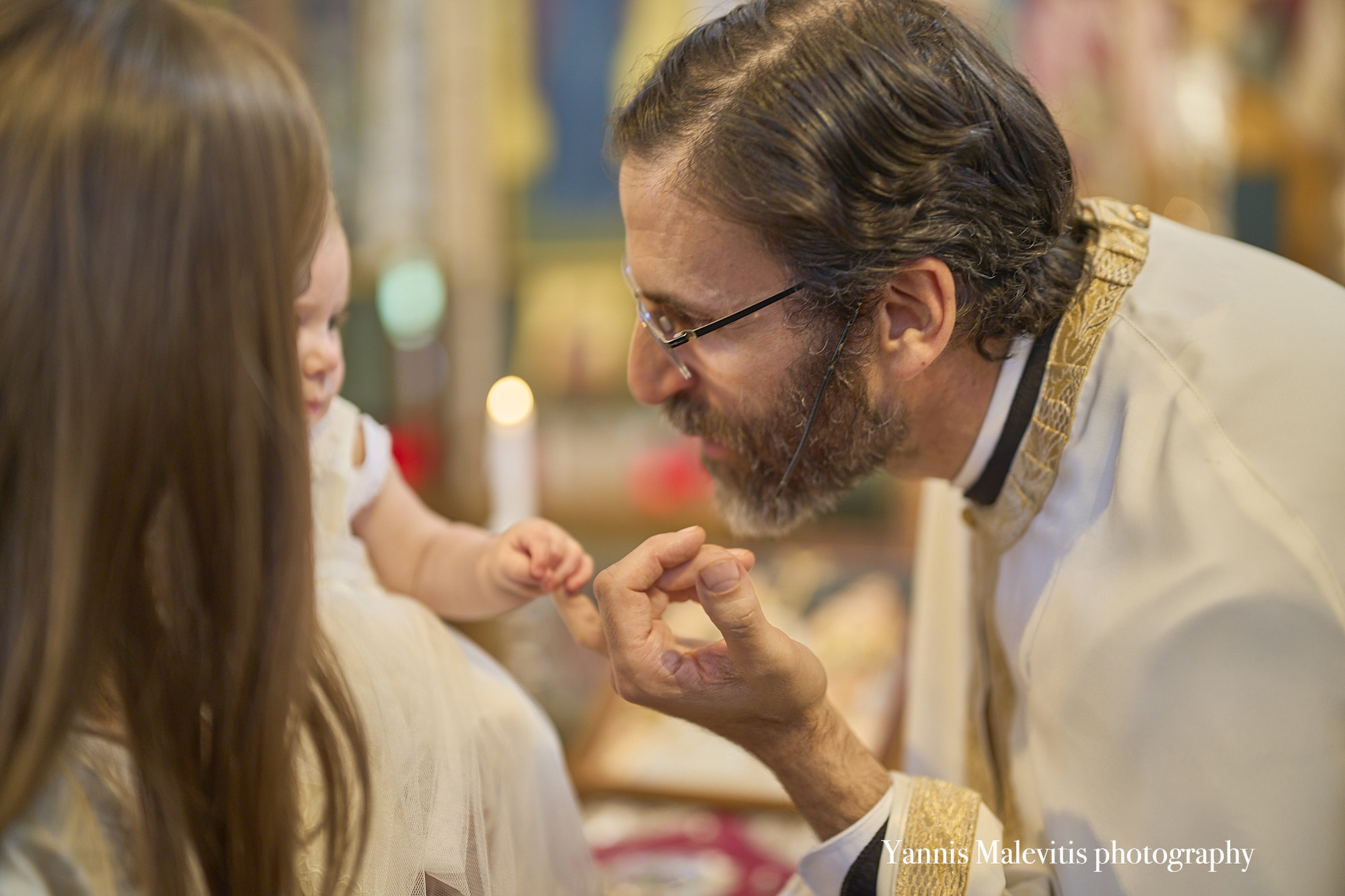
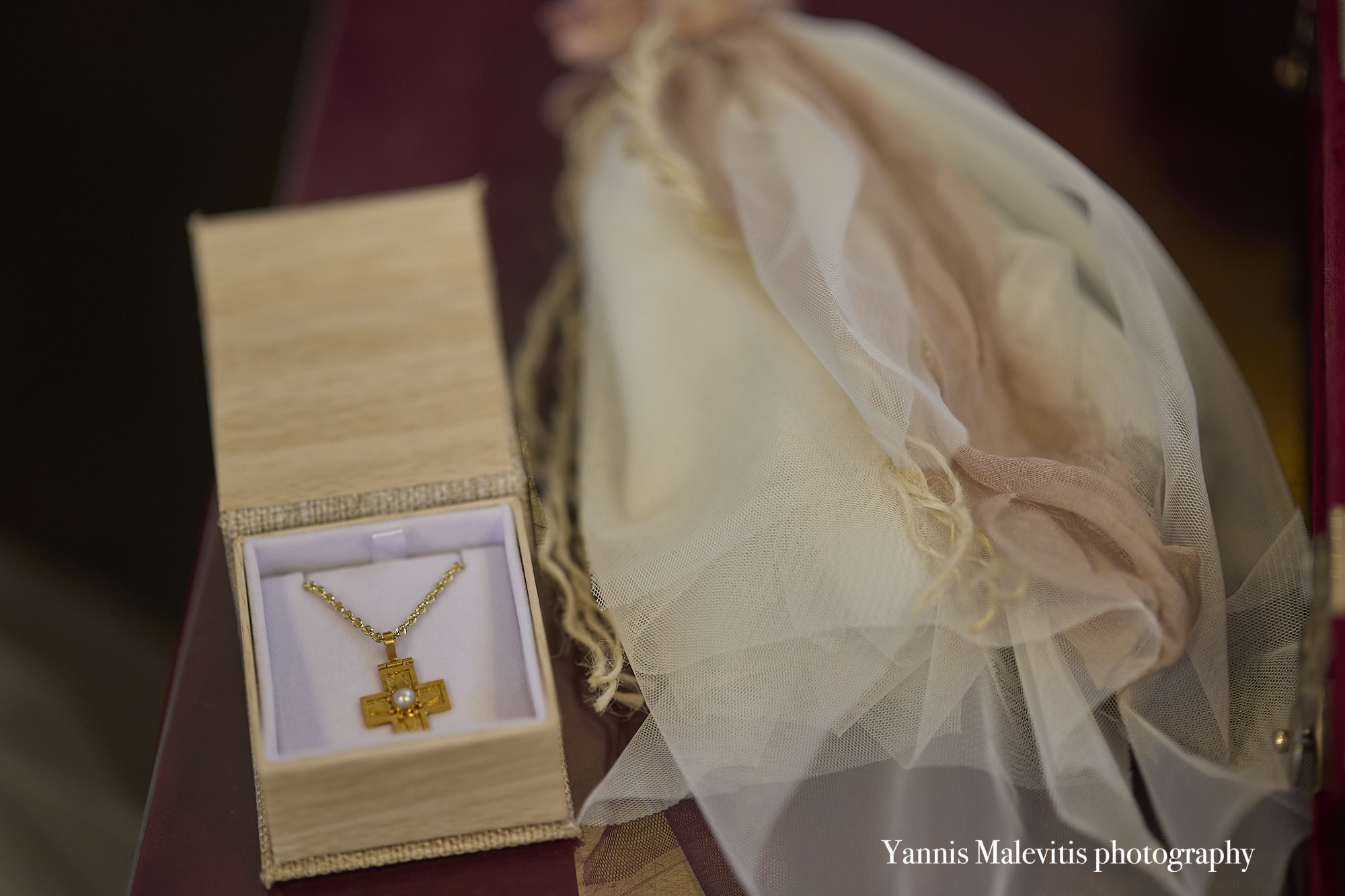
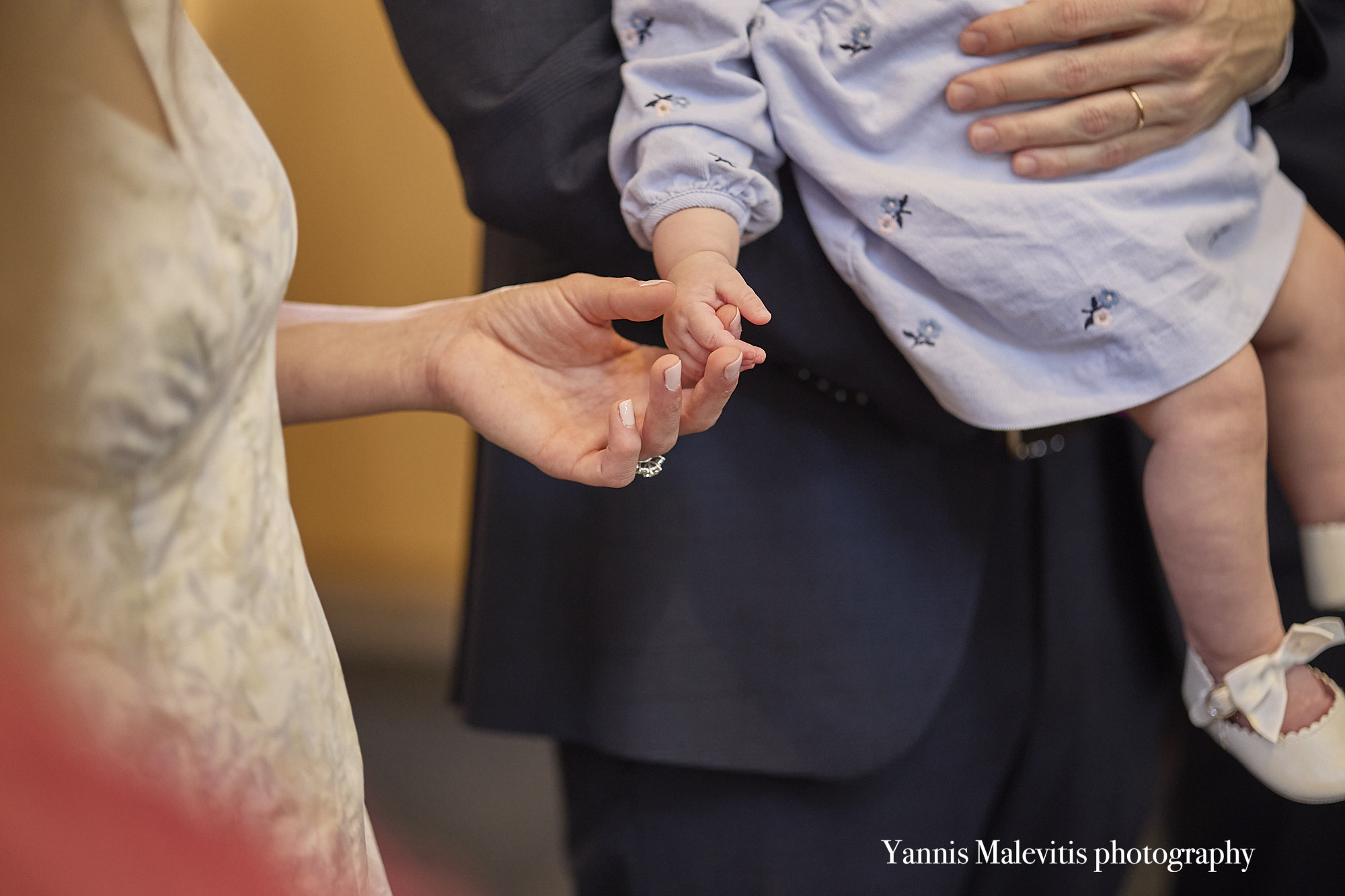
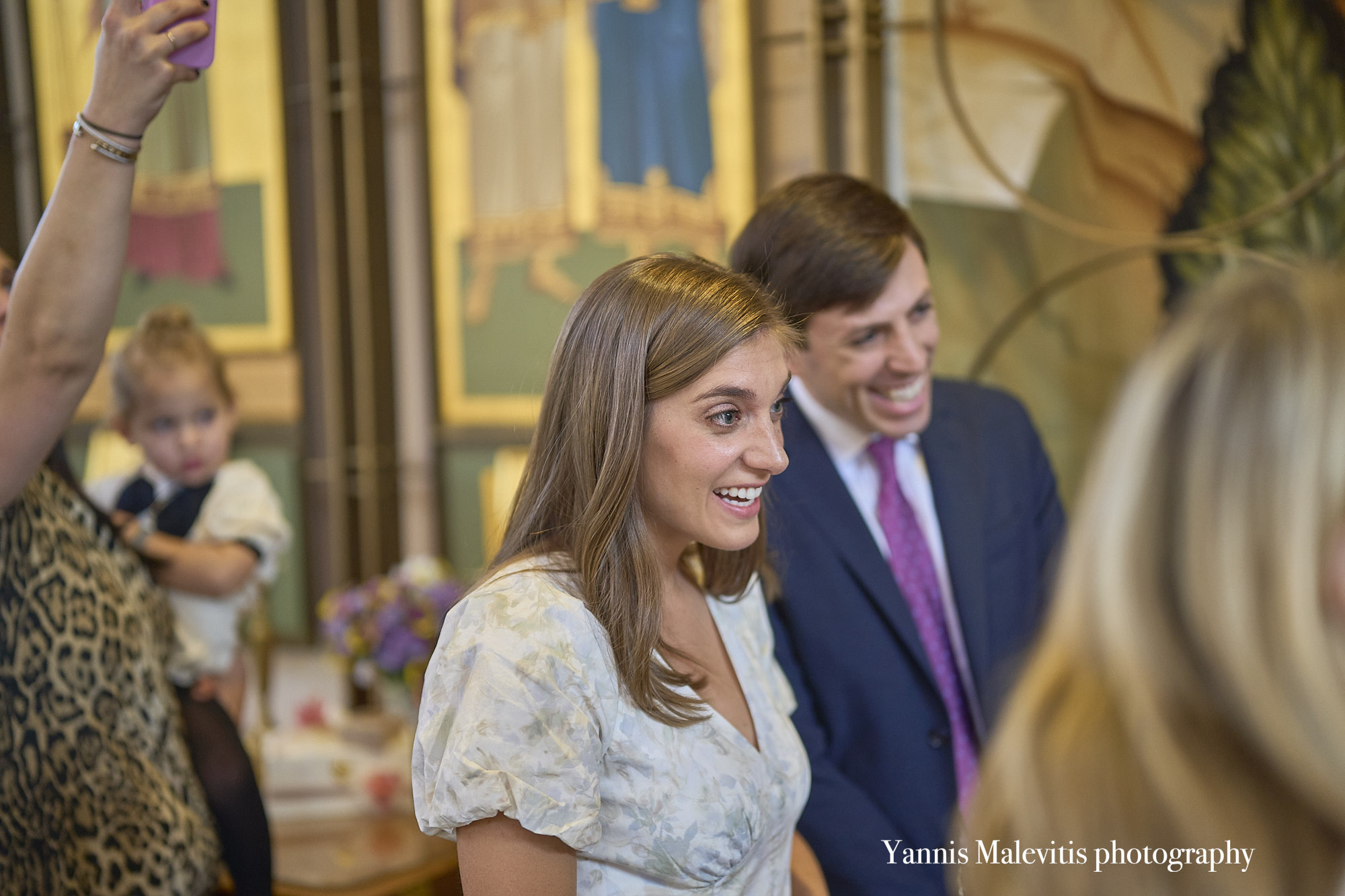
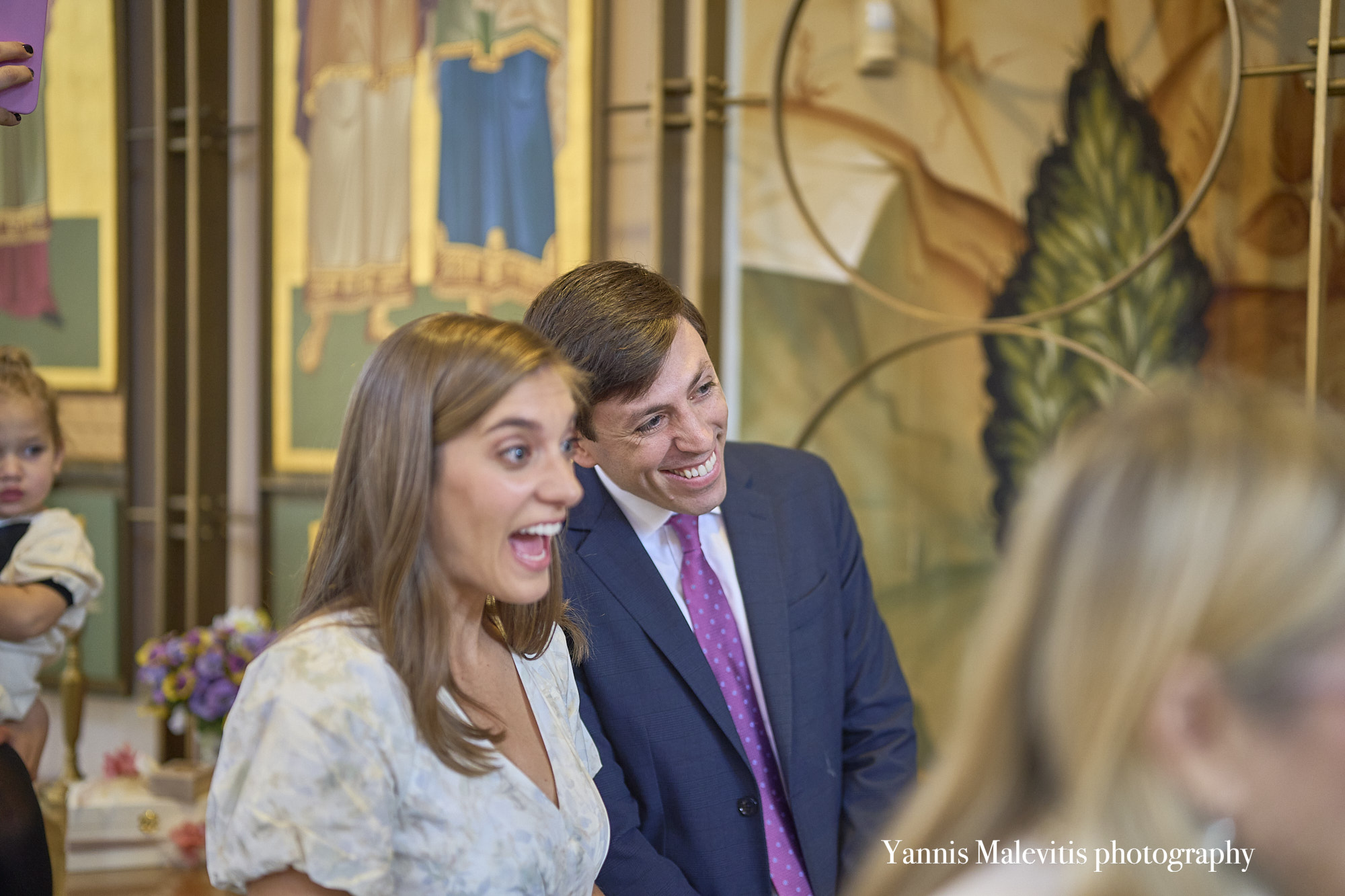
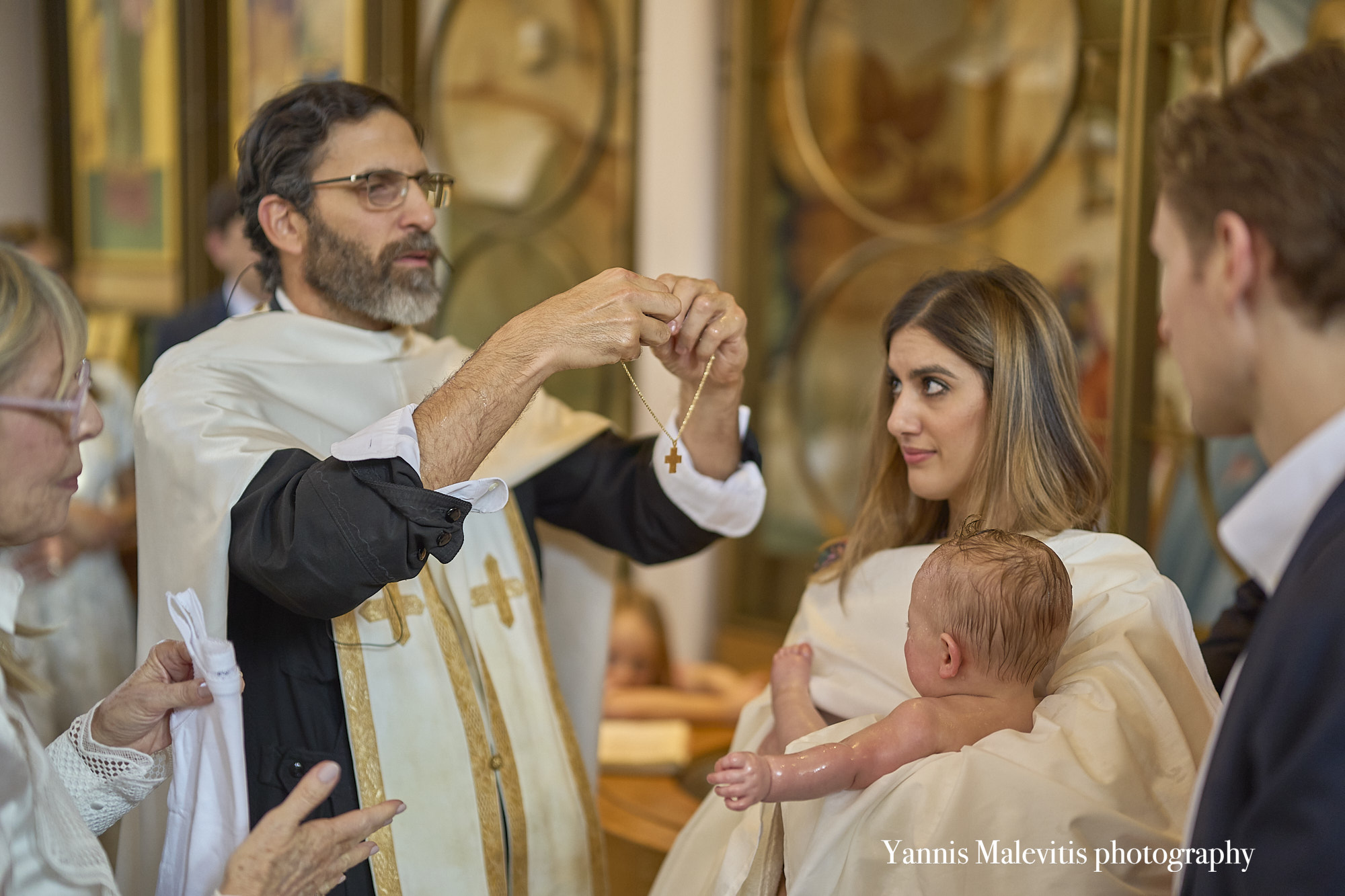
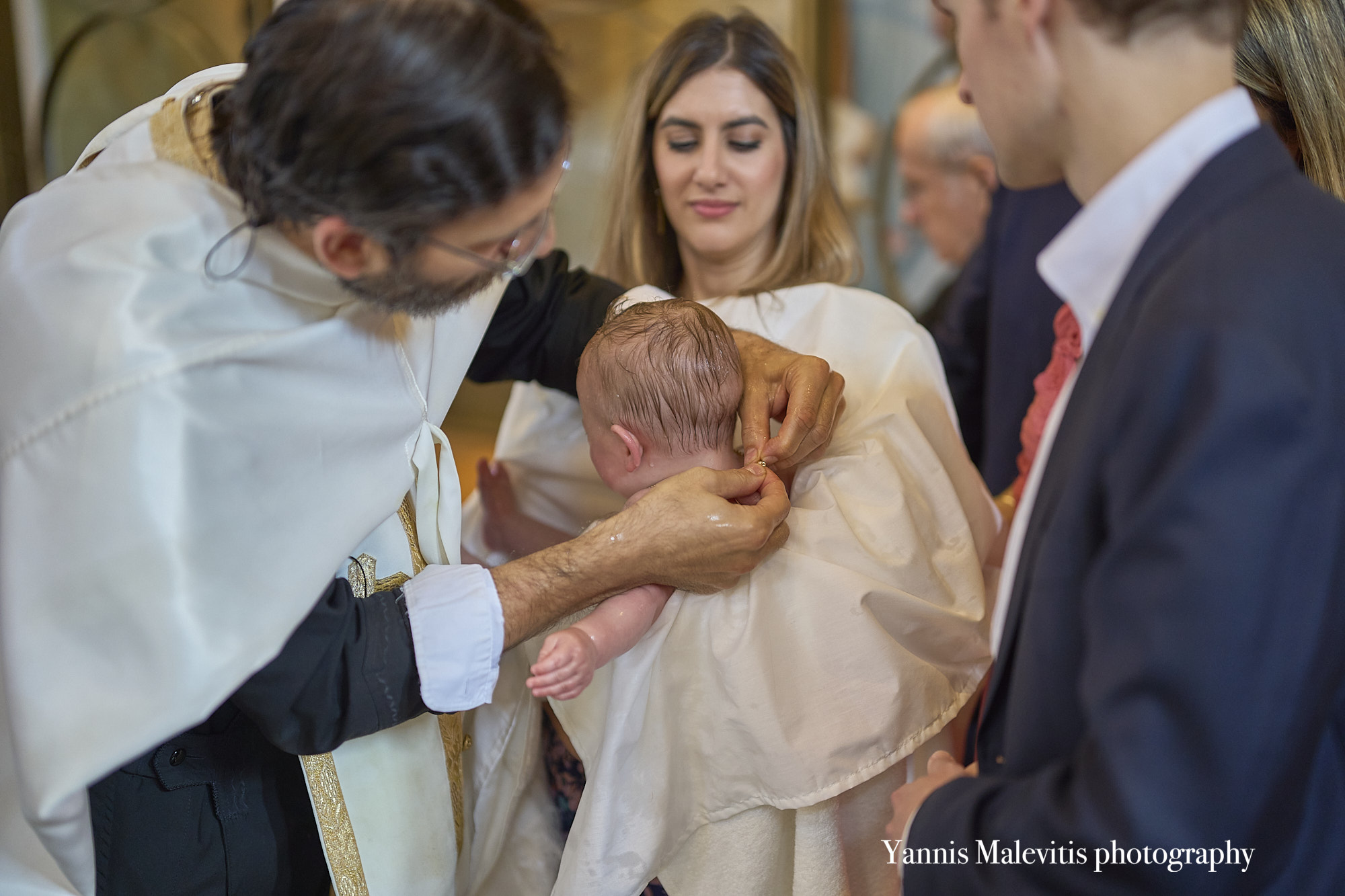
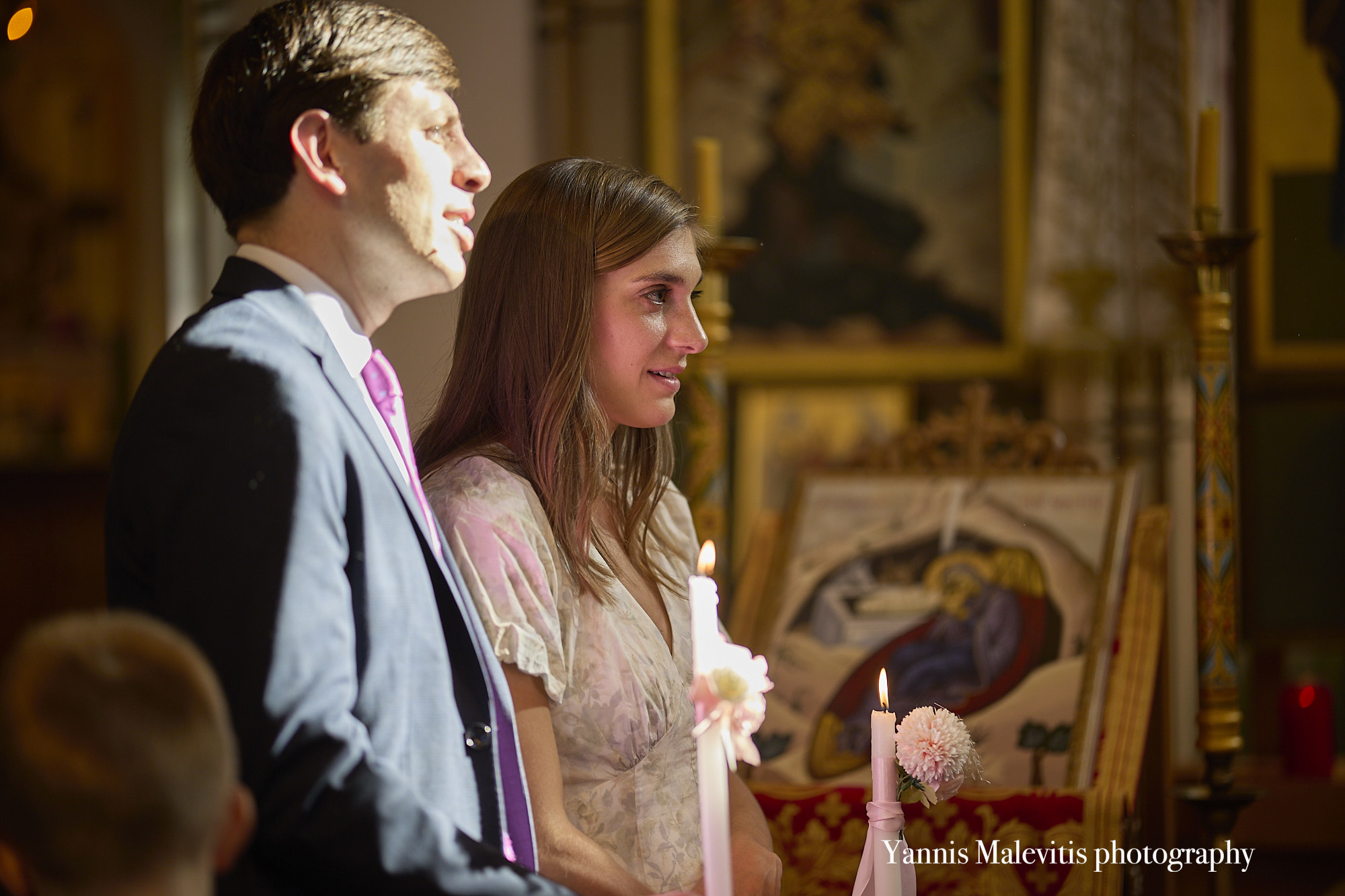
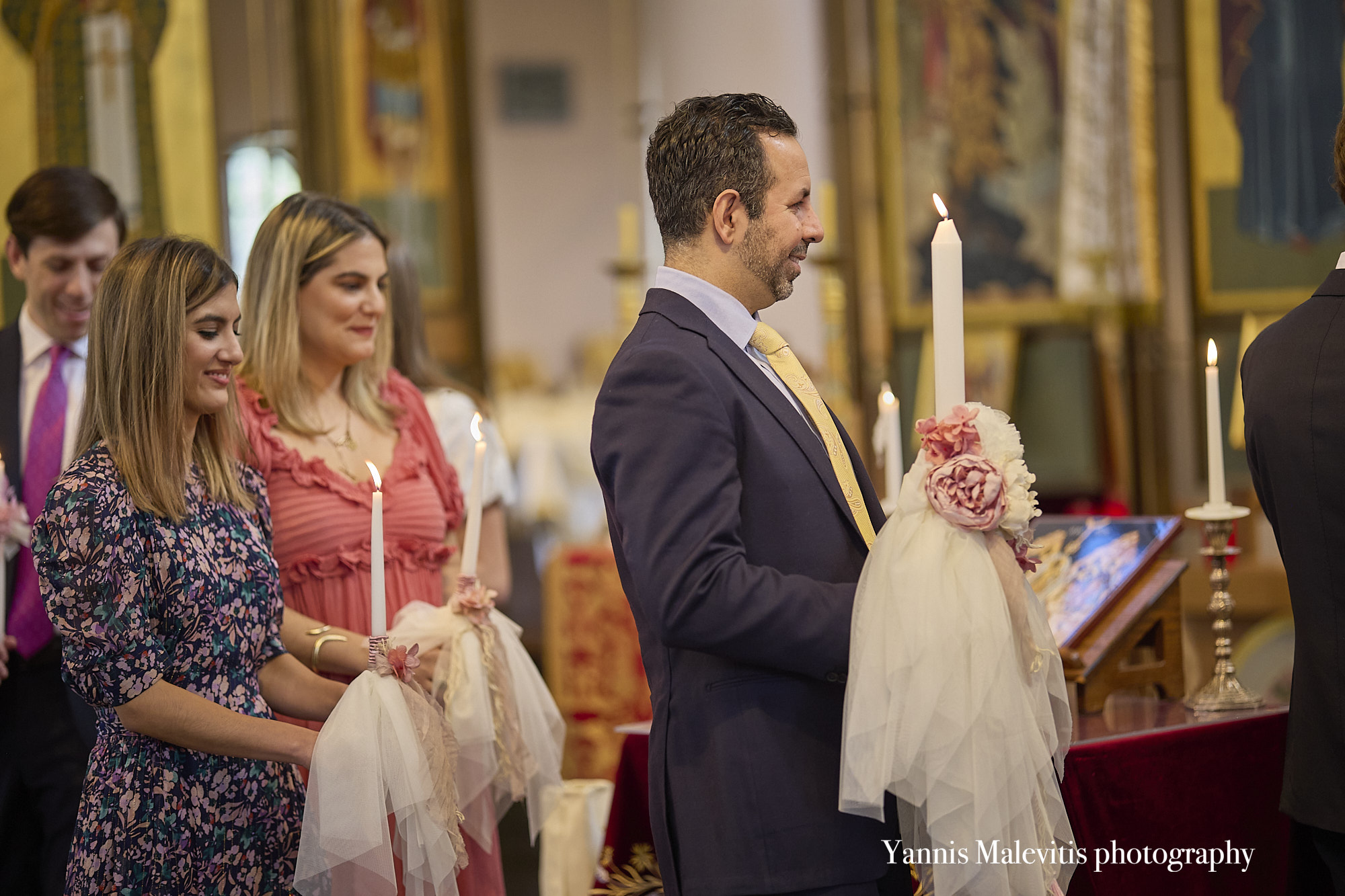
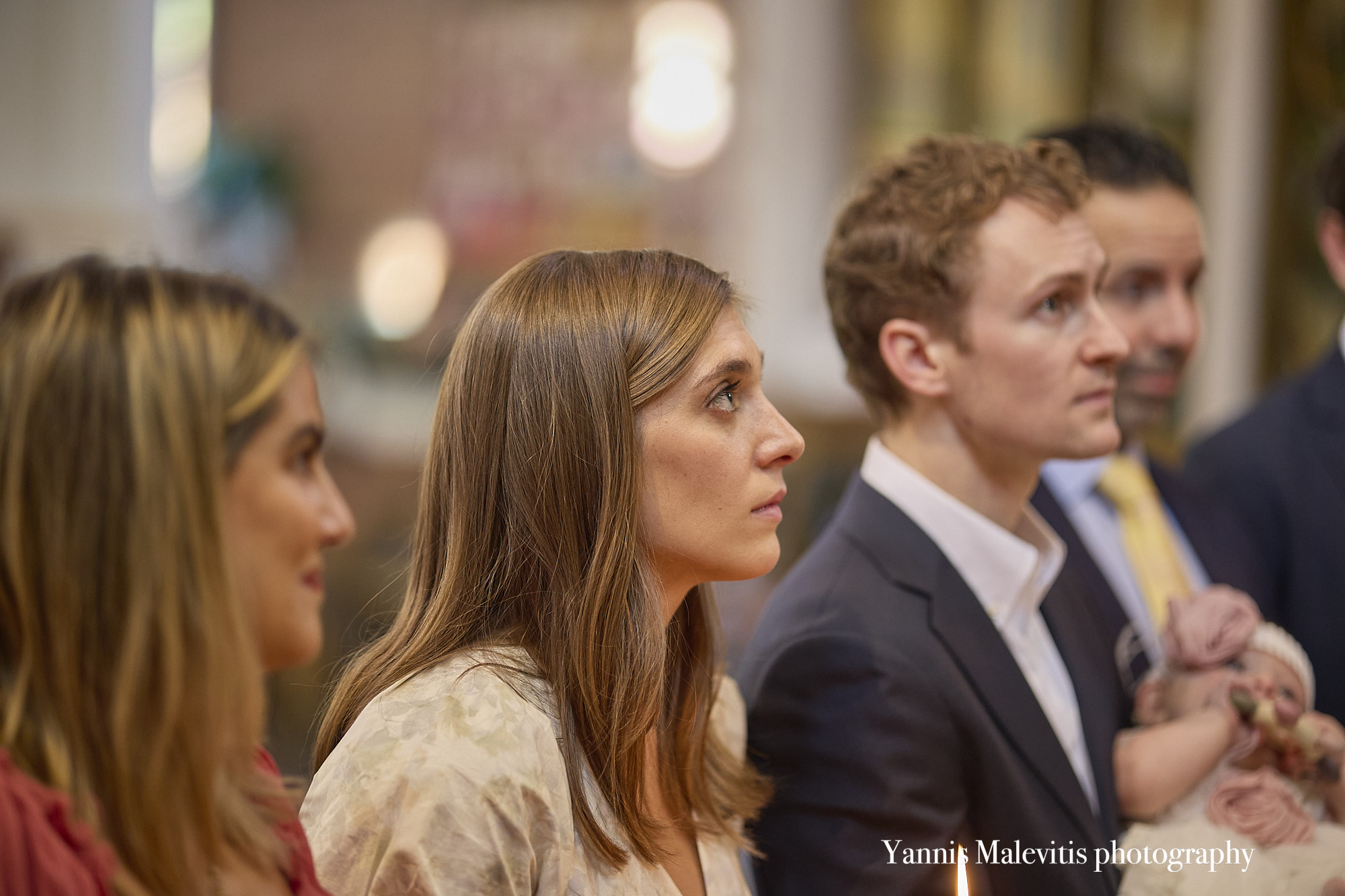
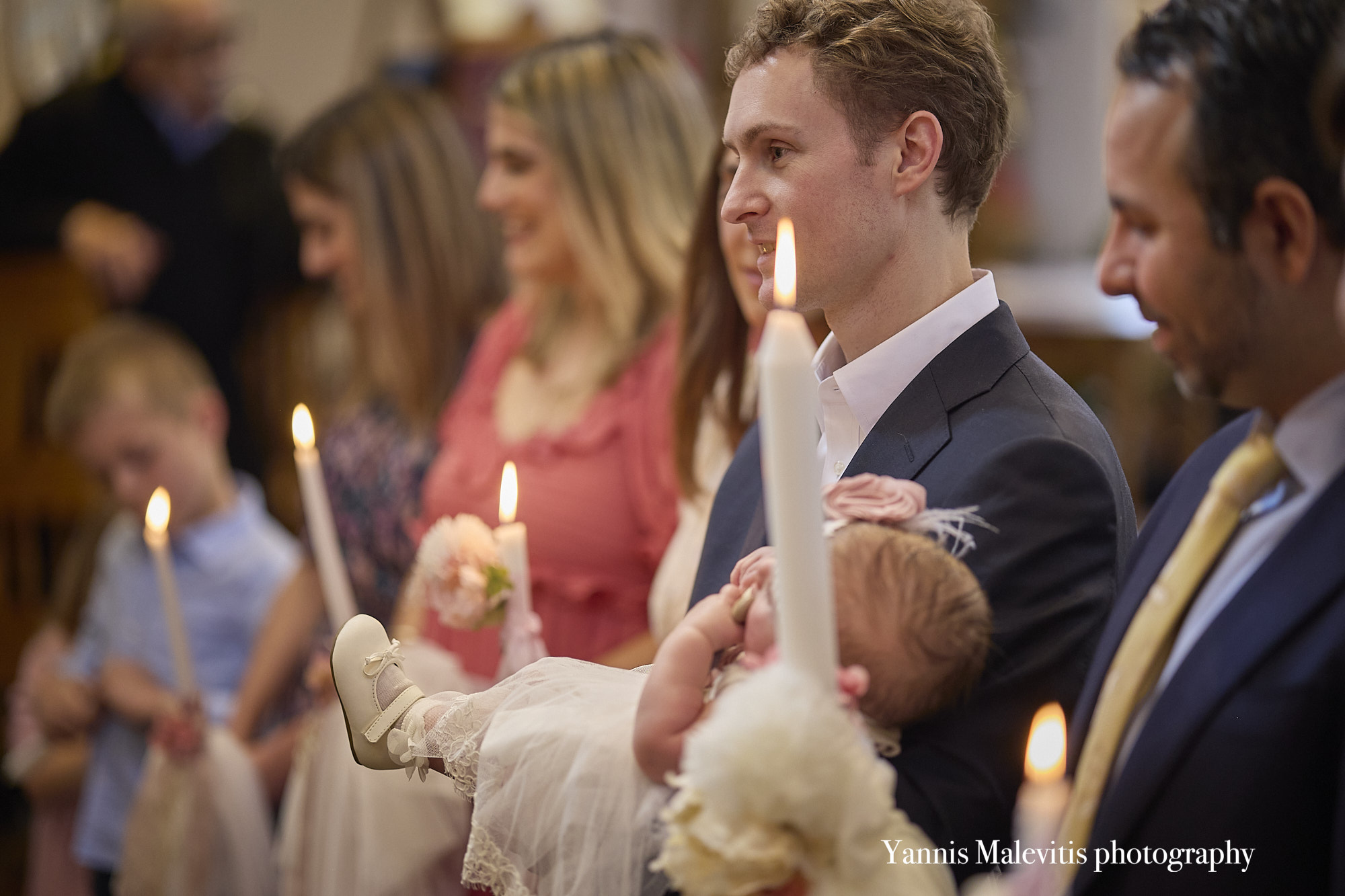
Before the child is baptized, parents quietly prepare their son or daughter for the sacrament. Godparents wait with anticipation as family members gather inside the church. Grandparents gently adjust a baptismal garment or offer a reassuring touch. Throughout the service, brief glances, smiles, and gestures reveal the love that surrounds the child on this important day.
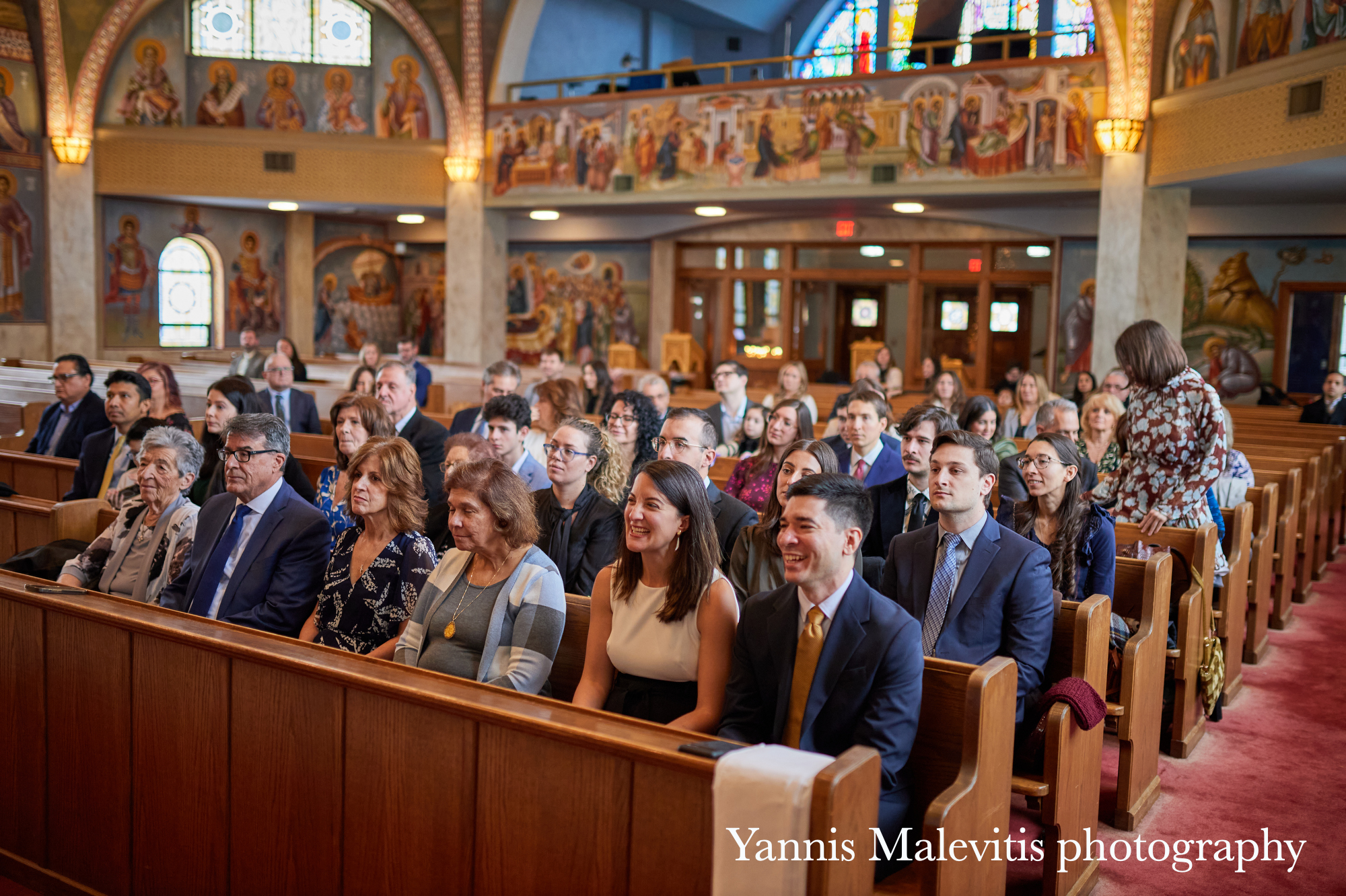
These quiet moments are easy to overlook, yet they often become the photographs that families treasure most. Years later, they recall not only the beauty of the baptismal service but also the expressions of those who shared the day with them.
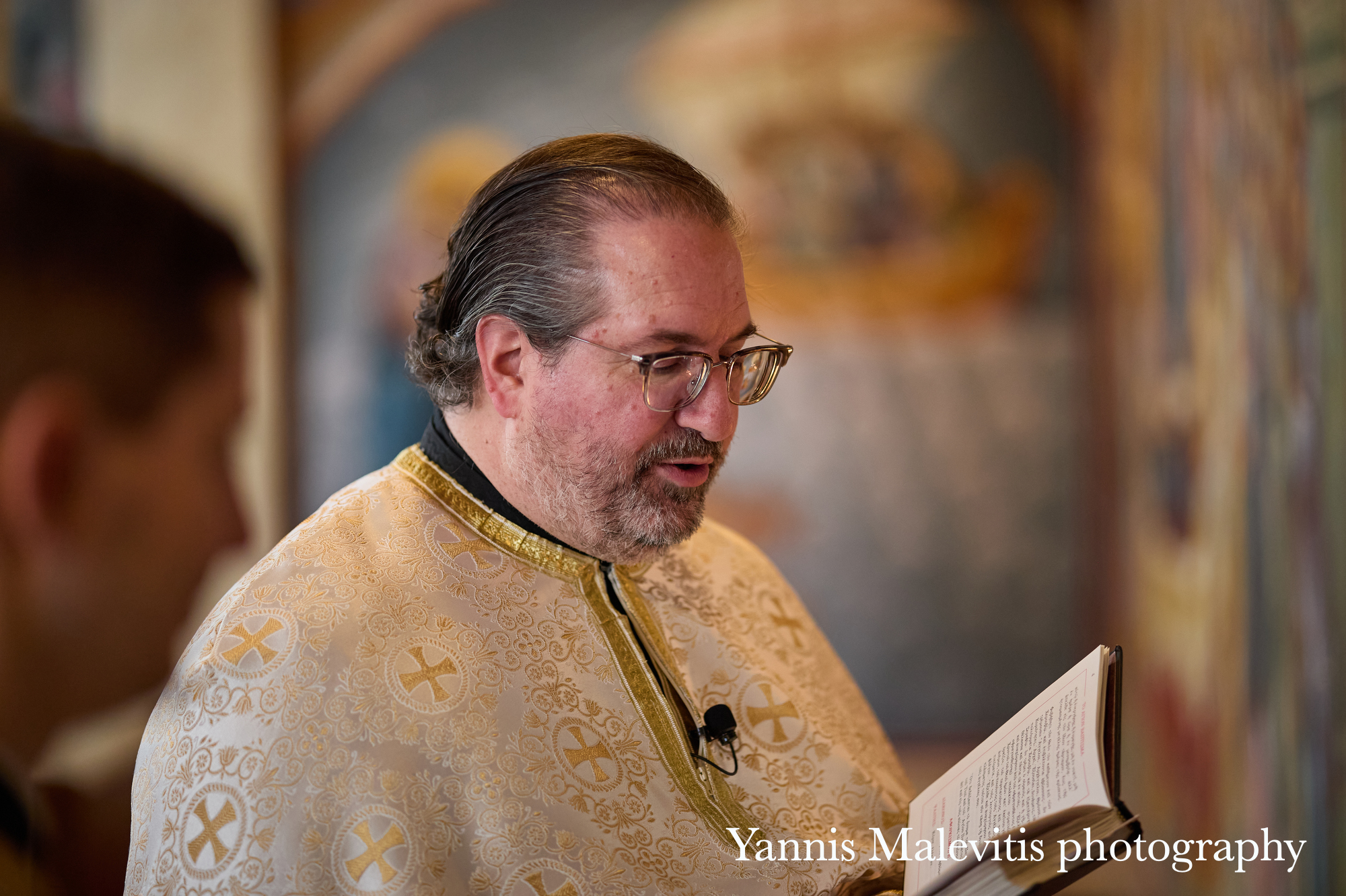
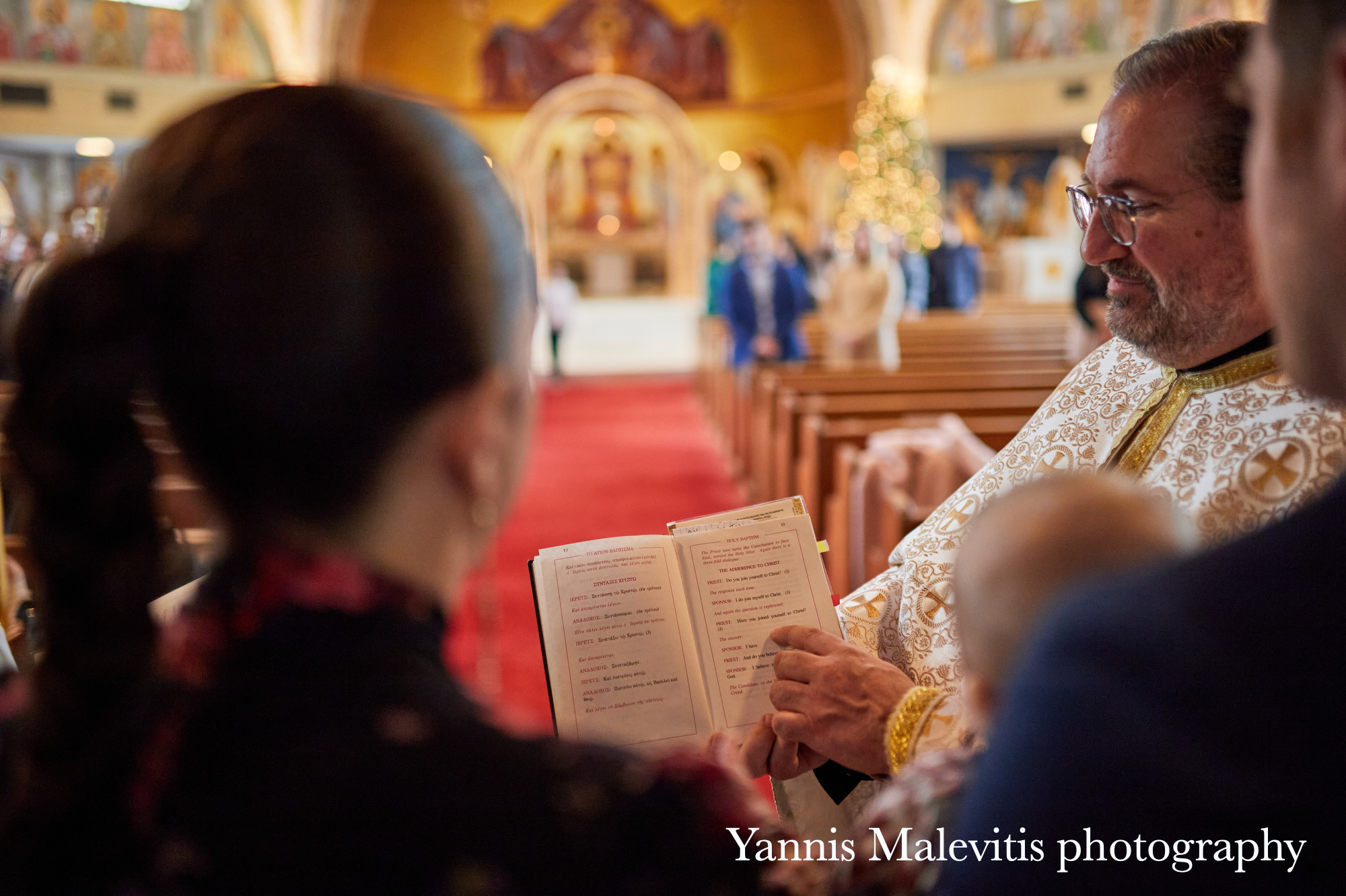
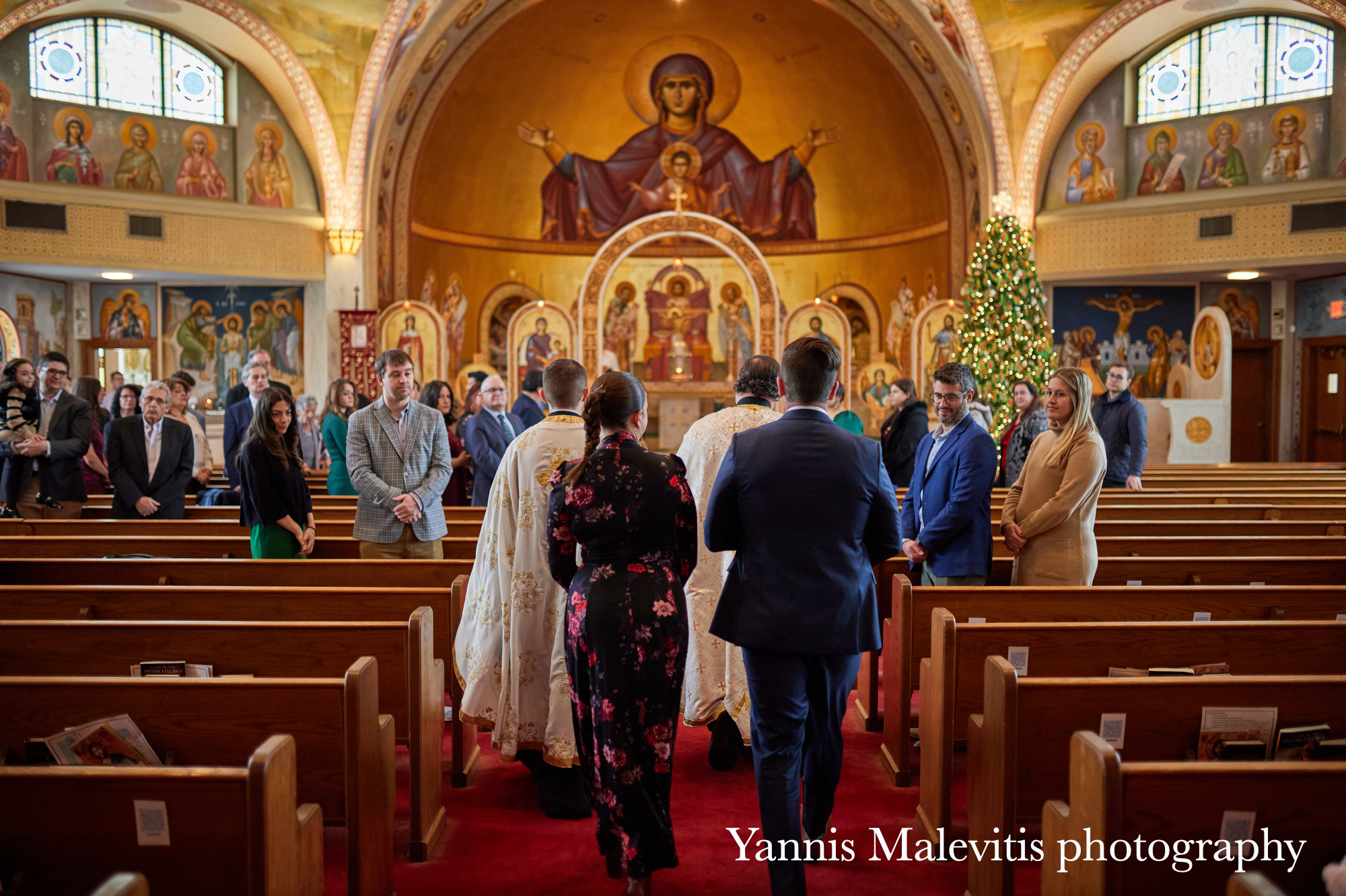
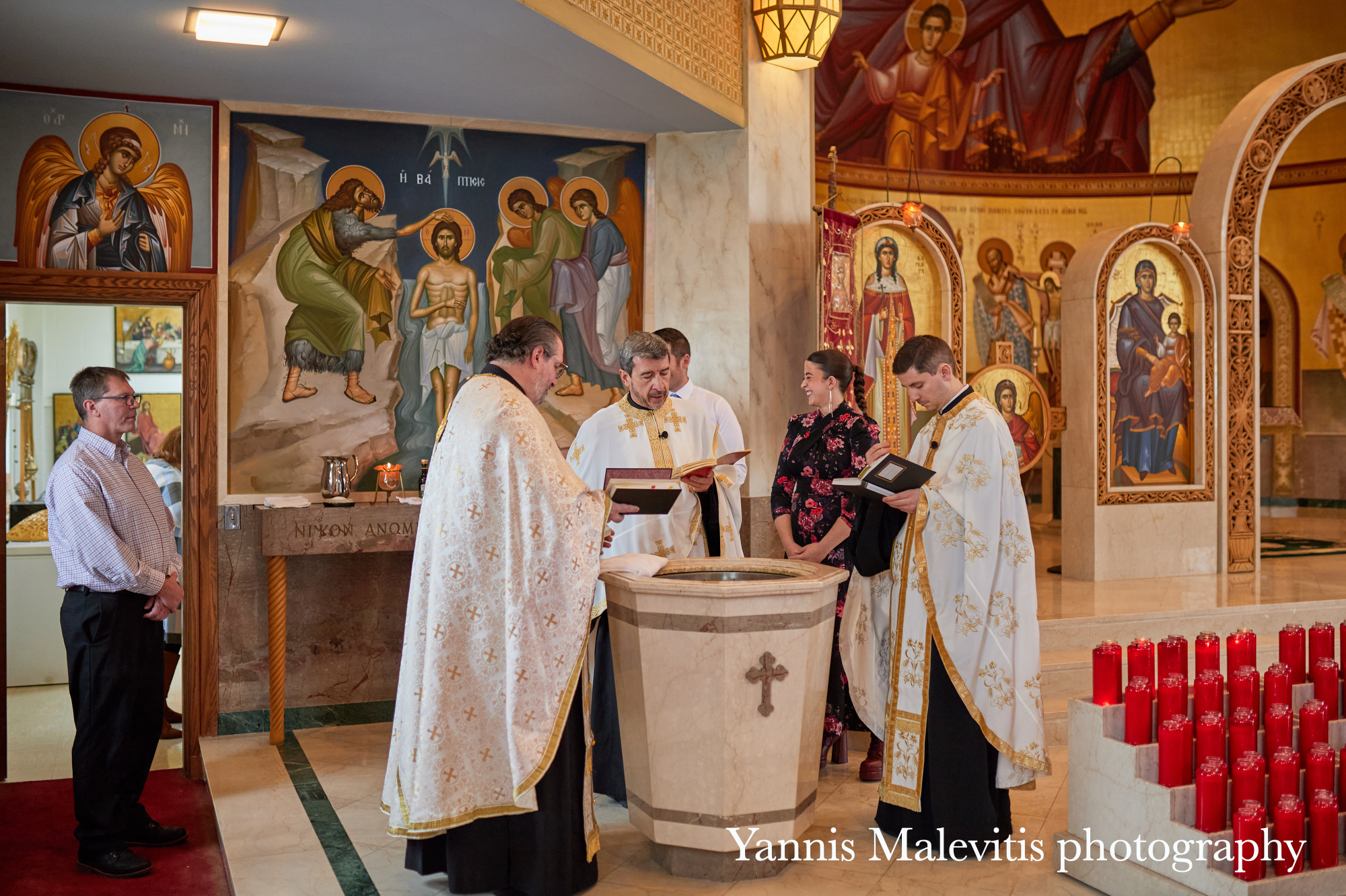
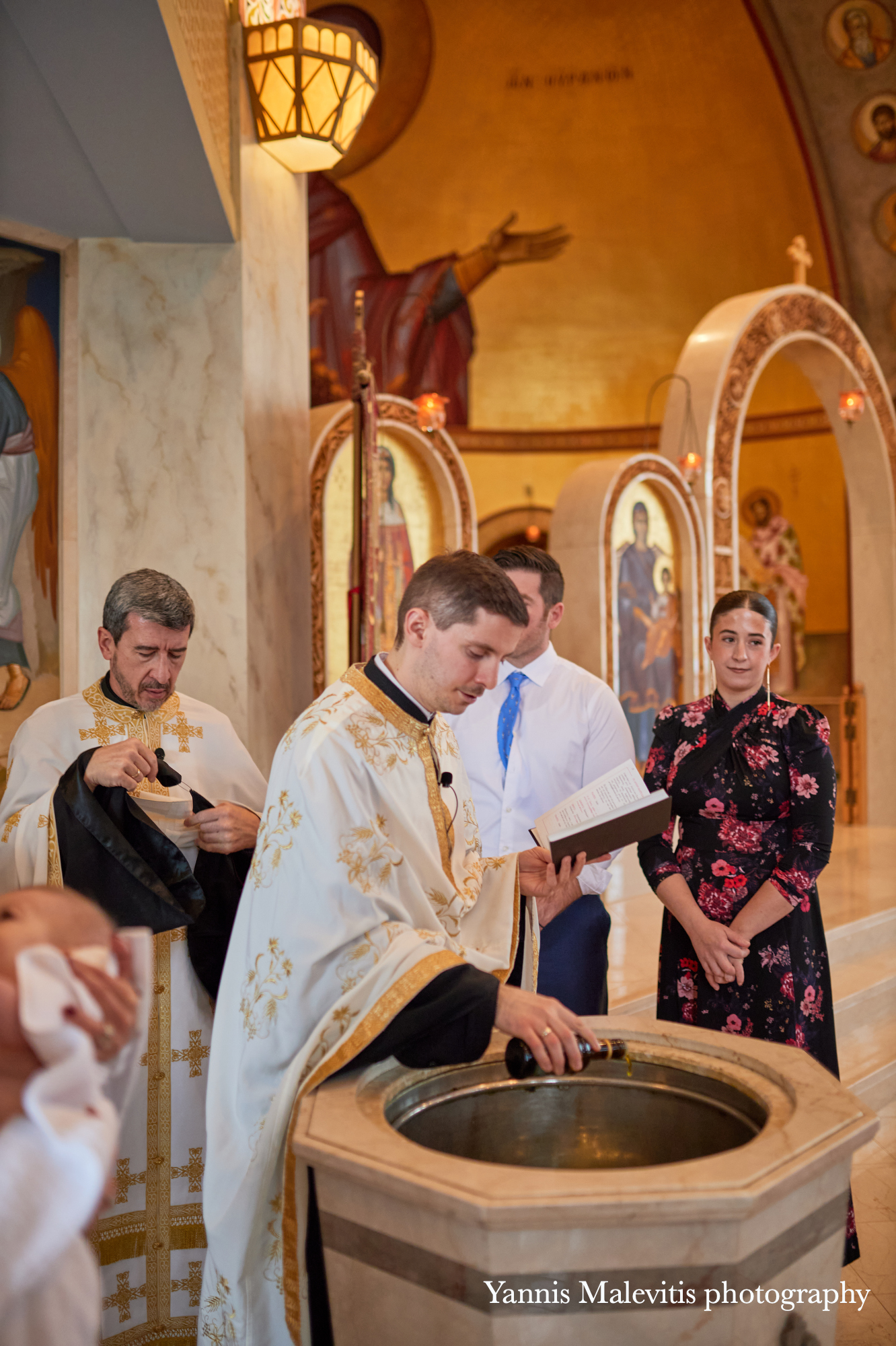
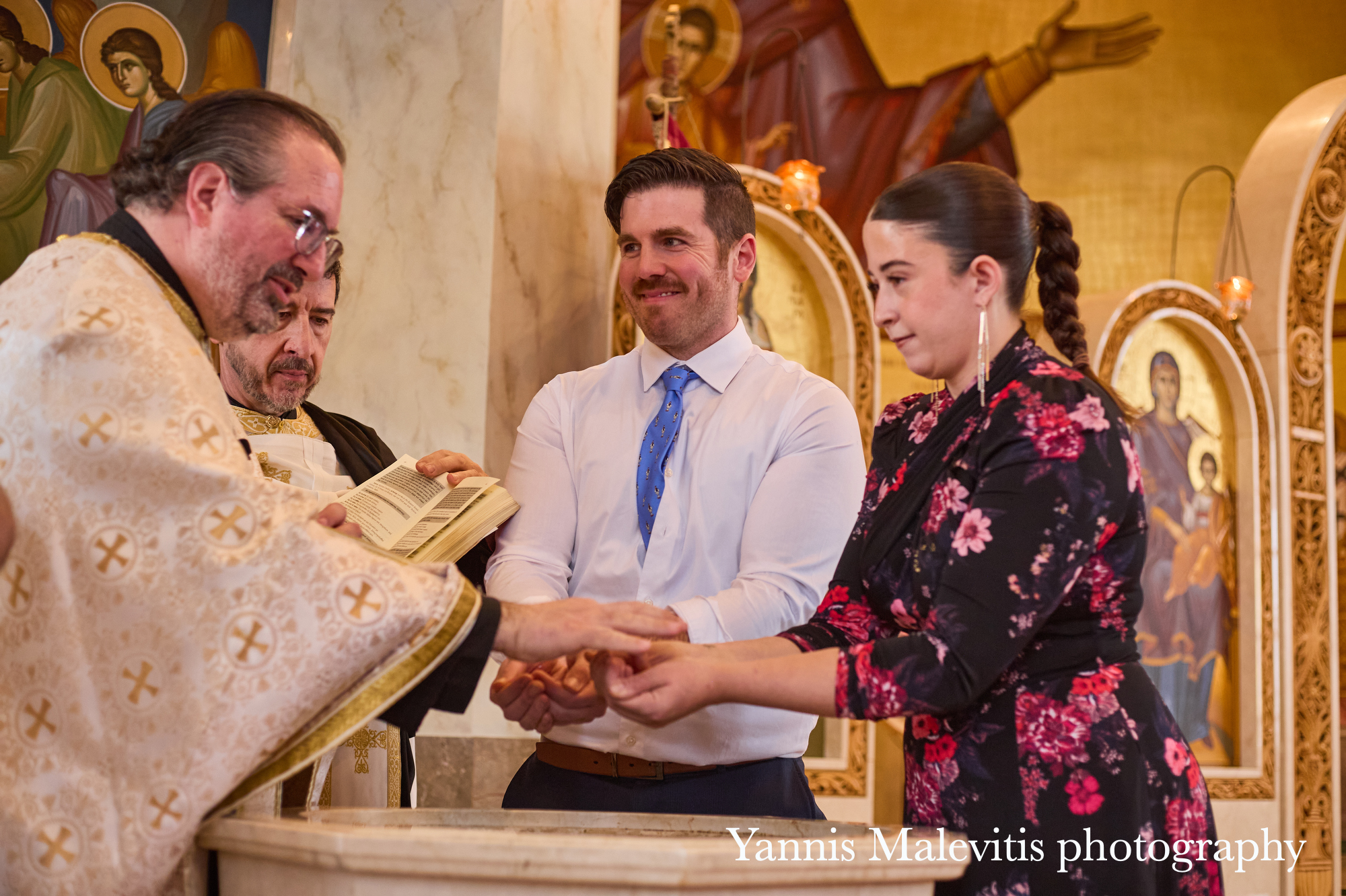
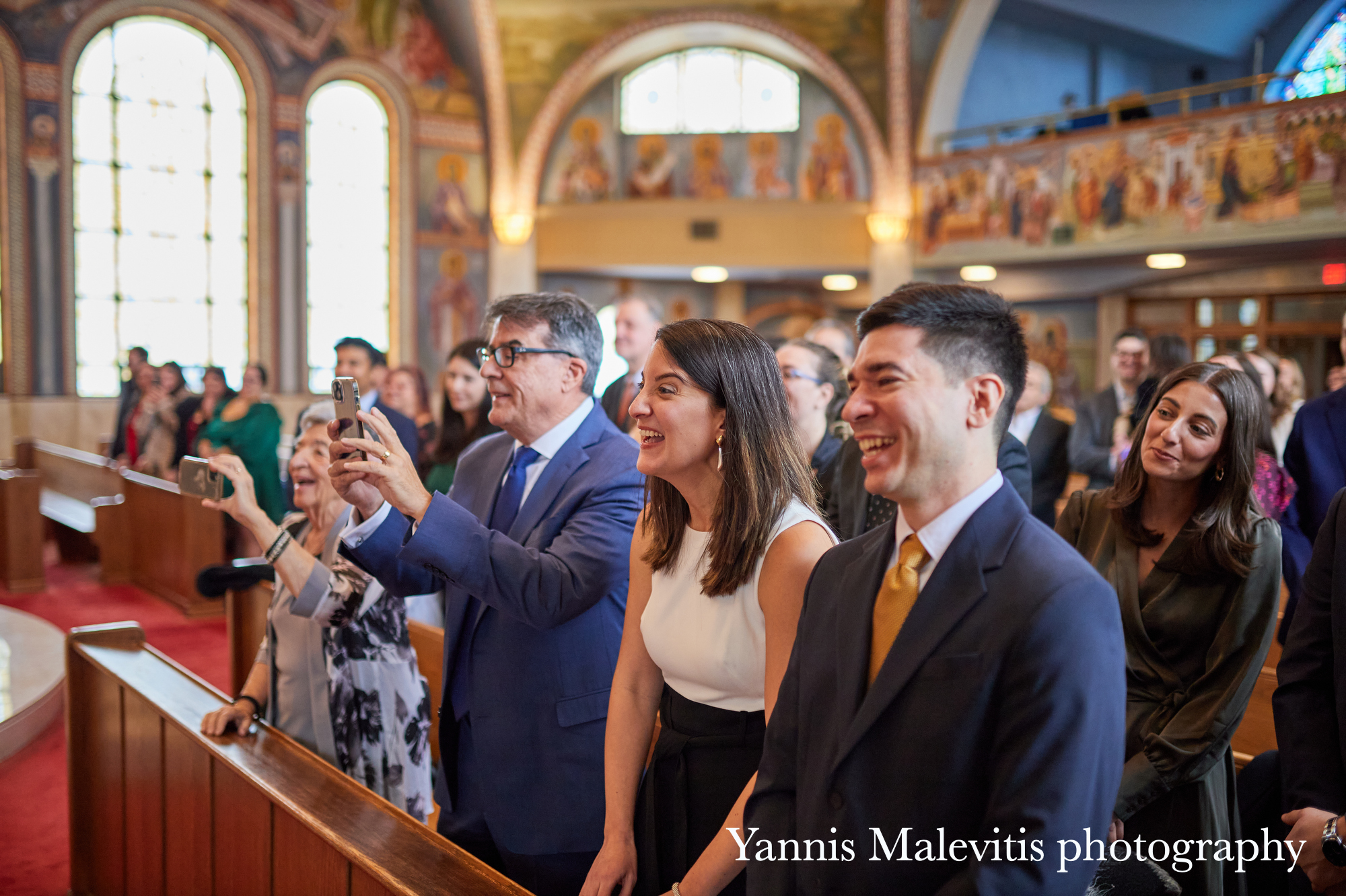
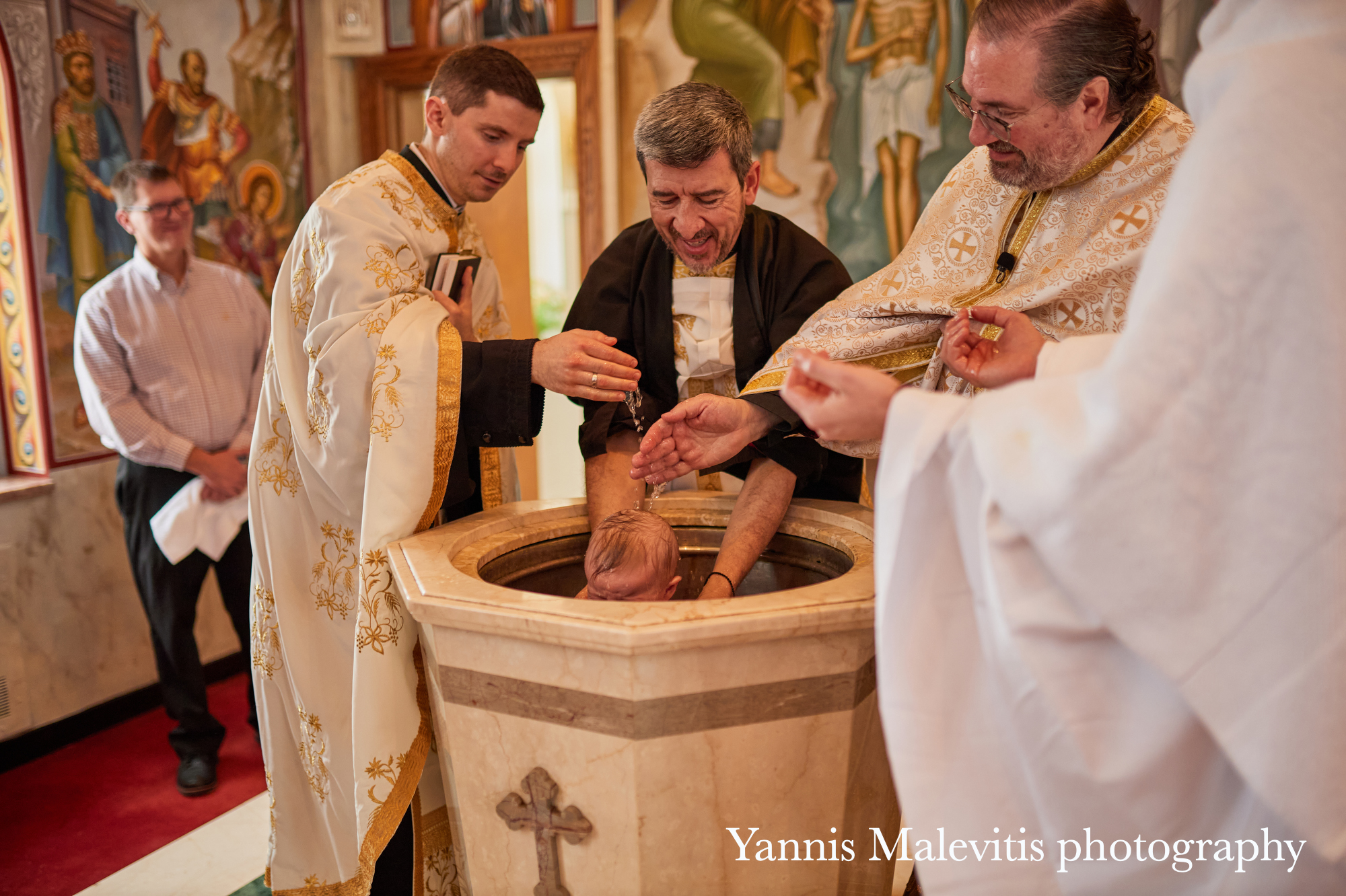
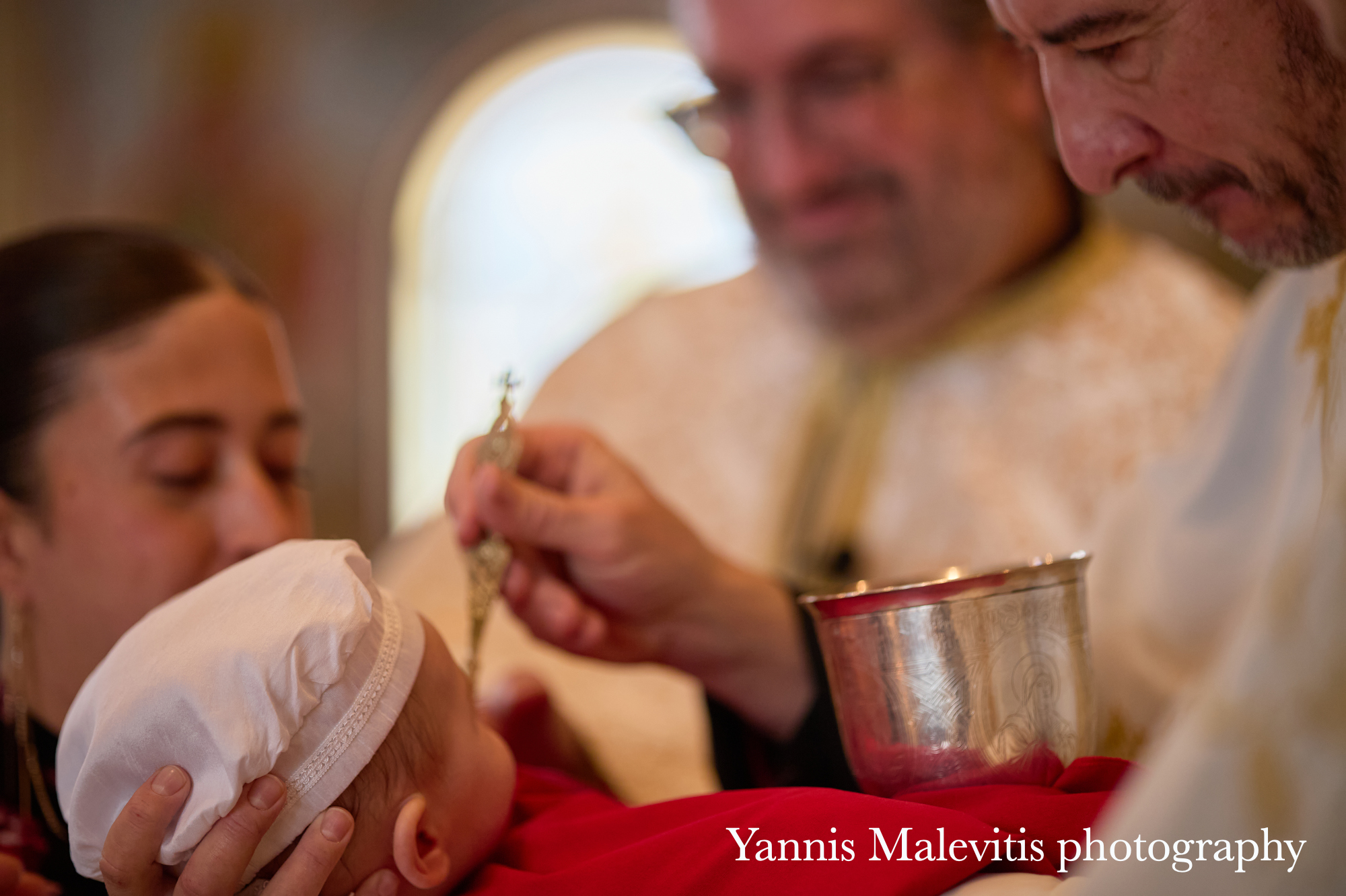
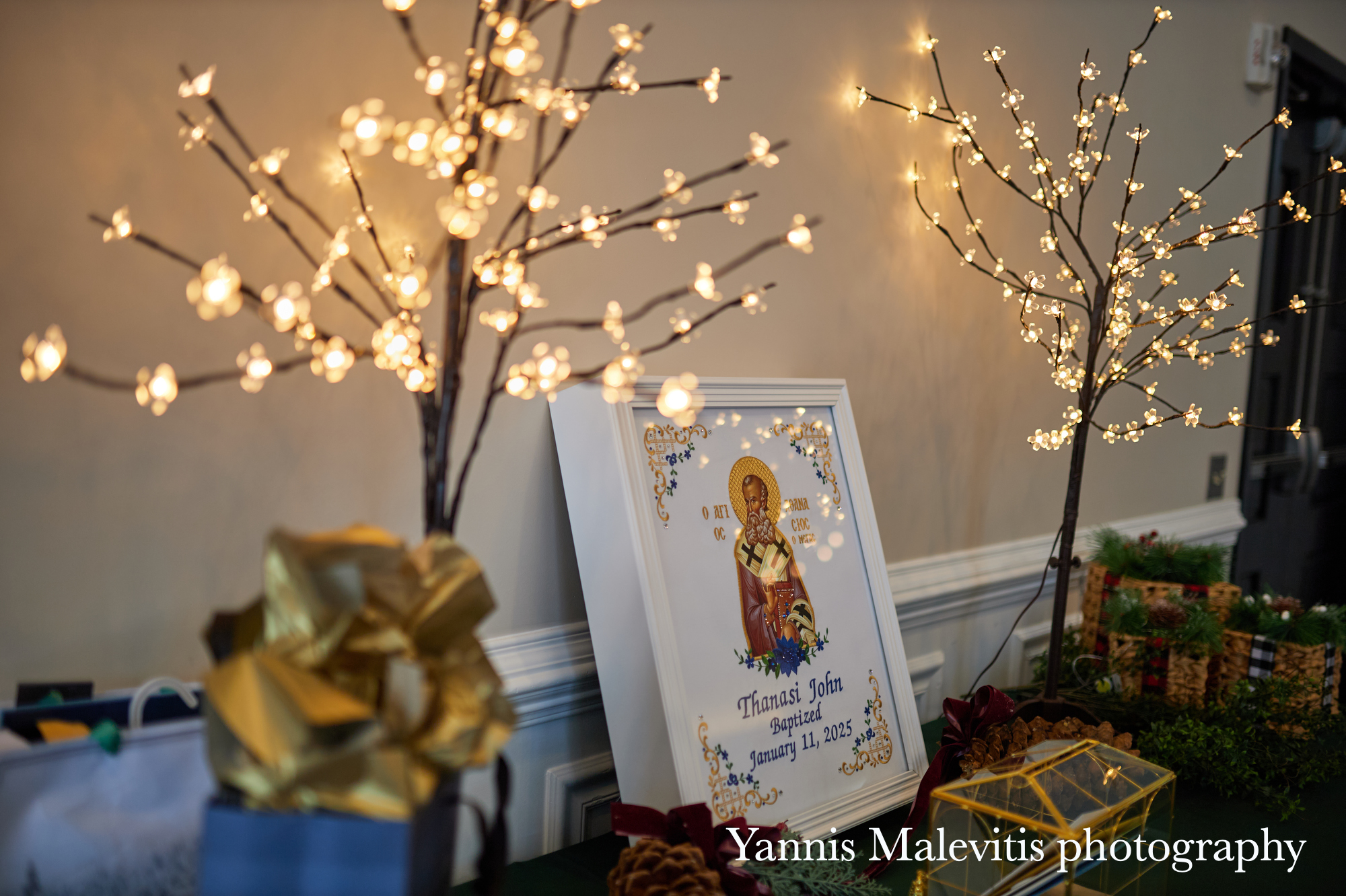
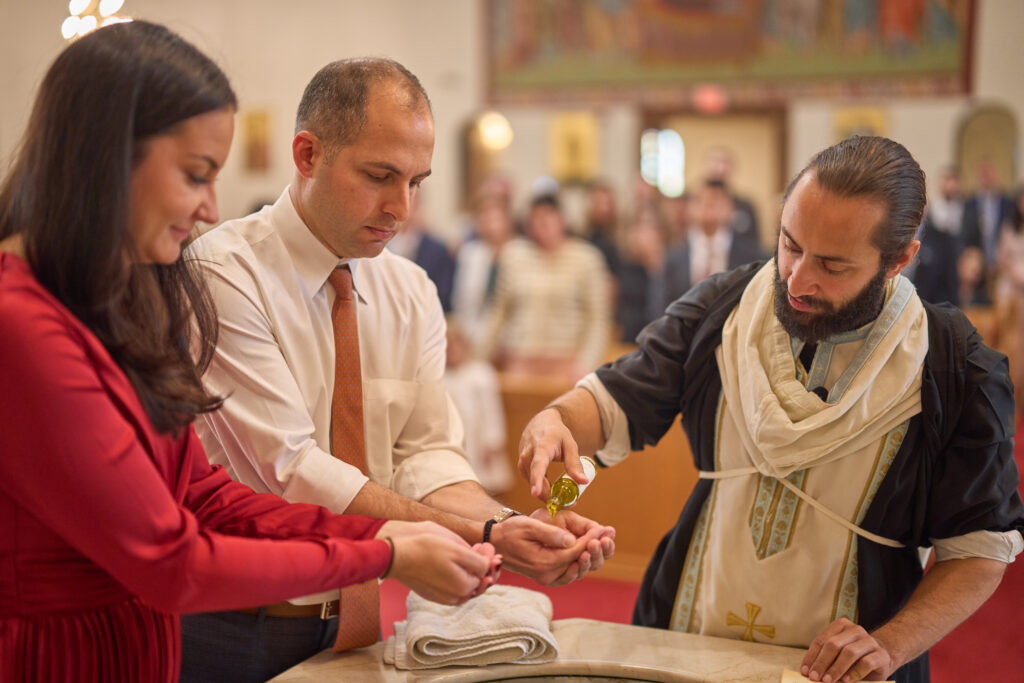
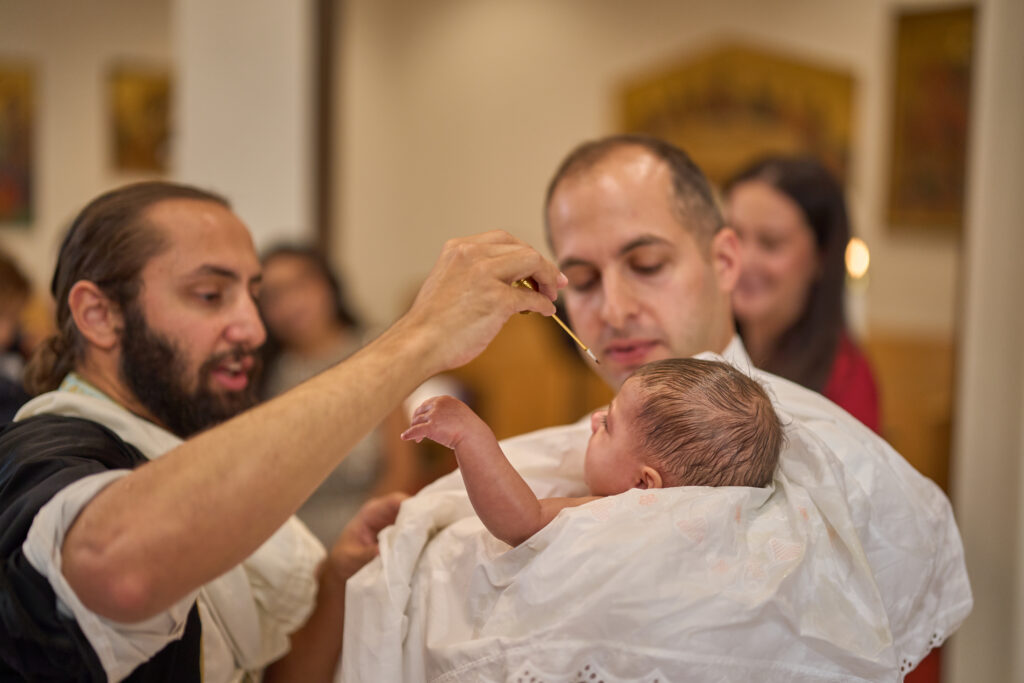
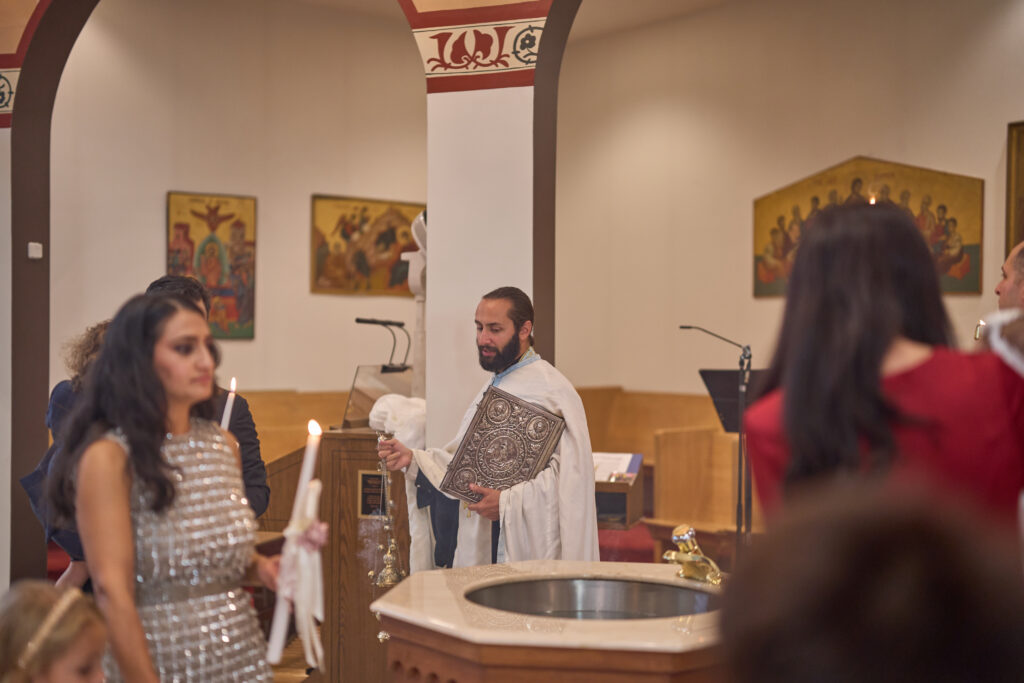
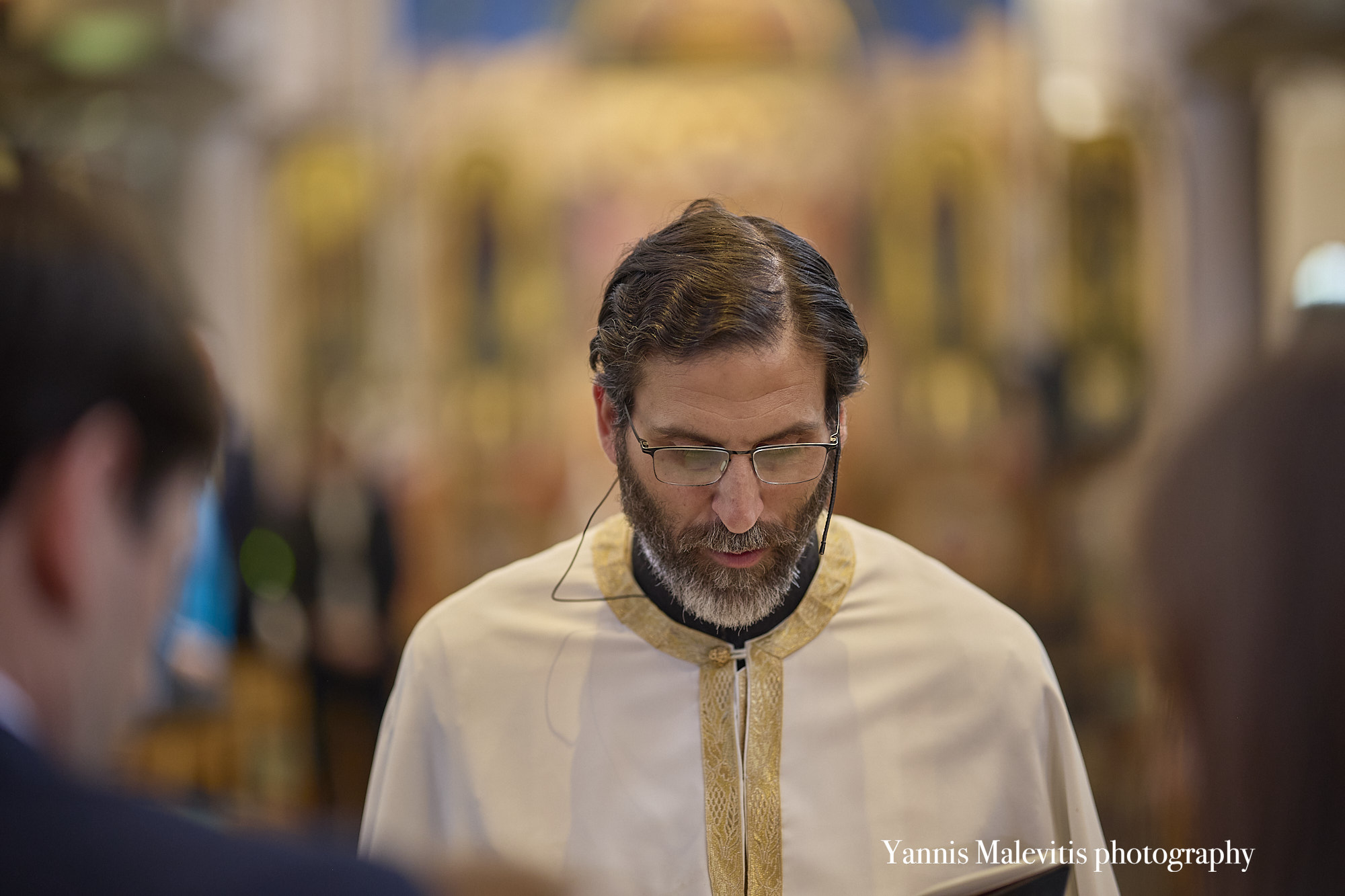
The baptism of Athanasios at Saint Barbara Greek Orthodox Church in Orange, Connecticut, was filled with these genuine interactions. While the prayers, anointing, and immersion remain the heart of the sacrament, the photographs below celebrate the relationships that give the day its warmth and meaning.
Rather than directing every interaction, I quietly observe the people around me, allowing moments to unfold naturally. My goal is to preserve not only what happened during the service, but also how it felt to be present with family and friends as they welcomed a child into the life of the Church.
The photographs that follow are a selection from this beautiful celebration of faith, family, and Greek Orthodox tradition.
A Greek Orthodox Christening is one of the most meaningful moments in a family’s life. It is not simply a celebration or a family gathering—it is the beginning of a child’s spiritual journey within the Orthodox Church.
As both a Greek Orthodox Christian and a photographer, I approach every Christening with deep respect for the sacrament, the traditions of the Church, and the emotions shared between parents, grandparents, godparents, and close family members.
My goal is to document the ceremony honestly and unobtrusively. Rather than directing every moment, I quietly observe the relationships, gestures, and expressions that naturally unfold throughout the day. Years later, these unplanned moments often become the photographs families treasure the most.
Before the Ceremony
I usually arrive at the church 30 to 45 minutes before the ceremony begins. This gives me time to observe the church, study the available light, and photograph the architecture before guests arrive.
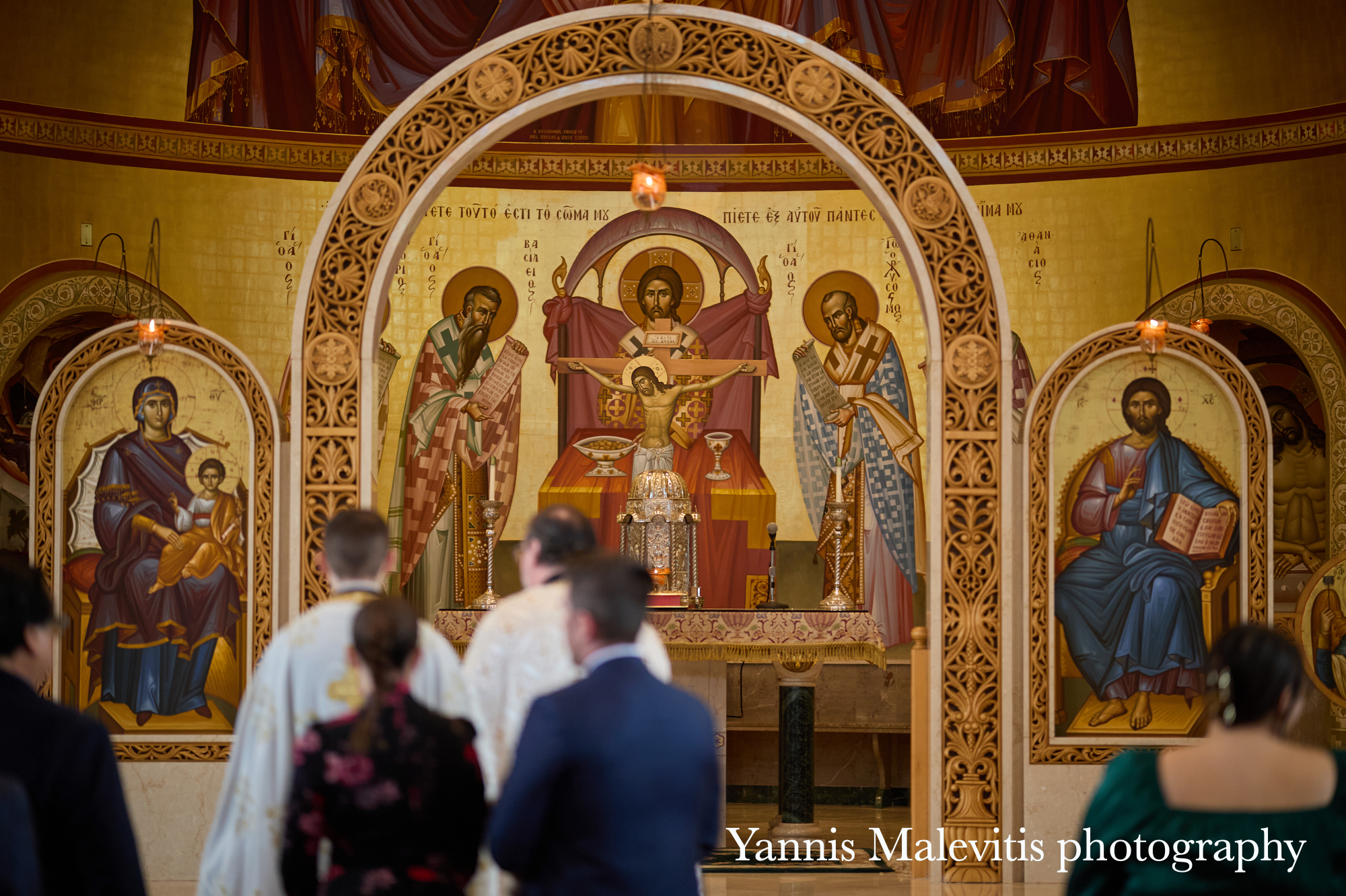
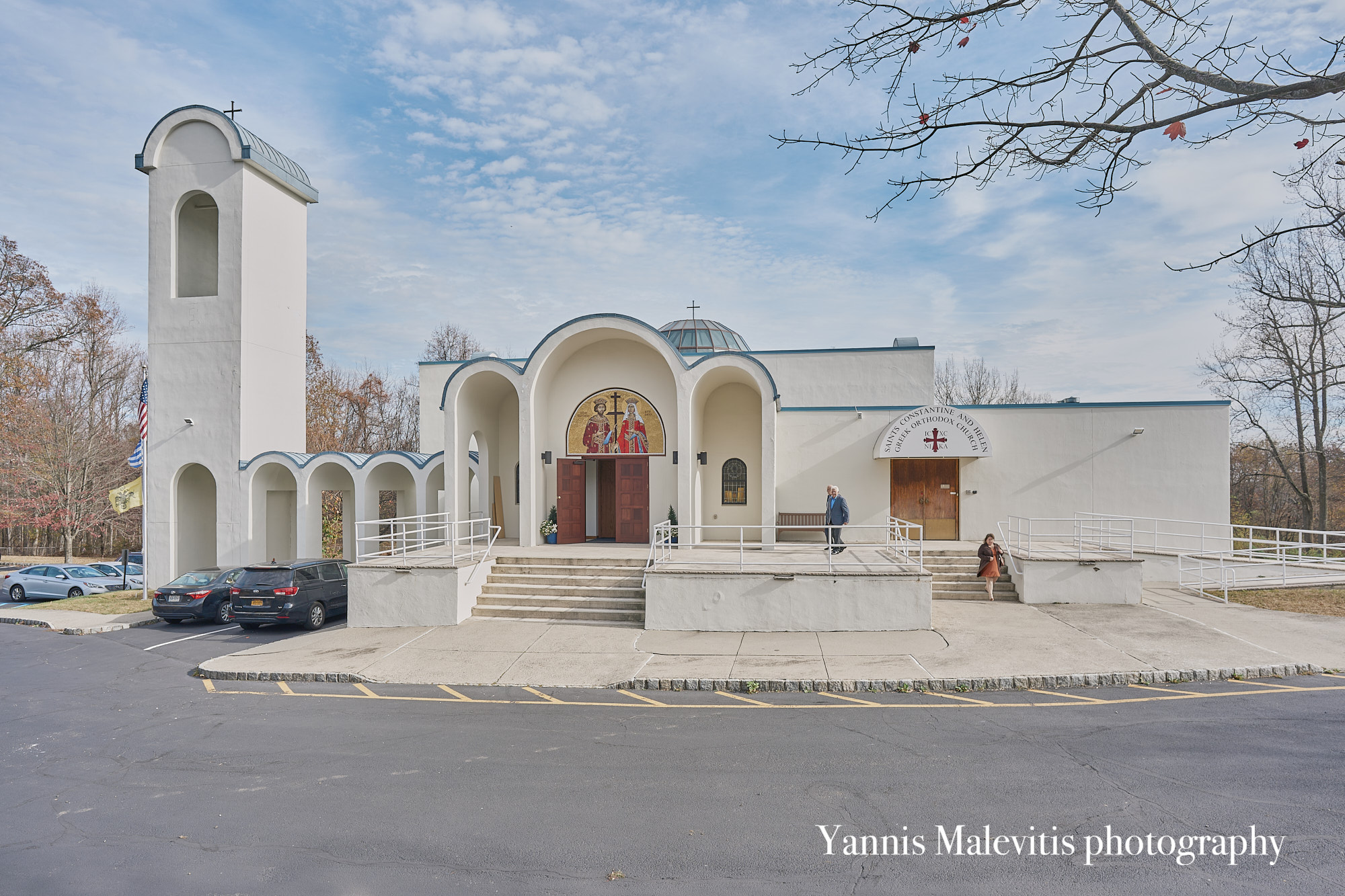
Having photographed numerous Greek Orthodox churches throughout New York and beyond, I enjoy incorporating the beauty of each church into the visual story of the Christening. The architecture reminds families where this important milestone took place and helps place the ceremony within its sacred setting.
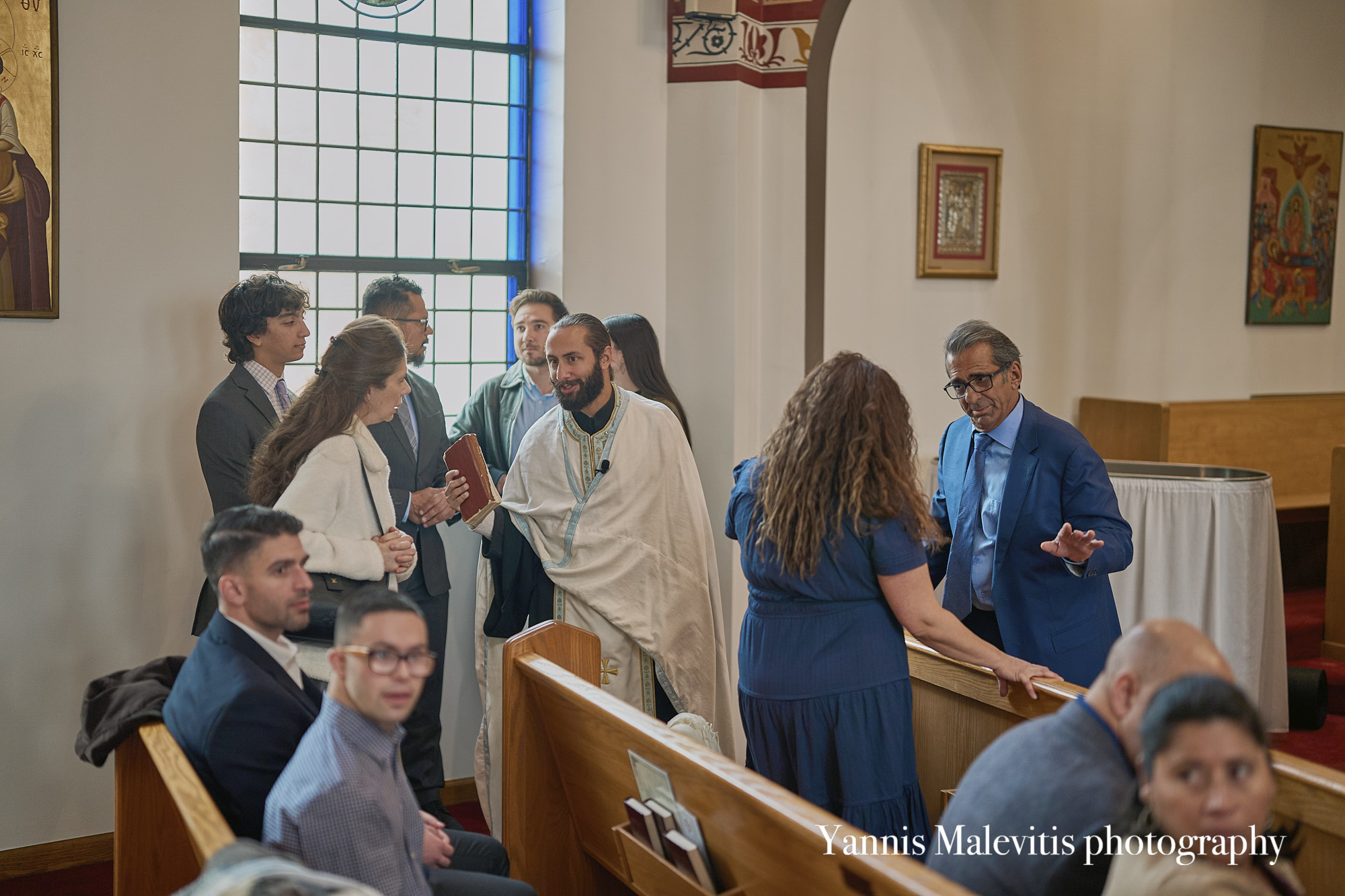
As family members begin arriving, I quietly walk through the church looking for genuine moments. Parents make final preparations, grandparents greet relatives they have not seen in years, children explore the church, and the godparents prepare themselves for their important role.
These quiet moments often become some of my favorite photographs because they capture the anticipation before the ceremony begins.
The Renunciation and Acceptance
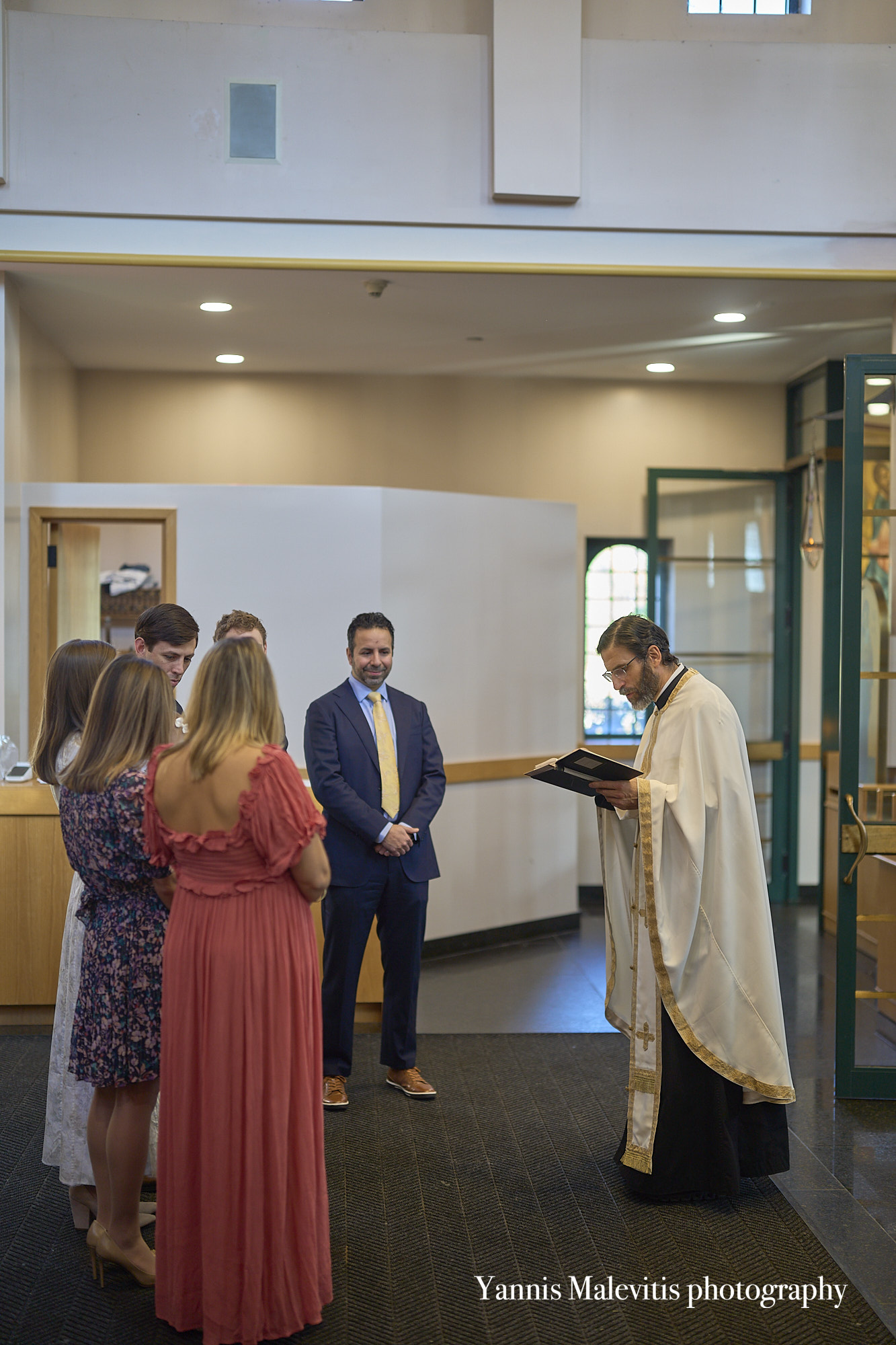
The Christening begins in the narthex of the church.
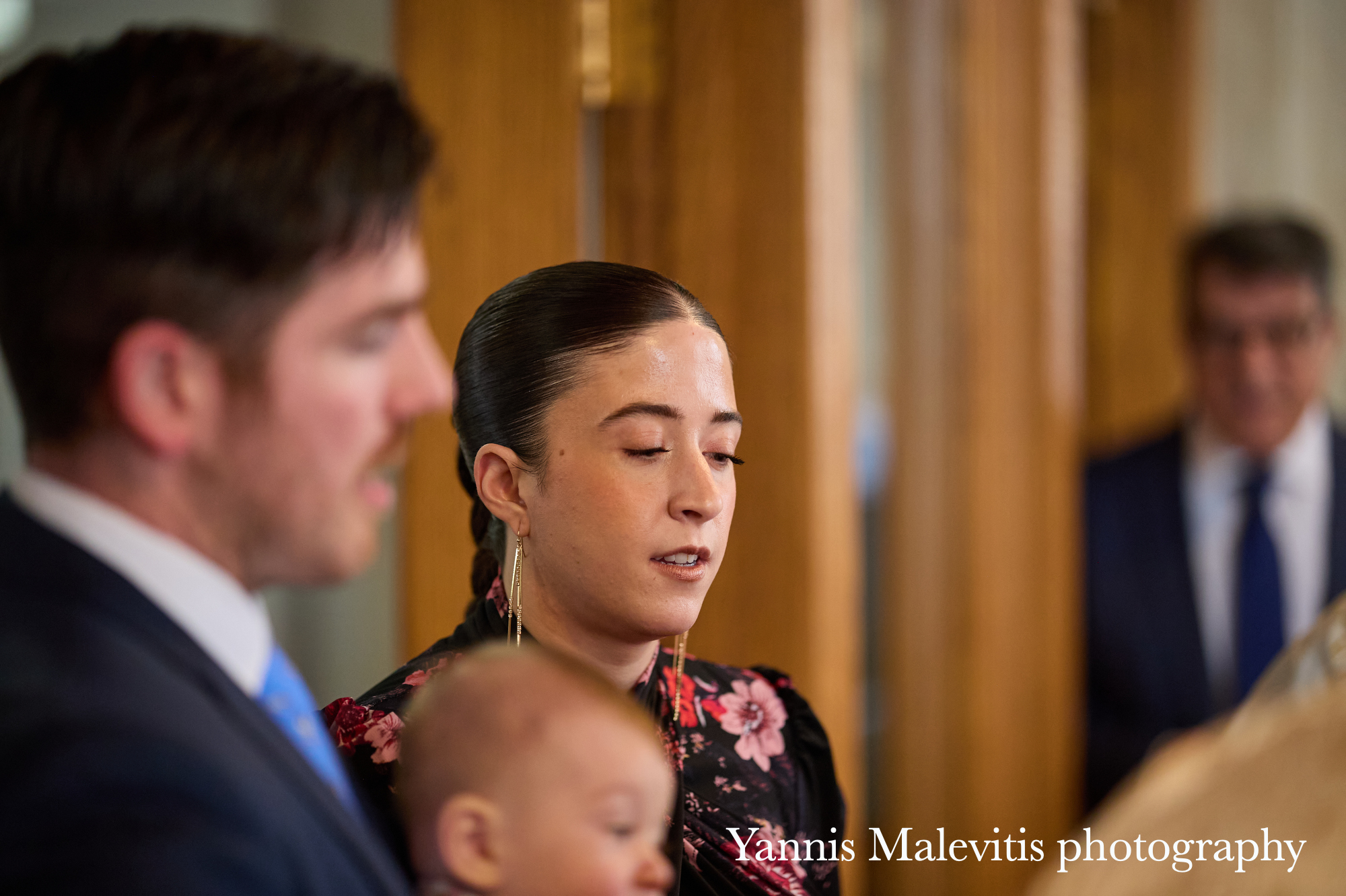
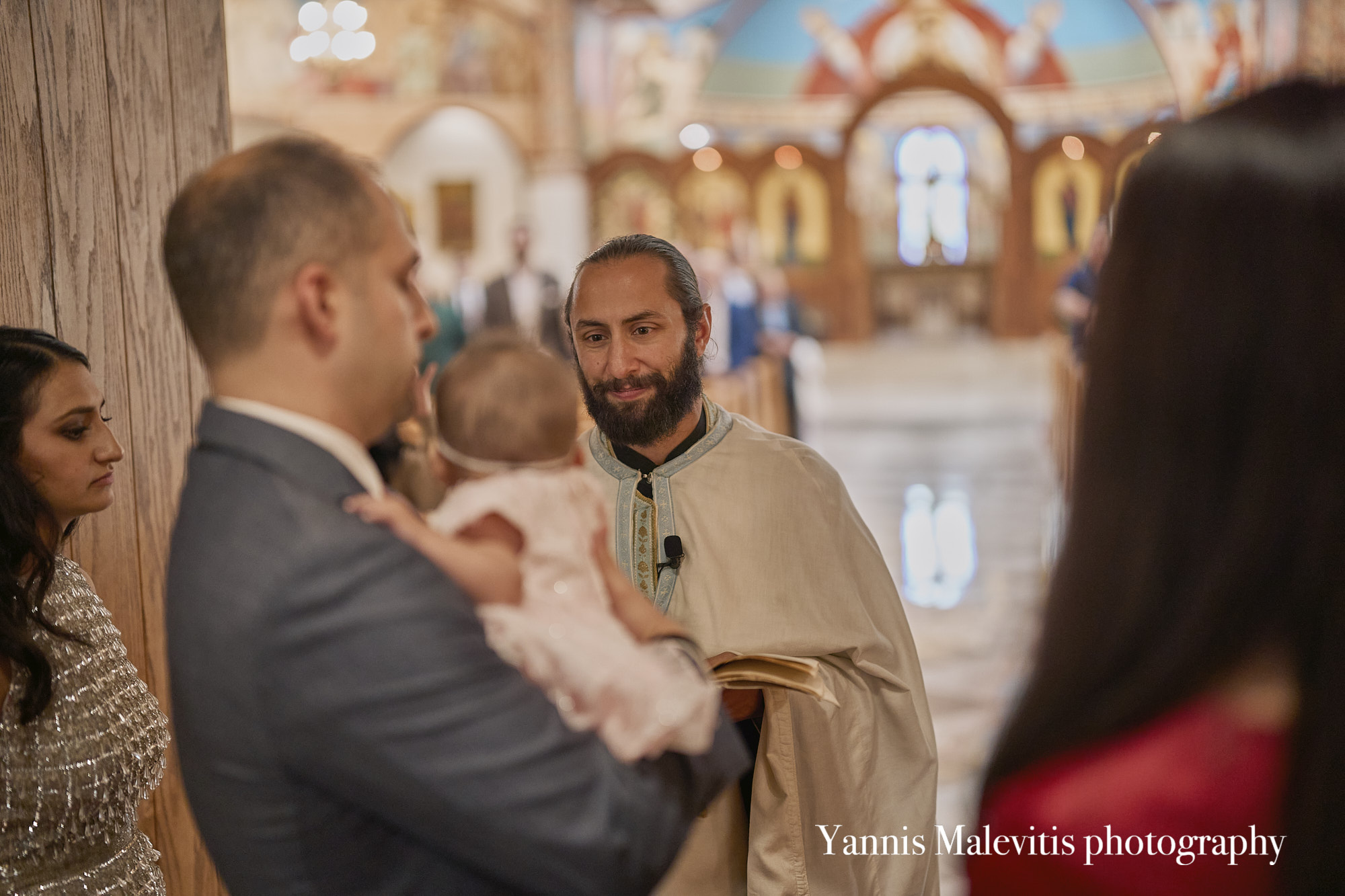
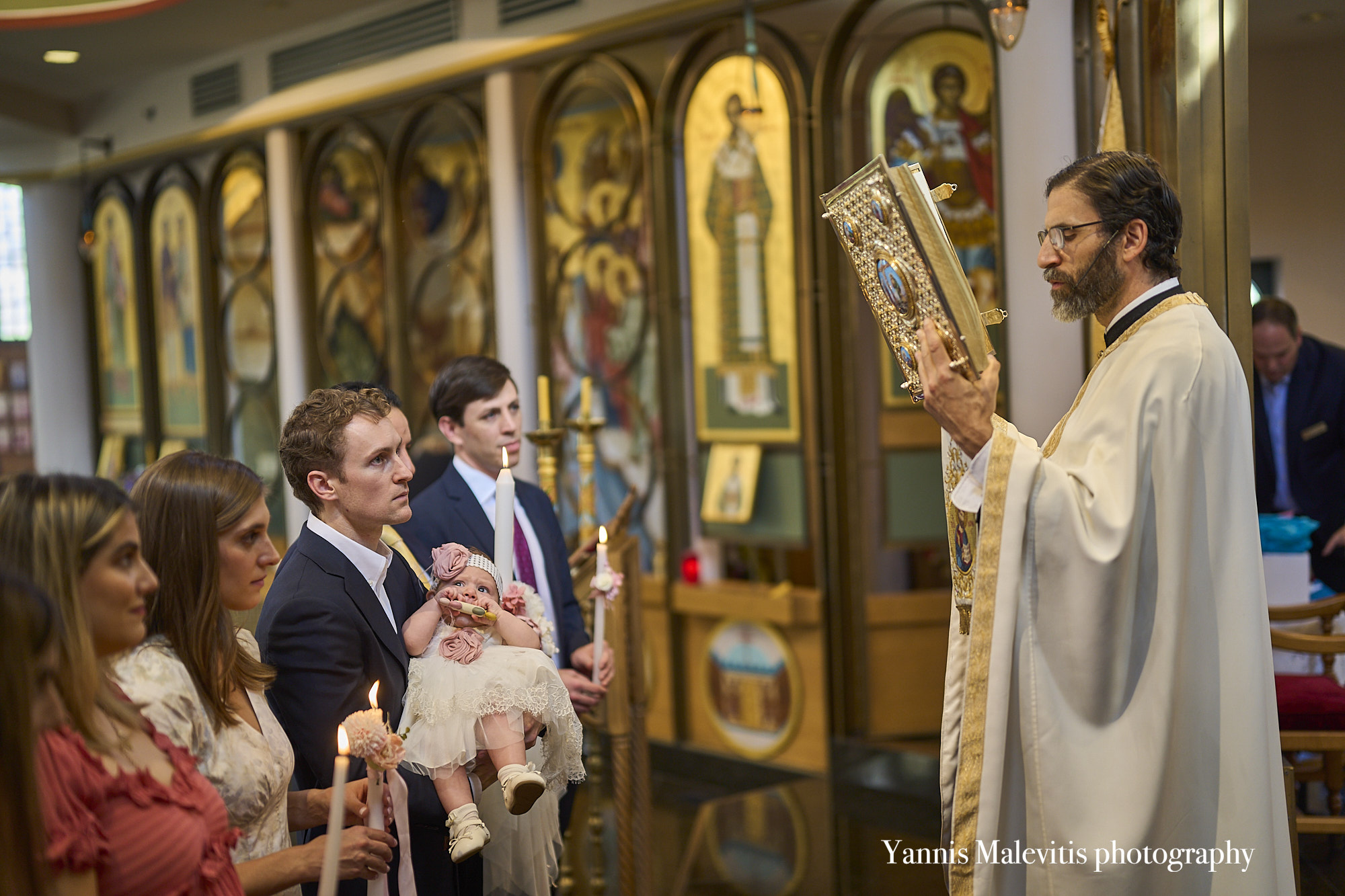
The godparent, known in Greek as the Nouno or Nouna, stands with the child while the priest begins the prayers of renunciation and acceptance.
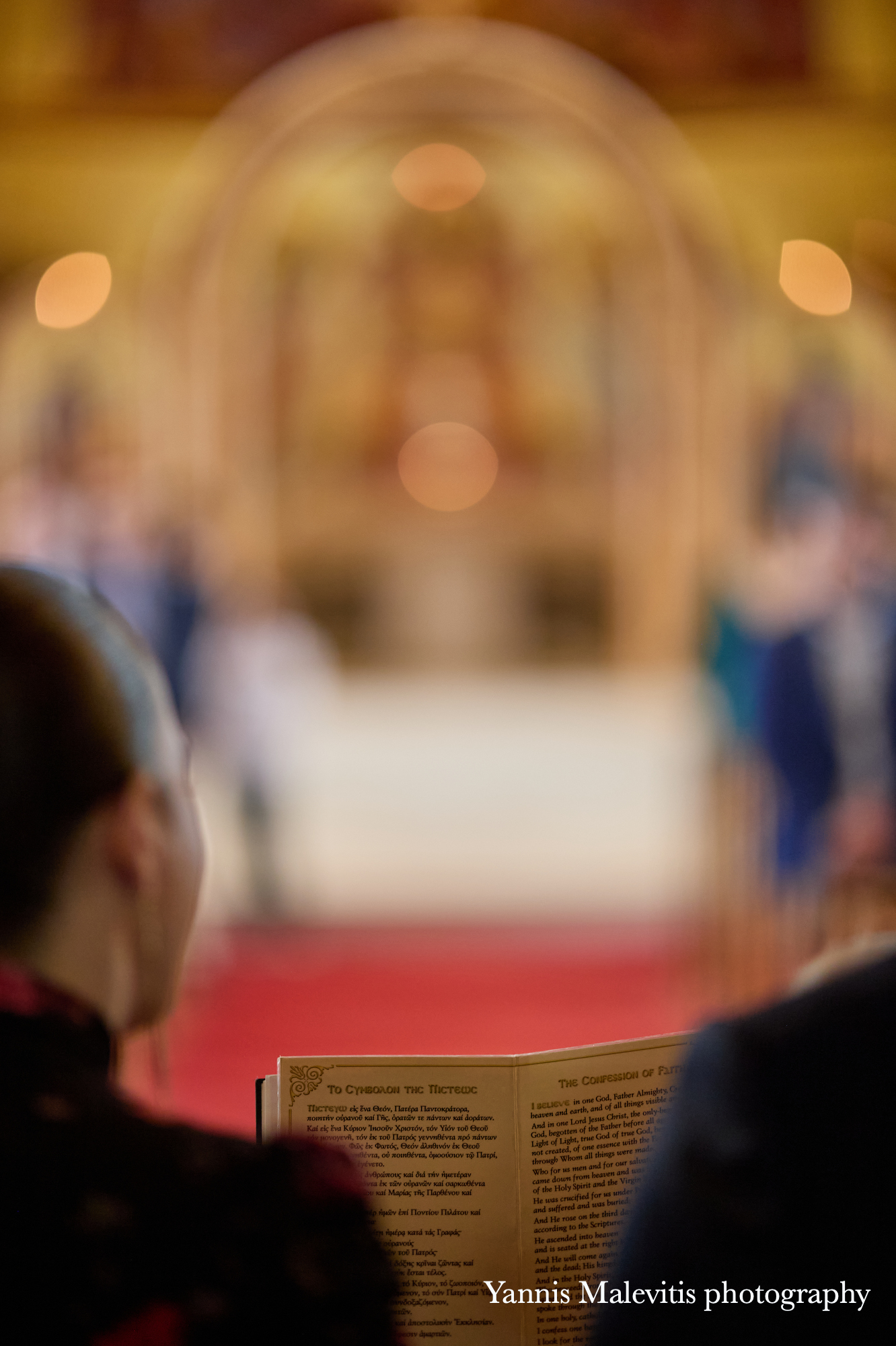
Facing west, the godparent renounces Satan and all his works. Afterwards, turning toward the east, the godparent professes faith in Christ and recites the Nicene Creed, also known as the Symbol of Faith.
While these prayers are taking place, I pay close attention not only to the priest and the godparent but also to everyone witnessing the ceremony.
A mother’s smile.
A grandfather quietly observing.
A grandmother wiping away tears.
A sibling watching with curiosity.
These expressions help tell the complete story of the Christening.
Because I work quietly and respectfully, these moments unfold naturally without interruption.
The Baptism
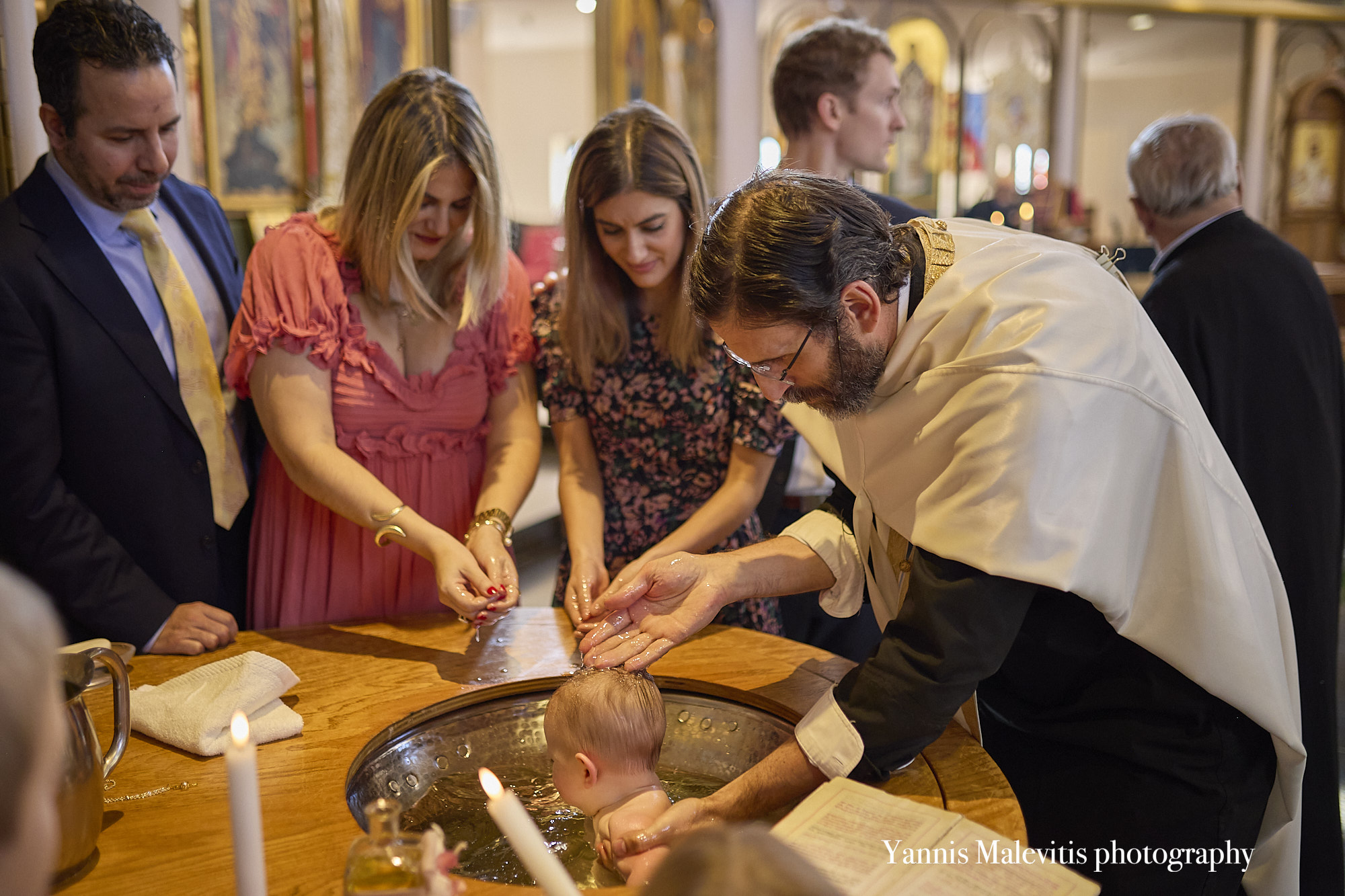
The baptism itself is the heart of the ceremony.
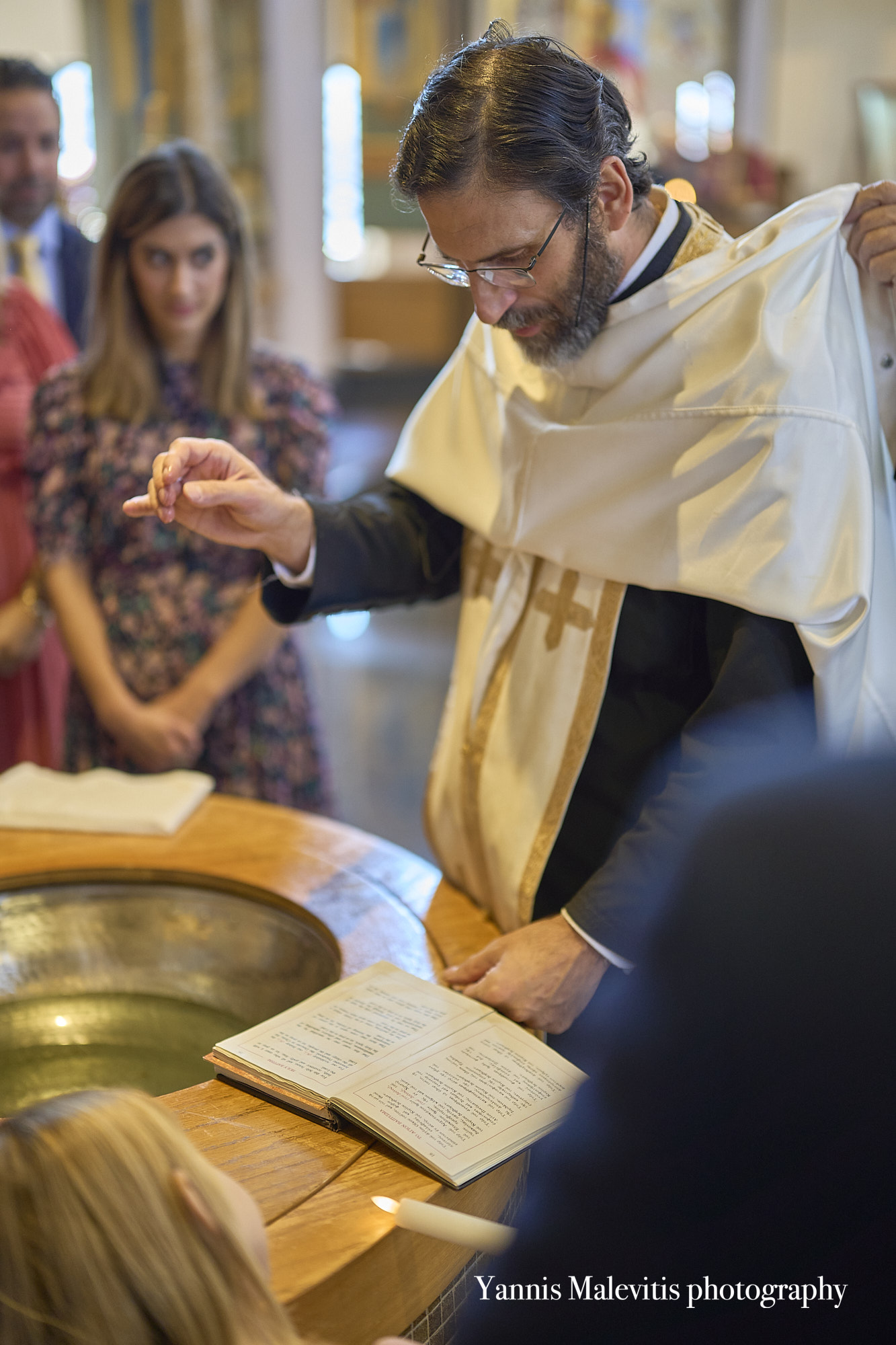
After blessing the water and the oil, the priest immerses the child three times in the baptismal font in the name of the Father, the Son, and the Holy Spirit.
For many families this is the most emotional part of the service.
Some children smile.
Others cry.
Parents often experience a mixture of joy, relief, and emotion as they witness this important moment in their child’s life.
Rather than remaining in one position, I quietly move throughout the church whenever appropriate, always respecting the priest and the traditions of the Church. My objective is to preserve the ceremony without distracting anyone from the sacrament itself.
Chrismation
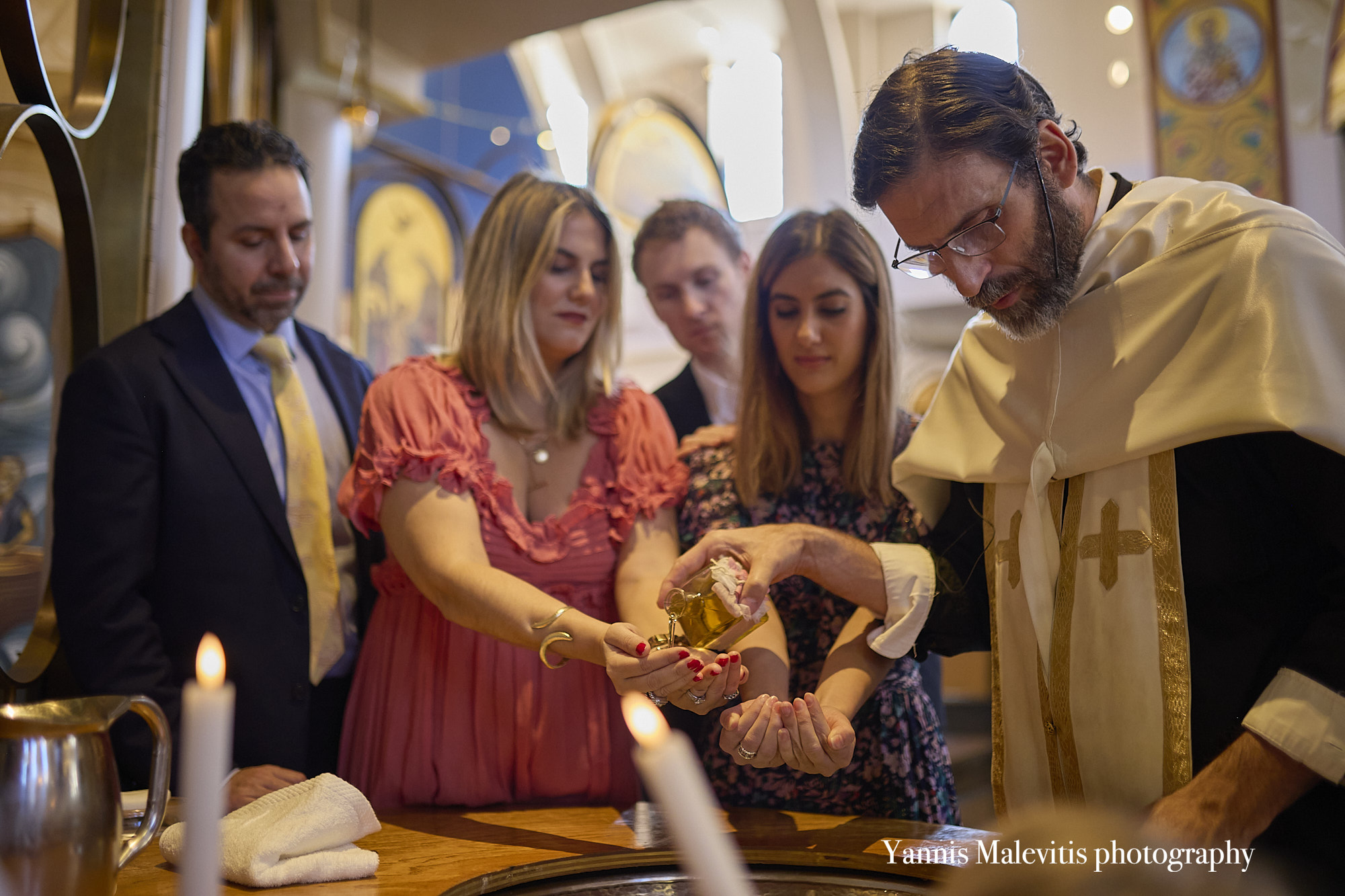
Immediately following the baptism, the priest anoints the newly baptized child with Holy Chrism.
Each anointing represents the gift of the Holy Spirit and completes the sacrament of initiation into the Orthodox Church.
Although this portion of the service is quieter than the baptism itself, it often contains beautiful moments of concentration, tenderness, and reflection.
I continue documenting both the ceremony and the reactions of the family as they witness each stage of the service.
The Tonsure
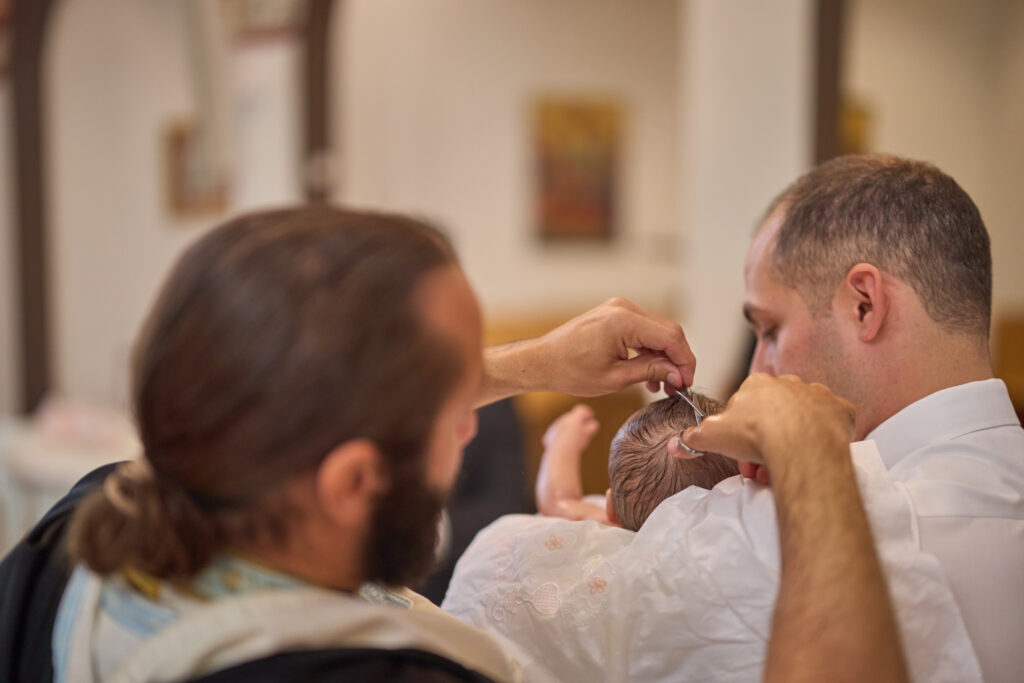
One of the quieter moments of the ceremony is the tonsure.
The priest cuts small locks of the child’s hair as a symbolic offering to God.
Because this happens quickly, many guests hardly notice it.
Photographically, however, it completes the story of the sacrament and deserves to be documented with the same care as every other stage.
The Procession Around the Font
The priest, the godparent, and the child walk around the baptismal font while hymns are sung.
This joyful procession symbolizes the child’s entrance into the life of the Church.
From a photographic perspective, I enjoy showing both the movement of the ceremony and the expressions of the family gathered around the font.
These photographs often communicate the joy of the celebration more effectively than formal portraits alone.
Family Portraits
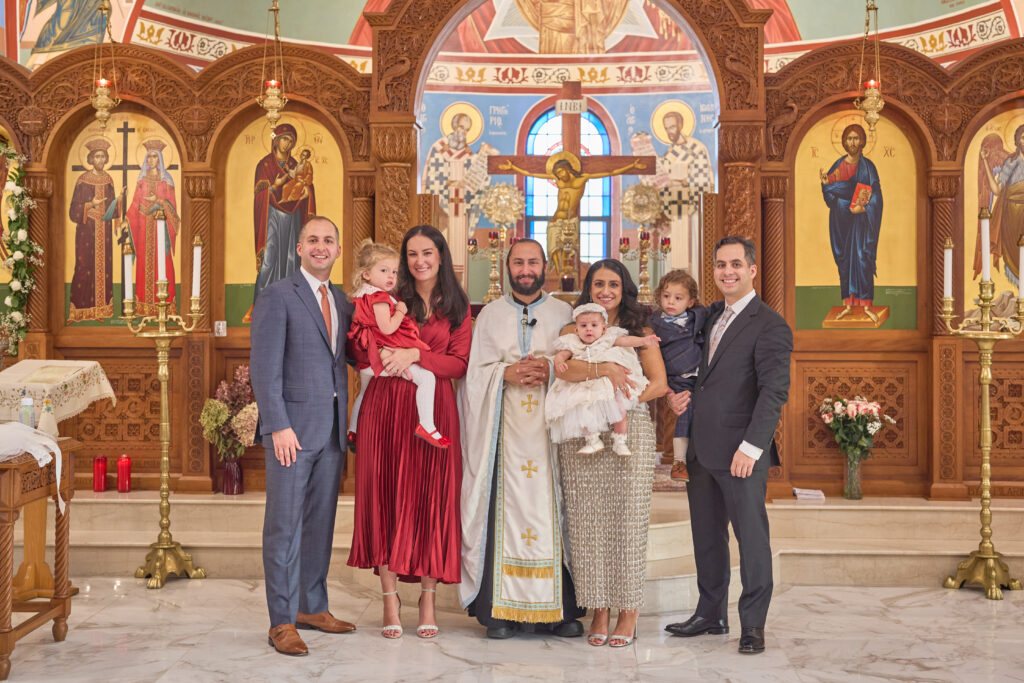
After the ceremony, I photograph family portraits.
Although these photographs are more traditional than the documentary images captured during the service, I still encourage natural interaction whenever possible.
Instead of asking everyone simply to look at the camera, I often encourage parents to look at their child, grandparents to interact with the family, or siblings to enjoy the moment together.
These small interactions create portraits that feel genuine rather than overly posed.
The Christening Reception
For many families, the celebration continues with a Christening reception.
This is where children begin playing, relatives relax, grandparents embrace one another, and conversations continue long after the ceremony has ended.
Some of the happiest photographs of the day are created during the reception because everyone is able to celebrate together without the formality of the church service.
I continue working unobtrusively, documenting authentic moments rather than directing every interaction.
My Documentary Approach
People often ask what distinguishes my approach to photographing a Greek Orthodox Christening.
The answer is simple.
I believe the strongest photographs are not created by directing every moment.
They are discovered by patiently observing relationships.
Throughout the ceremony I continually look beyond the obvious.
While the priest performs the sacrament, I may also notice the grandmother quietly praying, the father smiling with pride, or the godparent comforting the child.
These unplanned moments reveal the emotional story of the day.
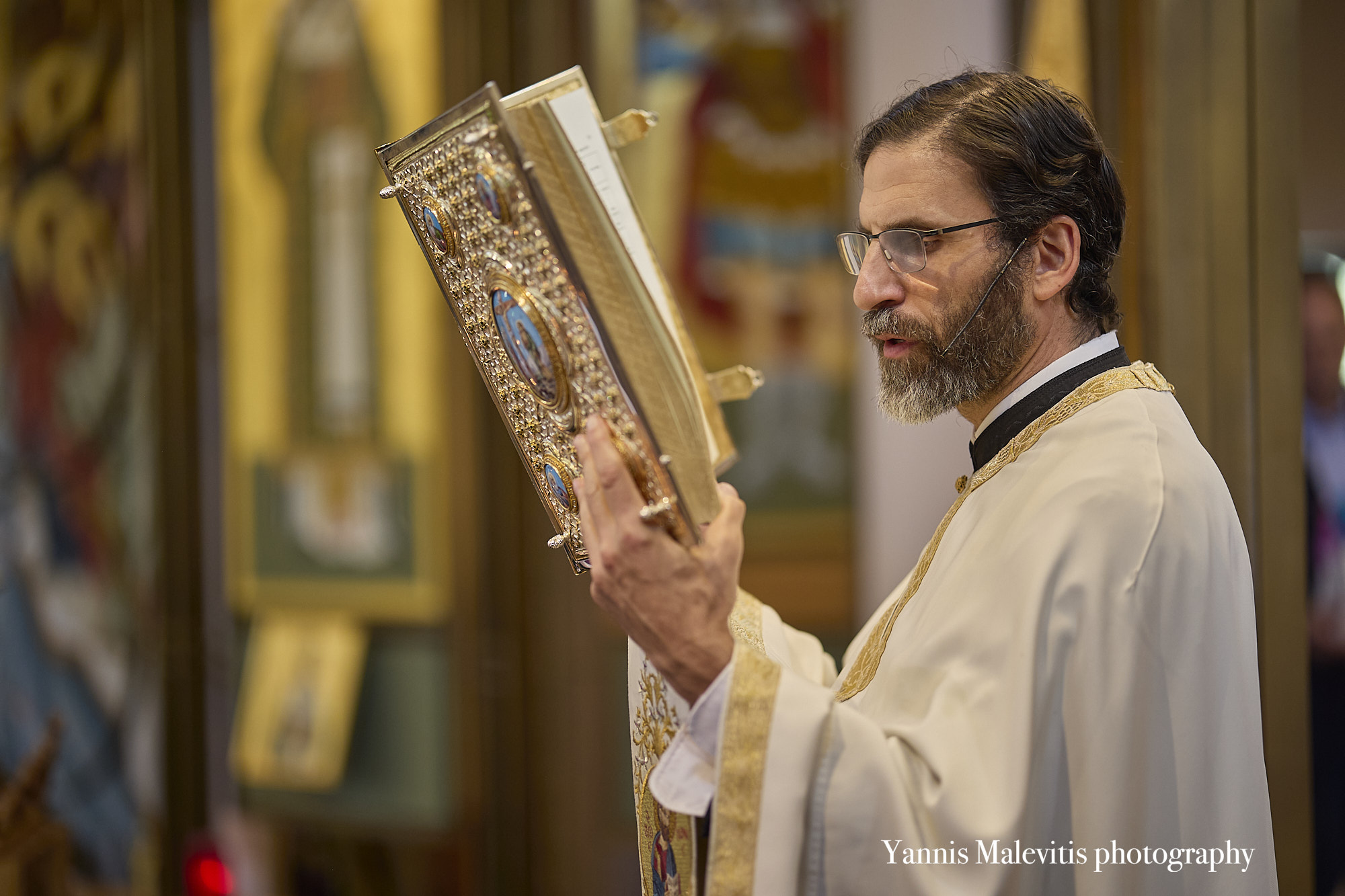
As a Greek Orthodox Christian, I also understand the significance of the traditions and know when important moments are about to happen. This allows me to anticipate photographs while remaining respectful of the ceremony and the clergy.
My goal is not simply to record the events of the day but to preserve how it felt to be present.
Planning Your Greek Orthodox Christening Photography
Every parish has its own customs and guidelines, so I always recommend speaking with your priest before the day of the Christening. Some churches have preferences regarding where photographers may stand or when family portraits can be taken.
To make the experience as relaxed as possible, I usually arrive 30 to 45 minutes before the ceremony begins. This gives me time to photograph the church, document your family’s arrival, and introduce myself to the priest before the service.
If you are planning a reception after the ceremony, I also recommend allowing enough time for family portraits before everyone leaves for the celebration.
Frequently Asked Questions
How early should the photographer arrive?
I usually arrive 30 to 45 minutes before the ceremony begins. This allows me to photograph the church, observe the light, and document family members as they arrive.
How long does a Greek Orthodox Christening usually last?
Most ceremonies last between 45 minutes to one hour, depending on the parish and the traditions followed.
Should family portraits be taken before or after the ceremony?
I generally recommend taking them after the ceremony when everyone is more relaxed and there is no concern about delaying the service. If we have the time we make a few family portraits before the ceremony.
Can photographers move during a Greek Orthodox Christening?
Every parish has its own customs. Before the ceremony I always introduce myself to the priest and follow the church’s guidelines. My goal is to work quietly and respectfully without distracting from the sacrament.
What is the role of the godparent during a Greek Orthodox Christening?
The godparent (Nouno or Nouna) plays an important spiritual role in the child’s life. During the ceremony the godparent participates in the prayers of renunciation and acceptance, recites the Nicene Creed, and stands with the child throughout the sacrament.
Final Thoughts
A Greek Orthodox Christening is far more than a family celebration.
It is a sacred milestone that brings together faith, family, tradition, and community.
Years from now, I hope these photographs will remind families not only of what happened during the ceremony but also of how they felt while witnessing one of the most meaningful days in their child’s life.
For me, that is the true purpose of documentary photography.
If you are planning a Greek Orthodox Christening in New York or the surrounding region, I would be honored to document your family’s celebration with a respectful documentary approach that preserves both the traditions of the Orthodox Church and the authentic moments shared with those you love most.
Every Greek Orthodox church has its own character.
The architecture, the way natural light enters the sanctuary, the traditions of the parish, and the relationships within the community all shape the experience of a baptism.
As a parishioner of Holy Resurrection Greek Orthodox Church in Brookville, New York, I have the privilege of photographing baptisms in a church that has become an important part of my own spiritual life. Fr. Panteleimon, the parish priest, is also my spiritual father, and that familiarity allows me to approach each baptism with both reverence and confidence.
Rather than concentrating on logistics, I am able to focus on the people, the relationships, and the quiet moments that make every family’s celebration unique.
A Familiar Church, A Different Story Every Time
No two celebrations are ever alike.
The sequence of the sacrament remains the same.
The families never do.
Parents experience anticipation.
Grandparents quietly observe.
Godparents accept an important spiritual responsibility.
Children respond in wonderfully unpredictable ways.
Those changing relationships are what transform each baptism into its own story.
Knowing the Church
One of the greatest advantages of photographing a baptism in a familiar parish is understanding not only the church itself but also the rhythm of the community.
Knowing Fr. Panteleimon over the years has given me a deeper appreciation for the reverence with which he celebrates each baptism. Because I already understand the rhythm of the service and his thoughtful pace, I can remain unobtrusive and focus my attention on the family rather than anticipating what comes next.
That familiarity allows me to quietly observe the relationships unfolding around the sacrament instead of concentrating on logistics.
Photographing the Sacrament
A Greek Orthodox baptism unfolds through a series of sacred moments, from the anointing with holy oil and the immersion in the baptismal font to the tonsure, the dressing of the child in white, and the lighting of the baptismal candles.
Because I understand both the sequence of the service and the rhythm of the parish, I can quietly position myself before each important moment while preserving the dignity of the celebration.
If you would like to learn more about the meaning and sequence of the sacrament itself, I invite you to read my complete guide to Greek Orthodox Christenings.
Looking Beyond the Ceremony
Although the sacrament itself is central to the day, I continually watch the people surrounding it.
A mother watching quietly.
A proud grandfather.
Godparents sharing a smile.
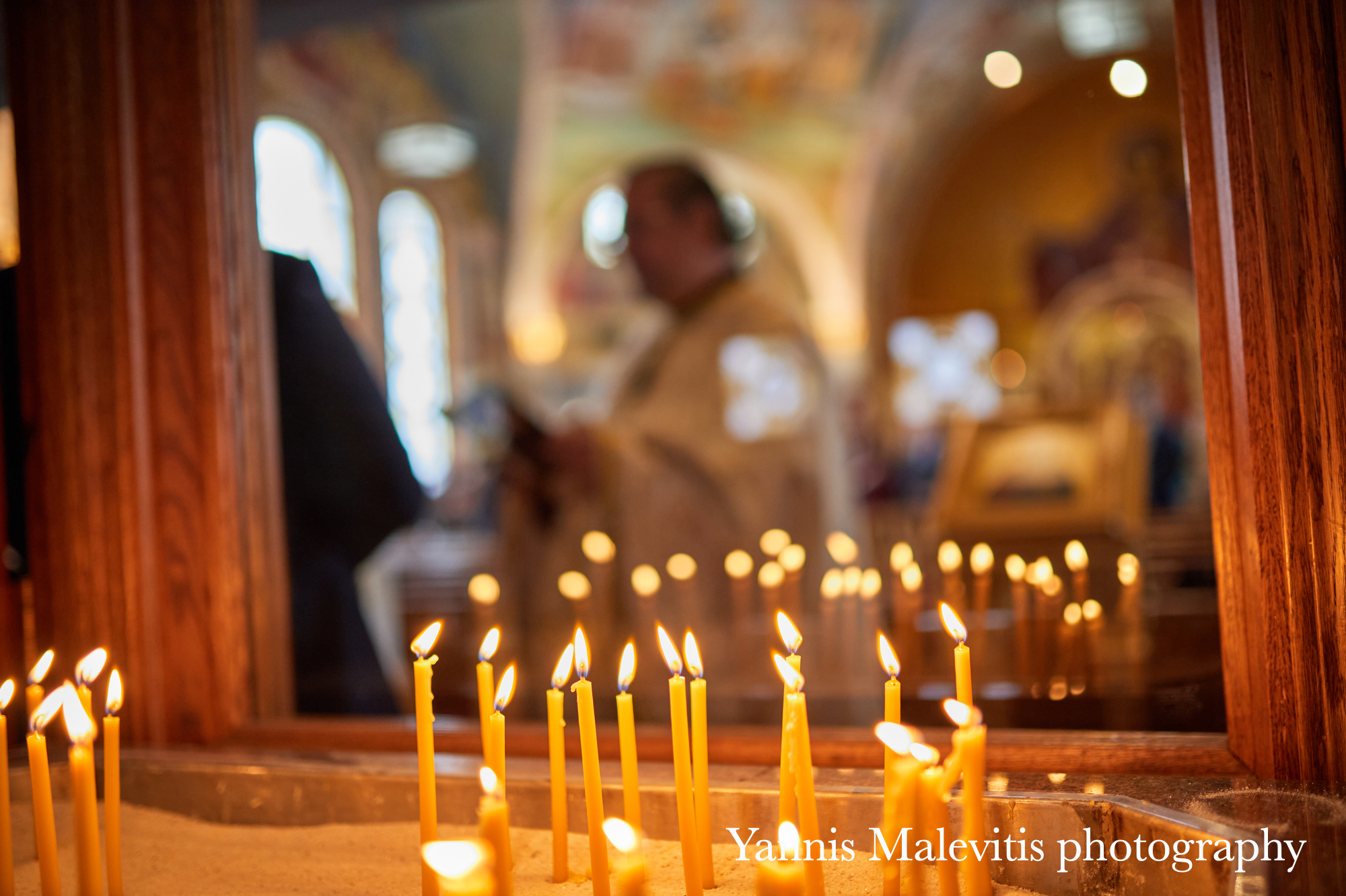
A child becoming fascinated by the candles.
These moments often last only a few seconds, yet they reveal how each family experiences the baptism in its own unique way.
Years later, these photographs often become just as meaningful as the formal moments of the ceremony.
My Documentary Approach
Whether I am photographing a wedding, a baptism, or another meaningful family celebration, my approach remains the same.
I believe the strongest photographs are created by paying attention to relationships rather than simply recording events.
The ceremony provides the structure.
The people create the story.
My role is to preserve both with honesty, patience, and respect.
Frequently Asked Questions
Why photograph a baptism at Holy Resurrection Church?
Every parish has its own character. What makes Holy Resurrection especially meaningful to me is not only the beauty of the church, but the relationships within the parish community and the reverence with which each baptism is celebrated.
Does being a parishioner make a difference?
I believe it does. Being familiar with the parish, its traditions, and the rhythm of the service allows me to remain unobtrusive and devote my attention to the people rather than the logistics of the ceremony.
How do you remain unobtrusive during the ceremony?
Because I understand both the church and the sequence of the baptism, I can position myself before each important moment rather than moving constantly throughout the service. This allows families to remain fully present while I quietly document the celebration.
Final Thoughts
Every baptism celebrates the beginning of a child’s spiritual journey within the Orthodox Church.
For me, photographing these celebrations at Holy Resurrection is especially meaningful because it combines my faith, my relationship with the parish, and my documentary approach to photography.
The traditions remain beautifully consistent.
The people, the relationships, and the emotions make every baptism unique.
If your family is planning a baptism at Holy Resurrection Greek Orthodox Church, I would be honored to document the celebration with the same respect, familiarity, and documentary approach that has shaped my work within this parish community.
A Greek Orthodox Christening is a joyful celebration of faith, family, and community.
While the sacrament itself takes place in the church, the reception offers families the opportunity to relax, reconnect, and celebrate together. If you’re interested in learning more about the meaning and traditions of the Greek Orthodox Christening, I invite you to read my complete guide before continuing with this reception story.
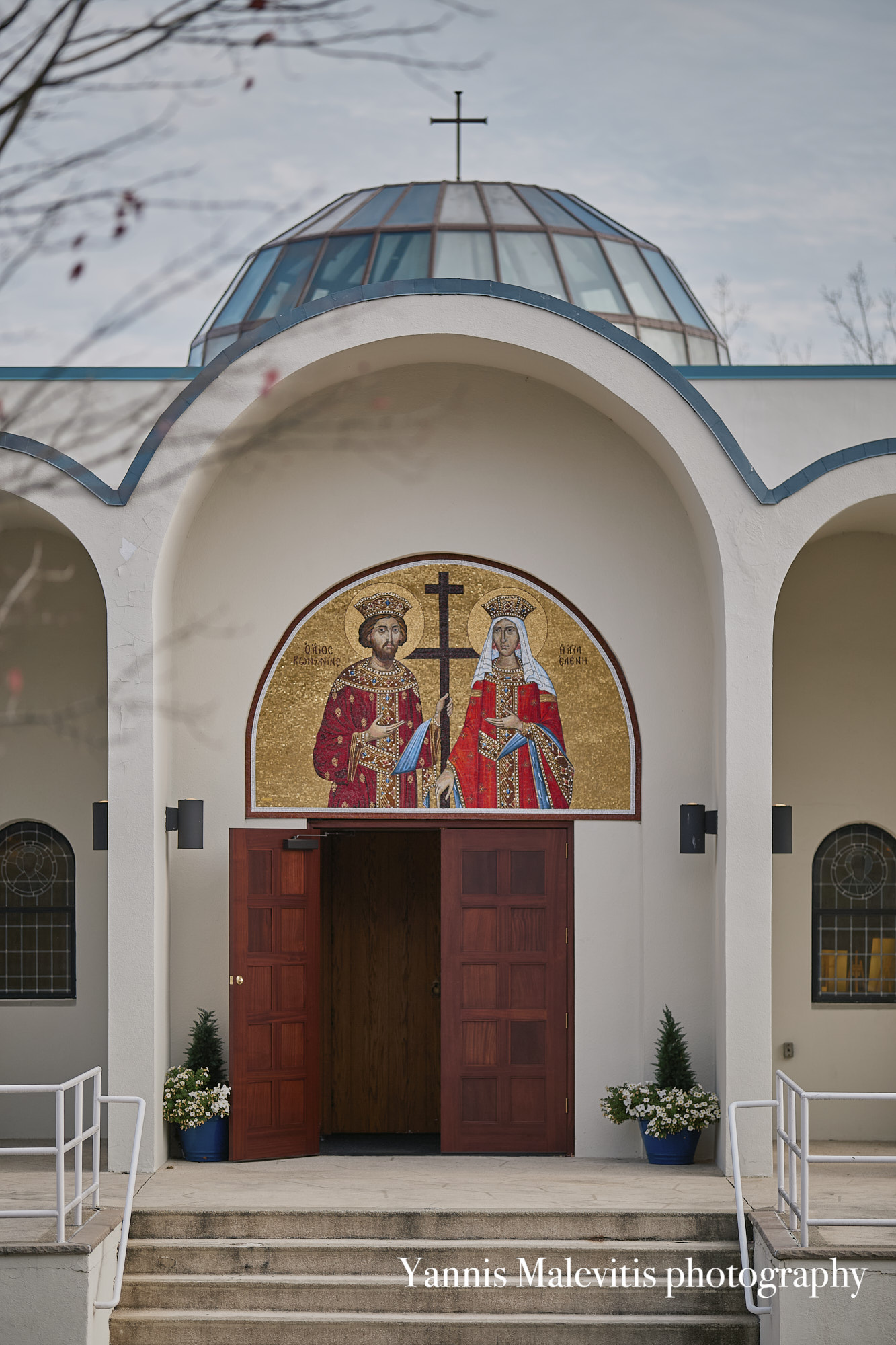
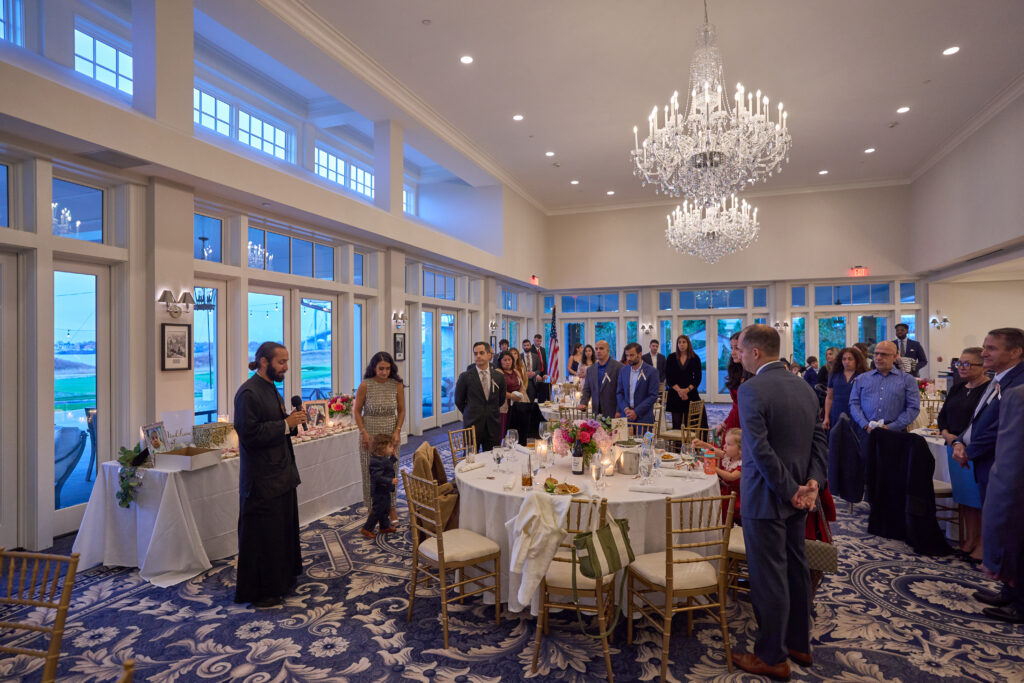
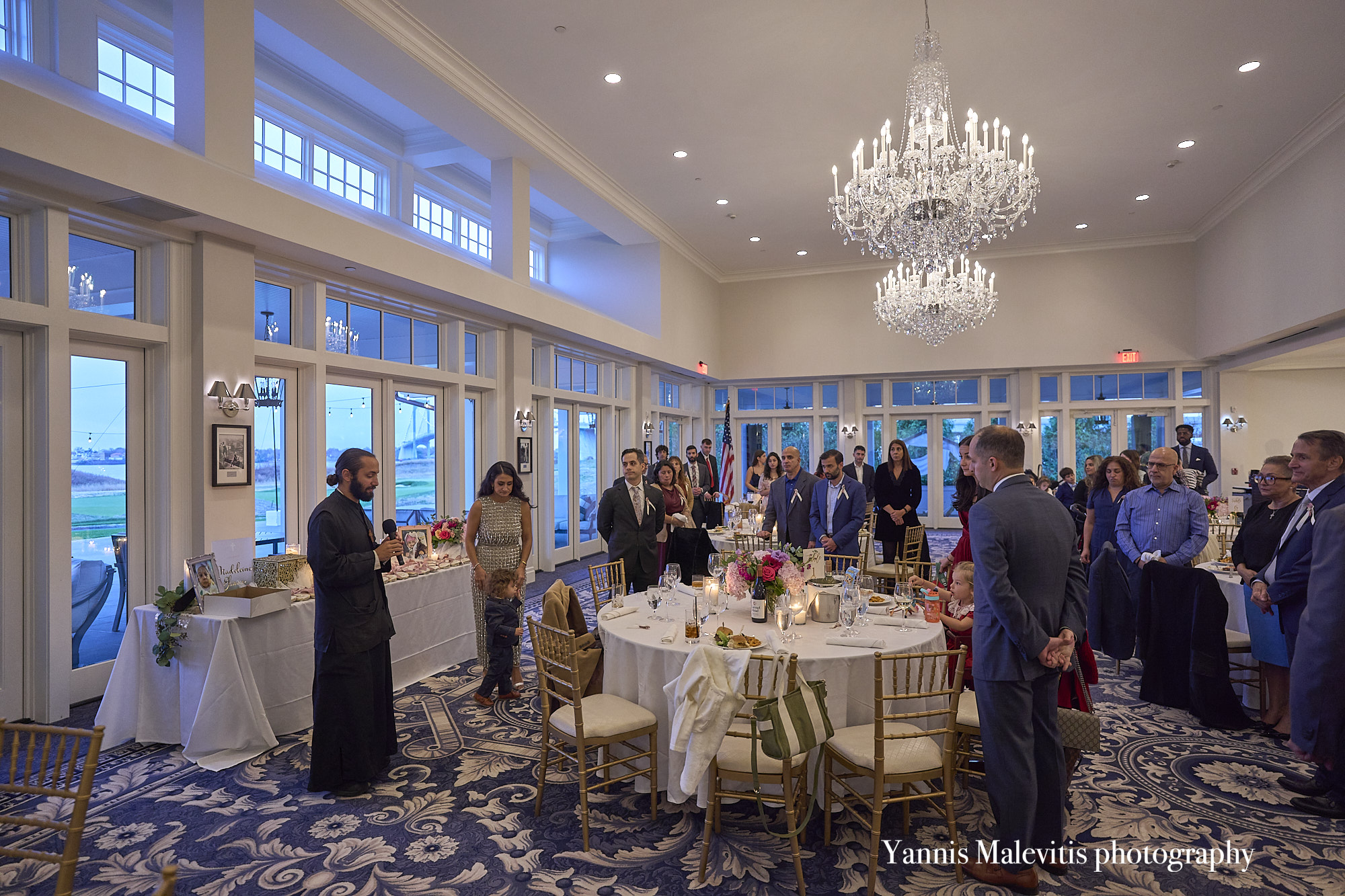
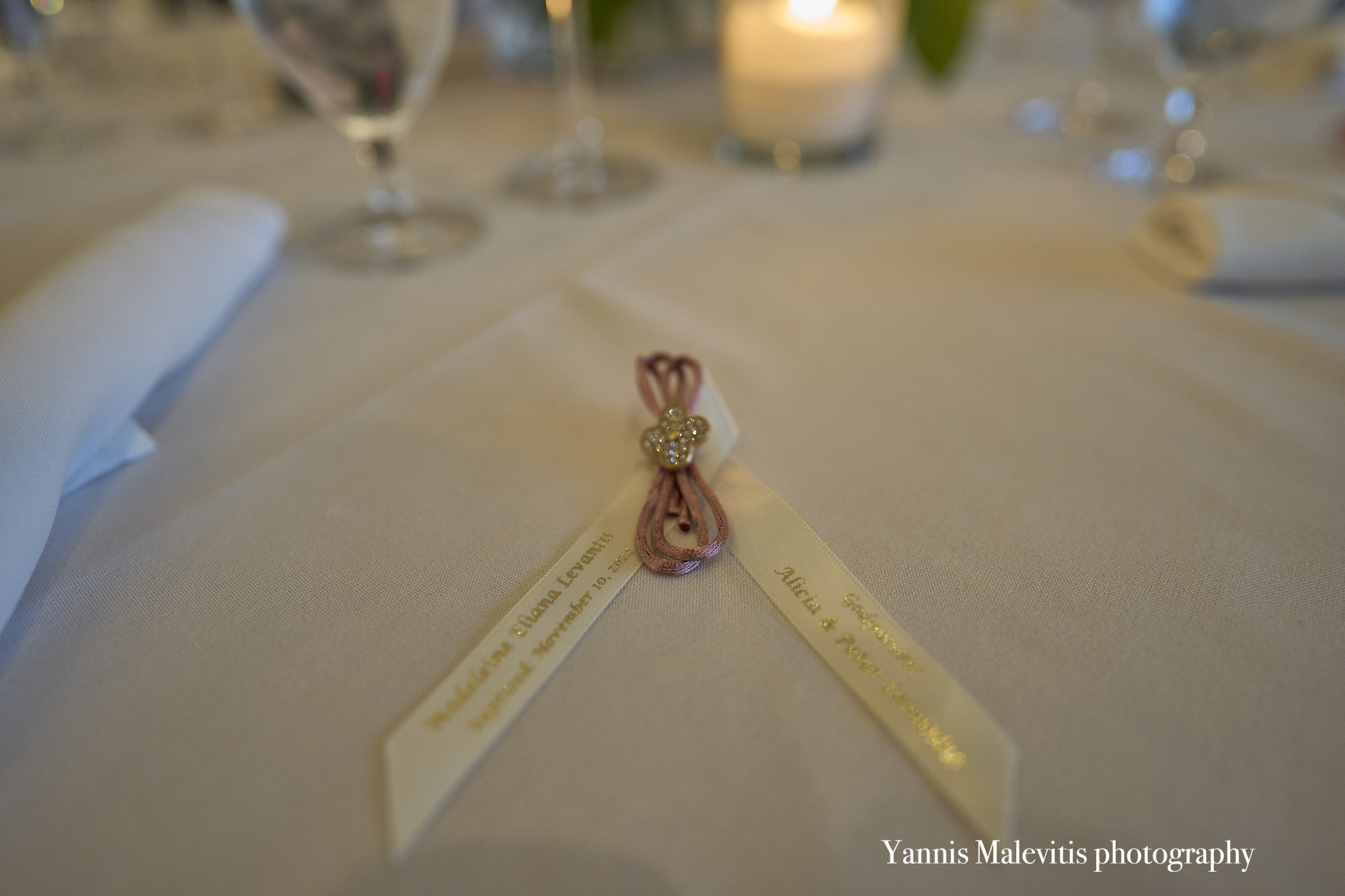
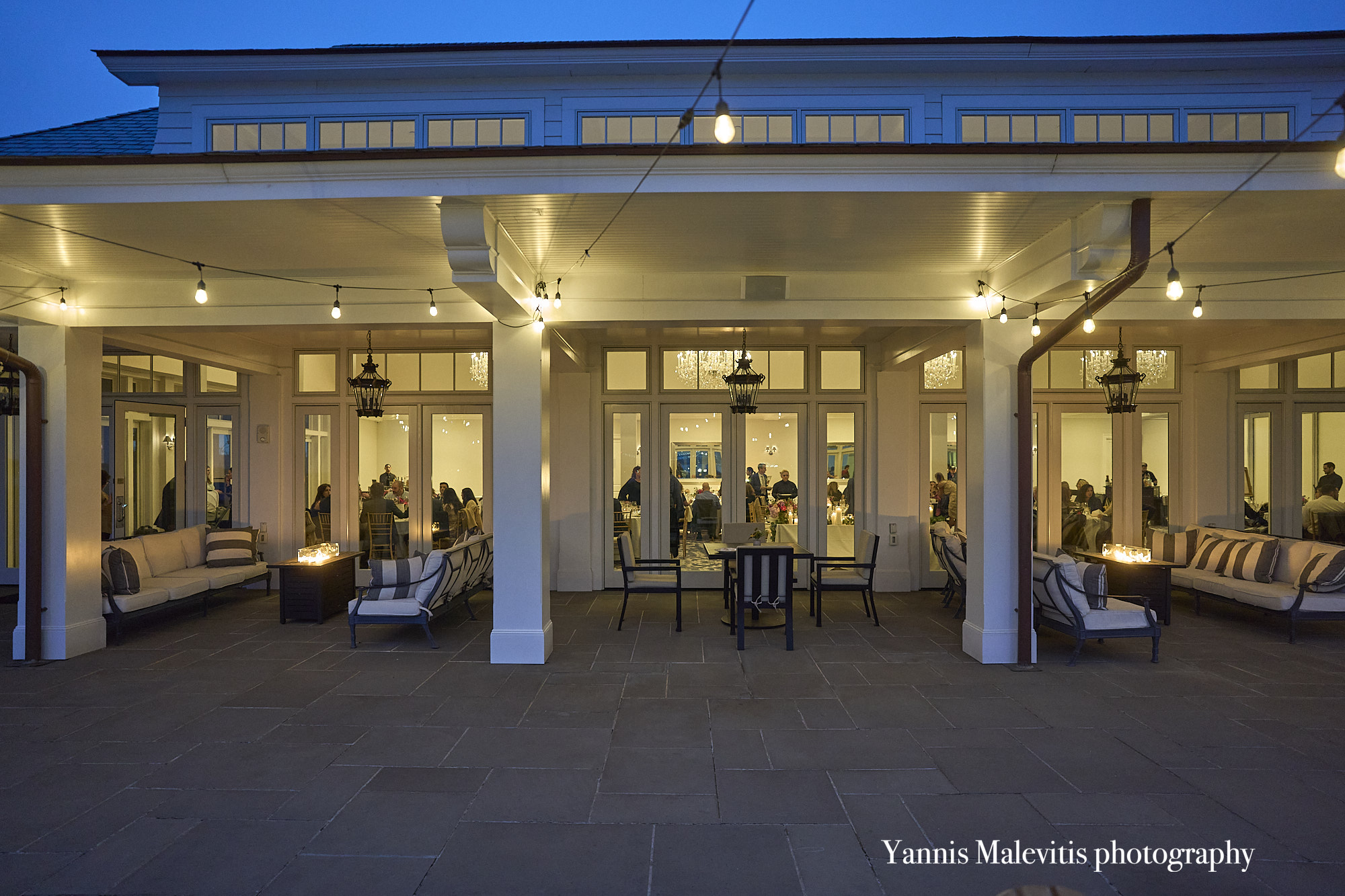
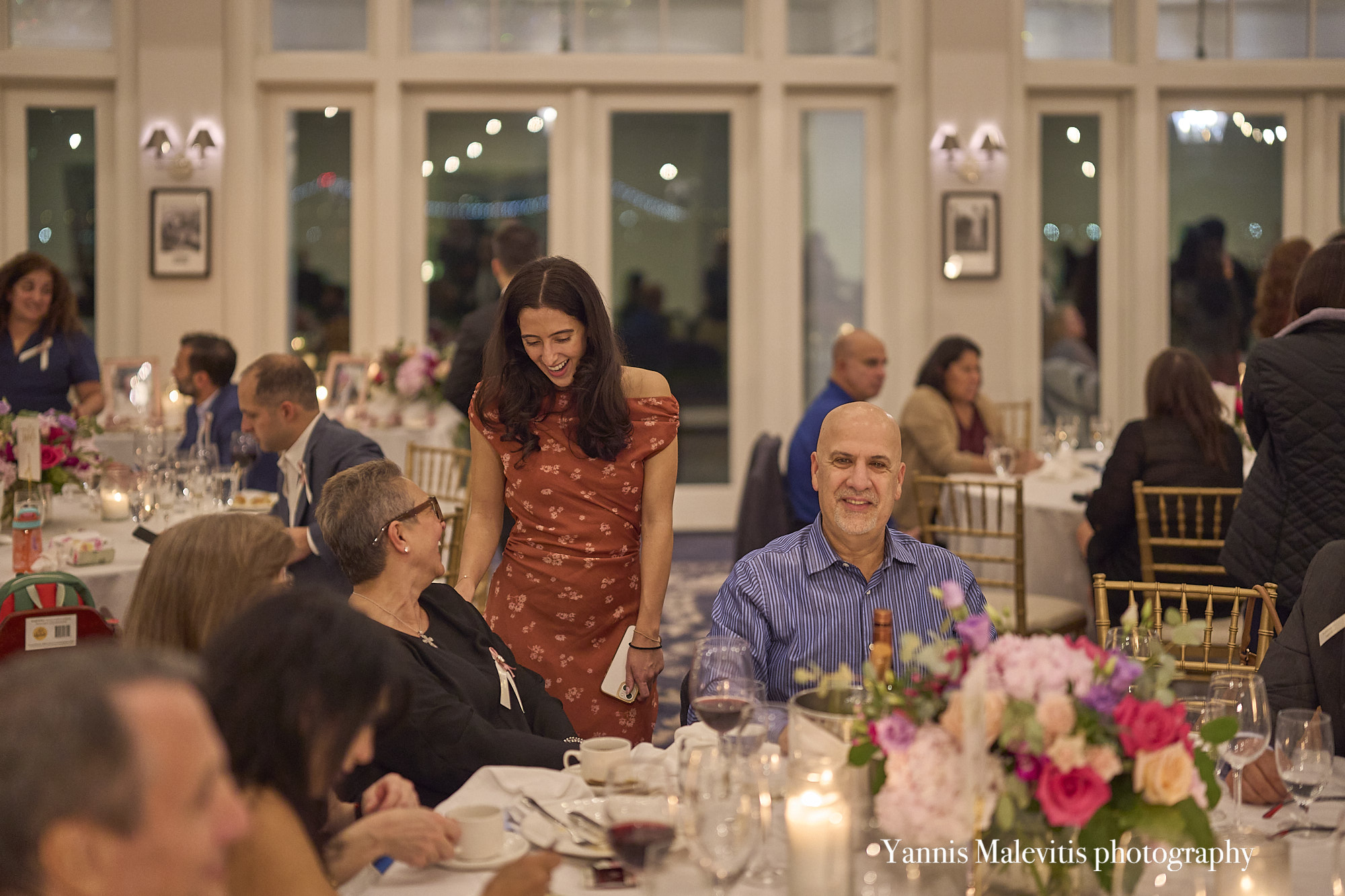
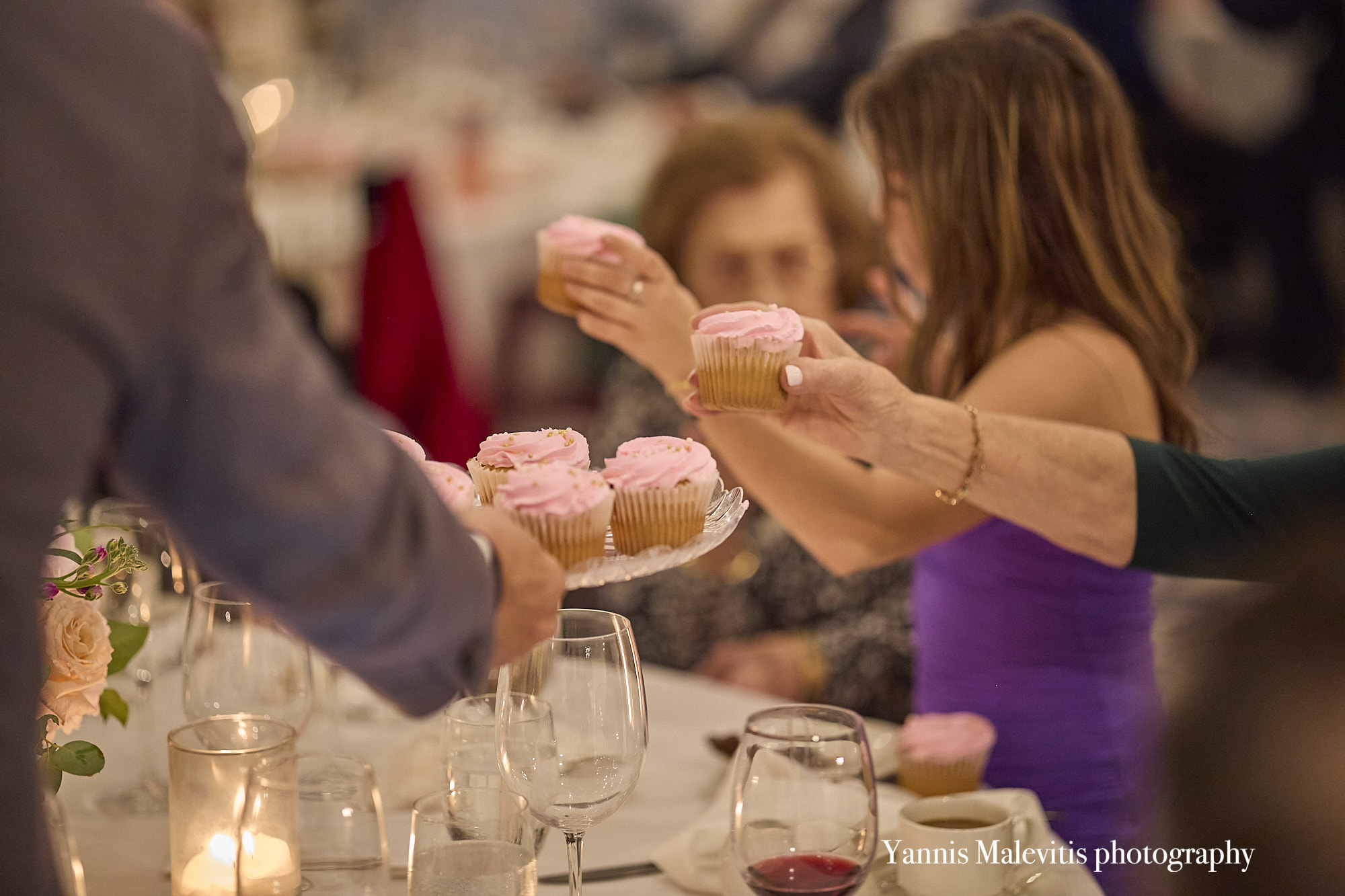
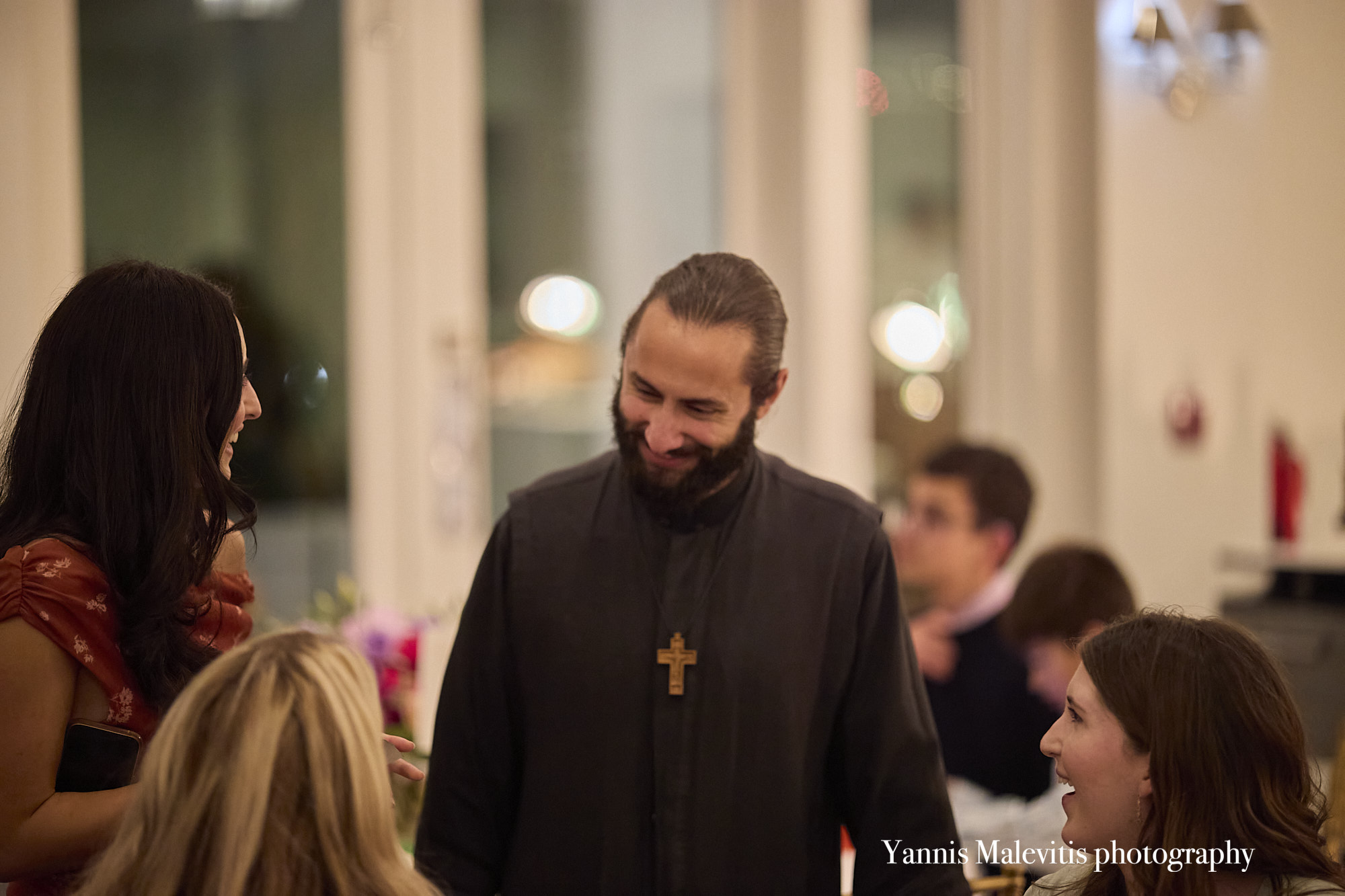
After Madeleine’s baptism at the Greek Orthodox Church of Saints Constantine and Helen in West Nyack, New York, family and friends gathered at Bally’s Golf Links at Ferry Point to continue the celebration.
My role was no longer simply to document the day’s events. It was to observe the relationships, conversations, and small moments that naturally unfolded as everyone enjoyed being together.
Beyond the Ceremony
The church tells the story of faith.
The reception tells the story of family.
Once the formal part of the day has ended, people naturally become more relaxed. Parents can finally enjoy the celebration they have spent months planning. Grandparents spend time with younger generations. Friends reconnect, children begin to play, and conversations continue around every table.
These moments are never scheduled.
They simply happen.
That is what makes them so meaningful to photograph.
Photographing the Celebration
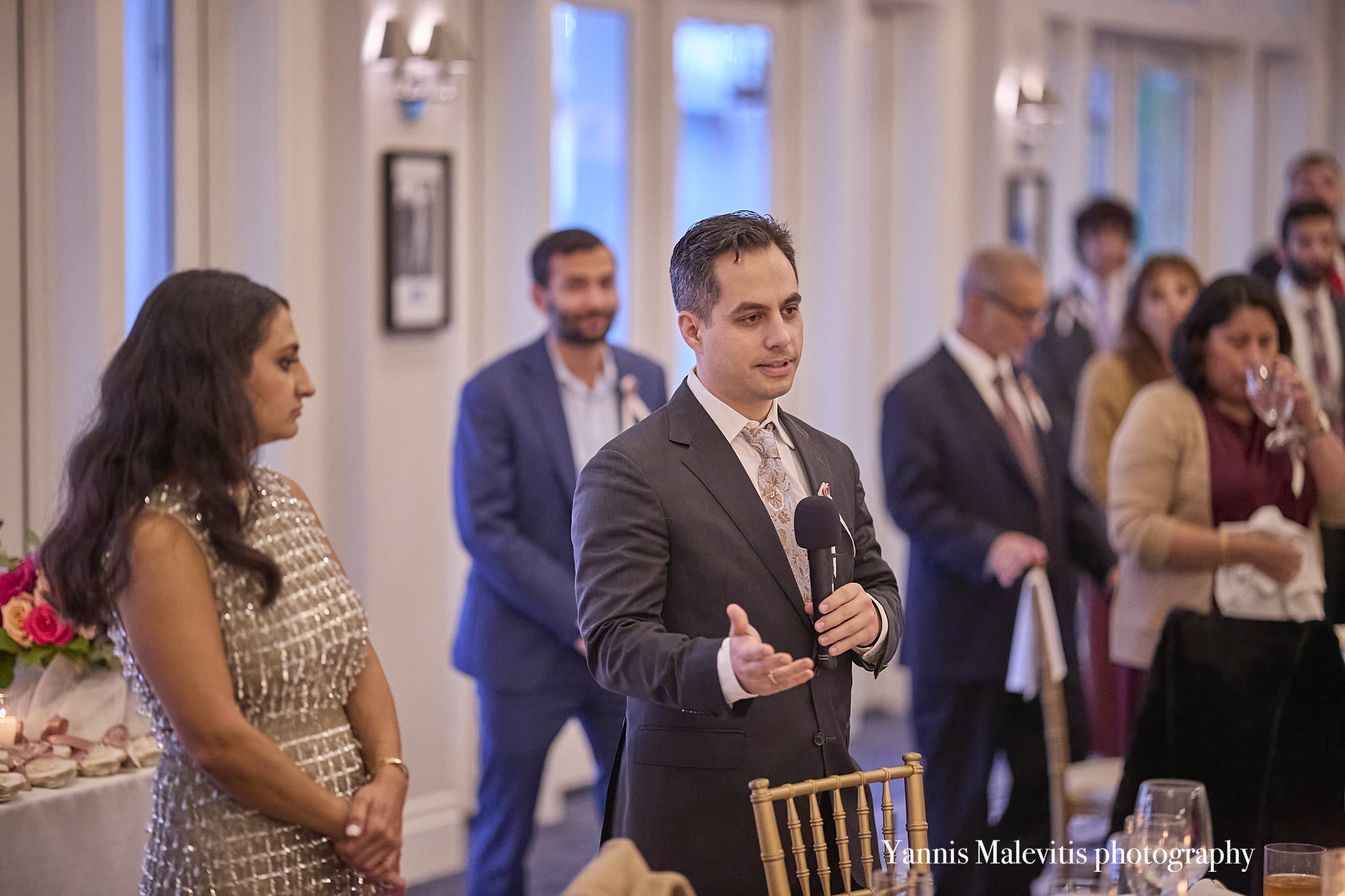
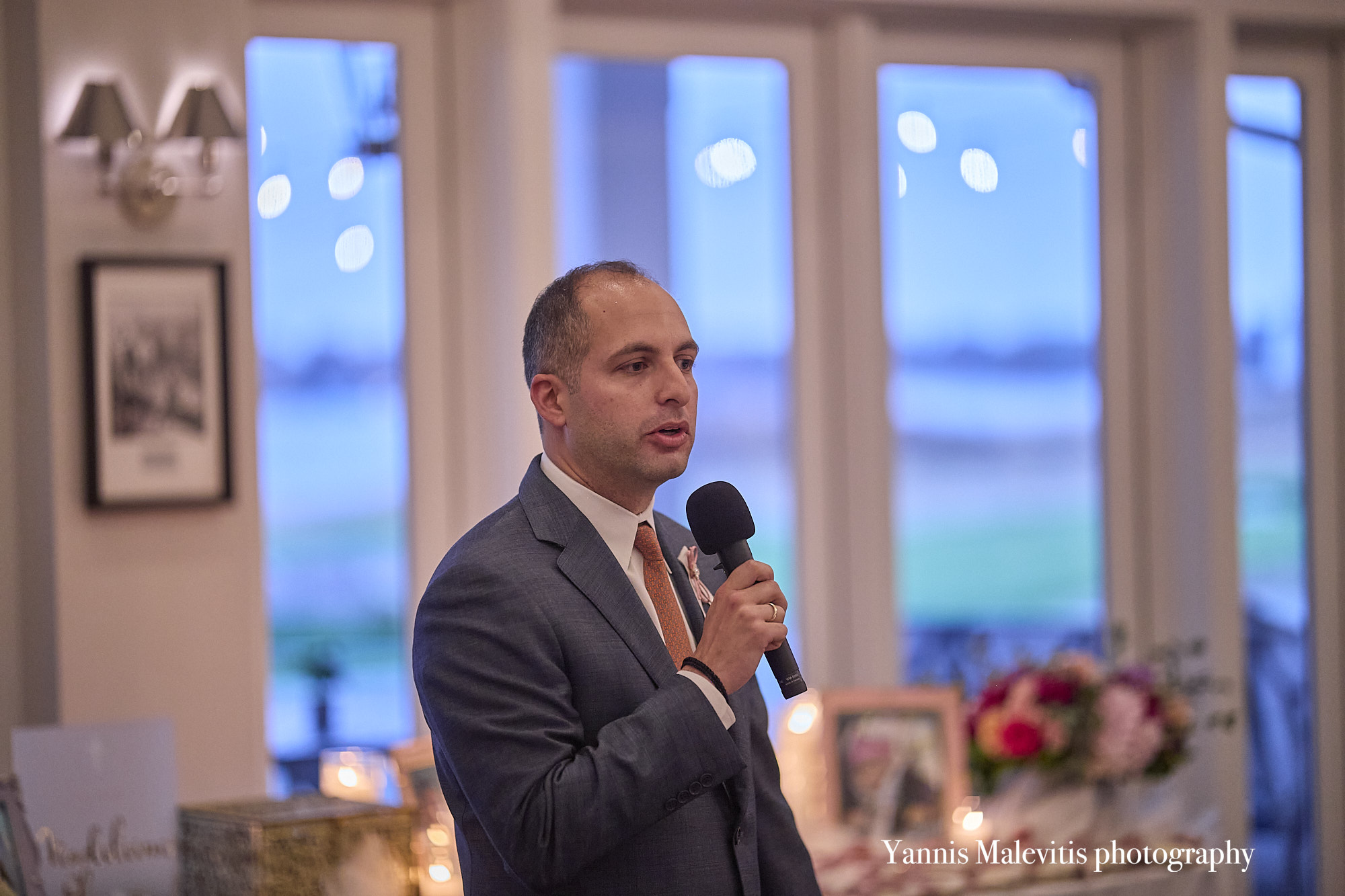
Rather than concentrating only on speeches or formal events, I continually watch what is happening throughout the room.
A quiet conversation between relatives.
A smile shared across a table.
Children discovering one another and beginning to play.
Parents watching the Christened child with quiet pride.
Each of these moments helps tell the story of the family’s celebration.
The Reception Atmosphere
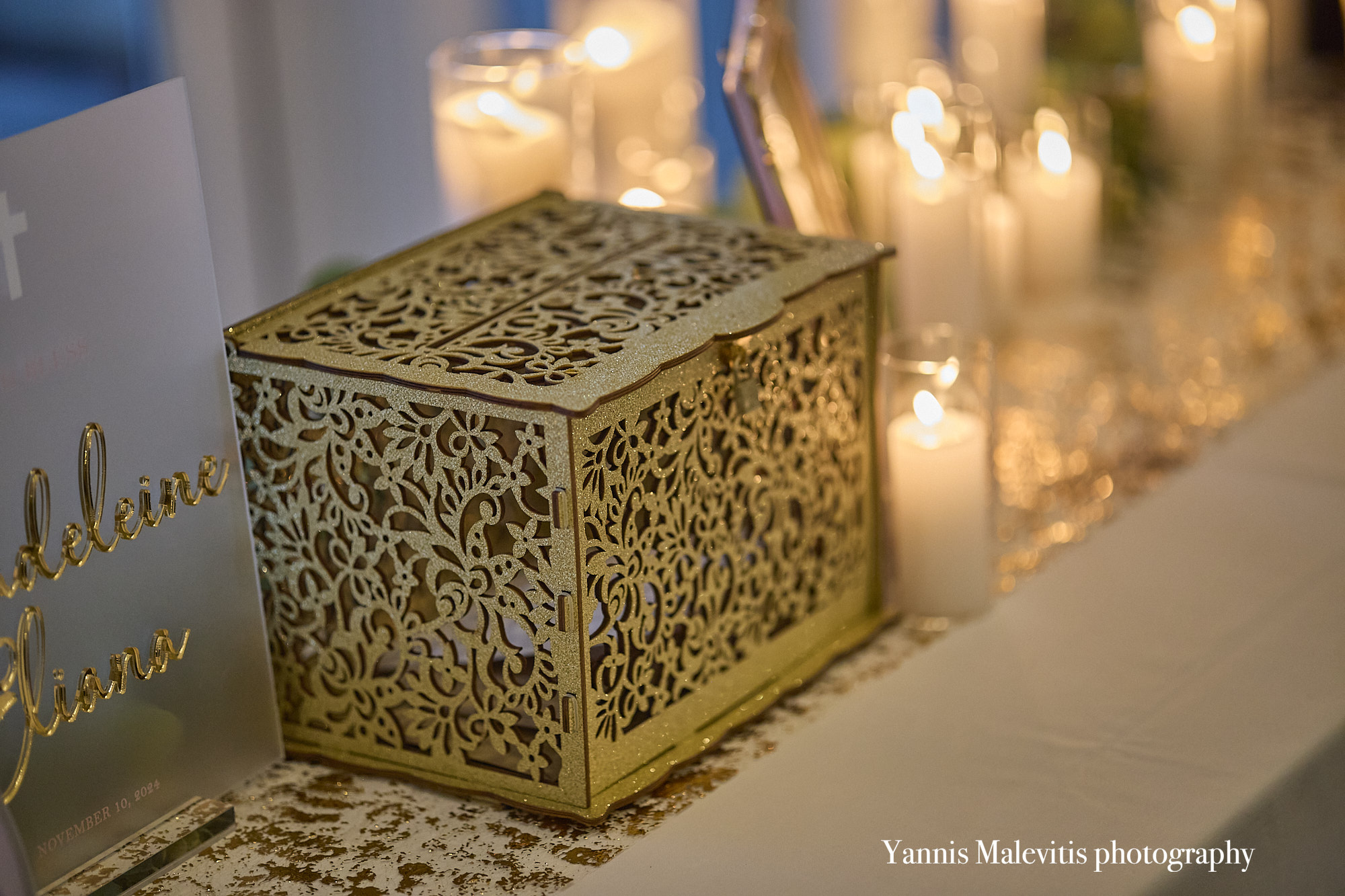
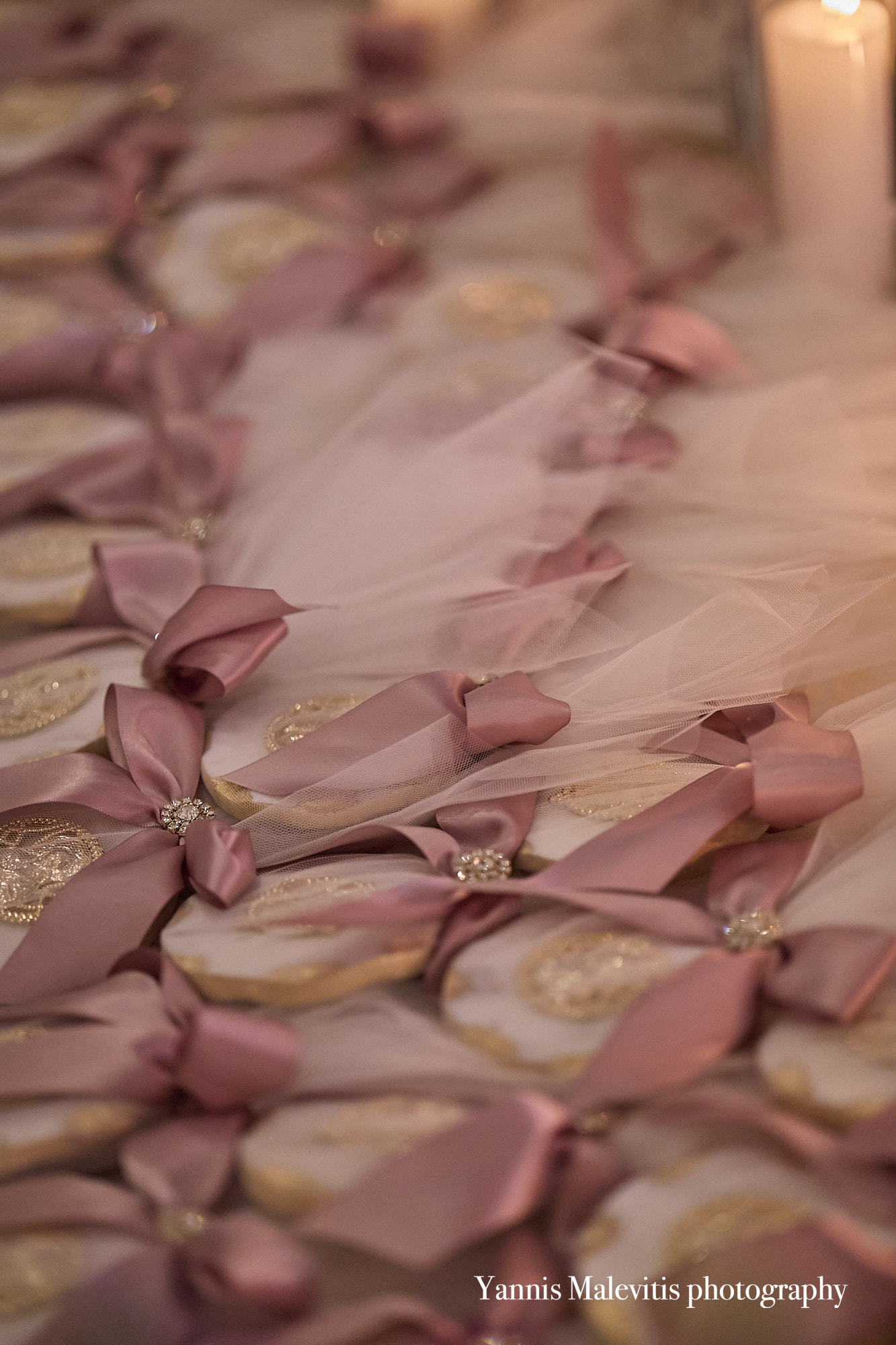
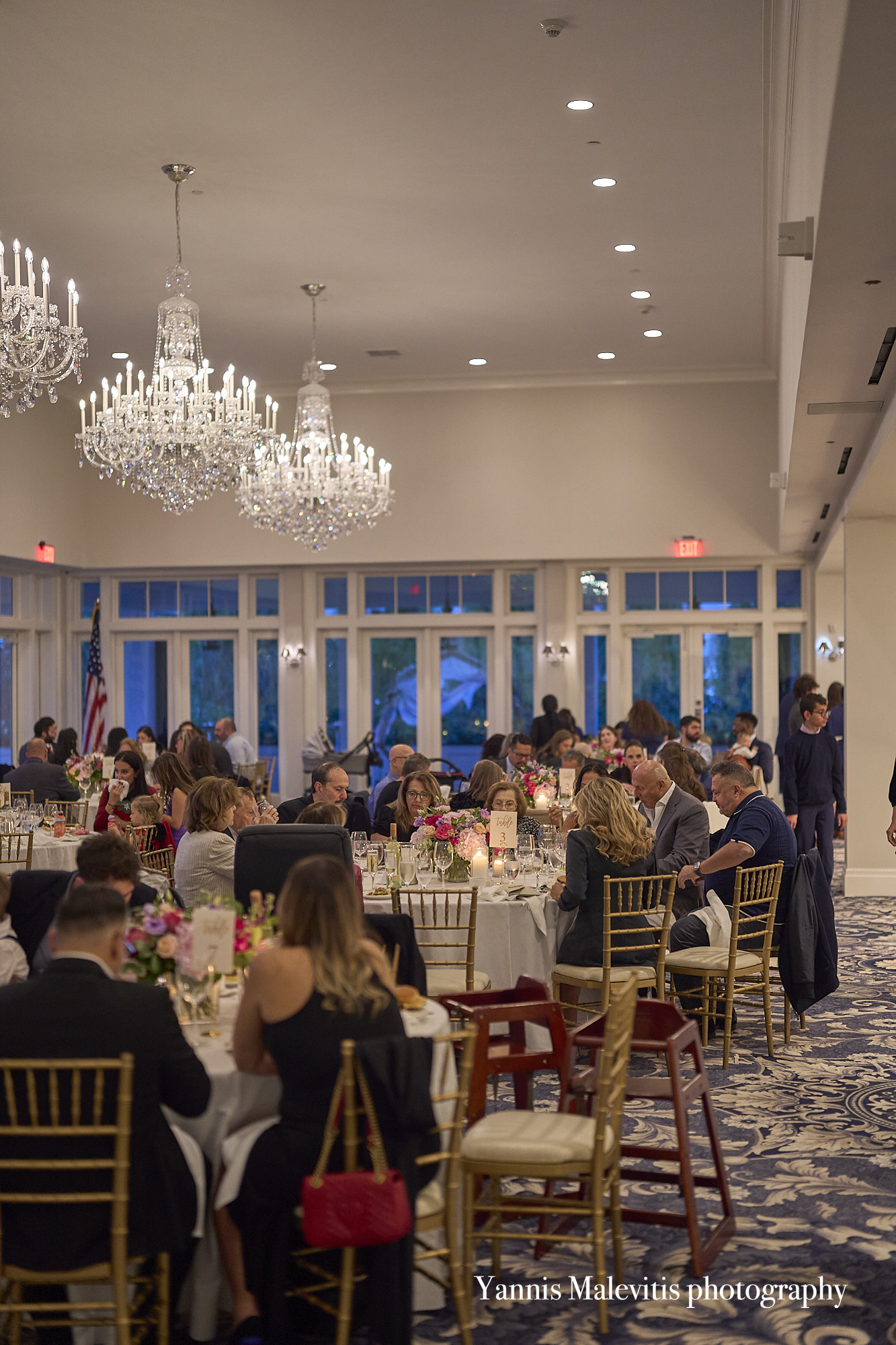
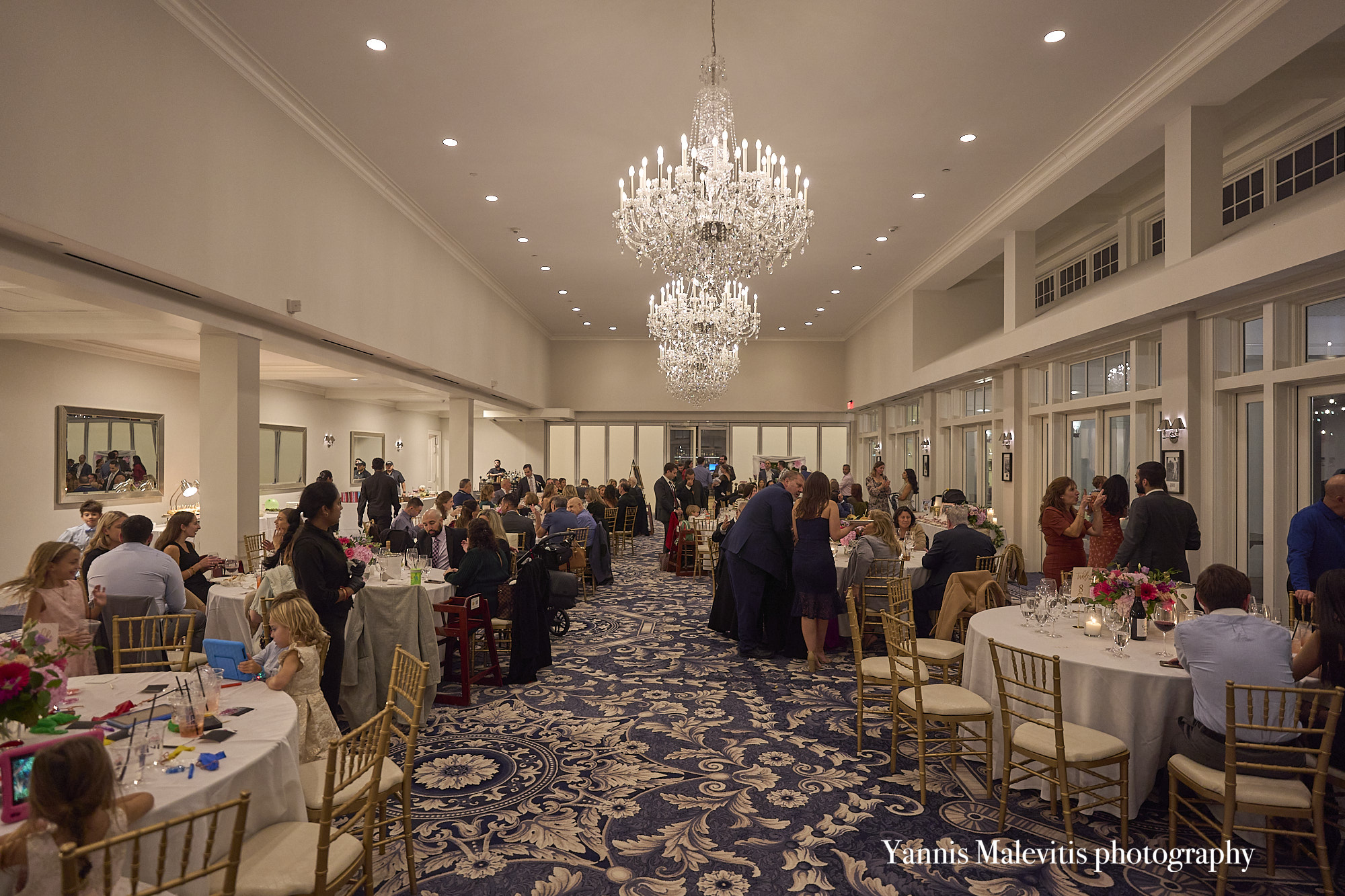
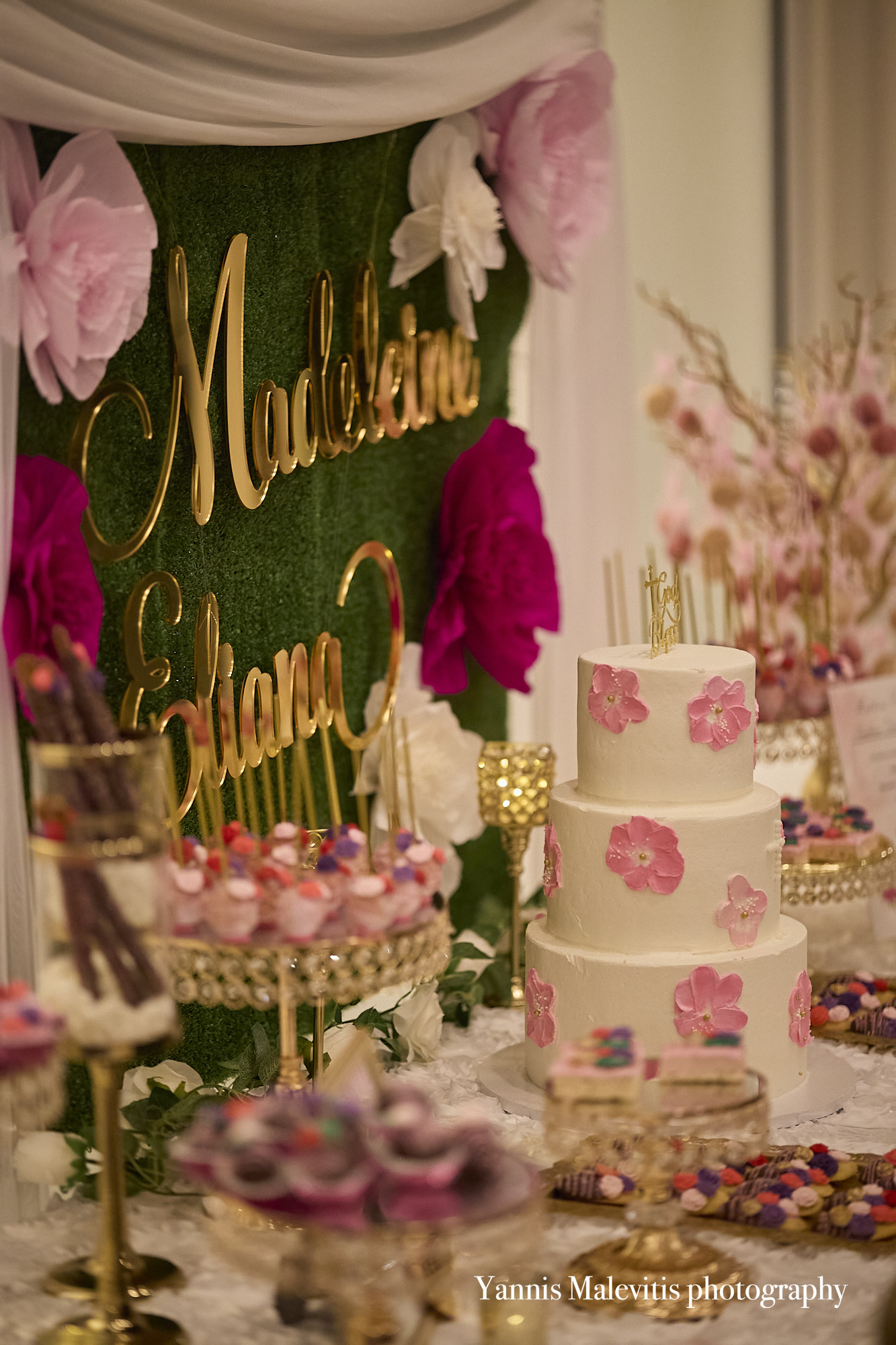
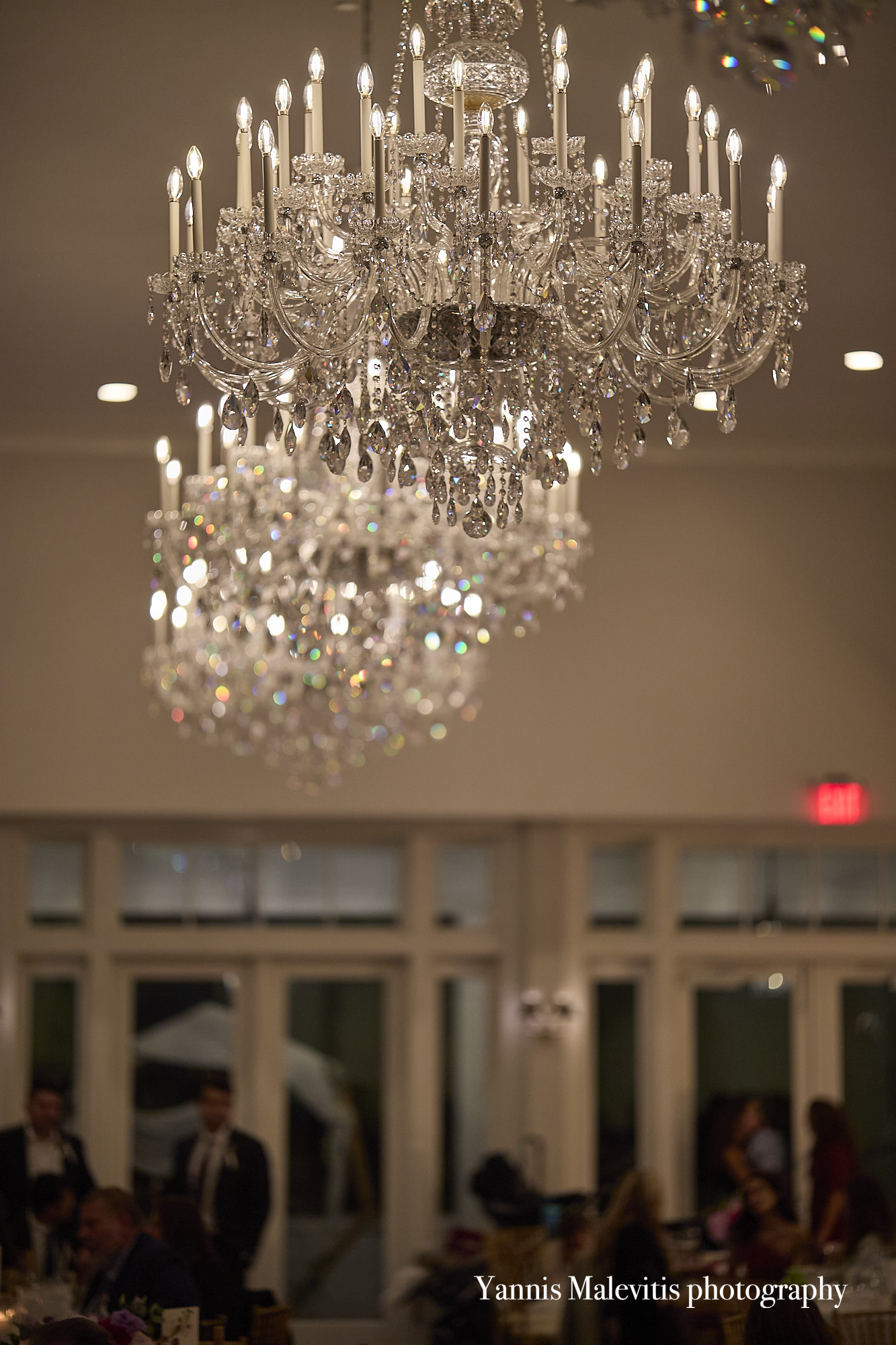
One of the first photographs I usually make is an overview of the reception room before guests are seated.
The room has been carefully prepared.
Flowers are arranged.
Tables are set.
Family members have spent months planning the celebration.
These photographs preserve the atmosphere before it gradually changes as the reception comes to life.
As the evening progresses, my attention shifts from the room itself to the people enjoying it.
Looking Beyond the Planned Moments
Some of my favorite photographs from Christening receptions happen between the scheduled events.
While guests are waiting for dinner.
While children quietly play together.
While grandparents watch the younger members of the family.
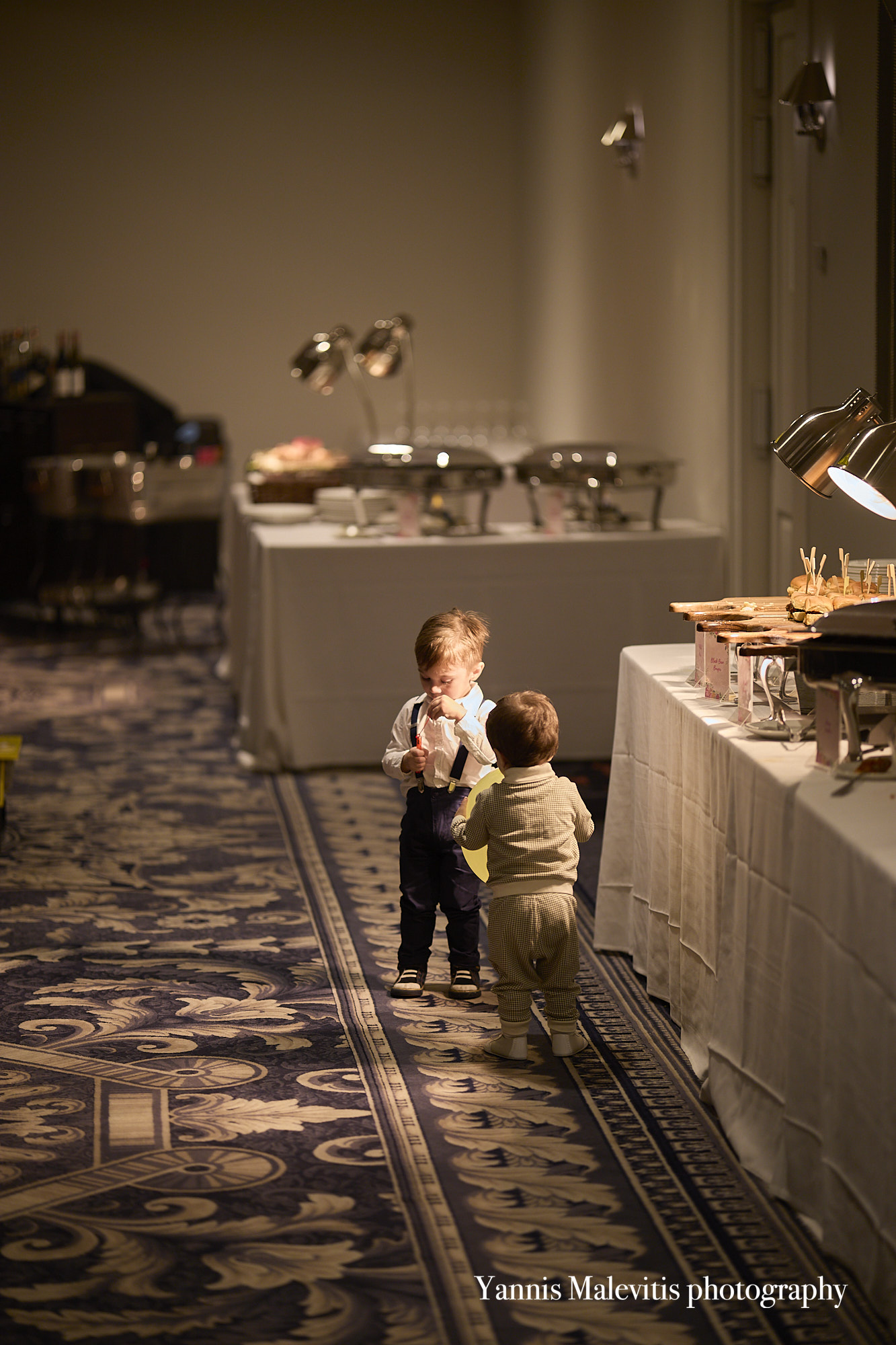
During Madeleine’s reception, I noticed two young children who had completely forgotten about the celebration around them as they became absorbed in their own game near the buffet. It lasted only a few moments, yet it perfectly reflected the warmth and joy of a family gathering.
Moments like these often become some of the photographs families treasure most because no one expected them.
My Documentary Approach
Whether I am photographing a wedding, a baptism, or a Christening reception, my approach remains the same.
I believe the strongest photographs are created by paying attention to people rather than simply following the schedule.
Formal moments are important.
The relationships surrounding them are what give the day its lasting meaning.
My goal is to preserve both with honesty, patience, and quiet observation.
Frequently Asked Questions
Why photograph the Christening reception?
The reception tells an important part of the family’s story. While the church celebrates the sacrament, the reception captures the relationships, conversations, and joyful moments shared by family and friends afterward.
What moments do you photograph during the reception?
I document both the planned events—such as blessings, speeches, and family photographs—and the spontaneous interactions that happen naturally throughout the celebration.
Do you direct people during the reception?
Only when needed for formal family photographs. The rest of the time I prefer to work quietly, allowing genuine conversations, laughter, and family relationships to unfold naturally.
Final Thoughts
A Greek Orthodox Christening reception is more than a meal after the ceremony.
It is where families celebrate, reconnect, and create new memories together.
Years from now, I hope these photographs remind families not only of the reception itself, but also of the people who gathered to celebrate one of the most meaningful days in a child’s life.
If your family is planning a Greek Orthodox Christening reception, I would be honored to document the celebration with the same quiet, relationship-focused approach described in this article.