A Catholic wedding ceremony is not simply an event taking place inside a beautiful church. It is a sacred celebration with its own structure, traditions and expectations.
Photographing it well requires more than anticipating the exchange of vows and rings. A photographer must understand the ceremony, respect the parish’s rules and remain attentive to the couple and the people gathered around them.
My objective is to preserve the complete experience without drawing attention away from it.
Understand the Church’s Expectations
Every Catholic parish establishes its own photography guidelines. Some churches permit movement within particular areas, while others ask photographers to remain at the back or along the side aisles. Flash may be allowed during the procession but prohibited during the ceremony.
These expectations should be clarified before the wedding whenever possible. The couple may receive written instructions from the parish, or the photographer may speak with the priest or wedding coordinator before the ceremony begins.
Knowing the boundaries in advance allows me to work confidently without creating uncertainty or disruption during the liturgy.
Preserve the Atmosphere of the Ceremony
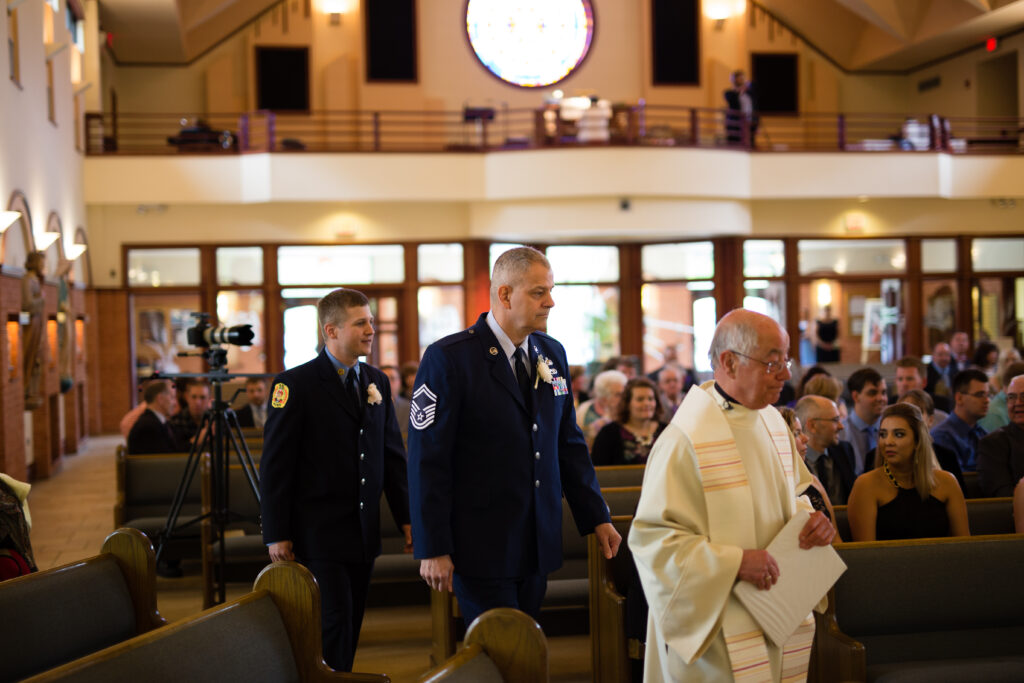
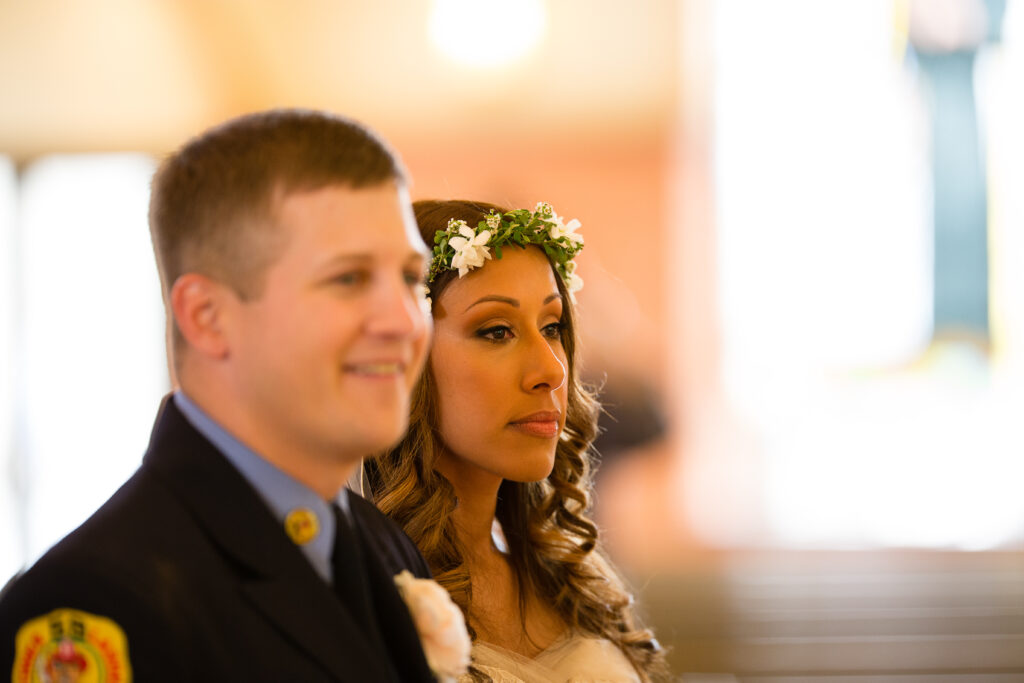
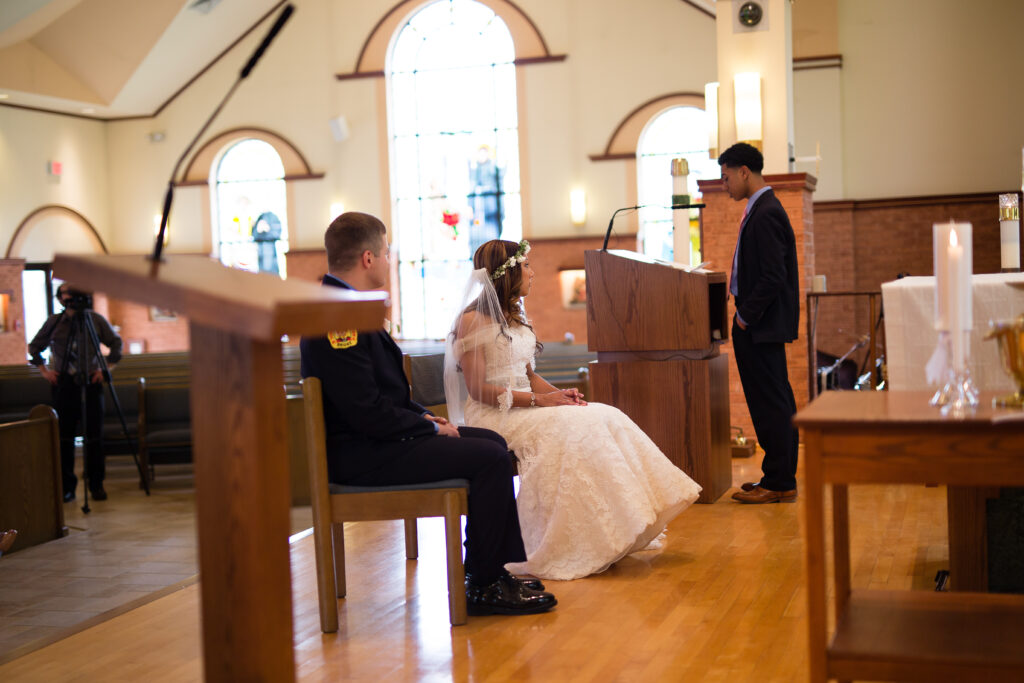
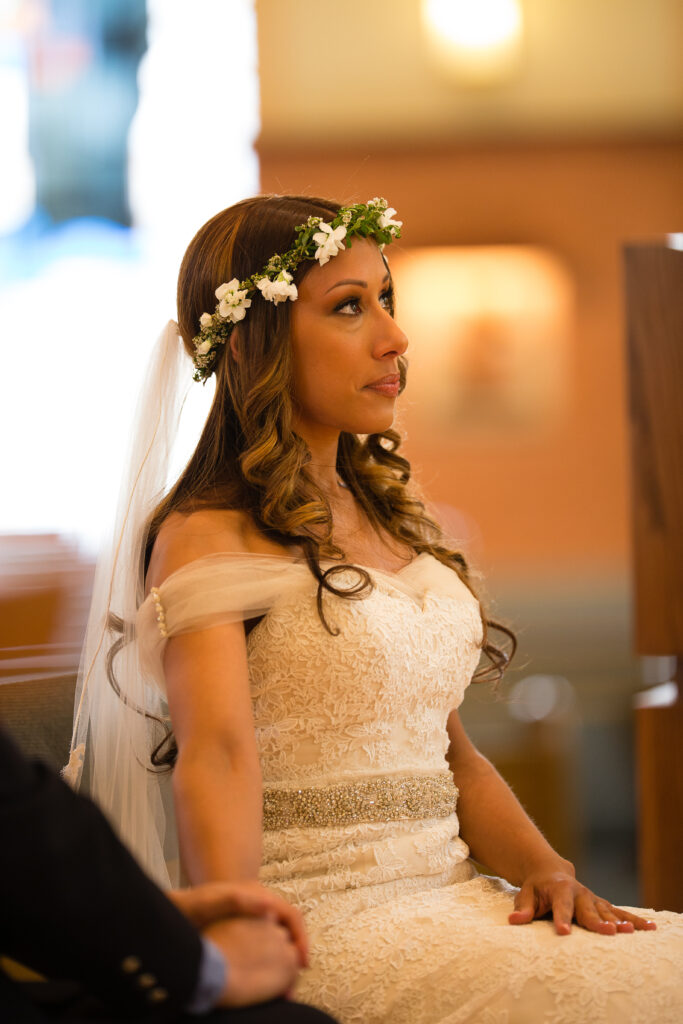
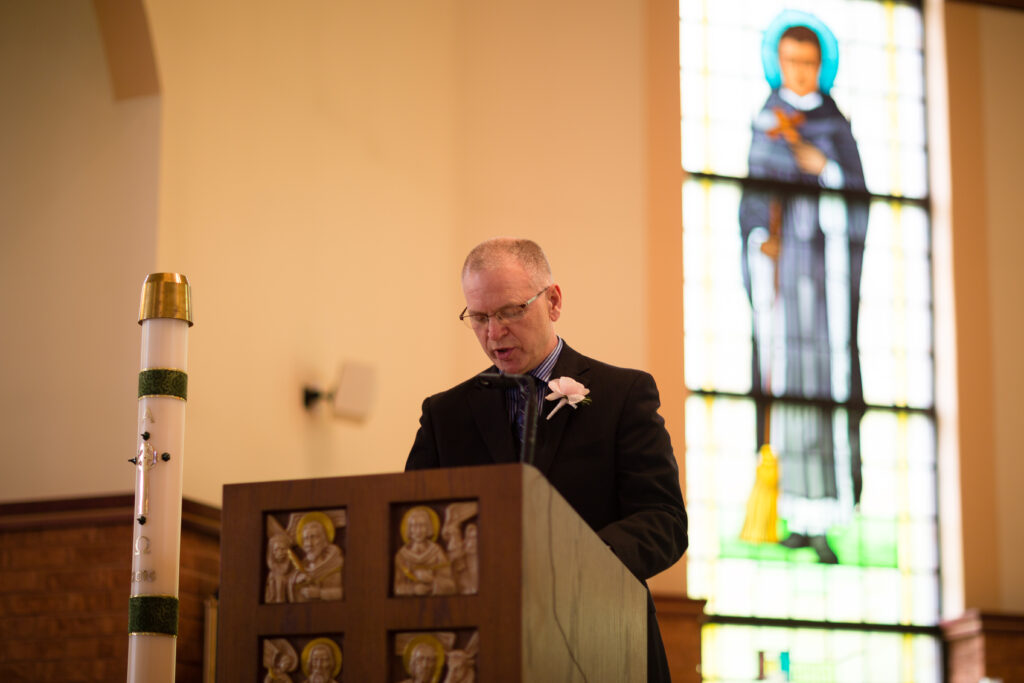
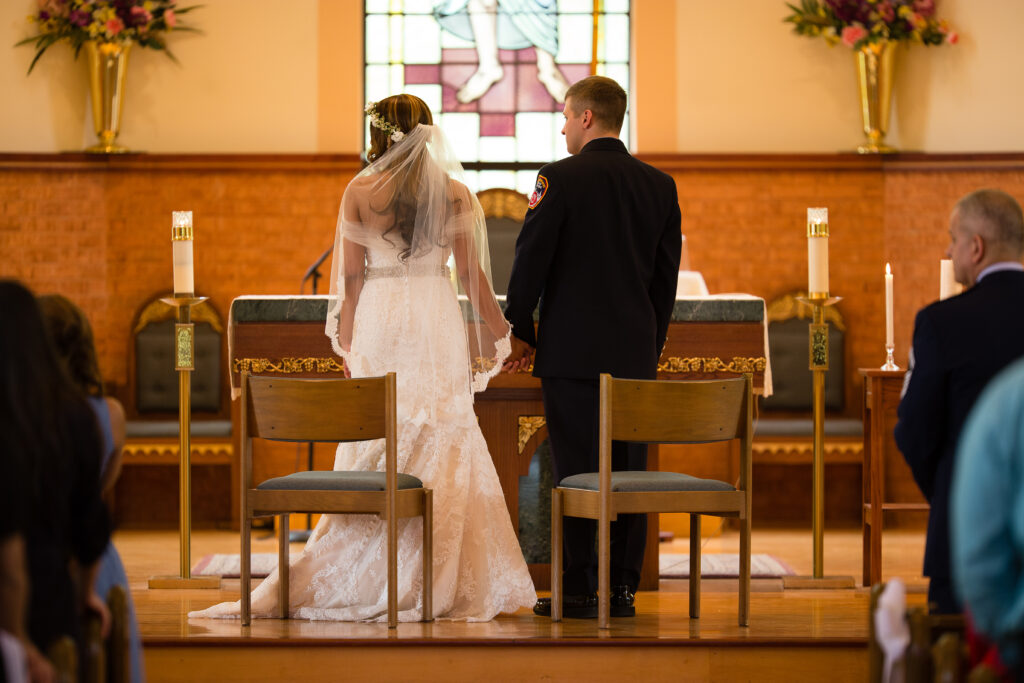
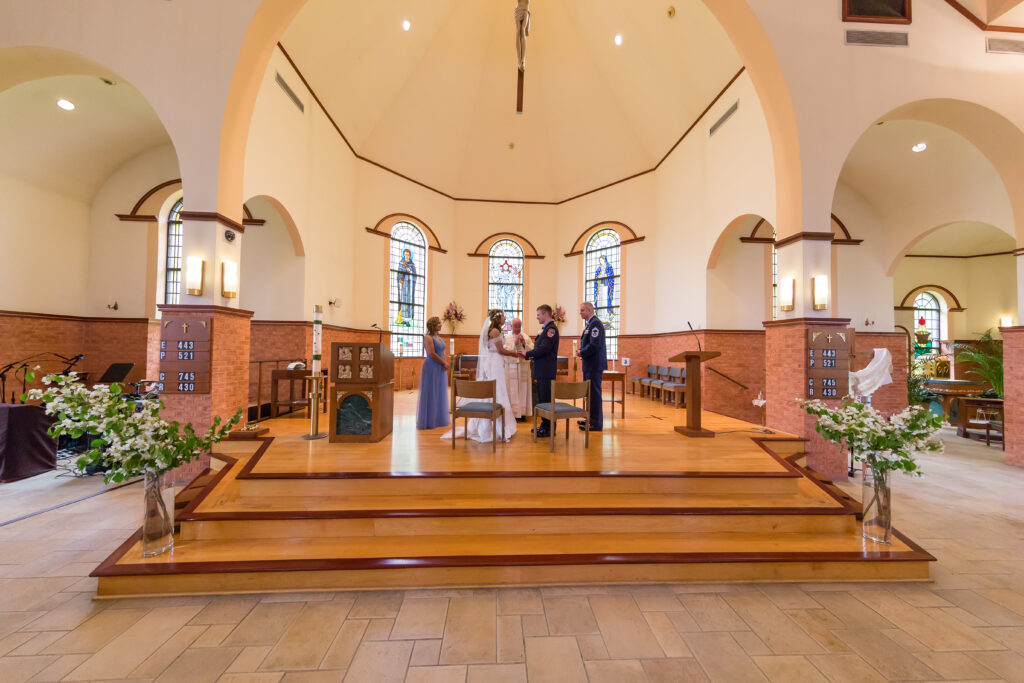
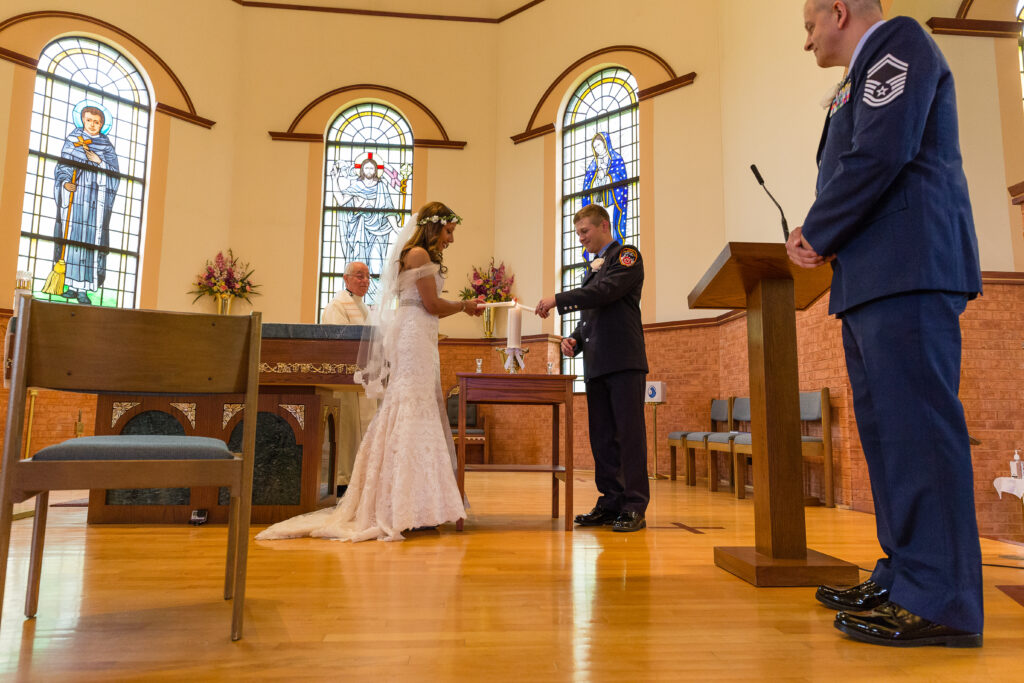
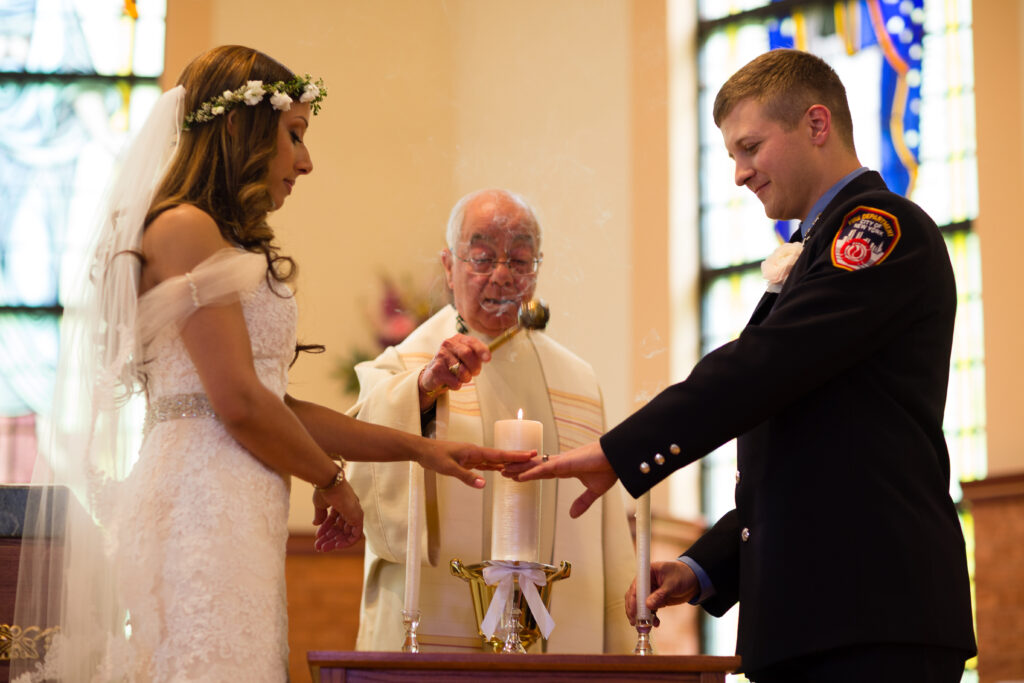
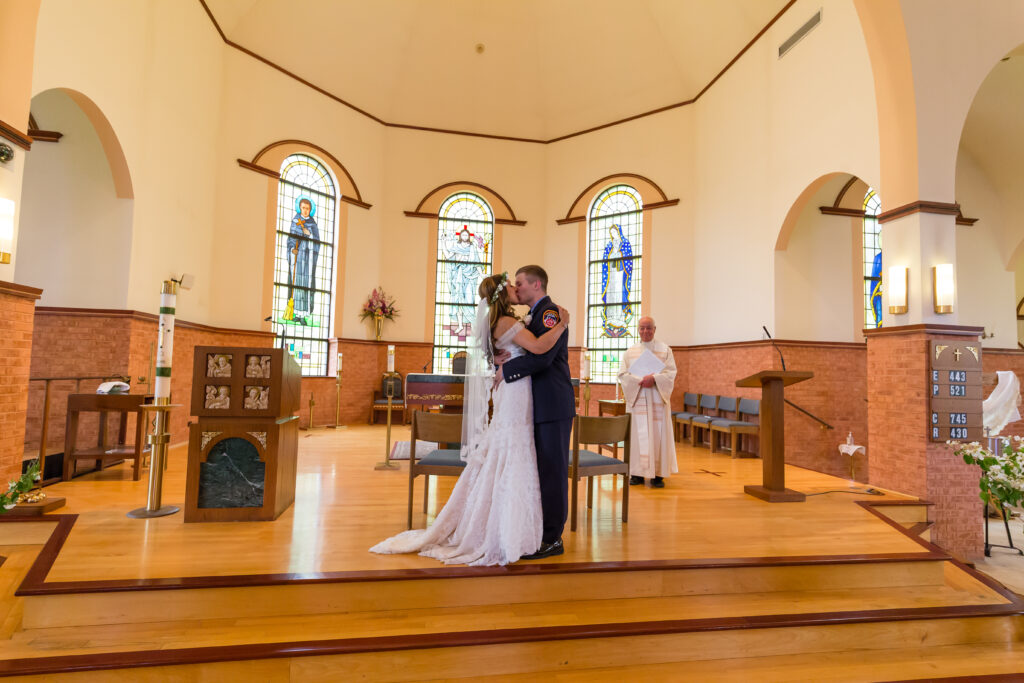
A Catholic church has a visual and spiritual atmosphere that should remain present in the photographs. The architecture, stained glass, candles and available light all contribute to the experience of being inside the space.
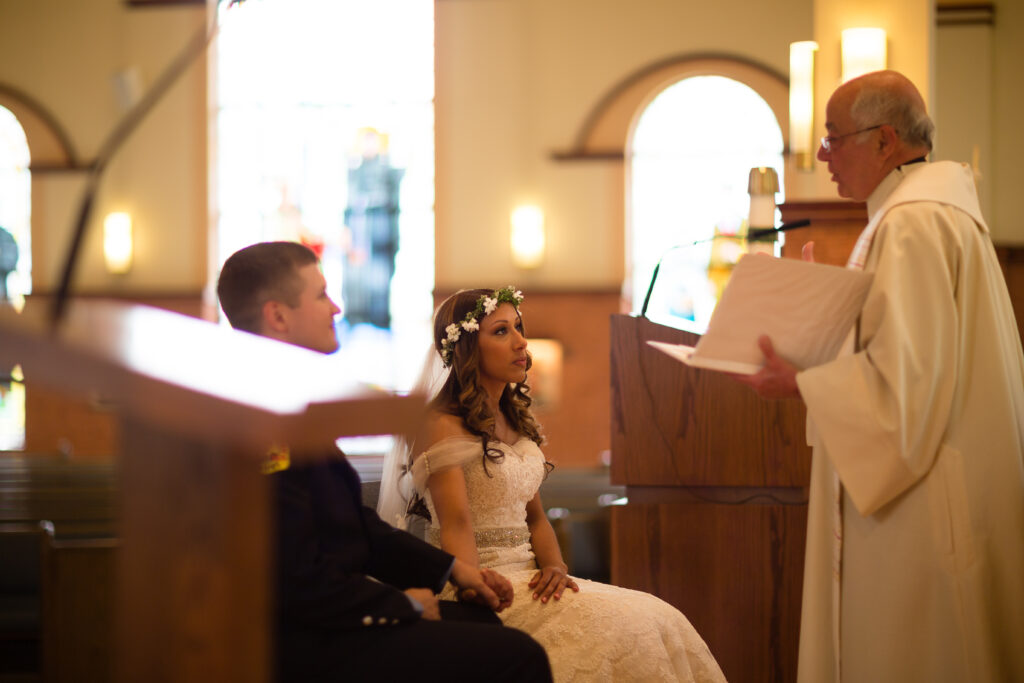
Flash can sometimes be distracting during solemn portions of the ceremony. When its use is prohibited or inappropriate, I work with the existing light and position myself carefully rather than interrupting the atmosphere.
The purpose is not to make the photographer’s presence visible. It is to preserve the ceremony as the couple, their families and their guests experienced it.
Remain Unobtrusive
Movement must be deliberate inside a church. Walking across the aisle at the wrong time, standing close to the altar or blocking a guest’s view can shift attention away from the couple and the sacrament.
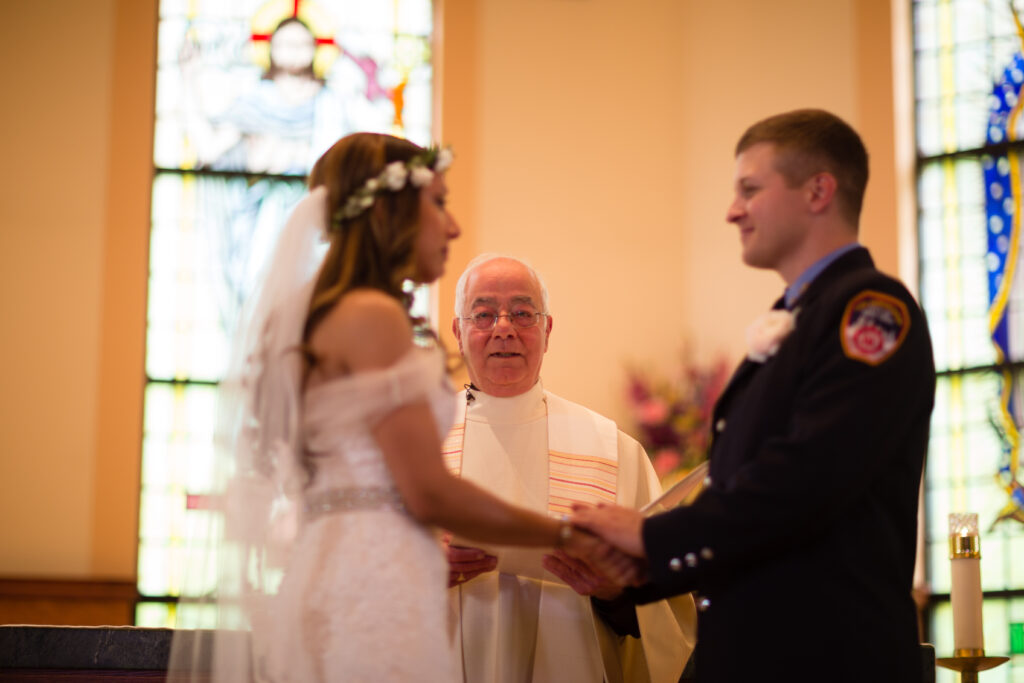
I prefer to establish useful positions before important moments begin. Working from a respectful distance allows the ceremony to continue naturally while still preserving expressions, gestures and relationships.
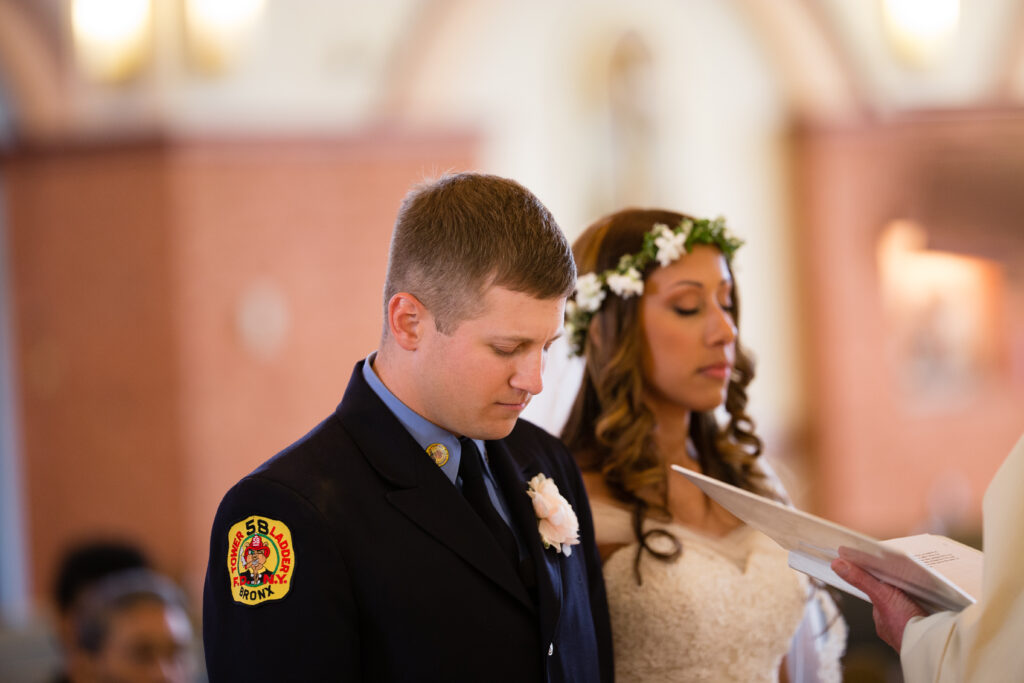
Remaining unobtrusive is especially important during the readings, vows, Nuptial Blessing and Communion when it forms part of the wedding Mass. These moments should belong to the couple and the congregation, not to the photographer.
Anticipate the Structure
Catholic wedding ceremonies may differ depending on the parish and whether the couple celebrates a full Nuptial Mass. Understanding the planned sequence makes it possible to anticipate significant moments rather than reacting after they have begun.
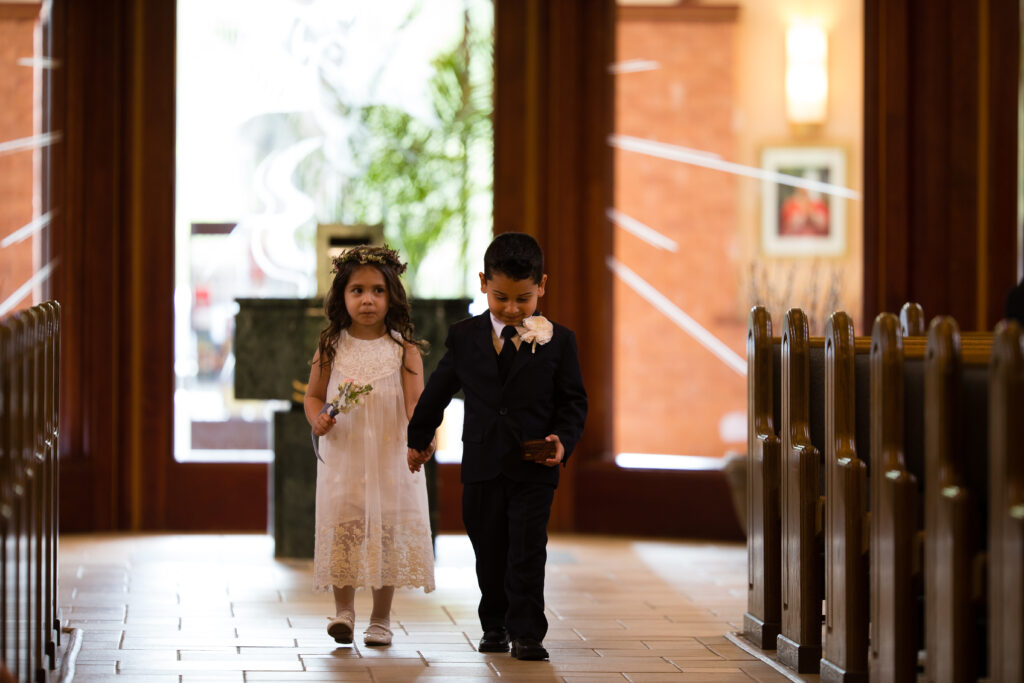
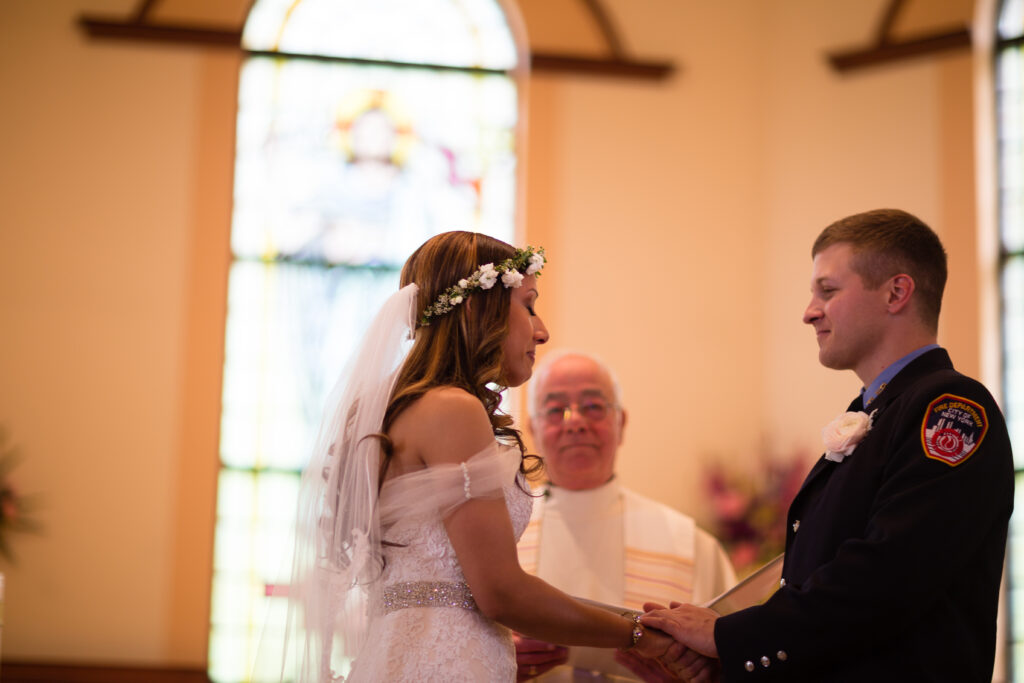
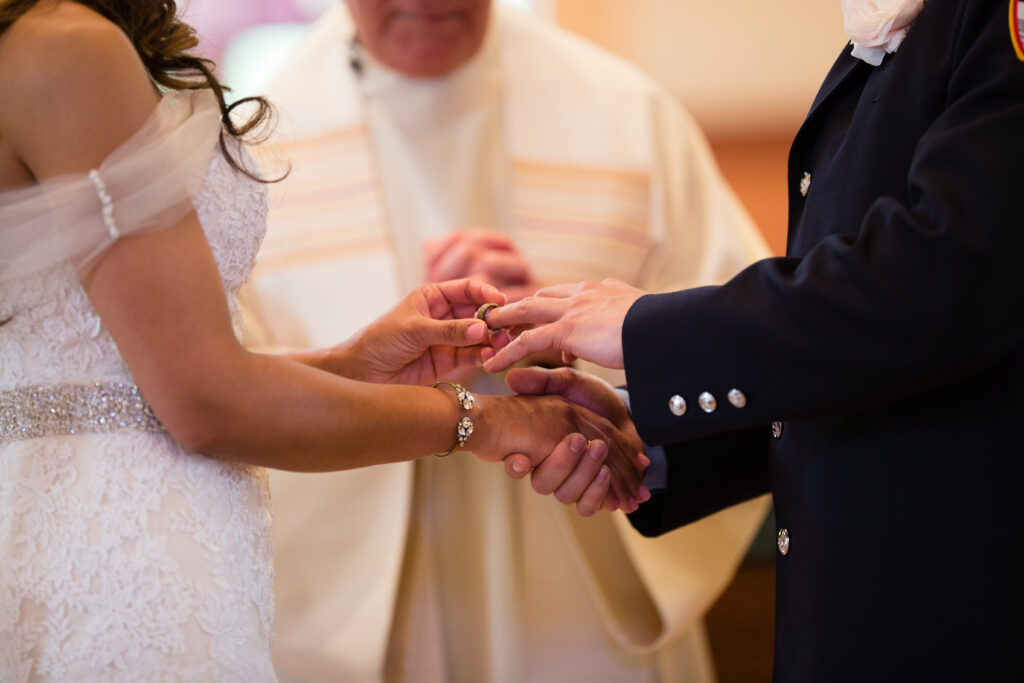
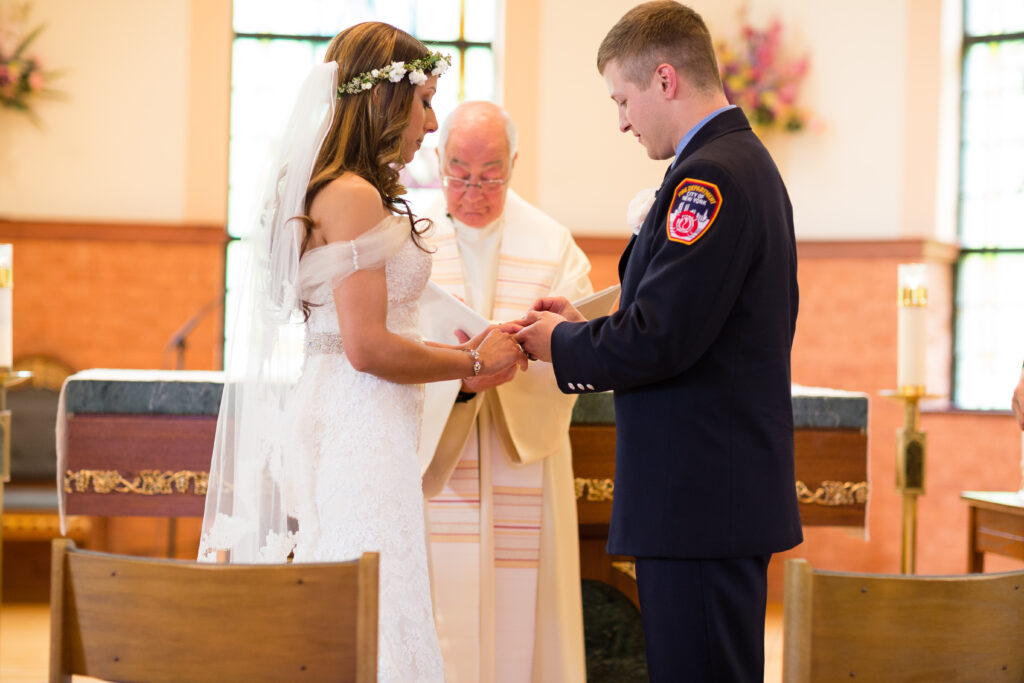
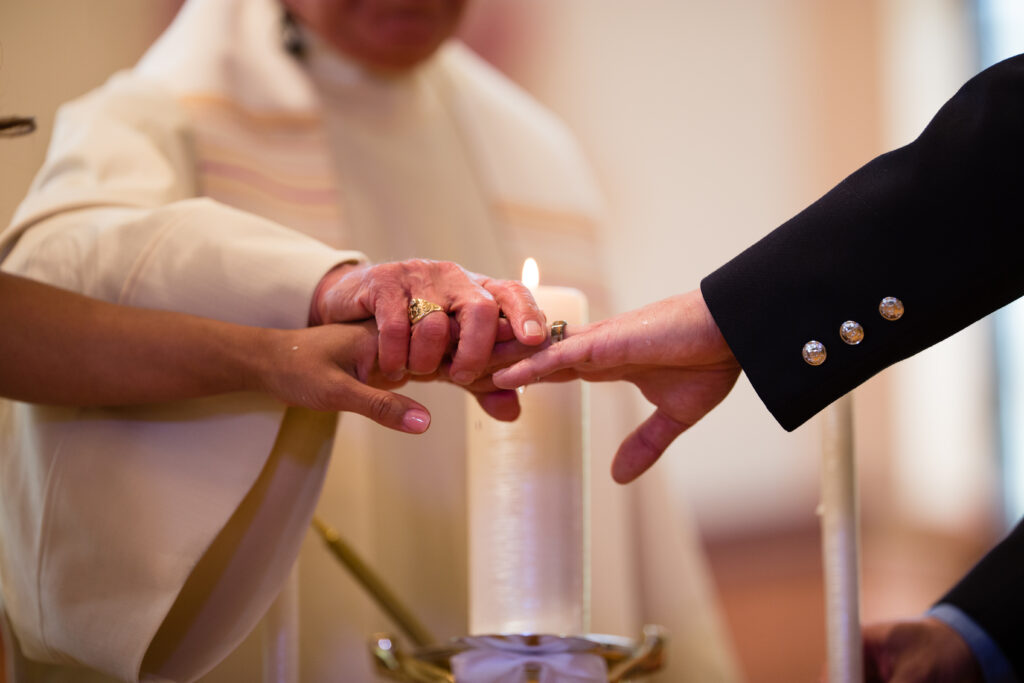
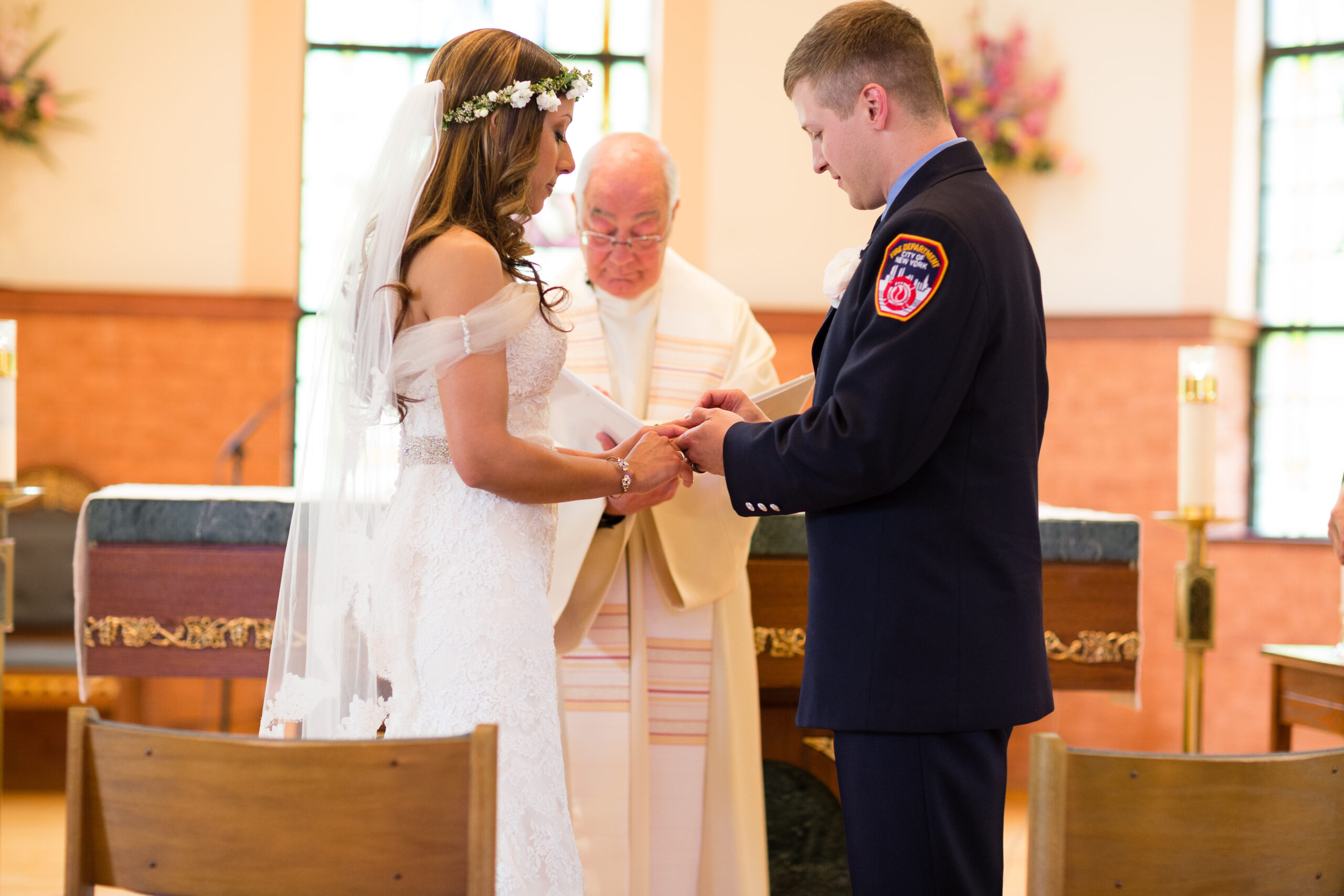
The procession, readings, vows, blessing and exchange of rings form the central progression of the ceremony. A Nuptial Mass also includes the Liturgy of the Eucharist and Holy Communion. Some couples may incorporate additional traditions, such as presenting flowers to the Blessed Virgin Mary.
Preparation allows me to photograph these moments from an appropriate position without unnecessary movement or direction.
Photograph the Relationships Surrounding the Ritual
The principal moments of a wedding ceremony are essential, but they are not the entire story.
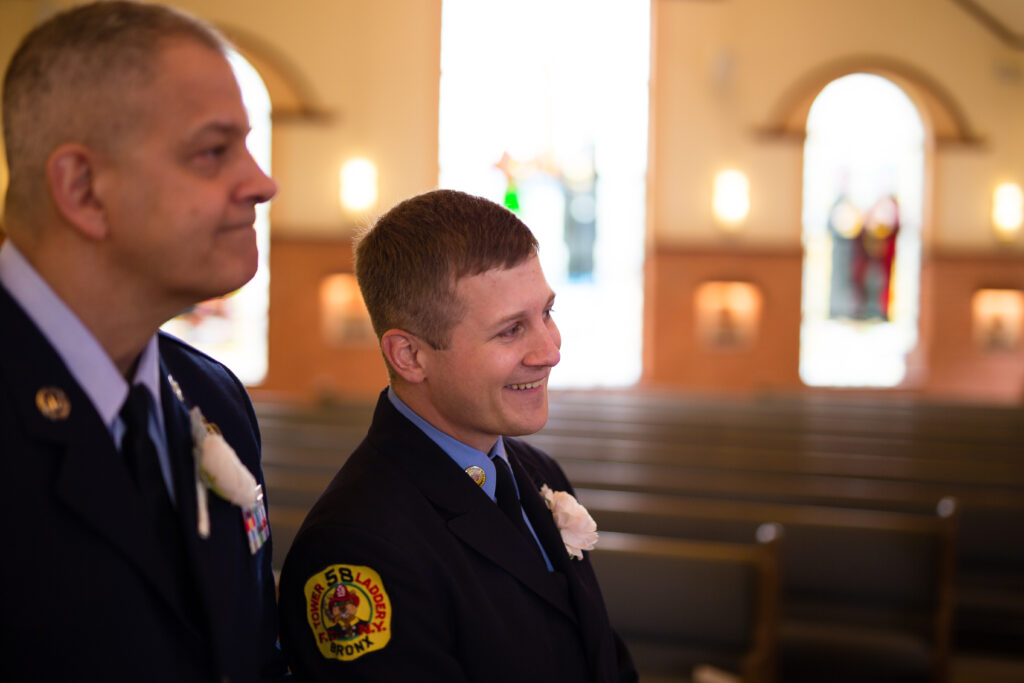
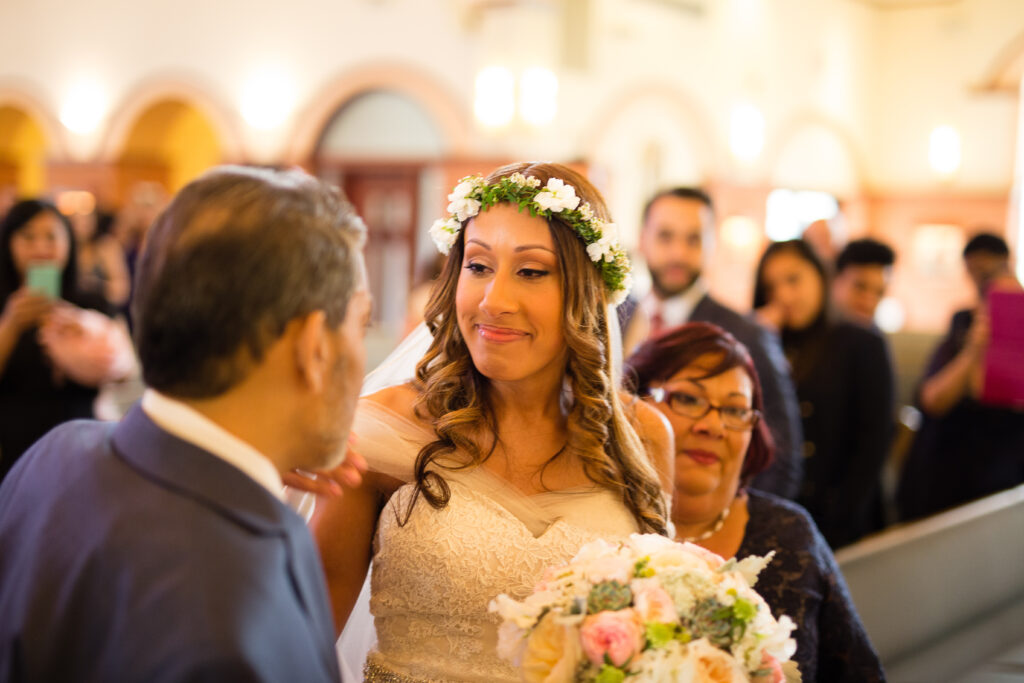
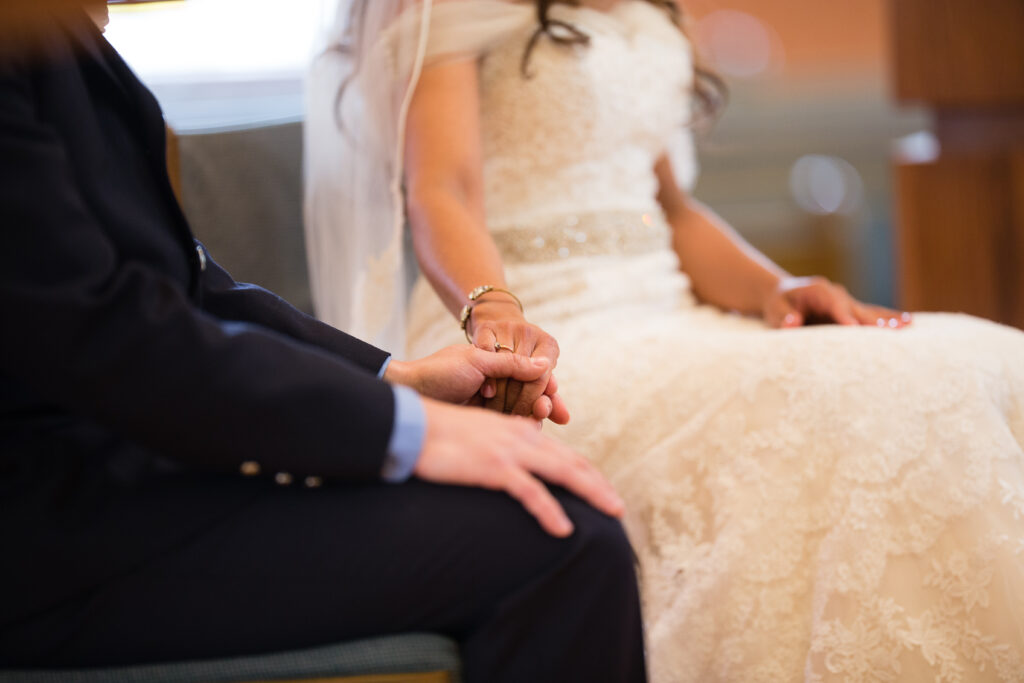
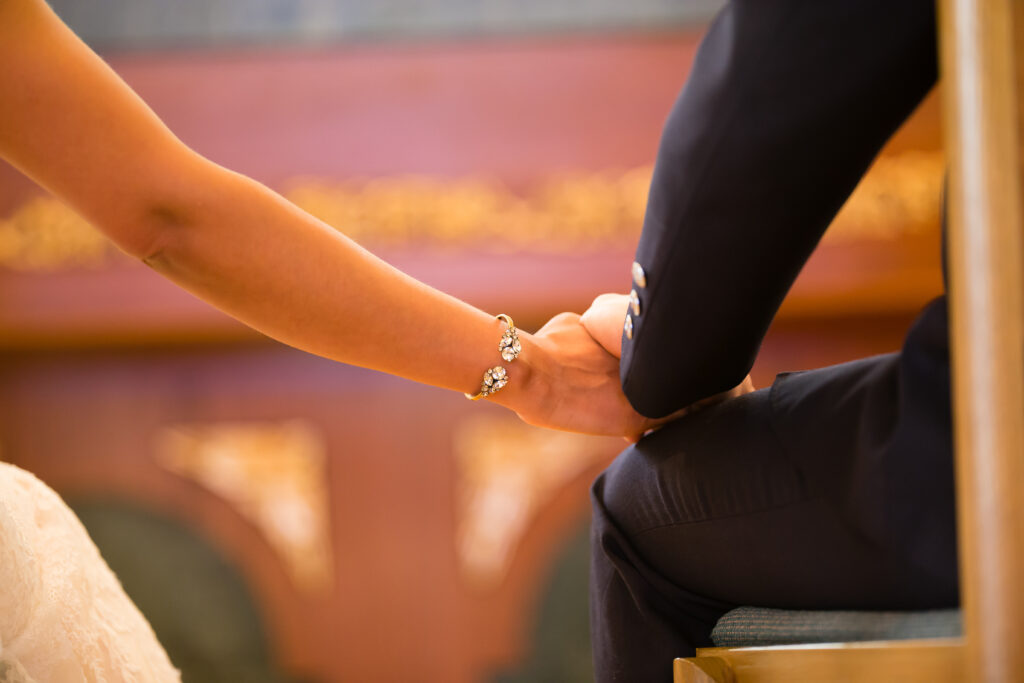
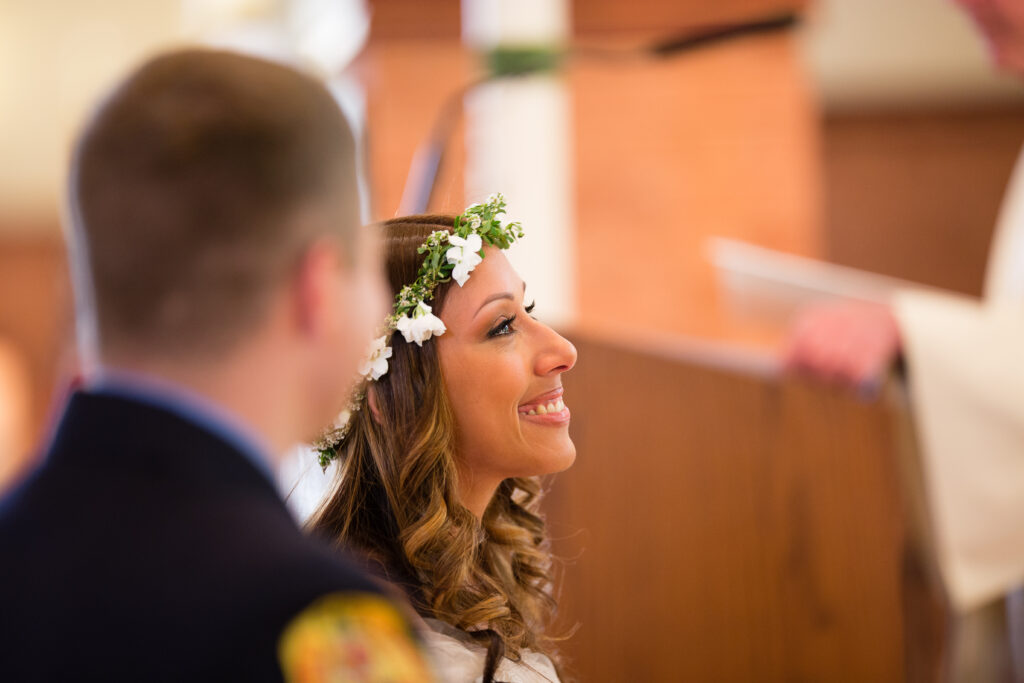
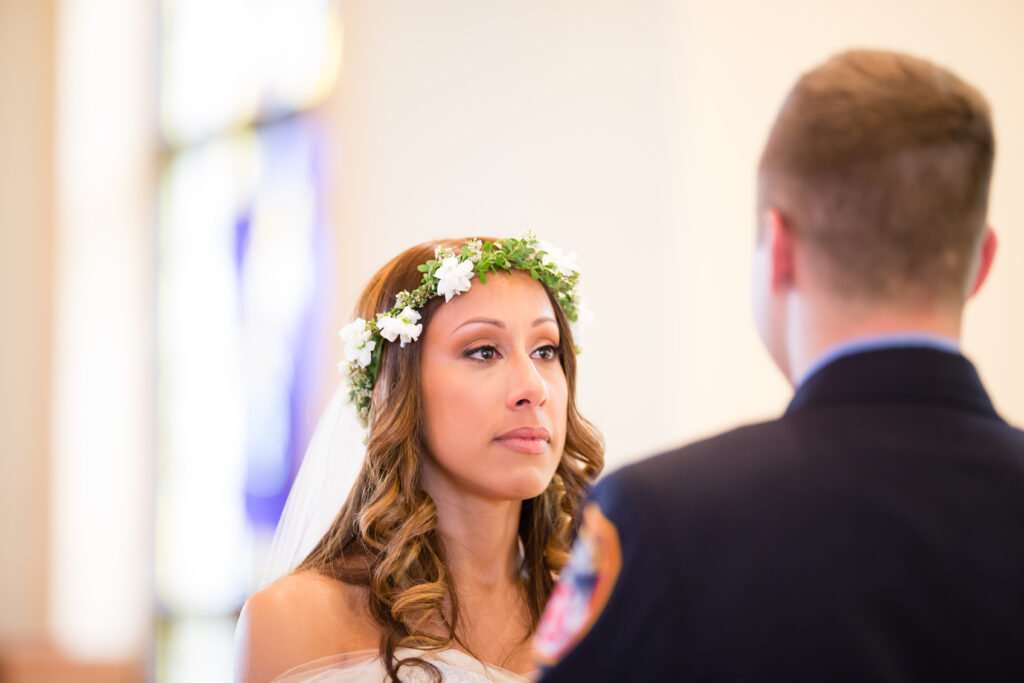
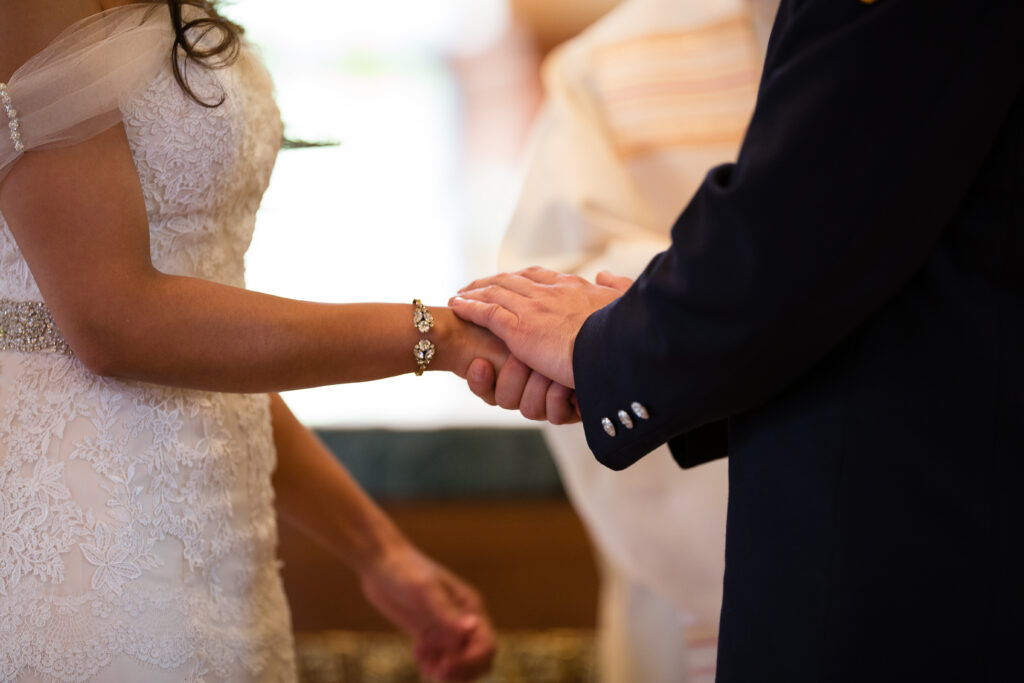
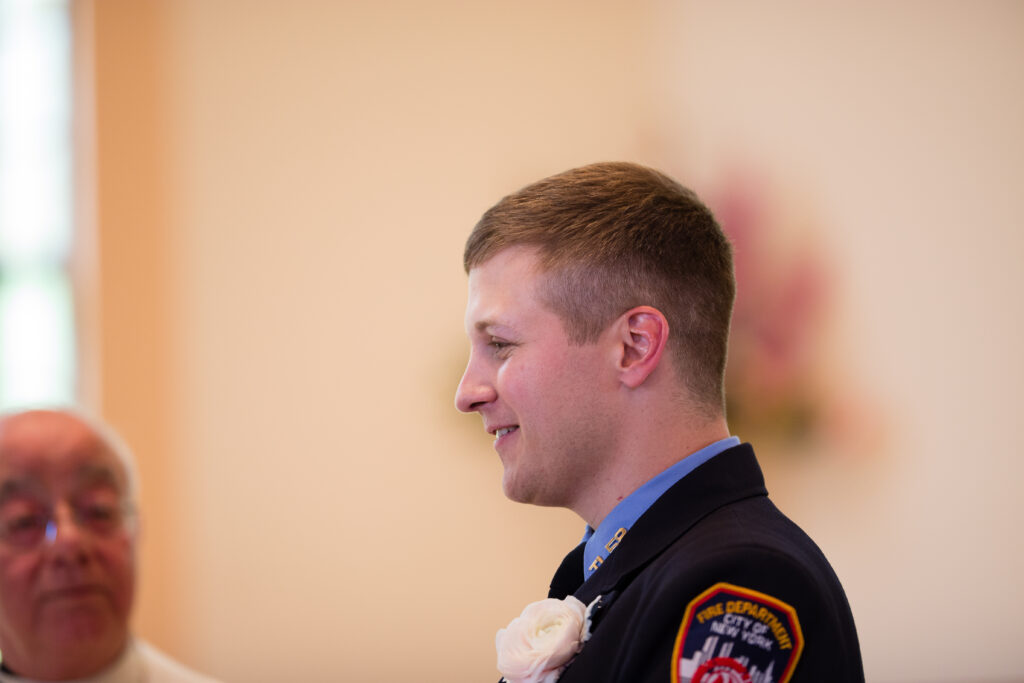
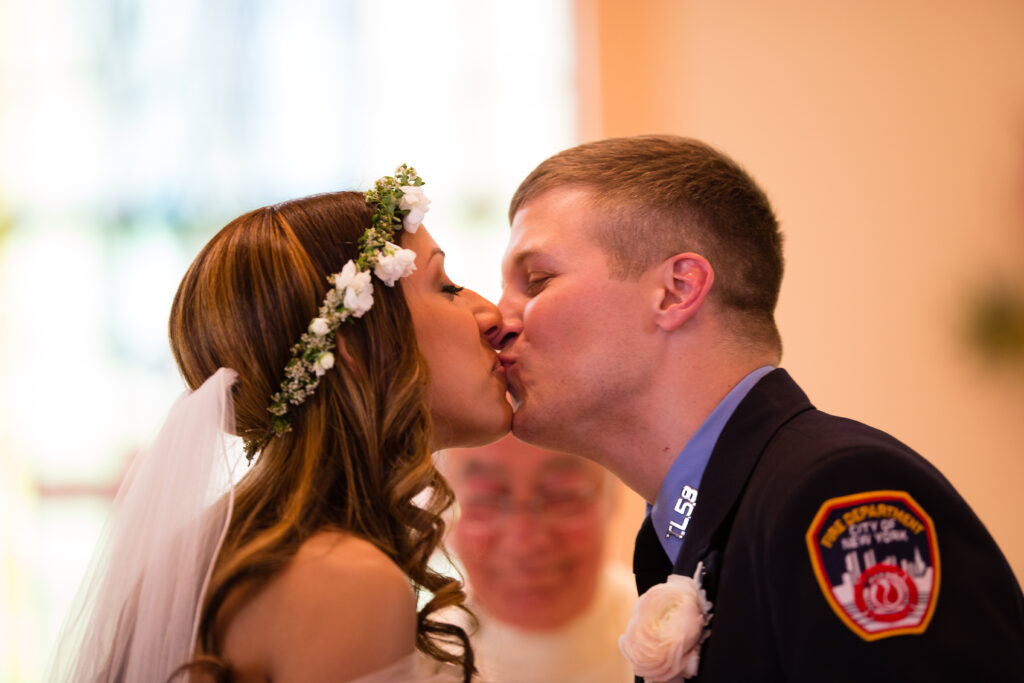
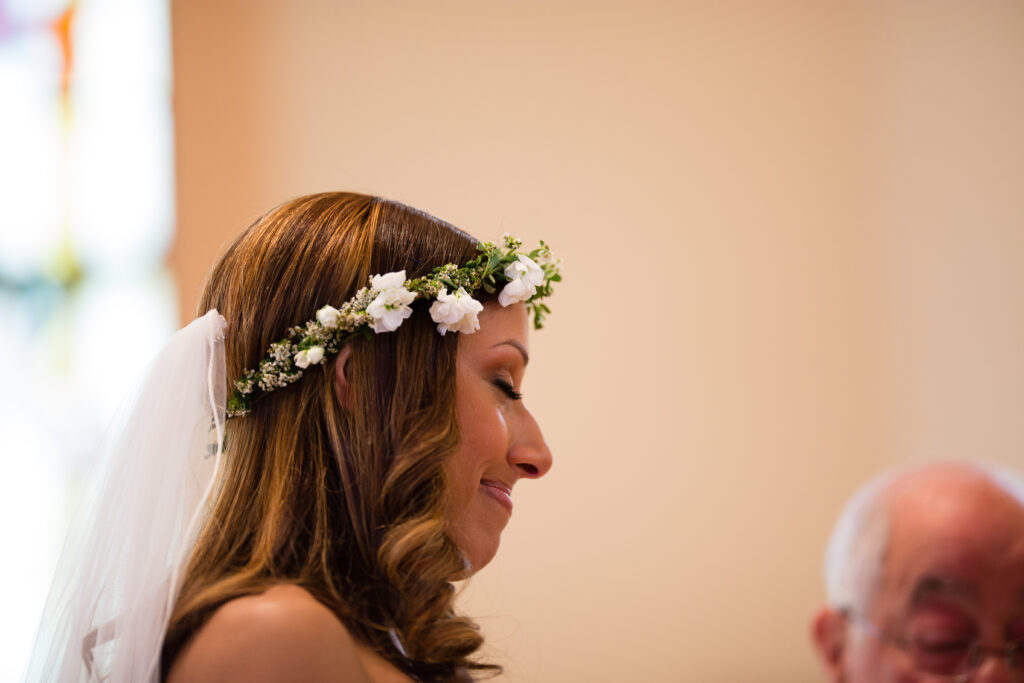
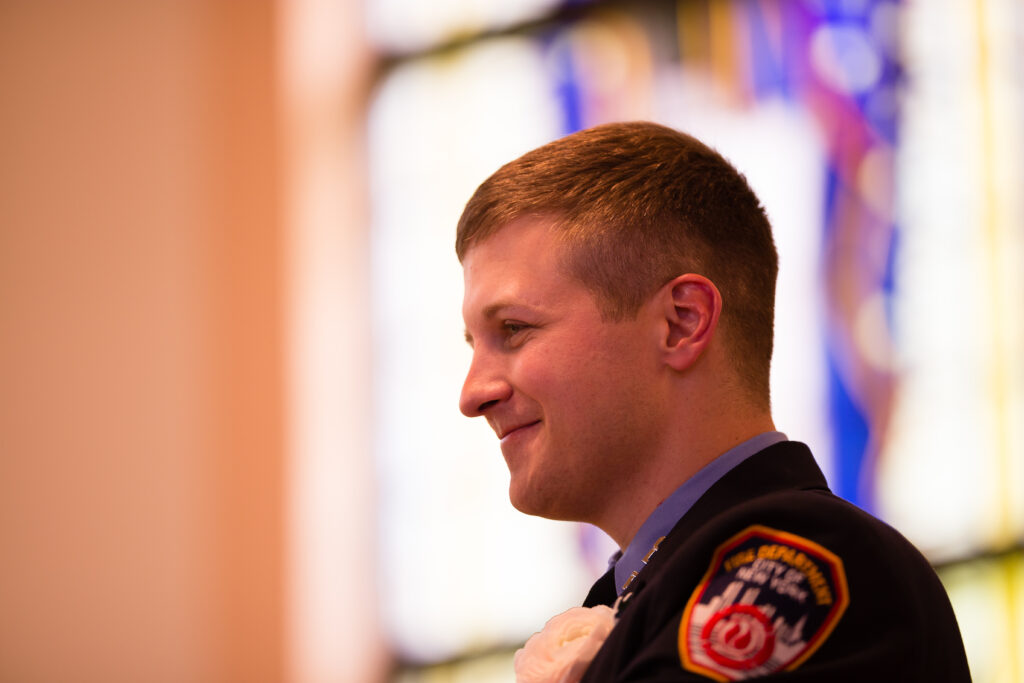
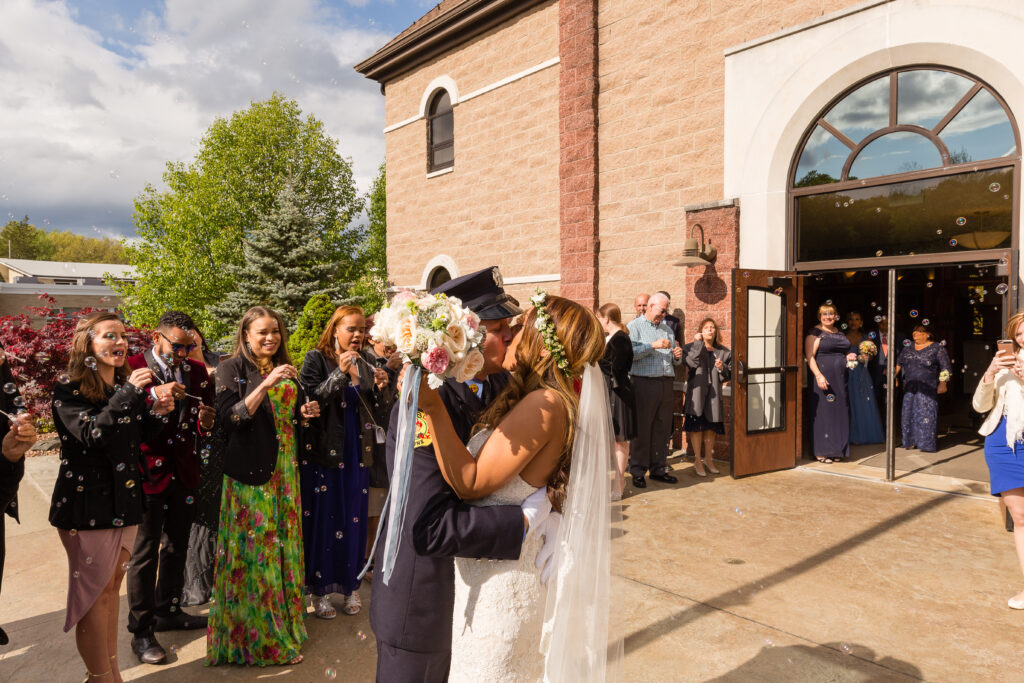
The couple may reach for one another’s hands while listening to a reading. A parent may watch from the first pew. The bride and groom may exchange a glance before speaking their vows. Guests may respond with emotion as the couple is introduced.
These expressions and gestures reveal how the ceremony is being experienced. They cannot be scheduled or recreated afterward.
I remain attentive to the ritual while also observing the people surrounding it. This creates a collection that preserves both the formal structure of the Catholic ceremony and the relationships that gave it personal meaning.
Respect Creates Better Photographs
The most effective Catholic wedding photography does not compete with the ceremony. It respects the sacred space, anticipates the liturgy and allows the couple to remain present with one another.
By working quietly and understanding when to move, when to wait and where to direct my attention, I can preserve the beauty of the church without overlooking the human connections within it.
The resulting photographs record more than the required moments. They preserve the reverence, relationships and experience of the ceremony as it naturally unfolded.