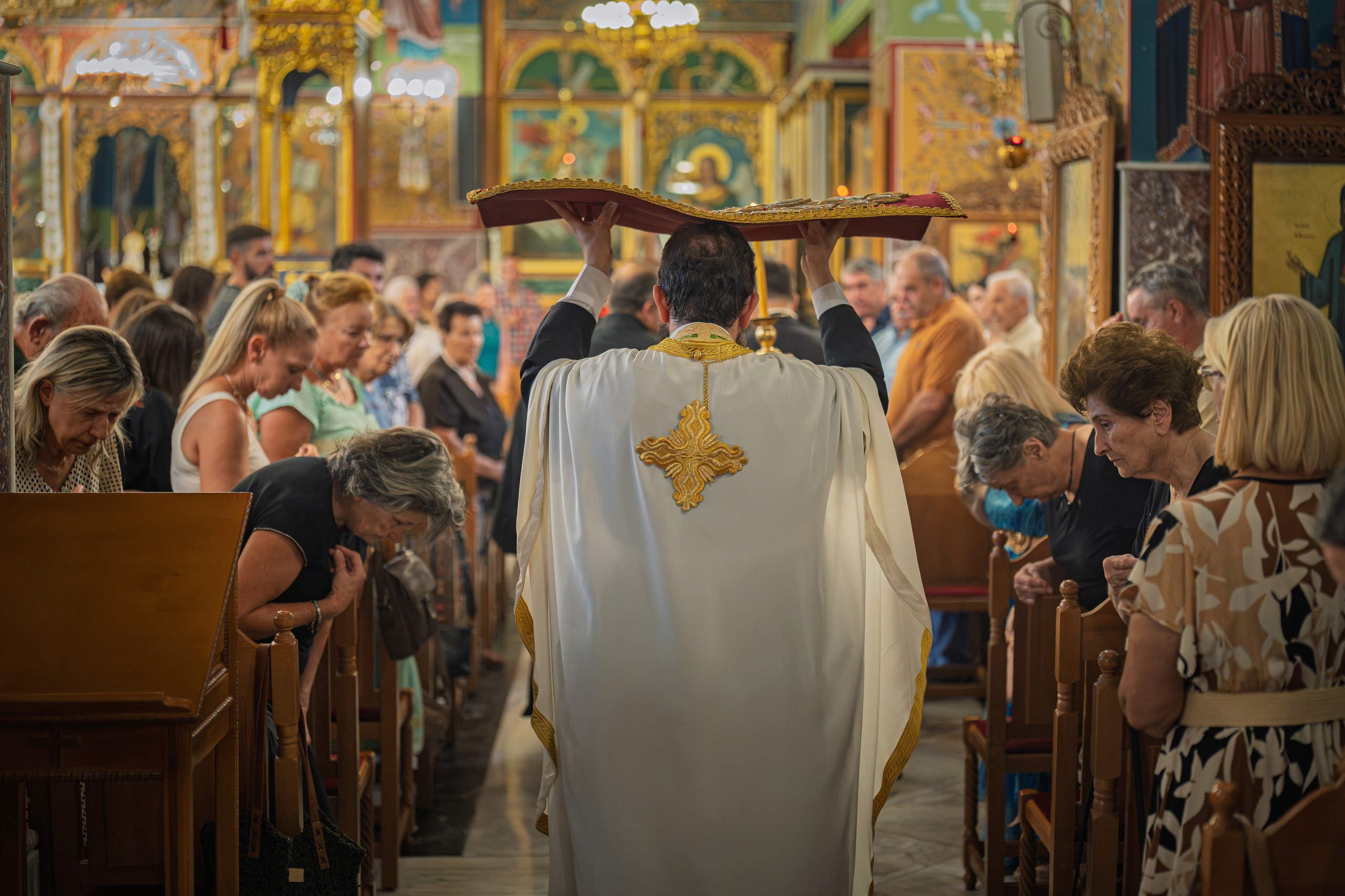
Photographing a living Orthodox tradition at Panagia Faneromeni during the days leading to the Dormition of the Theotokos.
On August 13, 2026, I photographed Τα Εγκώμια της Θεοτόκου—the Engomia of the Theotokos—at Panagia Faneromeni, the Metropolitan Cathedral of the Dormition of the Theotokos in Aigio (Αίγιο), Greece.
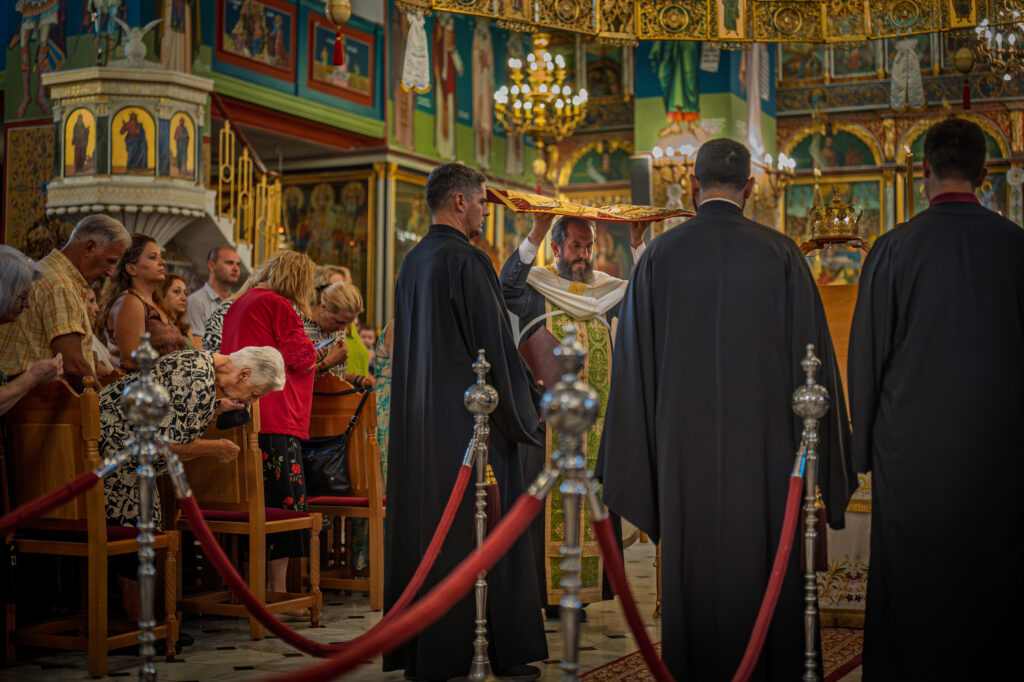
Faneromeni was completely full. Yet despite the number of people gathered inside, the atmosphere remained quiet and contemplative. Clergy moved through the nave, chanters led the service, and worshippers stood closely together beneath the chandeliers and richly decorated interior of the cathedral.
What interested me photographically was not simply the ceremony itself, but the relationship between ritual, congregation and sacred space.
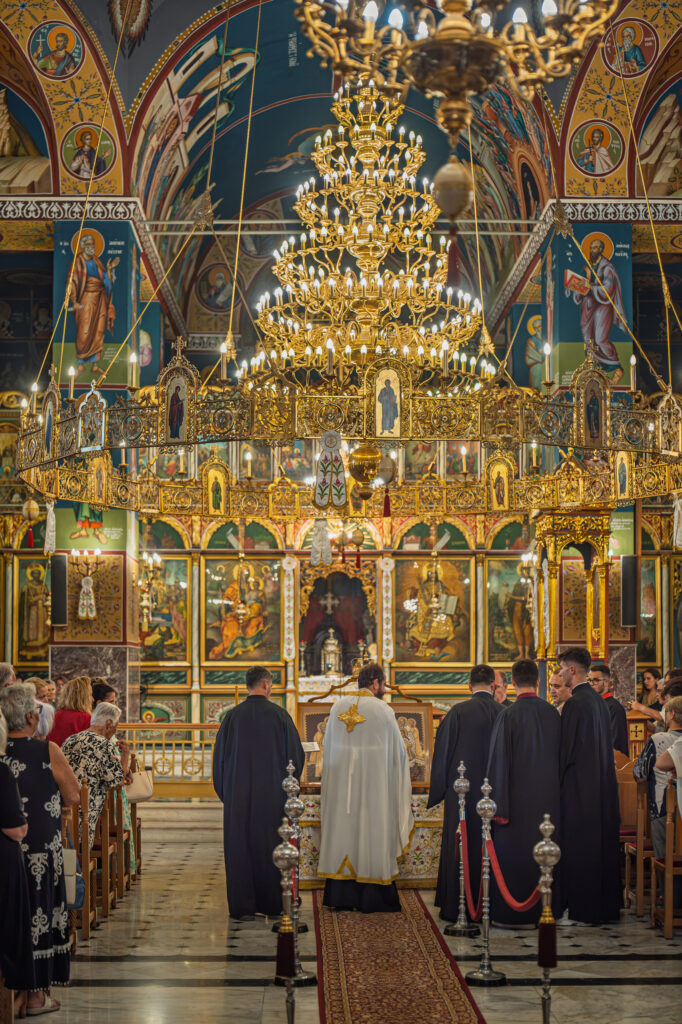
The Engomia of the Theotokos
The Engomia of the Theotokos, often described in English as the Dormition lamentations, are associated with the days leading to the Orthodox feast of the Dormition of the Theotokos on August 15. The word Dormition refers to the falling asleep, or repose, of the Virgin Mary.
The Engomia draw upon the form of the Lamentations chanted during Holy Week. Their observance is found in some Orthodox communities rather than being a universally prescribed service throughout the Orthodox Church. At Faneromeni, they form part of the local devotional preparation for the feast.
That evening, however, the meaning of the tradition was communicated as much through participation as through words.
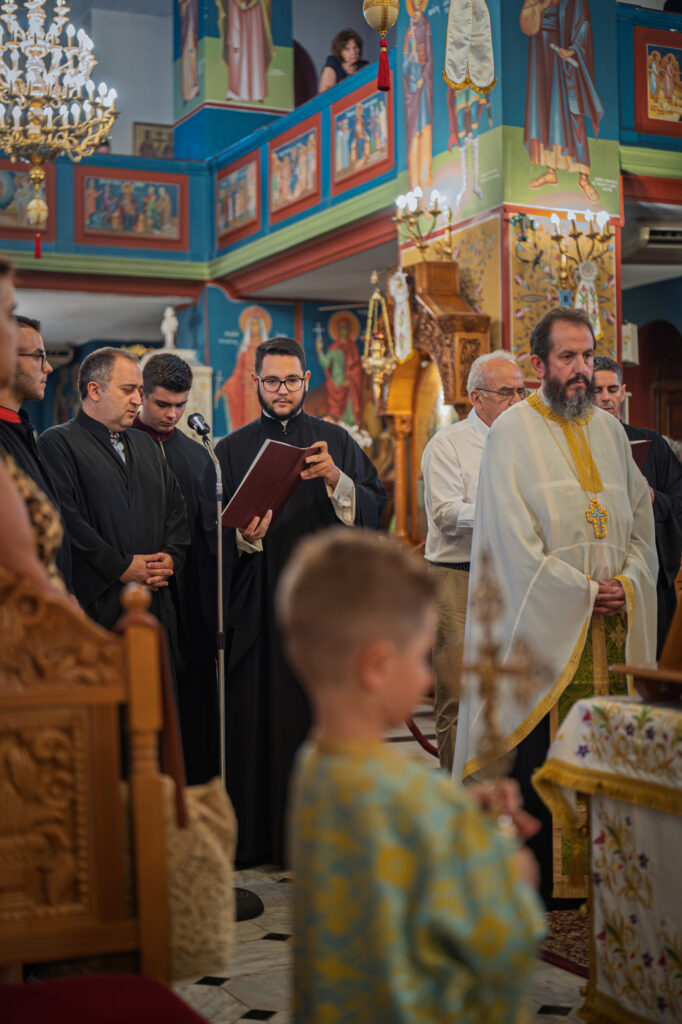
The chanters and clergy established the rhythm of the service, while the congregation responded through prayer, movement and gesture. From where I was photographing, the scale of Faneromeni remained constantly present: figures appeared beneath chandeliers, icons and architectural details that seemed to rise far above the congregation.
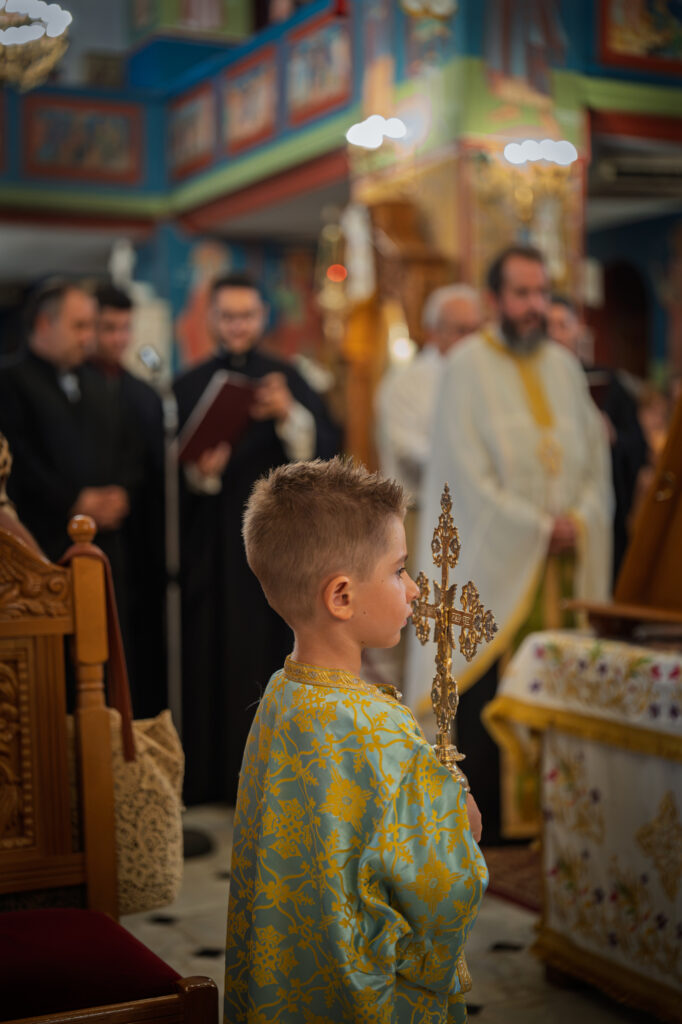
Children were also visibly part of the service. Their presence gave the evening a sense of continuity that is difficult to communicate through architecture alone. Orthodox tradition was not being presented as history; it was being practiced and passed from one generation to another.
Procession, Prayer and Participation
During the Engomia, an embroidered cloth depicting the Dormition of the Theotokos was carried around the nave.
As it passed through the densely gathered congregation, reactions differed. Some parishioners bowed. Others knelt. The movement of the cloth through the church momentarily transformed the nave into a processional space, bringing the ritual physically into the congregation rather than keeping it confined to the sanctuary.
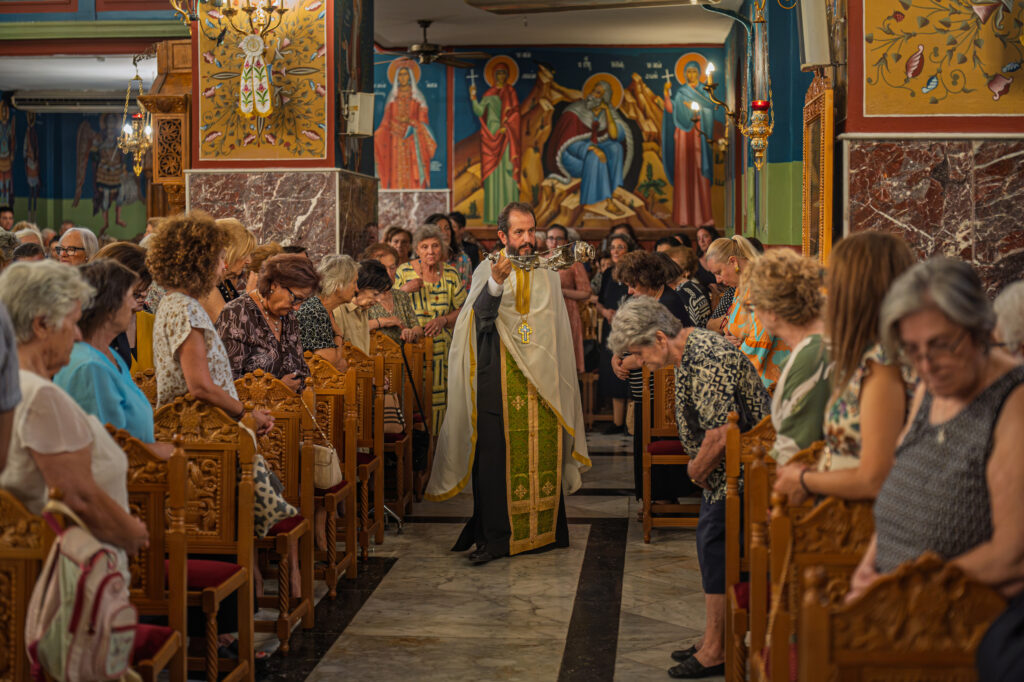
Incense added another layer to the experience. Within the already richly decorated interior, the movement of the priest among the congregation made the service feel both intimate and communal.
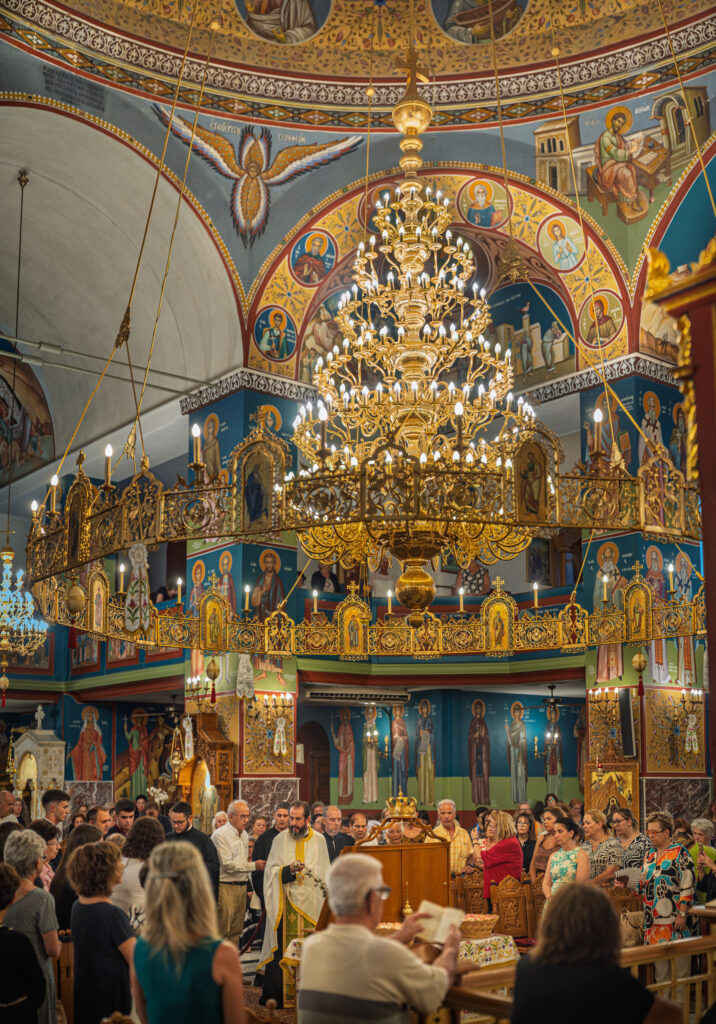
The wider photographs became important for another reason: they show that the ritual was taking place within a completely filled cathedral. Individual gestures mattered, but so did the collective presence of the congregation.
From Contemplation to Joy
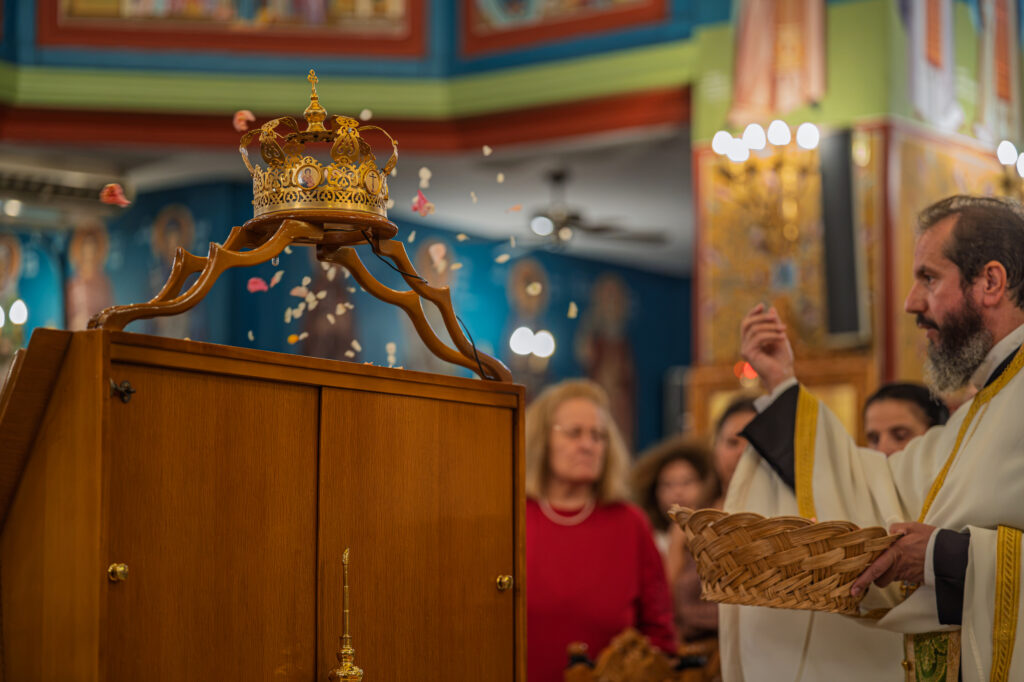
One of the most memorable transitions came with the flower petals.
Until that point, much of the service had felt restrained and contemplative. The scattering of the petals changed the emotional register.
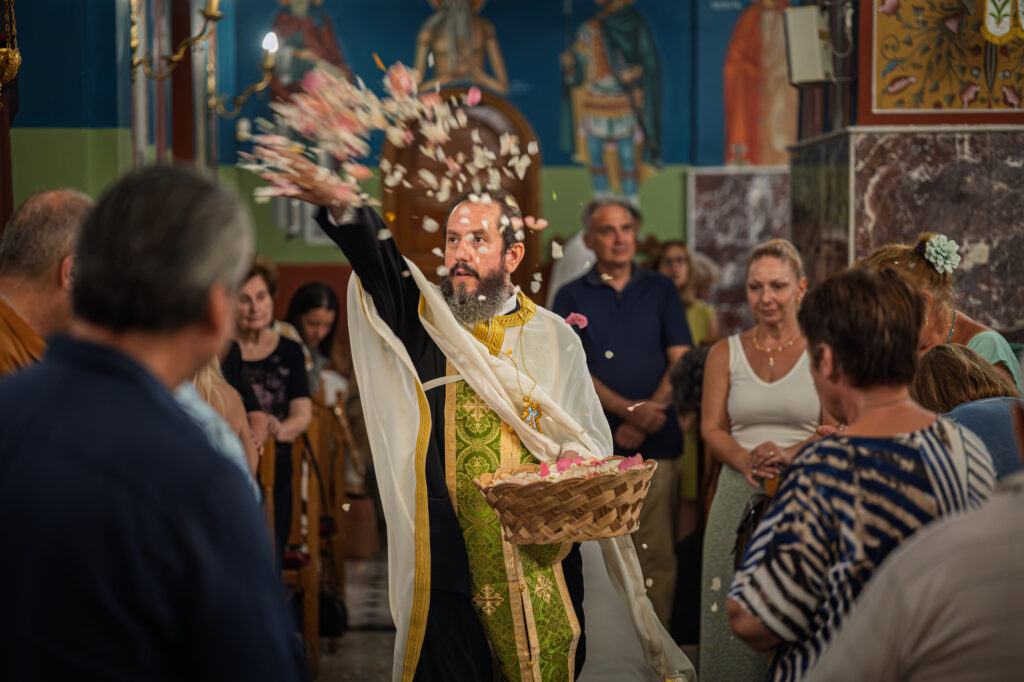
As the petals moved through the air, the response around me was visibly joyful. That moment prevented the Engomia from feeling simply mournful. The service held contemplation and celebration together, anticipating the Dormition not simply as an ending but within the Orthodox understanding of hope and life.
For me, this became one of the strongest moments photographically because movement, expression and ritual converged within a single scene.
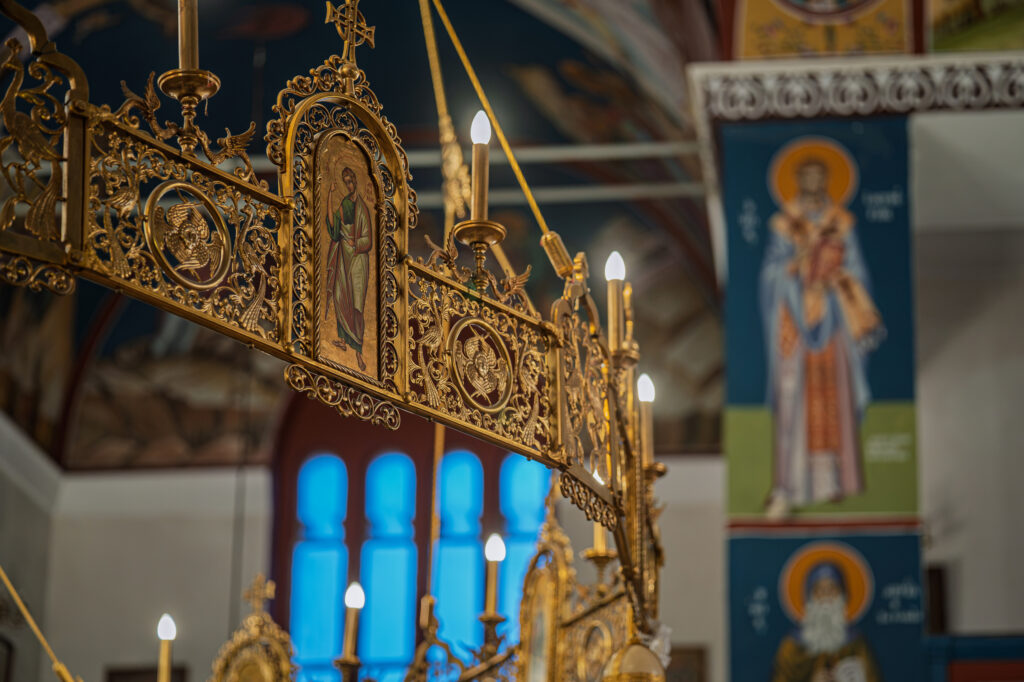
After the movement of the procession and the petals, the quieter details of Faneromeni became noticeable again—the icons, ornament, chandeliers and the extraordinary scale of the interior surrounding the worshippers.
But the architecture was never separate from what was happening inside it. It provided the setting for a tradition that remained entirely alive.
A Living Tradition
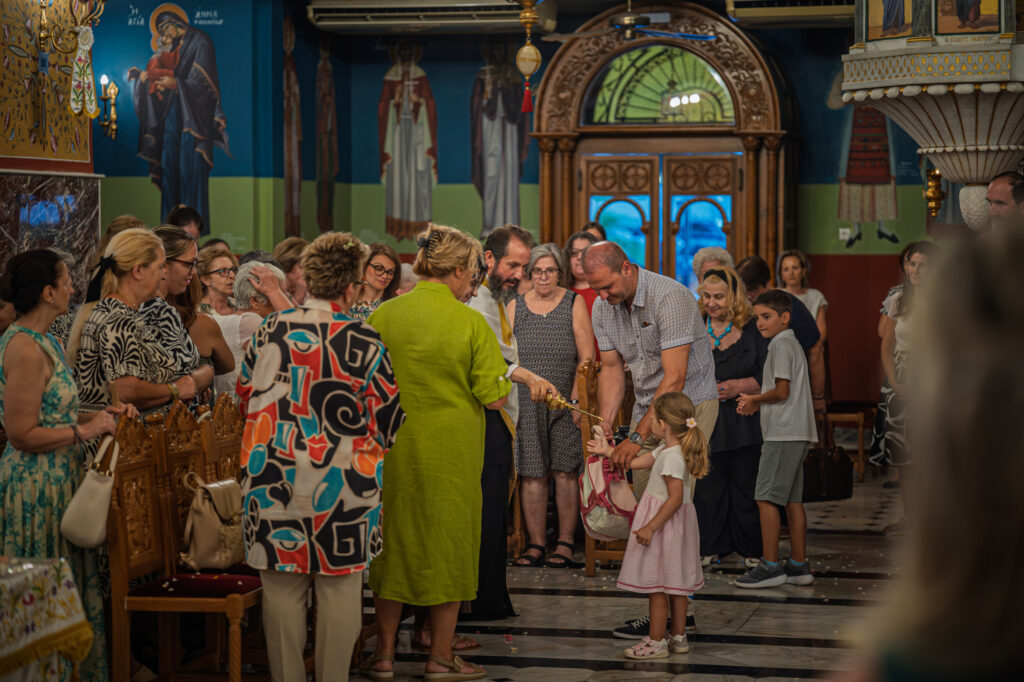
Toward the end of the service, the priest blessed the faithful with holy water. Parishioners extended their hands to receive a few drops and then touched the water to their faces as a blessing. I was standing among them and participated in the same gesture.
That final moment summarized what I had been trying to photograph throughout the evening.
Faneromeni is an extraordinary church, but the significance of the photographs is not primarily architectural. They record a cathedral completely filled with people participating in a tradition through prayer, procession, gesture and shared experience.
A few days earlier in Aigio, I had photographed another Orthodox church through the perspective of architecture and restoration: the Church of the Entrance of the Theotokos, which returned to worship after approximately three decades of closure.
At Panagia Faneromeni, the story was different.
Here, what I wanted to preserve was worship itself—the quiet concentration of the congregation, the movement through the nave, moments of joy, and a tradition continuing through the people who gathered to participate in it.